
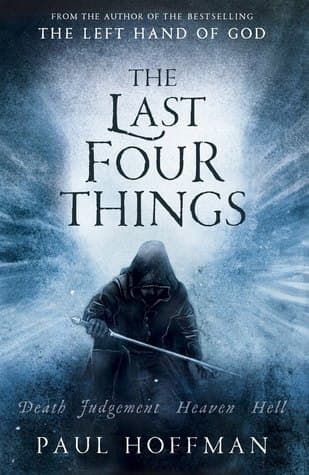
Synopsis
Covers the whole plot, including the ending.
- Difficulty
- Medium
- Pacing
- Variable
- Mood
- Dark, Violent, Philosophical, Grim, Suspenseful
- Read it if
- You enjoy dark, morally complex fantasy with a protagonist who is both a weapon and a victim, and don't mind a grim, violent world.
- Skip it if
- You prefer light-hearted fantasy, clear-cut heroes, or are sensitive to graphic violence and themes of child soldiery.
The Last Four Things Plot Summary
Covers the whole plot, including the ending.
The Betrayal and the Road to Memphis
Thomas Cale, devastated by Arbell's apparent betrayal and Vayl's death, is again under Redeemer control. Lord Militant Bosco, leading the Redeemer forces, makes Cale accompany him on a long march towards Memphis, the Antagonist capital. Cale, numb with loss, is a shadow of his former self, his fighting skills dulled by despair. Bosco, always manipulative, tries to use Cale's abilities while understanding the boy. The journey is dangerous and shows the brutal realities of war, further hardening Cale's spirit as he deals with love, betrayal, and a growing desire for revenge against those who wronged him, including Arbell.
Encountering the Antagonists and the Marquis
As the Redeemer army nears Memphis, they have several skirmishes with Antagonist forces, showing the efficiency of the Redeemers' child soldiers. Cale, despite his despair, is forced to fight, often with a terrifying ferocity that impresses and unnerves Bosco. During these fights, Cale learns more about the Antagonists and their leader, the Marquis. The Marquis is a formidable and cruel enemy, a contrast to the Redeemers' religious zealotry, yet equally dangerous. Cale starts to see the war not as a simple fight between good and evil, but as a complex conflict driven by power and ideology, with both sides showing extreme violence and moral ambiguity. This realization further complicates his conflicted worldview.
Arbell's Return and the Truth
To Cale's surprise and renewed heartbreak, Arbell reappears, not as a captive but as a key figure within the Antagonist hierarchy, working directly for the Marquis. She reveals that her past actions, including her apparent betrayal, were part of a plan to infiltrate the Redeemers and gather intelligence for the Antagonists. Cale is shattered, as this confirms his worst fears and deepens his sense of personal betrayal. Arbell tries to justify her actions, explaining her deception was necessary for the Antagonist cause, which she believes is the lesser of two evils compared to the Redeemers. This encounter reignites Cale's emotional turmoil, making him confront the complexities of loyalty and the blurred lines between friend and foe.
The Siege of Memphis Begins
The Redeemer army, led by Bosco, finally reaches Memphis and begins a devastating siege. The city is heavily fortified, and the Antagonists, commanded by the Marquis and aided by Arbell's strategies, resist fiercely. The battle is a brutal display of warfare, with massive casualties on both sides. Cale, despite his internal conflict, is again in the middle of the fighting. His unique combat skills and resilience are crucial to the Redeemers' advance, even as he grapples with the moral implications of his actions. The siege shows the scale of the conflict and the immense human cost of the Redeemers' goals, forcing Cale to witness horrors.
Cale's Internal Struggle and the Last Four Things
Throughout the siege, Cale is tormented by his past, his lost innocence, and the Redeemers' teachings. 'The Last Four Things' — Death, Judgment, Heaven, Hell — are constantly preached by the Redeemers as the ultimate goal, justifying their campaign. Cale, however, questions the true meaning of these concepts, seeing only death and hell in the war around him. He struggles with his own purpose, whether he is meant to be an instrument of destruction or something else. This internal conflict is made worse by his lingering feelings for Arbell and his desperate search for belonging and meaning amidst the chaos.
The Marquis's Deceptions and Arbell's Role
As the siege continues, Cale, through observation and information, begins to understand the Marquis's true nature. The Marquis is not just an opposing military leader but a cunning manipulator, driven by a desire for power and control rather than moral conviction. Arbell, despite trying to justify her loyalties, is deeply involved in the Marquis's plans, acting as his confidante and strategist. Cale sees the Marquis's calculated cruelty and how he exploits his followers, mirroring some Redeemer tactics. This realization further complicates Cale's understanding of Arbell, blurring the lines between her love for him and her loyalty to a compromised cause, leading to deeper emotional wounds.
The Fall of Memphis and the Confrontation
After a long and bloody struggle, the Redeemer forces finally breach Memphis's defenses. The city falls into chaos as the two armies clash in the streets. Cale, fighting with detached fury, finds himself face-to-face with Arbell amidst the carnage. Their reunion is not reconciliation but confrontation, as their opposing loyalties and past betrayals clash. Arbell, still committed to the Antagonist cause, tries to reason with Cale, urging him to abandon the Redeemers and join her. Cale, however, is too wounded and conflicted to accept, and their encounter is full of tension, unresolved emotions, and the specter of their broken relationship, ending in intense personal anguish for both.
The Marquis's Escape and New Revelations
Despite Memphis's fall, the Marquis escapes capture, slipping away with his most loyal followers. Cale, now more determined to understand the war and his place in it, uncovers more information about his mysterious origins and the larger, cosmic conflict at play. He learns that both the Redeemers and Antagonists are pawns in a grander scheme, manipulated by ancient, powerful forces. This revelation shatters Cale's perception of the world, making him question everything he has been taught and deepening his resolve to forge his own path, independent of either faction's agenda, and to seek his own truth.
Cale's Defiance and the Path Forward
Having witnessed atrocities by both sides and been manipulated by nearly everyone, Cale makes a decision: he will no longer be a pawn. He openly defies Bosco and the Redeemers, refusing to continue their mission. He also rejects Arbell's pleas to join the Antagonists, understanding that both factions represent different forms of oppression and destruction. This act of defiance marks a turning point in Cale's character, as he begins to assert his own agency. Though still deeply scarred, he resolves to find his own purpose, even if it means a solitary and dangerous path, setting the stage for a new quest for truth and redemption.
The Seeds of a New Purpose
With Memphis conquered and his ties to both the Redeemers and Antagonists severed, Cale is adrift but with a new purpose. He is no longer driven by revenge or blind obedience but by a desperate desire to prevent humanity's complete annihilation, which both factions seem intent on achieving. He begins to seek out individuals and information that might shed light on the deeper forces at play and a way to end the endless cycle of violence. Though emotionally broken and carrying immense burdens, a flicker of hope remains that he might yet make a difference, even if it means confronting powers beyond human comprehension. His journey for self-discovery and a path to peace has begun.
The Last Four Things Characters
Thomas Cale
Protagonist
The emotionally scarred warrior-monk caught between warring factions.
Thomas Cale is a young man of extraordinary combat prowess, trained from childhood by the Redeemers as an instrument of their apocalyptic vision. He is profoundly traumatized by his past, marked by the loss of his innocence and a deep capacity for both extreme violence and surprising tenderness. Cale is driven by a desperate search for belonging and meaning, often finding himself manipulated by those around him. His internal struggle between his violent nature and a nascent desire for peace defines his existence.
Relationships: Arbell (Complicated romantic interest and betrayer; his deepest emotional connection and source of pain.); Lord Militant Bosco (Manipulative leader and reluctant mentor; exploits Cale's abilities.); The Marquis (Ruthless adversary and manipulator; a dark mirror to the Redeemers.)
Arbell
Supporting
Cale's beloved, revealed to be a cunning operative for the Antagonists.
Arbell is Cale's first love and the source of his deepest emotional wounds. Initially appearing as a victim, she is revealed to be a highly intelligent and resourceful operative for the Antagonists, working directly for the Marquis. She is pragmatic and believes her actions, however deceptive, are for a greater good. Arbell possesses a strong will and a capacity for manipulation, but also a lingering affection for Cale, which creates immense conflict within her.
Relationships: Thomas Cale (Complicated romantic interest and source of mutual betrayal and pain.); The Marquis (Loyal subordinate and strategic advisor.)
Lord Militant Bosco
Antagonist/Supporting
The cunning and ambitious Redeemer general who seeks to control Cale.
Lord Militant Bosco is a high-ranking Redeemer general, cunning, ambitious, and deeply committed to the Redeemers' apocalyptic cause. He sees Cale as a valuable, albeit dangerous, asset and seeks to exploit his unique abilities for the Redeemers' benefit. Bosco is a master manipulator, capable of both brutal violence and strategic persuasion. He represents the calculating and ruthless face of the Redeemer hierarchy, driven by an unwavering faith in their mission to end the world.
Relationships: Thomas Cale (Manipulative superior and reluctant handler; seeks to control Cale's power.); The Redeemers (Loyal and high-ranking leader.)
The Marquis
Antagonist
The enigmatic and ruthless leader of the Antagonists.
The Marquis is the mysterious and formidable leader of the Antagonists, a direct opposing force to the Redeemers. He is portrayed as equally, if not more, ruthless and manipulative than the Redeemer leadership, driven by a desire for power and control. His motives are shrouded in secrecy, and he employs deception and cruelty to achieve his goals. The Marquis represents a different, yet equally dangerous, ideology to C Redeemers, and his presence highlights the moral ambiguity of the overarching conflict.
Relationships: Arbell (Trusted subordinate and strategic advisor.); Thomas Cale (Primary adversary and target of manipulation.)
Vayl
Mentioned
Cale's former friend, whose perceived death deeply affects Cale.
Vayl was Cale's closest friend and confidant in the previous book. Though presumed dead in 'The Last Four Things,' his memory and the impact of his loss continue to weigh heavily on Cale. Vayl represented a sliver of genuine human connection and innocence for Cale, and his absence contributes significantly to Cale's profound despair and sense of isolation throughout the narrative. His death is a constant reminder of the violence and loss that define Cale's life.
Relationships: Thomas Cale (Deceased closest friend and confidant; his memory haunts Cale.)
The Redeemers
Antagonist (as a collective)
The fanatical warrior-monks seeking to end the world.
The Redeemers are a powerful, fanatical religious order of warrior-monks who believe it is their divine mission to bring about the end of the world, ushering in the 'Last Four Things.' They rule over vast armies of child slaves, whom they indoctrinate and train for war. Their ideology is rigid and unforgiving, justifying extreme violence and genocide in the name of their sacred goal. They represent a destructive force of religious extremism and manipulation.
Relationships: Thomas Cale (His former masters and current manipulators.); Lord Militant Bosco (High-ranking leader.)
The Antagonists
Antagonist (as a collective)
The opposing faction, led by the Marquis, fighting the Redeemers.
The Antagonists are the primary opposing force to the Redeemers, led by the enigmatic Marquis. While they resist the Redeemers' genocidal campaign, they are not portrayed as morally superior. They are equally ruthless, employing cunning, deception, and violence to achieve their aims. Their motivations are often rooted in power and self-preservation, presenting a morally ambiguous alternative to the Redeemers' fanaticism.
Relationships: The Marquis (Their leader.); Arbell (A key operative and strategist.)
The Last Four Things Themes
Betrayal and its Aftermath
Betrayal is a central theme, deeply affecting Thomas Cale. Arbell's deception shatters Cale's emotional core, driving much of his despair and conflict. The revelation of her true allegiance forces Cale to question loyalty and trust, leading him to understand the morally gray world he lives in. His struggle to reconcile his love for Arbell with her actions shows the lasting pain and psychological scars that betrayal leaves, as seen in his numb detachment during the march to Memphis and his anguished confrontation with her.
“He had loved her, and she had given him to the wolves. That was the simple, terrible truth.”
The Corrupting Nature of Power and Ideology
The novel explores how absolute power and rigid ideologies corrupt individuals and entire factions. The Redeemers, driven by their religious fervor, commit atrocities, believing they act on divine will. Lord Militant Bosco embodies this corruption, manipulating Cale and others for their destructive mission. Similarly, the Marquis, leader of the Antagonists, uses power through cunning and cruelty, showing that even opposition to fanaticism can be ruthless. Both sides illustrate how good intentions can be twisted into justifications for violence and control, leaving Cale disillusioned with all authority.
“Both sides claimed God, but only one side seemed to possess the Devil's own cruelty.”
Loss of Innocence and Psychological Trauma
Cale's journey shows the profound loss of innocence and the lasting effects of psychological trauma. Raised in a brutal monastery and forced into warfare, Cale is a broken individual. The perceived death of Vayl and Arbell's betrayal strip away any remaining youth, leaving him numb and prone to detached violence. His internal thoughts reveal a constant struggle with his past, his identity as a weapon, and his desperate search for meaning in a world that has only offered him pain. This theme is clear in his moments of catatonia and his inability to form healthy attachments.
“The child inside him was long dead, replaced by a ghost that remembered only pain and betrayal.”
Free Will vs. Destiny
A recurring tension in the narrative is the struggle between predetermined destiny and free will. Cale is constantly told he is a tool, a divine instrument for the Redeemers' apocalyptic vision, or a pawn in the Marquis's schemes. Yet, despite manipulations and prophecies, Cale increasingly asserts his own agency, culminating in his defiance of both factions. This theme questions whether individuals can truly escape the roles assigned by powerful forces, or if they are merely players in a larger, predetermined game. Cale's ultimate choice to forge his own path highlights the human desire for self-determination.
“They all wanted him to be a weapon, but he was tired of being wielded.”
Plot Devices & Literary Techniques
The Last Four Things
The Redeemers' apocalyptic doctrine that drives their war.
This doctrine—Death, Judgment, Heaven, Hell—serves as the central ideological motivator for the Redeemers' genocidal campaign. It functions as a powerful propaganda tool, justifying their atrocities by framing them as necessary steps towards a divine end. For Cale, 'The Last Four Things' becomes a symbol of the twisted morality he is forced to confront, as he witnesses only death and hell manifesting in the world around him, questioning the promised heaven and judgment. It provides the overarching goal that propels the main conflict and highlights the fanaticism of the Redeemers.
Arbell's Deception
A major twist that drives Cale's emotional arc and plot progression.
Arbell's apparent betrayal and subsequent revelation as an Antagonist operative is a crucial plot device. It serves as the primary catalyst for Cale's emotional devastation and his subsequent internal struggle, pushing him into a state of despair and detachment. This deception also complicates the narrative's moral landscape, blurring the lines between good and evil, and forcing Cale (and the reader) to question appearances and allegiances. It directly impacts Cale's motivations and his relationships with both factions, leading to his ultimate rejection of both.
Cale's Prodigious Combat Skills
His almost supernatural fighting ability, a key element of his identity and utility.
Cale's exceptional and almost supernatural combat abilities are a constant plot device. They make him an invaluable asset to the Redeemers, ensuring his survival and central role in their military campaigns, despite his personal reluctance. These skills also set him apart, highlighting his unique and often terrifying nature. His fighting prowess is not just a practical tool for advancing the plot's action sequences, but also a constant reminder of his past trauma and his identity as a weapon, influencing his internal conflict and his attempts to find a purpose beyond violence.
The Mysterious Origins of Cale
The enigma surrounding Cale's birth and true nature.
The ongoing mystery surrounding Cale's origins and his seemingly divine (or demonic) purpose acts as a continuous thread of intrigue. Hints and fragments of information about his past, his connection to ancient powers, and why he possesses such unique abilities are slowly revealed. This device keeps Cale (and the reader) searching for answers, providing a deeper, more cosmic layer to the immediate conflict between the Redeemers and Antagonists. It fuels Cale's personal quest for identity and meaning beyond the roles others try to impose upon him.
The Last Four Things Quotes
“The past is a country we can't go back to, but it's also a country we never truly leave.”
“There are some things that, once seen, can never be unseen. And once known, can never be unknown.”
“Hope is a dangerous thing. It can keep you alive, but it can also make you do terrible things.”
“Sometimes the greatest betrayals come from those we trust the most.”
“Power is not about what you can do to others, but what you can make them do to themselves.”
“The world is a stage, and we are merely players. But some of us have much bloodier roles than others.”
“To truly forgive, you must first understand the unforgivable.”
“There is no justice, only consequences.”
“Even in the darkest of places, a flicker of light can be found. But sometimes, that light is merely a burning ember of destruction.”
“The hardest part of any journey is not the first step, but the last. For the last step often leads to the unknown.”
“Fear is a weapon. And like all weapons, it can be turned against its wielder.”
“Some scars never heal. They just become a part of who you are.”
“The greatest prison is not one made of stone and iron, but one built by your own mind.”
“Love, like war, makes monsters of us all.”
Quiz
10 questions on the plot and the characters. Each answer comes with a short explanation.
Question 1
What is the ultimate goal of the Redeemers, which Thomas Cale is being used to further?
- The establishment of a new world order under their rule.
- The extinction of humankind and the end of the world.
- The conversion of all people to their religious beliefs.
- The discovery of ancient magical artifacts.
Show answer
B. The extinction of humankind and the end of the world. The book description explicitly states that the Redeemers' sacred goal is 'the extinction of humankind and the end of the world,' using Cale's gifts to achieve it.
Question 2
What are 'the last four things' as understood by the warrior-monks known as the Redeemers?
- Life, Love, Loss, Legacy
- Faith, Hope, Charity, Redemption
- Death, Judgement, Heaven, Hell
- War, Famine, Pestilence, Death
Show answer
C. Death, Judgement, Heaven, Hell The book description clearly defines 'the last four things' for the Redeemers as 'Death. Judgement. Heaven. Hell.'
Question 3
Which of the following best describes the internal conflict within Thomas Cale?
- His struggle between loyalty to his friends and his duty to the Redeemers.
- His battle between his inherent capacity for violence and his moments of tenderness and innocence.
- His indecision between pursuing personal power or seeking a quiet, peaceful life.
- His desire to escape the Redeemers versus his fear of the outside world.
Show answer
B. His battle between his inherent capacity for violence and his moments of tenderness and innocence. The description highlights Cale as 'possessed of a remarkable aptitude for violence but capable of extreme tenderness,' showing the conflict between his violent nature and innocent side.
Question 4
What is the primary role of the Redeemers' armies?
- To spread religious teachings across the land.
- To conquer new territories for the Redeemers.
- They are massive armies of child slaves.
- They serve as protectors of ancient relics.
Show answer
C. They are massive armies of child slaves. The text states that the Redeemers 'rule over massive armies of child slaves,' indicating their primary composition.
Question 5
Despite his broken heart and violent path, what 'glimmer' remains for Thomas Cale?
- A chance to reclaim his lost family.
- The possibility of achieving immortality.
- A glimmer of hope for a different choice at the world's fate.
- The prospect of leading the Redeemers to ultimate victory.
Show answer
C. A glimmer of hope for a different choice at the world's fate. The description mentions, 'a glimmer of hope remains. The question even Cale can't answer: When it comes time to decide the fate of the world... what will he choose?'
Question 6
How is Thomas Cale's emotional state described in relation to his pursuit of peace?
- He is optimistic that peace is within his reach.
- His broken heart foretells a bloody trail in pursuit of a personal peace he can never achieve.
- He believes peace can only be found after the world's destruction.
- He has already found inner peace despite his circumstances.
Show answer
B. His broken heart foretells a bloody trail in pursuit of a personal peace he can never achieve. The text explicitly states, 'though his broken heart foretells the bloody trail he will leave in pursuit of a personal peace he can never achieve.'
Question 7
What is the overarching thematic question presented about Cale's ultimate decision regarding the fate of the world?
- Whether he will join forces with an opposing faction or remain with the Redeemers.
- Whether he will choose to express God's will on his sword or forgive humankind and himself.
- Whether he will become a benevolent ruler or a tyrannical dictator.
- Whether he will sacrifice himself for the greater good or save only those he loves.
Show answer
B. Whether he will choose to express God's will on his sword or forgive humankind and himself. The final sentence of the description poses this exact question: 'To express God's will on the edge of his sword, or to forgive his fellow man-and himself?'
Question 8
The competing ideas of heaven and hell are said to be most clearly exhibited where, in the context of the book?
- In the ongoing war between different religious factions.
- In the prophecies foretelling the end of days.
- In the dark and tormented soul of Thomas Cale.
- In the stark contrast between the Redeemers' cities and the desolate wilderness.
Show answer
C. In the dark and tormented soul of Thomas Cale. The description states, 'Perhaps nowhere are the competing ideas of heaven and hell exhibited more clearly than in the dark and tormented soul of Thomas Cale.'
Question 9
How is Thomas Cale's relationship with 'his beloved' characterized at the beginning of this installment?
- He has reunited with his beloved and found peace.
- He has betrayed his beloved for the Redeemers' cause.
- He has been betrayed by his beloved but still marked by a child's innocence.
- His beloved is actively working against him.
Show answer
C. He has been betrayed by his beloved but still marked by a child's innocence. The text states Cale is 'Betrayed by his beloved but still marked by a child's innocence,' indicating the nature of that relationship.
Question 10
Given the book's premise, what kind of choice will Cale ultimately face that determines the fate of the human race?
- To lead the Redeemers to victory or suffer defeat.
- To ensure the extermination of humankind or spare it.
- To embrace his destiny as a divine leader or reject it entirely.
- To sacrifice his own life or the lives of his closest companions.
Show answer
B. To ensure the extermination of humankind or spare it. The description explicitly asks: 'When it comes time to decide the fate of the world, to ensure the extermination of humankind or spare it, what will he choose?'
The Last Four Things FAQ
What is the central conflict driving the plot of 'The Last Four Things'?
The central conflict revolves around Thomas Cale's role in the Redeemers' sacred goal: the extinction of humankind. He is torn between his indoctrinated purpose to bring about the end of the world and the lingering humanity, tenderness, and personal attachments that challenge this destructive path.
Who are the Redeemers and what is their ultimate objective?
The Redeemers are a militant monastic order who rule vast armies of child slaves, training them as warriors. Their ultimate objective is to enact 'the last four things' – Death, Judgement, Heaven, and Hell – believing it is God's will to extinguish humankind and bring about the end of the world, which they see as eternal bliss.
How does Thomas Cale's personal journey intertwine with the Redeemers' grand plan?
Cale, despite being betrayed and marked by violence, possesses a unique blend of innocence and destructive capability that the Redeemers exploit. He is positioned as their primary instrument for global annihilation, yet his internal struggle and fragmented heart offer a slim hope that he might defy their ultimate goal.
What are 'the last four things' in the context of the book, and how do they relate to Cale?
'The last four things' are Death, Judgement, Heaven, and Hell, representing the culmination of a faithful life for the Redeemers, leading to either eternal bliss or destruction. For Cale, these concepts are embodied in his own tormented soul, reflecting his internal battle between enacting divine destruction and seeking personal peace or forgiveness.
What is the key question Cale must ultimately answer by the end of the book?
The pivotal question Cale faces is whether he will choose to express God's will by ensuring the extermination of humankind, as the Redeemers demand, or if he will choose to forgive his fellow man and himself, thereby sparing humanity and defying his destructive programming.
How does the betrayal by his 'beloved' impact Cale's psychological state and actions?
The betrayal by his beloved, likely Arbell Swan-Neck from the previous book, leaves Cale with a 'broken heart' and fuels a deep sense of torment and internal conflict. This emotional wound makes him susceptible to manipulation but also adds a layer of complexity to his motivations, often driving him towards a desperate search for personal peace.
Are there any subtle foreshadowings of Cale's potential defiance against the Redeemers' will?
Yes, the narrative hints at Cale's 'child's innocence' and 'extreme tenderness' despite his aptitude for violence. These qualities, coupled with his search for personal peace and the explicit question of his ultimate choice, subtly foreshadow his potential to defy the Redeemers and choose a path of forgiveness.
How does the concept of 'heaven' and 'hell' manifest within Cale's internal struggle?
The competing ideas of heaven and hell are explicitly stated to be 'exhibited most clearly' in Cale's 'dark and tormented soul.' His internal battle between destructive impulses and a yearning for tenderness, between executing the Redeemers' 'blissful' annihilation and seeking personal peace, represents his own living experience of these contrasting states.
What role does Cale's 'remarkable aptitude for violence' play in the Redeemers' strategy, beyond simple combat?
Cale's aptitude for violence isn't just for combat; it makes him the perfect, almost divine, instrument for the Redeemers' apocalyptic vision. They believe his capacity for destruction is a manifestation of God's will, making him the ideal leader to enact the end of the world, thereby legitimizing their extreme ideology.
Analyze the psychological impact of Cale's upbringing as a child slave warrior on his adult personality.
Cale's upbringing as a child slave warrior has deeply ingrained a capacity for violence and a sense of duty to the Redeemers. However, it also creates profound internal conflict, as glimpses of his innate innocence and tenderness remain, clashing with the brutal conditioning and leading to a deeply tormented and fractured psyche.
How does Cale's pursuit of 'personal peace' conflict with his assigned role as an instrument of destruction?
Cale's yearning for 'personal peace' is a direct psychological counterpoint to his role as an instrument of destruction. His broken heart and internal torment drive this desire, making him question the very purpose he has been groomed for, creating a profound existential crisis that could lead him to abandon his destructive path.
Discuss the psychological significance of Cale's 'broken heart' and its effect on his decision-making.
Cale's 'broken heart' signifies deep emotional trauma, likely from betrayal and loss, making him psychologically vulnerable and prone to a 'bloody trail' in pursuit of an elusive peace. This emotional wound fuels his internal torment but also leaves open the possibility that empathy or a desire for healing could sway his ultimate decision.
To what extent is Cale's 'innocence' a genuine trait versus a psychological coping mechanism?
While Cale possesses a genuine 'child's innocence' and 'extreme tenderness' as innate traits, these qualities may also serve as a psychological coping mechanism against the overwhelming brutality of his life. They offer a counterpoint to the violence, allowing him moments of humanity and potential for redemption amidst his destructive path.
Is Cale a truly free agent, or is his 'choice' ultimately predetermined by his past and programming?
This is a central interpretive debate. While Cale is heavily programmed by the Redeemers and burdened by his past, the narrative explicitly poses his final decision as a 'question even Cale can't answer,' suggesting genuine agency. His internal struggle between duty and personal peace implies a true, unpredetermined choice.
How does the book challenge or reinforce traditional notions of good and evil through Cale's character?
The book profoundly challenges traditional notions of good and evil by portraying Cale as a character capable of both immense violence and extreme tenderness. He is an instrument of a group believing they are doing 'God's will' by ending humanity, blurring the lines between righteous destruction and inherent malevolence, making 'good' and 'evil' complex and subjective.
What philosophical implications arise from the Redeemers' goal of 'extinction of humankind' as a path to 'eternal bliss'?
The Redeemers' philosophy presents a chilling inversion of salvation, implying that humanity itself is an obstacle to divine peace. This raises profound questions about the nature of faith, the justification of genocide in the name of a higher power, and whether true 'bliss' can be achieved through such destructive means, challenging conventional ethics.
Could Cale's 'forgiveness' of himself and others be considered a greater act of defiance than outright rebellion?
Yes, Cale's 'forgiveness' would be a profound act of defiance. It would involve rejecting the Redeemers' core dogma of divine judgment and destruction, choosing empathy and mercy over their violent interpretation of God's will. This internal transformation would undermine their entire philosophy more effectively than mere physical rebellion.
Is the 'glimmer of hope' mentioned in the synopsis solely for humanity, or does it also extend to Cale's personal redemption?
The 'glimmer of hope' extends to both. If Cale chooses to spare humanity, it offers hope for the world. Simultaneously, such a choice would represent a profound act of self-forgiveness and a rejection of his destructive programming, signifying his personal redemption from the torment of his past and the Redeemers' influence.
How does the Young Adult genre influence the narrative's exploration of these dark themes?
The Young Adult genre allows for a deep exploration of Cale's internal conflict and moral development through an adolescent lens. While tackling dark themes of violence, betrayal, and genocide, it often emphasizes themes of identity, choice, and the struggle for personal agency against overwhelming forces, making Cale's journey relatable despite the grim setting.
Similar books
- The Name of the Wind
Patrick Rothfuss
4.5 (716k) average on GoodreadsFantasyFeatures a gifted but troubled protagonist navigating a complex world.
- Prince of Thorns
Mark Lawrence
3.9 (95k) average on GoodreadsFantasyFollows a morally ambiguous, young, ruthless leader in a dark fantasy setting.
- The Blade Itself
Joe Abercrombie
4.2 (165k) average on GoodreadsFantasyKnown for grimdark themes, morally grey characters, and brutal combat.
- A Court of Thorns and Roses
Sarah J. Maas
4.2 (476k) average on GoodreadsFantasyMaas's series, while also YA fantasy, heavily incorporates romance and more conventional heroic journeys with clear antagonists and protagonists. The Last Four Things offers a stark contrast, largely devoid of romance and steeped in moral ambiguity, focusing instead on the psychological trauma of its characters and the brutal consequences of their actions. Hoffman's world is far grimmer and less escapist than Maas's.
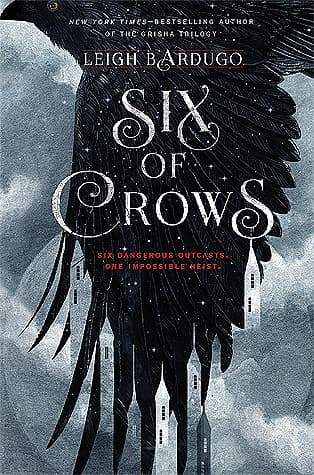
- Six of Crows
Leigh Bardugo
4.4 (316k) average on GoodreadsFantasyBardugo's duology, while featuring morally grey characters and heists, maintains a sense of camaraderie and eventual triumph for its protagonists. The Last Four Things, in contrast, is far more nihilistic and focused on individual suffering and systemic corruption. Bardugo's world, though dangerous, offers moments of levity and strong interpersonal bonds, which are largely absent or severely tested in Hoffman's bleak narrative.
- Harry Potter and the Sorcerer's Stone
J.K. Rowling
4.5 (7M) average on GoodreadsFantasyRescued from a miserable life under the stairs, an orphaned boy discovers he's a wizard destined for a magical school, where he uncovers a dangerous secret tied to the dark wizard who murdered his parents.


Enjoyed the summary?
A summary gives you the shape of the book. The book itself has the detail, the examples and the voice.
Find The Last Four Things on AmazonAs an Amazon Associate, BookBrief earns from qualifying purchases. How we're funded