
Synopsis
Covers the whole plot, including the ending.
- Difficulty
- Easy
- Pacing
- Moderate
- Mood
- Adventurous, Poignant, Hopeful, Historical
- Read it if
- You enjoy historical fiction for young readers, stories about the bond between humans and animals, and tales set in the Scottish Highlands.
- Skip it if
- You prefer complex adult narratives, or are sensitive to themes of war and separation, even when presented gently for a younger audience.
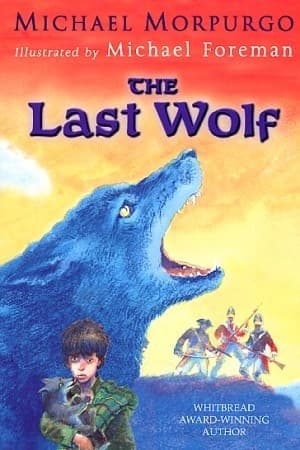
The Last Wolf Plot Summary
Covers the whole plot, including the ending.
The Massacre and the Orphaned Boy
The story begins in the Scottish Highlands in 1746, during the chaos after the Battle of Culloden. Ten-year-old Robbie McLeod lives a simple life with his family. One day, while he and his father are hunting, they see Redcoat soldiers, led by a cruel Captain, kill everyone in their village, including Robbie's mother and baby sister. Robbie's father, wounded, tells Robbie to run and find his uncle in the north before he dies. Robbie, alone and traumatized, starts a dangerous journey with only a small pouch and the weight of his family's destruction.
A Chance Encounter and a New Companion
As Robbie travels the desolate Scottish land, he finds a den where a mother wolf and her cubs are dead, likely from the same Redcoat violence or starvation. To his surprise, one small, whimpering cub is alive. Feeling a deep connection to the orphaned creature, like his own loss, Robbie decides to take the cub with him. He names the wolf 'Mog.' They begin their journey together, sharing Robbie's meager food and giving each other much-needed companionship in a hostile world. This bond becomes the core of Robbie's survival.
Life on the Run and Growing Up
Robbie and Mog spend months on the run, facing harsh weather, hunger, and the constant threat of Redcoat patrols and other dangers. Robbie learns to hunt and forage, guided by Mog's instincts. Mog, in turn, grows from a cub into a strong wolf, always loyal and protective of Robbie. Their life is nomadic and dangerous, forcing Robbie to grow up fast. They develop a silent understanding, relying on each other for survival and comfort as they travel north, still hoping to find Robbie's uncle.
Encountering the English Settlers
During their travels, Robbie and Mog meet English settlers who have moved into the Highlands, bringing their fears and biases. The settlers see Mog and immediately view him as a dangerous threat to their animals and children. They organize a hunt to kill the wolf. Robbie, desperate to protect his friend, cleverly creates a distraction, leading the hunters away from Mog. They escape, but the event shows the growing danger Mog faces from people and the deep-seated fear of wolves among the new inhabitants of the land.
Finding Refuge with Uncle Hamish
After years of wandering, Robbie, now a teenager, and a full-grown Mog finally find his Uncle Hamish's remote croft in the far north. Hamish, a gruff but kind man, is surprised but happy to see his nephew alive. He welcomes Robbie, but Mog's presence causes initial concern due to the wolf's size and wild nature. However, seeing Robbie and Mog's deep bond, and Mog's gentle nature toward Robbie, Hamish reluctantly allows the wolf to stay, understanding that Mog is a part of Robbie's life and survival.
A New Life and Growing Conflicts
Robbie starts to adjust to life on the croft, helping Uncle Hamish with the sheep and daily chores. He finds a sense of peace and stability he hasn't known since childhood. Mog stays close, often waiting for Robbie outside the croft or joining him on tasks. However, as Mog becomes bolder and sometimes frightens the sheep or is seen by other villagers, the tension around his presence grows. The local community, wary of wolves and their perceived threat to animals, begins to voice concerns, putting pressure on Hamish and Robbie.
The Threat to Mog
The villagers' fear of Mog increases after sheep disappearances and sightings of the wolf near their homes, even though Mog has never directly harmed their flocks. They form a hunting party, determined to kill Mog. Uncle Hamish tries to defend Robbie and Mog, but the villagers are set on their plan. Robbie is heartbroken, realizing that Mog's wild nature and the villagers' fear mean Mog can never truly be safe living among humans. He knows he must make a difficult choice to protect his friend.
The Farewell
With a heavy heart, Robbie decides that Mog must return to the wild, where he belongs and can live free from human harm. He takes Mog deep into the mountains, to a secluded, wild valley where he believes Mog can thrive. Their journey is silent and filled with unspoken sadness. Robbie spends one last night with Mog, cherishing their bond. In the morning, with tears in his eyes, he says his final goodbye, leaving Mog with a piece of meat before turning back toward the croft. His heart aches with the loss but also with hope for Mog's freedom.
Mog's New Beginning
The story shifts to Mog's perspective, showing his initial confusion and loneliness after Robbie leaves. However, his instincts soon take over. He explores his new territory, hunts successfully, and eventually meets another lone wolf. They bond, form a pack, and have cubs, starting a new line in the Scottish wilderness. Mog, the last wolf of his kind known to Robbie, becomes a father to a new wild population, fulfilling his natural destiny and ensuring his species continues in the Highlands.
Robbie's Enduring Memory
Robbie lives out his life on the croft, eventually taking over from Uncle Hamish. He marries and has children, building a peaceful existence. Yet, he never forgets Mog. He often visits the wild valley where he left his friend, sometimes seeing wolves in the distance — perhaps Mog's descendants. He tells his children and grandchildren stories of Mog, ensuring the wolf's memory and the wild spirit of the Highlands live on through generations. Robbie understands that true love sometimes means letting go, allowing those you care for to find their true home and purpose.
Principal Figures
Robbie McLeod
Protagonist
An orphaned Highland boy who forms an unbreakable bond with a wolf.
Robbie begins as a carefree ten-year-old boy whose world is shattered by the Redcoat massacre. He is resilient, resourceful, and deeply compassionate, especially towards Mog. His journey forces him to mature quickly, learning to survive in a harsh environment. He is driven by a deep sense of loyalty and a longing for belonging, which he initially finds in Mog and later with his uncle and his own family. He embodies the spirit of survival and the enduring connection between humans and nature.
Relationships: Mog (deep, symbiotic friendship and companionship); Robbie's Father (loving, protective, teaches survival skills); Robbie's Mother and Sister (cherished family, victims of tragedy); Uncle Hamish (gruff but caring guardian, provides a home)
Mog
Supporting Character
A wolf cub orphaned and raised by Robbie, representing the wild spirit of Scotland.
Mog is a wolf, initially a vulnerable cub, who grows into a powerful and intelligent animal. He is fiercely loyal to Robbie, acting as his protector, companion, and guide in the wilderness. Mog embodies the untamed beauty and ancient spirit of the Scottish Highlands. He is driven by instinct, but also capable of deep affection and understanding. His presence highlights the conflict between the wild and encroaching human civilization.
Relationships: Robbie McLeod (deep, symbiotic friendship and companionship)
Uncle Hamish
Supporting Character
Robbie's gruff but kind uncle who provides refuge.
Uncle Hamish is a crofter living in the remote north of Scotland. He is initially wary of Mog but accepts him due to Robbie's unwavering bond. He represents a grounded, traditional way of life in the Highlands, trying to protect his family and community. He is practical and resilient, offering Robbie a much-needed sense of stability and belonging after years of wandering. His character shows the human capacity for compassion even in the face of fear and tradition.
Relationships: Robbie McLeod (guardian and provider of a home)
The Redcoat Captain
Antagonist (implied)
A cruel English officer responsible for the massacre of Robbie's village.
The Captain is a symbol of the brutal oppression faced by the Scottish Highlanders after Culloden. He is depicted as merciless and unfeeling, responsible for the initial tragedy that orphans Robbie. He represents the destructive force of war and the disregard for human life by the conquering army. While not a consistently present character, his actions set the entire plot in motion and serve as a powerful catalyst for Robbie's journey.
Robbie's Father
Supporting Character (brief)
Robbie's loving father who teaches him survival skills.
Robbie's father is a strong and protective Highlander who is killed early in the story. He instills in Robbie the values of resilience and resourcefulness, and his final instructions guide Robbie's initial journey. Though his presence is brief, his memory profoundly influences Robbie's character and choices throughout the book. He represents the lost past and the traditional Highland way of life.
Relationships: Robbie McLeod (loving father, mentor)
Local Villagers/Farmers
Mentioned/Antagonistic Force
The community that fears Mog and demands his removal.
The villagers represent the collective fear and prejudice against wolves, driven by practical concerns for their livestock and the safety of their families. They embody the conflict between human settlement and wild nature. While not individually named, their collective pressure and demand for Mog's death force Robbie to make his ultimate decision. They highlight the societal pressures that wild animals face when encroaching on human territories.
Relationships: Mog (perceived threat, object of fear); Robbie McLeod (neighbor, but his bond with Mog causes conflict)
Themes & Insights
The Bond Between Humans and Animals
The main theme explores the deep and unique connection that can form between a person and an animal, especially during hard times. Robbie and Mog's relationship is more than just friendship; they are family, relying on each other for survival, comfort, and protection. This bond is formed through loss and kept alive through years of hardship. It shows the emotional depth and understanding possible between species, suggesting that love and loyalty have no limits. The scene where Robbie first finds Mog and takes him in, both orphans, clearly establishes this theme.
“He was an orphan too, just like me. And I knew, knew in my heart, that we belonged together.”
Loss, Grief, and Resilience
The story begins with great loss — Robbie's entire family is killed, and Mog loses his wolf family. Both characters experience deep sadness. The story then follows their journey of coping with this loss, not by forgetting, but by finding strength and purpose in their shared survival. Robbie's resilience is clear in his ability to endure hardship, learn new skills, and continue his journey despite great trauma. His lasting memory of his family, combined with his will to live, shows the human spirit's ability to overcome tragedy. The initial massacre scene and Robbie's flight are strong examples.
“I had nothing left to lose, it seemed, except my life. But I wanted to live. I had to live.”
The Wild vs. Civilization
This theme explores the natural conflict between the wild and the growing human world. Mog represents Scotland's wild spirit, a creature of instinct and freedom, while Robbie's journey eventually leads him back toward human settlement and the desire for a stable home. The fear and prejudice of the villagers toward Mog highlight how wild animals and human society can clash, especially when resources are competed for. The story suggests that the wild has its own rightful place, separate from human control, and that sometimes, love means letting go to protect that wildness. The conflict with the English settlers and later the villagers clearly shows this.
“He was a wolf, after all, and the Highlands were his home. Not a croft, not a village.”
Belonging and Home
Robbie's journey is a search for home and a sense of belonging after being violently uprooted. He finds a temporary 'home' in his relationship with Mog, in their shared travels, and eventually with Uncle Hamish. However, the story subtly explores different kinds of home: a physical place, a bond with another living creature, and ultimately, a spiritual connection to one's roots and the land. Mog's 'home' is naturally the wild, and Robbie's ultimate act of love is to ensure Mog can return to his true home. Robbie eventually builds his own human home, but carries Mog's wild spirit within him. Arriving at Uncle Hamish's croft is a significant point in this search.
“A home. A real home, after all these years. And yet, I knew, Mog could never truly share it.”
Plot Devices & Literary Techniques
Foil Characters
Mog serves as a foil to Robbie, highlighting their differences and similarities.
Mog, the wolf, acts as a foil to Robbie. While both are orphans and survivors, Mog embodies raw, untamed nature and instinct, whereas Robbie represents humanity's capacity for complex emotions, memory, and the desire for social connection. Their differences highlight their shared journey and the unique nature of their bond. Mog's wildness ultimately forces Robbie to confront the limits of their shared life, leading to the selfless act of release, which defines Robbie's maturity.
Symbolism of the Wolf
The wolf symbolizes the wild, untamed spirit of Scotland and its vanishing past.
Mog, as 'The Last Wolf,' symbolizes not only the literal species but also the wild, untamed spirit of the Scottish Highlands that was being systematically suppressed by the English after the Jacobite rebellions. His existence represents a connection to an ancient, free past that is slowly being eroded by human settlement and 'civilization.' His survival and eventual return to the wild, finding a mate, offers a hopeful symbol of the enduring power of nature and the possibility of resurgence.
Coming-of-Age Narrative
Robbie's journey details his growth from a boy to a young man.
The entire story functions as a coming-of-age narrative for Robbie. He begins as an innocent child, forced into a brutal reality. His journey with Mog, the constant need for survival, and the difficult decisions he faces, all contribute to his rapid maturation. The ultimate act of letting Mog go signifies his transition from boyhood dependence to a selfless, mature understanding of love and responsibility. His eventual establishment of his own family reinforces this theme of growth and finding his place in the world.
Foreshadowing
Early events hint at the inevitable separation of Robbie and Mog.
Subtle instances of foreshadowing, such as the encounters with English settlers who fear wolves, or the increasing tension from villagers as Mog grows, hint at the eventual necessity of Robbie and Mog's separation. These moments build a sense of impending conflict, making the final decision both heartbreaking and understandable. The incompatibility of Mog's wild nature with human society is established early, preparing the reader for the inevitable parting.
The Last Wolf Quotes
“When you have nothing left to lose, you have everything to gain.”
“The forest was our friend, our protector, our provider. And sometimes, our tomb.”
“Even in the darkest times, there are flickers of light, if you only know where to look.”
“A wolf does not choose its path, it is born to it. Just like some of us.”
“Silence can be a weapon, or a shield. We learned to use both.”
“The past is never truly gone, it just waits for you to remember it.”
“Sometimes the greatest courage is simply to keep going, even when you want to stop.”
“We were not just fighting for ourselves, but for the echoes of all those who came before us, and all those who would come after.”
“To be truly free, you must first be free in your mind.”
“The hardest part was not the hunger, or the cold, but the constant fear that gnawed at your soul.”
“A promise made in the dark is still a promise, and sometimes, it's the only thing that keeps you alive.”
“The mountains listened to our secrets, and kept them safe.”
“We were all just trying to survive, to find a way back to who we were, or who we hoped to be.”
“Sometimes, a small act of kindness can be a revolution in itself.”
Quiz
10 questions on the plot and the characters. Each answer comes with a short explanation.
Question 1
What historical period does 'The Last Wolf' primarily take place in?
- The English Civil War
- The Jacobite Rising (time of Bonnie Prince Charlie)
- The Napoleonic Wars
- World War I
Show answer
B. The Jacobite Rising (time of Bonnie Prince Charlie) The book's description explicitly states it is set 'in the time of Bonnie Prince Charlie', which refers to the Jacobite Rising.
Question 2
Who is the main human protagonist of 'The Last Wolf'?
- Michael Foreman
- Bonnie Prince Charlie
- Robbie McLeod
- The Redcoat Captain
Show answer
C. Robbie McLeod The synopsis introduces the main character as 'Robbie McLeod', who is orphaned along with the wolf cub.
Question 3
What significant event leads to Robbie and the wolf cub both becoming orphaned?
- A natural disaster like a flood
- An attack by English Redcoats on their village/den
- A disease that swept through the land
- A hunting accident
Show answer
B. An attack by English Redcoats on their village/den The story implies the 'vicious redcoats' are a central antagonistic force, and their actions are directly responsible for the initial tragedy that orphans both Robbie and the wolf cub.
Question 4
What is the primary theme explored in the relationship between Robbie and the wolf?
- The dangers of coexisting with wild animals
- The unbreakable bond of companionship and the eventual need for freedom/natural belonging
- The struggle for power between humans and nature
- The importance of domesticating wild animals
Show answer
B. The unbreakable bond of companionship and the eventual need for freedom/natural belonging The synopsis highlights their 'companionship' and Robbie's eventual realization that 'the wolf must find his own natural home too', pointing to themes of bond and natural belonging.
Question 5
Who is credited with illustrating 'The Last Wolf'?
- Michael Morpurgo
- Michael Foreman
- Robbie McLeod
- Bonnie Prince Charlie
Show answer
B. Michael Foreman The book description explicitly states, 'This spellbinding tale is complemented perfectly by Michael Foreman's illustrations.'
Question 6
What does the phrase 'land of rebellious fighters and vicious redcoats' describe in the context of the story?
- The peaceful home Robbie eventually finds
- The setting of the story's climax
- Robbie and the wolf cub's birthplace, marked by conflict
- A mythical land from ancient legends
Show answer
C. Robbie and the wolf cub's birthplace, marked by conflict The synopsis states, 'Robbie McLeod and a wolf cub, both orphaned, venture far from their birthplace, a land of rebellious fighters and vicious redcoats,' indicating this describes their origin.
Question 7
Why does Robbie eventually realize the wolf must find its own natural home?
- The wolf became aggressive and dangerous.
- Robbie grew tired of caring for the wolf.
- Robbie found a peaceful place for himself and understood the wolf's wild nature required its own environment.
- The redcoats threatened to capture the wolf.
Show answer
C. Robbie found a peaceful place for himself and understood the wolf's wild nature required its own environment. The synopsis states, 'But when at last Robbie finds a place where he can peacefully make his home, he knows in his heart that the wolf must find his own natural home too,' linking Robbie's stability with the wolf's need for its wild habitat.
Question 8
What does the phrase 'There is little constancy in Robbie's adventurous life' imply about his journey?
- He prefers a life of constant excitement and change.
- His life is marked by instability, frequent movement, and lack of a stable home.
- He is constantly accompanied by many different friends.
- He rarely faces any challenges or dangers.
Show answer
B. His life is marked by instability, frequent movement, and lack of a stable home. 'Little constancy' means a lack of stability or permanence, indicating a life of constant change and movement, which is consistent with the journey of an orphaned character in a tumultuous historical period.
Question 9
How does the historical setting of the Jacobite Rising contribute to the challenges faced by Robbie and the wolf?
- It provides a backdrop of peace and prosperity, allowing them to thrive easily.
- The conflict between 'rebellious fighters' and 'vicious redcoats' creates a dangerous and unstable environment for their survival.
- It introduces them to royal figures who offer them protection.
- The historical period is irrelevant to their personal struggles.
Show answer
B. The conflict between 'rebellious fighters' and 'vicious redcoats' creates a dangerous and unstable environment for their survival. The mention of 'rebellious fighters and vicious redcoats' directly links the historical conflict to the danger and instability of their birthplace and subsequent journey, making the setting crucial to their challenges.
Question 10
What is the ultimate decision Robbie makes regarding his wolf companion?
- To keep the wolf as a permanent pet in his new home.
- To sell the wolf for money to secure his own future.
- To release the wolf so it can find its own natural habitat.
- To train the wolf to fight against the redcoats.
Show answer
C. To release the wolf so it can find its own natural habitat. The synopsis clearly states, 'when at last Robbie finds a place where he can peacefully make his home, he knows in his heart that the wolf must find his own natural home too,' implying a decision to release it.
The Last Wolf FAQ
What is the primary setting and historical context of 'The Last Wolf'?
'The Last Wolf' is set in the Scottish Highlands during the tumultuous period of the Jacobite Rising, specifically around the time of Bonnie Prince Charlie's rebellion in the mid-18th century. The story unfolds against a backdrop of conflict between rebellious Highlanders and the British Redcoat soldiers.
Who are the two main protagonists of the story and how do they become connected?
The two main protagonists are Robbie McLeod, an orphaned young boy, and a wolf cub. They become connected early in the story when Robbie, also orphaned and displaced by the conflict, finds and adopts the equally vulnerable wolf cub, forming an unbreakable bond of companionship.
What kind of challenges do Robbie and the wolf face throughout their journey?
Robbie and the wolf face numerous challenges, including the constant threat from Redcoat soldiers, the harsh wilderness of the Scottish Highlands, hunger, and the need to constantly evade danger. Their journey is marked by displacement, loss, and the struggle for survival in a war-torn landscape.
How does the relationship between Robbie and the wolf evolve over time?
Their relationship evolves from one of mutual dependence and comfort to a deeper understanding of their differing natures. As Robbie grows and seeks a settled life, he realizes the wolf, now grown, needs its own wild home, leading to a poignant decision about their future.
What ultimately happens to Robbie and the wolf at the end of the story?
At the end of the story, Robbie finds a peaceful place where he can finally make a home for himself, implying a sense of belonging and stability. He then makes the difficult decision to release the wolf back into the wild, recognizing its true nature and need for its own natural habitat.
Are there any specific historical figures or events from the Jacobite Rising mentioned or alluded to?
While Bonnie Prince Charlie is mentioned in the synopsis as setting the time period, the story focuses more on the personal impact of the rebellion on ordinary people like Robbie rather than directly featuring historical figures. The conflict between 'rebellious fighters' and 'vicious redcoats' directly reflects the Jacobite Uprising.
What is the significance of Michael Foreman's illustrations to the narrative?
Michael Foreman's illustrations are described as 'complementing perfectly' the story, suggesting they are integral to conveying the dramatic and sweeping atmosphere of the Scottish Highlands and the emotional depth of Robbie's journey. They likely enhance the visual storytelling and mood.
Is there a symbolic meaning behind Robbie being an 'orphan' and the wolf cub also being 'orphaned'?
Yes, their shared orphaned status immediately creates a powerful bond of empathy and mutual vulnerability, symbolizing their shared displacement and loss caused by the human conflict. It highlights their common need for companionship and survival against overwhelming odds.
How does the setting of the Scottish Highlands contribute to the themes of the book?
The rugged and untamed Scottish Highlands serve as more than just a backdrop; they reinforce themes of survival, freedom, and the wildness inherent in both the landscape and the wolf. It also emphasizes the harsh realities and isolation faced by those displaced by war.
How does Robbie's experience of constant upheaval impact his psychological development?
Robbie's constant upheaval fosters resilience and adaptability but also likely instills a deep longing for stability and belonging. His primary emotional anchor becomes the wolf, shaping his capacity for loyalty and compassion despite his turbulent childhood.
What psychological needs does the wolf fulfill for Robbie during their journey?
The wolf fulfills Robbie's fundamental psychological needs for companionship, security, and unconditional affection in a world devoid of human connection. It provides comfort, a sense of purpose, and a living reminder of his own wild spirit and survival instinct.
How does the decision to release the wolf reflect Robbie's emotional maturity?
The decision to release the wolf demonstrates Robbie's emotional maturity by prioritizing the wolf's natural needs over his own desire for companionship. It signifies his understanding of true love and respect, recognizing that freedom is essential for the wolf's well-being, even if it means personal sacrifice.
What internal conflict might Robbie experience when contemplating letting the wolf go?
Robbie likely experiences a profound internal conflict between his deep emotional attachment and the rational understanding that the wolf belongs in the wild. He would grapple with feelings of loneliness, loss, and the pain of separation versus the conviction that he must do what is best for his beloved companion.
Could the wolf be interpreted as a symbol for something larger than just an animal companion?
Yes, the wolf can be interpreted as a symbol for the untamed spirit of the Highlands, the vanishing wildness in a changing world, or even Robbie's own wild, free spirit that he must eventually learn to integrate or let go of as he seeks a settled life. It embodies freedom and resilience.
Is the ending of the story, where the wolf is released, ultimately a happy or sad one?
The ending is bittersweet. While there is a sadness in the separation, it is ultimately a hopeful and mature resolution. Robbie achieves a sense of belonging, and the wolf finds its rightful place, suggesting a completion of their respective journeys, making it a nuanced and emotionally rich conclusion.
What message does the author convey about the relationship between humans and nature?
The author conveys a message about the deep, symbiotic bond between humans and nature, but also the importance of respecting nature's inherent wildness and autonomy. It suggests that true love sometimes means letting go and allowing nature to thrive in its own domain.
How does the theme of 'home' evolve for Robbie throughout the narrative?
Initially, 'home' for Robbie is embodied by the companionship of the wolf amidst their nomadic existence. As he matures, 'home' transforms from a transient state to a desire for a peaceful, settled place, representing a deeper longing for security and belonging beyond mere survival.
What is the significance of the title 'The Last Wolf'?
The title 'The Last Wolf' carries significant weight, suggesting the wolf is one of the final wild wolves in Scotland, symbolizing a vanishing era of untamed wilderness and perhaps the end of a certain way of life. It imbues the wolf with a poignant, almost legendary status.
About the author

Michael Morpurgo is a British author known for his children's fiction, often exploring themes of war and nature. His notable works include "War Horse," "Private Peaceful," "The Butterfly Lion," "An Elephant in the Garden," "The Amazing Story of Adolphus Tips," and "Born to Run." Morpurgo's storytelling often combines historical events with imaginative narratives.
Similar books
- War Horse
Michael Morpurgo
4.1 (42k) average on GoodreadsChildren'sShares a similar historical setting (though different conflict) and focuses on the deep bond between a human and an animal.
- White Fang
Jack London
4.0 (154k) average on GoodreadsChildren'sWhile both explore human-animal bonds and survival, The Last Wolf focuses more on the emotional development of the human child alongside the animal, prioritizing empathetic connection over the animal's raw instinctual perspective, which is more central to London's work.
- Island of the Blue Dolphins
Scott O'Dell
3.8 (292k) average on GoodreadsChildren'sThe Last Wolf is less rich in historical and cultural detail compared to O'Dell's work, which integrates indigenous perspectives and environmental nuances with greater depth. While both feature solitary protagonists and a strong connection to nature, O'Dell offers a more complex ecological and cultural context.
- Harry Potter and the Sorcerer's Stone
J.K. Rowling
4.5 (7M) average on GoodreadsFantasyRescued from a miserable life under the stairs, an orphaned boy discovers he's a wizard destined for a magical school, where he uncovers a dangerous secret tied to the dark wizard who murdered his parents.
- The Hobbit, or There and Back Again
J.R.R. Tolkien
4.3 (2.9M) average on GoodreadsFantasyA comfort-loving hobbit named Bilbo Baggins is whisked away by a mischievous wizard and a band of dwarves on an unexpected journey to reclaim stolen treasure from a fearsome dragon, discovering courage and a magical ring along the way.
- Harry Potter and the Goblet of Fire
J.K. Rowling
4.6 (2.6M) average on GoodreadsFantasyA bewildered Harry Potter, underage and thrust into a deadly Triwizard Tournament, must brave dragons, mermaids, and a resurgent dark magic to survive a year that will forever alter the wizarding world.





Enjoyed the summary?
A summary gives you the shape of the book. The book itself has the detail, the examples and the voice.
Find The Last Wolf on AmazonAs an Amazon Associate, BookBrief earns from qualifying purchases. How we're funded