
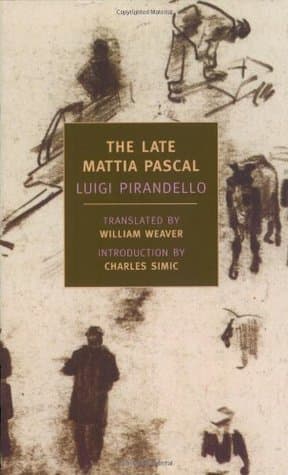
Synopsis
Covers the whole plot, including the ending.
- Difficulty
- Medium
- Pacing
- Moderate
- Mood
- Philosophical, Ironic, Melancholy, Absurdist
- Read it if
- You enjoy philosophical explorations of identity, freedom, and the constraints of societal roles, presented with a dark, ironic humor.
- Skip it if
- You prefer fast-paced plots with clear resolutions and optimistic themes.
The Late Mattia Pascal Plot Summary
Covers the whole plot, including the ending.
A Life of Drudgery in Miragno
Mattia Pascal, a librarian in his hometown of Miragno, begins to tell his unusual story. He describes his childhood with his loving mother and a dishonest administrator, Berto Papiano, who wasted their inheritance. After some bad luck, including losing his family's remaining property, Mattia quickly seduces Romilda Pescatore, his landlady Marianna Dondi's niece. This leads to a forced marriage, which quickly becomes a life of domestic unhappiness, controlled by his difficult wife and demanding mother-in-law. Mattia feels trapped and completely stifled by his life in Miragno, wanting to get away.
The Escape and the News
Overwhelmed by his suffocating home life and his infant daughter's recent death, Mattia reaches a breaking point. One night, after a particularly bad argument, he walks out of his house and leaves Miragno without telling anyone. He travels to Nice, then Monte Carlo, where he has amazing luck at the casino, winning a lot of money. On his way back to Miragno, planning to confront his family and take back his life with his new money, he reads a newspaper article about a drowned man found in the mill stream near his hometown, identified by his family as Mattia Pascal.
The Birth of Adriano Meis
When he reads the news of his own death, Mattia is first shocked but then quickly sees the huge chance it offers. He views it as freedom from his old, unhappy life. He decides to fully accept this new reality, leaving his past identity behind. He travels to Rome, changes his appearance by shaving his beard and cutting his hair, and carefully creates a new person: Adriano Meis. He invents a background, a job, and a past for Adriano, believing he can now live a truly free life, making different choices than Mattia Pascal.
The Freedom of Adriano Meis
As Adriano Meis, Mattia travels widely, enjoying the first thrill of being unknown and free. He finds he can watch life from a distance, without social duties or expectations. However, this freedom soon becomes a problem. He discovers that without a legal identity, he cannot truly participate in society. He cannot own property, marry, vote, or even report a crime without revealing his deception. He is a ghost, an observer, always on the outside, realizing that true freedom needs a recognized identity and the responsibilities that come with it. His new life, while free from the old burdens, is just as unbearable in its own way.
Life in Rome and the Love for Adriana
Adriano Meis eventually settles in Rome, renting a room in the house of Anselmo Paleari, an unusual philosopher interested in 'the squint of the spirit' and the illusion of reality. He finds a quiet sense there, watching the lives of those around him. He grows very fond of Paleari's gentle and sad daughter, Adriana. He falls in love with her, and she loves him back, offering him a hint of real happiness and connection. However, his made-up identity stops him from having a relationship or marriage with her, as he cannot legally exist or commit to anything.
The Theft and the Impasse
One evening, Adriano's money is stolen by Papiano, the brother of Adriana's suitor, who also lives in the house. This event clearly shows Adriano's difficult situation. He cannot report the theft to the police because, as Adriano Meis, he does not legally exist. He has no identification, no proof of who he is, and no legal standing to press charges. This event highlights the deep limits of his chosen freedom and the complete impossibility of seeking justice or protection without a recognized identity. He feels utterly powerless and unseen.
The Second 'Death' of Adriano Meis
The theft and his inability to act on it, along with his love for Adriana that cannot be, push Adriano Meis to a new crisis. He understands that his life as Adriano is empty, without real involvement or a future. He cannot marry Adriana, cannot own property, cannot even defend himself. He realizes he has simply traded one prison for another. He plans to 'kill off' Adriano Meis, leaving his glasses, hat, and a suicide note by a bridge, making it seem like Adriano has drowned.
The Return to Miragno
After 'killing' Adriano Meis, Mattia Pascal returns to Miragno, hoping to get back his old identity and life. He expects to find his wife, Romilda, and his mother, perhaps even his old job. However, upon his arrival, he finds much has changed. His mother has died, and his wife, Romilda, has remarried his friend Pomino and has a child with him. His old job at the library has been filled. He is a ghost in his own former life, an unwelcome visitor in a world that has moved on without him, having mourned him and then forgotten him.
The Ghost of Mattia Pascal
Mattia confronts his former wife and friend, but his attempts to reclaim his identity are met with confusion, disbelief, and anger. Legally, he is still dead. His wife and Pomino are now a family, and his return threatens their happiness and legitimacy. Mattia realizes he cannot force the world to recognize him. He is a man without an identity, unable to be Mattia Pascal, and unable to be Adriano Meis. He is forced to live as a 'late' Mattia Pascal, a mere shadow, a ghost watching his own former life from the side, forever outside the flow of existence.
The Perpetual Outsider
Mattia settles into a new routine, living as a permanent outsider in Miragno. He occasionally visits the graves of his mother and the man mistakenly buried as him. He continues to visit the library, where he watches his former life from a distance. He accepts that he can no longer truly take part in society. He is a man who has died twice, a living ghost, always thinking about identity, freedom, and the social rules that define human life. His story shows that truly escaping oneself or the need for social recognition is impossible.
The Late Mattia Pascal Characters
Mattia Pascal / Adriano Meis
Protagonist
A man who 'dies' twice and attempts to reinvent himself, only to become a perpetual outsider.
Mattia Pascal is a provincial man stifled by a miserable marriage and a mundane existence. He is initially weak-willed and passive, allowing others to dictate his life. His 'death' provides him with an opportunity for radical self-reinvention as Adriano Meis. As Adriano, he is more contemplative and analytical, but also naive about the practicalities of living without a legal identity. He longs for freedom and authenticity but eventually realizes the impossibility of achieving them outside of societal recognition.
Relationships: Romilda Pescatore (Wife, source of misery); Marianna Dondi (Widow Pescatore) (Overbearing mother-in-law); Adriana Paleari (Love interest as Adriano Meis); Anselmo Paleari (Landlord and philosophical mentor as Adriano Meis); Pomino (Childhood friend, later Romilda's second husband)
Romilda Pescatore
Supporting
Mattia's shrewish wife, who later remarries.
Romilda is portrayed as Mattia Pascal's demanding and unloving wife. She is a central figure in his initial unhappiness and his motivation to escape Miragno. After Mattia is declared dead, she moves on with her life, marrying Pomino and starting a new family. Her practical and somewhat harsh nature makes her unable to comprehend Mattia's complex identity crisis upon his return.
Relationships: Mattia Pascal (First husband); Marianna Dondi (Widow Pescatore) (Aunt); Pomino (Second husband)
Marianna Dondi (Widow Pescatore)
Supporting
Mattia's overbearing mother-in-law.
The Widow Pescatore is Mattia's formidable and perpetually complaining mother-in-law. She is a constant source of friction and misery in Mattia's household, always siding with Romilda and making Mattia's life unbearable. She embodies the suffocating domesticity and provincial gossip that Mattia desperately tries to escape.
Relationships: Mattia Pascal (Son-in-law); Romilda Pescatore (Niece)
Anselmo Paleari
Supporting
Adriano Meis's eccentric Roman landlord and philosopher.
Anselmo Paleari is an old, philosophical man who rents a room to Adriano Meis in Rome. He is deeply interested in metaphysical questions, particularly the nature of reality, identity, and 'the squint of the spirit' – the idea that our perception of reality is inherently flawed and subjective. His philosophical musings often parallel Mattia's own existential crisis, providing a sounding board for the novel's themes, though he remains unaware of Adriano's true identity.
Relationships: Adriano Meis (Mattia Pascal) (Tenant); Adriana Paleari (Daughter)
Adriana Paleari
Supporting
Anselmo Paleari's gentle daughter, whom Adriano Meis falls in love with.
Adriana is the kind and melancholic daughter of Anselmo Paleari. She provides Adriano Meis with a sense of warmth, connection, and the possibility of love and a normal life. Her gentle nature and quiet suffering (due to her brother's unsavory actions) draw Mattia to her, and she reciprocates his affection. She represents the human connection and conventional happiness that Adriano is ultimately denied due to his false identity.
Relationships: Adriano Meis (Mattia Pascal) (Love interest); Anselmo Paleari (Father); Terenzio Papiano (Brother-in-law (and former suitor))
Terenzio Papiano
Antagonist/Supporting
Adriana's brother-in-law, a dishonest and manipulative character.
Terenzio Papiano is a manipulative and dishonest individual who lives with the Paleari family. He is married to Anselmo's other daughter, but is also a suitor for Adriana's hand and is involved in shady dealings. He steals Adriano Meis's money, highlighting Adriano's vulnerability and lack of legal standing. He represents the real-world dangers and moral ambiguities that Adriano, without an identity, is powerless to confront.
Relationships: Adriana Paleari (Brother-in-law, suitor); Anselmo Paleari (Son-in-law); Adriano Meis (Mattia Pascal) (Victim of his theft)
Berto Papiano
Mentioned
The administrator who squandered Mattia's family inheritance.
Berto Papiano is the unscrupulous administrator who mismanages and ultimately squanders the Pascal family's inheritance. His actions contribute significantly to Mattia's early misfortunes and the financial struggles that plague him in Miragno. He is a symbol of the initial injustices and external forces that shape Mattia's unhappy early life.
Relationships: Mattia Pascal (Administrator of family assets)
Pomino
Supporting
Mattia's childhood friend who marries Romilda after Mattia's 'death'.
Pomino is Mattia's childhood friend. He is generally kind but somewhat weak-willed. After Mattia's supposed death, he marries Romilda and starts a family with her, taking on the life Mattia abandoned. His transformation from friend to Mattia's replacement underscores the finality of Mattia's 'death' and the impossibility of reclaiming his past.
Relationships: Mattia Pascal (Childhood friend); Romilda Pescatore (Husband)
The Late Mattia Pascal Themes
Identity and Self-Reinvention
The novel looks closely at the nature of identity, asking if it is something we are born with or something society creates. Mattia Pascal's attempt to shed his old self and become Adriano Meis shows how limited such a change can be. He finds that simply changing a name and appearance does not bring true freedom, as identity is tied to social recognition, legal status, and the relationships we form. Adriano's lack of a past makes him a ghost, unable to truly exist or participate in the world, showing that identity is not just what one chooses to be, but what society acknowledges.
“The law of the world is that you must have an identity; you must be someone. If you are no one, you are nothing.”
Freedom vs. Constraint
Pirandello explores the conflicting nature of freedom. Mattia first sees his 'death' as the ultimate release from his unhappy life in Miragno. However, his new life as Adriano Meis, free from social duties and a past, quickly becomes a different kind of prison. He finds himself unable to interact with society, form lasting relationships, or even seek justice. This shows that absolute freedom, without social ties and legal recognition, leads to loneliness and helplessness. It proves that true freedom often needs a balance with certain social rules and responsibilities.
“What freedom did I have? The freedom of the dead, of those who are nothing.”
The Illusion of Reality and Subjectivity
Through Anselmo Paleari's philosophical thoughts and Mattia's own experiences, the novel explores the idea that reality is not objective but a personal creation. Paleari's idea of 'the squint of the spirit' suggests that human perception is naturally flawed, affecting how we see ourselves and the world. Mattia's two 'deaths' and his life as a 'late' Mattia Pascal challenge the fixed nature of reality, showing how personal and social stories can create or erase a person's existence. The novel suggests that our understanding of truth and identity is often an illusion, shaped by viewpoint and social agreement.
“We are puppets, and the strings are pulled by an invisible hand. But we believe we are free.”
Alienation and Isolation
A constant theme is the deep sense of alienation and loneliness Mattia Pascal feels. In Miragno, he feels separate from his own life and family. As Adriano Meis, his lack of a legal identity and past forces him into a state of constant detachment, an observer unable to fully take part in human connection or social structures. When he returns to Miragno, he is separate from his former life, which has moved on without him. He becomes a 'living ghost,' an outsider always watching, showing the extreme loneliness of a man who has lost his place in the world.
“I was a man who had died twice, and who, therefore, could no longer live.”
Plot Devices & Literary Techniques
The Mistaken Identity
A drowned corpse is misidentified as Mattia Pascal, triggering his new life.
The discovery of a drowned man, mistakenly identified as Mattia Pascal, serves as the pivotal plot device. This error provides Mattia with the unique opportunity to escape his old life and create a new identity. It is the catalyst for the entire narrative, allowing him to explore the existential questions of self and freedom. Without this mistaken identity, Mattia would never have embarked on his journey as Adriano Meis, and the novel's central conflict regarding the nature of identity would not arise.
The Double 'Death'
Mattia Pascal 'dies' twice, once literally (by mistake) and once symbolically.
Mattia's two 'deaths' are crucial to the narrative. The first, the mistaken identification of a corpse, liberates him from his past. The second, the staged suicide of Adriano Meis, is a symbolic act by Mattia to rid himself of the burdens of his false identity. This double death underscores the theme of identity's fluidity and its dependence on social recognition. It highlights that one cannot simply shed an identity without consequence, and that even a chosen identity can become a prison, necessitating its own 'death'.
First-Person Retrospective Narration
The story is told by Mattia Pascal looking back on his experiences.
The novel is narrated in the first person by Mattia Pascal, who recounts his story from his current state as a 'living ghost.' This retrospective narration allows for philosophical reflection and irony, as Mattia can comment on his past actions with the wisdom gained from his experiences. It also emphasizes his detachment from his own life, as he is literally narrating the events of a man who no longer exists in the eyes of the law, reinforcing his role as an observer and commentator on his own peculiar fate.
The Casino Win
Mattia's unexpected fortune at the casino provides the means for his reinvention.
Mattia's astonishing win at the Monte Carlo casino is a crucial plot device. It provides him with the financial means to escape his old life and establish himself as Adriano Meis. Without this sudden influx of wealth, his decision to embrace his 'death' and create a new identity would have been far more difficult, if not impossible. The win represents a stroke of arbitrary fate that empowers him to pursue his quest for freedom, setting the stage for his subsequent existential dilemmas.
The Late Mattia Pascal Quotes
“Life is a very sad piece of buffoonery, because we have in ourselves the need to deceive ourselves continuously.”
“The greatest punishment for a man who has no name is that he cannot even be angry.”
“But what kind of freedom is it to be free from everything, if one is also free from oneself?”
“One does not die only once, but many times, and always for something, for someone, for a dream.”
“To construct a new life on the ruins of the old, that is perhaps the greatest audacity.”
“Every truth is born of a lie, and every lie dies of a truth.”
“Happiness is not a thing, it is an idea, and as such, it can be approached, but never possessed.”
“What is the good of having a name if it means nothing to anyone?”
“The mirror is not merely an object; it is a question mark that one places before oneself.”
“We think we are free, but we are always prisoners of ourselves, of our past, of our name.”
“The past does not pass. It remains, like a shadow, clinging to our steps.”
“One day, when I am truly dead, someone will perhaps remember that I was alive.”
“And the greatest irony is that, having abandoned one life, I found myself with no life at all.”
“Our life is a perpetual comedy, and we are forced to play the part.”
Quiz
10 questions on the plot and the characters. Each answer comes with a short explanation.
Question 1
What is the initial event that leads Mattia Pascal to believe he has a chance to start a new life?
- He wins a large sum of money in a lottery.
- He successfully fakes his own death to escape debt.
- He discovers that he has been mistakenly declared dead.
- He receives a mysterious inheritance requiring him to change his identity.
Show answer
C. He discovers that he has been mistakenly declared dead. Mattia Pascal's opportunity for a new life arises when he reads in a newspaper that a body found has been identified as his, leading to him being declared dead.
Question 2
What is Mattia Pascal's primary motivation for attempting to live a new life under a different identity?
- To escape political persecution in his hometown.
- To find true love and start a family without his past interfering.
- To escape his current life of drudgery and perceived failures, and start over.
- To become a famous writer using a pseudonym.
Show answer
C. To escape his current life of drudgery and perceived failures, and start over. The synopsis states Mattia Pascal endures a life of drudgery and, upon being declared dead, realizes he has a chance to 'start over, to do it right this time.'
Question 3
What happens to Mattia Pascal's job and wife when he attempts to return to his original life?
- His job is waiting for him, and his wife welcomes him back.
- His job is gone, and his wife has remarried.
- He finds his job taken by a relative, but his wife is still single.
- Both his job and his wife have moved to a different town.
Show answer
B. His job is gone, and his wife has remarried. The summary clearly states, 'when he returns to the world he left behind, it's too late: his job is gone, his wife has remarried.'
Question 4
What is the central paradox Mattia Pascal faces after adopting a new identity and moving to a new city?
- He becomes wealthy but finds no joy in his riches.
- He gains freedom from his past but finds his new existence equally insufferable.
- He builds a new family but secretly misses his old one.
- He is constantly pursued by people from his past who recognize him.
Show answer
B. He gains freedom from his past but finds his new existence equally insufferable. The synopsis highlights this paradox: 'he moves to a new city, adopts a new name, and a new course of life—only to find that this new existence is as insufferable as the old one.'
Question 5
Which of the following best describes Mattia Pascal's ultimate fate, as described in the summary?
- He successfully reintegrates into society as his original self.
- He finds happiness and fulfillment in his new identity.
- He lives on as the ghost of the man he once was, unable to fully exist in either identity.
- He becomes a recluse, completely abandoning all social interaction.
Show answer
C. He lives on as the ghost of the man he once was, unable to fully exist in either identity. The summary concludes, 'Mattia Pascal's fate is to live on as the ghost of the man he once was,' emphasizing his inability to reclaim his past or fully inhabit his new identity.
Question 6
What literary characteristic is Luigi Pirandello noted for, according to the provided text?
- A master of historical fiction and epic narratives.
- An explorer of identity and its mysteries, and a connoisseur of black humor.
- A chronicler of working-class struggles and social realism.
- A pioneer of stream-of-consciousness narrative techniques.
Show answer
B. An explorer of identity and its mysteries, and a connoisseur of black humor. The text describes Pirandello as 'An explorer of identity and its mysteries, a connoisseur of black humor,' and 'among the most teasing and profound of modern masters.'
Question 7
What does Mattia Pascal's repeated dissatisfaction with both his original life and his new identity primarily suggest about the nature of identity, according to Pirandello's themes?
- That changing one's name and location is sufficient for a complete personal transformation.
- That external circumstances are entirely responsible for personal happiness or unhappiness.
- That identity is not merely a social construct but is deeply tied to one's internal self, which cannot be easily shed or remade.
- That true identity can only be found through spiritual enlightenment.
Show answer
C. That identity is not merely a social construct but is deeply tied to one's internal self, which cannot be easily shed or remade. The core of the novel, as suggested by the summary, is Mattia's failure to escape himself, even when given a new identity. This highlights the idea that identity is more profound than just a name or social role.
Question 8
The description of Mattia Pascal's existence after his return as a 'ghost of the man he once was' implies what about his social status and recognition?
- He is literally haunting his old house.
- He is physically visible but legally and socially non-existent in his former life.
- He has become a forgotten figure, ignored by everyone.
- He is living a secret life, known only to a select few.
Show answer
B. He is physically visible but legally and socially non-existent in his former life. The 'ghost' metaphor suggests he exists, but without the legal or social recognition of his former self. His wife has remarried, and his job is gone, meaning his place in society has been filled or erased, rendering him a non-entity in his past life.
Question 9
What role does the 'providential' discovery of his declared death play in Mattia Pascal's journey, beyond merely providing an opportunity?
- It proves that fate is always benevolent and offers second chances.
- It highlights the arbitrary and often absurd nature of official records and societal recognition.
- It suggests a divine intervention guiding his life's path.
- It demonstrates his cunning ability to manipulate circumstances.
Show answer
B. It highlights the arbitrary and often absurd nature of official records and societal recognition. The fact that his 'death' is a mistake, an administrative error, rather than a deliberate act by him, underscores the arbitrary nature of how society defines and records identity, a key Pirandellian theme.
Question 10
According to the provided text, who translated 'The Late Mattia Pascal' into English for this edition?
- Luigi Pirandello himself
- An anonymous literary collective
- William Weaver
- A different translator, not mentioned in the text
Show answer
C. William Weaver The last sentence of the summary explicitly states, 'The Late Mattia Pascal, here rendered into English by the outstanding translator William Weaver'.
The Late Mattia Pascal FAQ
What is the core premise of 'The Late Mattia Pascal'?
The novel follows Mattia Pascal, a man from a provincial town who escapes his miserable life after being mistakenly declared dead. He attempts to forge a new identity as Adriano Meis but ultimately finds this new existence equally unfulfilling, leading to a profound crisis of self.
Who are the key figures in Mattia Pascal's original life in Miragno?
In Miragno, Mattia is burdened by his wife Romilda, his mother-in-law Marianna Dondi, and his job as a librarian. His brother-in-law, Pomino, also plays a role in the initial events that lead to Mattia's departure.
How does Mattia Pascal discover he has been declared dead?
After losing money gambling in Monte Carlo, Mattia reads a newspaper article detailing the discovery of a body in a mill, which is misidentified as his own. This shocking news provides him with an unexpected opportunity to abandon his old life.
What name does Mattia Pascal adopt for his new identity, and where does he try to establish it?
Mattia Pascal reinvents himself as Adriano Meis and attempts to build a new life in Rome. He tries to enjoy freedom and anonymity, but soon discovers the limitations and isolation inherent in his chosen path.
What significant romantic relationship does Adriano Meis develop, and why does it fail?
As Adriano Meis, Mattia falls in love with Adriana Paleari, the daughter of his landlord. Their relationship is doomed because Adriano, lacking legal identity, cannot marry her or defend her honor, highlighting the profound practical implications of his 'death'.
What symbolic significance does the mill have in Mattia Pascal's story?
The mill is the site where the misidentified body is found, serving as the catalyst for Mattia's perceived death and subsequent rebirth. It symbolizes the grinding, inescapable nature of his old life and the arbitrary event that liberates him.
How does Pirandello use the concept of 'the mirror' throughout the novel?
Pirandello frequently uses mirrors to reflect Mattia's struggle with identity. As Adriano Meis, Mattia often avoids mirrors, as they show him a face that is both his own and not his own, a constant reminder of his fabricated existence and internal conflict.
What is the significance of the character Anselmo Paleari, Adriana's father?
Anselmo Paleari is a philosopher who discusses theories of identity, illusion, and the human condition, often echoing Pirandello's own philosophical concerns. His discussions provide a theoretical framework for Mattia's practical struggles with his multiple identities.
How does the 'stolen money' incident impact Adriano Meis's perception of his new life?
When money is stolen from his room, Adriano Meis is unable to report the crime to the police because he has no legal identity. This incident starkly reveals the severe limitations of his 'freedom' and his powerlessness in the real world, pushing him towards despair.
What is Mattia Pascal's primary psychological motivation for escaping his original life?
Mattia is driven by a profound sense of entrapment and suffocation in his marriage, family responsibilities, and dull job. His escape is an attempt to achieve absolute freedom and autonomy, believing a new identity will erase past burdens and allow for true self-realization.
How does Mattia's perception of freedom evolve throughout his time as Adriano Meis?
Initially, Mattia equates freedom with the absence of ties and responsibilities. However, he gradually realizes that this absolute freedom leads to profound isolation and powerlessness, as he cannot form genuine connections or participate legally in society, ultimately feeling more trapped than before.
Describe the psychological impact of Mattia's 'death' on his sense of self.
Mattia's 'death' shatters his original identity, leaving him in a liminal state. He struggles with derealization, feeling like a ghost, an observer rather than a participant, which leads to a profound existential crisis and a loss of any stable sense of who he is.
How does Mattia Pascal's relationship with Adriana Paleari highlight his psychological dilemma?
His love for Adriana reveals his deep human need for connection and belonging. However, his inability to commit or protect her due to his lack of legal identity intensifies his internal conflict, exposing the painful cost of his chosen freedom and emphasizing his psychological unmooring.
What is the ultimate irony of Mattia Pascal's return to Miragno?
The ultimate irony is that upon his return, he finds his wife Romilda has remarried his childhood friend Pomino and has a child. Mattia Pascal is now truly 'the late' Mattia Pascal, a ghost in his own former life, with no place to reclaim.
In what ways does the novel explore the theme of identity as a social construct?
The novel argues that identity is largely dependent on social recognition and legal documentation. Mattia's attempts to live outside these constructs as Adriano Meis demonstrate that without societal validation, an individual becomes a non-entity, unable to fully exist or interact.
How does Pirandello use humor, particularly black humor, in the novel?
Pirandello employs black humor to highlight the absurdity and tragicomic nature of Mattia's predicament. For instance, the initial misidentification of the body or Mattia's futile attempts to live a 'free' life are presented with a sardonic wit that underscores the existential angst.
What does Mattia Pascal's final state as 'the late Mattia Pascal' signify?
His final state signifies a complete dissolution of identity and an acceptance of his non-existence in the conventional world. He becomes a living ghost, a detached observer of life, embodying the Pirandellian theme that one cannot truly escape their 'form' or the roles society imposes.
Can 'The Late Mattia Pascal' be seen as a critique of modern society's emphasis on documentation and legal identity?
Yes, the novel strongly critiques how modern bureaucratic systems and legal frameworks define and constrain individual identity. Mattia's suffering as Adriano Meis directly results from his lack of official papers, suggesting that true freedom is impossible without societal recognition.
About the author
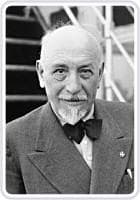
Luigi Pirandello was an Italian dramatist, novelist, poet, and short story writer whose greatest contributions were his plays. He was awarded the 1934 Nobel Prize in Literature for "his almost magical power to turn psychological analysis into good theatre." Pirandello's works include novels, hundreds of short stories, and about 40 plays, some of which are written in Sicilian. Pirandello's tragic farces are often seen as forerunners of the Theatre of the Absurd.
Similar books
- The Stranger
Albert Camus
4.1 (3k) average on GoodreadsFantasyExplores alienation and existential themes through an outsider's perspective.
- Notes from Underground
Fyodor Dostoevsky
4.2 (84k) average on GoodreadsPsychologyA character struggles with his place in society and the nature of freedom, often with an ironic and introspective tone.
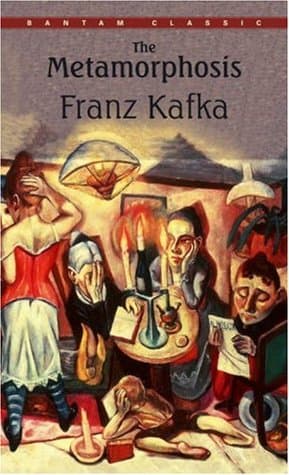
- The Metamorphosis
Franz Kafka
3.8 (643k) average on GoodreadsFantasyBoth deal with profound alienation and dehumanization. However, Pirandello's transformation is self-orchestrated and initially seen as liberation, while Kafka's is sudden, inexplicable, and immediately leads to complete otherness. Pirandello's tone is more satirical and melancholic, contrasted with Kafka's stark absurdity.
- Nineteen Eighty-Four
George Orwell
4.2 (5.5M) average on GoodreadsFictionWinston Smith dreams of truth and rebellion in a world where Big Brother watches all, but he confronts the terrifying power of a regime that controls not just actions, but thoughts.
- The Frozen River
Ariel Lawhon
4.4 (600k) average on GoodreadsFictionIn 1789 Maine, a heroic midwife's diary helps her expose a murder and get justice in a town that wants to silence her.
- A Man Called Ove
Fredrik Backman
4.4 (569k) average on GoodreadsFictionA stubborn widower, who lives by strict rules, finds his quiet world changed by a lively new family next door, making him face his past and find happiness in human connection.




Enjoyed the summary?
A summary gives you the shape of the book. The book itself has the detail, the examples and the voice.
Find The Late Mattia Pascal on AmazonAs an Amazon Associate, BookBrief earns from qualifying purchases. How we're funded