

Synopsis
Covers the whole plot, including the ending.
- Difficulty
- Medium
- Pacing
- Moderate
- Mood
- Intriguing, Suspenseful, Determined, Victorian
- Read it if
- You enjoy Victorian mysteries driven by strong female protagonists, legal intricacies, and psychological depth.
- Skip it if
- You prefer fast-paced thrillers or dislike detailed social commentary and legal procedural elements.
The Law and the Lady Plot Summary
Covers the whole plot, including the ending.
A Sudden Revelation
Valeria Brinton marries Eustace Macallan after a quick courtship. Their early marriage is happy until Valeria finds an old newspaper clipping about Eustace's past. The article says that three years earlier, Eustace was tried for poisoning his first wife, Agnes Macallan, in Scotland. The verdict was 'Not Proven,' meaning there was not enough evidence to convict or acquit him. This discovery shocks Valeria, as Eustace never mentioned this part of his life. She confronts Eustace, who, ashamed and afraid of her judgment, leaves for the continent, leaving Valeria heartbroken and determined to clear his name.
Valeria's Investigation Begins
Despite Eustace's departure and the public scandal, Valeria believes he is innocent. She talks to her family lawyer, Mr. Ayrton, who advises her against pursuing the matter, warning of social isolation and legal problems. Undeterred, Valeria begins her own investigation, starting at the Macallan family estate in Scotland, the scene of the alleged crime. She interviews former servants and local residents, trying to understand Agnes's death. Her first inquiries yield little new information, mostly confirming the known trial facts and the local opinion that Eustace was guilty, despite the 'Not Proven' verdict.
Meeting Miserrimus Dexter
Valeria's search leads her to Miserrimus Dexter, an eccentric invalid and a distant relative of the Macallan family. Dexter lives a reclusive life, confined to his bed by a mysterious illness, but has a sharp mind and a love for puzzles and crime. He is known for his unusual theories and knowledge of human nature. Valeria, hearing of his perspective, visits him, hoping he can offer a new view on Eustace's case. Dexter is interested by Valeria's belief in her husband's innocence and her courage. He agrees to help her, seeing the case as an intellectual challenge.
Dexter's Initial Analysis
Miserrimus Dexter, with Valeria's help, carefully reviews all trial transcripts, witness testimonies, and medical reports about Agnes Macallan's death. His analytical mind quickly finds inconsistencies and overlooked details that the original investigators and legal teams missed. He points out the unusual circumstances of Agnes's symptoms, the strange behavior of certain witnesses, and the lack of a clear motive for Eustace. Dexter suggests that the 'Not Proven' verdict, while legally inconclusive, psychologically condemned Eustace, and that the real perpetrator likely used the legal system's complexities and social biases.
The Enigmatic Mrs. Macallan
As Valeria looks into the Macallan family history, she learns more about Eustace's mother, Mrs. Macallan. Mrs. Macallan, a stern and controlling woman, had a tense relationship with her daughter-in-law, Agnes. She was protective of Eustace and disliked Agnes, whom she considered unsuitable. Valeria discovers that Mrs. Macallan was in the house when Agnes died and was a key prosecution witness, often making Eustace look bad. Dexter theorizes that Mrs. Macallan's personality and influence might have unintentionally (or even intentionally) swayed opinions during the initial investigation and trial.
The Role of the Companion, Miss Minerva
Valeria then focuses on Miss Minerva, Mrs. Macallan's long-time companion. Miss Minerva is quiet and subservient, often overshadowed by her employer. However, Valeria and Dexter begin to suspect Miss Minerva might know more than she said during the trial. They investigate her background and her relationship with both Mrs. Macallan and Agnes. They find that Miss Minerva was loyal to Mrs. Macallan and had a complicated, perhaps resentful, relationship with Agnes. Dexter suggests that Miss Minerva's meek manner could be a facade, hiding a deeper involvement in the tragic events.
The Poison and the Opportunity
Miserrimus Dexter carefully re-examines the evidence about the poison used to kill Agnes — a rare and strong substance. He considers how it could have been given without immediate detection and the chances various people in the household had. He theorizes that the poison was likely given in small, repeated doses, mimicking a natural illness, making it hard to trace. This method would require careful planning and ongoing access to Agnes, narrowing the suspects. Dexter also considers the psychological profiles of those present, looking for someone with the cunning and motive to commit such a subtle crime.
A Confession and a Revelation
Through questioning and psychological pressure from Miserrimus Dexter, Miss Minerva finally confesses to Agnes Macallan's murder. She reveals she poisoned Agnes out of loyalty to Mrs. Macallan, whom she believed Agnes was tormenting. Miss Minerva resented Agnes, seeing her as an outsider who threatened her secure position in the Macallan household. She planned the poisoning, giving small doses over time to make it look like a natural illness, thereby framing Eustace and keeping her place with Mrs. Macallan.
Eustace's Exoneration and Return
With Miss Minerva's confession and Dexter's detailed analysis, Valeria presents the new evidence to the authorities. The case is reopened, and the 'Not Proven' verdict against Eustace Macallan is overturned. The public, initially skeptical, accepts Miss Minerva's guilt. News of Eustace's exoneration reaches him on the continent, and he immediately returns to England. Overwhelmed with gratitude and love for Valeria, he is finally free from the suspicion that haunted him. Their reunion is emotional, marking the end of their separation and the restoration of their marriage.
Reconciliation and Future
With Eustace's name cleared, Valeria and Eustace begin to rebuild their lives. The ordeal has left its mark, but it has also created a strong bond between them. They have faced societal judgment, personal pain, and doubt, emerging stronger and more committed. While the past will always be remembered, they look forward to a future free from the shadow of the 'Not Proven' verdict. Miserrimus Dexter, having solved his most challenging case, returns to his reclusive life, satisfied with his intellectual victory and the justice he helped secure for Eustace and Valeria.
The Law and the Lady Characters
Valeria Brinton
Protagonist
A determined young woman who sets out to clear her husband's name.
Valeria is spirited, intelligent, and fiercely loyal. Despite the shocking revelation of her husband's past and the societal pressure to abandon him, she unwavering believes in Eustace's innocence. She possesses a strong moral compass and an impressive tenacity that drives her investigation. Her love for Eustace is her primary motivation, but she is also driven by a deep-seated desire for truth and justice. She is unconventional for her time, actively engaging in detective work rather than passively accepting her fate.
Relationships: Eustace Macallan (Husband, whom she loves deeply and seeks to exonerate.); Miserrimus Dexter (Intellectual partner and guide in her investigation.); Mr. Ayrton (Family lawyer, initially cautious but eventually supportive.)
Eustace Macallan
Protagonist
Valeria's husband, accused of murder and living under the cloud of a 'Not Proven' verdict.
Eustace is a sensitive and honorable man, deeply affected by the 'Not Proven' verdict that haunts his past. He is proud and easily shamed, leading him to conceal his history from Valeria and later to flee when confronted. He suffers from the psychological burden of being neither guilty nor innocent in the eyes of the law and society. Despite his initial weakness in leaving Valeria, his love for her is evident, and he yearns for his name to be cleared so he can return to her.
Relationships: Valeria Brinton (Wife, whom he loves but initially fails to confide in.); Agnes Macallan (First wife, whose murder he was accused of.); Mrs. Macallan (Dominant and critical mother.)
Miserrimus Dexter
Supporting
An eccentric invalid with a brilliant, analytical mind who aids Valeria.
Miserrimus Dexter is a reclusive, physically incapacitated man whose mind remains extraordinarily sharp and active. Confined to his bed, he channels his intellect into solving puzzles and mysteries. He is highly unconventional, with a dry wit and a unique perspective on human nature and crime. He sees Eustace's case not just as a quest for justice, but as an intriguing intellectual challenge. His role is primarily that of a brilliant armchair detective, guiding Valeria's investigation with his insights and deductions.
Relationships: Valeria Brinton (His intellectual partner and 'hands' in the investigation.); Mrs. Macallan (Distant relative, whom he observes with keen interest.)
Miss Minerva
Antagonist
Mrs. Macallan's quiet companion, who harbors a dark secret.
Miss Minerva appears initially as a meek, subservient, and seemingly harmless companion to Mrs. Macallan. She is quiet, observant, and outwardly devoted to her employer. However, beneath this unassuming exterior lies a deep-seated resentment, a twisted loyalty, and a calculating mind capable of murder. Her motive stems from a desire to secure her position and express her twisted devotion to Mrs. Macallan by eliminating Agnes, whom she perceived as a threat and a tormentor. She is a master of deception, maintaining her innocent facade for years.
Relationships: Mrs. Macallan (Employer, to whom she is fiercely and pathologically loyal.); Agnes Macallan (Victim, whom she resented and murdered.); Valeria Brinton (Investigator who uncovers her guilt.)
Mrs. Macallan
Supporting
Eustace's domineering and judgmental mother.
Mrs. Macallan is a formidable and overbearing matriarch, fiercely protective of her son, Eustace, yet also highly critical and controlling. She had a contentious relationship with her first daughter-in-law, Agnes, and her testimony during Eustace's trial inadvertently contributed to the cloud of suspicion surrounding him. She embodies the rigid social conventions and judgmental attitudes of the era, making her a formidable figure in Valeria's quest for truth. Her pride and stubbornness prevent her from seeing the truth about her son's innocence sooner.
Relationships: Eustace Macallan (Son, whom she loves possessively but judges harshly.); Agnes Macallan (Deceased daughter-in-law, whom she disliked intensely.); Miss Minerva (Her long-time companion and eventual murderer of Agnes.)
Agnes Macallan
Mentioned
Eustace's first wife, whose mysterious death sets the plot in motion.
Agnes Macallan is the victim whose poisoning murder is at the heart of the mystery. Though deceased, her character is revealed through the testimonies and recollections of others. She is portrayed as a somewhat delicate and perhaps temperamental woman, who struggled to fit into the Macallan household and had a strained relationship with her mother-in-law, Mrs. Macallan, and her companion, Miss Minerva. Her death is the catalyst for the entire plot, and her true character remains somewhat elusive, defined more by her tragic fate than her personality.
Relationships: Eustace Macallan (Husband, accused of her murder.); Mrs. Macallan (Mother-in-law, with whom she had a strained relationship.); Miss Minerva (Her murderer, disguised as a loyal companion.)
Mr. Ayrton
Supporting
Valeria's family lawyer, who initially advises caution.
Mr. Ayrton is a respectable and experienced family lawyer. He represents the voice of conventional wisdom and legal practicality. Initially, he advises Valeria against pursuing her investigation, warning her of the social consequences and the difficulty of overturning a 'Not Proven' verdict. However, he gradually comes to respect Valeria's determination and, once presented with concrete evidence, assists her in navigating the legal system. He is a pragmatic character, grounded in the realities of the law.
Relationships: Valeria Brinton (Client, whom he advises and eventually supports.)
The Law and the Lady Themes
The Nature of Justice and Legal Inadequacy
The novel examines the legal system's limits, especially through the 'Not Proven' verdict. This Scottish verdict leaves Eustace in legal limbo, neither condemned nor truly acquitted. It shows how legal technicalities can fail to deliver justice or peace of mind for the accused and society. The theme questions if legal truth always matches moral truth, and suggests that personal determination (like Valeria's) is sometimes needed to uncover the full story where the law falls short. Miserrimus Dexter's analytical approach shows a search for truth beyond legal precedent, aiming for a complete understanding of events.
“The Law, in its majestic impartiality, had found my husband neither innocent nor guilty. It had simply said: 'Not Proven.' And in that one phrase, it had condemned him more cruelly than a verdict of guilty could have done.”
Love, Loyalty, and Intuition
Valeria's love and loyalty to Eustace are the emotional core of the novel. Her intuition, more than concrete evidence, first convinces her of his innocence, even when he is ashamed and flees. This theme explores how marital devotion can overcome social judgment and legal uncertainty. Valeria's journey shows that love can drive truth-seeking, providing the strength to challenge established stories and overcome obstacles. Her belief in Eustace helps her persevere when others would give up.
“I knew him. I loved him. And I knew, with a certainty that defied all evidence, that he was innocent.”
Social Pressure and Reputation
The novel shows the social pressure and stigma of being accused of murder, even without a conviction. Eustace's 'Not Proven' verdict ruins his reputation, forcing him into exile and casting a shadow over his new marriage. Valeria, by standing by him and investigating, faces social rejection and disapproval, even from her own lawyer. This theme highlights the destructive power of gossip, suspicion, and public opinion, and how easily a person's life can be shattered by an unresolved accusation, regardless of legal innocence. It questions the fairness of a society that judges based on rumors and incomplete information.
“To be 'Not Proven' was to be eternally suspected, a pariah in the eyes of society, a name whispered with dread.”
The Unseen and the Obscure
A theme is that truth often hides in plain sight or in small details. Miserrimus Dexter, with his observation skills, excels at finding these hidden truths. The real murderer, Miss Minerva, is the least suspected character, operating in the shadows of her employer's home. The novel suggests that obvious explanations can mislead and that one must look past superficial appearances and conventional ideas to find the real answers. This is seen in the subtle poisoning method and the quiet nature of the culprit.
“The truth, my dear madam, is rarely found in the glare of the obvious. It lurks in the shadows, in the overlooked corners, in the very places no one thinks to look.”
Plot Devices & Literary Techniques
The 'Not Proven' Verdict
A unique Scottish legal verdict that leaves a lingering shadow of suspicion.
This is the central plot device, serving as the inciting incident and the primary obstacle for the protagonists. The 'Not Proven' verdict means the jury found insufficient evidence to either convict or acquit, leaving Eustace legally free but socially condemned. This ambiguity creates a compelling mystery and drives Valeria's quest for absolute truth. It heightens the stakes, as Eustace isn't seeking mere acquittal but complete exoneration to clear his name and conscience. It also allows for the exploration of themes like legal inadequacy and social judgment.
The Armchair Detective (Miserrimus Dexter)
An incapacitated but brilliant character who solves the mystery through intellect.
Miserrimus Dexter functions as the classic armchair detective, a character who, due to physical limitations, cannot actively participate in the investigation but uses their superior intellect and deductive reasoning to guide others. His role is to analyze evidence, identify inconsistencies, and formulate theories from his confined state, relying on Valeria to gather information. This device allows for complex intellectual puzzles to be solved through pure reasoning, while also creating a dynamic partnership between the physically active and the intellectually dominant characters.
First-Person Narration (Valeria)
The story is told from Valeria's perspective, emphasizing her emotional journey and subjective experience.
Valeria's first-person narration places the reader directly into her emotional turmoil, her unwavering belief in Eustace, and her determined pursuit of justice. This perspective allows for a deep exploration of her psychological state, her love, and her frustrations. It also creates suspense, as the reader only knows what Valeria knows, and experiences the revelations and setbacks alongside her. Her subjective viewpoint underscores the themes of intuition and personal conviction against societal judgment, making her quest more personal and compelling.
The Hidden Villain
The true antagonist is a seemingly harmless character, overlooked by initial investigations.
The revelation of Miss Minerva as the murderer employs the 'hidden villain' trope, where the least suspected character, often someone in a subservient or unassuming role, turns out to be the culprit. This device subverts reader expectations and highlights the idea that evil can reside in unexpected places. It also allows the author to explore the psychology of a character driven by complex motives (loyalty, resentment, desire for security) who has successfully maintained a facade for years, making the final confession all the more impactful.
The Law and the Lady Quotes
“The one thing that is certain in the story of every human life, is that it is a story which ends in the grave.”
“It is not the business of law to provide us with motives, but to test the motives we have.”
“There are some women who have no secrets. There are others who are secrets themselves.”
“Nothing is so easy as to deceive oneself; for what a man wishes, he generally believes to be true.”
“Suspicion is a poison which, once absorbed into the system, corrupts the whole being.”
“The longer a secret is kept, the more dangerous it becomes.”
“The truth is a terrible weapon in the hands of those who know how to use it.”
“There are cases in which the greatest kindness you can show to a human being is to tell him the truth, however painful it may be.”
“Ignorance is not innocence, but a crime against oneself.”
“The past is a phantom, but it can haunt the present with terrible reality.”
“It is easier to believe in a lie that flatters us than in a truth that offends us.”
“The law is a strange labyrinth, and few can find their way through it without a guide.”
“Madness, like genius, often takes a crooked path.”
“Justice may be blind, but she is not deaf.”
Quiz
10 questions on the plot and the characters. Each answer comes with a short explanation.
Question 1
What was the specific verdict given to Valeria's husband, Eustace, regarding the murder accusation?
- Guilty
- Not Guilty
- Not Proven
- Acquitted
Show answer
C. Not Proven The jury delivered the Scottish verdict of 'Not Proven,' meaning there wasn't enough evidence to either convict or comfortably exonerate him.
Question 2
How long had passed since Eustace was accused of murder before Valeria decided to act?
- One year
- Two years
- Three years
- Five years
Show answer
C. Three years The passage states that 'Three years ago, her husband stood accused of murder,' indicating this time frame before Valeria's quest began.
Question 3
What was Eustace's immediate reaction to the 'Not Proven' verdict and Valeria's discovery?
- He decided to appeal the verdict immediately.
- He fled to the continent to live in anonymity.
- He confronted Valeria about her lack of faith.
- He began his own investigation to clear his name.
Show answer
B. He fled to the continent to live in anonymity. The text explicitly states, 'Eustace could not bear the weight of her discovery; he fled to the continent, to live in anonymity.'
Question 4
What motivated Valeria to embark on her quest to prove Eustace's innocence?
- A direct request from Eustace himself to clear his name.
- Her strong belief in his innocence, guided by intuition and love.
- The discovery of new, overlooked evidence by the police.
- Her desire to inherit his family fortune.
Show answer
B. Her strong belief in his innocence, guided by intuition and love. Valeria was driven by her love for Eustace and an intuitive conviction of his innocence, as stated: 'Valeria knew her husband, and she loved him. She knew he was innocent, too, with the sort of intuition that guides the lucky flawlessly.'
Question 5
What is the primary challenge presented by a 'Not Proven' verdict, as it relates to Eustace's situation?
- It means the accused is automatically considered guilty in the eyes of the law.
- It leaves the accused in a state where neither guilt nor innocence is definitively established, impacting their reputation.
- It requires the accused to serve a reduced sentence in prison.
- It allows the prosecution to re-try the case at any time without new evidence.
Show answer
B. It leaves the accused in a state where neither guilt nor innocence is definitively established, impacting their reputation. The 'Not Proven' verdict meant the jury 'had not evidence enough to convict him -- nor enough to comfortably exonerate him,' leaving Eustace in a perpetual state of suspicion despite not being found guilty.
Question 6
Where did Eustace go after the verdict, and why?
- He stayed in Scotland to clear his name publicly.
- He went to live with relatives in the countryside.
- He fled to the continent to live anonymously, unable to bear the weight of his situation.
- He joined the military to escape his past.
Show answer
C. He fled to the continent to live anonymously, unable to bear the weight of his situation. The text states, 'he fled to the continent, to live in anonymity,' because he 'could not bear the weight of her discovery,' referring to Valeria's knowledge of the verdict.
Question 7
What specific aspect of Valeria's character is highlighted as her guiding force in proving Eustace's innocence?
- Her intellectual prowess and logical deduction skills.
- Her unwavering faith in the justice system.
- Her intuition, described as guiding 'the lucky flawlessly'.
- Her extensive network of influential contacts.
Show answer
C. Her intuition, described as guiding 'the lucky flawlessly'. The passage highlights her 'intuition that guides the lucky flawlessly' as the basis for her conviction in Eustace's innocence.
Question 8
What is the central theme introduced by the 'Not Proven' verdict in the context of the story?
- The infallibility of the legal system.
- The ambiguity of justice and the lingering doubt it can create.
- The importance of physical evidence over all other forms of proof.
- The ease with which truth can be universally accepted.
Show answer
B. The ambiguity of justice and the lingering doubt it can create. The 'Not Proven' verdict embodies the theme of ambiguous justice; it neither convicts nor fully exonerates, leaving a cloud of suspicion and doubt, which Valeria seeks to resolve.
Question 9
How does Eustace's flight to the continent contribute to the initial conflict and Valeria's challenge?
- It proves his guilt, making Valeria's task impossible.
- It provides Valeria with immediate access to him for questioning.
- It adds a layer of difficulty by making him inaccessible and complicating her efforts to prove his innocence to the world.
- It inspires Valeria to give up her quest.
Show answer
C. It adds a layer of difficulty by making him inaccessible and complicating her efforts to prove his innocence to the world. Eustace's flight 'to live in anonymity' means he is no longer publicly available to defend himself or aid Valeria, significantly complicating her goal of 'prov[ing] it to the world.'
Question 10
What distinction does the phrase 'the sort of intuition that guides the lucky flawlessly' imply about Valeria's method of approaching the mystery?
- She relies solely on luck and chance.
- Her approach will be less about empirical evidence and more about an instinctive, perhaps emotional, certainty.
- She possesses supernatural abilities.
- She will always find evidence by sheer coincidence.
Show answer
B. Her approach will be less about empirical evidence and more about an instinctive, perhaps emotional, certainty. The description suggests her belief in his innocence isn't based on concrete facts yet, but on a deep, unerring inner conviction, hinting at a more intuitive rather than purely logical investigative journey.
The Law and the Lady FAQ
What is the central mystery driving the plot of 'The Law and the Lady'?
The central mystery revolves around the 'Not Proven' verdict given to Valeria's husband, Eustace Macallan, three years prior for the murder of his first wife, Lady Verinder. Valeria, convinced of his innocence despite the societal stigma and his self-imposed exile, embarks on a quest to definitively prove he did not commit the crime.
Who is Valeria Macallan and what motivates her actions?
Valeria Macallan is the determined and loyal second wife of Eustace. She is deeply in love with him and possesses an unwavering belief in his innocence, fueled by intuition and her knowledge of his character. Her primary motivation is to clear his name and restore his honor, allowing them to live openly and happily.
What is the significance of the 'Not Proven' verdict in the Scottish legal system, as depicted in the novel?
The 'Not Proven' verdict in the Scottish legal system means the prosecution failed to provide sufficient evidence for a conviction, but also that the defense did not conclusively prove innocence. In the novel, it leaves Eustace in a perpetual state of suspicion, neither guilty nor fully exonerated, which is a key driver of the plot and his subsequent ostracization.
Where does Eustace Macallan go after the verdict, and how does this impact Valeria's quest?
Eustace Macallan flees to the Continent, living in anonymity to escape the shame and suspicion of the 'Not Proven' verdict. His absence and desire for a quiet life initially complicate Valeria's efforts, as he is reluctant to re-engage with the past and prefers to remain hidden, forcing her to act largely independently.
Who are some of the key supporting characters Valeria encounters in her investigation?
Valeria encounters several key characters, including the eccentric and reclusive Mrs. Macallan (Eustace's mother), who holds vital information but is difficult to approach; and eventually, the sharp-witted and observant Major Fitz-David, who becomes an unexpected ally in her search for the truth.
What specific physical evidence or circumstances from the original trial are re-examined by Valeria?
Valeria meticulously re-examines the circumstances surrounding the death of Lady Verinder, focusing on the poison involved and the limited access to it. She also scrutinizes the behavior of the household staff and the peculiar details of Lady Verinder's final days, looking for inconsistencies or overlooked clues related to her diet and habits.
How does the detailed description of Mrs. Macallan's eccentricities hint at deeper secrets or psychological states?
Mrs. Macallan's extreme reclusiveness, her peculiar dietary habits (consuming only milk and bread), and her general aversion to the world are not just eccentricities. They subtly hint at a profound trauma or guilt she carries, suggesting she is either hiding a secret related to Lady Verinder's death or is deeply affected by the events, making her a crucial, albeit unwilling, witness.
Are there any red herrings or misleading clues introduced early in the novel that divert Valeria's investigation?
Yes, the initial focus on arsenic poisoning and the limited number of people with access to such a substance serves as a strong red herring. This directs suspicion towards Eustace and others in the immediate household, while the true method and perpetrator are far more unconventional and cleverly concealed, requiring Valeria to think outside conventional investigative frameworks.
What is the significance of the specific poison used in Lady Verinder's murder, and how does it relate to the final reveal?
The poison used is not a common one like arsenic, but rather a unique, slow-acting, and virtually untraceable substance derived from milk, specifically designed to mimic natural illness. This crucial detail, once discovered, links directly to Mrs. Macallan's peculiar diet and her secret knowledge, revealing her as the perpetrator and the method she employed to avoid detection.
How does Valeria's unwavering faith in Eustace, despite societal pressure, reflect her psychological strength?
Valeria's unwavering faith in Eustace showcases immense psychological strength, as she resists societal condemnation, personal doubt, and even Eustace's own despair. Her conviction allows her to maintain focus and resilience, highlighting her deep emotional intelligence and refusal to succumb to circumstantial evidence or public opinion.
Analyze Eustace Macallan's emotional state and why he chooses anonymity over fighting for his name.
Eustace is psychologically devastated by the 'Not Proven' verdict and the accompanying social ostracism. He internalizes the suspicion, leading to profound shame and a sense of hopelessness. His choice for anonymity is a form of self-punishment and an attempt to escape the overwhelming burden of public judgment, indicating a fragile self-worth despite his innocence.
How does the character of Mrs. Macallan exemplify the psychological impact of guilt and secrecy?
Mrs. Macallan exemplifies the profound psychological impact of guilt and secrecy through her extreme reclusiveness, her obsessive and singular diet, and her defensive hostility. Her entire existence becomes a carefully constructed prison of her own making, demonstrating how a hidden crime can warp an individual's personality and isolate them from the world.
What psychological journey does Valeria undergo as she uncovers the truth, moving from intuition to concrete proof?
Valeria begins her journey guided by strong intuition and emotional conviction, but as she delves deeper, she evolves into a meticulous and rational investigator. She learns to gather evidence, connect disparate facts, and confront uncomfortable truths, demonstrating a growth from purely emotional belief to substantiated proof, solidifying her initial intuition.
To what extent does the novel critique the legal system, particularly the 'Not Proven' verdict?
The novel strongly critiques the 'Not Proven' verdict, portraying it as a cruel legal limbo that inflicts lasting damage on an individual's reputation and life, even if they are innocent. It highlights the system's failure to provide clear justice, leaving individuals like Eustace in a perpetual state of condemnation without definitive proof of guilt.
Is 'The Law and the Lady' primarily a mystery novel, or does it also function as a social commentary on Victorian marriage and gender roles?
While undeniably a mystery, the novel also functions as a powerful social commentary. Valeria's active role in investigating her husband's case challenges Victorian gender norms that confined women to domestic spheres. Her determination and independence highlight the limitations placed on women and the strength required to overcome them within the context of marriage and society.
How does the ending, with the revelation of the true murderer, challenge or reinforce typical Victorian morality?
The ending, revealing Mrs. Macallan's calculated and cruel method, challenges typical Victorian morality by exposing the dark undercurrents that could exist within seemingly respectable families. It subverts expectations of matriarchal figures and suggests that evil can hide behind appearances, forcing a re-evaluation of superficial moral judgments.
Does the novel suggest that intuition can be a more reliable guide than empirical evidence in certain situations?
The novel certainly suggests that intuition, particularly Valeria's, plays a crucial role in initiating and guiding her investigation where empirical evidence initially failed. While she ultimately seeks concrete proof, her initial 'knowing' of Eustace's innocence proves foundational, implying that deep personal understanding can sometimes precede or even lead to discovery of facts.
What is the ultimate message or moral of 'The Law and the Lady' regarding justice and truth?
The ultimate message of 'The Law and the Lady' is that true justice requires persistent pursuit of truth, even when the legal system falls short. It emphasizes that while the law may be imperfect, human determination and unwavering belief in innocence can ultimately prevail in exposing hidden wrongs and restoring honor, suggesting that personal conviction is vital in the face of ambiguity.
About the author
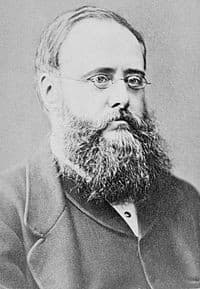
William Wilkie Collins was an English novelist and playwright known especially for The Woman in White (1859), a mystery novel and early "sensation novel", and for The Moonstone (1868), which established many of the ground rules of the modern detective novel and is also perhaps the earliest clear example of the police procedural genre.
Similar books
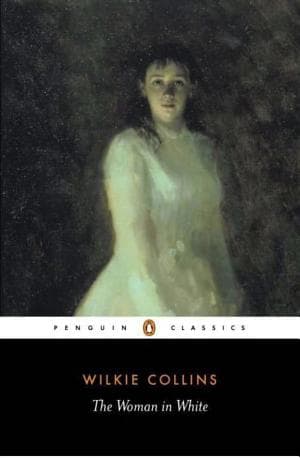
- The Woman in White
Wilkie Collins
4.0 (132k) average on GoodreadsHistorical FictionFeatures a complex mystery, legal entanglements, and a determined protagonist by the same author.
- Bleak House
Charles Dickens
4.0 (97k) average on GoodreadsHistorical FictionExplores the intricacies and frustrations of the legal system in Victorian England.
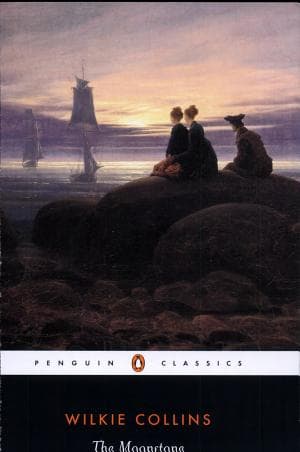
- The Moonstone
Wilkie Collins
3.9 (79k) average on GoodreadsHistorical FictionWhile 'The Law and the Lady' features a strong female investigator, it lacks the tightly woven, multi-perspective narrative mastery and sustained suspense of Collins's own 'The Moonstone' (1868). 'The Moonstone' is often cited as the first English detective novel, with its ensemble cast of narrators meticulously revealing fragments of the truth, leading to a more satisfying and complex unveiling of the culprit. 'The Law and the Lady' relies more on Valeria's singular drive, which, while commendable, doesn't achieve the same intricate narrative architecture or the psychological depth of characters like Sergeant Cuff or Franklin Blake. The legal intricacies in 'The Moonstone' also feel more organically integrated into the plot, whereas 'The Law and the Lady' sometimes feels more didactic in its critique of legal systems.
- Angels & Demons
Dan Brown
3.9 (2.7M) average on GoodreadsThrillerA Harvard symbologist races through Rome's ancient sites, deciphering cryptic clues to unmask the Illuminati and stop a vengeful plot to destroy the Vatican with a stolen antimatter weapon.
- Gone Girl
Gillian Flynn
4.1 (2.3M) average on GoodreadsThrillerA wife's sudden disappearance on her fifth anniversary reveals a web of lies and psychological warfare, exposing the secrets within a seemingly perfect marriage.
- The Girl on the Train
Paula Hawkins
3.9 (2.1M) average on GoodreadsThrillerA woman’s fascination with a seemingly perfect couple she watches from her daily train commute leads her into a dark investigation when she witnesses something that shatters their idyllic image.




Enjoyed the summary?
A summary gives you the shape of the book. The book itself has the detail, the examples and the voice.
Find The Law and the Lady on AmazonAs an Amazon Associate, BookBrief earns from qualifying purchases. How we're funded