
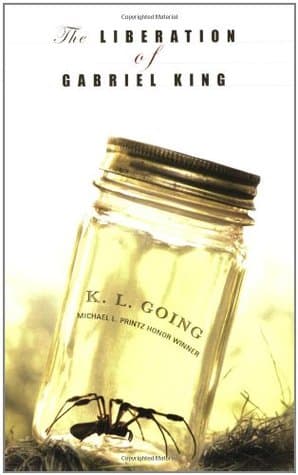
Synopsis
Covers the whole plot, including the ending.
- Difficulty
- Easy
- Pacing
- Moderate
- Mood
- Heartwarming, Hopeful, Thought-provoking
- Read it if
- You enjoy heartwarming stories about unlikely friendships, overcoming fear, and historical fiction that gently introduces themes of racial prejudice and civil rights to younger readers.
- Skip it if
- You prefer fast-paced action or are looking for a story with complex adult themes and a less optimistic tone.
The Liberation of Gabriel King Plot Summary
Covers the whole plot, including the ending.
Gabriel's Fearful Introduction and Frita's Challenge
The story begins with Gabriel 'Gabe' King, a boy with many fears, from spiders to the upcoming fifth grade. His best friend, Frita Wilson, is his opposite – brave, outspoken, and the only Black student in their mostly white rural town in 1976. Frustrated by Gabe's shyness, Frita decides that the summer before fifth grade will be for helping Gabe overcome his fears. She proposes they tackle each item on his fear list, promising to help him face them. Gabe, though nervous, agrees, wanting to stop being called a 'chicken.' This agreement sets the stage for their summer adventures and the underlying tensions of their small, prejudiced community.
Confronting Spiders and the Specter of the KKK
Frita's first challenge for Gabe is his fear of spiders. She takes him to her barn, where they see a large spider, testing Gabe's limits. While Gabe struggles with his fear of spiders, Frita reveals her own, more serious fear: the Ku Klux Klan. She shares a story about her grandfather's encounter with the KKK, saying they are a real and present danger in their town. This shows a clear difference between Gabe's relatively small fears and the life-threatening prejudice Frita faces daily. The KKK's presence is hinted at through local gossip and the general racial tension in their community.
The Graveyard Dare and a Difficult Conversation
Next on Gabe's list is his fear of corpses and graveyards. Frita dares him to spend time in the local cemetery, which makes Gabe very nervous. During their visit, they discuss death and how people cope with loss and fear. This experience not only pushes Gabe to confront a personal fear but also starts a deeper conversation between the two friends about the anxieties they both carry. Frita tries to teach Gabe resilience and the importance of facing uncomfortable truths, connecting it to the systemic fears she lives with.
The Fair and Unsettling Encounters
Gabe and Frita attend the local fair, where they play games and go on rides, briefly escaping their fears. However, the fun is interrupted when Frita sees a known KKK member in the crowd. The encounter leaves her visibly shaken, showing the constant threat she lives under. Gabe, though not fully understanding her deep fear, notices her distress and begins to see courage in different ways. This incident reminds him that while Gabe's fears are personal, Frita's are rooted in a dangerous social reality.
Confronting Loose Cows and Learning about Prejudice
Frita arranges an encounter with loose cows, one of Gabe's many animal fears. While dealing with this challenge, Frita tells Gabe about the daily prejudice she experiences at school and in their town. She talks about being excluded and the subtle, yet common, racism she faces from some classmates and adults. This conversation helps Gabe understand Frita's struggles more deeply, moving beyond his own fears. He starts to see the world through her eyes, realizing that her bravery is not just about facing a spider, but about navigating a hostile environment every day.
The Fifth Grade and a Budding Understanding
To address Gabe's fear of fifth grade, Frita takes him to their school during the summer. They explore the empty classrooms and hallways, helping Gabe get used to the environment that causes him so much anxiety. During this visit, Frita shares more about her experiences as the only Black student, explaining how she has to be strong every day just to be in that space. Gabe begins to understand that his fear of a new grade is small compared to the courage Frita shows daily, building a new level of respect for his best friend.
The KKK's Threat Escalates
The KKK's threat becomes more direct and personal when Frita's family receives a threatening note and a burning cross is left near their property. This terrifying event brings Frita's deepest fear to the forefront. The incident shocks their small community, confirming the real danger Frita and her family face. Gabe sees Frita's raw fear and the tension in her home, finally understanding the true weight of her anxieties. This event marks a turning point, shifting the focus from Gabe's minor fears to the serious threats Frita endures.
Frita's Unveiled Fear and Gabe's Support
After the KKK incident, Frita finally tells Gabe her deepest, unwritten fear: losing her family and being driven out of their home by the KKK. She confesses the constant anxiety she carries, the burden of being different, and the real possibility of violence. Gabe, having seen the terror firsthand, no longer sees her as just his brave friend but as someone carrying a huge burden. He assures her of his support, promising to stand by her, even if it means facing the KKK himself. This moment strengthens their bond and changes the dynamic of their 'liberation' project.
A Community Divided and a Difficult Decision
The KKK's increasing threats create a clear division in the town. While some residents support Frita's family, others remain silent or even quietly agree with the KKK's actions. Frita's parents, fearing for their safety, start to seriously think about moving away from their home, a decision that deeply upsets Frita. Gabe, feeling helpless, struggles with how he can truly help Frita with a fear that is much larger than anything on his own list. He realizes that courage is not just about facing a spider, but about standing up for what is right in the face of injustice.
The March and a Shared Act of Courage
In response to the KKK's threats, a local church organizes a march to support Frita's family and protest racial injustice. Despite his shyness, Gabe, inspired by Frita's bravery and his new understanding, decides to join the march with her. This public act of defiance is the result of their summer together. As they march, holding signs and standing with their community, Gabe realizes that true liberation is not just about conquering individual fears, but about collective action and standing up against oppression. They walk hand-in-hand, showing a powerful shared courage that goes beyond their individual anxieties.
The Aftermath and a New Beginning
The march gets significant attention and support, both locally and from nearby towns, showing that many in the community oppose prejudice. Inspired by this support, Frita's parents decide not to move, choosing to stay and fight for their place. As summer ends, Gabe, though still sometimes anxious, faces fifth grade with new confidence and a deeper understanding of courage and friendship. He has learned that true bravery often means standing up for others, and that some fears are worth confronting together. Their friendship is stronger than ever, built on shared experiences and mutual support.
Principal Figures
Gabriel 'Gabe' King
Protagonist
A timid boy who embarks on a journey to conquer his numerous fears.
Gabe is an anxious and fearful ten-year-old boy, prone to worrying about everything from spiders to the upcoming fifth grade. He is initially portrayed as a 'chicken,' relying heavily on his best friend Frita for courage and guidance. Throughout the summer, he slowly sheds his timidity, not just by facing his personal fears, but by witnessing and understanding the far greater fears Frita endures due to racial prejudice. His journey is one of gradual self-discovery and a growing awareness of the world beyond his own anxieties.
Relationships: Frita Wilson (Best friend, mentor, confidante); Mama (Gabe's Mother) (Supportive and loving parent)
Frita Wilson
Protagonist/Supporting
Gabe's brave and outspoken best friend, who navigates racial prejudice in their town.
Frita is a strong, resilient, and fiercely independent Black girl, the only one in their white rural school in 1976. She is Gabe's foil, constantly pushing him out of his comfort zone and challenging him to confront his fears. Despite her outward bravery, she harbors a deep, unspoken fear related to the Ku Klux Klan and the racial prejudice she and her family endure. Her intelligence and unwavering spirit make her a powerful force, inspiring Gabe to look beyond his own anxieties and understand the larger world of injustice.
Relationships: Gabriel King (Best friend, student, recipient of her support); Mama (Frita's Mother) (Loving and protective parent); Papa (Frita's Father) (Strong, resilient parent)
Mama (Gabriel's Mother)
Supporting
Gabe's understanding and supportive mother.
Gabe's mother is a loving and patient figure who provides a stable home environment. She is aware of Gabe's anxieties but encourages his friendship with Frita, recognizing the positive influence Frita has on him. She offers quiet support and understanding, allowing Gabe the space to grow and confront his fears, while also being a comforting presence when he struggles. Her gentle nature contrasts with Frita's more direct approach, providing a balanced parental influence for Gabe.
Relationships: Gabriel King (Mother-son); Frita Wilson (Supportive of her friendship with Gabe)
Mama (Frita's Mother)
Supporting
Frita's strong and protective mother, who grapples with the KKK's threats.
Frita's mother is a resilient and protective woman who faces the racial prejudice in their town with dignity and strength. She is deeply concerned for her family's safety, especially as the KKK's threats escalate. She embodies quiet courage and provides a grounding force for Frita, teaching her to stand tall in the face of adversity. Her decision-making regarding staying or leaving the town highlights the difficult choices Black families faced during this era.
Relationships: Frita Wilson (Mother-daughter); Papa (Frita's Father) (Spouse)
Papa (Frita's Father)
Supporting
Frita's steadfast father, a pillar of strength against racial injustice.
Frita's father is a strong and principled man who provides a powerful example of resilience and quiet defiance against racial prejudice. He works hard to provide for his family and protect them from the dangers of the KKK. His unwavering commitment to staying in their home and fighting for their rights, even when faced with terrifying threats, serves as a significant source of inspiration for Frita and a stark lesson for Gabe about true courage.
Relationships: Frita Wilson (Father-daughter); Mama (Frita's Mother) (Spouse)
The Ku Klux Klan (KKK)
Antagonist
A racist hate group that terrorizes Frita's family and the Black community.
The KKK, though not personified by a single character, acts as the primary antagonist, representing the pervasive racial prejudice and systemic fear that Frita and her family face. Their presence is felt through whispers, threats, and direct acts of intimidation like the burning cross. They embody the real-world dangers that contrast sharply with Gabe's more trivial fears, forcing both children and the reader to confront the harsh realities of racism in 1970s America. Their actions drive much of the core conflict in Frita's storyline.
Relationships: Frita Wilson's Family (Persecutors/victims); Gabriel King (Source of his growing understanding of injustice)
Mr. Henderson
Supporting
A local community leader who organizes the solidarity march.
Mr. Henderson is a respected figure in the community, likely a pastor or a prominent civic leader. He plays a crucial role in mobilizing the town against the KKK's intimidation. By organizing the solidarity march, he embodies the positive forces within the community that stand up against racism and injustice. His actions provide a counterbalance to the fear and hatred spread by the KKK, demonstrating that not everyone in the town is complicit or silent.
Relationships: Frita Wilson's Family (Supporter and advocate)
Gabe's Father
Mentioned
Gabe's largely absent but occasionally referenced father.
Gabe's father is mentioned occasionally but is not a significant presence in the narrative, suggesting he may work long hours or is otherwise less involved in Gabe's daily life compared to his mother. His absence allows for the focus to remain on the dynamic between Gabe, Frita, and Gabe's mother.
Relationships: Gabriel King (Father-son (distant))
Themes & Insights
Courage and Fear
The main theme explores different kinds of courage and fear. Gabe's journey is about conquering personal, often irrational fears (spiders, cows, fifth grade), which are contrasted with Frita's serious, life-threatening fears from racial prejudice (the KKK, violence, displacement). The book shows that courage is not the absence of fear, but the willingness to act despite it, whether it is facing a spider or standing up against injustice. Gabe's understanding of courage grows as he sees the immense bravery Frita shows every day.
“Being brave doesn't mean you aren't scared. It means you're scared, but you do it anyway.”
Friendship and Loyalty
The strong bond between Gabe and Frita is the emotional center of the story. Their friendship goes beyond racial and personal differences, built on trust and loyalty. Frita consistently pushes Gabe to grow, while Gabe, in turn, learns to support Frita when she faces her deepest fears. Their shared experiences strengthen their connection, showing how true friendship involves empathy, understanding, and standing by each other through difficult times, even when facing external threats.
“I wasn't sure what I could do, but I knew I had to do something. Frita was my best friend, and she was scared, really scared, for the first time I'd ever seen her.”
Racial Prejudice and Social Justice
Set in 1976, the book directly addresses racial prejudice through Frita's experiences as the only Black student in a mostly white, KKK-influenced town. It shows the subtle and clear forms of racism, from small insults to terrifying threats. The narrative explores the emotional cost of prejudice and the importance of fighting for social justice. Gabe's growing awareness of Frita's struggles helps young readers understand the historical and ongoing impact of racism and the need for support.
“They don't want us here, Gabe. They want us gone. Just because of the color of our skin.”
Identity and Self-Discovery
Both Gabe and Frita go on a journey of self-discovery. Gabe learns to redefine his identity beyond being 'the chicken,' finding his ability for bravery and empathy. Frita, while seeming confident, deals with the burden of her racial identity and the fear it brings, finding strength in vulnerability and community. Their individual and shared experiences shape who they become, teaching them about their own inner resources and their place in the world, especially in their community and the challenges they face.
“I wasn't just Gabe King, the chicken. I was Gabe King, the friend who would stand up for Frita.”
Plot Devices & Literary Techniques
Fear List
A literal list of Gabe's fears that structures the plot's initial challenges.
The 'Fear List' is a central plot device, serving as a tangible representation of Gabriel King's anxieties. Frita's challenge to tackle each item on the list (spiders, corpses, loose cows, fifth grade) provides a clear, episodic structure for the first half of the book, driving their adventures and interactions. It allows for a gradual progression of Gabe's courage and provides a framework for Frita to mentor him. Crucially, the absence of Frita's deepest fear from this list highlights the distinction between personal anxieties and systemic threats, ultimately revealing the deeper emotional core of the story.
Foil Characters
Gabe and Frita serve as direct contrasts to highlight different forms of courage and fear.
Gabriel King and Frita Wilson are presented as classic foil characters. Gabe is timid, white, and preoccupied with personal, often irrational fears, while Frita is brave, Black, and faces very real, life-threatening fears related to racial prejudice. This contrast effectively highlights the different dimensions of courage and fear. Frita's outward bravery pushes Gabe to confront his anxieties, while Gabe's vulnerability eventually allows Frita to share her own hidden fears. Their dynamic illuminates the complexities of their individual struggles and the societal context of their friendship.
Symbolism of the KKK
The KKK symbolizes pervasive racial prejudice and systemic fear.
The Ku Klux Klan functions as a powerful symbol rather than a group of individualized characters. They represent the deeply ingrained racial prejudice and hatred present in their 1970s rural community. Their actions—the threatening note, the burning cross—are symbolic acts of intimidation that underscore the very real danger faced by Black families. The KKK's presence serves to elevate the stakes of Frita's story, contrasting sharply with Gabe's more mundane fears and forcing the narrative to confront serious issues of social injustice and civil rights.
The Solidarity March
A climactic event symbolizing collective action and community defiance against injustice.
The solidarity march organized by Mr. Henderson is a pivotal plot device and a strong symbol of collective action and defiance. It serves as the culmination of the summer's events, where Gabe's personal journey of courage converges with Frita's struggle against social injustice. The march physically brings together community members who stand against the KKK, demonstrating that individual acts of bravery can inspire a larger movement. It symbolizes hope, resilience, and the power of unity in the face of hatred, ultimately influencing Frita's family's decision to stay.
The Liberation of Gabriel King Quotes
“Sometimes you have to break the rules to do what's right.”
“Fear is a big bully. It tries to make you small.”
“It ain't about where you come from, it's about where you're going.”
“Some things, you just gotta stand up for, even if you're scared.”
“The world ain't always fair, but that don't mean you stop trying to make it better.”
“Friendship is like a rope. It can pull you out of the deepest holes.”
“Being brave ain't about not being scared. It's about doing what you gotta do even when you are.”
“Sometimes the quietest people have the loudest stories.”
“You can't change the past, but you can sure make a difference in the future.”
“Hate is a heavy thing to carry. It weighs you down.”
“It takes courage to be kind when others are not.”
“Every person's got a light inside 'em, even if it's just a tiny flicker.”
“The biggest monsters ain't always the ones you can see.”
“Sometimes you gotta make your own path, even if nobody else is walking it.”
Quiz
10 questions on the plot and the characters. Each answer comes with a short explanation.
Question 1
What is Gabriel King's primary character trait at the beginning of the story?
- He is a natural leader.
- He is exceptionally brave and fearless.
- He is easily frightened and anxious.
- He is a troublemaker who often gets into fights.
Show answer
C. He is easily frightened and anxious. The book description explicitly states that Gabriel King 'was a born chicken' and is 'afraid of spiders, corpses, loose cows, and just about everything related to the fifth grade,' indicating his primary trait is being easily frightened.
Question 2
What historical period is the story set in?
- The 1950s
- The 1960s
- The 1970s
- The 1980s
Show answer
C. The 1970s The book description clearly states the setting is 'the summer of 1976,' placing it in the 1970s.
Question 3
Who is Gabriel's best friend?
- A boy named Peter
- Frita Wilson
- His older sister
- A new kid in town
Show answer
B. Frita Wilson The book description introduces 'Gabe's best friend, Frita Wilson,' who helps him face his fears.
Question 4
What is unique about Frita Wilson's position in their school and town?
- She is the only girl in an all-boys' club.
- She is the only black kid in school in a town with an active Ku Klux Klan.
- She is the smartest student and always wins awards.
- She is new to town and doesn't know anyone.
Show answer
B. She is the only black kid in school in a town with an active Ku Klux Klan. The description highlights Frita's unique and challenging situation: 'she's the only black kid in school in a town with an active Ku Klux Klan,' which gives her perspective on bravery.
Question 5
What is the main goal Gabriel and Frita set for themselves during the summer?
- To win a local talent show.
- To solve a mystery in their town.
- To help Gabriel confront and overcome his fears.
- To build a secret fort in the woods.
Show answer
C. To help Gabriel confront and overcome his fears. The text states, 'Together Gabe and Frita are going to spend the summer of 1976 facing down the fears on Gabe's list,' which is their shared primary objective.
Question 6
Which of these is NOT explicitly mentioned as one of Gabriel's fears?
- Spiders
- Public speaking
- Loose cows
- Corpses
Show answer
B. Public speaking The description lists 'spiders, corpses, loose cows, and just about everything related to the fifth grade' as Gabe's fears, but public speaking is not specifically mentioned.
Question 7
What thematic element does Frita's character introduce to the story, beyond helping Gabe with his personal fears?
- The importance of academic achievement.
- The challenges of racial prejudice and the need for social courage.
- The joy of artistic expression.
- The struggle of growing up in a large family.
Show answer
B. The challenges of racial prejudice and the need for social courage. Frita's background as 'the only black kid in school in a town with an active Ku Klux Klan' introduces the serious theme of racial prejudice and the courage required to face systemic challenges, contrasting with Gabriel's more personal fears.
Question 8
What is revealed about Frita's own situation as she helps Gabriel?
- She secretly wants to move away from the town.
- She has a hidden talent she is afraid to share.
- She has her own list of fears, and is avoiding the one that scares her most.
- She is worried about failing the upcoming school year.
Show answer
C. She has her own list of fears, and is avoiding the one that scares her most. The description states, 'But it turns out that Frita has her own list, and while she's helping Gabe confront his fears, she's avoiding the thing that scares her the most,' adding depth to her character.
Question 9
The title, 'The Liberation of Gabriel King,' primarily refers to:
- Gabriel being freed from a physical prison.
- Gabriel overcoming his personal fears and anxieties.
- Gabriel leading a political movement in his town.
- Gabriel's family achieving financial freedom.
Show answer
B. Gabriel overcoming his personal fears and anxieties. Given Gabriel's initial character as 'a born chicken' and the plot revolving around him 'facing down the fears on Gabe's list,' 'liberation' most directly refers to his freedom from these personal anxieties and fears.
Question 10
How does Frita's perspective on bravery likely differ from Gabriel's at the start of the story?
- Frita sees bravery as physical strength, while Gabriel sees it as intellectual prowess.
- Frita understands bravery in the context of confronting social injustice, while Gabriel is focused on overcoming personal, everyday fears.
- Frita believes bravery comes from being reckless, whereas Gabriel believes it comes from careful planning.
- Frita thinks bravery is unnecessary, while Gabriel idolizes heroes.
Show answer
B. Frita understands bravery in the context of confronting social injustice, while Gabriel is focused on overcoming personal, everyday fears. Frita's experience as 'the only black kid in school in a town with an active Ku Klux Klan' gives her a deep understanding of bravery in the face of systemic prejudice, contrasting with Gabriel's 'chicken' nature regarding common childhood fears. She 'knows something about being brave' from a social justice perspective.
The Liberation of Gabriel King FAQ
What is 'The Liberation of Gabriel King' about?
'The Liberation of Gabriel King' is about a timid fifth-grader named Gabriel King, who is afraid of almost everything. His best friend, Frita Wilson, a brave Black girl living in a racially tense 1976 North Carolina town, decides to help him conquer his fears over the summer. While Gabe faces his list of phobias, Frita is secretly avoiding confronting her own deepest fear.
Why should I read 'The Liberation of Gabriel King'?
You should read this book for its heartwarming exploration of friendship, courage, and overcoming personal and societal fears. It beautifully intertwines a personal coming-of-age story with the historical backdrop of racial prejudice and the Ku Klux Klan in the American South, offering both emotional depth and an important historical perspective through a child's eyes.
What is the background/setting of 'The Liberation of Gabriel King'?
The story is set in the summer of 1976 in a small, racially segregated town in North Carolina. This historical context is crucial, as the presence of the Ku Klux Klan and the civil rights struggles directly impact Frita Wilson's experiences and fears, contrasting sharply with Gabriel King's more sheltered, albeit fear-filled, existence.
What are the most memorable quotes?
While specific quotes aren't provided in the summary, memorable moments often revolve around Frita's blunt encouragement to Gabe, such as her insistence on confronting fears head-on, and Gabe's internal monologues about his 'chicken' nature. The book's power lies in the dialogue that showcases their evolving friendship and courage.
What writing style does the author use?
K.L. Going employs an accessible and engaging style, suitable for young adult readers, characterized by vivid descriptions and authentic dialogue. The narrative often shifts between Gabriel's internal thoughts, highlighting his anxieties, and the external actions of Frita, who pushes him outside his comfort zone, creating a balance of humor and serious reflection.
What minor details add significant meaning?
The specific fears on Gabriel's list, like 'loose cows' or 'corpses,' initially seem trivial but highlight the innocence of childhood anxieties before they are juxtaposed with Frita's very real and dangerous fears related to racial prejudice. The small-town dynamics and subtle signs of KKK activity in the background also underscore the pervasive tension.
What are some subtle foreshadowing moments?
Foreshadowing is subtly woven through Frita's increasingly distracted behavior and her reluctance to discuss certain topics, hinting that she has her own significant, unaddressed fear. The mentions of racial tensions in the town and the KKK's presence also foreshadow the eventual revelation of Frita's personal struggle.
What unexpected character connections exist?
Beyond Gabriel and Frita's central friendship, the book explores the complex connections within the community, often revealing unexpected biases or moments of solidarity. The way different adults in the town react to Frita and Gabriel's friendship, or to the underlying racial tensions, can reveal surprising alliances or prejudices.
What are unspoken character motivations?
Frita's unspoken motivation for helping Gabriel is not just friendship, but also a subconscious desire to project strength and control in her own life, perhaps as a way to cope with her personal fear. Gabriel's motivation to face his fears, beyond Frita's prodding, is likely a deep-seated desire to please her and prove his own worth, striving for a bravery he admires in her.
What psychological complexities do characters exhibit?
Gabriel exhibits classic anxiety, manifesting as an extensive list of phobias, while Frita displays a complex blend of outward bravery and hidden vulnerability. Her courage in facing racial prejudice is contrasted with her avoidance of a specific, personal fear, showcasing how strength in one area doesn't negate anxieties in another.
What are the major emotional turning points?
A major emotional turning point occurs when Gabriel, having gained confidence, realizes the depth of Frita's own secret fear and shifts from being the one needing liberation to supporting her. Another is when Frita finally confronts her fear, revealing the true weight she has been carrying and allowing for a deeper, more reciprocal friendship.
How do relationship dynamics evolve?
Initially, the dynamic is Frita as the strong, fearless leader and Gabriel as the timid follower. As Gabriel faces his fears, he gains confidence, and the friendship becomes more balanced. The ultimate evolution occurs when Gabriel becomes Frita's support system, reversing their roles and solidifying their bond through mutual understanding and shared vulnerability.
Which parts remain ambiguous or open-ended?
The long-term impact of the KKK's presence on the town and its residents, beyond the immediate summer, can be seen as open-ended, reflecting the ongoing struggle for civil rights. While Frita confronts her specific fear, the broader societal challenges she faces as a Black child in that era are ongoing, leaving the future somewhat ambiguous.
What are controversial scenes or decisions?
The book may contain scenes depicting the racial prejudice and activities of the Ku Klux Klan, which, while historically accurate for the setting, could be considered controversial or challenging for younger readers. Frita's decision to initially keep her deepest fear hidden, even from Gabriel, might also spark debate about the nature of trust and vulnerability in friendship.
'The Liberation of Gabriel King' ending explained: how it ends & what it means
The book ends with Gabriel having conquered many of his fears, but more importantly, with Frita finally confronting her own deepest fear, which is often related to the racial tensions and threats in their town. The ending signifies a mutual liberation: Gabriel from his anxieties, and Frita from the burden of her secret fear, solidifying their friendship as one built on reciprocal courage and understanding.
Similar books
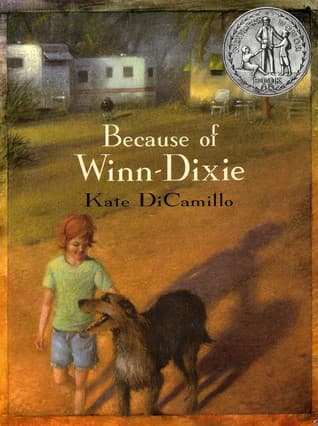
- Because of Winn-Dixie
Kate DiCamillo
4.0 (206k) average on GoodreadsChildren'sFeatures a young protagonist grappling with fears and finding friendship in a small Southern town.
- Harry Potter and the Sorcerer's Stone
J.K. Rowling
4.5 (7M) average on GoodreadsFantasyRescued from a miserable life under the stairs, an orphaned boy discovers he's a wizard destined for a magical school, where he uncovers a dangerous secret tied to the dark wizard who murdered his parents.
- The Hobbit, or There and Back Again
J.R.R. Tolkien
4.3 (2.9M) average on GoodreadsFantasyA comfort-loving hobbit named Bilbo Baggins is whisked away by a mischievous wizard and a band of dwarves on an unexpected journey to reclaim stolen treasure from a fearsome dragon, discovering courage and a magical ring along the way.
- Harry Potter and the Goblet of Fire
J.K. Rowling
4.6 (2.6M) average on GoodreadsFantasyA bewildered Harry Potter, underage and thrust into a deadly Triwizard Tournament, must brave dragons, mermaids, and a resurgent dark magic to survive a year that will forever alter the wizarding world.
- Harry Potter and the Order of the Phoenix
J.K. Rowling
4.5 (2.5M) average on GoodreadsFantasyIn a year of oppressive secrets and the threat of Voldemort, Harry Potter and Dumbledore's Army secretly train for war, shown through Jim Kay and Neil Packer's dark illustrations.
- The Lightning Thief
Rick Riordan
4.3 (2M) average on GoodreadsFantasyThrust into a world of mythological monsters and divine treachery, an ordinary boy discovers he's the son of Poseidon and must embark on a perilous quest across modern America to prevent an Olympian war.





Enjoyed the summary?
A summary gives you the shape of the book. The book itself has the detail, the examples and the voice.
Find The Liberation of Gabriel King on AmazonAs an Amazon Associate, BookBrief earns from qualifying purchases. How we're funded