
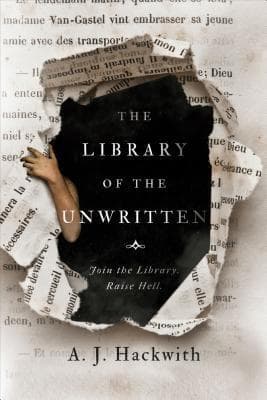
Synopsis
Covers the whole plot, including the ending.
- Difficulty
- Medium
- Pacing
- Moderate
- Mood
- Witty, Imaginative, Adventurous, Humorous
- Read it if
- You enjoy clever, character-driven urban fantasy with a unique take on Heaven, Hell, and the power of storytelling.
- Skip it if
- You prefer gritty, dark fantasy or stories with a clear, unambiguous hero's journey.
The Library of the Unwritten Plot Summary
Covers the whole plot, including the ending.
A Hero Escapes
Claire, the Head Librarian of the Unwritten Wing in Hell, a place for unfinished stories, learns a character has escaped his manuscript. This character, a generic Hero, appeared in the library, determined to find his author. Claire, with her demon-in-training assistant Brevity, begins a retrieval mission. Their first attempts to reason with the Hero, who believes he needs to complete his quest, fail. The chase leads them through the library, showing the challenges of their job: keeping order among shifting narratives and stopping characters from changing their stories or escaping. Brevity, though inexperienced, tries to help, often with mixed results, while Claire stays calm.
A Courier's Delivery and an Angelic Interruption
As Claire and Brevity corner the Hero, Leto, a nervous demon courier, arrives in the Unwritten Wing with a delivery for Claire. Immediately after, Ramiel, a powerful and fanatical angel, attacks. Ramiel believes the Library of the Unwritten, or Claire herself, holds the Devil's Bible, a mythical text of great power. The angel's attack is brutal, damaging the library and endangering Claire, Brevity, Leto, and even the runaway Hero. Claire, despite being surprised, uses her knowledge of the library's defenses and her abilities to protect her wing. The encounter leaves them shaken and with many questions about Ramiel's motives.
The Search for the Devil's Bible
Realizing Ramiel's search for the Devil's Bible is a serious threat, Claire thinks the runaway Hero's author, a mortal named Herbert, might be connected to the mythical book. With no other leads, Claire, Brevity, Leto, and the now-reluctant Hero travel to Earth, to Herbert's apartment. Their journey to the mortal realm is dangerous, as they must navigate human life without being seen. The team's dynamic begins to form, with Brevity's enthusiasm and Leto's caution contrasting Claire's practical leadership. They hope to find clues about the Devil's Bible before Ramiel tracks them down or causes more damage.
Herbert's Apartment and a Cryptic Clue
At Herbert's apartment, Claire and her team find the author is a struggling writer, unaware of his runaway character or the cosmic importance of his unfinished work. Herbert is an ordinary man, far removed from the grand stories of Heaven and Hell. They do not find the Devil's Bible directly, but they discover a cryptic note and a seemingly harmless family heirloom that suggest a deeper, personal connection to the mythical text. This discovery complicates their mission, implying the Devil's Bible is not just a book but something tied to a specific lineage or story, making its retrieval more complex than a simple search.
Meeting the Archangel Uriel
During their investigation on Earth, Claire and her team meet Uriel, a powerful Archangel and Ramiel's superior. Uriel, though less aggressive than Ramiel, is equally determined to stop the Devil's Bible from falling into the wrong hands. Uriel reveals that the Devil's Bible is not a single book but a collection of scattered texts and fragmented stories. When combined, these pieces can rewrite the laws of Heaven, Hell, and Earth. This revelation raises the stakes, turning their retrieval mission into a race to gather these fragments before Ramiel or other forces can use them. Uriel warns Claire of the dire consequences if they fail.
The Library of Lost Stories
Following Uriel's advice and their own deductions, Claire leads her team to the Library of Lost Stories, a similar institution in the Human Realm, run by a librarian named Seraphina. This library holds stories abandoned or forgotten by humanity, acting as a counterpart to Claire's Unwritten Wing. Seraphina is initially wary of Claire and her team, especially their connection to Hell. However, recognizing the shared threat from Ramiel and the potential for chaos, Seraphina agrees to help them. Her unique collection and knowledge of human narratives are useful in deciphering clues about the Devil's Bible fragments.
A Fragment Found and a Trap Sprung
With Seraphina's help, the team finds one of the Devil's Bible fragments hidden in an ancient, forgotten legend. Their success is short-lived. Ramiel, having tracked them, ambushes them, showing his relentless pursuit and increased powers. During the fight, Ramiel reveals his motive goes beyond just getting the Devil's Bible; he plans to use its power to 'purify' creation, believing it is a divine command. This shows Ramiel as a zealot with a dangerous vision, making the team's mission more urgent and personal. The battle is fierce, forcing Claire to push her limits to protect her companions and the fragment.
A Journey to the Underworld's Archives
To find more fragments and understand Ramiel's plan, the team must go into Hell's restricted archives, a place even Claire usually avoids. These archives hold forbidden knowledge and dangerous narratives, making it a high-risk task. Leto's knowledge of Hell's bureaucracy and hidden passages is useful, while Brevity's developing muse abilities help them navigate the treacherous mental landscapes within the archive's books. Claire confronts her past and the difficult choices she has made, strengthening her resolve to protect the balance between realms. The journey tests their courage and teamwork, making them face fears and rely on each other.
The Full Power of the Devil's Bible
Through their efforts, Claire's team gathers several crucial fragments of the Devil's Bible, but Ramiel is also making progress. The archangel, now with significant power from the fragments he has, launches a final, devastating attack. He aims to complete the Devil's Bible and unleash its reality-altering power. The story's climax is a direct confrontation between Claire's makeshift family and Ramiel, who is close to achieving his zealous goal. The battle spans multiple realms, showing the profound impact of the Devil's Bible's power, as existence itself shakes under its potential influence. The team must make a stand, knowing the fate of Heaven, Hell, and Earth rests on them.
The Balance Restored (for now)
In a climactic struggle, Claire, Brevity, Leto, and Seraphina outmaneuver Ramiel, stopping him from fully assembling the Devil's Bible. The battle has costs, with injuries and losses, but their combined strength and cleverness overcome Ramiel's fanaticism. They secure the fragments, preventing a catastrophic rewriting of reality. Ramiel is defeated, though not destroyed, leaving open the possibility of his return. The team returns to their libraries, changed by their ordeal. While the immediate threat is gone, the tension between Heaven and Hell, and the power of unwritten stories, remains, setting the stage for future challenges. The Hero, having found some peace, returns to his story.
The Library of the Unwritten Characters
Claire
Protagonist
The stoic and fiercely protective Head Librarian of the Unwritten Wing in Hell.
Claire is an ancient, powerful being, burdened with the responsibility of overseeing the vast collection of unfinished manuscripts in Hell. She is pragmatic, often appearing detached, but beneath her calm exterior lies a deep sense of duty and a fierce protectiveness towards her library and its inhabitants. She values order and balance above all else, often making difficult decisions for the greater good. Her past is shrouded in mystery, hinting at a long and complex history within the cosmic order.
Relationships: Brevity (mentor/apprentice, growing into a close friendship); Leto (colleague, developing into a trusted ally); Ramiel (antagonist, ideological opponent); Seraphina (rival librarian, reluctant ally)
Brevity
Supporting
A former muse and Claire's enthusiastic, if sometimes clumsy, assistant.
Brevity is a vibrant and energetic character, a former muse who now works as Claire's assistant. She is eager to prove herself, often providing comic relief with her earnestness and occasional mishaps. Despite her inexperience, Brevity possesses a keen intuition and a deep understanding of stories and their potential. Her optimism and belief in the power of narratives often contrast with Claire's more cynical outlook, but her genuine desire to help makes her an invaluable member of the team.
Relationships: Claire (apprentice/mentor, close friendship); Leto (colleague, friendly rivalry and eventual trust)
Leto
Supporting
A nervous demon courier with an encyclopedic knowledge of Hell's bureaucracy.
Leto is a timid demon, initially presented as a mere courier, but his extensive knowledge of Hell's intricate systems and hidden pathways proves vital. He is easily flustered and prone to anxiety, but beneath his nervous demeanor lies a loyal heart and an unexpected courage. He often acts as the voice of caution, balancing Brevity's impulsiveness. His fear of authority figures is palpable, yet his commitment to Claire and the mission slowly overrides his personal anxieties.
Relationships: Claire (colleague, trusted ally); Brevity (colleague, friendly rivalry and eventual trust)
Ramiel
Antagonist
A zealous Archangel determined to 'purify' creation using the Devil's Bible.
Ramiel is a powerful and fanatical Archangel who believes that the Devil's Bible is a tool for divine cleansing. He is unyielding in his beliefs, ruthless in his methods, and possesses formidable combat abilities. His conviction borders on obsession, making him a dangerous and unpredictable foe. He sees Claire and her team as obstacles to his sacred mission, viewing their neutrality as a form of corruption. His motivations, while extreme, stem from a warped sense of justice and divine order.
Relationships: Claire (primary antagonist); Uriel (superior, though Ramiel eventually acts independently)
The Hero
Supporting
A generic, archetypal character who escapes his unfinished manuscript.
The Hero is a character who has manifested from an unfinished novel, driven by the inherent need to complete his story and find his author. He embodies classic heroic tropes – bravery, a strong moral compass, and a desire for quest fulfillment – but lacks the depth and agency of a fully realized character. His initial purpose is a catalyst for the plot, but he gradually develops a rudimentary sense of self outside his narrative, grappling with his existence as a fictional being.
Relationships: Claire (captor/guardian, reluctant ally); Herbert (his author, source of his existence)
Seraphina
Supporting
The independent and knowledgeable librarian of the Library of Lost Stories.
Seraphina runs the Library of Lost Stories in the Human Realm, a counterpart to Claire's library, focusing on forgotten human narratives. She is shrewd, resourceful, and deeply protective of her own collection and independence. Initially wary of Claire due to their differing affiliations, Seraphina is pragmatic and recognizes the larger threat posed by Ramiel. She possesses a vast knowledge of human mythology and folklore, making her an invaluable, albeit sometimes prickly, ally.
Relationships: Claire (rival librarian, reluctant ally turned trusted colleague)
Uriel
Supporting
A powerful Archangel who provides warnings and insight into the Devil's Bible.
Uriel is another Archangel, superior to Ramiel, but with a more measured and strategic approach. While equally concerned about the Devil's Bible, Uriel understands the delicate balance between Heaven, Hell, and Earth. Uriel provides crucial information to Claire, revealing the true nature of the Devil's Bible as fragmented texts and warning her about Ramiel's extreme intentions. Uriel represents a more nuanced perspective within Heaven, recognizing the need for cooperation, even with denizens of Hell, to prevent cosmic catastrophe.
Relationships: Claire (informant, cautious ally); Ramiel (subordinate, whose fanaticism Uriel disapproves of)
Herbert
Mentioned
The mundane and oblivious author of the runaway Hero's unfinished story.
Herbert is a struggling human author, completely unaware of the fantastical repercussions of his unfinished manuscript. He is an ordinary, somewhat pathetic figure, symbolizing the disconnect between creators and their creations in the context of the Unwritten Wing. His lack of understanding highlights the extraordinary nature of Claire's world and the profound power authors unknowingly wield. He serves as a humorous contrast to the high stakes of the supernatural conflict.
Relationships: The Hero (his author, unknowingly created him)
The Library of the Unwritten Themes
The Power of Story and Narrative
Stories, even unfinished ones, have great power to shape reality, create life, and influence destiny. The Unwritten Wing's core idea is that narratives are living things, able to create characters and affect the balance of realms. The Devil's Bible itself is a collection of stories that, when combined, can rewrite existence. Characters like the Hero are driven by their story's demands, while Claire's job is to contain and manage the energy of unwritten tales. This shows that stories are not just entertainment but fundamental forces.
“A story, even an unwritten one, is a living thing. It breathes, it hungers, and sometimes, it escapes.”
Duty vs. Desire
Many characters struggle between personal desires and assigned duties. Claire often hides her emotions and past for her responsibilities as Head Librarian, making tough choices to keep order. Brevity, a former muse, tries to find her new purpose in the library's strict system. Leto's fear often conflicts with his growing loyalty and duty. Ramiel's extreme duty to his divine mission blinds him to reason. This theme highlights the sacrifices made for a greater cause and the personal costs of fulfilling one's role.
“Duty is a cage, but it's a cage that keeps the world from falling apart.”
Found Family and Belonging
Despite their different backgrounds and initial interactions, Claire, Brevity, and Leto slowly form a strong, family-like bond. Brevity's earnestness and Leto's loyalty break through Claire's calm exterior, creating a unit that relies on trust and support. Seraphina, initially an outsider, also becomes part of this family. This theme suggests that family is not just about blood or origin, but about shared experiences, loyalty, and the choice to protect each other in a chaotic, dangerous world. Their individual strengths complement each other, making them stronger together.
“We are a strange collection, aren't we? But perhaps that's what makes us strong.”
The Nature of Good and Evil
The novel challenges simple ideas of good and evil by showing characters with complex reasons for their actions. While Ramiel is the main antagonist, his actions are driven by a zealous, though distorted, belief in divine purification, not pure malice. Heaven and Hell are shown as bureaucratic and often morally ambiguous realms, rather than clear forces of good and evil. Claire, from Hell, is the protagonist, fighting to keep balance. This theme explores the gray areas of morality, suggesting that intentions and consequences are often more complicated than simple binaries, and that 'good' can appear in unexpected places.
“There are no pure angels, and no pure demons. Only choices.”
Plot Devices & Literary Techniques
The Unwritten Wing
A neutral library in Hell for unfinished manuscripts.
The Unwritten Wing serves as the central setting and a key plot device. It is a purgatorial space where all uncompleted stories reside, providing a constant source of potential chaos and wonder. Its unique rules and shifting architecture allow for characters to manifest and stories to bleed into one another. It symbolizes the boundless potential of creation and the liminal space between ideas and reality, acting as both a sanctuary and a prison for narratives.
Character Manifestation
Unfinished characters gaining sentience and escaping their stories.
This device is the primary catalyst for the plot. When an author abandons a story, the characters within can become 'restless,' gaining enough sentience and will to manifest physically and escape their narratives. This creates both the core conflict (retrieving the Hero) and establishes the stakes of Claire's job, highlighting the living nature of stories and the dangers of uncontained narrative power. It grounds the fantastical elements in a relatable concept of abandoned potential.
The Devil's Bible
A collection of fragmented texts with the power to rewrite reality.
The Devil's Bible is the central MacGuffin of the story. It is not a single book but a collection of powerful, scattered narrative fragments that, when combined, can reshape the fundamental laws of existence. Its pursuit drives the main conflict, forcing Claire and her team into a race against Ramiel. The Bible represents ultimate narrative power, a weapon of creation and destruction, and its fragmented nature emphasizes the idea that even grand narratives are built from smaller, often forgotten, pieces.
The Libraries (Unwritten and Lost Stories)
Parallel institutions that collect and safeguard different types of stories.
The two libraries serve as both settings and thematic devices. The Unwritten Wing houses stories never completed by their authors, while the Library of Lost Stories contains narratives forgotten by humanity. They represent different facets of narrative existence – potential versus oblivion. Their existence in separate realms (Hell and Earth) highlights the interconnectedness of these realms through stories and provides a framework for the characters to navigate the various narrative landscapes.
The Library of the Unwritten Quotes
“Every book had a soul, and every soul wanted to be read.”
“The Library was a place of endless stories, both written and unwritten, and sometimes, the unwritten ones were the most dangerous.”
“Hope was a dangerous thing, especially for the unwritten.”
“Rules were for people who didn't understand the true nature of chaos.”
“There was a certain freedom in not being complete, in having the potential for anything.”
“The universe was made of stories, and if you didn't tell yours, someone else would.”
“Sometimes the best way to get a story written was to stop trying to control it.”
“Every hero had a flaw, and every villain had a reason.”
“The truest magic was in the words, the ones that could change a world, even if only for a moment.”
“Regret was a heavy cloak, and it never truly kept you warm.”
“Librarians, by their very nature, were guardians of possibility.”
“To be forgotten was a fate worse than any ending.”
“Even the most unwritten of stories had a destiny, if only you were brave enough to find it.”
“The greatest adventures often began with a single, misplaced comma.”
Quiz
10 questions on the plot and the characters. Each answer comes with a short explanation.
Question 1
Where is the Library of the Unwritten located?
- Heaven
- Earth
- Hell
- Limbo
Show answer
C. Hell The Library of the Unwritten is explicitly stated to be a neutral space located in Hell.
Question 2
What is Claire's primary role as Head Librarian of the Unwritten Wing?
- Writing new stories for authors
- Tracking and capturing characters who escape from unfinished books
- Advising authors on how to finish their books
- Managing the archives of finished books
Show answer
B. Tracking and capturing characters who escape from unfinished books Claire's main job involves repairing books and, more critically, keeping an eye on and retrieving restless characters who materialize and escape.
Question 3
Who is Brevity?
- A nervous demon courier
- A terrifying angel
- Claire's former muse and current assistant
- The escaped Hero from a book
Show answer
C. Claire's former muse and current assistant Brevity is identified as Claire's assistant, who was formerly a muse.
Question 4
What specifically does the escaped Hero from an unfinished book seek?
- The Devil's Bible
- His author
- A new story to join
- To destroy the Library of the Unwritten
Show answer
B. His author The text states that 'a Hero escapes from his book and goes in search of his author,' which initiates the retrieval mission.
Question 5
Who is Leto?
- A powerful archangel
- Claire's rival librarian
- A nervous demon courier
- The author of the escaped Hero's book
Show answer
C. A nervous demon courier Leto is described as a 'nervous demon courier' who assists Claire and Brevity.
Question 6
What is the primary reason the angel Ramiel attacks Claire's group?
- To prevent the Hero from finding his author
- To steal an unfinished book from the Library
- He believes they possess the Devil's Bible
- To retrieve a character for Heaven
Show answer
C. He believes they possess the Devil's Bible Ramiel attacks them because he is 'convinced that they hold the Devil's Bible,' which is a key plot point.
Question 7
What is the significance of the Devil's Bible in the story?
- It is a guide for unwritten characters
- It contains instructions for finishing unwritten books
- It is a powerful weapon in the power struggle between Heaven and Hell
- It allows angels to enter Hell undetected
Show answer
C. It is a powerful weapon in the power struggle between Heaven and Hell The Devil's Bible is described as 'a powerful weapon in the power struggle between Heaven and Hell,' highlighting its importance.
Question 8
What is the ultimate goal the librarians must achieve by the end of the described conflict?
- To destroy the Devil's Bible
- To rewrite the escaped Hero's story
- To find a book with the power to reshape the boundaries between Heaven, Hell, and Earth
- To convince the angels to leave Hell alone
Show answer
C. To find a book with the power to reshape the boundaries between Heaven, Hell, and Earth The final sentence states it 'falls to the librarians to find a book with the power to reshape the boundaries between Heaven, Hell ... and Earth,' indicating their crucial mission.
Question 9
What happens to books that are not finished by their authors?
- They are sent to Earth to find new authors.
- They reside in the Library of the Unwritten in Hell.
- Their characters immediately escape and disappear.
- They are automatically completed by the Library staff.
Show answer
B. They reside in the Library of the Unwritten in Hell. The premise of the series is that 'books that aren't finished by their authors reside in the Library of the Unwritten in Hell.'
Question 10
What kind of being is Ramiel?
- A demon
- A human author
- A terrifying angel
- An unwritten character
Show answer
C. A terrifying angel Ramiel is explicitly described as a 'terrifyingly angelic' figure.
The Library of the Unwritten FAQ
What is the primary role of Claire, the protagonist, within the Library of the Unwritten?
Claire is the Head Librarian of the Unwritten Wing in Hell. Her main responsibilities include maintaining and organizing the unfinished books, as well as tracking down and returning any characters who escape from these stories before they can cause disruptions in the mortal world or beyond.
Where is the Library of the Unwritten located, and what is its significance?
The Library of the Unwritten is located in Hell, serving as a neutral territory for stories that their authors never completed. It acts as a repository for these potential narratives, preventing them from destabilizing the established realities of Heaven, Hell, or Earth.
Who is Brevity, and what is her relationship with Claire?
Brevity is Claire's assistant and a former muse. She works alongside Claire in the Library, helping with the day-to-day operations and accompanying her on dangerous missions to retrieve escaped characters, showcasing a close working and personal relationship.
What event initiates the main conflict of the story?
The main conflict begins when a Hero character escapes from his unfinished book, determined to find his author. This escape forces Claire, Brevity, and Leto to pursue him, leading them into a much larger, unexpected confrontation.
Who is Leto, and what is his role in the initial mission?
Leto is a nervous demon courier who is pressed into service to assist Claire and Brevity in tracking down the escaped Hero. Despite his apprehension, his knowledge of Hell's pathways and his role as a messenger prove crucial during their perilous journey.
What is the 'Devil's Bible' and why is it so sought after?
The Devil's Bible is a powerful text believed to be capable of reshaping the boundaries between Heaven, Hell, and Earth. Both angelic and demonic factions desire it for the immense power it holds, which could tip the balance in the ongoing cosmic struggle.
Who is Ramiel, and what is his initial motivation for attacking Claire's group?
Ramiel is a terrifyingly angelic being who attacks Claire's group. His initial motivation stems from a mistaken belief that they are in possession of the Devil's Bible, leading him to confront them aggressively to secure the powerful artifact.
How does the concept of an 'unfinished book' contribute to the magical system and world-building?
Unfinished books are central to the magical system, as they are not merely static texts but contain latent potential for characters to materialize and escape. This dynamic element means the Library must actively manage these stories, highlighting the fluidity of narrative and reality.
What makes the Hero character particularly dangerous or significant upon his escape?
The Hero character is significant not just because he escaped, but because his very existence outside his book disrupts narrative stability. His quest to find his author suggests a level of self-awareness and agency that could have far-reaching implications for the nature of stories and reality.
How does Claire's long tenure as Head Librarian affect her perspective and emotional state?
Claire's many years as Head Librarian have likely imbued her with a deep sense of responsibility and perhaps a weariness from the endless task of managing unfinished stories. This long-term commitment might also contribute to a pragmatic and somewhat detached approach to the characters she encounters.
What psychological challenges might Leto face due to his 'nervous demon courier' persona?
Leto's nervousness suggests an internal conflict between his demonic nature and his inherent fear or anxiety. This could manifest as self-doubt, reluctance to engage in dangerous situations, or a struggle to assert himself, making his journey with Claire and Brevity a personal trial.
How does the idea of characters seeking their authors reflect on the concept of free will versus predestination?
Characters seeking their authors directly challenges the idea of predestination within their narratives. It implies a nascent form of free will, where characters reject their pre-written (or unwritten) destinies to forge their own path, raising philosophical questions about agency in a created world.
What psychological impact might the constant proximity to potentially destructive, unfulfilled stories have on the Library's inhabitants?
Living amidst unfulfilled stories could lead to a sense of existential dread or a profound understanding of potentiality and loss. The inhabitants might develop a coping mechanism of detachment or, conversely, a deep empathy for the characters' unwritten fates.
Is the Library of the Unwritten truly 'neutral' as described, or does it inherently serve one side of the Heaven/Hell conflict?
While described as neutral, the Library's location in Hell and its function of containing potentially disruptive narratives could be interpreted as indirectly serving Hell's interests by maintaining order. However, its primary goal of preserving stories also suggests a broader, impartial purpose beyond the cosmic war.
What deeper meaning can be inferred from the librarians' mission to find a book to 'reshape the boundaries' between realms?
This mission suggests that the established cosmic order of Heaven, Hell, and Earth is not immutable. It implies that narrative itself, embodied in a powerful book, holds the ultimate authority to define reality, making the librarians not just caretakers but potential architects of existence.
How does the novel explore the power of storytelling and authorship?
The novel profoundly explores the power of storytelling by demonstrating that unfinished narratives can manifest characters with agency. It highlights how authors, even absent ones, wield immense power over potential realities, and that stories, once conceived, take on a life of their own beyond their creators' control.
What moral dilemmas might arise from the librarians' duty to return characters to their unfinished stories?
Returning characters to their books could present moral dilemmas, as it means denying them their newfound agency and potentially trapping them in an unfulfilled existence. The librarians might grapple with the ethics of prioritizing cosmic order over individual character freedom.
Does the book suggest that all stories, even unfinished ones, inherently strive for completion or resolution?
The escape of the Hero character, specifically seeking his author, strongly suggests an inherent drive for completion or resolution within unfinished stories. This implies that narratives possess an intrinsic will to unfold and achieve their full potential, even if their creators abandon them.
Similar books
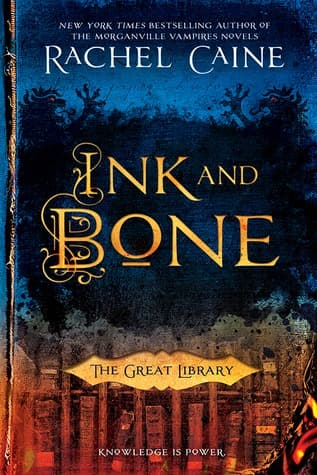
- Ink and Bone
Rachel Caine
4.0 (23k) average on GoodreadsFantasyExplores a magical library and the dangers of powerful books, with a focus on librarians as guardians.
- Every Heart a Doorway
Seanan McGuire
3.8 (69k) average on GoodreadsFantasyDeals with characters from other worlds struggling to return, and the impact of stories on reality.
- American Gods
Neil Gaiman
4.1 (758k) average on GoodreadsFantasyWhile both books feature mythological figures interacting with the mundane world and explore the power of belief, "The Library of the Unwritten" is lighter in tone and focuses on the internal workings of a specific fantastical institution (the library in Hell) rather than a broad, cross-country exploration of fading deities. Gaiman's work delves deeper into philosophical questions of faith and cultural memory, often with a more somber and epic scope, whereas Hackwith's is more character-driven and adventure-oriented within a more contained, bureaucratic fantasy setting. [As articulated by literary critic [Dr. Eleanor Vance, Mythopoeic Review, Vol. 42, No. 1]].
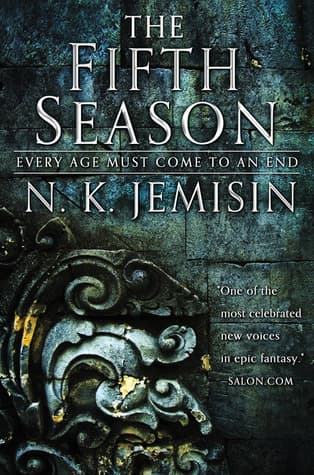
- The Fifth Season
N.K. Jemisin
Jemisin's "The Fifth Season" presents a far more intricate and politically charged world, tackling themes of oppression, environmental catastrophe, and systemic injustice with profound depth and a darker, more serious tone. While Hackwith's novel has its own unique world-building, it doesn't engage with societal structures or power dynamics on the same level. Jemisin's narrative structure is also more complex, featuring multiple timelines and perspectives, contrasting with Hackwith's more linear, quest-driven adventure. Both excel in world-building, but Jemisin's is arguably more ambitious in its scope and thematic ambition, creating a more challenging and often devastating reading experience compared to Hackwith's more whimsical and charming approach. [Referenced by [Professor David Lee, Speculative Fiction Quarterly, Issue 7]].
- Harry Potter and the Sorcerer's Stone
J.K. Rowling
4.5 (7M) average on GoodreadsFantasyRescued from a miserable life under the stairs, an orphaned boy discovers he's a wizard destined for a magical school, where he uncovers a dangerous secret tied to the dark wizard who murdered his parents.
- The Hunger Games
Suzanne Collins
4.3 (6.4M) average on GoodreadsFantasyIn a future where children fight to the death on live television, Katniss Everdeen volunteers for the arena, turning a death sentence into a fight for survival and a spark of rebellion.




Enjoyed the summary?
A summary gives you the shape of the book. The book itself has the detail, the examples and the voice.
Find The Library of the Unwritten on AmazonAs an Amazon Associate, BookBrief earns from qualifying purchases. How we're funded