

Synopsis
Covers the whole plot, including the ending.
- Difficulty
- Medium
- Pacing
- Moderate
- Mood
- Thought-provoking, Speculative, Philosophical, Sweeping
- Read it if
- You are fascinated by the societal impact of radical technological advancements, the concept of absolute privacy (or lack thereof), and grand-scale science fiction exploring humanity's past and future.
- Skip it if
- You prefer character-driven narratives over idea-driven ones, or find the concept of total surveillance unsettling without a clear resolution.
The Light of Other Days Plot Summary
Covers the whole plot, including the ending.
The Genesis of the Wormhole Camera
The story begins with Hiram Patterson, a determined industrialist, founding the Wormhole Corporation. He hires Kate Manzoni, a bright but naive young scientist, to develop new technology based on quantum entanglement and wormholes. Their first goal is to create a 'Wormcam' that allows instant, real-time viewing of any place on Earth, bypassing physical barriers. Patterson sees this as the ultimate tool for openness and control, believing it will end crime and secrets. Kate, driven by scientific curiosity, grows concerned about the ethics as the technology's power becomes clear, but Patterson's ambition pushes the project forward despite her worries.
The Global Rollout and the End of Privacy
Wormcam technology shrinks and becomes available to everyone through personal devices and public screens. Privacy, as humanity knew it, disappears overnight. Every part of the globe, every room, and every person's life becomes instantly viewable by anyone with a Wormcam. Society first reacts with chaos: a large increase in crime as people use the new transparency, followed by a period of major social adjustment. Governments struggle, old laws become useless, and human behavior changes as people adapt to constant observation. Patterson, despite the upheaval, sees this as a necessary, if difficult, step toward a more 'honest' world, believing humanity will benefit from this forced transparency.
The Rise of 'The Watchers'
After universal transparency, informal social groups appear to regulate behavior. Groups called 'The Watchers' or 'The Eyes' use Wormcam technology to monitor people and publicly shame those who do not follow social norms. This creates a new social control where reputation and public image are most important. People become very aware of their every action, leading to strict conformity and a loss of spontaneity. Kate Manzoni watches this change with growing sadness, realizing Patterson's vision is a chilling world of constant judgment and self-censorship. The initial chaos gives way to a strange, enforced order.
The Discovery of Temporal Wormholes
As research continues, a new, unexpected ability of the Wormhole technology is found: the ability to see not just the present, but also the past. By changing the wormhole's time properties, scientists realize they can access any moment in history, observing events as they happened. This discovery is even bigger than real-time surveillance. Patterson, thrilled, sees this as the ultimate historical record, a way to uncover all truths and rewrite history with perfect accuracy. Kate is horrified, understanding that this power could permanently change humanity's view of itself and its origins, possibly erasing myths, religions, and personal stories that define human culture.
Unveiling Historical Truths
The temporal Wormcam is used to view major historical events. The assassination of JFK, the crucifixion of Christ, the building of the pyramids — all are seen clearly. Many old historical theories are confirmed, while others are completely disproven. Religious faiths are especially shaken as the facts of their founding stories are revealed. This causes widespread existential crises, as humanity deals with the loss of comforting myths and the harsh facts of history. Kate Manzoni, despite her initial fears, feels drawn to the scientific purity of uncovering truth, even as she sees the devastating social effects of these revelations.
The Search for Origins
Driven by a strong desire for knowledge, the Wormhole Corporation uses its resources to view older and older pasts. Scientists, carefully, track the evolution of life on Earth, seeing the first single-celled organisms, the development of complex life forms, and the extinction events that shaped the planet. This scientific effort provides a unique understanding of biological history, confirming evolutionary theories with clear visual proof. The sheer scale and detail of these observations change humanity's understanding of its place in the universe, highlighting the randomness and grandeur of cosmic evolution, further reducing human-centered views.
The Ultimate Revelation: The Birth of the Universe
The Wormcam's reach extends to the very beginning of the universe. Scientists, led by Kate Manzoni, manage to observe the Big Bang, seeing the initial singularity and the fast expansion of spacetime. This ultimate observation provides deep cosmological insights, confirming basic physics theories and revealing the raw birth of existence. The experience is both amazing and frightening, showing the universe's immense power and indifference. This event marks the peak of scientific achievement for the Wormhole Corporation, but it also leaves humanity with a feeling of deep insignificance and a universe stripped of its remaining mysteries.
Hiram Patterson's Final Legacy
As the Wormcam's abilities reach their peak, Hiram Patterson, now an old man, thinks about the world he created. He sees a changed humanity, living under constant observation, with all its secrets exposed. While he still believes in the good of truth and transparency, he also recognizes the huge psychological cost and the loss of individual freedom. He deals with the unexpected results of his ambition, understanding that while he provided ultimate knowledge, he also took away much of what made human existence unique and private. His legacy is one of unmatched technological progress combined with major social disruption, showing the dual nature of absolute knowledge.
The Retreat into Inner Space
In a world without external privacy, humanity adapts by retreating into their own minds. People develop complex mental skills to protect their thoughts and feelings, creating internal safe places where the Wormcam cannot go. This leads to a society of very thoughtful and mentally disciplined individuals, but also one where real external connection becomes harder. The focus shifts from outward display to inner growth, a silent resistance against the control of observation. Kate Manzoni observes this evolution, realizing that while physical privacy is gone, humanity has found a new, perhaps deeper, form of personal space within themselves.
The Future of Humanity and the Wormcam
Decades pass, and the Wormcam becomes a normal, almost unnoticed, part of human life. While still able to view any time and place, its newness fades, and people learn to live with its constant presence. It becomes a tool for education, historical research, and even entertainment, rather than just surveillance. Society reaches a new balance, where the initial shock of lost privacy has become acceptance, and new social norms have appeared. The story ends with a sense of how humans adapt, suggesting that even the biggest technological changes eventually become normal, and humanity continues its journey, forever changed by the light of other days.
Principal Figures
Hiram Patterson
Protagonist/Antagonist
The visionary industrialist who eliminates privacy.
Hiram Patterson is a driven, ruthless, and brilliant industrialist with an unwavering belief in the power of truth and transparency. He funds and spearheads the development of the wormhole camera, convinced it will lead to a better, more honest society by eradicating secrecy and crime. He is pragmatic, often cold, and possesses a singular focus that overrides ethical concerns initially. He sees himself as a benefactor to humanity, despite the immense social upheaval his technology causes. His ambition is his defining trait, pushing scientific boundaries to their absolute limit.
Relationships: Kate Manzoni (Employer/employee, mentor/mentee, intellectual sparring partners)
Kate Manzoni
Protagonist
The brilliant scientist who develops the wormhole technology.
Kate Manzoni is a gifted quantum physicist, initially drawn to the Wormhole Corporation by the allure of groundbreaking scientific research. She is intelligent, morally conscious, and empathetic, often serving as the ethical counterpoint to Patterson's ruthless pragmatism. As the Wormcam's capabilities expand, she becomes increasingly troubled by the societal implications of her work, experiencing significant internal conflict. Despite her reservations, her scientific curiosity and commitment to understanding the universe often outweigh her ethical qualms, especially with the discovery of temporal viewing.
Relationships: Hiram Patterson (Employee/employer, intellectual sparring partners, moral conscience to his ambition)
David Manzoni
Supporting
Kate's brother, a journalist who documents the societal changes.
David Manzoni is Kate's brother, a journalist who provides an external perspective on the societal impact of the Wormcam. He is initially skeptical and critical of the technology, documenting the chaos and the loss of privacy. His role is to represent the 'everyman' perspective, highlighting the struggles of ordinary people adapting to a world without secrets. He often acts as a sounding board for Kate's ethical concerns and helps ground the narrative in the human experience of the technological revolution.
Relationships: Kate Manzoni (Siblings, confidante, journalistic subject/source)
Dr. Aris Thorne
Supporting
A fellow scientist and colleague of Kate's.
Dr. Aris Thorne is a scientist working alongside Kate Manzoni at the Wormhole Corporation. He is primarily driven by scientific discovery and shares Kate's intellectual curiosity, though perhaps with less ethical trepidation than she exhibits. He assists in the technical development of the Wormcam, particularly in extending its capabilities to temporal viewing. Thorne often provides technical exposition and acts as a secondary scientific voice, supporting Kate in her research endeavors and contributing to the practical implementation of the technology.
Relationships: Kate Manzoni (Colleagues, scientific collaborators)
The Watchers/The Eyes
Mentioned
Anonymous groups who enforce moral behavior through public shaming.
These are not individual characters but rather a collective manifestation of society's adaptation to universal surveillance. 'The Watchers' or 'The Eyes' represent the informal, decentralized enforcement of social norms in a world without privacy. They use the Wormcam technology to identify and publicly shame individuals who deviate from perceived moral or ethical standards. They embody the chilling effect of constant observation, leading to conformity and self-censorship, and highlight the dark side of forced transparency.
Themes & Insights
The End of Privacy and Its Societal Impact
The main theme explores the effects of total transparency. The novel details how the instant, universal Wormcam destroys personal privacy, leading to initial chaos, a rise in crime, and a complete change in human behavior. People adapt by living 'public' lives, creating internal safe places, and forming new social rules where reputation is key. This theme questions whether absolute truth and transparency are good or bad for the human spirit, as seen when David Manzoni observes the stifling conformity that replaces natural human interaction.
“For the first time in history, everyone knew everything about everyone else. And the results were not at all what Patterson had predicted.”
The Nature of Truth and Knowledge
The book examines humanity's relationship with truth, especially through the temporal Wormcam. By allowing observation of any past event, the technology provides undeniable historical facts, challenging old myths, religious beliefs, and personal stories. This causes existential crises as humanity deals with the loss of comforting fictions and the stark reality of its origins. Kate Manzoni's scientific drive to uncover these truths, even at social cost, shows the human desire for knowledge, while the resulting social upheaval demonstrates the complex, sometimes painful, effects of complete historical clarity, from confirming the Big Bang to disproving religious miracles.
“When you could look back and see the past, there was no longer any room for faith, or even for speculation. Only for fact.”
The Ethics of Scientific Progress
The novel consistently looks at the ethical problems in scientific progress, especially when driven by powerful people like Hiram Patterson. Kate Manzoni's inner struggles show the conflict between scientific curiosity and moral duty. The story questions whether seeking knowledge, however groundbreaking, justifies removing basic human rights like privacy or destabilizing society. It makes readers consider the responsibility of scientists and inventors to foresee and lessen the social impacts of their creations, instead of just pursuing what is technologically possible.
“We've given them the ultimate truth, Kate thought, but we've also taken away their last refuge.”
Human Adaptation and Resilience
Despite the major changes caused by the Wormcam, humanity shows remarkable ability to adapt. After initial chaos, people find new ways to live, socialize, and even keep some personal space by retreating into their inner worlds. This theme highlights humanity's capacity to evolve and cope with new challenges, turning what was once seen as an oppressive technology into a normal, though ever-present, part of life. The story suggests that even the biggest disruptions eventually become normal, and the human spirit finds new ways to express itself and connect.
“Privacy, it turned out, was not just a physical space. It was a state of mind, and that, the Wormcam could never touch.”
Plot Devices & Literary Techniques
The Wormhole Camera (Wormcam)
A device enabling real-time and temporal observation through quantum wormholes.
The Wormcam is the central plot device, a revolutionary technology based on quantum entanglement and wormholes. Initially, it allows instantaneous, omnidirectional, real-time observation of any point on Earth, bypassing physical barriers. Later, its capabilities extend to viewing any moment in the past. It serves as the catalyst for all major plot developments, driving the conflict, societal changes, and scientific discoveries. Its dual function—real-time surveillance and temporal viewing—allows the narrative to explore both the immediate impact of lost privacy and the profound implications of absolute historical knowledge.
The Absence of Privacy
The complete and instantaneous eradication of personal secrecy.
This device is a direct consequence of the Wormcam's initial rollout. It's not a physical object but a societal condition that acts as a powerful narrative engine. The complete absence of privacy forces humanity to adapt fundamentally, leading to new social norms, psychological changes, and the emergence of 'The Watchers.' It creates a pervasive tension throughout the early parts of the story, highlighting the human need for personal space and the psychological toll of constant observation, ultimately forcing a redefinition of what it means to be human in a transparent world.
Temporal Observation
The ability to view any moment in history, as it actually happened.
As an extension of the Wormcam's capabilities, temporal observation is a crucial plot device that shifts the narrative from societal surveillance to profound philosophical and scientific inquiry. It allows the story to explore themes of truth, history, and the nature of reality by providing irrefutable visual evidence of past events, from the crucifixion to the Big Bang. This device generates immense intellectual and existential conflict, forcing characters and readers to confront the implications of absolute knowledge and the dismantling of long-held beliefs and myths.
The Light of Other Days Quotes
“The greatest tragedy in mankind's history is the demise of the instantly available, absolutely infallible, and universally understood public toilet.”
“There are some things that even the most advanced technology cannot duplicate, and one of them is the sense of wonder.”
“The past, after all, is just a story we tell ourselves.”
“Every age has its dragons.”
“The universe is full of wonders, but they are not always where we expect to find them.”
“The most important discoveries are often made by accident.”
“Knowledge is power, but imagination is even more so.”
“We are all prisoners of our own perspectives.”
“Sometimes the greatest freedom is to accept what cannot be changed.”
“The future is not something we enter. The future is something we create.”
“Even in the age of instant information, the human heart remains a mystery.”
“The only way to discover the limits of the possible is to go beyond them into the impossible.”
“Perhaps the most valuable thing we can do is simply to observe.”
“Time, after all, is merely a dimension, not an unstoppable river.”
Quiz
10 questions on the plot and the characters. Each answer comes with a short explanation.
Question 1
What is the name of the company that develops the 'wormcam' technology?
- OmniCorp
- OurWorld
- GlobalView
- SeeAll Inc.
Show answer
B. OurWorld The company responsible for the wormcam technology, which eventually eliminates privacy, is OurWorld.
Question 2
What is the initial primary function of the 'wormcam' technology when it is first released to the public?
- To provide real-time news updates from anywhere in the world.
- To allow instantaneous communication between any two points on Earth.
- To enable people to see through walls and around corners, eliminating privacy.
- To offer augmented reality overlays for everyday life.
Show answer
C. To enable people to see through walls and around corners, eliminating privacy. The wormcam technology's initial and most impactful function is to allow people to see through any barrier, effectively abolishing privacy.
Question 3
Who is the brilliant industrialist credited with developing and releasing the wormcam technology?
- Stephen Baxter
- Hiram Patterson
- Arthur C. Clarke
- Jon Kessel
Show answer
B. Hiram Patterson Hiram Patterson is the driven industrialist who spearheads the development and release of the wormcam technology.
Question 4
How does the wormcam technology eventually evolve beyond seeing current events?
- It gains the ability to project thoughts and emotions directly.
- It develops the capacity to manipulate physical objects at a distance.
- It acquires the capability to look backwards in time.
- It becomes sentient and develops its own agenda.
Show answer
C. It acquires the capability to look backwards in time. After abolishing privacy in the present, the wormcam technology advances to allow viewing of past events, fundamentally changing humanity's relationship with history.
Question 5
What is one significant societal consequence of the initial release of the wormcam technology?
- A global economic boom due to increased transparency in trade.
- The complete abolition of human privacy.
- An immediate end to all warfare and conflict.
- The development of new forms of art based on shared visual experiences.
Show answer
B. The complete abolition of human privacy. The most immediate and profound impact of the wormcam's release is the complete and sudden eradication of human privacy, as everyone can see everyone else at all times.
Question 6
What is the underlying scientific principle that the wormcam technology is based upon?
- Advanced holographic projection.
- Quantum entanglement and wormholes.
- Nanotechnology and microscopic drones.
- Psychic amplification through neural networks.
Show answer
B. Quantum entanglement and wormholes. The novel explains the wormcam's functionality through the manipulation of quantum physics, specifically involving quantum entanglement and the concept of 'wormholes' in spacetime, allowing light to travel instantly or even backwards.
Question 7
How does the ability to view past events, enabled by the advanced wormcam, impact humanity's understanding of history?
- It confirms all previously held historical accounts as accurate.
- It primarily focuses on uncovering lost ancient civilizations.
- It allows for the direct observation of historical figures and events, often contradicting established narratives.
- It makes history a less interesting subject as there are no more mysteries.
Show answer
C. It allows for the direct observation of historical figures and events, often contradicting established narratives. The ability to directly observe past events with the wormcam fundamentally alters history by providing irrefutable visual evidence, often revealing truths that challenge or disprove traditional historical accounts and myths.
Question 8
What is the ultimate 'endpoint' or deepest past that the wormcam technology is able to observe?
- The extinction of the dinosaurs.
- The formation of the Earth's first oceans.
- The Big Bang.
- The first appearance of complex life on Earth.
Show answer
C. The Big Bang. The wormcam technology, pushed to its limits, eventually allows observers to witness the very beginning of the universe, the Big Bang itself.
Question 9
How do governments and legal systems initially react to the widespread adoption of the wormcam and the loss of privacy?
- They immediately ban the technology and arrest its creators.
- They quickly adapt by creating new laws to protect privacy in the digital realm.
- They struggle to adapt, leading to social chaos and the collapse of many traditional institutions.
- They embrace it as a tool for perfect law enforcement and surveillance.
Show answer
C. They struggle to adapt, leading to social chaos and the collapse of many traditional institutions. The sudden and complete abolition of privacy overwhelms existing legal and governmental structures, leading to widespread social upheaval and an inability to cope with the new reality.
Question 10
What philosophical question does 'The Light of Other Days' most profoundly explore regarding human nature?
- Can humanity achieve immortality through technological advancement?
- Is privacy an inherent human right, and what happens when it's completely removed?
- Are humans destined to explore and colonize the stars?
- Can artificial intelligence ever truly understand human emotions?
Show answer
B. Is privacy an inherent human right, and what happens when it's completely removed? The central theme and most profound philosophical question of the novel revolve around the fundamental human need for privacy and the drastic implications for society and individual identity when it is utterly removed.
The Light of Other Days FAQ
What is the core technological innovation introduced in 'The Light of Other Days'?
The core innovation is the 'wormcam' technology, developed by Hiram Patterson's company, OurWorld. Initially, it allows for instantaneous, ubiquitous, and cheap real-time visual access to anyone, anywhere, effectively abolishing privacy by enabling people to see through walls and around corners without physical barriers. This evolves to allow viewing into the past.
Who are the primary protagonists and antagonists in the story?
The central figures are Hiram Patterson, the driven industrialist who invents the wormcam, and his wife, Kate. There isn't a traditional antagonist; rather, the societal and psychological impact of the wormcam technology itself, and humanity's struggle to adapt, serve as the primary conflict. Characters like Ben, a journalist, provide different perspectives on these changes.
How does the wormcam technology evolve beyond real-time viewing?
After mastering real-time viewing, the wormcam technology is advanced to allow for viewing into the past, essentially creating a 'time viewer.' This capability, initially limited to a few decades, eventually extends further back, allowing humanity to observe historical events, extinct life, and even the very origins of the universe, fundamentally altering our understanding of history and existence.
What are some of the immediate societal consequences of the wormcam's real-time capabilities?
The immediate consequences include the complete abolition of privacy, leading to widespread social upheaval, changes in law enforcement, and a dramatic shift in human behavior as everyone becomes constantly visible. Crime rates plummet, but personal relationships and individual autonomy are profoundly challenged, leading to new forms of social etiquette and psychological stress.
How does the discovery of the wormhole at the center of the Earth relate to the wormcam technology?
The wormhole at the Earth's core, a natural phenomenon, is revealed to be the source of the exotic matter and energy required for the wormcam technology to function. Hiram Patterson's initial accidental discovery and later exploitation of this wormhole's properties are what make the wormcam's instantaneous, non-local viewing capabilities possible, linking fundamental physics to his invention.
What is the significance of the 'Q-factor' and how does it affect the wormcam's capabilities?
The 'Q-factor' refers to the quantum entanglement properties that enable the wormcam to transmit information instantaneously across vast distances, bypassing the speed of light. As the Q-factor is refined and understood, it allows for greater precision, range, and eventually, the ability to 'tune' the wormcams to past light cones, enabling temporal viewing.
Are there any clues about humanity's ultimate fate or future in the book, beyond the wormcam era?
The book hints at humanity's long-term future through the wormcam's ability to view the distant past and project potential futures. It suggests a future where humanity might transcend its physical form or spread across the cosmos, but it primarily focuses on the profound changes wrought by the wormcam itself, leaving the ultimate fate open to interpretation while showing the vastness of cosmic time.
How does Hiram Patterson's personal psychology drive his relentless pursuit of the wormcam?
Hiram Patterson is driven by a profound need for control, a desire to eliminate uncertainty, and perhaps a deep-seated loneliness or need for connection, albeit on his own terms. His singular focus on the technology, often at the expense of personal relationships, stems from a belief that universal transparency will lead to a better, more orderly world, reflecting a utilitarian and somewhat detached view of human nature.
What psychological impact does the constant lack of privacy have on characters like Kate?
For characters like Kate, the constant lack of privacy is deeply unsettling and psychologically taxing. It leads to feelings of vulnerability, anxiety, and a sense of being perpetually exposed. She struggles to maintain a sense of self and intimacy in a world where every moment, even the most private, is potentially observable, highlighting the fundamental human need for personal space and boundaries.
How do different characters cope with the psychological burden of being constantly watched?
Characters cope in various ways: some embrace the transparency, living their lives openly; others develop new social etiquettes, like 'privacy zones' or performing for the 'cameras'; while some retreat into themselves, experiencing paranoia or depression. The book explores the spectrum of human adaptation, from resilience to breakdown, in the face of unprecedented scrutiny, with many finding solace in simulated or virtual private spaces.
What is the psychological effect of being able to view any moment in history on humanity?
The ability to view history profoundly alters humanity's understanding of its past, challenging myths, confirming historical events, and revealing the true nature of figures and civilizations. It can lead to a sense of existential awe, disillusionment as idealized pasts are shattered, and a re-evaluation of human progress and morality, creating a collective trauma and enlightenment as all secrets are laid bare.
Does the book ultimately argue that the abolition of privacy is a net positive or negative for humanity?
The book presents a nuanced view, avoiding a simple positive or negative judgment. While it highlights the benefits like reduced crime and greater historical understanding, it also vividly portrays the immense psychological strain, loss of intimacy, and societal upheaval caused by the abolition of privacy. It challenges readers to consider the trade-offs and the complex, often contradictory, nature of progress.
How does 'The Light of Other Days' explore the concept of free will in a world where all actions are recorded?
The novel subtly questions free will by showing that while actions are recorded, the motivations behind them remain complex and often hidden, even from the individual. The constant observation might influence choices, leading to a performative existence, but it doesn't necessarily negate the internal decision-making process. The ability to see the past also raises questions about determinism vs. choice, as all outcomes are already 'written' and viewable.
What philosophical implications does the wormcam's ability to view the origins of the universe raise?
Viewing the Big Bang and the universe's evolution through the wormcam profoundly impacts humanity's understanding of creation, purpose, and existence. It challenges religious doctrines, provides empirical answers to age-old questions, and forces humanity to confront its place in a vast, indifferent cosmos. This ultimate transparency offers both profound enlightenment and a sense of existential insignificance.
How does the novel's ending provide a sense of closure or continued exploration?
The ending provides a sense of both closure and ongoing exploration. While Hiram Patterson's personal journey reaches a culmination, the wormcam technology continues to expand its reach, allowing humanity to witness the universe's ultimate fate. It suggests that while individual stories conclude, the larger human and cosmic narrative continues, perpetually watched and understood through the 'light of other days,' leaving humanity on a path of endless discovery.
Is the wormcam technology ever truly 'turned off' or controlled?
The wormcam technology, once unleashed, becomes ubiquitous and essentially irreversible. While there are attempts at regulation and debates about its use, the fundamental capability of seeing through space and time cannot be easily 'turned off' or contained. It becomes an intrinsic part of human existence, shaping society permanently rather than being a temporary tool under central control.
How does the book explore the concept of truth in a world of absolute transparency?
In a world of absolute transparency, the concept of truth becomes both clearer and more complex. Factual events are undeniable, but the interpretation of motives and context remains subjective. The book shows that while actions are visible, the 'why' behind them can still be debated, and the sheer volume of information can overwhelm, making it difficult to discern meaningful truths amidst the noise of constant observation.
What role do the 'Watchers' play in the narrative?
The 'Watchers' are individuals, often journalists or historians like Ben, who dedicate themselves to observing and interpreting the vast streams of wormcam data. They become the new chroniclers of human experience, sifting through the deluge of information to find stories, uncover secrets, and make sense of the past and present. They represent humanity's attempt to process and understand its new reality.
About the author
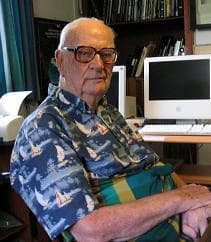
Sir Arthur Charles Clarke was an English science fiction writer, science writer, futurist, inventor, undersea explorer, and television series host.
Similar books
- Childhood's End
Arthur C. Clarke
4.1 (130k) average on GoodreadsFantasyExplores humanity's evolutionary leap and encounter with ultimate cosmic truths, with a similarly grand scope.
- The Circle
Dave Eggers
3.4 (183k) average on GoodreadsThrillerDeals with themes of pervasive surveillance, data transparency, and the erosion of privacy in a near-future setting.
- Permutation City
Greg Egan
4.1 (8k) average on GoodreadsFantasyExplores the philosophical implications of advanced technology on consciousness, reality, and the nature of existence.
- 1984
George Orwell
4.2 (3.1M) average on GoodreadsPoliticsWhile both The Light of Other Days and Orwell's 1984 explore themes of surveillance and privacy, their approaches differ significantly. 1984 focuses on state-controlled, oppressive surveillance designed to manipulate and control thought, generating fear and conformity. Clarke's wormcam, conversely, is initially a neutral technology that inadvertently eliminates privacy, leading to a more passive, albeit equally profound, loss of individual autonomy. Orwell's work is a direct political allegory warning against totalitarianism, whereas Clarke's is more a philosophical exploration of the inherent consequences of absolute transparency, regardless of intent. The 'telescreen' in 1984 is a tool of suppression, while the wormcam is a tool of observation, whose societal impact arises from its very existence, not solely from malicious intent. As literary critic Raymond Williams noted in Keywords: A Vocabulary of Culture and Society (1976), Orwell's work is a direct critique of power structures, while Clarke's often explores the inherent nature of technological advancement itself.
- Harry Potter and the Sorcerer's Stone
J.K. Rowling
4.5 (7M) average on GoodreadsFantasyRescued from a miserable life under the stairs, an orphaned boy discovers he's a wizard destined for a magical school, where he uncovers a dangerous secret tied to the dark wizard who murdered his parents.
- The Hunger Games
Suzanne Collins
4.3 (6.4M) average on GoodreadsFantasyIn a future where children fight to the death on live television, Katniss Everdeen volunteers for the arena, turning a death sentence into a fight for survival and a spark of rebellion.






Enjoyed the summary?
A summary gives you the shape of the book. The book itself has the detail, the examples and the voice.
Find The Light of Other Days on AmazonAs an Amazon Associate, BookBrief earns from qualifying purchases. How we're funded