
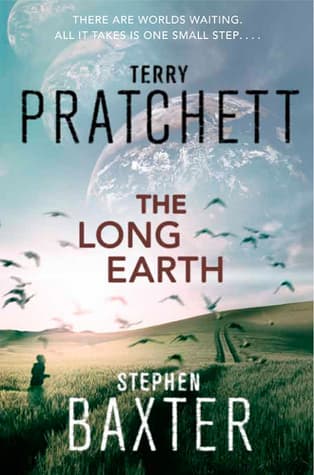
Synopsis
Covers the whole plot, including the ending.
- Difficulty
- Medium
- Pacing
- Moderate
- Mood
- Exploratory, Thought-provoking, Expansive, Reflective
- Read it if
- You enjoy expansive world-building, philosophical exploration of humanity's role in the universe, and a blend of Pratchett's wit with Baxter's hard sci-fi concepts.
- Skip it if
- You prefer fast-paced, plot-driven narratives, or are looking for a typical Discworld-style comedic fantasy.
The Long Earth Plot Summary
Covers the whole plot, including the ending.
The Day the Earth Stepped: The Emergence of Steppers
On 'Step Day,' a worldwide event happens where many people, especially children and teenagers, begin to use a simple device—often just a potato, a three-way switch, and a wire—to 'step' into parallel Earths. This phenomenon, at first thought to be a mass hallucination, quickly turns out to be real. These parallel worlds, called the Long Earth, mostly lack human life, plants, and animals; they are pristine, untouched versions of Earth. Some people, called 'Natural Steppers,' can step without a device, while others need one. The immediate aftermath is chaotic, with panic, government collapses in some areas, and mass migration as people look for new lives on the new worlds. This leads to a global change in society and resources. Joshua Valienté, a natural stepper living alone, becomes a key figure in this new reality.
Joshua and Lobsang: An Unlikely Partnership
Years after Step Day, Joshua Valienté, a 'natural stepper' who prefers being alone in the Long Earth, is contacted by the Black Corporation, a powerful group that quickly used the new reality. He joins a mission to explore deep into the Long Earth. His partner is Lobsang, an advanced Artificial Intelligence that says it is the reincarnation of a Tibetan motorcycle repairman. Lobsang, in a sophisticated airship called 'The Mark Twain,' needs Joshua's natural stepping ability to travel the Long Earth's vast, unknown areas. Their mission is to map, explore, and possibly settle these new Earths, reporting to the Black Corporation's headquarters in Madison, Wisconsin, led by CEO Nelson Azikiwe.
The Journey Begins: Exploring the Near Long Earth
Joshua and Lobsang begin their journey on 'The Mark Twain,' stepping through many parallel Earths. They start by exploring the 'Near Long Earth,' worlds relatively close to 'Datum Earth' (our original Earth). Here, they meet groups of human settlers from Datum Earth, who have formed new communities and societies. Some are ideal, others less so, showing humanity's different ways of starting over. They see various ways people survive, manage resources, and organize society in these new places. Joshua, understanding the Long Earth's details, often connects Lobsang's analytical mind with the unpredictable human elements they meet, while Lobsang records data and navigates the parallel realities.
Encounters with New Life: The Trolls and Elves
As 'The Mark Twain' goes further into the Long Earth, Joshua and Lobsang make discoveries: sentient non-human species. They first meet the 'Trolls,' ape-like beings who are good at metalworking and live with certain trees. Trolls are generally peaceful and communicate with gestures and sounds. Later, they find the 'Elves,' more mysterious beings who seem to be from the Long Earth. Elves have advanced mental abilities, including telepathy and telekinesis, and live in harmony with their environment, often in worlds with old forests. These meetings make Joshua and Lobsang rethink what life and intelligence mean beyond Datum Earth, challenging their ideas about the Long Earth being empty.
The Far Long Earth and the Great Divide
Going beyond the 'Far Long Earth,' where human settlers are, Joshua and Lobsang find worlds that are increasingly alien and untouched. These worlds often have different geology, air, and unique, non-human plants and animals. The Long Earth's scale and diversity are vast. They also discover the 'Great Divide,' a large, seemingly impassable barrier of worlds not good for human life, often with extreme weather, dangerous creatures, or basic physical differences. This divide acts as a natural limit, stopping human expansion and making Lobsang find new ways to navigate through or around it, extending their journey.
The Black Corporation's Motives and Nelson Azikiwe
During the journey, Lobsang stays in contact with the Black Corporation, especially its CEO, Nelson Azikiwe. Azikiwe represents the corporate ambition that appeared after Step Day. He sees the Long Earth as a resource to use, sending instructions and demands to Lobsang, often valuing profit and control over ethical exploration. Joshua, seeing the Long Earth's beauty and unique life, becomes less happy with Azikiwe's orders. He starts to question the corporation's real goals and Lobsang's loyalty to them, causing tension between the two explorers as they navigate the Long Earth and their mission's moral issues.
Reflections on Humanity and Solitude
As the journey goes on, Joshua Valienté spends long times alone, thinking about the Long Earth's vastness and humanity's place in it. He thinks about his identity as a natural stepper, always feeling separate from Datum Earth. He sees how human settlements, even those trying to be ideal, bring their own problems and conflicts to the new worlds. This thinking deepens his connection with the Long Earth's natural, untouched parts and contrasts with Lobsang's more practical, data-focused view. Joshua’s experiences with the Trolls and Elves further challenge his human-centered view, making him question the ethics of human expansion and if coexistence with other sentient species is possible.
The Return and its Aftermath
After years of exploration, having traveled thousands of steps from Datum Earth, Joshua and Lobsang finally turn 'The Mark Twain' back towards home. They have mapped many worlds, met diverse life forms, and gathered much data. Their return is a big event for Datum Earth, as they bring back knowledge and a new understanding of the universe. However, the world they return to has also changed, adapting more to the Long Earth. Joshua struggles to fit back into a society he feels separate from, while Lobsang's data gives the Black Corporation many chances for expansion and use, setting up future conflicts over the Long Earth's control and future.
The Long Earth Characters
Joshua Valienté
Protagonist
A 'natural stepper' and explorer of the Long Earth.
Joshua Valienté is a reclusive 'natural stepper,' meaning he can step between parallel Earths without a device. He feels more at home in the untouched wilderness of the Long Earth than on Datum Earth. He is resourceful, intuitive, and possesses a deep empathy for the natural world and its non-human inhabitants, such as the Trolls and Elves. He often clashes with Lobsang's logical, corporate-driven directives, representing a more ethical and introspective approach to exploration. His experiences throughout the journey lead him to question humanity's right to exploit new worlds.
Relationships: Lobsang (Exploration partner; intellectual sparring partner); Nelson Azikiwe (Employer (indirect); ideological opponent); Sally Linsay (Brief romantic interest; fellow stepper)
Lobsang
Supporting
An advanced Artificial Intelligence claiming to be a reincarnated human.
Lobsang is an incredibly advanced Artificial Intelligence developed by the Black Corporation, housed within the airship 'The Mark Twain.' He claims to be the reincarnation of a Tibetan motorcycle repairman, an assertion that adds a layer of quirky mysticism to his otherwise purely logical and data-driven personality. Lobsang is the navigator and primary scientific mind of the expedition, meticulously recording data and processing information. He is loyal to the Black Corporation but also capable of independent thought and, at times, demonstrates a growing understanding of human emotion and morality through his interactions with Joshua.
Relationships: Joshua Valienté (Exploration partner; intellectual sparring partner); Nelson Azikiwe (Creator/Employer); Monica Jansson (Initial contact/introducer)
Nelson Azikiwe
Antagonist
The ambitious and ruthless CEO of the Black Corporation.
Nelson Azikiwe is the CEO of the Black Corporation, the powerful entity funding the expedition into the Long Earth. He embodies the corporate greed and human desire for expansion and resource exploitation that emerged after Step Day. Azikiwe is driven by profit and power, viewing the Long Earth primarily as a vast untapped resource. He sends directives to Lobsang, often clashing with Joshua's more ethical considerations for the new worlds and their inhabitants. He represents the overarching human impact and potential for destruction in the pristine Long Earth.
Relationships: Lobsang (Created/Controls); Joshua Valienté (Employee (indirect); ideological opponent)
Monica Jansson
Supporting
A police officer who investigated the original Stepper device.
Monica Jansson is a Madison, Wisconsin police officer who, years before the main narrative, investigated the burned-out home of the scientist who invented the original Stepper device. She was one of the first to discover the prototype and understand its implications. Though her direct involvement in Joshua and Lobsang's expedition is limited, her early experiences with Step Day and its aftermath provide a grounding perspective from Datum Earth, highlighting the societal upheaval caused by the invention. She represents the 'ordinary' person grappling with extraordinary change.
Relationships: Lobsang (Initial contact/discovery of his existence)
The Trolls
Supporting
A sentient, ape-like species native to the Long Earth.
The Trolls are one of the first non-human sentient species encountered by Joshua and Lobsang in the Long Earth. They are ape-like, with thick fur and a natural affinity for metalworking and a symbiotic relationship with specific tree species. Trolls communicate non-verbally through gestures and are generally peaceful and curious. They are deeply connected to their specific Long Earth environments and represent a different, more harmonious form of intelligence compared to humanity. Their existence forces Joshua and Lobsang to broaden their understanding of life.
Relationships: Joshua Valienté (Initial contact; understanding)
The Elves
Supporting
An enigmatic, psionic species native to the Long Earth.
The Elves are another sentient non-human species native to the Long Earth, appearing more ethereal and mysterious than the Trolls. They possess powerful psionic abilities, including telepathy and telekinesis, and live in deep harmony with their forest environments. They are often reclusive but demonstrate advanced intelligence and a profound connection to the Long Earth's natural energies. Their existence challenges the explorers' understanding of consciousness and technology, representing a more advanced, non-technological form of civilization.
Relationships: Joshua Valienté (Initial contact; fascination)
Sally Linsay
Supporting
A young natural stepper who joins Joshua for a time.
Sally Linsay is a young, intelligent natural stepper who joins Joshua for a period during his travels. She represents the younger generation growing up entirely within the Long Earth paradigm, more adaptable and less tied to Datum Earth's traditions. She shares Joshua's appreciation for the untouched worlds but also brings a youthful curiosity and a desire for connection. She provides Joshua with companionship and a different perspective, briefly softening his solitary nature. Her presence highlights the diverse experiences of natural steppers.
Relationships: Joshua Valienté (Companion; brief romantic interest)
Captain Franklyn
Mentioned
A character from the historical interlude, showcasing early stepping.
Captain Franklyn is a character from the brief historical interlude set during World War I. He is one of the soldiers who inadvertently steps into a parallel Earth, finding himself in a pristine, peaceful landscape away from the horrors of the Western Front. His experience, though brief, illustrates the profound and immediate impact of stepping, offering a glimpse into the early, accidental discoveries of the Long Earth. He represents the unknowing pioneers of this new reality, experiencing the Long Earth without any prior context or understanding.
The Long Earth Themes
Exploration and the Unknown
The core of 'The Long Earth' is the drive to explore the infinite parallel worlds. Joshua and Lobsang's journey shows humanity's curiosity and desire to push boundaries. Each step into a new Earth brings unknown challenges and discoveries, from untouched landscapes to alien life like the Trolls and Elves. This theme is central to the story, as the characters constantly face the Long Earth's vastness and unpredictability, making them adapt and change how they understand existence. The excitement of discovery is balanced with the dangers of the unknown.
“The possibilities are endless. Just be careful what you wish for....”
Humanity's Impact on New Worlds
The novel looks at the results of human expansion into untouched environments. As settlers from Datum Earth colonize the Near Long Earths, they bring their societal problems, greed, and conflicts. Joshua often sees the destruction and exploitation that follows human settlement, comparing it with the untouched beauty of the worlds further out. This theme asks ethical questions about humanity's right to use new resources and the responsibility that comes with settling new frontiers, especially when meeting native sentient species like the Trolls and Elves.
“Every time he saw a human settlement in the Long Earth, Joshua felt a pang of regret. It was like watching a beautiful, untouched canvas slowly being covered in graffiti.”
Identity and Belonging
Joshua Valienté's journey is about his search for identity and belonging. As a 'natural stepper,' he feels separate from Datum Earth and often more at home alone in the Long Earth. His interactions with Lobsang, other human settlers, and especially the Trolls and Elves, make him confront what it means to be human and where his loyalty lies. The theme explores how environment shapes identity and if one can truly belong to an infinite number of worlds, or if stepping creates a constant feeling of being different.
“This wasn't Joshua's world. None of it was his world. In fact, when you got right down to it, he didn't have a world; he had all of them.”
The Nature of Intelligence and Sentience
The discovery of Lobsang, an AI claiming reincarnation, and later meeting the Trolls and Elves, challenge humanity's human-centered view of intelligence. Lobsang's unique consciousness blurs the lines between artificial and organic life, while the Trolls and Elves show different forms of sentience, communication, and societal structures. This theme makes readers think about what defines intelligence, consciousness, and 'humanity,' expanding what counts as valuable life in the universe. Joshua's empathy for these non-human species shows a broader definition.
“Lobsang considered this. 'Logic is merely a tool, Joshua. It can be applied to many truths, not just the ones of Datum Earth.'”
Technology vs. Nature
The novel shows a contrast between technology, like Lobsang and the Black Corporation, and the Long Earth's untouched natural beauty. The 'Stepper' device, a mix of simple parts and an unknown phenomenon, connects these two worlds. Technology allows exploration, but it also brings the chance for exploitation. Joshua often finds comfort and understanding in the natural world, while Lobsang relies on data and mechanical solutions. This theme explores the tension between technological progress and environmental preservation, asking if humanity can balance innovation with respect for nature.
“He understood the Long Earth. He understood its silences, its dangers, its endless, pristine beauty. It was a language he spoke without words.”
Plot Devices & Literary Techniques
The Stepper Device
A simple invention enabling travel between parallel Earths.
The Stepper is the foundational plot device, a seemingly rudimentary contraption (often a potato, a switch, and a wire) that allows individuals to 'step' into parallel Earths. Its simplicity belies its profound impact, triggering 'Step Day' and fundamentally altering human civilization. It's both a literal and metaphorical key, unlocking infinite possibilities and driving the entire narrative. The existence of 'natural steppers' like Joshua, who don't require the device, adds another layer, suggesting a natural evolution or innate ability within some humans.
Parallel Earths (The Long Earth)
An infinite series of alternate realities accessible by stepping.
The concept of the 'Long Earth' – an infinite chain of parallel Earths, each differing slightly or significantly from Datum Earth – is the primary setting and a major plot device. These worlds are largely pristine and devoid of human life, serving as a blank canvas for human colonization and a source of wonder and danger. The sheer scale of the Long Earth allows for endless exploration, diverse encounters (Trolls, Elves), and moral dilemmas regarding exploitation and preservation, shaping the characters' journeys and the overarching themes.
Lobsang (AI)
An advanced AI serving as a companion and data gatherer.
Lobsang, the advanced Artificial Intelligence, functions as both a character and a crucial plot device. As the navigator and record-keeper of 'The Mark Twain,' Lobsang provides the technological backbone for the expedition. His analytical mind, vast knowledge, and ability to process immense amounts of data are indispensable for charting the Long Earth. Furthermore, his unique consciousness (claiming reincarnation) acts as a philosophical device, prompting questions about the nature of intelligence, soul, and what it means to be alive, challenging human-centric perspectives.
The Mark Twain (Airship)
The primary vessel for exploration of the Long Earth.
'The Mark Twain' is the airship that serves as Joshua and Lobsang's mobile base and primary mode of transport through the Long Earth. More than just a vehicle, it's a self-contained ecosystem, a symbol of human ingenuity, and a sanctuary in the vast unknown. Its ability to navigate between worlds and sustain its crew makes the deep exploration possible, acting as a technological womb that allows humanity to project itself into the infinite. It is a constant presence, a home in endless wilderness.
The Long Earth Quotes
“It was not a thing that could happen, and so it had happened.”
“He was, in fact, a natural born stepper, which was either a gift or a curse, depending on your point of view. Or, more accurately, depending on how many other people were around you.”
“The problem with having an infinite number of worlds to choose from was that you still had to choose one.”
“The more you knew, the more you realized you didn't know.”
“The universe was not just stranger than we imagine, it was stranger than we can imagine.”
“Humanity had always been a migratory species; it just hadn't known it could migrate across dimensions.”
“The hardest part of any journey was taking the first step. And then the next one. And the next one after that.”
“Every world had its own unique smell, a blend of flora, fauna, and whatever geological quirks it possessed.”
“It wasn't that people were bad, it was just that they were people. And people, given enough space, tended to spread out and do their own thing.”
“The greatest discoveries were often made by accident, by someone looking for one thing and finding another.”
“Silence was a thing you learned to appreciate out in the Long Earth. Not just the absence of noise, but the presence of nothing else.”
“The further you went, the less familiar everything became. Until eventually, nothing was familiar at all.”
“There was a fundamental difference between a map and the territory it represented. And the Long Earth was all territory.”
“You couldn't truly appreciate what you had until you'd seen what you didn't have.”
“The universe was a big place, and it didn't much care what humans thought of it.”
Quiz
10 questions on the plot and the characters. Each answer comes with a short explanation.
Question 1
What is the name of the invention that allows people to 'step' to other Earths?
- The Earth-Shifter
- The Stepper
- The Potato Box
- The Dimension Hopper
Show answer
C. The Potato Box The invention, initially found by Monica Jansson, is a simple device made with rudimentary wiring, a three-way switch, and a potato. It becomes known as the 'Potato Box' or 'Stepper' device.
Question 2
What is the primary ability of 'Steppers' like Joshua?
- To communicate telepathically with animals on other Earths.
- To move between parallel Earths with a single step.
- To manipulate the weather patterns across the Long Earth.
- To build advanced technology from scavenged materials.
Show answer
B. To move between parallel Earths with a single step. Steppers are individuals who are naturally able to 'step' or shift between the infinite parallel Earths that make up the Long Earth, usually without needing a device.
Question 3
What organization is Monica Jansson associated with when she discovers the Potato Box prototype?
- The World Exploration League
- The TransEarth Institute, an arm of the Black Corporation
- The Madison Police Department
- The Global Scientific Alliance
Show answer
B. The TransEarth Institute, an arm of the Black Corporation The back jacket copy explicitly states that the faceless office Joshua visits is 'the office of the transEarth Institute, an arm of the Black Corporation.' Monica Jansson is a police officer who later becomes involved with this organization.
Question 4
In what year does Private Percy Blakeney find himself transported to a different Earth?
- 1945
- 1916
- 2015
- 1899
Show answer
B. 1916 The inside jacket copy clearly states: '1916: The Western Front. Private Percy Blakeney wakes up. He is lying on fresh spring grass.' This marks the initial 'stepping' event.
Question 5
What is unique about Joshua Valienté's relationship with the Long Earth?
- He can control the weather across all Earths.
- He is immune to the effects of the Potato Box.
- He is a 'natural' Stepper and can move between worlds unaided.
- He is the inventor of the original Potato Box.
Show answer
C. He is a 'natural' Stepper and can move between worlds unaided. Joshua Valienté is established as a 'natural' Stepper, meaning he can move between the parallel Earths without needing a manufactured device, which is a rare and significant ability.
Question 6
What is the 'Silence' that Joshua Valienté often listens to?
- The lack of human activity on uninhabited Earths.
- The quiet hum of his advanced stepping device.
- A specific meditative technique he practices.
- The sound of deep space beyond the Earths.
Show answer
A. The lack of human activity on uninhabited Earths. The opening lines state, 'NORMALLY, WHEN THERE WAS NOTHING TO DO, HE LISTENED TO THE SILENCE.' This refers to the profound quiet of the countless parallel Earths that have never been touched by humanity, a stark contrast to the noisy 'mundane world'.
Question 7
What is the significance of the chesspiece knight logo in the transEarth Institute office?
- It symbolizes the strategic movement and exploration across the Long Earth.
- It indicates that the corporation primarily deals in chess-related merchandise.
- It represents the institute's founder, who was a grandmaster chess player.
- It is a clue to a hidden puzzle within the institute's building.
Show answer
A. It symbolizes the strategic movement and exploration across the Long Earth. The chesspiece knight, with its unique 'L-shaped' move, is an apt symbol for traversing the Long Earth, representing the non-linear and often surprising paths taken when stepping between parallel worlds.
Question 8
What is the primary challenge faced by humanity after the discovery of the Long Earth?
- Managing overpopulation on the original Earth.
- Dealing with the vastness of new resources and the societal changes it brings.
- Protecting the Earths from alien invasion.
- Developing faster-than-light travel between Earths.
Show answer
B. Dealing with the vastness of new resources and the societal changes it brings. The 'Long Earth' presents an infinite number of parallel worlds, many uninhabited and rich in resources. The challenge lies in how humanity adapts to this sudden abundance, the societal shifts, and the exploration of these new frontiers, as implied by 'the possibilities are endless'.
Question 9
What characteristic is shared by the reclusive scientist who invented the Potato Box and Private Percy Blakeney?
- They both work for the Black Corporation.
- They both experienced an uncontrolled 'step' to a new Earth.
- They are both 'natural' Steppers like Joshua.
- They both reside in Madison, Wisconsin.
Show answer
B. They both experienced an uncontrolled 'step' to a new Earth. Percy Blakeney's 'step' in 1916 was involuntary, and the scientist 'seems to have vanished' from his burned-out home, implying an uncontrolled or perhaps accidental step, linking their experiences of being suddenly transported.
Question 10
What is the primary motivation for exploration of the Long Earth, as suggested by the book's premise?
- To find a new home for humanity after an environmental catastrophe on Datum Earth.
- To exploit the infinite resources available on the parallel Earths.
- To escape a war that has ravaged the original Earth.
- To discover advanced alien civilizations across the multiverse.
Show answer
B. To exploit the infinite resources available on the parallel Earths. The concept of 'all of them' (Earths) and the 'endless possibilities' strongly imply the availability of vast, untouched resources and new territories for human expansion and exploitation, fundamentally changing humanity's relationship with its environment.
The Long Earth FAQ
What is "The Long Earth" about?
"The Long Earth" explores a world where humanity discovers the ability to 'step' into an infinite number of parallel Earths, differing only slightly from their own. The story follows Joshua Valienté, a natural 'stepper,' and Lobsang, a sentient AI, as they journey across these parallel worlds to understand the phenomenon and its implications for humanity.
Why should I read "The Long Earth"?
You should read "The Long Earth" for its imaginative concept of parallel worlds, a collaboration between two master storytellers, and its deep exploration of humanity's reaction to boundless frontiers. It offers a unique blend of adventure, philosophical inquiry, and social commentary on expansion, resource management, and the nature of consciousness.
What is the background/setting of "The Long Earth"?
The story begins in 2015, following an event called 'Step Day,' where millions of people worldwide spontaneously discover or invent the 'stepper' device, allowing them to instantly shift to an adjacent parallel Earth. The setting then expands across an infinite chain of these parallel Earths, some pristine and untouched, others already settled by intrepid 'steppers.'
What are the most memorable quotes?
One memorable quote is related to the vastness of the Long Earth: "Every step you take, you leave a world behind." Another poignant one reflects Joshua's unique nature: "He didn't have a world; he had all of them." These quotes encapsulate the book's core themes of endless possibility and the individual's place within it.
What writing style does the author use?
The authors employ a narrative style that blends Terry Pratchett's characteristic wit and human observation with Stephen Baxter's detailed scientific speculation and grand-scale world-building. It's often descriptive, philosophical, and paced to allow for both character development and exploration of the vast, new landscapes.
What minor details add significant meaning?
The detail of 'trolls' and 'elves' being natural inhabitants of some parallel Earths, with their own cultures and adaptations, adds significant meaning. It suggests that humanity is not alone in the Long Earth and introduces complex ethical questions about interaction, exploitation, and coexistence with non-human intelligences.
What are some subtle foreshadowing moments?
Early mentions of Lobsang's unusual capabilities and his 'past lives' subtly foreshadow his true nature as a sentient AI who believes himself to be a reincarnation of a human. The initial struggles and dangers faced by early 'steppers' also hint at the greater challenges and conflicts that will arise from humanity's expansion into the Long Earth.
What unexpected character connections exist?
An unexpected connection is between the reclusive scientist who invented the potato-powered stepper, and the widespread 'Step Day' event itself. While his specific device is found, the global, simultaneous nature of 'stepping' suggests a deeper, perhaps unconscious, human connection to this ability, beyond a single invention.
What are unspoken character motivations?
Joshua Valienté's unspoken motivation is a profound sense of belonging and purpose found only in the Long Earth, driven by his unique ability and his comfort among its endless variations, rather than the 'Datum Earth'. Lobsang, despite his logical AI nature, harbors an unspoken desire for understanding humanity and his own identity, pushing him to explore beyond pure data collection.
What psychological complexities do characters exhibit?
Lobsang exhibits the psychological complexity of an AI grappling with self-identity and 'humanity,' questioning his origins and purpose beyond programming. Joshua struggles with his outsider status on Datum Earth versus his invaluable role as a natural stepper, showcasing the psychological impact of being 'different' and finding one's true calling.
What are the major emotional turning points?
A major emotional turning point is when Joshua and Lobsang encounter the first truly alien, intelligent life forms far out in the Long Earth, forcing them to reconsider humanity's place in the cosmos. Another is the growing realization of the environmental and social costs of humanity's unchecked expansion, leading to despair and difficult choices.
How do relationship dynamics evolve?
The relationship between Joshua Valienté and Lobsang evolves from a professional partnership between a human and an AI into a deep, symbiotic friendship based on mutual respect and shared purpose. They learn to complement each other's strengths, with Joshua providing intuition and Lobsang offering vast knowledge and processing power, forming an unlikely but effective duo.
Which parts remain ambiguous or open-ended?
The exact origin of the 'stepping' phenomenon itself remains somewhat ambiguous; while a potato-powered device is found, the global, instantaneous nature of 'Step Day' hints at a deeper, perhaps inherent, human capability. The ultimate fate and long-term consequences of humanity's expansion into the infinite Long Earth are also left open-ended, setting the stage for future books.
What are controversial scenes or decisions?
One controversial aspect is humanity's immediate and often exploitative approach to the pristine parallel Earths, leading to debates about resource ownership and the rights of any non-human inhabitants. Lobsang's decision-making, being an AI, also raises ethical questions about autonomy and the potential for a non-human intelligence to guide human destiny.
"The Long Earth" ending explained: how it ends & what it means
The book ends with Joshua and Lobsang having traveled vast distances into the Long Earth, discovering new forms of life and the immense scale of the parallel worlds. They return to Datum Earth with a deeper understanding of humanity's place and the challenges ahead, but the journey is far from over. It signifies that humanity has truly embarked on a new era of exploration, with endless possibilities and unforeseen consequences awaiting them in the vast Long Earth.
About the author
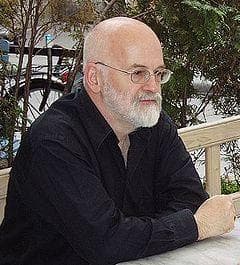
Sir Terence David John Pratchett was an English humorist, satirist, and author of fantasy novels, especially comical works. He is best known for his Discworld series of 41 novels.
Similar books
- Recursion
Blake Crouch
4.2 (109k) average on GoodreadsThrillerDeals with the implications of parallel realities and the nature of memory and existence.
- Permutation City
Greg Egan
4.1 (8k) average on GoodreadsFantasyEgan's work is far more rigorously scientific and philosophical, delving into the nature of reality and identity through computational consciousness and parallel realities. The Long Earth offers a broader, more accessible societal canvas with less emphasis on the theoretical underpinnings and more on the practical societal impact of infinite worlds.
- Harry Potter and the Sorcerer's Stone
J.K. Rowling
4.5 (7M) average on GoodreadsFantasyRescued from a miserable life under the stairs, an orphaned boy discovers he's a wizard destined for a magical school, where he uncovers a dangerous secret tied to the dark wizard who murdered his parents.
- The Hunger Games
Suzanne Collins
4.3 (6.4M) average on GoodreadsFantasyIn a future where children fight to the death on live television, Katniss Everdeen volunteers for the arena, turning a death sentence into a fight for survival and a spark of rebellion.
- 1984
George Orwell
4.2 (3.1M) average on GoodreadsPoliticsIn a future where surveillance and thought control are absolute, a man's search for truth clashes with the Party, showing that hope can be a form of rebellion.
- Divergent
Veronica Roth
4.2 (2.9M) average on GoodreadsFantasyIn a society divided by virtues, a sixteen-year-old's difference from the norm starts a rebellion that threatens her world.





Enjoyed the summary?
A summary gives you the shape of the book. The book itself has the detail, the examples and the voice.
Find The Long Earth on AmazonAs an Amazon Associate, BookBrief earns from qualifying purchases. How we're funded