
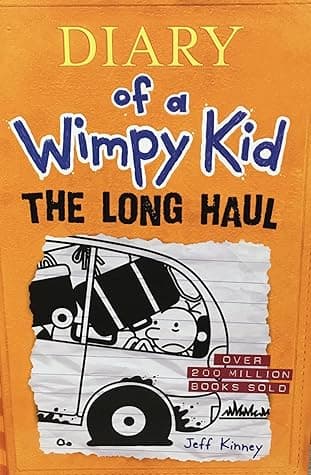
Synopsis
Covers the whole plot, including the ending.
- Difficulty
- Easy
- Pacing
- Fast
- Mood
- Humorous, Chaotic, Lighthearted, Relatable
- Read it if
- You enjoy humorous, light-hearted stories about family misadventures and the trials of growing up.
- Skip it if
- You prefer complex plots, deep character development, or stories without slapstick humor.
The Long Haul Plot Summary
Covers the whole plot, including the ending.
The Heffleys Plan a Road Trip
The Heffley family—Greg, his parents Frank and Susan, and brothers Rodrick and Manny—gets ready for a summer road trip. Susan wants a trip with no electronics and lots of 'quality time.' Greg hates the idea and wants to stay home to play video games. The first plan is to visit Aunt Loretta, but Susan secretly plans a stop at a water park she saw advertised. The car is packed full, and the family leaves. Greg already expects the usual problems that seem to follow them. The trip starts with typical Heffley chaos, including fights over seats and the crowded minivan.
Rest Stop Mishaps and a Runaway Pig
Their first stop is a dirty motel, which lowers everyone's mood. The motel room is bad, and Rodrick accidentally locks himself out in just a towel. The next morning, at a roadside petting zoo, Manny wins a piglet in a 'guess the weight' game. Susan, against Frank's wishes, lets Manny keep the pig, thinking it will teach him responsibility. But the pig quickly causes trouble, escaping its makeshift pen in the car and distracting everyone. Its actions lead to a wild chase through a gas station parking lot, ending with the pig running into the woods, which upsets Manny.
The Water Park Debacle
After the pig incident, the family continues their trip and arrives at the water park Susan wanted to visit. Greg is excited at first, but the park is too crowded and not very good. Lines are very long, food costs too much, and the facilities are dirty. While waiting for a ride, Greg and Rodrick argue, and Greg accidentally loses his locker key. This makes them spend time and money to get their things, making the experience even worse. The idea of a fun family day at the water park quickly becomes a hot, frustrating, and expensive mess, confirming Greg's belief that their trips are cursed.
Car Trouble and a Food Fight
Leaving the disappointing water park, the Heffley family finds more trouble. Their minivan, already old, has a small accident with another family's car. The other family, a loud and equally messy group, blames the Heffleys for the accident, leading to a loud fight. Later, at a restaurant, the two families coincidentally sit at nearby tables. Tensions grow, ending in a huge food fight between the two groups, with mashed potatoes, gravy, and other food. The Heffleys run from the restaurant in shame, leaving a big mess and making their reputation for public problems even stronger.
The Seagull Attack and the Boat Ride
Driving along the coast, the Heffleys stop for a nice view and snacks. But aggressive seagulls interrupt their peaceful moment, flying down to their car to steal their food. The family tries to fight them off, causing more mess and panic inside the car. Later, they decide to take a ferry to save time, but the boat ride is not relaxing. Rodrick gets seasick, Manny causes trouble, and it is crowded and uncomfortable. The trip seems to be a continuous series of bad luck, pushing the family's patience to its limits.
Finding the Pig and a New Problem
During their trip, the Heffleys unexpectedly see Manny's runaway pig at a roadside attraction. After a frantic chase, they catch the pig again, which makes Manny happy. But the pig has grown much bigger and is even harder to control. Its presence in the already crowded car creates more chaos, messes, and arguments. The family struggles to transport and feed the pig without it causing more trouble. While the reunion is nice for Manny at first, for the rest of the family, it is just another problem added to their increasingly bad road trip.
The Hotel Horror and Rodrick's Laundry
The Heffleys check into another cheap hotel, hoping for a good night's sleep. But the hotel is not good, with questionable cleanliness and noisy neighbors. Rodrick, who hasn't changed clothes in days, finally decides to do his laundry. He uses the hotel's washing machine, but Greg sees Rodrick has mixed his clothes with someone else's, resulting in stained and shrunken clothes. This gross event adds another layer of disgust and trouble to the trip, showing again how the family struggles to do even simple tasks without creating a mess.
The Other Family Returns
Just when the Heffleys think things can't get worse, they see the rival family from the car accident and food fight again. This time, they meet in a public park. The two families immediately start their fight again, with accusations and insults. The situation quickly turns into a physical fight involving the kids, embarrassing the Heffleys more and confirming their reputation as a family that causes public scenes. The repeated meetings with this family become a running joke, each meeting more chaotic and shameful than the last, making the Heffleys wish they could just disappear.
The Pig's New Home and the Unexpected Turn
The Heffleys, wanting to get rid of the now huge and troublesome pig, try to find it a new home. They find a local fair or farm where they give the pig away. While Manny is sad, the rest of the family feels relieved. Unexpectedly, they then find a local fair that has a giant pumpkin contest. Frank, surprisingly, decides to enter. Against all odds, the Heffleys win the contest, not for the pumpkin, but for a smaller, odd-shaped squash that Manny had picked up. This unexpected win brings a moment of joy and a feeling of success, a rare good point in their otherwise bad trip.
The Journey Home and a Reluctant Memory
With their unexpected prize, the Heffleys finally start their trip home. The car is still a mess, and the family is tired, but their mood has changed a little. Despite all the problems—the lost pig, the water park mess, the food fight, and the car trouble—they have, in their own messy way, made a memorable experience. Greg, who hated the trip at first, admits that it was certainly eventful, even if not how his mom planned. They return home, tired and worn out, but with unique stories, making sure that 'The Long Haul' will be a family legend, whether Greg likes it or not.
The Long Haul Characters
Greg Heffley
Protagonist
Middle schooler whose perspective shapes the narrative of the disastrous road trip
Greg is the quintessential reluctant hero, a middle schooler who prefers the comfort of his home and video games to any form of outdoor adventure or family bonding. He is often cynical, self-centered, and prone to complaining, viewing most situations through a lens of impending doom or personal inconvenience. Throughout the road trip, he constantly tries to avoid participation, finds fault in everything, and often makes situations worse through his schemes or lack of effort. His primary motivation is usually self-preservation and avoiding embarrassment. He documents the trip in his journal, providing the narrative voice.
Relationships: Susan Heffley (Mother, whose well-intentioned but often misguided plans Greg resents); Frank Heffley (Father, whom Greg often tries to manipulate or avoid); Rodrick Heffley (Older brother, frequent tormentor and partner in minor mischief); Manny Heffley (Younger brother, whose innocent actions often cause chaos for Greg)
Susan Heffley
Supporting
Greg's optimistic mother, determined to create family memories
Susan is the driving force behind the family road trip, an eternal optimist who believes in the power of family bonding and 'quality time.' She is well-meaning but often naive, overlooking the practical difficulties and her family's reluctance. She imposes rules like no electronics and encourages activities that usually backfire spectacularly. Her desire for a perfect family vacation often clashes with the reality of her chaotic family. She is the one who insists on keeping the pig and secretly plans the water park detour, always trying to find the silver lining even amidst the worst disasters.
Relationships: Greg Heffley (Son, whose negative attitude she tries to counter); Frank Heffley (Husband, whom she often overrules or ignores); Rodrick Heffley (Son, whose slovenly habits she tries to correct); Manny Heffley (Youngest son, whom she dotes on and often enables)
Frank Heffley
Supporting
Greg's easily stressed father, often a voice of reason ignored by Susan
Frank is Greg's father, a man who generally prefers quiet and order but is constantly dragged into his family's chaotic escapades. He is often stressed and easily exasperated by his sons' antics and Susan's overly ambitious plans. He frequently voices his doubts about the road trip and its various detours, but his concerns are usually overridden by Susan. He tries to enforce rules and maintain some semblance of control but is ultimately powerless against the combined forces of his family's chaos. Despite his grumbling, he participates in the family's adventures, even showing a competitive streak at the fair.
Relationships: Greg Heffley (Son, with whom he shares a mutual desire for peace and quiet); Susan Heffley (Wife, whose plans he often reluctantly follows); Rodrick Heffley (Son, whose laziness and irresponsibility annoy him); Manny Heffley (Youngest son, whose innocent mischief he often tolerates)
Rodrick Heffley
Supporting
Greg's older brother, lazy and often the source of gross humor
Rodrick is Greg's older brother, characterized by his laziness, lack of hygiene, and general indifference to others' feelings. He is primarily interested in his band, Löded Diper, and avoiding any form of responsibility. During the road trip, he contributes significantly to the chaos, whether by locking himself out of a motel room in a towel, refusing to change his clothes, or instigating arguments with Greg. He often acts as a foil to Greg, but they also share a common enemy in their parents' rules. His antics are a constant source of embarrassment and frustration for the rest of the family.
Relationships: Greg Heffley (Younger brother, whom he frequently teases and annoys); Susan Heffley (Mother, whose attempts to make him responsible he resists); Frank Heffley (Father, whom he often ignores); Manny Heffley (Youngest brother, whom he mostly ignores)
Manny Heffley
Supporting
Greg's youngest brother, whose innocent actions cause major problems
Manny is the youngest Heffley brother, a toddler whose innocent actions often have disproportionately large and disastrous consequences for the family. He is largely unsupervised and doted upon by Susan, which allows him to get away with more than his older brothers. His winning of the piglet at the petting zoo sets off a major chain of events, and his subsequent attachment to the animal complicates the entire trip. Despite his young age, he is often surprisingly resourceful in his mischief, such as finding ways to escape his car seat or get into trouble at motels. He is a catalyst for many of the plot's chaotic turns.
Relationships: Greg Heffley (Older brother, whose life he often complicates); Susan Heffley (Mother, whom he can easily manipulate); Frank Heffley (Father, whom he tolerates); Rodrick Heffley (Older brother, whom he mostly ignores)
The Pig
Supporting
A piglet won by Manny, whose presence causes immense chaos
The pig is a pivotal plot device and character in its own right, introduced when Manny wins it at a petting zoo. Initially a cute piglet, it quickly grows into a large, unruly animal that causes continuous mayhem for the Heffley family. Its escape from the car, subsequent recapture, and messy presence in the minivan drive several key plot points. The pig represents the ultimate disruption to Susan's idealized road trip, embodying the unpredictable and uncontrollable nature of their journey. Its eventual rehoming provides a moment of relief and a turning point for the family.
Relationships: Manny Heffley (Owner, deeply attached to the pig); Heffley Family (Its presence causes constant stress and chaos for the entire family)
The Other Family (Beardo's Family)
Supporting
A rival family encountered multiple times, escalating the Heffleys' misfortunes
This unnamed family, often referred to by Greg as 'the family with the beard' or 'Beardo's family,' serves as a recurring antagonist for the Heffleys. They are a large, boisterous, and equally chaotic group who first encounter the Heffleys during a fender bender. Their aggressive and confrontational nature leads to a public food fight and subsequent skirmishes. They are a mirror image of the Heffleys' own dysfunction, amplifying the themes of family chaos and public embarrassment. Their repeated appearances ensure that the Heffleys' trip is never truly peaceful.
Relationships: Heffley Family (Rival family, constantly clashing with them)
Aunt Loretta
Mentioned
The initial, forgotten destination of the road trip
Aunt Loretta is mentioned as the original, ostensible destination for the Heffley family's road trip. However, her house quickly becomes a forgotten goal as Susan's secret water park agenda and the subsequent disasters take over. She represents the mundane, sensible plan that is abandoned in favor of Susan's more adventurous, albeit disastrous, vision. Her existence highlights how far the Heffleys stray from their initial intentions.
Relationships: Heffley Family (Relative, intended destination)
The Long Haul Themes
The Illusion vs. Reality of Family Vacations
The book shows a clear difference between Susan's perfect idea of a family road trip and the messy, often bad reality. Susan dreams of family time and nice memories, but Greg's journal shows crowded places, bad motels, constant fights, and growing problems. This idea shows up from the beginning when Susan bans electronics, to the bad water park and the endless accidents. The Heffley's trip shows how plans often fail when faced with unexpected family issues and outside events, leading to a trip remembered for all the wrong reasons.
“Mom has this theory that the best way to bond as a family is to go on a road trip. But I think the only thing we're bonding over is how much we hate road trips.”
Chaos and Dysfunction as Family Norm
The Heffley family has a lot of chaos and problems, which gets worse in the small, stressful space of a road trip. Every try at order or fun quickly turns into arguments, accidents, or gross events. From Rodrick's hygiene and Manny's innocent destruction to Frank's frustration and Susan's mistaken hope, each family member adds to the growing mess. The repeated meetings with 'the other family' also show this idea, reflecting their own messy habits and proving that their type of problems is not unique, but perhaps more intense. The pig is the main symbol of this uncontrolled chaos.
“I swear, every time we go on a trip, it's like we're trying to break some kind of record for how many things can go wrong.”
The Burden of Responsibility (and lack thereof)
The idea of responsibility, or the lack of it, runs through the story. Susan tries to teach responsibility by making Manny care for the pig, which goes very wrong as the pig becomes a problem for everyone. Rodrick always avoids his duties, shown by his refusal to clean up and his general messiness. Greg always tries to avoid tasks or blame, looking for the easiest way out. Frank, while trying to be responsible, is often ignored. The pig, meant as a lesson, shows how the family struggles to handle even simple responsibilities, causing more chaos and stress for everyone.
“Mom said keeping a pig would teach Manny 'responsibility.' All it's taught ME is that I never want to be responsible for anything ever again.”
The Absurdity of Everyday Life
The book offers a funny and over-the-top look at the silly parts of everyday family life, especially when stuck in a small space on a long trip. The events, while wild (like a seagull attack or a food fight with another family), come from common family fights and travel problems. Greg's calm narration points out how ridiculous his family's situations are, from Rodrick's towel incident to the never-ending search for clean bathrooms. The constant turning of small annoyances into big problems shows that life, especially family life, is often an unpredictable and completely silly ride.
“I don't know why Mom thinks driving around in a cramped car for hours is 'fun.' It's like she's trying to invent new ways to torture us.”
Plot Devices & Literary Techniques
First-Person Journal Narration
The story is told through Greg Heffley's diary entries and drawings.
The entire 'Diary of a Wimpy Kid' series, including 'The Long Haul,' is presented as Greg Heffley's personal journal. This device provides a direct, unfiltered (and often biased) account of events from Greg's perspective. His distinctive voice, filled with cynicism, self-pity, and humorous observations, shapes the reader's understanding of the plot. The accompanying stick-figure illustrations are integral to the storytelling, adding visual gags, character expressions, and clarifying plot points in a way that text alone could not. This format is crucial for conveying Greg's internal thoughts and the comedic timing of the family's mishaps.
Running Gag / Recurring Antagonist
The repeated encounters with 'the other family' provide comedic and plot tension.
The Heffleys repeatedly encounter a rival family (often referred to as 'the family with the beard' or 'Beardo's family') throughout their road trip. This serves as a running gag, where each subsequent meeting escalates the conflict, from a fender bender to a food fight and further confrontations. This device adds a layer of external antagonism and comedic tension, highlighting the Heffleys' tendency to attract trouble and their inability to escape their past mishaps. The predictability of their next disastrous encounter with this family becomes a humorous expectation for the reader.
The Unattainable Ideal
Susan's vision of a perfect family vacation constantly clashes with reality.
This device is central to the plot, as Susan Heffley's idealized vision of a 'fun,' 'bonding,' and 'gadget-free' family road trip is relentlessly undermined by the harsh realities of travel with her dysfunctional family. Her secret plan for the water park, her insistence on keeping the pig, and her general optimism all represent this unattainable ideal. The gap between her expectations and the actual events—disgusting motels, chaotic attractions, and constant arguments—drives much of the story's humor and conflict. The plot continuously shows the breakdown of this ideal, only to find a small, unexpected victory at the end.
The Pig as a Catalyst and Symbol
Manny's pig serves as a central plot device, driving much of the chaos.
The pig, won by Manny at a petting zoo, is more than just an animal; it's a major plot catalyst and symbol of the Heffley family's unraveling. Its initial escape leads to a frantic chase, and its subsequent growth and messy presence in the car create numerous comedic and stressful situations. The pig embodies the unpredictable and uncontrollable elements that constantly derail Susan's plans. Its presence forces the family into uncomfortable situations and highlights their collective inability to manage unexpected responsibilities, ultimately leading to the events at the fair where it is rehomed.
The Long Haul Quotes
“I'll be famous one day, but for now I'm stuck in middle school with a bunch of morons.”
“The thing is, it's not easy for me to think of something to write about every day.”
“I'm not saying I'm a genius, but I'm pretty sure I'm smarter than the average bear.”
“The only reason I agreed to do this stupid journal was because I thought it would be easy.”
“I figure if I can just survive middle school, I'll be okay.”
“My mom is always trying to get me to do stuff that's 'good for me,' like eating vegetables or going outside.”
“The thing about having a best friend is that you have to put up with their annoying habits.”
“I'm not lazy, I'm just on energy-saving mode.”
“Sometimes I feel like I'm the only one who gets how the world works.”
“If there's one thing I've learned, it's that you can't trust anyone over the age of 30.”
“I'm not saying I'm perfect, but I'm pretty close.”
“The best way to get through life is to avoid as much responsibility as possible.”
“I don't see why I have to learn algebra. When am I ever going to use it in real life?”
“Friends come and go, but a diary is forever.”
Quiz
10 questions on the plot and the characters. Each answer comes with a short explanation.
Question 1
What is the main setting and premise of 'The Long Haul'?
- A family vacation to a tropical island
- A school trip to a museum
- A family road trip that goes wrong
- A camping trip in the wilderness
Show answer
C. A family road trip that goes wrong The book centers on the Heffley family's road trip, which is intended to be fun but quickly becomes chaotic with various mishaps, as described in the summary.
Question 2
Who is the narrator and main character of the story?
- Rodrick Heffley
- Greg Heffley
- Frank Heffley
- Manny Heffley
Show answer
B. Greg Heffley Greg Heffley is the protagonist and narrator, as the story is told from his perspective, detailing his experiences and thoughts during the road trip.
Question 3
Which of these events happens during the Heffleys' road trip?
- They win a lottery
- They encounter a runaway pig
- They visit a famous castle
- They go skydiving
Show answer
B. They encounter a runaway pig One of the specific mishaps mentioned in the summary is a runaway pig, which adds to the chaotic and humorous nature of their journey.
Question 4
Why does the road trip quickly take wrong turns according to the summary?
- Because the car breaks down immediately
- Because they get lost in a big city
- Due to various mishaps like gas station bathrooms and crazed seagulls
- Because they run out of money
Show answer
C. Due to various mishaps like gas station bathrooms and crazed seagulls The summary lists specific incidents such as gas station bathrooms, crazed seagulls, a fender bender, and a runaway pig that cause the trip to go awry.
Question 5
What is Greg Heffley's initial attitude towards the road trip?
- He is excited and optimistic
- He is indifferent and bored
- He sees it as not his idea of a good time
- He is scared and anxious
Show answer
C. He sees it as not his idea of a good time Based on the summary, Greg does not consider the road trip a good time, especially as mishaps occur, reflecting his typical reluctant and humorous perspective.
Question 6
Which theme is highlighted by the Heffleys' road trip turning into an adventure?
- The importance of careful planning
- Family bonding through unexpected challenges
- The dangers of traveling
- The value of solitude
Show answer
B. Family bonding through unexpected challenges Despite the chaos, the summary suggests that even the worst road trip can become a memorable adventure, emphasizing how families can bond and create lasting memories through shared experiences, even when things go wrong.
Question 7
What specific incident involves a vehicle during the trip?
- A car theft
- A fender bender
- Running out of gas
- A flat tire
Show answer
B. A fender bender The summary explicitly mentions a fender bender as one of the mishaps that occurs, adding to the series of unfortunate events on the road trip.
Question 8
How does the summary describe the Heffleys' overall experience of the road trip?
- As a complete disaster to be forgotten
- As a boring and uneventful journey
- As an adventure they won't soon forget
- As a successful and smooth trip
Show answer
C. As an adventure they won't soon forget The summary concludes by stating that even the worst road trip can turn into an adventure, and this is one the Heffleys won't soon forget, highlighting its memorable impact.
Question 9
Which element from the summary suggests the trip starts with optimism?
- The mention of gas station bathrooms
- The description of crazed seagulls
- The journey starting off full of promise
- The runaway pig incident
Show answer
C. The journey starting off full of promise The summary notes that the journey starts off full of promise, indicating initial hope and excitement before the various wrong turns occur.
Question 10
What role do the crazed seagulls play in the story based on the summary?
- They help the Heffleys find their way
- They are a source of food for the family
- They are part of the mishaps that make the trip chaotic
- They symbolize freedom and adventure
Show answer
C. They are part of the mishaps that make the trip chaotic The summary lists crazed seagulls alongside other incidents like gas station bathrooms and a fender bender, implying they contribute to the humorous and troublesome events during the road trip.
The Long Haul FAQ
What is 'The Long Haul' by Jeff Kinney about?
'The Long Haul' follows the Heffley family on a disastrous summer road trip that starts with promise but quickly descends into chaos. Greg Heffley documents mishaps like gas station bathroom horrors, seagull attacks, a fender bender, and a runaway pig, all while trying to salvage some fun. The book chronicles how even the worst family trip can become a memorable, if absurd, adventure.
Why should I read 'The Long Haul'?
Readers should pick up 'The Long Haul' for its hilarious, relatable portrayal of family dynamics and travel disasters, delivered through Jeff Kinney's signature blend of diary-style text and cartoons. It offers laugh-out-loud moments, such as Greg's schemes to avoid boredom and the family's escalating misfortunes, making it a perfect light-hearted read for fans of the Diary of a Wimpy Kid series.
What is the background/setting of 'The Long Haul'?
The story is set during a summer road trip across various American locations, including highways, rest stops, beaches, and small towns. The Heffleys travel in their family car, encountering typical road trip settings like gas stations, motels, and tourist traps, which serve as backdrops for the comedic chaos that unfolds.
What are the most memorable quotes from 'The Long Haul'?
Memorable quotes include Greg's observations like, 'A family road trip is supposed to be a lot of fun... unless, of course, you're the Heffleys,' highlighting the book's theme of misadventure. Another is Greg's lament, 'I thought this trip would be an adventure, but it's turning into a survival story,' capturing his escalating frustration and the trip's absurdity.
What writing style does Jeff Kinney use in 'The Long Haul'?
Jeff Kinney employs a diary-style narrative with simple, conversational text and humorous cartoon illustrations that complement the story. The writing is accessible and witty, focusing on Greg's first-person perspective to convey the absurdities of family life and travel, making it engaging for young readers.
What minor details add significant meaning in 'The Long Haul'?
Minor details like the recurring seagull attacks and the runaway pig symbolize the uncontrollable chaos of family trips, emphasizing how small incidents can snowball. The Heffleys' packed car, filled with junk and last-minute items, subtly reflects their disorganized approach to travel, adding to the comedic tension.
What are some subtle foreshadowing moments in 'The Long Haul'?
Early scenes, such as Greg's mom overpacking the car and Dad's overconfidence in navigation, foreshadow the logistical nightmares to come. The initial optimism about the trip's promise quickly gives way to hints of trouble, like Greg's skepticism, setting up the cascade of disasters that follow.
What unexpected character connections exist in 'The Long Haul'?
Unexpected connections arise when the Heffleys encounter strangers, like the pig owner or other travelers, whose minor interactions escalate into major plot points. These encounters highlight how family dynamics extend to outsiders, creating chaotic but bonding moments, such as the collective effort to catch the runaway pig.
What are unspoken character motivations in 'The Long Haul'?
Greg's unspoken motivation is to avoid embarrassment and boredom, often leading to secret schemes that backfire. Mom seeks to create perfect family memories, while Dad wants to prove his competence as a trip planner, both driving the plot as their hidden agendas clash with reality.
What psychological complexities do characters exhibit in 'The Long Haul'?
Greg shows a mix of self-preservation and desire for approval, often masking his fears with humor. Dad displays pride and stubbornness, refusing to admit mistakes, while Mom balances optimism with stress, revealing the complexities of parental roles under pressure during family crises.
What are the major emotional turning points in 'The Long Haul'?
Key emotional turning points include the fender bender, which shifts the trip from annoying to stressful, and the runaway pig incident, where the family must work together, fostering a sense of unity. The climax often involves a moment of shared laughter or relief, turning disaster into a bonding experience.
How do relationship dynamics evolve in 'The Long Haul'?
Initially strained by mishaps like seagull attacks and navigation errors, the Heffleys' relationships grow through shared adversity, such as collaborating to solve problems like the pig chase. By the end, they develop a grudging appreciation for each other's quirks, strengthening their family bond despite the chaos.
Which parts of 'The Long Haul' remain ambiguous or open-ended?
The book leaves some outcomes ambiguous, such as the long-term effects of the fender bender or whether the family learns from their mistakes for future trips. Greg's final reflections on the adventure hint at ongoing family quirks, leaving readers to ponder if the Heffleys will ever have a smooth journey.
What are controversial scenes or decisions in 'The Long Haul'?
Controversial moments include Dad's reckless driving leading to the fender bender and Greg's selfish schemes that endanger the trip. Some readers might debate whether the family's chaotic approach to travel is humorous or irresponsible, sparking discussions on parenting and adventure in children's literature.
'The Long Haul' ending explained: how it ends & what it means
The book ends with the Heffleys returning home, exhausted but with a newfound sense of camaraderie from surviving the road trip. It suggests that family adventures, no matter how disastrous, can create lasting memories and strengthen bonds, emphasizing resilience and humor in the face of chaos.
About the author
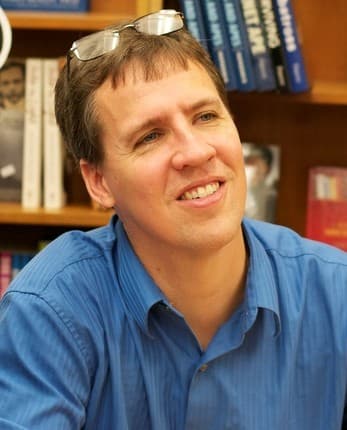
Jeffrey Patrick Kinney is an American author and cartoonist, best known as the creator of the children's book series Diary of a Wimpy Kid. He also created the child-oriented website Poptropica.
Similar books
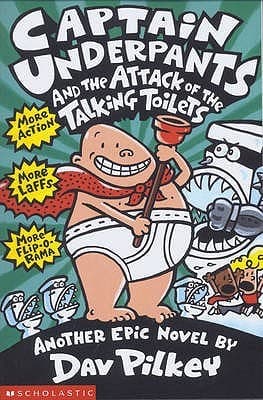
- Captain Underpants and the Attack of the Talking Toilets
Dav Pilkey
4.1 (44k) average on GoodreadsFantasyOffers a similar blend of silly humor, cartoon illustrations, and adventurous mishaps for young readers.
- Wonder
R.J. Palacio
4.4 (733k) average on GoodreadsChildren'sWhile both books target a similar age group, 'Wonder' delves into significantly deeper and more complex themes of empathy, acceptance, bullying, and identity through its multi-perspective narrative. 'The Long Haul' prioritizes lighthearted humor and escapism, whereas 'Wonder' challenges readers to consider profound social dynamics and personal ethics, offering a richer emotional landscape and opportunities for character growth that are largely absent in Kinney's work. 'Wonder' aims to teach profound life lessons, while 'The Long Haul' aims primarily to entertain.
- Harry Potter and the Sorcerer's Stone
J.K. Rowling
4.5 (7M) average on GoodreadsFantasyRescued from a miserable life under the stairs, an orphaned boy discovers he's a wizard destined for a magical school, where he uncovers a dangerous secret tied to the dark wizard who murdered his parents.
- The Hobbit, or There and Back Again
J.R.R. Tolkien
4.3 (2.9M) average on GoodreadsFantasyA comfort-loving hobbit named Bilbo Baggins is whisked away by a mischievous wizard and a band of dwarves on an unexpected journey to reclaim stolen treasure from a fearsome dragon, discovering courage and a magical ring along the way.
- Harry Potter and the Goblet of Fire
J.K. Rowling
4.6 (2.6M) average on GoodreadsFantasyA bewildered Harry Potter, underage and thrust into a deadly Triwizard Tournament, must brave dragons, mermaids, and a resurgent dark magic to survive a year that will forever alter the wizarding world.
- Harry Potter and the Order of the Phoenix
J.K. Rowling
4.5 (2.5M) average on GoodreadsFantasyIn a year of oppressive secrets and the threat of Voldemort, Harry Potter and Dumbledore's Army secretly train for war, shown through Jim Kay and Neil Packer's dark illustrations.





Enjoyed the summary?
A summary gives you the shape of the book. The book itself has the detail, the examples and the voice.
Find The Long Haul on AmazonAs an Amazon Associate, BookBrief earns from qualifying purchases. How we're funded