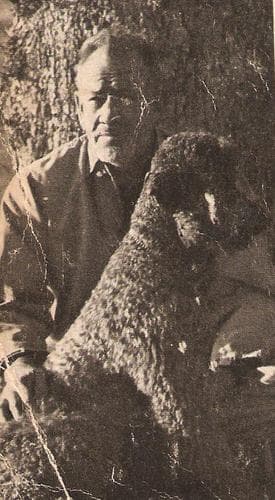
John Ernst Steinbeck was an American writer. He won the 1962 Nobel Prize in Literature "for his realistic and imaginative writings, combining as they do sympathetic humor and keen social perception". He has been called "a giant of American letters."

Sign in to track this book
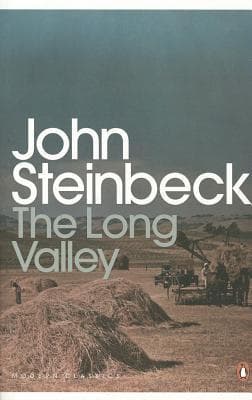
In John Steinbeck's "The Long Valley," the Salinas Valley is a stage for the hidden struggles of ordinary lives, where the land's bounty is often overshadowed by the complex tensions of human relationships.
Ask anything about The Long Valley and get instant answers grounded in the summary.
Elisa Allen, a strong woman, tends her chrysanthemums, finding peace in their care. Her husband, Henry, suggests she go to the fights in town, a world she feels apart from. A traveling tinker arrives, offering to sharpen tools. Elisa is at first uninterested but becomes curious when he shows interest in her flowers, letting her explain her passion. She gives him some cuttings and a pot to fix, feeling a connection to his traveling life. Later, on the way to town with Henry, she sees the tinker by the road. He has thrown away her chrysanthemum cuttings. Elisa feels let down and understands their brief connection.
Mary Teller creates a perfect garden, a sanctuary she believes attracts a rare white quail. Her life revolves around keeping this environment flawless and protecting the quail. She discourages her husband, Harry, from anything that might disturb the garden. Her obsession takes over, and she grows distant from Harry, who feels like an outsider in his own home. When a neighbor's cat threatens the quail, Mary, in a protective rage, shoots the cat with Harry's gun. This act, while protecting her ideal, isolates her more, leaving Harry feeling trapped by her demands for a perfect world.
Pepé, a young Californian-Indian, is left in charge of his family's ranch while his mother and sister are away. He is proud of his new knife and his sense of manhood. Drunk and overconfident, he gets into a fight in Monterey and kills a man. Returning home, he confesses to his mother, who understands his actions. She prepares him for escape, giving him food, a rifle, and instructions to avoid capture. Pepé flees into the mountains, at first confident but soon suffering from hunger, thirst, and fear. He loses his horse, is wounded, and eventually, cornered by his pursuers, he makes a final stand, facing his end with fear and dignity.
Two young labor organizers, Root and Dick, arrive in a conservative rural town to build support for a workers' union. Root, the older man, is cynical and practical; Dick is idealistic and full of revolutionary passion. They hold a meeting, but the local community, led by the town's landowners, meets their efforts with hostility. A mob forms, and the organizers are beaten. Root, despite his injuries, remains calm, used to such violence. Dick, however, is deeply shaken, his idealism broken by the brutality and the resistance they face.
Young Jody Tiflin watches two old men, a Native American named Gitano and an old paisano named Billy Buck, who live in the mountains near his family's ranch. Gitano, a very old man, arrives at the Tiflin ranch, saying he was born there and wants to die there. Jody's father, Carl, is at first unwelcoming but allows Gitano to stay. Gitano eventually takes one of Carl's old, broken-down horses and rides into the mountains, likely to die. Jody is fascinated by the old men and the wild mountains, which represent a world beyond his grasp, a place of mystery and natural cycles.
Peter Randall is a hardworking farmer, known for his quiet life with his sickly wife, Emma. He prides himself on his honesty and morality, believing he lives a sinless life. After Emma's death, Peter feels a sudden sense of freedom. He begins to enjoy pleasures he had long denied himself, especially visiting brothels in Monterey. He tells a friend that Emma, despite her frail health, had always 'kept a harness' on him, stopping him from showing his true, more dissolute nature. His new freedom, however, is not entirely satisfying, leaving him with an empty feeling and a struggle to connect his past self with his present desires.
Dr. Phillips, a marine biologist, is working in his lab when a calm woman arrives and asks to buy a male garter snake. Dr. Phillips is curious about her composed yet intense manner. She observes the snake with scientific interest. Later, she returns and asks for a white rat. Dr. Phillips gives her one, and she feeds it to the garter snake in the lab, watching the process closely. Her interest is not cruel but almost clinical in the act of predation. Dr. Phillips finds her presence unsettling and her cold observation of life and death disturbing, leaving him with unease about human nature.
The narrator remembers a morning spent with migrant workers in a field. He wakes to the smell of coffee and frying bacon, drawn to their campfire. He is invited to share their simple breakfast. There is a quiet friendship among the workers, a sense of shared purpose. The brief interaction brings peace and connection to the land and to other people, despite their temporary existence. The experience shows the dignity and simplicity of life for those who work the land, offering a glimpse into a harmonious community built on shared labor.
Jim Moore, a young rancher, is deeply in love with his beautiful wife, Jelka, a Croatian immigrant. He is possessive and struggles with her emotional distance, believing she holds a secret sadness for her past. When he finds her with another man, Jelka's cousin, in the barn, his jealousy and betrayal explode. In a rage, he kills Jelka, believing he is ending her unfaithfulness and freeing her from her internal struggles. He then calmly waits for the authorities, convinced he acted out of a deep, though mistaken, love. This shows the destructive side of possessive passion and cultural misunderstandings.
The narrator, a writer, visits a small town and becomes fascinated by Johnny Bear, a man with an ape-like appearance and a talent for mimicking voices and sounds perfectly. Johnny Bear's actions, often crude, reflect the town's hidden desires. He is particularly obsessed with the two beautiful sisters, Emalin and Amy Hawkins, who run a local ranch. Through Johnny Bear's mimicry, the town's secrets and hidden sexual lives are exposed, especially the sisters' affair. The story explores appearance versus reality, the primal parts of human nature, and the discomfort of confronting difficult truths.
Jody Tiflin's grandfather, who once led a wagon train across the plains, visits the ranch. He constantly tells stories of his past adventures, which grow repetitive to Jody's father, Carl. Jody, however, is at first captivated by his grandfather's tales of leadership. The grandfather feels a strong need to be heard and valued, to confirm his role in history. He laments that 'westering' is over, leaving him without a purpose or an audience for his stories. Jody, sensing his grandfather's sadness, offers comfort, understanding the old man's desire for relevance in a changing world.
This novella, often published separately, tells of young Jody Tiflin's experiences growing up on his family's ranch. It has four sections. The first, 'The Gift,' sees Jody get a red pony, Gabilan, which he loves. The pony dies of pneumonia, teaching him about grief. 'The Great Mountains' introduces the old paisano Gitano and the wilderness. 'The Promise' shows Jody's wait for a new colt from his mare, Nellie, and the hard choice to sacrifice Nellie to save the colt, a lesson in the cycle of life and death. Finally, 'The Leader of the People' shows Jody's changing relationship with his grandfather and the weight of the past. Through these experiences, Jody learns about responsibility, mortality, and life's harshness.
The Protagonist
Elisa moves from a state of contained passion to a brief, hopeful connection, followed by deep disillusionment and a return to a muted existence, having glimpsed what she desires but cannot attain.
The Protagonist
Pepé transitions from a carefree, impulsive youth to a hunted, desperate man, stripped of his innocence and forced into a brutal struggle for survival that ends in his death.
The Protagonist
Jody matures through a series of significant experiences, learning about life, death, responsibility, and the passage of time, transforming from an innocent boy into a more understanding and empathetic young man.
The Protagonist
Jim's intense, possessive love for his wife escalates into a destructive jealousy, culminating in an act of violence that destroys both his wife and his own future.
The Protagonist
Peter transitions from a publicly respectable but privately repressed man to a liberated but ultimately unfulfilled individual, grappling with the consequences of his long-suppressed desires.
The Supporting
Johnny Bear remains largely static in his grotesque nature and mimicry, but his presence acts as a catalyst for revealing the hidden truths and moral decay within the community.
The Supporting
Gitano's arc is brief but symbolic; he arrives to fulfill his desire to die on his ancestral land, representing a return to origins and the acceptance of natural cycles.
The Supporting
The Tinker's arc is minimal, serving primarily as a catalyst for Elisa's emotional journey rather than undergoing significant personal change himself.
The Supporting
The Grandfather's arc is one of unfulfilled longing; he continually seeks to relive and validate his past achievements in a present that no longer values them, remaining somewhat static in his yearning.
The Protagonist
Mary's obsession with her garden and the white quail intensifies, driving her to a violent act and further isolating her from her husband and the outside world.
Many characters in 'The Long Valley' struggle with desires that are held back by expectations, circumstances, or inner conflicts. Elisa Allen wants a more adventurous life beyond her home, only to have her hopes crushed. Peter Randall lives a life of strict morality, only to release a flood of repressed desires after his wife's death, finding it unfulfilling. This theme shows how suppressing one's true nature can lead to frustration, emptiness, or even destructive acts, highlighting the cost of unacknowledged longings.
“She was a big woman, with a figure of a man's body in a woman's clothes.”
The natural world, especially the Salinas Valley, is a strong backdrop and a constant reminder of life's cycles. Characters like Jody Tiflin learn hard lessons about birth and death through his experiences with the red pony and the mare, Nellie. Gitano's journey into the mountains to die shows a peaceful acceptance of this natural cycle. The land provides both food and hardship, uncaring of human suffering. This theme emphasizes humanity's place within a larger, often brutal, natural order, showing how individual lives are temporary against enduring cycles.
“He knew then that Jody was not a little boy any more. He knew that the death of the pony was a bigger thing than a child could understand.”
A common theme is the deep sense of isolation many characters feel, even when near others. Elisa Allen feels a disconnect from her husband and the world outside her garden. Mary Teller's obsession alienates her from Harry. Jim Moore's inability to understand Jelka's inner world leads to tragedy. Even the migrant workers, while sharing a brief friendship, are fundamentally temporary. This theme explores barriers to real human connection, whether from differing desires, cultural gaps, or the inherent solitude of individual experience, leading to loneliness and misunderstanding.
“There was a loneliness in the room that was almost a presence.”
Several stories show characters' ideals clashing with their world's harsh realities. Dick, the young labor organizer in 'The Raid,' starts with strong ideals, only to be violently disillusioned by the opposition. Pepé's youthful confidence and romantic view of manhood are shattered by the difficulty of his escape and capture. This theme examines the painful loss of innocence and facing the often-unjust nature of society or the environment. It highlights the struggle to keep hope when facing great adversity and the harsh consequences of naive expectations.
“The world was not a soft place for a boy, and he was not a boy any more.”
Steinbeck often explores different aspects of masculinity, through characters dealing with what it means to be a man. Pepé's initial pride in his knife and impulsive violence is a naive, destructive expression of perceived manhood. Jim Moore's possessive love and violent reaction come from a distorted sense of masculine honor. Henry Allen's attempts to connect with Elisa through shared activities show traditional gender roles. This theme looks at the pressures and often flawed ways masculinity is shown in a rural setting, examining how men define themselves through work, family, and community.
“He was a man now, and he had a man's work to do.”
The cultivated and wild land reflects characters' inner states.
The land in 'The Long Valley' is more than just a setting; it's a powerful symbol. Elisa Allen's chrysanthemums represent her repressed passion and desire for beauty and purpose. Mary Teller's meticulously manicured garden and the white quail symbolize her obsessive need for control and perfection, ultimately leading to her isolation. The rugged, untamed mountains in 'Flight' and 'The Great Mountains' represent freedom, danger, and the inevitable cycle of life and death, a place where characters confront their primal selves or return to nature. The land often mirrors the characters' internal landscapes, acting as a canvas for their struggles and desires.
Subtle hints and warnings of future events or character fates.
Steinbeck employs foreshadowing to build tension and deepen the sense of inevitability. In 'Flight,' Pepé's mother's detailed instructions for his escape, coupled with her resigned demeanor, subtly hint at the grim outcome of his journey. In 'The Murder,' Jim Moore's intense jealousy and possessiveness towards Jelka, and his internal struggles with her perceived emotional distance, foreshadow the tragic act of violence he will commit. This device creates a sense of foreboding, allowing the reader to anticipate the unfolding drama and the often-unhappy fates of the characters, underscoring the themes of destiny and consequence.
Contrasting youthful naiveté with harsh realities.
This device is most evident in the 'Red Pony' stories, where young Jody Tiflin's initial innocence and idealized view of ranch life are starkly contrasted with the harsh realities of death, responsibility, and the unforgiving nature of the world. His joy in receiving Gabilan is juxtaposed with the pony's painful demise. Similarly, Pepé's youthful bravado in 'Flight' is brutally juxtaposed with the terror and desperation of his flight for survival. This contrast highlights the painful process of coming-of-age and the loss of innocence, emphasizing the often-cruel lessons that life imparts upon its characters.
Characters who are marginalized or represent a different way of life.
Many stories feature characters who exist on the fringes of society or represent a different culture or perspective. The Tinker in 'The Chrysanthemums' is a transient outsider who briefly disrupts Elisa's settled life. Gitano in 'The Great Mountains' is an old Native American, a remnant of a bygone era, whose quiet presence evokes a connection to ancient ways. Jelka in 'The Murder' is a Croatian immigrant, whose cultural 'otherness' contributes to Jim's misunderstanding and jealousy. These characters often serve to highlight the narrowness of the main characters' worlds or to introduce new perspectives, sometimes leading to conflict or profound introspection.
Ready to see how well you understood this book? Take our interactive quiz with 10 questions.
John Ernst Steinbeck was an American writer. He won the 1962 Nobel Prize in Literature "for his realistic and imaginative writings, combining as they do sympathetic humor and keen social perception". He has been called "a giant of American letters."
Support the author — grab the full book.
As an Amazon Associate, BookBrief earns from qualifying purchases, at no extra cost to you. How we're funded.