
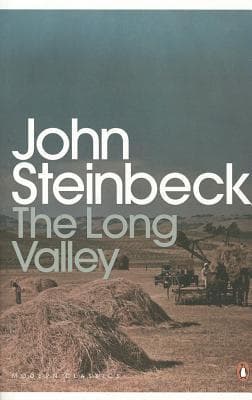
Synopsis
Covers the whole plot, including the ending.
- Difficulty
- Medium
- Pacing
- Moderate
- Mood
- Reflective, somber, contemplative, rustic, humanistic, poignant.
The Long Valley Plot Summary
Covers the whole plot, including the ending.
The Chrysanthemums
Elisa Allen, a strong woman, tends her chrysanthemums, finding peace in their care. Her husband, Henry, suggests she go to the fights in town, a world she feels apart from. A traveling tinker arrives, offering to sharpen tools. Elisa is at first uninterested but becomes curious when he shows interest in her flowers, letting her explain her passion. She gives him some cuttings and a pot to fix, feeling a connection to his traveling life. Later, on the way to town with Henry, she sees the tinker by the road. He has thrown away her chrysanthemum cuttings. Elisa feels let down and understands their brief connection.
The White Quail
Mary Teller creates a perfect garden, a sanctuary she believes attracts a rare white quail. Her life revolves around keeping this environment flawless and protecting the quail. She discourages her husband, Harry, from anything that might disturb the garden. Her obsession takes over, and she grows distant from Harry, who feels like an outsider in his own home. When a neighbor's cat threatens the quail, Mary, in a protective rage, shoots the cat with Harry's gun. This act, while protecting her ideal, isolates her more, leaving Harry feeling trapped by her demands for a perfect world.
Flight
Pepé, a young Californian-Indian, is left in charge of his family's ranch while his mother and sister are away. He is proud of his new knife and his sense of manhood. Drunk and overconfident, he gets into a fight in Monterey and kills a man. Returning home, he confesses to his mother, who understands his actions. She prepares him for escape, giving him food, a rifle, and instructions to avoid capture. Pepé flees into the mountains, at first confident but soon suffering from hunger, thirst, and fear. He loses his horse, is wounded, and eventually, cornered by his pursuers, he makes a final stand, facing his end with fear and dignity.
The Raid
Two young labor organizers, Root and Dick, arrive in a conservative rural town to build support for a workers' union. Root, the older man, is cynical and practical; Dick is idealistic and full of revolutionary passion. They hold a meeting, but the local community, led by the town's landowners, meets their efforts with hostility. A mob forms, and the organizers are beaten. Root, despite his injuries, remains calm, used to such violence. Dick, however, is deeply shaken, his idealism broken by the brutality and the resistance they face.
The Great Mountains
Young Jody Tiflin watches two old men, a Native American named Gitano and an old paisano named Billy Buck, who live in the mountains near his family's ranch. Gitano, a very old man, arrives at the Tiflin ranch, saying he was born there and wants to die there. Jody's father, Carl, is at first unwelcoming but allows Gitano to stay. Gitano eventually takes one of Carl's old, broken-down horses and rides into the mountains, likely to die. Jody is fascinated by the old men and the wild mountains, which represent a world beyond his grasp, a place of mystery and natural cycles.
The Harness
Peter Randall is a hardworking farmer, known for his quiet life with his sickly wife, Emma. He prides himself on his honesty and morality, believing he lives a sinless life. After Emma's death, Peter feels a sudden sense of freedom. He begins to enjoy pleasures he had long denied himself, especially visiting brothels in Monterey. He tells a friend that Emma, despite her frail health, had always 'kept a harness' on him, stopping him from showing his true, more dissolute nature. His new freedom, however, is not entirely satisfying, leaving him with an empty feeling and a struggle to connect his past self with his present desires.
The Snake
Dr. Phillips, a marine biologist, is working in his lab when a calm woman arrives and asks to buy a male garter snake. Dr. Phillips is curious about her composed yet intense manner. She observes the snake with scientific interest. Later, she returns and asks for a white rat. Dr. Phillips gives her one, and she feeds it to the garter snake in the lab, watching the process closely. Her interest is not cruel but almost clinical in the act of predation. Dr. Phillips finds her presence unsettling and her cold observation of life and death disturbing, leaving him with unease about human nature.
Breakfast
The narrator remembers a morning spent with migrant workers in a field. He wakes to the smell of coffee and frying bacon, drawn to their campfire. He is invited to share their simple breakfast. There is a quiet friendship among the workers, a sense of shared purpose. The brief interaction brings peace and connection to the land and to other people, despite their temporary existence. The experience shows the dignity and simplicity of life for those who work the land, offering a glimpse into a harmonious community built on shared labor.
The Murder
Jim Moore, a young rancher, is deeply in love with his beautiful wife, Jelka, a Croatian immigrant. He is possessive and struggles with her emotional distance, believing she holds a secret sadness for her past. When he finds her with another man, Jelka's cousin, in the barn, his jealousy and betrayal explode. In a rage, he kills Jelka, believing he is ending her unfaithfulness and freeing her from her internal struggles. He then calmly waits for the authorities, convinced he acted out of a deep, though mistaken, love. This shows the destructive side of possessive passion and cultural misunderstandings.
Johnny Bear
The narrator, a writer, visits a small town and becomes fascinated by Johnny Bear, a man with an ape-like appearance and a talent for mimicking voices and sounds perfectly. Johnny Bear's actions, often crude, reflect the town's hidden desires. He is particularly obsessed with the two beautiful sisters, Emalin and Amy Hawkins, who run a local ranch. Through Johnny Bear's mimicry, the town's secrets and hidden sexual lives are exposed, especially the sisters' affair. The story explores appearance versus reality, the primal parts of human nature, and the discomfort of confronting difficult truths.
The Leader of the People
Jody Tiflin's grandfather, who once led a wagon train across the plains, visits the ranch. He constantly tells stories of his past adventures, which grow repetitive to Jody's father, Carl. Jody, however, is at first captivated by his grandfather's tales of leadership. The grandfather feels a strong need to be heard and valued, to confirm his role in history. He laments that 'westering' is over, leaving him without a purpose or an audience for his stories. Jody, sensing his grandfather's sadness, offers comfort, understanding the old man's desire for relevance in a changing world.
The Red Pony
This novella, often published separately, tells of young Jody Tiflin's experiences growing up on his family's ranch. It has four sections. The first, 'The Gift,' sees Jody get a red pony, Gabilan, which he loves. The pony dies of pneumonia, teaching him about grief. 'The Great Mountains' introduces the old paisano Gitano and the wilderness. 'The Promise' shows Jody's wait for a new colt from his mare, Nellie, and the hard choice to sacrifice Nellie to save the colt, a lesson in the cycle of life and death. Finally, 'The Leader of the People' shows Jody's changing relationship with his grandfather and the weight of the past. Through these experiences, Jody learns about responsibility, mortality, and life's harshness.
Principal Figures
Elisa Allen
Protagonist
A capable woman seeking fulfillment beyond her domestic life.
Elisa is a strong, passionate woman in her mid-thirties, living on a ranch with her husband, Henry. She is highly skilled in gardening, particularly with her chrysanthemums, which she cultivates with intense dedication. Beneath her practical exterior, she yearns for a deeper connection and a more expansive life. She possesses a vibrant, almost masculine energy, often expressed through her physical work and her desire for meaningful engagement. Her encounter with the tinker briefly ignites a spark of longing for adventure and understanding, only to be extinguished by his casual disregard, leaving her with a sense of profound disappointment and unfulfilled potential.
Relationships: Henry Allen (husband); The Tinker (brief, impactful acquaintance)
Pepé
Protagonist
A naive young man forced to confront the harsh realities of survival.
Pepé is a young Californian-Indian, characterized by his youth, naiveté, and a nascent sense of manhood. He is proud of his new knife and eager to prove himself, often acting impulsively. He is physically capable, skilled with a horse and rifle, but lacks the experience and foresight to navigate the consequences of his actions. His flight into the mountains strips away his youthful bravado, exposing his vulnerability and fear. He is a tragic figure, unprepared for the brutal demands of survival and the inexorable pursuit of justice, ultimately facing his demise with a mix of fear and a final, defiant stand.
Relationships: His Mother (mother); His Sister (sister)
Jody Tiflin
Protagonist
A young boy's journey of discovery and loss on a ranch.
Jody is a young boy growing up on a ranch in the Salinas Valley. He is initially portrayed as somewhat sheltered and naive, but eager to learn and experience the world around him. Throughout 'The Red Pony' stories, he encounters life and death, responsibility, and the often-harsh realities of the ranch. He loves animals deeply, particularly his pony, Gabilan, and experiences profound grief at their loss. He is observant and sensitive, slowly developing an understanding of the cycles of nature and the complexities of human relationships. His experiences shape his character, moving him from childhood innocence towards a more mature, albeit sometimes painful, understanding of life.
Relationships: Carl Tiflin (father); Billy Buck (ranch hand, mentor); Grandfather (maternal grandfather)
Jim Moore
Protagonist
A rancher whose possessive love leads to tragedy.
Jim Moore is a young rancher deeply in love with his wife, Jelka. He is characterized by a fierce, almost primal love, which quickly turns to possessiveness and jealousy. He struggles to understand Jelka's quiet, sometimes distant nature, attributing it to a secret sorrow or a longing for her past. His inability to bridge this perceived emotional gap leads to resentment and a growing sense of insecurity. When his suspicions are confirmed, his passion explodes into violence, leading him to commit murder. He believes his act is an expression of his profound love, revealing a disturbing distortion of affection and control.
Relationships: Jelka (wife)
Peter Randall
Protagonist
A farmer who finds liberation and emptiness after his wife's death.
Peter Randall is presented as a pillar of the community, a hardworking, honest, and morally upright farmer. He lives a disciplined life, seemingly content with his sickly wife, Emma. However, beneath this facade lies a repressed desire for a different, more indulgent existence. After Emma's death, he experiences a profound sense of freedom, shedding the 'harness' he felt she had placed on him. He embarks on a secret life of pleasure-seeking in Monterey, but this newfound liberty ultimately leaves him feeling hollow and unfulfilled. He struggles to reconcile his public persona with his private desires, highlighting the complexities of self-identity and societal expectations.
Relationships: Emma Randall (wife (deceased))
Johnny Bear
Supporting
A grotesque mimic who exposes hidden truths.
Johnny Bear is a physically deformed and mentally challenged man with an extraordinary ability to perfectly mimic voices, sounds, and even entire conversations. His appearance is described as monstrous, almost ape-like, making him an outcast in the community. Despite his grotesque exterior, he possesses a keen, almost instinctual, understanding of human behavior and secrets. He is a primal force, acting as an unwitting catalyst for revealing the hidden hypocrisies and sexual desires of the seemingly respectable townspeople, particularly the Hawkins sisters. He is both a source of crude amusement and profound discomfort, forcing others to confront uncomfortable truths about themselves.
Relationships: Narrator (observer); Emalin and Amy Hawkins (objects of his obsession/mimicry)
Gitano
Supporting
An old Native American man seeking to die on his ancestral land.
Gitano is a very old Native American man who appears at the Tiflin ranch, claiming he was born there and wishes to die on his ancestral land, the great mountains. He is silent, dignified, and carries an ancient, broken-down rapier. He represents a connection to the past, to the land, and to a way of life that is slowly fading. His journey into the mountains with Carl Tiflin's old horse symbolizes a return to nature and a peaceful acceptance of death. He embodies a quiet, almost spiritual, connection to the earth and the inevitable cycle of life and demise, leaving a lasting impression on young Jody.
Relationships: Jody Tiflin (observer); Carl Tiflin (ranch owner)
The Tinker
Supporting
A transient craftsman who briefly sparks Elisa Allen's desires.
The tinker is a traveling repairman, a man of the road who moves from farm to farm, mending pots and sharpening tools. He is charming and observant, possessing a knack for reading people and adapting his sales pitch. He initially feigns interest in Elisa Allen's chrysanthemums to secure work, but his transient lifestyle and casual disregard for her emotional investment ultimately highlight the chasm between their worlds. He represents the freedom of the open road, but also the superficiality of fleeting connections and the inability to truly understand or reciprocate deep emotional needs.
Relationships: Elisa Allen (customer, brief emotional connection)
Grandfather
Supporting
A former pioneer leader yearning for recognition in a changing world.
Jody's maternal grandfather is an old man who frequently visits the Tiflin ranch. He was once a 'leader of the people,' guiding wagon trains across the plains during the pioneer days. He constantly recounts his past adventures, seeking validation and recognition for his significant role in history. He laments the end of 'westering' and the lack of new frontiers, which leaves him feeling irrelevant and without purpose. He carries the weight of a glorious past that no longer holds meaning in the present, struggling to find an audience for his stories and a place in a world that has moved beyond his era of heroism.
Relationships: Jody Tiflin (grandson, occasional listener); Carl Tiflin (son-in-law, weary listener)
Mary Teller
Protagonist
A woman whose obsession with order and beauty leads to isolation.
Mary Teller is a woman consumed by her desire for a perfectly ordered and beautiful garden, which she sees as a sanctuary for a rare white quail. Her pursuit of this ideal becomes an all-encompassing obsession, dictating every aspect of her life and alienating her from her husband, Harry. She is meticulous, rigid, and possessive, unable to tolerate any disruption to her carefully constructed world. Her love for the white quail is not one of gentle affection but of fierce, protective ownership, leading her to commit a violent act to preserve her ideal. She embodies the dangers of an inflexible pursuit of perfection and the isolation it can bring.
Relationships: Harry Teller (husband)
Themes & Insights
The Dangers of Repression and Unfulfilled Desires
Many characters in 'The Long Valley' struggle with desires that are held back by expectations, circumstances, or inner conflicts. Elisa Allen wants a more adventurous life beyond her home, only to have her hopes crushed. Peter Randall lives a life of strict morality, only to release a flood of repressed desires after his wife's death, finding it unfulfilling. This theme shows how suppressing one's true nature can lead to frustration, emptiness, or even destructive acts, highlighting the cost of unacknowledged longings.
“She was a big woman, with a figure of a man's body in a woman's clothes.”
The Cycle of Life, Death, and Nature's Indifference
The natural world, especially the Salinas Valley, is a strong backdrop and a constant reminder of life's cycles. Characters like Jody Tiflin learn hard lessons about birth and death through his experiences with the red pony and the mare, Nellie. Gitano's journey into the mountains to die shows a peaceful acceptance of this natural cycle. The land provides both food and hardship, uncaring of human suffering. This theme emphasizes humanity's place within a larger, often brutal, natural order, showing how individual lives are temporary against enduring cycles.
“He knew then that Jody was not a little boy any more. He knew that the death of the pony was a bigger thing than a child could understand.”
Isolation and the Difficulty of Connection
A common theme is the deep sense of isolation many characters feel, even when near others. Elisa Allen feels a disconnect from her husband and the world outside her garden. Mary Teller's obsession alienates her from Harry. Jim Moore's inability to understand Jelka's inner world leads to tragedy. Even the migrant workers, while sharing a brief friendship, are fundamentally temporary. This theme explores barriers to real human connection, whether from differing desires, cultural gaps, or the inherent solitude of individual experience, leading to loneliness and misunderstanding.
“There was a loneliness in the room that was almost a presence.”
The Clash Between Idealism and Harsh Reality
Several stories show characters' ideals clashing with their world's harsh realities. Dick, the young labor organizer in 'The Raid,' starts with strong ideals, only to be violently disillusioned by the opposition. Pepé's youthful confidence and romantic view of manhood are shattered by the difficulty of his escape and capture. This theme examines the painful loss of innocence and facing the often-unjust nature of society or the environment. It highlights the struggle to keep hope when facing great adversity and the harsh consequences of naive expectations.
“The world was not a soft place for a boy, and he was not a boy any more.”
The Nature of Masculinity and Manhood
Steinbeck often explores different aspects of masculinity, through characters dealing with what it means to be a man. Pepé's initial pride in his knife and impulsive violence is a naive, destructive expression of perceived manhood. Jim Moore's possessive love and violent reaction come from a distorted sense of masculine honor. Henry Allen's attempts to connect with Elisa through shared activities show traditional gender roles. This theme looks at the pressures and often flawed ways masculinity is shown in a rural setting, examining how men define themselves through work, family, and community.
“He was a man now, and he had a man's work to do.”
Plot Devices & Literary Techniques
Symbolism of the Garden/Land
The cultivated and wild land reflects characters' inner states.
The land in 'The Long Valley' is more than just a setting; it's a powerful symbol. Elisa Allen's chrysanthemums represent her repressed passion and desire for beauty and purpose. Mary Teller's meticulously manicured garden and the white quail symbolize her obsessive need for control and perfection, ultimately leading to her isolation. The rugged, untamed mountains in 'Flight' and 'The Great Mountains' represent freedom, danger, and the inevitable cycle of life and death, a place where characters confront their primal selves or return to nature. The land often mirrors the characters' internal landscapes, acting as a canvas for their struggles and desires.
Foreshadowing
Subtle hints and warnings of future events or character fates.
Steinbeck employs foreshadowing to build tension and deepen the sense of inevitability. In 'Flight,' Pepé's mother's detailed instructions for his escape, coupled with her resigned demeanor, subtly hint at the grim outcome of his journey. In 'The Murder,' Jim Moore's intense jealousy and possessiveness towards Jelka, and his internal struggles with her perceived emotional distance, foreshadow the tragic act of violence he will commit. This device creates a sense of foreboding, allowing the reader to anticipate the unfolding drama and the often-unhappy fates of the characters, underscoring the themes of destiny and consequence.
Juxtaposition of Innocence and Experience
Contrasting youthful naiveté with harsh realities.
This device is most evident in the 'Red Pony' stories, where young Jody Tiflin's initial innocence and idealized view of ranch life are starkly contrasted with the harsh realities of death, responsibility, and the unforgiving nature of the world. His joy in receiving Gabilan is juxtaposed with the pony's painful demise. Similarly, Pepé's youthful bravado in 'Flight' is brutally juxtaposed with the terror and desperation of his flight for survival. This contrast highlights the painful process of coming-of-age and the loss of innocence, emphasizing the often-cruel lessons that life imparts upon its characters.
The Outsider/Other
Characters who are marginalized or represent a different way of life.
Many stories feature characters who exist on the fringes of society or represent a different culture or perspective. The Tinker in 'The Chrysanthemums' is a transient outsider who briefly disrupts Elisa's settled life. Gitano in 'The Great Mountains' is an old Native American, a remnant of a bygone era, whose quiet presence evokes a connection to ancient ways. Jelka in 'The Murder' is a Croatian immigrant, whose cultural 'otherness' contributes to Jim's misunderstanding and jealousy. These characters often serve to highlight the narrowness of the main characters' worlds or to introduce new perspectives, sometimes leading to conflict or profound introspection.
Quiz
10 questions on the plot and the characters. Each answer comes with a short explanation.
Question 1
What is the primary setting for the short stories in "The Long Valley"?
- A bustling metropolis
- The Scottish Highlands
- The Salinas Valley in California
- A remote desert oasis
Show answer
C. The Salinas Valley in California The text explicitly states the stories are set in the 'Salinas Valley in California'.
Question 2
Which of the following is NOT mentioned as a key theme in Steinbeck's writing reflected in these stories?
- Tensions between town and city
- The relationship between humans and nature
- The struggles of labourers and owners
- The conflict between past and present
Show answer
B. The relationship between humans and nature The text mentions tensions between town and city, labourers and owners, and past and present. The relationship between humans and nature is a common Steinbeck theme but not explicitly listed as a focus of this collection.
Question 3
Which of these acclaimed tales is included in "The Long Valley"?
- Of Mice and Men
- The Grapes of Wrath
- The Chrysanthemums
- East of Eden
Show answer
C. The Chrysanthemums The text explicitly states that 'THE CHRYSANTHEMUMS' is included in the collection.
Question 4
What kind of writing is "The Long Valley" described as?
- Science Fiction
- Mystery Thriller
- Literary Fiction
- Historical Romance
Show answer
C. Literary Fiction The text clearly labels the genre as 'Literary Fiction'.
Question 5
The collection is presented as an ideal introduction to which author's work?
- William Faulkner
- John Steinbeck
- Ernest Hemingway
- F. Scott Fitzgerald
Show answer
B. John Steinbeck The first sentence of the description states that the collection is 'the ideal introduction to Steinbeck's work'.
Question 6
The characters in the stories are described as primarily engaging in what activity?
- Urban exploration
- Farming the land
- Industrial manufacturing
- Maritime trade
Show answer
B. Farming the land The text mentions 'simple people farm the land' as a characteristic of the characters.
Question 7
What is the overall tone suggested by the description of the Salinas Valley as 'idyllic'?
- Bleak and desolate
- Peaceful and picturesque
- Chaotic and overcrowded
- Technologically advanced
Show answer
B. Peaceful and picturesque The word 'idyllic' typically describes a scene or setting that is picturesque and charmingly simple, suggesting a peaceful and pleasant atmosphere.
Question 8
The phrase 'struggle to find a place for themselves in the world' implies that the characters are dealing with issues of:
- Social belonging and purpose
- Economic surplus
- Political revolution
- Artistic expression
Show answer
A. Social belonging and purpose The phrase 'find a place for themselves' directly relates to finding one's role, identity, and belonging within society or the broader world.
Question 9
Considering the themes mentioned (tensions between town and city, labourers and owners, past and present), what can be inferred about the nature of the conflicts in Steinbeck's stories?
- They are primarily internal, psychological conflicts.
- They are often rooted in societal structures and historical contexts.
- They are resolved easily and without significant consequence.
- They are focused on supernatural or fantastical elements.
Show answer
B. They are often rooted in societal structures and historical contexts. The listed tensions (town vs. city, labourer vs. owner, past vs. present) all point to conflicts arising from social divisions, economic disparities, and the passage of time, which are deeply embedded in societal structures and historical contexts.
Question 10
If "The Long Valley" is considered an introduction to Steinbeck's work, what overarching concern of the author is likely highlighted through these short stories?
- The exploration of abstract philosophical concepts divorced from human experience.
- The examination of the human condition within specific social and environmental settings.
- The critique of modern technology and its impact on artistic creation.
- The romanticization of historical figures and grand political narratives.
Show answer
B. The examination of the human condition within specific social and environmental settings. The description emphasizes the setting (Salinas Valley), the people (simple farmers), their struggles (finding a place), and specific thematic tensions (town/city, labour/owner, past/present). This all points to Steinbeck's focus on how people navigate their lives within particular social, economic, and temporal environments, which is the human condition in context.
The Long Valley FAQ
What is The Long Valley by John Steinbeck about?
The Long Valley is a collection of short stories by John Steinbeck, primarily set in the Salinas Valley of California. The stories explore the lives of ordinary people who work the land and grapple with their place in the world, touching on themes of rural life, social tensions, and the human condition.
What are the main themes in The Long Valley?
Key themes in The Long Valley include the conflicts between town and country, the struggles between laborers and owners, and the relationship between the past and the present. The collection also delves into the challenges faced by individuals trying to find their identity and purpose.
Is The Long Valley a good introduction to John Steinbeck's work?
Yes, The Long Valley is often considered an ideal introduction to John Steinbeck's writing. It showcases his signature style and explores many of the recurring concerns that define his literary career.
Which famous stories are included in The Long Valley?
The Long Valley includes celebrated tales such as 'The Murderer' and 'The Chrysanthemums.' These stories are representative of Steinbeck's skill in character development and his ability to evoke the atmosphere of rural California.
Where is The Long Valley set?
The stories in The Long Valley are predominantly set in the Salinas Valley, a fertile agricultural region in California. This setting plays a crucial role in shaping the lives and experiences of the characters.
What kind of characters can I expect in The Long Valley?
You can expect to find characters who are simple people, often farmers and laborers, who are deeply connected to the land. They struggle with everyday challenges, personal relationships, and their place within the social and economic landscape.
How does The Long Valley compare to Steinbeck's novels?
While Steinbeck is famous for his novels like 'The Grapes of Wrath,' The Long Valley offers a focused look at his storytelling through shorter narratives. The themes and character types are often similar, but the short story format allows for a more concentrated exploration of specific moments and relationships.
What is the tone of the stories in The Long Valley?
The tone varies across the stories, but there is often a sense of quiet struggle, resilience, and a deep connection to the natural world. Steinbeck captures both the beauty and the harsh realities of life in the Salinas Valley.
Are there any practical lessons or advice in The Long Valley?
While not a self-help book, The Long Valley offers profound insights into the human condition, resilience in the face of hardship, and the importance of human connection. Readers can draw practical understanding about rural life and social dynamics.
Who would enjoy reading The Long Valley?
Readers who appreciate classic American literature, character-driven stories, and explorations of rural life and social issues would likely enjoy The Long Valley. It's perfect for those looking to discover or revisit John Steinbeck's masterful short fiction.
About the author
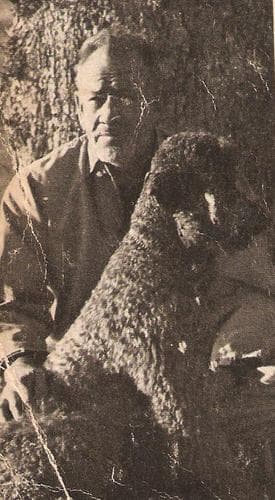
John Ernst Steinbeck was an American writer. He won the 1962 Nobel Prize in Literature "for his realistic and imaginative writings, combining as they do sympathetic humor and keen social perception". He has been called "a giant of American letters."
Similar books
- Pastoralia
George Saunders
4.1 (18k) average on GoodreadsLiterary FictionWhile separated by many decades and stylistic shifts, both "The Long Valley" and Saunders' "Pastoralia" critique aspects of American society through the lens of ordinary people facing extraordinary circumstances. Steinbeck focuses on the struggles of the working class and the harshness of agricultural life in the past, often with a sense of tragic grandeur. Saunders, on the other hand, uses satirical and often absurd scenarios to comment on modern corporate culture, economic anxieties, and the erosion of human dignity in a contemporary context. Steinbeck's tone is largely earnest and empathetic, whereas Saunders employs humor and surrealism to highlight similar societal failings, albeit in a more fantastical manner. Steinbeck's characters are often victims of their environment, while Saunders' characters frequently navigate bizarre, self-imposed or system-imposed absurdities.
- The Old Man and the Sea
Ernest Hemingway
3.8 (831k) average on GoodreadsLiterary FictionA Cuban fisherman's long struggle with a giant marlin becomes a story of endurance and dignity, now retold for young adults with illustrations, phonetic guides, and writing prompts in Traditional Chinese.
- One Hundred Years of Solitude
Gabriel García Márquez
4.1 (753k) average on GoodreadsLiterary FictionThrough the multi-generational story of the Buendía family, a mythical town deals with the repeating patterns of time, love, and solitude, as the extraordinary mixes with the ordinary.
- The Goldfinch
Donna Tartt
3.9 (720k) average on GoodreadsLiterary FictionHaunted by a tragic explosion and clutching a stolen Dutch masterpiece, a young orphan navigates the opulent drawing rooms of New York and the gritty underbelly of the art world, desperately seeking connection and redemption amidst a life spiraling into crime and obsession.
- Little Fires Everywhere
Celeste Ng
4.1 (713k) average on GoodreadsLiterary FictionIn Shaker Heights, an artist and her daughter move in, and their free-spirited lives clash with a rule-bound matriarch, revealing hidden conflicts beneath a perfect surface.
- Eleanor Oliphant Is Completely Fine
Gail Honeyman
4.3 (708k) average on GoodreadsLiterary FictionA lonely woman's structured life changes when an IT guy and an elderly man help her learn to open her heart.





Enjoyed the summary?
A summary gives you the shape of the book. The book itself has the detail, the examples and the voice.
Find The Long Valley on AmazonAs an Amazon Associate, BookBrief earns from qualifying purchases. How we're funded