
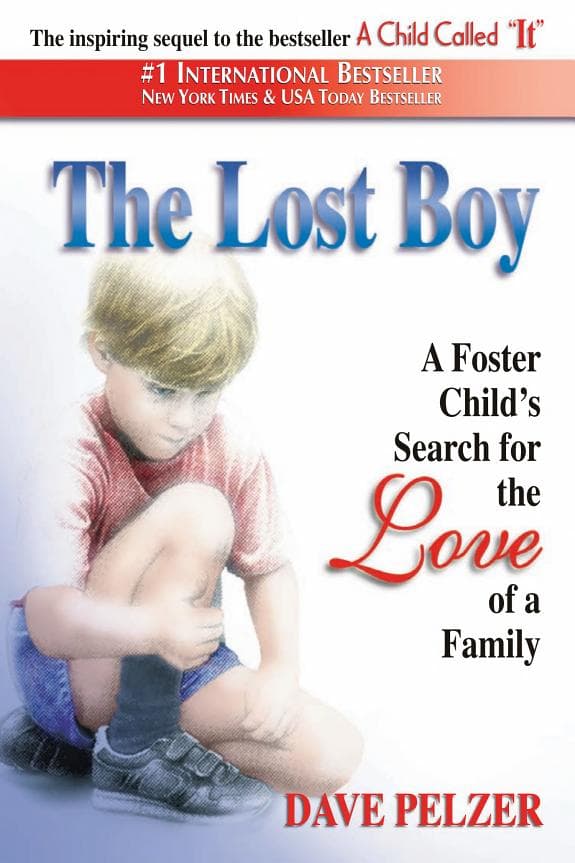
Synopsis
Covers the whole plot, including the ending.
- Difficulty
- Medium
- Read it if
- You are interested in true stories of survival, the complexities of the foster care system, and the resilience of the human spirit. This book is for readers who appreciate biographical narratives that delve into the psychological impact of trauma and the long road to recovery and self-discovery.
- Skip it if
- You are sensitive to themes of child abuse (even if the direct abuse from his mother is in the previous book, its aftermath and psychological impact are central here), neglect, and the sometimes harsh realities of the juvenile justice and foster care systems. If you prefer fiction or lighter, more optimistic narratives, this might not be for you.
The Lost Boy Plot Summary
Covers the whole plot, including the ending.
A Precarious Freedom
After years of horrific abuse, David Pelzer is rescued from his mother's house at the age of 12. He is placed in a temporary foster home with the demanding but ultimately kind Mrs. Gold, who begins to introduce him to a semblance of normal life. However, the emotional scars run deep, and David struggles to adapt to rules and expectations, often acting out in ways that bewilder his new caregivers. His past haunts him, making trust a difficult concept to grasp, and he constantly fears being returned to his mother.
The Struggle for Stability
David's journey through the foster care system is far from smooth. He moves between several homes, each presenting new challenges and personalities. Some foster parents are genuinely caring, while others are less understanding of his trauma. His rebellious streak, a coping mechanism developed during his abuse, often leads to misunderstandings and further displacement. He longs for a permanent home but struggles to believe he deserves one, constantly testing boundaries and pushing away those who try to help him.
School as a Sanctuary and a Battlefield
School becomes a complex environment for David. While it offers a respite from some of the anxieties of his home life, it also exposes him to the cruelties of other children and the challenges of academic performance. He struggles with learning disabilities, a consequence of his early deprivation, but also finds solace in certain teachers who recognize his potential. Socially, he is an outcast, often getting into fights as a way to assert himself and protect his fragile self-worth.
The Juvenile Justice System
David's behavioral issues escalate, leading him into conflict with the law. He is involved in shoplifting and other minor offenses, which are often cries for attention or attempts to feel in control. This path eventually leads to his placement in a juvenile detention center, a harsh environment that further challenges his resilience. Here, he encounters both hardened delinquents and dedicated staff members, forcing him to confront the consequences of his actions and the choices he has made.
Building Unexpected Alliances
Despite his difficulties, David begins to form tentative bonds. He finds a few trusted friends among his peers in the detention center, individuals who understand his struggles and offer a sense of camaraderie. More significantly, certain adults, including social workers, teachers, and even some of the staff in the institutions, see beyond his troubled exterior and offer him guidance, encouragement, and a glimmer of hope that he can overcome his past and build a future.
A Glimmer of Hope: Eileen
After numerous placements, David is eventually placed with Eileen, a kind and patient foster mother who provides him with a stable and loving environment. Eileen's unwavering support and understanding are crucial in David's healing process. She offers him the consistent care he has always craved, helping him to develop a sense of belonging and security. Her home becomes a true sanctuary, allowing David to begin shedding some of the emotional armor he has worn for so long.
Confronting the Past, Embracing the Future
Under Eileen's care and with the help of therapy, David slowly begins to process the trauma of his childhood. He learns to articulate his feelings, understand the roots of his anger, and develop healthier coping mechanisms. This period marks a significant turning point, as he starts to actively work towards healing rather than merely reacting to his past. He begins to see a future for himself beyond the shadow of his mother's abuse.
The Road to Adulthood
As David approaches adulthood, he makes the pivotal decision to enlist in the United States Air Force. This choice represents a desire for structure, discipline, and a chance to forge his own identity, separate from his traumatic past. The military offers him a new family and a sense of purpose, providing the framework he needs to transition into independent living. It's a testament to his resilience and determination to build a meaningful life.
Breaking the Cycle
David's journey culminates in a profound sense of healing and a commitment to helping others. He not only survives his horrific past but thrives, becoming an advocate for abused children. His story serves as a powerful testament to the human spirit's ability to overcome adversity, demonstrating that even the most damaged individuals can find hope, redemption, and a path to a fulfilling life, breaking the cycle of abuse and trauma.
Principal Figures
David Pelzer
Protagonist
The Resilient Survivor
David is the central character, a young boy rescued from severe child abuse. He is initially deeply traumatized, exhibiting behaviors like lying, stealing, and aggression, stemming from years of deprivation and fear. Despite his struggles, David possesses an extraordinary inner strength, a will to survive, and a deep-seated desire for love and acceptance. He is intelligent and observant, though his academic performance is hampered by his emotional state. His journey is one of profound healing and self-discovery.
Relationships: Catherine Pelzer (Mother) (Abuser and Source of Trauma); Stephen Pelzer (Father) (Absent and Passive Enabler); Mrs. Gold (First Foster Mother, Strict but Caring); Eileen (Stable Foster Mother, Source of Unconditional Love and Healing); Mr. Ziegler (Supportive Social Worker/Mentor); Ron (Friend) (Peer in Juvenile Hall, Source of Camaraderie)
Eileen
Key Supporting Character
The Compassionate Foster Mother
Eileen is a foster mother who provides David with the most stable and loving home he experiences. She is portrayed as exceptionally patient, understanding, and unwavering in her commitment to David. Unlike many others, she sees beyond his troubled exterior to the hurt child within, offering consistent boundaries coupled with unconditional love. Her home becomes a true sanctuary, allowing David to begin the crucial process of healing and developing a sense of belonging.
Relationships: David Pelzer (Foster Mother and Son, Source of Healing and Stability)
Mr. Ziegler
Supporting Character
The Persistent Social Worker
Mr. Ziegler is David's social worker, a consistent and dedicated figure throughout David's tumultuous journey through the foster care system. He is portrayed as empathetic, persistent, and genuinely invested in David's well-being. Mr. Ziegler often acts as an advocate for David, navigating the complexities of the system and trying to ensure David receives the support he needs. He represents the positive impact that committed professionals can have on vulnerable children.
Relationships: David Pelzer (Social Worker and Client, Advocate and Mentor)
Mrs. Gold
Supporting Character
The First Foster Mother
Mrs. Gold is David's first foster mother after his rescue. She is a no-nonsense, strict but ultimately caring woman who provides David with his first taste of a structured, albeit demanding, home environment. She struggles to understand David's trauma-induced behaviors but strives to provide him with basic care and teach him responsibility. Her home, though temporary, marks David's initial step away from abuse and towards a different kind of life.
Relationships: David Pelzer (First Foster Mother, Initial Caregiver)
Catherine Pelzer
Antagonist (Flashbacks/Influence)
The Abusive Mother
Catherine is David's biological mother, a figure who appears primarily in David's memories and as the source of his profound trauma. She is depicted as severely abusive, both physically and emotionally, creating a living hell for David. Her presence is felt throughout the book as the lingering shadow of his past, shaping his fears, trust issues, and behavioral problems. She embodies the severe neglect and cruelty David suffered.
Relationships: David Pelzer (Abusive Mother and Son, Source of Trauma)
Themes & Insights
The Enduring Power of Resilience
This theme explores David's extraordinary capacity to survive and ultimately thrive despite unimaginable abuse and a challenging journey through the foster care system. It highlights the human spirit's ability to endure profound suffering, adapt to adverse circumstances, and continuously strive for a better life. David's story is a testament to the inner strength that allows individuals to overcome trauma and rebuild their lives.
“I was an eleven-year-old lost boy who would, in time, find his way home.”
The Search for Identity and Belonging
David's journey is fundamentally a quest to discover who he is outside of his abusive past and to find a place where he truly belongs. Moving between multiple foster homes and institutions, he struggles with his self-worth and the constant feeling of being an outsider. The theme delves into his efforts to forge an identity distinct from 'the abused child' and to find a stable family environment that offers him acceptance and love.
“All I wanted was to be loved and to be accepted, but I didn't know how to achieve that. I was still 'the boy.'”
The Impact of Compassion and Mentorship
Despite the darkness of David's early life, the book powerfully illustrates how the kindness, patience, and unwavering support of a few compassionate adults—like Eileen, Mr. Ziegler, and certain teachers—can make an immense difference. This theme emphasizes that even a small act of understanding or consistent care can provide the crucial foundation for healing and guide a traumatized individual towards a positive future, breaking cycles of neglect and despair.
“I learned that there were good people in the world, people who cared, people who would help, if only I would let them.”
The Flaws and Strengths of the Foster Care System
The narrative provides an intimate look at the foster care system, showcasing both its inherent challenges and its potential for good. It exposes the bureaucratic hurdles, the difficulty of finding suitable placements, and the psychological impact of constant movement on children. Simultaneously, it highlights the dedication of social workers and foster parents who tirelessly work within the system to protect and nurture vulnerable children, demonstrating its vital, albeit imperfect, role.
“The system was designed to protect, but often it felt like a maze, each turn leading to another unknown.”
Plot Devices & Literary Techniques
First-Person Narrative
Intimate and Immediate Perspective
The story is told from David Pelzer's direct perspective, allowing readers to experience his thoughts, fears, and triumphs intimately. This device creates a strong sense of empathy and immediacy, as the reader is privy to David's internal struggles and his interpretations of events. It makes his journey feel deeply personal and authentic, fostering a powerful connection with his experiences of trauma and healing.
Flashbacks and Memory Recurrence
Echoes of the Past
David's past abuse is not presented chronologically but surfaces through vivid flashbacks and recurring memories throughout the narrative. These fragmented recollections highlight how deeply his trauma has impacted his present behavior and emotional state. This device effectively conveys the lingering psychological scars and the ongoing struggle David faces in processing and overcoming his early experiences, emphasizing that healing is a gradual, non-linear process.
Symbolism of the 'Lost Boy'
Representing Vulnerability and Search for Home
The title itself, 'The Lost Boy,' serves as a potent symbol for David's emotional and physical state. It represents his profound sense of abandonment, his struggle to find a stable home, and his identity being fractured by abuse. Throughout the book, his journey is a literal and metaphorical search for 'home' – a place of safety, belonging, and self-acceptance. The symbol evolves as he moves from being truly lost to finding his way.
The Lost Boy Quotes
“I was a boy who had been taught to survive by any means necessary.”
“My mother was dead. My father was gone. My brothers were strangers.”
“The hardest part was not knowing what I had done wrong.”
“I learned to be invisible, to blend into the background, to not make a sound.”
“Hope was a dangerous thing, but I couldn't help but cling to it.”
“I was a survivor, and I would continue to survive.”
“Every day was a battle, and I was determined to win.”
“The scars on my body were nothing compared to the scars on my soul.”
“I wanted to be loved, to belong, to be normal.”
“The past was a shadow that followed me everywhere.”
“I had to learn to trust again, even when it felt impossible.”
“My life was a jigsaw puzzle, and I was slowly putting the pieces back together.”
“Even in the darkest moments, there was a flicker of light.”
Quiz
10 questions on the plot and the characters. Each answer comes with a short explanation.
Question 1
Which book immediately precedes 'The Lost Boy' in Dave Pelzer's series about his life?
- A Child Called 'It'
- A Man Named Dave
- The Privilege of Youth
- Help Yourself
Show answer
A. A Child Called 'It' 'A Child Called 'It'' is the first book, detailing his childhood abuse, and 'The Lost Boy' is the second, focusing on his time in foster care.
Question 2
What is the primary theme explored in 'The Lost Boy' regarding Dave's experiences after being removed from his mother's care?
- His struggle to adapt to the foster care system and find a sense of belonging.
- His journey to become a successful businessman.
- His efforts to reconcile with his abusive mother.
- His early military career.
Show answer
A. His struggle to adapt to the foster care system and find a sense of belonging. The book primarily details Dave's often challenging experiences moving through various foster homes and institutions, seeking stability and acceptance.
Question 3
How old was Dave Pelzer when he was finally removed from his mother's custody?
- 12
- 8
- 16
- 10
Show answer
A. 12 Dave was removed from his home at the age of 12, marking the beginning of his time in the foster care system described in 'The Lost Boy'.
Question 4
What is one of the significant challenges Dave faces in foster care, as depicted in the book?
- Difficulty trusting adults and forming attachments.
- Struggling with advanced academic subjects.
- Overcoming a gambling addiction.
- Adapting to a luxurious lifestyle.
Show answer
A. Difficulty trusting adults and forming attachments. Due to his past trauma, Dave found it extremely difficult to trust new caregivers and form healthy emotional bonds, which is a recurring struggle in the book.
Question 5
Which of the following best describes Dave's emotional state during much of his time in foster care, as portrayed in 'The Lost Boy'?
- A mix of hope, fear, and a desperate search for love and acceptance.
- Constant anger and resentment towards everyone.
- Overwhelming joy and immediate relief.
- Indifference and apathy towards his future.
Show answer
A. A mix of hope, fear, and a desperate search for love and acceptance. Dave's journey is marked by a complex emotional landscape, where glimmers of hope and connection are often overshadowed by the fear of abandonment and the longing for a true home.
Question 6
What role do school and education play in Dave's life during the events of 'The Lost Boy'?
- It becomes a place where he can find some normalcy, structure, and support.
- It is another source of torment and bullying.
- He drops out of school early on to work.
- He excels effortlessly without needing to try.
Show answer
A. It becomes a place where he can find some normalcy, structure, and support. Despite his home life struggles, school often provided Dave with a sense of routine, positive adult figures, and a place where he could feel somewhat normal and achieve success.
Question 7
How does Dave's relationship with his biological father evolve or feature in 'The Lost Boy'?
- His father is largely absent and Dave struggles with the lack of his presence.
- His father becomes a strong, supportive figure in his foster care journey.
- He actively seeks out and reconciles with his father.
- His father attempts to regain custody of him.
Show answer
A. His father is largely absent and Dave struggles with the lack of his presence. His father's absence and the impact of that absence on Dave are significant, as he grapples with the void left by both parents.
Question 8
What is the significance of the title 'The Lost Boy'?
- It reflects Dave's feeling of being lost and unmoored within the foster care system.
- It refers to a specific incident where Dave gets physically lost.
- It's a metaphor for his desire to escape to a fantasy world.
- It describes his physical appearance after years of neglect.
Show answer
A. It reflects Dave's feeling of being lost and unmoored within the foster care system. The title encapsulates Dave's emotional and psychological state – feeling lost, without a permanent home or a clear identity, as he navigates the complexities of foster care.
Question 9
Which of the following best describes the overall tone of 'The Lost Boy'?
- Gritty, hopeful, and ultimately resilient.
- Depressing and entirely without optimism.
- Humorous and lighthearted.
- Angry and vengeful.
Show answer
A. Gritty, hopeful, and ultimately resilient. While the book deals with very difficult subjects, Dave's narrative often conveys a sense of enduring hope and his incredible resilience in overcoming his circumstances.
Question 10
What is one of the key lessons or messages Dave Pelzer conveys through 'The Lost Boy'?
- The importance of perseverance and the human spirit's capacity to heal and find belonging.
- That forgiveness is always easy and immediate.
- That the foster care system is flawless and always provides perfect solutions.
- That past trauma inevitably dictates one's entire future.
Show answer
A. The importance of perseverance and the human spirit's capacity to heal and find belonging. The book is a testament to Dave's incredible will to survive and thrive despite his horrific past, highlighting the resilience of the human spirit.
The Lost Boy FAQ
Who is the author of 'The Lost Boy'?
'The Lost Boy' was written by Dave Pelzer. It is the second book in his acclaimed series of memoirs detailing his abusive childhood and subsequent journey to healing.
What is 'The Lost Boy' about?
This book continues Dave Pelzer's story from 'A Child Called 'It'', chronicling his life in the foster care system after being removed from his abusive mother. It details his struggles to adapt, his experiences with different foster families, and his search for stability and belonging.
Is 'The Lost Boy' a true story?
Yes, 'The Lost Boy' is a memoir, meaning it is based on the author Dave Pelzer's real-life experiences. It continues his personal account of overcoming severe childhood abuse.
What age group is 'The Lost Boy' suitable for?
Due to its mature themes of child abuse, trauma, and the foster care system, 'The Lost Boy' is generally recommended for young adults and adults, typically ages 16 and up. Parental discretion is advised for younger readers.
How does 'The Lost Boy' relate to 'A Child Called 'It''?
'The Lost Boy' is the direct sequel to 'A Child Called 'It''. While the first book focuses on the extreme abuse Pelzer endured at home, 'The Lost Boy' explores his life after being rescued, navigating the foster care system and its challenges.
What challenges does Dave face in 'The Lost Boy'?
Dave faces numerous challenges, including adapting to new environments, dealing with trust issues, struggling with his past trauma, finding his identity, and trying to build meaningful relationships within the foster care system. He also experiences periods of instability and uncertainty.
Are there any controversies surrounding Dave Pelzer's books?
Yes, there have been controversies and debates regarding the absolute accuracy of some details in Pelzer's memoirs. While the core story of abuse is widely accepted, some family members have disputed certain events, leading to discussions about memory, trauma, and biographical writing.
What themes are explored in 'The Lost Boy'?
Key themes include resilience, the impact of trauma, the search for identity and belonging, the complexities of the foster care system, the power of hope, and the journey toward healing and self-discovery. It highlights the human spirit's capacity to endure.
Is 'The Lost Boy' part of a series?
Yes, 'The Lost Boy' is the second book in a trilogy of memoirs. It follows 'A Child Called 'It'' and is succeeded by 'A Man Named Dave', which completes his personal narrative.
Where can I find resources about child abuse or foster care mentioned in the book?
If you or someone you know needs help, resources such as the National Child Abuse Hotline, local child protective services, and various foster care advocacy groups can provide support and information. Many organizations are dedicated to helping children and families affected by abuse.
How does Dave's relationship with his father evolve in 'The Lost Boy'?
In 'The Lost Boy', Dave's relationship with his father is often distant and complicated. While his father was unable to protect him from his mother's abuse, Dave still grapples with feelings of longing and disappointment, seeking some form of connection or understanding.
What impact did 'The Lost Boy' have on readers?
'The Lost Boy' profoundly impacted many readers by shedding light on the realities of child abuse and the foster care system. It fostered empathy, raised awareness, and inspired discussions about child welfare and the importance of intervention and support for vulnerable children.
About the author

Dave Pelzer is a renowned author known for his powerful autobiographical accounts of overcoming childhood abuse. His most famous works, 'A Child Called "It"' and 'A Man Named Dave,' detail his struggles and resilience, inspiring millions worldwide. Pelzer's unflinching honesty and strength in sharing his story have made him a significant voice in the non-fiction genre.
Similar books
- A Man Named Dave
Dave Pelzer
3.9 (30k) average on GoodreadsPsychologyThe third book in Pelzer's trilogy, it covers his adult life, military service, and eventual reconciliation with his past, offering a complete picture of his journey.
- The Glass Castle
Jeannette Walls
4.3 (903k) average on GoodreadsBiographyAnother powerful memoir about growing up in poverty and with unconventional, sometimes neglectful, parents. It explores themes of resilience and overcoming a challenging childhood.
- Angela's Ashes
Frank McCourt
4.1 (540k) average on GoodreadsBiographyFrank McCourt's 'Angela's Ashes' shares with 'The Lost Boy' a depiction of extreme poverty and hardship during childhood. However, McCourt's narrative is infused with a distinct Irish wit and a more detached, observational tone, even when describing dire circumstances. Pelzer's writing, while direct, is often more emotionally raw and immediate, reflecting the trauma he experienced. Both books highlight the resilience of children in difficult environments, but McCourt's focuses more on cultural identity and the struggle against systemic poverty in a specific historical context, whereas Pelzer's is a more personal account of escaping individual abuse and navigating the social welfare system.
- The Diary of a Young Girl
Anne Frank
4.2 (2.7M) average on GoodreadsBiographyDuring the Nazi occupation, a teenage girl's diary, written from a secret annex, shares observations on humanity, hope, and the wait for freedom.
- Twisted 1. Twisted love
Ana Huang
3.7 (1.7M) average on GoodreadsA quiet billionaire with a difficult past finds his guarded heart opening to the woman he must protect, but their growing passion uncovers dangerous secrets and a shared, traumatic history.
- Eat, Pray, Love
Elizabeth Gilbert
3.6 (1.5M) average on GoodreadsLifestyleA heartbroken writer leaves her conventional life for a year-long global search for pleasure in Italy, spiritual devotion in India, and unexpected love and balance in Bali.






Enjoyed the summary?
A summary gives you the shape of the book. The book itself has the detail, the examples and the voice.
Find The Lost Boy on AmazonAs an Amazon Associate, BookBrief earns from qualifying purchases. How we're funded