

Synopsis
Covers the whole plot, including the ending.
- Difficulty
- Medium
- Pacing
- Moderate
- Mood
- Historical, Thought-provoking, Adventurous, Hopeful
- Read it if
- You enjoy historical fiction about overcoming prejudice and finding common ground, with a touch of mystery and adventure.
- Skip it if
- You prefer fast-paced thrillers or stories without significant historical context and social commentary.
The Madman of Piney Woods Plot Summary
Covers the whole plot, including the ending.
The First Encounter
In 1900, nine-year-old Benji and his grandmother, Mama-Jo, live in Sweetwater, Michigan, a mostly Black town. While gathering herbs in the Piney Woods, they have a chilling encounter. Mama-Jo senses a presence and tells Benji to stay still. A tall, thin figure, covered in bark and leaves, appears silently and watches them from a distance before disappearing. Mama-Jo calmly explains that this is the 'Madman of Piney Woods,' a legendary figure in local stories, believed to live deep within the forest and occasionally show himself to those who respect the woods. Benji is both scared and curious about the encounter, which sparks his interest in the figure.
Red's World
Meanwhile, across the Piney Woods, in the segregated, mostly Irish immigrant town of Otsego, ten-year-old Steve 'Red' Hammell lives a harder life. Red lives with his strict father, a logger, and his younger sister, Rosie. Their mother recently died, leaving Red with many responsibilities. He often feels the sting of poverty and his father's rough manner. Red's days involve chores, school, and constant awareness of the social divisions between his town and Sweetwater. He often escapes into the woods, finding peace and freedom there, unaware that his path will soon cross with the legendary figure his father and other townsfolk also speak of with fear and superstition.
The Mysterious Tracks
During a harsh Michigan winter, Red is trapping in the Piney Woods, a skill he has learned to help his family. He notices unusual tracks in the fresh snow – too large and oddly shaped to be from any common animal. The tracks lead deeper into an untouched part of the forest, sparking Red's adventurous spirit. He follows them for a while, feeling watched, but never seeing anyone. His father and the other loggers often tell tales of a 'wild man' or 'madman' living in the woods, a figure they blame for various misfortunes. Red's discovery of the tracks makes him wonder if these stories are true, deepening the forest's mystery.
Benji's Illness and Mama-Jo's Wisdom
Benji gets a severe fever, leaving him weak and confused. Mama-Jo, using her knowledge of traditional medicine and the forest, gathers specific herbs and roots from the Piney Woods to make remedies. While caring for Benji, she tells him more stories about the Madman, not as a monster, but as a guardian of the woods, a being who understands nature's balance. She explains that the Madman is not evil, but misunderstood, and has been part of the woods' history for generations, often appearing to those who are lost or need guidance. Mama-Jo's stories calm Benji and deepen his respect for the mysterious figure and the natural world.
A Shared Vision
Both Benji and Red experience a significant encounter with the Madman, though separately. Benji, while recovering from his illness, goes back into the woods with Mama-Jo and catches another glimpse of the figure, feeling a strange connection rather than fear. Red, after a particularly difficult day with his father and feeling the weight of his family's struggles, goes to his favorite spot in the woods. He sees the Madman watching him from a distance, a silent, watchful presence that seems to understand his sorrow. These encounters make the Madman more than just a legend but a real, if mysterious, entity in their lives.
The Logging Conflict
Red's father and the other loggers from Otsego face declining resources and economic hardship. They decide to expand their logging operations deeper into the Piney Woods, entering untouched areas. This decision causes tension and concern among Sweetwater residents, who see the woods as sacred and vital to their community. Mama-Jo and other elders worry about disturbing the natural balance and the potential consequences for both towns. Red, though dependent on his father's work, feels a growing unease about the forest's destruction, sensing that something important is threatened by the constant advance of the axes.
The Forest Fire
Tragedy strikes when a large forest fire erupts in the Piney Woods, likely started by careless logging practices. The fire spreads quickly, threatening to burn both Sweetwater and Otsego. Panic grips both communities as residents try to evacuate or fight the blaze. Benji, Mama-Jo, Red, and Rosie are all in grave danger. The fire represents the destructive consequences of human interference with nature, and the shared threat forces the divided communities to face their common vulnerability. The once comforting woods become a terrifying, consuming force, and everyone's survival depends on a desperate struggle against the flames.
The Madman's Intervention
Amidst the chaos and smoke of the raging fire, the Madman of Piney Woods appears. He does not fight the fire directly but acts as a mysterious guide. Benji, separated from Mama-Jo, finds himself disoriented and trapped, but the Madman silently leads him through dangerous paths, pointing towards safety. Similarly, Red, trying to protect Rosie, is also guided by the Madman's subtle gestures and presence, showing them hidden clearings and safer routes. The Madman's actions are not overt heroism but a deep, almost primal, instinct to protect the children and the spirit of the woods, revealing his true nature as a protector rather than a threat.
Working Together
The shared disaster of the forest fire forces the long-divided communities of Sweetwater and Otsego to set aside their prejudices and work together. People from both towns collaborate, digging firebreaks, carrying water, and helping evacuate the vulnerable. Red's father and Mama-Jo, despite their initial mistrust, find themselves coordinating efforts, their shared humanity overcoming their differences. This collective effort, born out of desperation, begins to build new understanding and respect between the two towns, showing that their survival depends on unity rather than segregation. The fire, while destructive, helps break down barriers.
The Aftermath and Revelation
As the fire finally lessens, leaving a scarred landscape, Benji and Red see the Madman one last time. Mama-Jo, having witnessed the Madman's actions during the fire, reveals his true story. She explains that the Madman is not a supernatural being but a man named Elijah, a formerly enslaved person who escaped to the Piney Woods generations ago. He found refuge there, learned to live off the land, and became a silent guardian, observing and protecting the forest and its inhabitants. His 'madness' was simply his choice to live apart from a world that had caused him great suffering, and his deep connection to nature. This revelation changes all the legends and fears surrounding him.
A New Beginning
After the fire, Benji and Red, having shared the terrifying experience and the Madman's guidance, develop a new respect and friendship. Their shared ordeal crosses the social barriers between Sweetwater and Otsego. The two towns, though changed by the fire, begin to rebuild with a new spirit of cooperation. The adults, including Red's father and Mama-Jo, start to interact more openly, recognizing their shared humanity and the need for mutual support. The Piney Woods, though damaged, will eventually regrow, symbolizing the resilience of both nature and the human spirit, and the potential for a more inclusive future for the two young boys and their communities.
Principal Figures
Benji
Protagonist
A curious and imaginative boy from Sweetwater.
Benji is a nine-year-old African American boy living in the close-knit community of Sweetwater. He is deeply connected to his grandmother, Mama-Jo, who fills his world with stories and wisdom about nature and the Madman. Benji is sensitive, observant, and possesses a vivid imagination, often seeing the world through a lens of wonder. He is initially fearful of the Madman but his curiosity and Mama-Jo's teachings lead him to understand the figure as a protector rather than a monster. He represents innocence, the power of storytelling, and the importance of respecting nature.
Relationships: Mama-Jo (Grandson, student of her wisdom and stories.); Red (Initial stranger, later a friend forged through shared experience.); The Madman (Elijah) (Observer, mysterious guide, and ultimately a figure of reverence.)
Red (Steve Hammell)
Protagonist
A resilient and resourceful boy from Otsego.
Red is a ten-year-old Irish American boy from the struggling logging town of Otsego. He is tough, practical, and resourceful, having learned to fend for himself and help care for his younger sister, Rosie, after their mother's death. Red often feels the weight of responsibility and the harshness of his father's life. He finds solace and freedom in the Piney Woods, where he traps and explores. He is initially skeptical and somewhat fearful of the 'wild man' legends but is also drawn to the mystery. Red embodies resilience, the struggles of poverty, and the longing for a better life.
Relationships: Rosie (Protective older brother.); Red's Father (Son, often at odds with his father's gruffness and logging lifestyle.); Benji (Initial stranger, later a friend forged through shared experience.); The Madman (Elijah) (Observer, mysterious guide during crisis.)
Mama-Jo
Supporting
Benji's wise grandmother and the keeper of Sweetwater's history.
Mama-Jo is Benji's grandmother, an elder in the Sweetwater community, and a fount of wisdom, stories, and traditional knowledge. She is a healer, using herbs and remedies from the Piney Woods. Mama-Jo possesses a deep spiritual connection to nature and a calm, knowing presence. She is the primary source of information about the Madman for Benji, framing him not as a monster but as a misunderstood guardian. She represents ancestral wisdom, the power of oral tradition, and the importance of respecting both nature and history.
Relationships: Benji (Grandmother, mentor, and storyteller.); The Madman (Elijah) (Knows his true history and respects his role in the woods.); Sweetwater Community (Respected elder and healer.)
The Madman (Elijah)
Supporting
The mysterious, silent guardian of the Piney Woods.
Initially a legendary, feared figure, the Madman is a silent, almost mythical presence in the Piney Woods. He is described as gaunt, covered in natural elements, and observes from a distance. His actions are always subtle – a fleeting glimpse, a set of tracks, a silent guidance. He is later revealed to be Elijah, a formerly enslaved man who escaped north and found refuge and peace living off the land in the woods. He is a symbol of resilience, survival, and the profound connection one can have with nature when alienated from human society. He is a protector of the woods and, implicitly, of the innocent who respect it.
Relationships: Benji (Mysterious observer and subtle guide.); Red (Mysterious observer and subtle guide.); Mama-Jo (His history is known and respected by her.); Piney Woods (Deeply connected to and acts as its guardian.)
Red's Father
Supporting
A gruff, hardworking logger from Otsego.
Red's father is a hardworking, often stern and short-tempered logger from Otsego. He is struggling to provide for his family after his wife's death and sees the Piney Woods primarily as a resource for their livelihood. He holds the common prejudices of his community against the Black residents of Sweetwater and views the 'wild man' of the woods with superstition and fear. Despite his rough exterior, he cares for his children, though he struggles to express it. He represents the harsh realities of manual labor and the ingrained social divisions of the era.
Relationships: Red (Father, often demanding and emotionally distant.); Rosie (Father, cares for her well-being.); Mama-Jo (Initial mistrust, later forced cooperation.)
Rosie
Supporting
Red's younger sister, a vulnerable and sweet child.
Rosie is Red's younger sister, a sweet and gentle child. After their mother's death, she is largely cared for by Red. She is innocent and vulnerable, often a source of concern and motivation for Red. Her presence highlights Red's protective nature and the family's struggles. She represents the innocent victims of hardship and the hope for a future where communities are more united.
Relationships: Red (Younger sister, protected by him.); Red's Father (Daughter, cared for by him.)
Sweetwater Community
Mentioned
The close-knit African American town.
Sweetwater is a vibrant, predominantly African American community that values tradition, storytelling, and a deep respect for nature. Its residents rely on the Piney Woods for sustenance and spiritual connection. They are wary of the loggers from Otsego and their encroachment on the forest. The community represents resilience, cultural heritage, and a harmonious relationship with the natural world.
Relationships: Benji (Member and beneficiary of its values.); Mama-Jo (Respected elder and leader.)
Otsego Community
Mentioned
The struggling Irish immigrant logging town.
Otsego is a predominantly Irish immigrant logging town characterized by hardship, manual labor, and a more utilitarian view of the Piney Woods. Its residents face economic struggles and often harbor prejudices against the Black residents of Sweetwater. The community represents the challenges of industrialization, poverty, and social division in early 20th-century America.
Relationships: Red (Member, experiencing its struggles firsthand.); Red's Father (Representative of its working-class values.)
Themes & Insights
The Interconnectedness of Nature and Humanity
The novel explores the connection between humans and the natural world, especially the Piney Woods. The woods are not just a setting but a living entity that provides food, shelter, and spiritual guidance. Mama-Jo's wisdom highlights respect for nature, while the loggers' exploitation leads to the forest fire. The Madman himself embodies this theme, living in harmony with the woods and acting as its silent guardian. The fire ultimately forces both communities to understand that their survival depends on the forest's health.
“The woods ain't just trees, Benji. They got a heart, a memory, and a spirit. You treat 'em right, they'll treat you right back.”
Overcoming Prejudice and Division
A main theme is overcoming racial and social prejudices that divide the African American community of Sweetwater and the Irish immigrant community of Otsego. Initially, there is deep mistrust and misunderstanding between the towns, fueled by history and economic competition. The shared threat of the forest fire acts as a powerful event, forcing individuals like Red's father and Mama-Jo to work together for survival. This shared experience breaks down barriers, building empathy and showing that unity is essential for collective well-being and progress.
“When the fire comes, it don't ask if you're Black or white. It just burns.”
The Power of Storytelling and Legend
Storytelling is a key element, particularly through Mama-Jo, who uses traditional tales and legends to share wisdom, history, and moral lessons with Benji. The legend of the 'Madman of Piney Woods' is a prime example, initially a source of fear and superstition, but gradually revealed as a complex story reflecting real history and human suffering. The stories shape the characters' perceptions and understanding of their world, connecting the past with the present and helping to explain mysterious events. They serve as a way to preserve culture and teach morals.
“Stories ain't just words, Benji. They're seeds. Plant 'em right, and they grow into understanding.”
The Legacy of Slavery and Resilience
The novel addresses the lasting impact of slavery and the resilience of those who survived it. The revelation of the Madman's true identity as Elijah, a formerly enslaved person who found freedom and refuge in the Piney Woods, shows the strength and determination needed to build a new life despite great trauma. His silent existence in the woods symbolizes a deep independence and a quiet reclaiming of dignity. This theme connects the historical struggle for freedom to the present lives of the characters, especially Benji and the Sweetwater community, emphasizing the human spirit's endurance.
“He chose the woods over a world that had tried to break him. He chose freedom, quiet and deep.”
The Transition from Childhood to Adulthood
Both Benji and Red grow significantly throughout the novel, moving from childhood innocence to a more mature understanding of the world. They face fear, loss, and the complexities of human nature and societal divisions. Their encounters with the Madman, the fire, and each other force them to develop courage, empathy, and resilience. This theme is clear in their growing friendship, which marks a step towards a more inclusive and understanding future, beyond the prejudices of their upbringings. They learn to question inherited beliefs and forge their own paths.
“Sometimes, the biggest lessons ain't learned in school, but in the heart of the woods, or the heat of a fire.”
Plot Devices & Literary Techniques
The Piney Woods
A living, symbolic setting that shapes the narrative.
The Piney Woods is more than just a setting; it acts as a character, a symbol, and a catalyst for the plot. It is the physical barrier between Sweetwater and Otsego, but also the place where their fates intertwine. It provides sustenance, refuge, and mystery. Its health reflects the moral state of the human communities, and its destruction by fire forces change. The woods are also the Madman's home, making it a sacred space for certain characters and a source of fear for others.
The Madman of Piney Woods (Elijah)
A legendary figure whose true identity is a central mystery and revelation.
The Madman serves as a mystery that drives the narrative, initially presented as a frightening legend, then evolving into a silent, watchful presence, and finally revealed as a man with a poignant history. His character facilitates the exploration of themes like prejudice, resilience, and the human connection to nature. His subtle interventions, particularly during the fire, provide moments of unexpected guidance and highlight his role as a protector, challenging the initial fears and superstitions surrounding him.
The Forest Fire
A catastrophic event that acts as a powerful turning point and catalyst.
The forest fire is a major plot device, serving as the ultimate external conflict that forces the characters and communities to confront their divisions and cooperate. It represents the destructive consequences of human carelessness and disregard for nature. More importantly, it acts as a crucible, forging new relationships (like Benji and Red's friendship) and breaking down old prejudices between Sweetwater and Otsego. It is the event where the Madman's protective nature is most clearly demonstrated, and where the communities learn the hard lesson of interconnectedness.
Dual Perspective Narrative
Alternating viewpoints of Benji and Red to show contrasting worlds.
The novel uses a dual perspective, alternating between the experiences of Benji in Sweetwater and Red in Otsego. This allows the author to effectively showcase the stark social, economic, and racial divisions of the time. By presenting both boys' inner thoughts and external realities, the narrative builds empathy for each and highlights their similarities despite their different backgrounds. This device creates suspense as their paths gradually converge, culminating in their shared experiences and eventual friendship, underscoring the theme of unity.
The Madman of Piney Woods Quotes
“The wind was a monster that day, a roaring, invisible beast that snatched hats and scarves and flung them into the churning waters of Lake Michigan.”
“It ain't fair, but then again, a whole lot of things ain't fair. You just gotta keep on keeping on.”
“Sometimes the best way to get rid of a problem is to make a new one, a bigger one, that makes the first one seem small.”
“There are some things in this world that are just plain wrong, and no amount of wishing or praying is going to make them right.”
“History ain't just somethin' you read in a book. It's somethin' that happens every day, all around you, if you just open your eyes and see it.”
“Fear can make a person do some mighty peculiar things, things they wouldn't never do otherwise.”
“The past ain't never really past. It just waits for you to catch up to it.”
“Sometimes you gotta make your own family, the kind that chooses you just as much as you choose them.”
“A good story, well told, can change a person's mind, even if it don't change the world.”
“It takes courage to look at the truth, even when the truth is ugly.”
“The world is full of madmen, but sometimes the ones they call mad are the only ones who see things clearly.”
“You can't fix everything, but you can always try to make one little corner of the world a bit better.”
“Laughter is a powerful thing. It can chase away the shadows, even if just for a little while.”
“Sometimes you just gotta trust your gut, even when your brain is telling you to be scared.”
Quiz
10 questions on the plot and the characters. Each answer comes with a short explanation.
Question 1
What is the primary reason Benji and Red's fates become intertwined?
- They are long-lost brothers separated at birth.
- They both witness the same crime in the forest.
- They both encounter the mysterious 'Madman of Piney Woods'.
- Their families have a long-standing feud that they try to resolve.
Show answer
C. They both encounter the mysterious 'Madman of Piney Woods'. The synopsis clearly states that a chance meeting leads them to discover they both encountered a strange presence in the forest, the 'Madman of Piney Woods', which entwines their fates.
Question 2
Which of the following best describes the initial relationship between Benji and Red?
- They are best friends who live in different towns.
- They are strangers with seemingly nothing in common.
- They are rivals in a local competition.
- They are distant cousins who haven't met before.
Show answer
B. They are strangers with seemingly nothing in common. The description states, 'Benji and Red couldn't be more different. They aren't friends. They don't even live in the same town.' This indicates they are initially strangers.
Question 3
What is the central mystery that drives the plot of the story?
- Solving a historical puzzle about the town's founding.
- Uncovering the true identity and nature of the 'Madman of Piney Woods'.
- Finding a hidden treasure buried in the woods.
- Escaping a dangerous group of outlaws in the forest.
Show answer
B. Uncovering the true identity and nature of the 'Madman of Piney Woods'. The core question posed in the synopsis is, 'Could the Madman of Piney Woods be real?' indicating that this mystery is central to the plot.
Question 4
What genre does 'The Madman of Piney Woods' fall under, according to the description?
- Fantasy and Science Fiction
- Mystery and Thriller
- Children's, Historical Fiction, Young Adult
- Romance and Drama
Show answer
C. Children's, Historical Fiction, Young Adult The provided information explicitly lists the genres as 'Children's, Historical Fiction, Young Adult.'
Question 5
The description states that Benji and Red 'don't even live in the same town.' What does this imply about their eventual meeting?
- Their meeting was pre-arranged by their parents.
- They must have met by chance, likely outside their respective towns.
- They were forced to meet due to a town-wide emergency.
- One of them moved to the other's town shortly before the story begins.
Show answer
B. They must have met by chance, likely outside their respective towns. Given they don't live in the same town and aren't friends, their meeting would most logically be 'a chance meeting' as described in the synopsis, implying it occurred unexpectedly.
Question 6
What specific characteristic is attributed to the 'strange presence' in the forest that both boys encounter?
- It leaves behind cryptic notes and clues.
- It is described as 'watching them, tracking them'.
- It communicates with them telepathically.
- It leaves gifts and offerings for them.
Show answer
B. It is described as 'watching them, tracking them'. The description explicitly states that the presence is 'watching them, tracking them,' highlighting its observant and potentially menacing nature.
Question 7
How does the author, Christopher Paul Curtis, typically approach historical fiction for young readers, based on his other works?
- He often focuses on fantastical elements and magic within historical settings.
- He frequently explores themes of identity, resilience, and social justice through the eyes of young protagonists during significant historical periods.
- His works primarily involve solving complex espionage plots during wartime.
- He tends to write lighthearted comedies set in historical contexts.
Show answer
B. He frequently explores themes of identity, resilience, and social justice through the eyes of young protagonists during significant historical periods. Christopher Paul Curtis is well-known for his award-winning historical fiction that addresses serious themes like the Civil Rights Movement ('The Watsons Go to Birmingham—1963') and the Great Depression ('Bud, Not Buddy') through the lens of young characters, emphasizing their experiences and growth.
Question 8
Given the historical fiction genre, what might be a likely underlying theme explored in the book beyond the immediate mystery of the Madman?
- The challenges and realities of space exploration in the past.
- The impact of societal prejudices or historical events on individual lives and communities.
- The evolution of technology and its influence on daily life.
- The importance of ancient mythology in modern society.
Show answer
B. The impact of societal prejudices or historical events on individual lives and communities. Historical fiction often uses a specific time period to comment on broader societal issues. Given Curtis's previous work and the 'different' nature of Benji and Red, it's plausible the book delves into how historical context, including potential prejudices or social divides, shapes their experiences and interactions.
Question 9
The phrase 'their fates are entwined' suggests what about the boys' journey?
- They are destined to become enemies.
- Their individual destinies are now linked and will likely unfold together.
- They will only meet one more time before going their separate ways.
- One of them will sacrifice their life for the other.
Show answer
B. Their individual destinies are now linked and will likely unfold together. 'Entwined fates' implies a deep and lasting connection where their paths are no longer separate but intertwined, meaning their future experiences will be linked, likely through the shared mystery.
Question 10
Considering the target audience (Children's, Young Adult) and the historical fiction genre, what kind of resolution might readers anticipate regarding the 'Madman of Piney Woods'?
- The Madman will turn out to be a supernatural creature with no logical explanation.
- The Madman will likely be revealed as a misunderstood individual with a compelling backstory, rather than a truly evil or mythical entity.
- The Madman will remain an unsolved mystery, leaving the ending ambiguous.
- The Madman will be an alien from another planet hiding in the woods.
Show answer
B. The Madman will likely be revealed as a misunderstood individual with a compelling backstory, rather than a truly evil or mythical entity. In children's and YA historical fiction, especially from authors like Curtis, 'monsters' or 'madmen' often turn out to be human figures shaped by their circumstances, offering a nuanced and empathetic understanding rather than a purely fantastical or villainous one. This aligns with themes of understanding and overcoming prejudice.
The Madman of Piney Woods FAQ
What is the central premise of 'The Madman of Piney Woods'?
'The Madman of Piney Woods' follows two boys from different towns and backgrounds, Benji and Red, whose lives become intertwined after they both encounter a mysterious figure in the forest. Despite their initial differences and lack of friendship, they discover shared experiences and a common mystery surrounding the 'Madman' that forces them to collaborate.
Who are the two main characters, Benji and Red, and how do their backgrounds differ?
Benji is a young Black boy living in the town of Buxton, Ontario, a settlement for former slaves, and is characterized by his thoughtful nature and connection to his community. Red, on the other hand, is a white boy from the nearby town of Sagard, Michigan, often portrayed as more mischievous and initially wary of Benji, reflecting the racial tensions and societal divisions of the time.
What significant historical period does the book take place in?
The book is set in the mid-19th century, specifically around the 1850s, a crucial period in North American history. This era is marked by the Underground Railroad's operations, the ongoing struggle against slavery in the United States, and the establishment of free Black communities like Buxton in Canada.
What is the 'Madman of Piney Woods' and what is his initial perceived threat?
The 'Madman of Piney Woods' is a mysterious, reclusive figure living in the forest between Buxton and Sagard, who is rumored to be dangerous and unsettling. Both Benji and Red initially perceive him as a frightening presence, watching them from the shadows, leading to fear and speculation about his intentions and sanity among the local communities.
How do Benji and Red first meet, and what is the catalyst for their shared investigation?
Benji and Red first meet by chance in the forest, each having encountered the mysterious figure independently. Their shared, unsettling experiences with the 'Madman' serve as the catalyst, prompting them to overcome their initial mistrust and collaborate to understand who this person is and why he is watching them.
What hidden detail about the 'Madman's' past is revealed that changes the boys' perception?
It is revealed that the 'Madman' is actually a former runaway slave named Jedediah, who suffered immense trauma and loss during his escape to freedom via the Underground Railroad. This revelation transforms him from a frightening enigma into a figure of profound sorrow and resilience, completely altering Benji and Red's initial perception.
How does the author use the forest as more than just a setting?
The forest acts as a symbolic liminal space, a 'borderland' between the two towns and cultures, and also between childhood innocence and the harsh realities of the adult world. It is a place of both fear and discovery, where secrets are kept and truths are uncovered, reflecting the complex emotional landscape of the characters.
Are there any subtle connections made between the Madman's past and the historical context of the Underground Railroad?
Yes, Jedediah's past as a runaway slave directly connects to the historical context of the Underground Railroad, highlighting the brutal realities faced by those escaping bondage. His trauma and reclusiveness are a direct consequence of the violence and loss he endured, underscoring the deep scars left by slavery.
What role do the adults in Buxton and Sagard play in perpetuating or dispelling the myth of the Madman?
The adults largely perpetuate the myth, often out of fear, ignorance, or a lack of understanding of Jedediah's true circumstances. Their stories and warnings contribute to the 'Madman's' terrifying reputation, making it difficult for Benji and Red to initially see beyond the rumors and discover the truth.
How does Benji's inherent empathy develop throughout his interactions with Jedediah?
Benji's inherent empathy deepens significantly as he learns Jedediah's tragic story. Initially fearful, he moves towards understanding and compassion, recognizing Jedediah's suffering not as madness, but as a profound response to trauma. This development allows Benji to connect with Jedediah on a human level, transcending societal prejudices.
What psychological impact does the fear of the 'Madman' have on the children of both Buxton and Sagard?
The fear of the 'Madman' fosters a sense of unease and paranoia among the children, influencing their play and perception of the woods. It also reflects broader societal anxieties and prejudices, demonstrating how easily fear of the unknown can be instilled and perpetuated, even without concrete evidence.
How does Red's initial skepticism and prejudice evolve through his experiences with Benji and Jedediah?
Red's initial skepticism and prejudice, particularly towards Benji and the 'Madman,' gradually erode as he witnesses Benji's compassion and learns Jedediah's true story. This journey challenges his preconceived notions and fosters a growing sense of empathy and understanding, leading to a more nuanced perspective on people different from himself.
Discuss the psychological burden of trauma as exemplified by Jedediah.
Jedediah exemplifies the profound psychological burden of trauma, manifesting as reclusiveness, distrust, and a struggle to reconnect with society. His 'madness' is not an inherent mental illness but a direct consequence of the unimaginable horrors he endured as a slave and during his escape, highlighting the long-lasting impact of such experiences.
What is the primary message the author conveys about judging others based on appearance or rumor?
The author strongly conveys that judging others based on appearance or rumor is deeply flawed and often leads to misunderstanding and injustice. Through Jedediah's character, the book demonstrates that beneath frightening exteriors or whispered tales often lie complex stories of suffering, resilience, and humanity that deserve empathy.
How does the relationship between Benji and Red symbolize a broader hope for racial reconciliation?
The evolving friendship between Benji and Red, two boys from different racial backgrounds and communities, symbolizes a broader hope for racial reconciliation. Their ability to overcome initial prejudices and work together suggests that understanding, empathy, and shared experiences can bridge divides, even in a society marked by deep racial tensions.
What debate does the book implicitly raise about the nature of 'madness' vs. trauma?
The book implicitly raises a debate about whether Jedediah's behavior is 'madness' in a clinical sense or a profound manifestation of trauma. It argues for the latter, suggesting that his reclusiveness and fear are rational responses to inhumane experiences, thus challenging societal labels and encouraging a deeper understanding of mental and emotional suffering.
In what ways does 'The Madman of Piney Woods' challenge traditional notions of heroism?
The book challenges traditional notions of heroism by presenting Jedediah not as a conventional hero, but as a survivor whose strength lies in enduring immense suffering and finding a way to exist. The true heroism also lies in Benji and Red's courage to question adult narratives and seek truth, demonstrating that heroism can be found in empathy and open-mindedness.
What is the significance of the setting in Buxton, Ontario, for the overall themes of the book?
Buxton, Ontario, as a real-life settlement for former slaves, is highly significant. It represents freedom, community, and the promise of a new life, contrasting sharply with the horrors of slavery. This setting underscores themes of hope, resilience, and the enduring human spirit in the face of immense adversity, and provides a safe haven for characters like Jedediah.
About the author
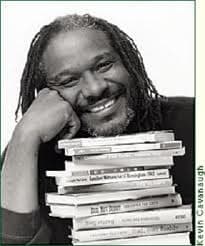
Christopher Paul Curtis is a celebrated author of children's historical fiction, renowned for his engaging narratives and authentic portrayals of African American life. His Newbery Medal-winning novel, "Bud, Not Buddy," and the Newbery Honor book "Elijah of Buxton" are cornerstones of his acclaimed body of work, earning him widespread recognition for bringing history to life for young readers.
Similar books
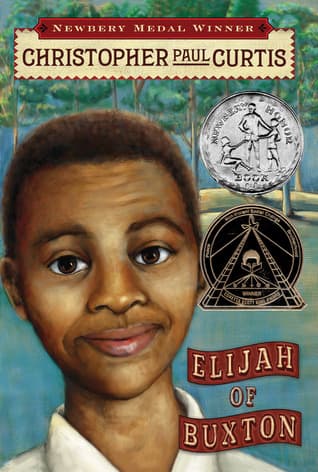
- Elijah of Buxton
Christopher Paul Curtis
3.9 (13k) average on GoodreadsChildren'sAnother historical fiction novel by the same author, set in the same community of Buxton, with similar themes.
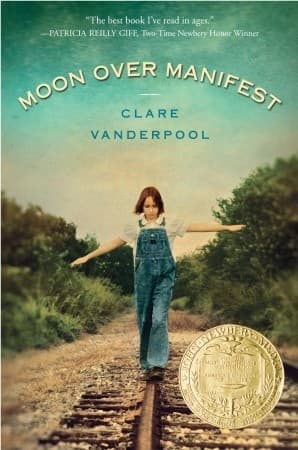
- Moon Over Manifest
Clare Vanderpool
4.0 (31k) average on GoodreadsChildren'sFeatures a young protagonist uncovering town secrets and history, blending mystery with a historical setting.
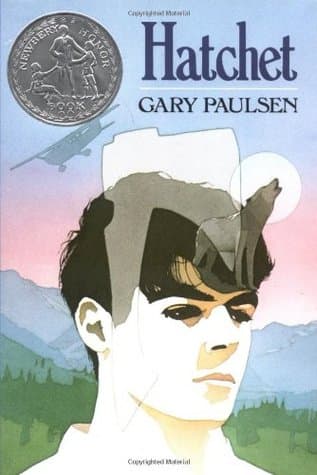
- Hatchet
Gary Paulsen
3.7 (309k) average on GoodreadsChildren'sBoth books feature protagonists navigating challenging wilderness environments. However, Paulsen's Hatchet is primarily a survival story, focusing on Brian Robeson's individual struggle against nature and his internal growth. Curtis's The Madman of Piney Woods, while featuring elements of wilderness and survival, embeds these within a rich historical and social context, using the natural world as a backdrop for exploring themes of racial harmony, environmental conflict, and intergenerational wisdom. Paulsen's work is less concerned with explicit historical or social commentary than Curtis's.
- Harry Potter and the Sorcerer's Stone
J.K. Rowling
4.5 (7M) average on GoodreadsFantasyRescued from a miserable life under the stairs, an orphaned boy discovers he's a wizard destined for a magical school, where he uncovers a dangerous secret tied to the dark wizard who murdered his parents.
- The Hobbit, or There and Back Again
J.R.R. Tolkien
4.3 (2.9M) average on GoodreadsFantasyA comfort-loving hobbit named Bilbo Baggins is whisked away by a mischievous wizard and a band of dwarves on an unexpected journey to reclaim stolen treasure from a fearsome dragon, discovering courage and a magical ring along the way.
- Harry Potter and the Goblet of Fire
J.K. Rowling
4.6 (2.6M) average on GoodreadsFantasyA bewildered Harry Potter, underage and thrust into a deadly Triwizard Tournament, must brave dragons, mermaids, and a resurgent dark magic to survive a year that will forever alter the wizarding world.



Enjoyed the summary?
A summary gives you the shape of the book. The book itself has the detail, the examples and the voice.
Find The Madman of Piney Woods on AmazonAs an Amazon Associate, BookBrief earns from qualifying purchases. How we're funded