
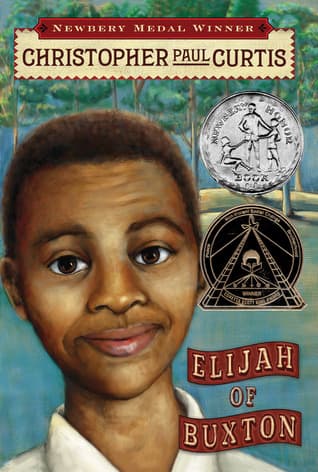
Synopsis
Covers the whole plot, including the ending.
- Difficulty
- Medium
- Pacing
- Moderate
- Mood
- Heartwarming, Hopeful, Historical, Thought-provoking, Humorous
- Read it if
- You enjoy historical fiction about the Underground Railroad, stories of courage and moral dilemmas, or books with a strong, humorous, and unique young protagonist's voice.
- Skip it if
- You prefer lighthearted stories without serious historical themes, or are sensitive to descriptions of slavery and its brutalities.
Elijah of Buxton Plot Summary
Covers the whole plot, including the ending.
A Boy Born Free in Buxton
Elijah Freeman, an eleven-year-old, lives in Buxton, Canada, a settlement for former slaves who escaped through the Underground Railroad. He is the first child born free in the community and is known for an embarrassing incident with Frederick Douglass, where he vomited on the orator. Elijah spends his days with his best friend, Cooter, doing chores and getting into mischief, like trying to catch a fish for his mother. Adults tell him stories of hardship and bravery from their experiences with slavery and their journey to freedom. His parents, especially his Ma, teach him the importance of education and kindness, even though Elijah is often scared.
The Preacher's Arrival and the 'Fragile' Man
A new character, a preacher, arrives in Buxton. He is charismatic and well-dressed. He quickly makes friends with the community, especially MaWee and Mr. Leroy, by telling vivid stories of his efforts to buy his enslaved family members' freedom. The Preacher says he has a lot of money to buy his wife and children out of bondage and promises to return to the South to do it. Elijah is wary of the Preacher, sensing he is not genuine, but many in Buxton are moved by his stories and his dedication to freeing his loved ones. The Preacher's presence brings hope to the settlement.
Mr. Leroy's Sacrifice and the Stolen Money
Mr. Leroy, a kind and hardworking man in Buxton, has been saving money for years to buy his wife and children's freedom; they are still enslaved in the American South. He keeps his money in a small, locked box. The Preacher, having gained Mr. Leroy's trust, stays in his cabin. One day, Mr. Leroy finds his money box broken into and all his savings gone. The Preacher has disappeared. The community is upset by this betrayal, especially Mr. Leroy, who is heartbroken. Elijah sees Mr. Leroy's grief and the injustice, and feels a strong need to help.
Elijah's Pursuit South
Elijah feels he must help Mr. Leroy, so he decides to follow the Preacher into the United States to get the stolen money. Mr. Segee, a formerly enslaved man known for his skill with horses and knowledge of southern routes, goes with him. Elijah's parents are unsure but agree, understanding the mission's importance and trusting Mr. Segee. The journey is dangerous. Crossing into America means entering a place where slavery is legal and any Black person is at risk. Elijah quickly begins to understand the harsh realities outside Buxton.
First Encounters with American Reality
As Elijah and Mr. Segee travel deeper into American territory, Elijah's sheltered upbringing in Buxton is broken by what he sees. He sees enslaved people treated with cruelty, forced into hard labor, and living in bad conditions. He watches a slave auction, where people are bought and sold like property. This deeply disturbs and frightens him. The constant fear and oppression defining enslaved people's lives become real to Elijah, contrasting sharply with the freedom and dignity he has always known. He begins to understand the true meaning of the stories his parents and other Buxton residents shared.
Tracking the Preacher
Elijah and Mr. Segee follow the Preacher's trail, finding clues from people they meet. They learn the Preacher is indeed traveling south, continuing his deceit. They hear reports of a Black man fitting the Preacher's description, often charming people but leaving suspicion. The journey is slow and dangerous, requiring constant vigilance against slave catchers and suspicious white people. Elijah's bravery is tested as they travel through unfamiliar and hostile territory, relying on Mr. Segee's experience and their shared goal to get back Mr. Leroy's money.
The Horrors of a Slave Coffle
During their pursuit, Elijah accidentally gets separated from Mr. Segee and finds a slave coffle—a group of enslaved people chained together and being marched to be sold. He hides and watches in horror as the slave catchers abuse the captives. Among them, he recognizes a woman he had seen before, a mother separated from her child. The sight of their suffering, exhaustion, and brutal treatment affects Elijah deeply. This direct encounter with slavery is traumatic, forcing him to face its evil.
The Preacher's True Nature Revealed
Elijah eventually finds the Preacher, but not as he expected. He finds him in a horrifying situation: the Preacher is trying to sell a young mother and her baby, claiming they are his own family, even though he told Mr. Leroy his family was older. Elijah overhears the Preacher's negotiations and realizes the man is not just a thief, but a wicked person who profits from selling human beings. The Preacher is a 'slave catcher' or 'kidnapper' himself, preying on vulnerable free Black people or those who have escaped, or even selling those he claims to be 'freeing.' The stolen money from Mr. Leroy was not meant to buy freedom.
A Desperate Act of Courage
Seeing the Preacher's act, Elijah, despite his fear, feels a surge of courage. He confronts the Preacher, demanding Mr. Leroy's money back and trying to stop the sale of the mother and child. His intervention is risky and puts his life in danger. He creates a distraction and, in the chaos, helps the mother and child escape. This moment is a turning point for Elijah, showing his growth from a timid boy to someone willing to stand up against injustice, even with great personal risk. He has fully embraced the compassion and courage taught in Buxton.
The Rescue and the Return
After Elijah's intervention, Mr. Segee, who had been looking for Elijah, arrives to help. Together, they get the mother and child to safety, away from the Preacher and the slave traders. Elijah does not get back Mr. Leroy's money, as the Preacher escapes. However, he has saved two lives, a greater accomplishment. With the immediate danger passed, Elijah, Mr. Segee, the mother, and her baby begin their journey back to Buxton. Elijah carries the weight of what he has seen, but also the satisfaction of having acted with courage and compassion. He returns a changed boy, having experienced the horrors of slavery firsthand and showing remarkable bravery.
Elijah of Buxton Characters
Elijah Freeman
Protagonist
The first child born free in Buxton, who embarks on a journey into the slave states.
Elijah is an eleven-year-old boy, known for being the first child born in the free settlement of Buxton, Canada. He is often characterized by his 'fragile' stomach, his tendency to be easily scared, and his literal interpretations of sayings. Despite his initial timidity, Elijah possesses a keen sense of observation, a strong moral compass, and a deep empathy for others. His journey into the American South forces him to confront the horrors of slavery firsthand, transforming him from a naive boy into a courageous young man who stands up against injustice. He embodies the hopes and ideals of the Buxton community.
Relationships: Ma (Loving and guiding mother); Pa (Wise and supportive father); Cooter (Best friend and confidante); Mr. Leroy (Mentor figure, whose trust is betrayed); Mr. Segee (Travel companion and protector)
Ma (Mrs. Freeman)
Supporting
Elijah's wise and loving mother, a former slave who provides guidance.
Ma is Elijah's strong, loving, and deeply moral mother. She is a former slave who found freedom in Buxton and is dedicated to raising Elijah with a strong sense of right and wrong, and an appreciation for education and kindness. She often uses proverbs and stories to teach Elijah life lessons, though he sometimes takes them too literally. Ma is a pillar of the Buxton community, representing the resilience and wisdom of those who escaped slavery. Her experiences deeply inform her parenting and her perspective on the world, and she reluctantly allows Elijah to go south, trusting his good heart.
Relationships: Elijah Freeman (Son, whom she loves and guides); Pa (Husband, partner in raising Elijah)
Pa (Mr. Freeman)
Supporting
Elijah's calm and steady father, a former slave and community leader.
Pa is Elijah's steady, calm, and intelligent father. Like Ma, he is a former slave who escaped to Buxton. He is a respected figure in the community, known for his wisdom and his quiet strength. He supports Ma in instilling strong values in Elijah, often offering practical advice and understanding. Pa represents the quiet dignity and hard work that built the Buxton settlement. He is pragmatic but also deeply compassionate, and his decision to allow Elijah to pursue the Preacher reflects his trust in his son and the importance of justice, even as he fears for Elijah's safety.
Relationships: Elijah Freeman (Son, whom he teaches and trusts); Ma (Wife, partner in their shared life and values)
Cooter
Supporting
Elijah's best friend and companion in childhood adventures.
Cooter is Elijah's best friend and constant companion in Buxton. He is a lively and sometimes mischievous boy, often participating in Elijah's escapades, such as trying to catch fish or exploring the settlement. Cooter represents the innocence and joy of childhood in a free community, a stark contrast to the experiences of enslaved children. While he doesn't accompany Elijah on his journey south, his friendship provides a grounding presence for Elijah in Buxton and highlights the freedom that Elijah and his peers enjoy, a freedom denied to so many others.
Relationships: Elijah Freeman (Best friend)
The Preacher
Antagonist
A deceptive and cruel man who steals from Mr. Leroy and sells people into slavery.
The Preacher is the primary antagonist of the story. He is a charismatic but utterly deceitful man who arrives in Buxton, charming the residents with his eloquent speech and fabricated stories of trying to buy his family's freedom. He is a master manipulator, exploiting the hopes and generosity of the Buxton community. His true nature is revealed when he steals Mr. Leroy's life savings and later when Elijah discovers him actively involved in selling a mother and child into slavery. He embodies the worst kind of betrayal and the insidious nature of human cruelty, preying on the very people he pretends to help.
Relationships: Mr. Leroy (Victim of his theft and betrayal); Elijah Freeman (His pursuer and eventual confronter)
Mr. Leroy
Supporting
A kind and hardworking Buxton resident whose savings are stolen by the Preacher.
Mr. Leroy is a gentle, hardworking man in Buxton who has tirelessly saved money to buy the freedom of his wife and children, who remain enslaved in the American South. He is a symbol of the enduring hope and sacrifice of former slaves. His trust in the Preacher is tragically betrayed, leading to the theft of his life savings and profound heartbreak. Mr. Leroy's plight is the catalyst for Elijah's journey, as Elijah feels a deep empathy and a desire to right the wrong committed against him. His story highlights the emotional toll of slavery, even on those who have found freedom.
Relationships: The Preacher (Trusting host, then victim of theft); Elijah Freeman (The boy who tries to avenge his loss)
Mr. Segee
Supporting
Elijah's travel companion and guide into the American South.
Mr. Segee is a wise and experienced formerly enslaved man who accompanies Elijah on his dangerous journey into the American South. He is skilled with horses and possesses invaluable knowledge of the routes and dangers of the slave states. Mr. Segee acts as Elijah's protector and mentor, teaching him caution and survival skills while they pursue the Preacher. He represents the practical wisdom and courage of those who navigated the perilous paths to freedom and are willing to risk their lives to help others. His presence ensures Elijah's safety and provides a steady hand during their harrowing adventure.
Relationships: Elijah Freeman (Travel companion and mentee)
Frederick Douglass
Mentioned
Famous abolitionist, whom Elijah famously vomited on as a child.
Frederick Douglass is a renowned abolitionist and orator who visits Buxton. He is famous for his powerful speeches against slavery. Elijah's most memorable childhood anecdote involves him vomiting on Douglass during a speech, an event that embarrasses Elijah but highlights his innocent and sometimes clumsy nature. Douglass's presence in the story grounds Buxton in historical reality and symbolizes the broader fight for freedom that the community is a part of. He represents the ideals of freedom and intellectual pursuit that Buxton strives to embody.
Relationships: Elijah Freeman (Brief, accidental interaction with a historical figure)
Elijah of Buxton Themes
Freedom vs. Slavery
The main theme contrasts the free life in Buxton with the realities of slavery in the American South. Elijah, born free, sees the difference firsthand, understanding the value of his freedom. The novel shows the physical and psychological horrors of slavery, from slave owners' cruelty to the devastation of family separation, set against a community built on liberty. This contrast shows how fragile and precious freedom is.
“''First freedom, then freedom to be free.' That's what Ma always said. She meant that getting free was only the first step, then you had to learn how to be free, how to act free, how to think free.”
Coming of Age and Moral Courage
Elijah's journey from a scared boy to a courageous young man forms his character arc. His experiences in the South make him face evil, pushing him past his comfortable Buxton life. He learns to overcome his fears and act on his strong morals, leading to his intervention to save the mother and child. This theme highlights the development of personal integrity and the ability for heroism in young people when faced with injustice.
“I wasn't fragile anymore, not really. Not when I saw what them folks had to put up with. No, I wasn't fragile, but I was scared. And that was okay. You could be scared and still be brave.”
Community and Betrayal
The novel explores the strength and weaknesses of the Buxton community. The residents, united by their shared history and commitment to freedom, create a supportive society. But, this trust is broken by the Preacher's betrayal, who exploits their generosity and hope. This shows how outside evils can damage even good communities, but also how community bonds can inspire people like Elijah to seek justice and protect each other.
“Buxton was a place where folks looked out for each other, where you knew your neighbor and they knew you. That's why what the Preacher done hurt so bad, it wasn't just stealing money, it was stealing trust.”
The Power of Storytelling and Oral Tradition
Stories are important in the novel; they educate, warn, and connect the community. Adults in Buxton share their experiences of slavery and their journeys to freedom, shaping Elijah's understanding of his heritage. The Preacher, however, uses deceptive storytelling to manipulate. This theme shows how stories, true or false, can influence perception, preserve history, and pass on values, ultimately affecting actions and community identity.
“Ma always said stories were like seeds, you plant 'em and they grow. Some grow good things, some grow weeds, but they all grow something.”
Justice and Redemption
The pursuit of justice for Mr. Leroy's stolen money starts Elijah's journey, but it becomes a quest for a broader justice—saving innocent lives from slavery. While Elijah does not get the money back, his actions save others. This theme explores the idea that justice is not always about getting something back but can also be about preventing harm and upholding morals, even without personal gain. Elijah's act, though not getting the money, is a profound act of moral justice.
“I didn't get Mr. Leroy's money back, but I got them folks out. Maybe that was a different kind of pay, a better kind.”
Plot Devices & Literary Techniques
First-Person Narrative (Elijah's Voice)
Provides an intimate, often humorous, and naive perspective on profound historical events.
The story is told through the eyes of Elijah Freeman, an eleven-year-old boy. This narrative choice allows the author to present the harsh realities of slavery through a filter of innocence and developing understanding. Elijah's unique voice, marked by his literal interpretations, his 'fragile' stomach, and his evolving bravery, makes the historical context accessible and emotionally resonant for young readers. His internal thoughts and observations provide both humor and a growing sense of gravity as he encounters the world outside Buxton.
Buxton as a Microcosm of Freedom
The free settlement serves as a stark contrast to the enslaved South, highlighting the value of liberty.
The town of Buxton functions as a symbolic and literal haven of freedom and self-determination for formerly enslaved people. It represents the successful establishment of a Black community, thriving on education, hard work, and mutual support. This setting provides a powerful contrast to the brutal realities of the American South. By showing Elijah's life in Buxton first, the novel emphasizes what was gained by escaping slavery and what is at stake, making his journey into the slave states all the more impactful and terrifying.
The Preacher's Deception
A catalyst for Elijah's journey and a symbol of internal and external threats.
The Preacher's character and his elaborate deception serve as the primary plot device that propels Elijah's adventure. His charming facade and subsequent betrayal highlight the dangers of misplaced trust and the insidious ways evil can manifest. He is not just a thief but a symbol of the continued threats to Black freedom, even in free territories, and the moral corruption that slavery fosters. His actions force Elijah out of his sheltered existence and into a direct confrontation with the darker aspects of human nature.
Symbolism of the 'Fragile' Stomach
Represents Elijah's initial innocence and sensitivity to the world's harshness.
Elijah's recurring 'fragile' stomach, which causes him to vomit when he is scared, nervous, or overwhelmed, serves as a symbolic representation of his initial innocence and his visceral, often physical, reaction to the harsh realities of the world. As he journeys into the South and confronts the horrors of slavery, his ability to control his stomach, or at least to act despite its turmoil, mirrors his growth in courage and his increasing ability to cope with profound trauma and injustice. It externalizes his internal emotional state.
Elijah of Buxton Quotes
“The first thing you gotta learn is that everybody in Buxton is free. And the second thing is that everybody in Buxton is free.”
“I was the first child born free in Buxton, and that makes me special, but it also makes me a fra-gile boy.”
“Sometimes you gotta do what's right, even if it scares you half to death.”
“A man's word is his bond, and a boy's word is practice for being a man.”
“Hope is a powerful thing. It can keep you going when nothing else will.”
“You don't know what freedom means until you've had it taken away.”
“The world ain't always fair, but that don't mean we stop trying to make it right.”
“Laughter is good medicine, even when your heart is heavy.”
“We look out for each other in Buxton. That's what makes us strong.”
“Sometimes the bravest thing you can do is ask for help.”
“The past has a way of catching up, but we don't have to let it define us.”
“Freedom ain't just a place; it's a state of mind.”
“Even in the darkest times, there's light to be found if you know where to look.”
Quiz
10 questions on the plot and the characters. Each answer comes with a short explanation.
Question 1
What is Elijah best known for in his hometown of Buxton?
- Being the fastest runner in the settlement
- Making a memorable impression on Frederick Douglass
- Helping build the first school in Buxton
- Discovering a hidden treasure in the woods
Show answer
B. Making a memorable impression on Frederick Douglass Early in the book, it's established that Elijah is famous in Buxton for the time he threw up on Frederick Douglass when the famous abolitionist visited the settlement, creating an unforgettable (and humorous) first impression.
Question 2
Why does Elijah embark on a dangerous journey to America?
- To visit relatives he has never met
- To pursue a thief who stole money meant to buy a friend's family out of slavery
- To deliver an important message to abolitionists
- To prove he is brave enough to cross the border
Show answer
B. To pursue a thief who stole money meant to buy a friend's family out of slavery Elijah's journey is triggered when the Preacher (a former slave) steals money that Mr. Leroy had been saving to buy his family's freedom. Elijah feels responsible and decides to pursue the thief into America.
Question 3
What significant distinction does Elijah have in Buxton?
- He is the youngest child in the settlement
- He is the first child born into freedom in the settlement
- He is the only child who can read and write
- He is the settlement's best fisherman
Show answer
B. He is the first child born into freedom in the settlement As the first child born free in Buxton, Elijah represents hope and a new beginning for the formerly enslaved community, though he initially doesn't fully understand the weight of this distinction.
Question 4
What is the name of the settlement where Elijah lives?
- Freedom's Crossing
- Buxton
- New Canaan
- Libertyville
Show answer
B. Buxton Buxton is a real historical settlement in Ontario, Canada, established by formerly enslaved people and free Blacks. In the novel, it serves as a safe haven just across the border from Detroit.
Question 5
Who steals the money that Mr. Leroy had been saving?
- A stranger passing through Buxton
- Elijah's friend Cooter
- The Preacher (a former slave)
- Frederick Douglass
Show answer
C. The Preacher (a former slave) The Preacher, who presents himself as a reformed man, ultimately betrays the community by stealing the money Mr. Leroy had painstakingly saved to purchase his family's freedom from slavery.
Question 6
What does Elijah discover firsthand during his journey to America?
- The excitement of big city life
- The unimaginable horrors of the life his parents fled
- That America is more prosperous than Canada
- That slavery has been abolished everywhere
Show answer
B. The unimaginable horrors of the life his parents fled Having grown up free in Buxton, Elijah's journey forces him to confront the brutal reality of slavery that his parents and other adults in his community escaped, fundamentally changing his understanding of freedom.
Question 7
What important realization does Elijah come to by the end of his journey?
- That he prefers life in America to Buxton
- That freedom is something he'll always have if he can get back home
- That money is the most important thing in life
- That he wants to become a preacher
Show answer
B. That freedom is something he'll always have if he can get back home After witnessing slavery firsthand, Elijah understands that his freedom in Buxton is precious and must be protected. The journey reinforces that home represents safety and liberty.
Question 8
How does Elijah's perception of the adults in Buxton change during his journey?
- He realizes they have been hiding the truth about slavery from him
- He understands why they are sometimes fearful and cautious in ways he previously found puzzling
- He decides they are overly protective and should let children take more risks
- He believes they have exaggerated the dangers of America
Show answer
B. He understands why they are sometimes fearful and cautious in ways he previously found puzzling Before his journey, Elijah often found the adults' fears and warnings confusing or excessive. After experiencing the dangers of America himself, he gains empathy for their trauma and understands their protective behavior.
Question 9
What role does humor play in Elijah's narrative voice throughout the novel?
- It serves as a coping mechanism that contrasts with the serious historical context
- It is used primarily to mock the other characters in Buxton
- It disappears completely once Elijah reaches America
- It makes light of the institution of slavery
Show answer
A. It serves as a coping mechanism that contrasts with the serious historical context Christopher Paul Curtis uses Elijah's humorous observations and misunderstandings (like the famous 'fragile' fish scene) to create an authentic child's perspective while dealing with heavy historical themes, making the story accessible to young readers.
Question 10
What does Elijah's journey ultimately teach him about courage?
- That courage means never showing fear
- That courage is acting despite fear to do what is right
- That only adults can truly be courageous
- That courage is unnecessary in a safe place like Buxton
Show answer
B. That courage is acting despite fear to do what is right Throughout his dangerous journey, Elijah experiences fear but continues forward to help Mr. Leroy and confront injustice. His growth shows that true courage isn't the absence of fear, but the determination to act rightly despite it.
Elijah of Buxton FAQ
What is 'Elijah of Buxton' about?
The novel follows 11-year-old Elijah Freeman, the first child born free in Buxton, Canada, a settlement for escaped slaves. When a former slave steals money from his friend Mr. Leroy, who was saving to buy his family out of slavery, Elijah embarks on a dangerous journey to America to recover the money, confronting the brutal realities of slavery firsthand.
Why should I read 'Elijah of Buxton'?
It combines historical authenticity with compelling storytelling, offering a unique perspective on freedom through the eyes of a child who has never known slavery. Christopher Paul Curtis masterfully balances humor, tension, and emotional depth, making it both educational and engaging for readers of all ages.
What is the background/setting of 'Elijah of Buxton'?
Set in the 1850s, the story primarily takes place in Buxton, Ontario, a real settlement founded by escaped slaves. Later, Elijah travels to Michigan and encounters the horrors of slavery in America, contrasting the safety of Buxton with the danger south of the border.
What are the most memorable quotes?
Key quotes include Elijah's reflection, 'I was the first child born free in Buxton,' highlighting his unique identity, and Mr. Leroy's desperate plea, 'That money's for my family,' which drives the plot. The phrase 'the Preacher' also becomes symbolic of betrayal and greed.
What writing style does the author use?
Christopher Paul Curtis employs a first-person narrative from Elijah's perspective, using dialect and humor to bring the character to life. The style blends historical detail with accessible language, making complex themes relatable for young readers while maintaining emotional depth.
What minor details add significant meaning?
Elijah's 'fragility'—his tendency to get scared easily—initially seems like a flaw but becomes a source of empathy and courage. The 'fish head' incident early in the book subtly foreshadows the darker themes of loss and betrayal he will face later.
What are some subtle foreshadowing moments?
The Preacher's smooth-talking and manipulative behavior early on hints at his eventual betrayal. Elijah's encounters with Frederick Douglass, who warns about the dangers of trusting strangers, foreshadow the perilous journey and the realities of slavery he will witness.
What unexpected character connections exist?
The Preacher, who initially seems like a charismatic figure, is revealed to have been a slave catcher, connecting him directly to the oppression Elijah's community fled. This twist highlights how trauma and greed can corrupt even those who have escaped slavery.
What are unspoken character motivations?
Mr. Leroy's desperation to buy his family's freedom stems from deep guilt and love, driving him to trust the Preacher despite risks. Elijah's journey is motivated not just by friendship but by a growing need to prove his courage and understand his parents' past.
What psychological complexities do characters exhibit?
Elijah grapples with the tension between his sheltered upbringing in Buxton and the brutal truths of slavery, leading to a crisis of identity. The Preacher shows how survival in a oppressive system can twist morality, making him both a victim and a villain.
What are the major emotional turning points?
Key moments include Elijah witnessing the lynching of a slave in America, which shatters his innocence, and finding the stolen money with the Preacher's corpse, forcing him to confront death and loss. His decision to return home marks a shift from boyhood to maturity.
How do relationship dynamics evolve?
Elijah's relationship with Mr. Leroy deepens from casual friendship to a bond forged in shared trauma and purpose. His view of adults, especially the Preacher, shifts from trust to disillusionment, reflecting his growing understanding of human complexity and betrayal.
Which parts remain ambiguous or open-ended?
The fate of Mr. Leroy's family is left unresolved, emphasizing the ongoing struggle for freedom. Elijah's internal conflict about his identity and courage continues beyond the journey, leaving readers to ponder how his experiences will shape his future in Buxton.
What are controversial scenes or decisions?
Elijah's decision to travel alone to America, risking his life, sparks debate about the balance between bravery and recklessness. The portrayal of the Preacher's betrayal and death raises questions about redemption and justice in a system built on slavery.
'Elijah of Buxton' ending explained: how it ends & what it means
Elijah returns to Buxton with the stolen money, but Mr. Leroy dies before he can use it, leaving the family's fate uncertain. The ending symbolizes the bittersweet nature of freedom—Elijah gains courage and understanding, but the cycle of loss continues, highlighting the enduring impact of slavery.
About the author
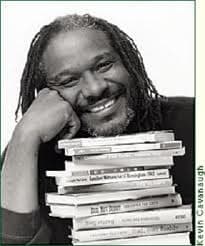
Christopher Paul Curtis is a celebrated author of children's historical fiction, renowned for his engaging narratives and authentic portrayals of African American life. His Newbery Medal-winning novel, "Bud, Not Buddy," and the Newbery Honor book "Elijah of Buxton" are cornerstones of his acclaimed body of work, earning him widespread recognition for bringing history to life for young readers.
Similar books
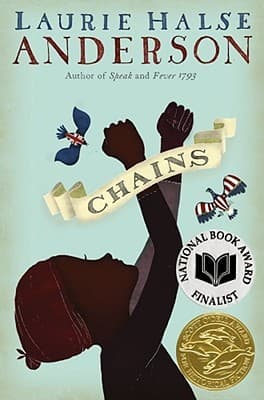
- Chains
Laurie Halse Anderson
4.1 (47k) average on GoodreadsChildren'sProvides a compelling historical narrative of a young person's experience with slavery and the fight for freedom.
- Copper Sun
Sharon M. Draper
4.3 (13k) average on GoodreadsHistorical FictionCopper Sun offers a much darker and more explicit depiction of the horrors of slavery and the Middle Passage. While both deal with the theme of freedom, Elijah focuses on the experience of being free and the challenges of maintaining that freedom, whereas Copper Sun intensely portrays the journey to freedom from brutal enslavement. Elijah is generally more suitable for a slightly younger audience due to its less graphic content and use of humor.
- Harry Potter and the Sorcerer's Stone
J.K. Rowling
4.5 (7M) average on GoodreadsFantasyRescued from a miserable life under the stairs, an orphaned boy discovers he's a wizard destined for a magical school, where he uncovers a dangerous secret tied to the dark wizard who murdered his parents.
- The Hobbit, or There and Back Again
J.R.R. Tolkien
4.3 (2.9M) average on GoodreadsFantasyA comfort-loving hobbit named Bilbo Baggins is whisked away by a mischievous wizard and a band of dwarves on an unexpected journey to reclaim stolen treasure from a fearsome dragon, discovering courage and a magical ring along the way.
- Harry Potter and the Goblet of Fire
J.K. Rowling
4.6 (2.6M) average on GoodreadsFantasyA bewildered Harry Potter, underage and thrust into a deadly Triwizard Tournament, must brave dragons, mermaids, and a resurgent dark magic to survive a year that will forever alter the wizarding world.
- Harry Potter and the Order of the Phoenix
J.K. Rowling
4.5 (2.5M) average on GoodreadsFantasyIn a year of oppressive secrets and the threat of Voldemort, Harry Potter and Dumbledore's Army secretly train for war, shown through Jim Kay and Neil Packer's dark illustrations.





Enjoyed the summary?
A summary gives you the shape of the book. The book itself has the detail, the examples and the voice.
Find Elijah of Buxton on AmazonAs an Amazon Associate, BookBrief earns from qualifying purchases. How we're funded