

Synopsis
Covers the whole plot, including the ending.
- Difficulty
- Easy
- Pacing
- Fast
- Mood
- Whimsical, Humorous, Thought-provoking, Slightly Dark
- Read it if
- You enjoy classic Roald Dahl stories with a clear moral message and a touch of dark fantasy.
- Skip it if
- You prefer complex plots or realistic narratives without magical elements.
The Magic Finger Plot Summary
Covers the whole plot, including the ending.
The Narrator and the Greggs' Hobby
The unnamed eight-year-old narrator introduces herself and her 'Magic Finger'—a power that, when she gets extremely angry, causes her finger to glow and inflict strange punishments. She recounts an incident where she gave her teacher, Mrs. Winter, a tail for scolding her. The narrator lives next door to the Gregg family: Mr. Gregg, Mrs. Gregg, and their two children, Philip and William. The Greggs are avid hunters, a hobby the narrator detests. She frequently tries to persuade them to stop, but they only laugh at her concerns, dismissing her pleas.
The Duck Hunt and the Breaking Point
One Saturday morning, the narrator observes Mr. Gregg, Philip, and William preparing for a duck hunt. Despite her strong protests and pleas, the Greggs are determined. They depart for the hunt and later return with thirty-two dead ducks. The sight of the lifeless birds, coupled with the Greggs' disregard for her feelings, ignites the narrator's fury. She feels her Magic Finger begin to tingle and glow, signaling that a powerful and uncontrolled transformation is about to occur. The Greggs remain unaware of the impending magic.
The Transformation
As the narrator's anger peaks, her Magic Finger unleashes its power. The Gregg family—Mr. Gregg, Mrs. Gregg, Philip, and William—suddenly begin to shrink and sprout feathers. Their arms become wings, and their mouths become beaks. In a flash, they all turn into tiny, wild ducks, no bigger than the ducks they had just hunted. They are bewildered and terrified by their sudden metamorphosis, unable to understand what has happened or how to reverse it. Their house, once their comfortable home, now seems impossibly large and alien.
A Night in the Nest
Confused and disoriented, the bird-Greggs manage to fly out of their house. They soon discover their own house has shrunk to the size of a bird's nest. They try to return to their normal house, but find it impossible. As night falls, cold and hungry, they must seek shelter. They find a duck's nest high in a tree, which, to their dismay, is already occupied by four large, real ducks. The Greggs huddle together in the uncomfortable nest, enduring a miserable night exposed to the elements, experiencing the vulnerability of the very creatures they used to hunt.
The Real Ducks' Revenge
The next morning, the bird-Greggs, stiff and famished, fly back towards their home, hoping the magic has worn off. To their horror, they find that the four large ducks from the nest have now occupied their house. The real ducks are living inside, wearing the Greggs' clothes, eating their food, and generally making themselves at home. The bird-Greggs, unable to enter their own dwelling, realize they are truly homeless and helpless. They watch in despair as the real ducks enjoy the comforts of their former lives, while they shiver outside.
The Hunters Become the Hunted
While the bird-Greggs are still reeling from the shock of their house being occupied, three of Mr. Gregg's hunting friends, including the Coopers, arrive. They are armed with shotguns, ready for a day of hunting. The bird-Greggs, flying nearby, suddenly find themselves targets. Mr. Cooper aims his gun directly at them. The bird-Greggs are terrified, realizing they are about to be shot by their own friends, experiencing firsthand the terror of being hunted. They manage to escape the immediate danger by frantically flying away, but the close call changes them.
A Life-Changing Realization
After the near-death experience, the bird-Greggs fly to a pond, their spirits crushed. They are cold, hungry, and exhausted. They reflect on their situation, remembering their past actions as hunters. They vividly recall shooting ducks out of the sky and the joy they once took in it. Now, as ducks themselves, they understand the terror and pain they inflicted. This empathy marks a turning point for the family. They realize the cruelty of their former hobby and vow to never hunt again, if only they can return to their human forms.
The Return to Humanity
The narrator, watching the suffering Greggs from her window, feels a mix of satisfaction and pity. As the Greggs, still in their duck forms, make a solemn promise aloud never to hunt again, the narrator's anger subsides. Her Magic Finger, which had been glowing, begins to fade. With a flash of light, the Greggs are instantly transformed back into their human selves, standing naked and bewildered by the pond. They are overjoyed to be human again, and their first act is to retrieve their clothes and rush home.
A New Beginning
Back in their human forms, the Greggs immediately go to their house. They find the four real ducks still inside, enjoying their comforts. Instead of evicting them, the Greggs, remembering their own experience, decide to build a beautiful new house for the ducks by the pond. They also take down all their hunting guns and trophies, burying them in the garden. They become strong advocates for animal welfare, dedicating themselves to protecting creatures rather than harming them. The narrator observes their changed behavior with approval.
A New Threat and a Hint of Future Magic
The narrator concludes her story by noting that the Greggs have truly changed, never hunting again. However, she then observes Mr. Cooper and his two sons, also avid hunters, walking by her house with their guns. Her Magic Finger begins to tingle once more, and she points it directly at the Cooper family. The story ends here, implying that the Coopers are about to experience a similar transformation or punishment for their hunting activities, hinting at the narrator's continued use of her power against those who harm animals.
The Magic Finger Characters
The Narrator
Protagonist
An eight-year-old girl with a powerful, uncontrollable 'Magic Finger'.
The unnamed narrator is a compassionate and principled eight-year-old girl who possesses a mysterious power known as the 'Magic Finger'. This power activates when she becomes extremely angry, causing her finger to glow and inflict bizarre, transformative punishments on those who provoke her. She is fiercely protective of animals and strongly opposes hunting, viewing it as a cruel and unnecessary act. Her actions are driven by a deep sense of justice and a desire to see wrongs righted, even if her methods are unconventional and often beyond her direct control.
Relationships: The Gregg Family (Neighbors, whom she dislikes due to their hunting, but ultimately helps them learn a lesson.)
Mr. Gregg
Supporting/Antagonist (initially)
The patriarch of the Gregg family, an enthusiastic hunter.
Mr. Gregg is a cheerful but insensitive man who loves hunting, especially ducks. He sees it as a harmless sport and dismisses the narrator's protests with laughter. He is initially oblivious to the suffering of animals and the impact of his actions. His transformation into a duck forces him to confront the reality of being hunted, leading to a profound change in his perspective. He is a loving father and husband, but his moral blind spot regarding hunting makes him the target of the Magic Finger.
Relationships: Mrs. Gregg (Husband); Philip Gregg (Father); William Gregg (Father); The Narrator (Neighbor, whose warnings he initially ignores.)
Mrs. Gregg
Supporting
Mr. Gregg's wife, who also participates in the family's hunting hobby.
Mrs. Gregg is equally complicit in the family's hunting activities, though perhaps less central to the act itself than her husband and sons. She shares her family's initial dismissive attitude towards the narrator's concerns about animal welfare. Her transformation into a duck, alongside her family, forces her to experience the vulnerability and fear of the hunted. This experience profoundly alters her perspective, leading her to embrace a compassionate stance towards animals.
Relationships: Mr. Gregg (Wife); Philip Gregg (Mother); William Gregg (Mother)
Philip Gregg
Supporting
One of the Gregg sons, an enthusiastic young hunter.
Philip is one of the two sons in the Gregg family, and like his father and brother, he enjoys hunting. He is young and impressionable, following his father's lead in the sport. His initial enthusiasm for hunting is born out of childhood recreation rather than malice, but he lacks an understanding of the consequences for the animals. His transformation into a duck is a shocking and terrifying experience that forces him to mature and develop empathy for the creatures he once pursued.
Relationships: Mr. Gregg (Son); Mrs. Gregg (Son); William Gregg (Brother)
William Gregg
Supporting
The other Gregg son, also a participant in the family's hunting.
William is the second son of the Gregg family, and he, too, is a keen participant in their hunting expeditions. Like Philip, he initially views hunting as an exciting pastime, without fully grasping the suffering it inflicts. His experience of being transformed into a duck, enduring the cold, hunger, and fear of being hunted, is a powerful lesson. This traumatic event fundamentally shifts his understanding and appreciation for animal life, turning him against his former hobby.
Relationships: Mr. Gregg (Son); Mrs. Gregg (Son); Philip Gregg (Brother)
The Four Ducks
Supporting/Mentioned
Real ducks who briefly take over the Greggs' house.
These four real ducks are initially displaced from their nest by the transformed Gregg family. They later take advantage of the Greggs' absence to occupy their human house, symbolizing the role reversal and the disruption of natural order caused by the Magic Finger. They are not characters in the traditional sense but serve as a visual representation of the Greggs' new reality and the consequences of their actions. Their presence in the house highlights the absurdity and effectiveness of the Magic Finger's punishment.
Mr. Cooper
Mentioned/Antagonist (implied)
One of Mr. Gregg's hunting friends, who becomes the narrator's next target.
Mr. Cooper is introduced as one of Mr. Gregg's hunting companions. He nearly shoots the transformed Greggs, unknowingly targeting his friends. At the end of the story, he is seen with his sons, still engaged in hunting, which draws the attention of the narrator's Magic Finger. He represents the continued prevalence of hunting despite the lesson learned by the Greggs, setting up a potential future use of the magic.
Relationships: The Gregg Family (Hunting friend); The Narrator (Potential next target of her Magic Finger.)
Mrs. Winter
Mentioned
The narrator's former teacher, an early victim of the Magic Finger.
Mrs. Winter is the narrator's former teacher, mentioned only briefly as the recipient of an earlier punishment from the Magic Finger. She received a tail for pulling the narrator's ear, demonstrating the unpredictable and sometimes petty nature of the Magic Finger when the narrator is angered. Her inclusion establishes the history and power of the Magic Finger before its major use against the Greggs.
Relationships: The Narrator (Teacher-student relationship.)
The Magic Finger Themes
Empathy and Perspective Taking
The central theme is understanding others' experiences by literally walking in their shoes. The Gregg family, initially unaware of animal suffering, is forced to become ducks themselves. This transformation allows them to experience the terror of being hunted, the discomfort of living in a nest, and the vulnerability of prey. Their realization, 'We were the ducks!', highlights how direct experience can change one's perspective and create empathy, leading to a complete reversal of their values. This is shown when they build a new house for the real ducks, rather than simply evicting them.
“What a terrible thing it is to be a duck! What a terrible thing it is to be shot at!”
Animal Rights and Welfare
The book strongly advocates for the ethical treatment of animals and condemns hunting for sport. The narrator's anger at the Greggs' hunting stems from her belief that it is cruel and unnecessary. The Magic Finger enforces animal rights, punishing those who harm creatures. The Greggs' transformation is a powerful metaphor for the consequences of human actions on the animal kingdom. By the end, the Greggs become active protectors of animals, burying their guns and building a home for the ducks, symbolizing a shift towards a more compassionate relationship with nature.
“I hated the hunting. I hated the gun. I hated the way they all laughed when I asked them to stop.”
Consequences of Actions
A key theme is that every action has consequences, especially when those actions cause harm to others. The Greggs' repeated disregard for the narrator's pleas and their continued hunting leads to their magical punishment. The Magic Finger ensures that they directly experience the negative results of their own behavior. The discomfort, fear, and loss they endure as ducks are direct consequences of their past actions as hunters. This theme is clear by the immediate reversal of the spell once they genuinely repent and promise to change, showing a cause-and-effect relationship between their morality and their fate.
“We were the ducks! We were the ones who were getting shot at!”
The Power of a Child's Voice
The story highlights how a child's perspective and moral convictions, even when initially dismissed, can hold significant power. The narrator, despite being only eight years old, holds a strong moral stance against hunting. Although the adults initially laugh at her, her 'Magic Finger' gives her a literal voice that cannot be ignored. Her power forces the adults to listen and learn, demonstrating that children's concerns and ethical insights should be taken seriously. The ending, with the narrator pointing her finger at the Coopers, suggests that this power will continue to be used to uphold her moral code.
“I tried to tell them to stop, but they only laughed at me.”
Plot Devices & Literary Techniques
The Magic Finger
A supernatural power that transforms people when the narrator gets angry.
The Magic Finger is the central magical element and primary plot device. It is an uncontrollable power possessed by the unnamed narrator, which activates when she becomes extremely angry. It causes her finger to glow and inflicts bizarre, often animal-related, transformations or punishments on the offending party. It serves as an instrument of divine-like justice, directly manifesting the narrator's moral outrage into tangible consequences. The device drives the entire plot, initiating the conflict and resolving it by forcing the antagonists to experience the repercussions of their actions.
Role Reversal (Human-to-Animal Transformation)
The primary method of punishment, forcing characters to experience life from an animal's perspective.
The transformation of the Gregg family into ducks is the key mechanism through which the story's themes are explored. This role reversal forces the hunters to become the hunted, experiencing the fear, vulnerability, and discomfort of the creatures they once casually killed. It's a literal application of the concept of 'walking in someone else's shoes,' allowing for profound empathy to develop. This device is crucial for the Greggs' character arc, making their change of heart believable and impactful, as it stems directly from their lived experience as ducks.
Symbolism of the House and Nest
The physical dwellings symbolize the characters' status and values.
The Greggs' large, comfortable house symbolizes their human privilege and their detachment from nature. When they are transformed into ducks, their house becomes inaccessible and is then occupied by real ducks, while the Greggs are forced to live in a cold, exposed nest. This contrast highlights their loss of status and comfort, mirroring their newfound vulnerability. The subsequent building of a new house for the real ducks by the transformed Greggs symbolizes their complete change of heart and their new commitment to coexisting respectfully with animals, rather than dominating them.
The Unnamed Narrator
A first-person perspective from a child with extraordinary power, enhancing the story's moral clarity.
The story is told from the first-person perspective of the unnamed eight-year-old narrator. This narrative choice allows the reader to directly access her moral indignation and strong convictions about animal welfare. Her lack of a name universalizes her experience, making her a representative of innocent justice. By filtering the events through her eyes, the story maintains a clear moral compass and emphasizes the straightforward, often black-and-white, ethical understanding of a child, making the message about the cruelty of hunting more impactful and less open to adult rationalizations.
The Magic Finger Quotes
“I can't tell you how I do it because I don't even know myself.”
“All of a sudden, my right forefinger began to tingle.”
“It was the Magic Finger. I could feel it burning like fire.”
“They were all standing on their heads and flapping their arms.”
“The next morning, when they woke up, they were birds.”
“They had wings instead of arms, and feathers all over their bodies.”
“They were ducks. Four enormous ducks.”
“It's not fair to shoot things just for fun.”
“They had to build a nest for themselves.”
“They were learning what it felt like to be a bird.”
“They didn't like it one bit.”
“They never went hunting again.”
“I hope I never have to use my Magic Finger again.”
“It was a very queer sort of a day.”
Quiz
10 questions on the plot and the characters. Each answer comes with a short explanation.
Question 1
¿Cuál es el poder especial de la niña de ocho años?
- Puede volar
- Puede hablar con los animales
- Su dedo lanza castigos que transforman a las personas en animales
- Puede hacer que las plantas crezcan rápidamente
Show answer
C. Su dedo lanza castigos que transforman a las personas en animales La niña de ocho años tiene un poder especial: cuando se enfada, su dedo mágico transforma a las personas en animales.
Question 2
¿Por qué la niña no está de acuerdo con la familia Gregg?
- Porque son sus vecinos
- Porque son muy ruidosos
- Porque a ella no le gusta para nada que sean cazadores
- Porque no la invitan a jugar
Show answer
C. Porque a ella no le gusta para nada que sean cazadores A la niña no le gusta que la familia Gregg sea cazadora, lo cual es el motivo de su desacuerdo.
Question 3
¿En qué animales transforma la niña a la familia Gregg?
- En zorros
- En pájaros
- En conejos
- En peces
Show answer
B. En pájaros Cuando la niña apunta con su dedo a los Gregg, los transforma en pájaros.
Question 4
¿Qué implicación principal tiene la transformación de los Gregg en pájaros para su forma de vida?
- Deben aprender a volar
- Deben vivir en las ramas de los árboles, en un nido
- Deben buscar comida en el suelo
- Deben construir una nueva casa
Show answer
B. Deben vivir en las ramas de los árboles, en un nido Como pájaros, los Gregg se ven obligados a vivir en un nido en las ramas de los árboles, lo cual es un cambio radical en su existencia.
Question 5
¿Cuál es la reacción de la niña cuando los Gregg se ríen de sus intentos de persuadirlos para que dejen de cazar?
- Ella se da por vencida y los ignora
- Ella se enoja mucho y usa su Dedo Mágico en ellos
- Ella busca ayuda de otros adultos
- Ella les escribe una carta de protesta
Show answer
B. Ella se enoja mucho y usa su Dedo Mágico en ellos Cuando los Gregg se ríen de ella, la niña se enoja mucho y su Dedo Mágico toma el control, transformándolos.
Question 6
¿Qué mensaje principal transmite la historia a través de la experiencia de la familia Gregg como pájaros?
- La importancia de la amistad entre vecinos
- Las dificultades de vivir en la naturaleza
- La importancia de la empatía y de no dañar a los animales
- La diversión de la caza
Show answer
C. La importancia de la empatía y de no dañar a los animales Al experimentar la vida como pájaros, la familia Gregg comprende el sufrimiento de los animales que cazaban, promoviendo un mensaje de empatía.
Question 7
Además de la transformación, ¿qué otro problema inicial enfrentan los Gregg una vez que se convierten en pájaros?
- No pueden comunicarse entre ellos
- No pueden encontrar comida adecuada para pájaros
- Se encuentran viviendo en un nido, lo que es solo el principio de sus problemas
- Son atacados por otros animales
Show answer
C. Se encuentran viviendo en un nido, lo que es solo el principio de sus problemas El texto menciona que 'se encuentran viviendo en un nido, y eso es solo el principio de sus problemas', lo que sugiere que la adaptación a su nueva forma de vida traerá más desafíos.
Question 8
¿Qué implica la frase 'el cazador se convierte en el cazado' en el contexto de la historia?
- Que los animales que antes eran cazados ahora cazan a los Gregg
- Que los Gregg experimentan la vulnerabilidad y el miedo que sus presas sentían
- Que la niña se convierte en una cazadora de los Gregg transformados
- Que los Gregg ahora disfrutan de ser cazados
Show answer
B. Que los Gregg experimentan la vulnerabilidad y el miedo que sus presas sentían La frase hace referencia a que los Gregg, al ser transformados en pájaros, ahora son vulnerables y están expuestos a los peligros que antes infligían a otros animales, experimentando la perspectiva de sus presas.
Question 9
¿Cómo se describe la capacidad de la niña para controlar su Dedo Mágico cuando está muy enfadada?
- Ella lo controla perfectamente y lo usa a voluntad
- Ella no puede controlarlo, y el Dedo Mágico toma el control
- Necesita la ayuda de un adulto para activarlo
- Solo funciona si ella está feliz
Show answer
B. Ella no puede controlarlo, y el Dedo Mágico toma el control El texto indica que 'Cuando está muy, muy enojada, el Dedo Mágico de la niña toma el control. Realmente no puede controlarlo'.
Question 10
¿Qué papel juega la falta de control de la niña sobre su Dedo Mágico en el desarrollo de la trama?
- Permite que la niña decida conscientemente el castigo para los Gregg
- Introduce un elemento de imprevisibilidad y subraya la fuerza incontrolable de su ira
- Le da a la niña la oportunidad de arrepentirse inmediatamente de sus acciones
- Demuestra que la niña es malvada por naturaleza
Show answer
B. Introduce un elemento de imprevisibilidad y subraya la fuerza incontrolable de su ira El hecho de que la niña no pueda controlar su Dedo Mágico cuando está muy enojada hace que la transformación de los Gregg sea un evento espontáneo e incontrolable, lo que aumenta el impacto de la historia y la imprevisibilidad de las consecuencias de la ira.
The Magic Finger FAQ
What is the core premise of 'The Magic Finger'?
The story centers on an unnamed eight-year-old girl who possesses a mysterious 'Magic Finger.' When she becomes extremely angry, this finger involuntarily activates, causing dramatic transformations, often turning people into animals, as a form of supernatural punishment for actions she disapproves of.
Who are the Gregg family and what is their role in the story?
The Gregg family consists of Mr. Gregg, Mrs. Gregg, and their two sons, Philip and William. They are the protagonists' neighbors and avid hunters, a hobby that deeply upsets the girl, ultimately leading to their transformation into birds by her Magic Finger.
What specifically triggers the girl's Magic Finger against the Greggs?
The girl's Magic Finger is triggered when she sees Mr. and Mrs. Gregg, along with Philip and William, returning from a duck hunting trip, proudly carrying four dead mallards. Their laughter and dismissal of her pleas to stop hunting ignite her uncontrollable anger, causing the transformation.
What is the initial transformation the Gregg family undergoes?
The Magic Finger causes the Gregg family to shrink down and grow wings, turning them into birds. They are initially confused and distressed as they find themselves perched on the branches of their own apple tree, unable to return to their human forms.
How do the Greggs experience life as birds, and what challenges do they face?
As birds, the Greggs are forced to build a nest, forage for worms, and endure the cold and rain. Their most significant challenge comes when three real ducks, whose family they had hunted, steal their house and guns, turning the tables on them and making them the hunted.
Is there any indication of the Magic Finger's origin or how the girl acquired it?
No, the book provides no explanation for the Magic Finger's origin or how the girl came to possess it. It is presented as an inherent, mysterious ability she has had since birth, activating only when she reaches a peak of intense anger.
Are there any other instances of the Magic Finger being used before the Greggs?
Yes, the girl recounts two previous instances: once when her teacher, Miss Winter, pulled her ear, resulting in Miss Winter growing a long tail; and another time when a boy named Wilfred bit her, causing him to bark like a dog for three days. These examples establish the finger's power and unpredictability.
How does the author use the ducks to symbolize the Greggs' past actions?
The three ducks that take over the Greggs' house and guns directly mirror the Greggs' own hunting practices. This reversal of roles forces the Greggs to experience the fear and vulnerability of their prey, creating a powerful allegorical connection between their actions and their punishment.
What is the significance of the Greggs' house being taken over by the ducks?
The ducks taking over the Greggs' house symbolizes the complete inversion of power and control. It represents the Greggs losing their human comforts and status, while their victims metaphorically reclaim what was taken from them, highlighting the injustice of hunting.
How does the girl's inability to control the Magic Finger affect her psychologically?
The girl's lack of control over her Magic Finger suggests a struggle with powerful, repressed emotions. Her deep anger manifests physically and involuntarily, indicating a psychological state where her moral convictions are so strong they bypass conscious control, leading to extreme consequences.
What psychological impact does the transformation have on the Gregg family?
The transformation forces the Greggs into a state of profound empathy and fear. Their initial anger and disbelief give way to terror and understanding as they experience vulnerability and the struggle for survival, leading to a complete reevaluation of their past actions and values.
How does the Magic Finger represent a child's sense of justice?
The Magic Finger embodies a child's often black-and-white, absolute sense of justice. The girl perceives hunting as inherently wrong and punishes it severely, reflecting a desire for immediate, tangible consequences for perceived wrongdoing, unburdened by adult complexities or compromises.
What is the underlying message about animal rights in 'The Magic Finger'?
The book strongly advocates for animal rights and compassionate treatment of animals. By transforming the hunters into hunted animals, it directly challenges the ethics of sport hunting, forcing readers to consider the perspective of the prey and the suffering inflicted upon them.
Can the Magic Finger be seen as a metaphor for the power of collective conscience or environmentalism?
Yes, the Magic Finger can be interpreted as a metaphor for the collective conscience or the Earth's retaliatory power against human mistreatment. The girl, as a seemingly small and powerless individual, wields a force that corrects perceived injustices, symbolizing nature's potential to 'strike back' against those who harm it.
Is the ending of the story truly a happy one for the Greggs, or is there a lingering ambiguity?
The ending is presented as happy for the Greggs, as they return to human form, destroy their guns, and pledge never to hunt again, embracing a new, compassionate lifestyle. However, the lingering ambiguity lies in the girl's continued possession of the Magic Finger, implying that its power, and the threat of its use, remains.
Does the book suggest that extreme measures are sometimes necessary to enforce moral lessons?
The narrative certainly suggests that extreme, even fantastical, measures can be effective in conveying profound moral lessons. The Magic Finger's drastic punishment is what ultimately transforms the Greggs' perspective, implying that for deeply ingrained behaviors, radical experiences may be required for change.
How does the girl's anonymity contribute to the story's themes?
The girl's lack of a name makes her a more universal figure, representing any child or individual who feels strongly about injustice. Her anonymity allows readers to project themselves onto her, emphasizing that the power to challenge wrongdoing can come from anyone, regardless of their personal identity.
What role does humor play in delivering the story's serious message?
Dahl uses dark humor and absurd situations, such as the Greggs trying to eat worms or the ducks occupying their house, to make the serious message about animal cruelty more palatable and engaging for young readers. The comedic elements soften the intensity of the punishment while still highlighting its moral implications.
About the author
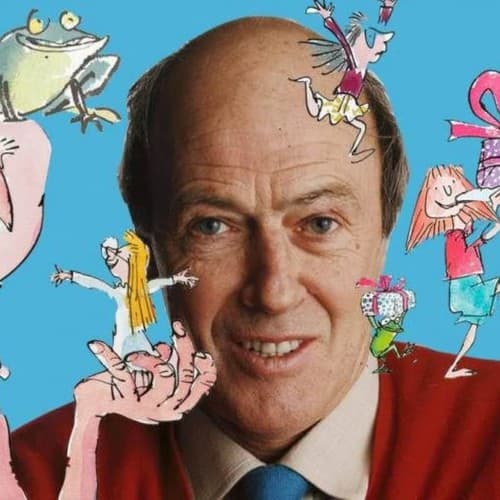
Roald Dahl was a British popular author of children's literature and short stories, a poet, and wartime fighter ace. His books have sold more than 300 million copies worldwide. Dahl has been called "one of the greatest storytellers for children of the 20th century".
Similar books
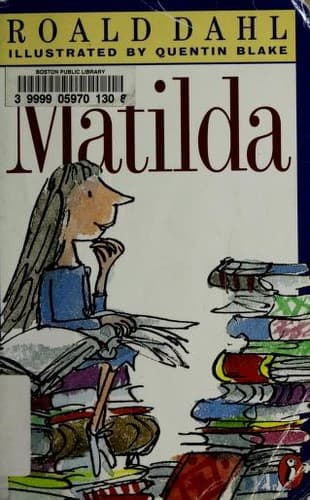
- Matilda
Roald Dahl
4.3 (648k) average on GoodreadsFantasyFeatures a child with extraordinary powers and a strong sense of justice.
- Fantastic Mr. Fox
Roald Dahl
4.1 (105k) average on GoodreadsFantasyFocuses on animals and humans, with a clear distinction between 'good' and 'bad' characters.
- The Lorax
Dr. Seuss
4.3 (283k) average on GoodreadsFantasyA children's story with a strong environmental and anti-hunting message.
- Harry Potter and the Sorcerer's Stone
J.K. Rowling
4.5 (7M) average on GoodreadsFantasyRescued from a miserable life under the stairs, an orphaned boy discovers he's a wizard destined for a magical school, where he uncovers a dangerous secret tied to the dark wizard who murdered his parents.
- The Hunger Games
Suzanne Collins
4.3 (6.4M) average on GoodreadsFantasyIn a future where children fight to the death on live television, Katniss Everdeen volunteers for the arena, turning a death sentence into a fight for survival and a spark of rebellion.
- 1984
George Orwell
4.2 (3.1M) average on GoodreadsPoliticsIn a future where surveillance and thought control are absolute, a man's search for truth clashes with the Party, showing that hope can be a form of rebellion.





Enjoyed the summary?
A summary gives you the shape of the book. The book itself has the detail, the examples and the voice.
Find The Magic Finger on AmazonAs an Amazon Associate, BookBrief earns from qualifying purchases. How we're funded