
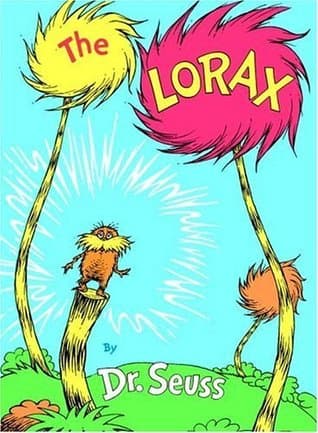
Synopsis
Covers the whole plot, including the ending.
- Difficulty
- Easy
- Pacing
- Moderate
- Mood
- Cautionary, Reflective, Hopeful, Whimsical
- Read it if
- You want a classic, impactful story about environmentalism, the consequences of unchecked industrialization, and the power of individual action, suitable for all ages.
- Skip it if
- You prefer complex narratives with deep character development or are looking for a lighthearted story without a strong moral message.
The Lorax Plot Summary
Covers the whole plot, including the ending.
The Boy's Quest for the Truth
A young boy lives in a desolate, polluted land where only 'dark, grickly grass' grows. He goes to the edge of town, to the home of the Once-ler, a mysterious, reclusive creature who lives in a rickety house on a 'Grickle-grass' hill. The boy pays the Once-ler fifteen cents, a nail, and the shell of a great-great-great-grandfather snail to hear the story of the Lorax and the vanished Truffula Trees. The Once-ler, speaking through a 'whispering-hole,' begins his tale, describing a time when the land was full of life.
The Once-ler's Arrival and First Thneed
The Once-ler tells of his arrival in a beautiful valley, a clean land filled with fluffy Truffula Trees. Their 'tuffts' were 'softer than silk' and smelled 'like fresh butterfly milk.' He was immediately taken by the valley's natural beauty and the creatures there: the Bar-ba-loots who ate Truffula Fruits, the Swomee-Swans who sang sweetly, and the Humming-Fish who hummed in the pond. Inspired by the Truffula Tree's unique qualities, the Once-ler, with a 'gleam' in his eye, cuts down his first Truffula Tree to knit a 'Thneed' – a peculiar, multi-purpose garment he believes everyone will need.
The Lorax Appears and Warns Against Greed
Right after the first Truffula Tree is cut down, a small, orange creature with a 'mossy, bossy, powerful voice' appears from the stump. This is the Lorax, who 'speaks for the trees, for the trees have no tongues.' The Lorax confronts the Once-ler, asking why he cut down a Truffula Tree. The Once-ler ignores the Lorax's worries, proudly showing his new Thneed, believing it to be a harmless and useful product. The Lorax, however, sees the broader effects of the Once-ler's actions and warns him about possible environmental harm, but his words are not heard.
The Thneed Business Booms
Despite the Lorax's first warnings, the Thneed sells well. The Once-ler's relatives arrive, and his business quickly grows. He builds a large factory, inventing a 'Super-Axe-Hacker' to cut down Truffula Trees at a fast rate. The Once-ler's greed and desire for profit grow. He says he is creating jobs and providing a needed product, ignoring the Lorax's repeated requests to think about the environmental impact. The Lorax, increasingly upset, watches as more and more Truffula Trees are cut down.
Environmental Degradation Begins
The effects of the Once-ler's constant production soon become clear. The factory's operations create 'smogulous smoke' that pollutes the air, making it hard for the Swomee-Swans to sing or even breathe. More importantly, the Bar-ba-loots, who eat Truffula Fruits, start to get 'crummy tummies' because their food is scarce. The Lorax, his voice full of sadness, asks the Once-ler to stop, but the Once-ler stays focused on his profits. Eventually, the Bar-ba-loots have to leave the valley to find food.
Further Pollution and Species Exodus
The environmental destruction gets worse. The Once-ler's factory dumps its waste, 'gruvvulous gloop,' into the pond where the Humming-Fish live. The water gets so polluted that the Humming-Fish can no longer hum or swim. Their gills get 'gummed up' with the sludge. The Lorax, with 'tears' in his eyes, tells the Once-ler that the Humming-Fish, too, must leave the valley to find cleaner water. The Once-ler, though briefly bothered, continues his manufacturing, blinded by his desire for more production and profit.
The Last Truffula Tree Falls
The Once-ler's destructive business reaches its end. One day, the last Truffula Tree is cut down. With no more trees, there is no more raw material for Thneeds. The factory stops, and the Once-ler's relatives leave. The valley, once a lively ecosystem, is now a desolate wasteland, silent and empty. The Lorax, without a word, simply lifts himself by the 'seat of his pants' and 'silently, sadly, he lifted himself and he took to the sky.' He leaves behind only a small pile of rocks with the word 'UNLESS' carved into one of them.
The Once-ler's Regret and Revelation
The Once-ler, left alone in the ruined valley, finally understands his actions. He spends years alone, thinking about the Lorax and the lost beauty of the Truffula Valley. He considers the meaning of the 'UNLESS' left by the Lorax, slowly realizing its importance. He understands that 'UNLESS someone like you cares a whole awful lot, nothing is going to get better. It's not.' He sees that individual action and real care are needed for environmental protection and recovery.
A Seed of Hope for the Future
Ending his long, warning story, the Once-ler, now an old, regretful figure, drops a single, precious Truffula Seed into the boy's hands. This seed is the last hope for the Truffula Trees and the valley's restoration. The Once-ler asks the boy to plant the seed, protect it, and care for it, saying that 'Truffula Trees are what everyone needs.' He places the job of bringing back the forest, and with it, the creatures and the Lorax, directly on the boy, telling him to learn from his own mistakes and make a difference.
Principal Figures
The Once-ler
Antagonist/Narrator
A greedy industrialist who destroys the environment for profit, later becoming a remorseful recluse.
The Once-ler is initially an ambitious and inventive, albeit shortsighted, entrepreneur. He discovers the Truffula Valley and, driven by profit, invents the 'Thneed,' leading to the rapid deforestation of Truffula Trees and severe environmental pollution. He is characterized by his hidden face (only his green arms are shown) and his refusal to heed the Lorax's warnings. After destroying the entire ecosystem, he becomes a solitary, regretful figure, living in isolation and recounting his cautionary tale to a young boy. His arc is one of transformation from destructive greed to profound remorse and a desire for redemption.
Relationships: The Lorax (Adversary; the Lorax warns him, he ignores the warnings); The Boy (Storyteller to listener; entrusts the boy with the future of the Truffula Trees)
The Lorax
Protagonist/Environmental Advocate
A small, orange creature who 'speaks for the trees' and warns against environmental destruction.
The Lorax is a wise and passionate advocate for the environment. He emerges from the first felled Truffula Tree and acts as the voice of nature, repeatedly confronting the Once-ler about his destructive industrial practices. He represents environmental consciousness and the inherent value of nature. Despite his efforts, his warnings go unheeded, and he ultimately leaves the devastated valley in despair, leaving only a cryptic message. His departure symbolizes the silencing of nature when its warnings are ignored.
Relationships: The Once-ler (Adversary; he warns the Once-ler, who disregards him); Truffula Trees (Protector and voice); Bar-ba-loots, Swomee-Swans, Humming-Fish (Guardian and advocate)
The Boy
Supporting/Symbol of Hope
A young, curious boy who seeks the truth and is entrusted with the future of the Truffula Trees.
The Boy represents the future generation and the hope for environmental renewal. He lives in a desolate, polluted world and actively seeks out the Once-ler to learn about the past and the vanished Truffula Trees. His curiosity and willingness to listen make him receptive to the Once-ler's cautionary tale. At the story's end, he is given the last Truffula Seed, symbolizing the responsibility and power of individuals to make a difference and restore nature. He embodies the idea that change begins with someone caring 'a whole awful lot.'
Relationships: The Once-ler (Listener to the Once-ler's story; recipient of the last Truffula Seed)
Bar-ba-loots
Supporting/Victims of Pollution
Bear-like creatures who eat Truffula Fruits and are forced to leave due to food scarcity.
The Bar-ba-loots are cheerful, bear-like creatures who happily play and feed on the sweet Truffula Fruits in the pristine valley. They represent the innocent wildlife directly impacted by deforestation. As the Truffula Trees are cut down, their food source dwindles, leading to 'crummy tummies' and forcing them to migrate in search of sustenance. Their departure is one of the first clear signs of the environmental devastation caused by the Once-ler's industry.
Relationships: Truffula Trees (Dependent on them for food)
Swomee-Swans
Supporting/Victims of Pollution
Graceful birds who sing beautifully and are forced to leave due to air pollution.
The Swomee-Swans are elegant birds known for their beautiful singing, adding to the idyllic atmosphere of the Truffula Valley. They are directly affected by the 'smogulous smoke' emanating from the Once-ler's factory. The polluted air makes it impossible for them to sing and even breathe properly, forcing them to fly away in search of clean air. Their silenced songs and departure symbolize the loss of natural beauty and harmony due to industrial pollution.
Humming-Fish
Supporting/Victims of Pollution
Fish who hum in the pond and are forced to leave due to water pollution.
The Humming-Fish are quirky fish that 'hum' in the clean waters of the Truffula pond. They represent aquatic life and are the last group of creatures to be driven away by the Once-ler's pollution. The factory's 'gruvvulous gloop' contaminates their pond, gumming up their gills and making it impossible for them to hum or swim. Their forced exodus highlights the pervasive impact of industrial waste on water ecosystems.
Truffula Trees
Mentioned/Central Object
Vibrant, fluffy trees that are the source of the Thneed and the lifeblood of the valley.
The Truffula Trees are the central natural resource of the story, depicted as beautiful, soft, and sweet-smelling. They are essential for the ecosystem, providing food for the Bar-ba-loots and shelter for other creatures. Their destruction by the Once-ler is the primary driver of the plot's environmental catastrophe. They symbolize the irreplaceable beauty and vital role of natural resources, and their eventual disappearance signifies the irreversible damage caused by unchecked exploitation.
Relationships: The Lorax (Protected by him); The Once-ler (Exploited by him); Bar-ba-loots (Food source)
Themes & Insights
Environmentalism and Conservation
The main theme of 'The Lorax' is a warning about environmental destruction and the urgent need for conservation. The Once-ler's constant pursuit of profit at nature's expense completely devastates the Truffula Valley, destroys its unique ecosystem, and causes the Lorax to disappear. The book clearly shows the results of deforestation, air pollution, and water contamination. It emphasizes that uncontrolled industry can ruin natural beauty and wildlife. The message 'UNLESS someone like you cares a whole awful lot, nothing is going to get better. It's not.' directly asks for individual responsibility in protecting the environment.
“UNLESS someone like you cares a whole awful lot, nothing is going to get better. It's not.”
Greed and Industrialization
The Once-ler shows the destructive power of unchecked greed and industry. His initial interest in the Truffula Trees quickly turns into a strong desire for profit through making many Thneeds. He ignores all warnings from the Lorax, putting economic growth before ecological health. The fast growth of his factory, the invention of the 'Super-Axe-Hacker,' and the resulting pollution are direct results of his greed. The story criticizes the business mindset that often puts short-term money over long-term environmental health and societal well-being.
“I meant no harm. I most truly did not. But I had to grow bigger. So bigger I got.”
The Power of Individual Action
Despite the large scale of environmental destruction, the story ends with a strong message about what individual action can do. The Once-ler, in his regret, gives the young boy the last Truffula Seed, putting the hope for restoration in his hands. This act means that even one person, motivated by care and understanding, can start positive change. The 'UNLESS' message highlights that group change comes from individual commitment and that personal responsibility is important in stopping and reversing environmental damage.
“And now, now that you're here, the word of the Lorax seems perfectly clear. UNLESS someone like you cares a whole awful lot, nothing is going to get better. It's not.”
Loss and Nostalgia
The story has a deep sense of loss and longing for a clean past. The Once-ler's description of the Truffula Valley's original beauty, with its bright trees and happy creatures, sharply contrasts with the desolate, polluted present. This contrast creates a deep sadness for what has been lost due to human carelessness. The Once-ler himself lives with regret, thinking about the Lorax and the lost paradise. This theme shows the permanent results of environmental damage and the importance of valuing and protecting nature before it's gone.
“And all that the Lorax left here in this mess was a small pile of rocks, with one word... 'UNLESS.'”
Plot Devices & Literary Techniques
Framing Device
The story of the Truffula Trees and the Lorax is told as a flashback by the Once-ler.
The narrative structure of 'The Lorax' employs a framing device. The present-day story features a curious young boy seeking answers from the reclusive Once-ler in a desolate, polluted landscape. The bulk of the book then unfolds as the Once-ler's flashback, recounting his arrival in the pristine Truffula Valley and the subsequent environmental destruction. This structure allows the reader to witness the stark contrast between the past and present, emphasizing the tragic consequences of the Once-ler's actions and lending a somber, cautionary tone to the tale.
Symbolism (Truffula Trees)
The Truffula Trees symbolize natural resources and the beauty of nature.
The Truffula Trees are a central symbol in the story. With their vibrant colors, soft 'tuffts,' and sweet scent, they represent the inherent beauty, richness, and vitality of nature and natural resources. Their systematic destruction by the Once-ler symbolizes the exploitation and deforestation of Earth's forests for industrial gain. The last remaining Truffula Seed, entrusted to the boy, symbolizes hope, the potential for renewal, and the future of environmental conservation, highlighting that even a small seed can bring back life.
Allegory
The story serves as an allegory for real-world environmental degradation and corporate greed.
'The Lorax' functions as an allegory, where the fictional world of Truffula Valley and its characters represent real-world concepts and issues. The Once-ler embodies unchecked industrialism, corporate greed, and human shortsightedness. The Lorax represents environmental activists and the voice of nature, often ignored in the pursuit of profit. The Bar-ba-loots, Swomee-Swans, and Humming-Fish symbolize various species affected by pollution and habitat loss. The Thneed represents consumerism and the creation of unnecessary products, making the story a powerful commentary on human impact on the environment.
The 'UNLESS' Message
A cryptic, single-word message left by the Lorax, symbolizing individual responsibility.
The word 'UNLESS' left behind by the Lorax is a powerful and pivotal plot device. Initially cryptic, its meaning is eventually revealed by the remorseful Once-ler: 'UNLESS someone like you cares a whole awful lot, nothing is going to get better. It's not.' This single word transforms the story from a mere cautionary tale into a call to action. It emphasizes the critical role of individual care, awareness, and proactive effort in environmental protection and restoration, shifting the responsibility from abstract entities to personal commitment.
The Lorax Quotes
“I am the Lorax. I speak for the trees. I speak for the trees, for the trees have no tongues.”
“Unless someone like you cares a whole awful lot, nothing is going to get better. It's not.”
“But now, says the Once-ler, now that you're here, the word of the Lorax seems perfectly clear.”
“I meant no harm. I most truly did not. But I had to grow bigger. So bigger I got.”
“The Lorax said nothing. Just gave me a glance... just gave me a very sad, backward glance.”
“And all that the Lorax left here in this mess was a small pile of rocks, with the one word... 'UNLESS.'”
“You're glumping the pond where the Humming-Fish hummed! No more can they hum, for their gills are all glummed.”
“A Thneed's a Fine-Something-That-All-People-Need!”
“How bad can I be? I'm just building the economy.”
“Catch! calls the Once-ler. He lets something fall. It's a Truffula Seed. It's the last one of all!”
“They loved living here. But I can't let them stay. They'll have to find food. And I hope that they may.”
“Plant a new Truffula. Treat it with care. Give it clean water. And feed it fresh air.”
“The wind smells slow-and-sour when it blows and no birds ever sing excepting old crows.”
Quiz
10 questions on the plot and the characters. Each answer comes with a short explanation.
Question 1
What does the Once-ler cut down to make his Thneeds?
- Truffula Trees
- Brown Bar-ba-loots
- Humming-Fish ponds
- Grickle-grass
Show answer
A. Truffula Trees The Once-ler cuts down the colorful, tufted Truffula Trees to knit his Thneeds, which are versatile garments. This action directly leads to the environmental destruction in the story.
Question 2
Who speaks the line, 'UNLESS someone like you...cares a whole awful lot...nothing is going to get better...It's not.'?
- The Lorax
- The Once-ler
- The boy listening to the story
- A Brown Bar-ba-loot
Show answer
B. The Once-ler The Once-ler, reflecting on his past mistakes, gives this message to the boy at the end of the story, passing on the responsibility for environmental stewardship.
Question 3
What animal leaves first because it can no longer find food after the Truffula Trees are cut down?
- Humming-Fish
- Swomee-Swans
- Brown Bar-ba-loots
- The Lorax
Show answer
C. Brown Bar-ba-loots The Brown Bar-ba-loots, who eat Truffula Fruits from the trees, are forced to leave when their food source disappears due to deforestation.
Question 4
Why do the Swomee-Swans have to fly away from the area?
- Because the Once-ler hunts them for feathers
- Because the air becomes polluted by the factory's smog
- Because the Truffula Trees are gone, so they have no nests
- Because the Lorax tells them to leave for their safety
Show answer
B. Because the air becomes polluted by the factory's smog The Once-ler's factory emits smog that pollutes the air, making it impossible for the Swomee-Swans to sing and forcing them to migrate.
Question 5
What does the Once-ler give to the boy at the end of the story as a symbol of hope?
- A Thneed
- The last Truffula Tree seed
- A picture of the Lorax
- A map to find the Lorax
Show answer
B. The last Truffula Tree seed The Once-ler tosses down the last Truffula Tree seed, urging the boy to plant it and care for it to potentially restore the environment.
Question 6
How does the Lorax first appear to the Once-ler?
- He emerges from a Truffula Tree trunk
- He pops out of the stump of the first Truffula Tree cut down
- He flies in on a cloud of smog
- He is summoned by the Brown Bar-ba-loots
Show answer
B. He pops out of the stump of the first Truffula Tree cut down After the Once-ler chops down the first Truffula Tree, the Lorax mysteriously pops out of the stump to speak for the trees and the environment.
Question 7
What is the primary theme of 'The Lorax' as highlighted in the book description?
- The importance of friendship and loyalty
- The dangers of mindless progress and environmental neglect
- The value of hard work and innovation
- The joys of exploring nature
Show answer
B. The dangers of mindless progress and environmental neglect The book is a cautionary tale warning against unchecked industrialization and the exploitation of natural resources, emphasizing environmental stewardship.
Question 8
What happens to the Humming-Fish as a result of the Once-ler's factory operations?
- They are caught and sold as pets
- Their ponds become polluted with Gluppity-Glupp and Schloppity-Schlopp
- They evolve to breathe smog instead of water
- They join the Lorax in protesting the factory
Show answer
B. Their ponds become polluted with Gluppity-Glupp and Schloppity-Schlopp The factory's waste products, Gluppity-Glupp and Schloppity-Schlopp, pollute the ponds, forcing the Humming-Fish to leave and find cleaner water.
Question 9
In the context of the story, what does the Lorax 'lift' himself away by?
- A flock of Swomee-Swans
- The seat of his pants
- A cloud of Truffula Tree tufts
- A magical gust of wind
Show answer
B. The seat of his pants When the environment is彻底 destroyed, the Lorax lifts himself away by the seat of his pants, leaving behind only a stone slab with the word 'UNLESS'.
Question 10
What literary device is prominently used in 'The Lorax' to critique consumerism and environmental harm?
- Allegory
- Hyperbole
- Onomatopoeia
- Irony
Show answer
A. Allegory The story functions as an allegory, with characters and events symbolizing real-world issues like deforestation, pollution, and corporate greed, making complex topics accessible to children.
The Lorax FAQ
What is 'The Lorax' about?
'The Lorax' tells the story of the Once-ler, who arrives in a beautiful valley filled with Truffula Trees and Brown Bar-ba-loots. He chops down the trees to make Thneeds, a useless but popular product, ignoring the warnings of the Lorax, who 'speaks for the trees.' As the environment is destroyed, the animals leave, and the valley becomes a polluted wasteland, with the Once-ler left alone in regret.
Why should I read 'The Lorax'?
You should read 'The Lorax' because it's a timeless, engaging environmental fable that teaches about greed, responsibility, and conservation in a way accessible to all ages. Through Dr. Seuss's whimsical rhymes and illustrations, it delivers a powerful message about the consequences of unchecked industrialization and the importance of caring for nature.
What is the background/setting of 'The Lorax'?
The story is set in a fantastical valley initially teeming with life, featuring colorful Truffula Trees, Humming-Fish, Swomee-Swans, and Brown Bar-ba-loots. Over time, it transforms into a grim, polluted landscape called 'the Street of the Lifted Lorax,' symbolizing environmental degradation caused by human activity.
What are the most memorable quotes from 'The Lorax'?
Key quotes include the Lorax's warning, 'I am the Lorax. I speak for the trees,' and the Once-ler's final lesson: 'UNLESS someone like you...cares a whole awful lot...nothing is going to get better...It's not.' These lines encapsulate the book's themes of advocacy and hope through individual action.
What writing style does Dr. Seuss use in 'The Lorax'?
Dr. Seuss uses his signature rhyming verse, playful language, and invented words (like 'Thneeds' and 'Truffula') to create a whimsical yet serious tone. The style engages children while conveying complex themes of environmentalism and morality through allegory and repetition.
What minor details add significant meaning in 'The Lorax'?
Minor details like the 'Grickle-grass' growing in the polluted valley and the Once-ler's hidden face (only his arms are shown) add depth. The Grickle-grass symbolizes resilience in damaged ecosystems, while the Once-ler's anonymity highlights how greed can dehumanize individuals, making him a universal cautionary figure.
What are some subtle foreshadowing moments in 'The Lorax'?
Early foreshadowing includes the Lorax's immediate protests when the first Truffula Tree is chopped, hinting at future conflict. The Once-ler's initial excitement over profit ('Business is business! And business must grow') subtly predicts the environmental collapse that follows his unchecked expansion.
What unexpected character connections exist in 'The Lorax'?
The Once-ler and the Lorax are deeply connected as foils: the Once-ler represents destructive human ambition, while the Lorax embodies nature's voice. Their interactions drive the plot, with the Once-ler's later regret showing how these opposing forces can lead to redemption if heeded.
What are unspoken character motivations in 'The Lorax'?
The Once-ler is motivated by a desire for success and validation, hinted when he says his family laughed at his ideas. This unspoken need for approval drives his relentless pursuit of profit, blinding him to the Lorax's warnings until it's too late, revealing underlying insecurity.
What psychological complexities do characters exhibit in 'The Lorax'?
The Once-ler shows complexity through his transition from naive entrepreneur to remorseful hermit, grappling with guilt and denial. The Lorax, while a moral guardian, expresses frustration and sorrow, reflecting the emotional toll of environmental advocacy in the face of apathy.
What are the major emotional turning points in 'The Lorax'?
Key emotional turns include the first time the Lorax appears to protest the tree-cutting, creating tension; the departure of the Brown Bar-ba-loots due to lack of food, highlighting loss; and the Once-ler's breakdown as he gives the boy the last Truffula seed, symbolizing hope and redemption.
How do relationship dynamics evolve in 'The Lorax'?
The Once-ler and Lorax start in conflict, with the Lorax as a critic and the Once-ler as dismissive. Over time, as destruction worsens, their dynamic shifts to one of futile pleading from the Lorax and growing guilt from the Once-ler, culminating in a legacy of mentorship when the Once-ler passes on the seed.
Which parts of 'The Lorax' remain ambiguous or open-ended?
The fate of the Lorax after he 'lifts himself' away is ambiguous—it's unclear if he represents a lost spirit of nature or might return. Additionally, whether the boy will successfully regrow the Truffula Trees is left open, emphasizing that environmental recovery depends on reader action.
What are controversial scenes or decisions in 'The Lorax'?
Some readers debate the Once-ler's culpability—was he purely greedy or a product of societal pressures? The abrupt expulsion of the animals (like the Swomee-Swans) without alternative solutions has sparked discussion about whether the book oversimplifies conservation versus economic needs.
'The Lorax' ending explained: how it ends & what it means
The story ends with the Once-ler giving the last Truffula seed to a boy, urging him to plant it and care for it. This symbolizes hope and the idea that environmental repair is possible through individual responsibility. The ending reinforces the message that change starts with 'someone like you' taking action.
What deeper themes are explored through the Thneeds in 'The Lorax'?
Thneeds represent consumerism and manufactured demand—a 'thing that everyone needs' but is essentially useless. They critique how capitalism drives environmental harm by creating unnecessary products, as the Once-ler's obsession with Thneeds leads to the deforestation and pollution of the valley.
How does 'The Lorax' use color and imagery to convey its message?
Dr. Seuss uses vibrant colors for the pristine valley (bright Truffula Trees, blue skies) that fade to grays and browns as pollution sets in. This visual shift mirrors the environmental degradation, making the loss tangible and emphasizing the beauty that's at stake without overt explanation.
What role do the animals play in the environmental message of 'The Lorax'?
Animals like the Brown Bar-ba-loots, Swomee-Swans, and Humming-Fish serve as indicators of ecosystem health—their suffering and departure signal the valley's collapse. They personalize the impact of destruction, showing that environmental harm affects all living beings, not just trees.
Is the Once-ler a villain or a tragic figure in 'The Lorax'?
The Once-ler is more a tragic figure than a pure villain; his initial intentions aren't malicious, but his greed and refusal to listen lead to ruin. His later regret and passage of the seed suggest redemption, highlighting how good people can cause harm through shortsightedness, a nuanced take on responsibility.
How does 'The Lorax' address the balance between progress and conservation?
The book critiques 'mindless progress' through the Once-ler's unchecked industrialization, showing that without care for nature, progress leads to desolation. It suggests balance is possible if people 'care a whole awful lot,' implying sustainable practices rather than outright rejection of development.
About the author
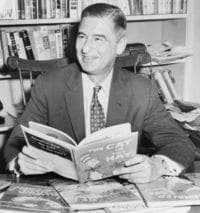
Dr. Seuss, born Theodor Seuss Geisel, was a beloved American children's author and illustrator. He is renowned for his imaginative tales and whimsical rhymes, including iconic works like 'The Cat in the Hat,' 'Green Eggs and Ham,' and 'Oh, the Places You'll Go!'. His unique style and memorable characters have made him a staple in children's literature for generations.
Similar books
- The Giving Tree
Shel Silverstein
4.4 (906k) average on GoodreadsFantasyExplores themes of giving, taking, and the impact of human actions on nature, with a poignant, allegorical style.
- Harry Potter and the Sorcerer's Stone
J.K. Rowling
4.5 (7M) average on GoodreadsFantasyRescued from a miserable life under the stairs, an orphaned boy discovers he's a wizard destined for a magical school, where he uncovers a dangerous secret tied to the dark wizard who murdered his parents.
- The Hunger Games
Suzanne Collins
4.3 (6.4M) average on GoodreadsFantasyIn a future where children fight to the death on live television, Katniss Everdeen volunteers for the arena, turning a death sentence into a fight for survival and a spark of rebellion.
- 1984
George Orwell
4.2 (3.1M) average on GoodreadsPoliticsIn a future where surveillance and thought control are absolute, a man's search for truth clashes with the Party, showing that hope can be a form of rebellion.
- Divergent
Veronica Roth
4.2 (2.9M) average on GoodreadsFantasyIn a society divided by virtues, a sixteen-year-old's difference from the norm starts a rebellion that threatens her world.
- The Hobbit, or There and Back Again
J.R.R. Tolkien
4.3 (2.9M) average on GoodreadsFantasyA comfort-loving hobbit named Bilbo Baggins is whisked away by a mischievous wizard and a band of dwarves on an unexpected journey to reclaim stolen treasure from a fearsome dragon, discovering courage and a magical ring along the way.





Enjoyed the summary?
A summary gives you the shape of the book. The book itself has the detail, the examples and the voice.
Find The Lorax on AmazonAs an Amazon Associate, BookBrief earns from qualifying purchases. How we're funded