
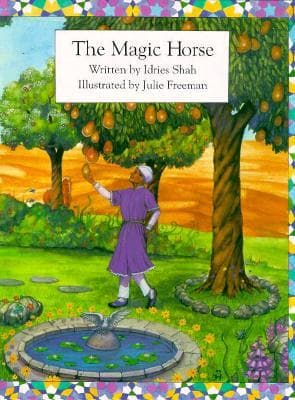
Synopsis
Covers the whole plot, including the ending.
- Difficulty
- Easy
- Pacing
- Moderate
- Mood
- Whimsical, Reflective, Gentle, Instructive
- Read it if
- You enjoy allegorical children's stories with gentle life lessons and a touch of magic.
- Skip it if
- You prefer fast-paced, action-driven narratives or explicit moralizing.
The Magic Horse Plot Summary
Covers the whole plot, including the ending.
The Sultan's Dilemma
The story begins in ancient Persia, where Sultan Khusrau, a wise ruler, needs to choose a successor from his two sons, Prince Ahmad and Prince Husain. Both princes are intelligent, but they have different personalities. Prince Ahmad is known for his studies, love of books, and quiet thought, often in the royal library. Prince Husain is an adventurous and outgoing young man who loves exploring the world beyond the palace. The Sultan, wanting the best for his kingdom and daughter, Princess Yasmin, plans to test their true character and wisdom, though the test is not immediately clear.
Ahmad's Scholarly Pursuit
Following his father's unspoken challenge, Prince Ahmad, true to his nature, focuses on his studies. He spends hours in the royal library, reading ancient texts, philosophy, and history. He seeks not just academic knowledge, but a deeper understanding of the world, human nature, and good governance. He believes leadership comes from wisdom and a well-informed mind. During his research, he finds an old legend about a magical, mechanical fish that grants wishes, hidden in distant seas. Intrigued, he decides finding this fish would be a worthy goal, proving his intelligence and bringing a unique treasure to his father.
Husain's Adventurous Spirit
In contrast, Prince Husain sees the Sultan's challenge as an invitation to adventure. He wants to see new lands, meet different people, and discover wonders beyond the palace. He prepares for a long journey, traveling through busy markets, across deserts, and over mountains. His travels lead him to a remote village where he meets an old, mysterious craftsman. This craftsman has a peculiar wooden horse, intricately carved and seemingly still. However, the craftsman reveals the horse is magical, able to fly through the air and travel vast distances instantly, but only with secret words and hidden mechanisms. Husain, fascinated, believes it would be the perfect gift for his father and a sign of his adventurous spirit.
The Mechanical Fish Revealed
After months of research and following clues from old texts, Prince Ahmad finally finds the location of the legendary mechanical fish. It is in a hidden grotto under a waterfall, reached through a dangerous underwater passage. Ahmad, using his intellect and courage, navigates the path. There, in the dim grotto, he finds the magnificent, clockwork fish. Its scales are polished brass, and its eyes are luminous jewels. The texts also said the fish could grant one wish. Ahmad, remembering his father's desire for a wise ruler, wishes for the wisdom to always govern fairly and kindly. The fish glows brightly, and Ahmad feels a deep understanding fill his mind.
The Magic Horse's Secret
Prince Husain spends weeks with the mysterious craftsman, learning the secrets of the magical wooden horse. The craftsman, seeing Husain's enthusiasm and kindness, teaches him the specific spells and movements needed to activate the horse. With a twist of a hidden peg and a secret phrase, the horse's wings unfold, and it flies gracefully into the sky. Husain practices tirelessly, mastering its controls and enjoying the freedom of flight. He travels to distant lands on the horse, seeing wonders no one had seen before. He realizes the horse is not just a gift, but a way to expand his knowledge and bring understanding of the wider world to his kingdom, fulfilling his adventurous spirit.
Return to the Palace
After their journeys, both Prince Ahmad and Prince Husain return to the Sultan's palace. Prince Ahmad arrives first, calm and thoughtful, carrying no object but radiating new inner wisdom. He tells of his journey to the hidden grotto and his encounter with the mechanical fish, explaining how he wished for wisdom to rule justly. Soon after, Prince Husain makes a grand entrance, flying through the sky on his magnificent wooden horse, landing gracefully in the palace courtyard to everyone's surprise. He dismounts, excited, and presents the magical horse to his father, explaining its abilities and how far it can travel. The Sultan is impressed by both sons' unique achievements and their extraordinary discoveries.
The Sultan's Contemplation
Sultan Khusrau listens to both sons' tales, hearing about the mechanical fish (which Ahmad describes in detail, emphasizing the wisdom it gave him) and marveling at the magical wooden horse. He sees the genuine effort each son put into their quest. He recognizes that Ahmad's gift of wisdom is intangible but deep, promising a just and stable reign. He also understands that Husain's magical horse represents adventure, exploration, and the ability to connect with distant lands, potentially bringing new knowledge and alliances to Persia. The Sultan, however, is not just looking for impressive objects or skills; he seeks the heart and character of a true leader. He retreats to his chambers to decide which son, and which path, would best serve his kingdom and Princess Yasmin.
Yasmin's Choice
Unknown to the princes, Sultan Khusrau had also considered Princess Yasmin's happiness in his succession plans. He calls her and explains her brothers' unique gifts and qualities. He tells her of Ahmad's deep wisdom from the mechanical fish, and Husain's adventurous spirit, shown by the magical wooden horse. Then, to their surprise, he asks her to choose which brother she would prefer to marry, implying her choice would also affect the succession. Princess Yasmin, who had watched her brothers closely, thinks deeply. She values wisdom and stability, but also desires excitement and the unknown. After a moment, she makes her decision, revealing her preference for one prince and the qualities she finds most appealing.
The Unveiling of Hearts' Desires
After Princess Yasmin's decision, Sultan Khusrau gathers his court and his sons. He praises both Ahmad and Husain for their courage, intelligence, and remarkable gifts. He explains that true leadership is about understanding one's own heart and serving the greater good. He reveals that Princess Yasmin has chosen Prince Husain, drawn to his adventurous spirit and the promise of a life of exploration that the magical horse represents. The Sultan then declares that Prince Husain will marry Princess Yasmin and succeed him, recognizing that Husain's desire to explore and connect with the world would bring energy and new ideas to the kingdom. Prince Ahmad, with his new wisdom, accepts this gracefully, understanding his path is in scholarly pursuits and advising the new Sultan.
A Future of Balance
Prince Husain and Princess Yasmin marry in a grand ceremony, and Husain begins to rule, often using the magical horse to visit neighboring kingdoms and build good relations. Prince Ahmad becomes a trusted advisor to his brother, offering counsel based on his wisdom. He continues his studies, helping the kingdom's intellectual growth and ensuring decisions are made carefully. The magical horse becomes a symbol of Persia's openness to the world and new ideas, while Ahmad's wisdom ensures a foundation of justice and stability. The kingdom thrives under this balanced leadership, showing that different paths can lead to a prosperous future, with each prince finding his true purpose.
Principal Figures
Sultan Khusrau
Supporting
The wise and just ruler of Persia seeking a worthy heir.
Sultan Khusrau is the benevolent and discerning ruler of Persia. He is deeply committed to the well-being of his kingdom and his family, particularly his daughter, Princess Yasmin. His primary motivation is to ensure a stable and prosperous future for Persia by choosing the most suitable successor from his two sons. He possesses a keen understanding of character and wisdom, opting to test his sons' true natures rather than simply their martial prowess or academic achievements. He values both intellect and adventurous spirit, ultimately seeking a balanced leader. He is fair-minded and open to different interpretations of success.
Relationships: Prince Ahmad (Father to a studious and wise son.); Prince Husain (Father to an adventurous and spirited son.); Princess Yasmin (Loving father to his daughter, whose happiness he prioritizes.)
Prince Ahmad
Protagonist
The studious and contemplative prince who values wisdom and knowledge.
Prince Ahmad is the elder son of Sultan Khusrau, known for his quiet demeanor, intellectual pursuits, and love for books. He finds solace and purpose in the royal library, dedicating himself to ancient texts and philosophical studies. He believes that true leadership stems from deep knowledge and understanding. His quest leads him to seek out the legendary mechanical fish, not for its power, but for the wisdom it is said to impart. He is thoughtful, introspective, and ultimately accepts his path as an advisor with grace and understanding, demonstrating a maturity beyond his years.
Relationships: Sultan Khusrau (Obedient and respectful son.); Prince Husain (Brother with contrasting interests, but ultimately supportive.); Princess Yasmin (Brother; a potential suitor, but not her chosen one.)
Prince Husain
Protagonist
The adventurous and outgoing prince who seeks exploration and new experiences.
Prince Husain is the younger son of Sultan Khusrau, characterized by his adventurous spirit, outgoing personality, and desire to explore the world. Unlike his brother, he is less inclined towards books and more towards direct experience. His quest leads him to discover the magical wooden horse, which becomes a symbol of his desire for freedom, exploration, and connecting with distant lands. He is enthusiastic, charismatic, and eager to bring new wonders and perspectives back to his kingdom. He is chosen by Princess Yasmin and ultimately becomes the new Sultan, embodying a dynamic and outward-looking leadership.
Relationships: Sultan Khusrau (Eager and loving son, keen to impress his father.); Prince Ahmad (Brother with contrasting interests, but ultimately respected.); Princess Yasmin (Beloved and chosen husband-to-be.)
Princess Yasmin
Supporting
The Sultan's daughter whose choice influences the kingdom's future.
Princess Yasmin is the beautiful and insightful daughter of Sultan Khusrau. While her role might seem passive at first, her ultimate decision is pivotal to the story's resolution. She is observant and possesses a keen understanding of both her brothers' characters. She values both wisdom and adventure, but her heart is ultimately drawn to the excitement and new horizons promised by Prince Husain. Her choice reflects a desire for a dynamic and engaging future, not just for herself but for the kingdom. She represents the balance between tradition and the embrace of new possibilities.
Relationships: Sultan Khusrau (Beloved daughter, whose happiness is a priority for him.); Prince Ahmad (Brother; she respects his wisdom but is not drawn to him romantically.); Prince Husain (Brother and her chosen husband-to-be, with whom she shares an adventurous spirit.)
The Enigmatic Craftsman
Mentioned
The mysterious creator and guardian of the magical wooden horse.
This old, wise craftsman is a minor but crucial character. He lives in a remote village, possessing ancient knowledge and the skill to create magical artifacts. He is the guardian of the magical wooden horse and recognizes Prince Husain's pure heart and adventurous spirit, choosing to impart the horse's secrets to him. He represents the hidden wisdom and magic that exist beyond the conventional, and his role is to facilitate Husain's discovery and mastery of his unique gift. He is not motivated by wealth or power, but by the proper transmission of knowledge.
Relationships: Prince Husain (Mentor and teacher, passing on the secrets of the magic horse.)
Themes & Insights
Different Paths to Wisdom and Leadership
The story shows how wisdom and good leadership can come from different places. Prince Ahmad gains wisdom through study and deep thought, leading to a fair and stable view. Prince Husain finds his way through adventure and direct experience, learning about the world and making connections. The Sultan's decision, and Yasmin's choice, highlight that both intellectual depth and an adventurous spirit are valuable. A truly prosperous kingdom benefits from a balance of both. This is clear in how both brothers are presented as equally worthy, their 'gifts' being very different yet equally meaningful.
“For true wisdom does not only reside in dusty scrolls, but also in the winds that carry tales from distant lands.”
The Nature of True Value
The tale explores what true value means, especially for inheritance and leadership. The Sultan is not looking for the most expensive or powerful object, but for the qualities of heart and mind his sons show. Ahmad's 'gift' is intangible wisdom, while Husain's is a magical horse that offers freedom and connection. Both 'gifts' serve a higher purpose than just owning something. The story suggests that true value is not in money or status, but in personal growth, understanding, and helping the world. This is emphasized when the Sultan considers the deeper meaning behind each son's quest.
“A kingdom's strength is not measured by its gold, but by the wisdom and spirit of its people and its leaders.”
Following One's Heart's Desire
A main message of the story is the importance of following one's true passions. Both Prince Ahmad and Prince Husain go on quests that fit their natural personalities: Ahmad's scholarly pursuits and Husain's adventurous spirit. They do not force themselves into roles that do not suit them, but instead, find 'gifts' that are extensions of who they are. Princess Yasmin's choice further supports this, as she picks the prince whose path aligns with her own hopes. The story suggests that when people follow their true desires, they find personal happiness and bring unique and valuable contributions to their community.
“For a heart that knows its true longing will always find its way, even across the widest seas or through the highest skies.”
Balance and Harmony
The story advocates for the importance of balance and harmony, especially in leadership. The kingdom succeeds not by choosing one extreme, but by combining the strengths of both princes. Husain's adventurous spirit and global view, along with Ahmad's deep wisdom and thoughtful advice, create well-rounded and effective governance. This theme is seen in the final setup, where both brothers play important, complementary roles. It suggests that a truly prosperous society accepts different talents and perspectives, finding strength in their combined efforts rather than in a single approach. The ending shows a kingdom where exploration and stability can coexist and thrive.
“Just as the sun and moon bring light to different parts of the day, so too do different strengths illuminate a kingdom's path.”
Plot Devices & Literary Techniques
The Mechanical Fish
A magical artifact that bestows wisdom upon its discoverer.
The mechanical fish serves as a symbolic representation of intellectual pursuit and the acquisition of inner wisdom. It is not a physical tool for power or travel, but rather a catalyst for personal growth and understanding. Its discovery requires diligent study and interpretation of ancient texts, aligning perfectly with Prince Ahmad's character. Once found, it imparts an intangible gift of wisdom, signifying that true knowledge is often an internal transformation rather than a material gain. It acts as a counterpoint to the more outwardly magical wooden horse.
The Magical Wooden Horse
A flying contraption that enables rapid travel and exploration.
The magical wooden horse is a fantastical device that embodies adventure, exploration, and the breaking of physical boundaries. It is a symbol of outward journey and the discovery of the wider world. Its operation requires skill, courage, and a willingness to embrace the unknown, perfectly matching Prince Husain's adventurous spirit. The horse allows Husain to travel to distant lands, bringing back new perspectives and experiences, thereby enriching the kingdom. It represents the dynamism and connectivity that an outward-looking leader can bring.
The Sultan's Implicit Test
An unstated challenge that prompts the princes to reveal their true natures.
Instead of explicitly dictating a challenge, Sultan Khusrau subtly encourages his sons to demonstrate their worth in their own ways. This implicit test allows both Prince Ahmad and Prince Husain to pursue paths that genuinely align with their personalities and talents, rather than conforming to a prescribed notion of leadership. This device highlights the theme of following one's heart's desire and reveals the true character of each prince, making their 'gifts' authentic reflections of who they are, rather than forced achievements. It sets up the core conflict and character development without overt instruction.
The Magic Horse Quotes
“The Prince looked at the horse, and it looked back at him.”
“It was indeed a horse, but not like any horse he had ever seen.”
“This horse, my son, can travel to any place in the world, and beyond.”
“He twisted the peg, and with a whirring sound, the horse rose into the air.”
“The world below looked like a patchwork quilt.”
“He landed softly in a garden, more beautiful than any he had ever imagined.”
“The Princess, whose name was Shemsa, was as lovely as the moon.”
“He knew he must find a way to take her with him.”
“The Sultan was furious. 'No one steals from me!'”
“The horse flew faster than any bird, carrying them both to safety.”
“But a peg had been twisted in the wrong direction.”
“The horse plunged downwards, out of control.”
“He would not rest until he had found his beloved Princess.”
“The Magic Horse, once a source of wonder, had brought both joy and sorrow.”
Quiz
10 questions on the plot and the characters. Each answer comes with a short explanation.
Question 1
What kind of magical object does Prince Mahmud find in the story?
- A flying carpet
- A mechanical fish
- A talking bird
- A golden lamp
Show answer
B. A mechanical fish Prince Mahmud, the younger prince, is fascinated by and eventually discovers his heart's desire in a wonderful, mechanical fish.
Question 2
Which magical object does Prince Kamal discover?
- A crystal ball
- A magical wooden horse
- A silver key
- An enchanted sword
Show answer
B. A magical wooden horse Prince Kamal, the elder prince, finds his heart's desire and adventure with a magical wooden horse.
Question 3
What is the primary theme explored through the two princes' differing interests?
- The importance of wealth
- The pursuit of power
- Different paths to happiness and fulfillment
- The dangers of magic
Show answer
C. Different paths to happiness and fulfillment The story highlights how two individuals can have very different desires and find fulfillment through their unique paths, one through inner discovery (the fish) and the other through outward adventure (the horse).
Question 4
How do the princes initially acquire their magical objects?
- They are gifts from a powerful sorcerer.
- They are discovered during their travels.
- They inherit them from their father, the King.
- They purchase them from a mysterious merchant.
Show answer
B. They are discovered during their travels. Both princes encounter and discover their magical objects during their individual journeys and explorations, rather than being given them directly.
Question 5
What distinguishes Prince Mahmud's 'heart's desire' from Prince Kamal's?
- Mahmud seeks adventure in distant lands, while Kamal seeks knowledge.
- Mahmud's desire is tied to inner contemplation and understanding, while Kamal's is about external exploration and action.
- Mahmud desires power, while Kamal desires peace.
- Mahmud wants to stay home, while Kamal wants to leave.
Show answer
B. Mahmud's desire is tied to inner contemplation and understanding, while Kamal's is about external exploration and action. The mechanical fish symbolizes inner working and understanding for Mahmud, whereas the magic horse represents outward journey and experience for Kamal, highlighting their different paths to fulfillment.
Question 6
What is the primary function of the mechanical fish for Prince Mahmud?
- It grants wishes.
- It helps him understand the workings of the world and himself.
- It takes him on undersea adventures.
- It provides him with endless food.
Show answer
B. It helps him understand the workings of the world and himself. The mechanical fish is depicted as a marvel that helps Mahmud delve into understanding, representing an internal journey of knowledge and self-discovery.
Question 7
How does the magical wooden horse specifically aid Prince Kamal?
- It makes him invisible.
- It allows him to travel swiftly to distant lands and overcome obstacles.
- It transforms into a boat for sea voyages.
- It can speak and offer advice.
Show answer
B. It allows him to travel swiftly to distant lands and overcome obstacles. The magical wooden horse is primarily a vehicle for rapid, adventurous travel, enabling Kamal to explore and experience the world beyond his kingdom.
Question 8
What does the 'Sufi teaching tale' aspect of the book imply about its purpose?
- It is meant to entertain with fantastical elements only.
- It aims to convey moral or spiritual lessons through its narrative.
- It is a historical account of Sufi masters.
- It primarily teaches about the history of mechanics and engineering.
Show answer
B. It aims to convey moral or spiritual lessons through its narrative. Sufi teaching tales, like fables, often use symbolic narratives to impart deeper philosophical or spiritual insights and lessons to the reader.
Question 9
What is one key difference in the *nature* of the 'magic' associated with each object?
- The fish's magic is destructive, while the horse's is constructive.
- The fish's magic is about quiet contemplation, while the horse's is about active movement and external engagement.
- The fish's magic is temporary, while the horse's is permanent.
- The fish's magic requires a spell, while the horse's is innate.
Show answer
B. The fish's magic is about quiet contemplation, while the horse's is about active movement and external engagement. The mechanical fish facilitates an internal, contemplative journey of understanding, contrasting with the magical wooden horse that enables an external, active journey of exploration and adventure.
Question 10
Who is the author of 'The Magic Horse'?
- Hans Christian Andersen
- The Brothers Grimm
- Idries Shah
- Aesop
Show answer
C. Idries Shah The book 'The Magic Horse' is authored by Idries Shah, known for his collections of Sufi tales.
The Magic Horse FAQ
What is the central premise of 'The Magic Horse'?
The story follows two princes, Bahram and Hussein, who are quite different in their temperaments and desires. Bahram is practical and seeks tangible wonders, finding his fascination in a mechanical fish, while Hussein is more introspective and drawn to the enigmatic, ultimately discovering a magical wooden horse that transports him to new realms.
Who are the two main princes and how do their personalities differ?
Prince Bahram is depicted as pragmatic and curious about observable mechanics, delighting in the intricate workings of a mechanical fish that can swim and spout water. Prince Hussein, on the other hand, is portrayed as contemplative and drawn to the mysterious, finding his true calling with a magical wooden horse that promises journeys beyond the ordinary.
What is the significance of the mechanical fish in the story?
The mechanical fish represents Bahram's preference for wonders that are understandable and controllable through engineering and skill. It is a marvel of human ingenuity, providing amusement and a sense of mastery over the physical world, aligning with Bahram's more grounded nature.
How does the magical wooden horse function and what does it represent for Prince Hussein?
The magical wooden horse, unlike the mechanical fish, operates through an unseen force, activated by a secret mechanism or thought. For Hussein, it symbolizes the pursuit of inner knowledge, spiritual journeys, and the acceptance of the unknown, taking him to places both physical and metaphorical that transcend ordinary experience.
What is the ultimate 'heart's desire' for each prince?
Bahram's heart's desire is fulfilled by the mechanical fish, representing his contentment with tangible achievements and observable wonders. Hussein's desire is met by the magical wooden horse, signifying his yearning for profound experiences, inner exploration, and a connection to the mystical.
Are there any subtle clues in the descriptions of the princes' initial interests that foreshadow their later choices?
Yes, Bahram is often described observing and analyzing, indicating his inclination towards understanding mechanisms, while Hussein is depicted as more reflective and perhaps less satisfied with superficial explanations, hinting at his openness to deeper, less obvious truths. Their initial reactions to various courtly entertainments might also subtly differentiate them.
Is there a hidden connection between the artisan who creates the mechanical fish and the origin of the magical horse?
The story doesn't explicitly state a direct connection between the artisan of the fish and the horse's origin. However, one could interpret the fish's creator as representing the pinnacle of conventional human skill, while the horse's origin might be implied to be from a source of deeper, perhaps ancient or spiritual, wisdom that transcends mere craftsmanship.
What role do the reactions of other characters (e.g., the King, courtiers) play in highlighting the princes' differences?
The King and courtiers likely praise Bahram's choice of the mechanical fish as a display of wealth and technological prowess, which is easily understood and admired. Their potential bemusement or dismissal of Hussein's quiet fascination with a seemingly simple wooden horse further emphasizes his unique path and the often-unseen value of his quest.
Could the 'magic' of the horse be interpreted as an internal, psychological shift within Hussein rather than an external power?
Yes, from a psychological perspective, the 'magic' of the horse could represent Hussein's developing intuition and his ability to access deeper levels of consciousness or understanding. The journeys it takes him on might symbolize internal explorations and the broadening of his mental and spiritual horizons.
How does each prince's choice reflect different psychological approaches to problem-solving or seeking fulfillment?
Bahram's choice reflects a logical, analytical approach, seeking solutions and fulfillment through mastery of the external world and tangible achievements. Hussein's choice represents an intuitive, introspective approach, finding fulfillment through inner journeying, embracing the unknown, and seeking deeper, less obvious truths.
What psychological needs does the mechanical fish fulfill for Bahram?
For Bahram, the mechanical fish likely fulfills needs for control, understanding, and admiration for human ingenuity. It provides a sense of order and predictability, appealing to a mind that values structure and tangible results, confirming his belief in observable cause and effect.
In what ways does Hussein's journey on the magical horse contribute to his personal growth or self-discovery?
Hussein's journeys on the magical horse expose him to new perspectives, challenges his preconceived notions, and forces him to rely on inner guidance rather than external validation. This process fosters self-reliance, expands his awareness, and ultimately leads him to a deeper understanding of himself and the world beyond the material.
Does the story suggest one prince's path is inherently 'better' or more enlightened than the other's?
The story, as a Sufi teaching tale, typically avoids declaring one path definitively 'better.' Instead, it suggests that different individuals find fulfillment through different means. Both princes achieve their 'heart's desires,' implying that both practical understanding and spiritual exploration are valid and valuable pursuits for different temperaments.
What is the Sufi teaching behind presenting two such contrasting paths to 'heart's desire'?
The Sufi teaching highlights the diversity of human nature and the various avenues through which individuals can seek truth and fulfillment. It suggests that while some may find their path through empirical knowledge and tangible mastery, others find it through intuition, introspection, and the pursuit of the unseen, yet both are legitimate journeys towards self-realization.
Could the mechanical fish be seen as a metaphor for conventional knowledge, and the magical horse for intuitive wisdom?
This is a strong interpretation. The mechanical fish, being a product of observable engineering, aligns with conventional, empirical knowledge. The magical horse, operating beyond immediate understanding and leading to unseen realms, perfectly symbolizes intuitive wisdom and the pursuit of deeper, less tangible truths.
Does the ending imply that both princes ultimately live happily, or is there a subtle hint of one being more profoundly content?
The story generally implies that both princes find their respective forms of happiness and contentment, fulfilling their individual 'heart's desires.' While Hussein's journey might seem more profound or transformative from a spiritual perspective, the narrative usually respects both paths as equally valid for the individuals who choose them.
How might the story be interpreted differently by a child versus an adult reader?
A child might primarily enjoy the fantastical elements, seeing the fish and horse as literal wonders and focusing on the adventure. An adult, especially one familiar with Sufi teachings, would likely delve deeper into the allegorical meanings, interpreting the objects and journeys as metaphors for different life paths, psychological states, and spiritual quests.
What is the overarching message about individual destiny or purpose in 'The Magic Horse'?
The overarching message is that each individual has a unique destiny and purpose, and their path to fulfillment will reflect their innate nature and deepest yearnings. The story champions the idea that diverse forms of striving and achievement are equally valid in leading one to their true 'heart's desire,' whether it be through the tangible or the transcendent.
About the author
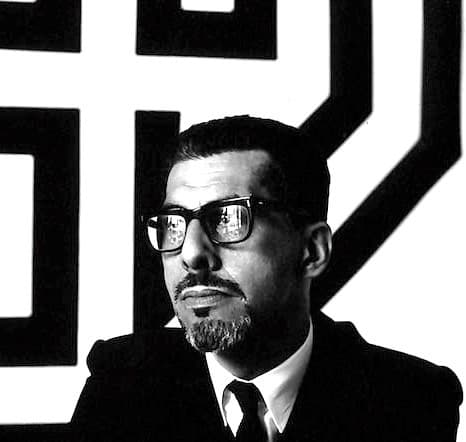
Idries Shah was a writer known for his contributions to literature and Sufi thought. His book "The Magic Horse" is part of his collection of stories that explore themes of wisdom and human experience through a blend of fiction and folklore. Shah's works often aim to convey deeper philosophical insights through engaging narratives.
Similar books
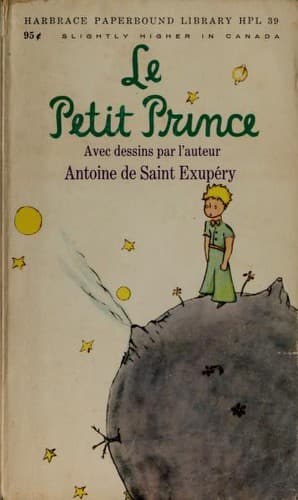
- The Little Prince
Antoine De Saint Exupéry
Both are philosophical children's tales with symbolic characters and a focus on inner wisdom.
- Harry Potter and the Sorcerer's Stone
J.K. Rowling
4.5 (7M) average on GoodreadsFantasyRescued from a miserable life under the stairs, an orphaned boy discovers he's a wizard destined for a magical school, where he uncovers a dangerous secret tied to the dark wizard who murdered his parents.
- The Hobbit, or There and Back Again
J.R.R. Tolkien
4.3 (2.9M) average on GoodreadsFantasyA comfort-loving hobbit named Bilbo Baggins is whisked away by a mischievous wizard and a band of dwarves on an unexpected journey to reclaim stolen treasure from a fearsome dragon, discovering courage and a magical ring along the way.
- Harry Potter and the Goblet of Fire
J.K. Rowling
4.6 (2.6M) average on GoodreadsFantasyA bewildered Harry Potter, underage and thrust into a deadly Triwizard Tournament, must brave dragons, mermaids, and a resurgent dark magic to survive a year that will forever alter the wizarding world.
- Harry Potter and the Order of the Phoenix
J.K. Rowling
4.5 (2.5M) average on GoodreadsFantasyIn a year of oppressive secrets and the threat of Voldemort, Harry Potter and Dumbledore's Army secretly train for war, shown through Jim Kay and Neil Packer's dark illustrations.
- The Lightning Thief
Rick Riordan
4.3 (2M) average on GoodreadsFantasyThrust into a world of mythological monsters and divine treachery, an ordinary boy discovers he's the son of Poseidon and must embark on a perilous quest across modern America to prevent an Olympian war.





Enjoyed the summary?
A summary gives you the shape of the book. The book itself has the detail, the examples and the voice.
Find The Magic Horse on AmazonAs an Amazon Associate, BookBrief earns from qualifying purchases. How we're funded