“I want to make a life for myself, a magnificent one, and I will.”
— Marjorie's early declaration of ambition and determination.

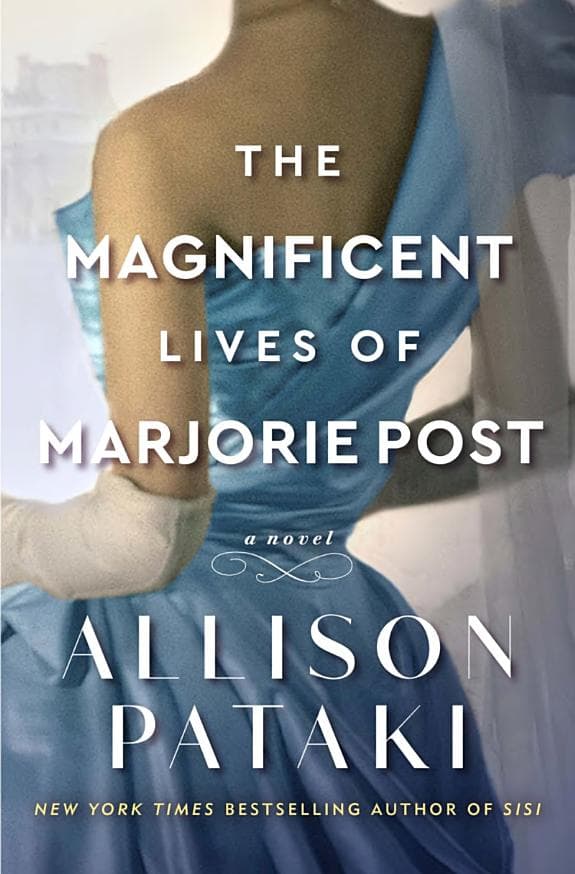
Allison Pataki (2022)
Goodreads Rating
4.14/ 5(96,792 reviews)
Genre
General
Summary Read
10 min
Book Length
500 min
Sign in to track this book
From gluing cereal boxes to hosting presidents and outrunning Nazis, Marjorie Post built a colossal empire and lived a life of unparalleled grandeur, resilience, and love amidst the Gilded Age and beyond.
Ask anything about The Magnificent Lives of Marjorie Post and get instant answers grounded in the summary.
The story begins with Marjorie Merriweather Post as a young girl in Battle Creek, Michigan. She watches her father, C.W. Post, build his cereal company. She learns early lessons about hard work, innovation, and quality, often helping him with tasks like gluing cereal boxes. Her father teaches her a strong work ethic and the belief that she can achieve anything, despite what society expects of women. Marjorie sees the Postum Cereal Company grow quickly, understanding the careful processes and bold vision needed to turn a small operation into a national brand. This experience prepares her for her own future role in the growing business.
As Marjorie grows up, she marries Edward Bennett Close, a New York socialite. This period brings her into America's high society, where she deals with expectations for women of her status: to be a decorative wife and mother. Despite the luxury, Marjorie wants more than just social events. She becomes a mother to Adelaide and Eleanor, but her sharp business mind, developed by her father, still seeks an outlet. She watches the financial world and her husband's family, always learning and quietly showing her intelligence and ambition.
After her father, C.W. Post, dies, Marjorie inherits the large Postum Cereal Company. This moment puts her in a position of great power and responsibility, making her the wealthiest woman in America. Despite initial doubt from some male executives, Marjorie shows a remarkable talent for business. She takes part in company decisions, showing a clear understanding of marketing, product development, and expansion. Her leadership helps the company continue to grow, leading to the formation of General Foods Corporation. This shows her vision and business skill.
Marjorie divorces Edward Close and marries Edward F. Hutton, a financier. Their marriage brings her into new financial and social circles. With Hutton, Marjorie expands her charitable work, especially in health and welfare. She uses her wealth to support hospitals, schools, and various social programs, showing a strong commitment to giving back. During this time, she also begins to build some of her famous estates, such as Mar-a-Lago, which would become known for its grandeur and as a center for social and political gatherings. This reflects her changing public image.
During the Great Depression, Marjorie Merriweather Post does not withdraw into her wealth. Instead, she actively helps with relief efforts. She opens soup kitchens, provides jobs where possible, and uses her resources to ease suffering. Her public service during this difficult time earns her widespread respect. She sees her wealth not just as personal fortune but as a tool for good, following her father's principles of responsibility and community involvement. This era establishes her reputation not just as an heiress, but as a compassionate and effective humanitarian.
Marjorie's third marriage is to Joseph E. Davies, a lawyer and diplomat who becomes the U.S. Ambassador to the Soviet Union. This period changes her life dramatically, as she moves to Moscow and becomes a prominent figure in international diplomacy. Despite political tensions and the strict conditions of Soviet Russia, Marjorie embraces her role as a diplomatic hostess, using her charm and resources to build good relationships. She also develops a strong appreciation for Russian art and culture, famously collecting many imperial treasures, often under difficult circumstances. This shows her adventurous spirit and good judgment.
While in Moscow, Marjorie collects Imperial Russian art, silverware, and jewelry, often saving pieces from warehouses where the Soviet regime held them. Her acquisitions would later form the core of her famous collection, eventually housed at Hillwood Estate. As the political situation in Europe worsens with the rise of Nazism, Marjorie and Joseph Davies witness the increasing tensions. They eventually leave Moscow and travel through Europe, experiencing the anxieties and dangers of the coming war, even having close calls with Nazi forces, before returning to the United States.
Returning to the United States, Marjorie divorces Joseph Davies and eventually marries Herbert Arthur May. Her life continues to involve grand entertaining and charity. She hosts presidents, royalty, and Hollywood stars at her magnificent estates, especially Mar-a-Lago and Hillwood, confirming her reputation as one of America's leading hostesses. Despite the ups and downs of her marriages, Marjorie maintains her independent spirit and remains a force in both society and philanthropy. She oversees the careful upkeep and development of her homes, which become extensions of her opulent lifestyle and artistic vision.
In her later years, Marjorie dedicates herself to turning Hillwood Estate, her Washington D.C. residence, into a museum. She carefully arranges her vast collections of French and Russian decorative arts, making sure they are displayed in a way that shows their historical and artistic importance. Her goal for Hillwood is to share her love for beauty and culture with the public, leaving a lasting impact beyond her personal wealth. This effort shows her commitment to education and art preservation, solidifying her place as a significant patron of the arts.
In her final years, Marjorie Merriweather Post reflects on a life lived on a grand scale, marked by great success and personal difficulties. She remains active in her charitable work and continues to manage her estates. Her story is of a woman who challenged societal expectations, using her inherited wealth as a platform for influence, philanthropy, and the pursuit of beauty. She leaves a legacy of business skill, humanitarianism, and cultural support, remembered as an iconic figure who shaped American society and culture. She was truly 'American royalty' with a strong drive to live and give.
The Protagonist
Marjorie transforms from a dutiful daughter into a powerful, independent woman who harnesses her wealth for business, philanthropy, and cultural preservation, ultimately defining her own legacy beyond societal expectations.
The Supporting
Establishes a foundational legacy for his daughter, providing the initial wealth and guiding principles that shape Marjorie's entire life and career.
The Supporting
Represents Marjorie's initial foray into high society and the limitations of traditional marital roles, leading to their eventual divorce as Marjorie seeks greater fulfillment.
The Supporting
Serves as a partner in Marjorie's business expansion and grand lifestyle, but ultimately proves incompatible with her long-term happiness, contributing to her growth in seeking a fulfilling partnership.
The Supporting
Introduces Marjorie to international diplomacy and Russian culture, broadening her worldview and providing a platform for her art collecting, though their marriage eventually falters.
The Supporting
Represents Marjorie's final attempt at finding enduring love, ultimately exposing deeper personal challenges and contributing to her journey of self-reliance.
The Supporting
Navigates growing up in Marjorie's shadow, eventually forging her own path while inheriting aspects of her mother's grand lifestyle and expectations.
The Supporting
Grows up under the influence of her formidable mother, seeking to define her own identity within the context of the Post legacy.
The novel shows how Marjorie Merriweather Post used her wealth not just for personal luxury, but for influence and societal good. It shows her belief that wealth brings responsibility to help the community, seen in her support for hospitals, soup kitchens during the Depression, and the creation of Hillwood as a public museum. Her financial skill allowed her to expand the family business into a corporate giant, while her generosity left a lasting legacy of cultural enrichment and social welfare.
“Always think for yourself, never take success for granted, and work hard—even when deemed American royalty, even while covered in imperial diamonds.”
Marjorie's life shows female ambition at a time when women of her status were largely expected to stay in domestic and social roles. She actively participated in business, took on diplomatic duties, and made important decisions about her fortune and properties. The novel highlights her refusal to be limited by societal expectations, showing her as a pioneer who made her own way in business, philanthropy, and cultural support. She proved that a woman could be both elegant and powerful, wanting more from life than just being a society wife.
“Not content to stay in her prescribed roles of high-society wife, mother, and hostess, Marjorie dared to demand more, making history in the process.”
Despite her public success and wealth, Marjorie's personal life, especially her four marriages, shows a continuous search for love and companionship. Each marriage brought different challenges and lessons, from the social expectations of her first, to the business partnership of her second, the diplomatic complexities of her third, and the hidden secrets of her fourth. The novel explores the difficulties in finding an equal and lasting partnership for a woman of such power and independence, suggesting that personal happiness can be hard to find even amidst great luxury.
“Marjorie did everything on a grand scale, especially when it came to love.”
Marjorie Merriweather Post's life is connected to major historical events of the 20th century. From the economic boom of the early 1900s, through the Great Depression, her diplomatic time in Soviet Russia, and the threat of World War II, her personal experiences are set against global change. Her homes became settings for political and social gatherings, hosting presidents and world leaders. The novel shows how her private decisions, ambitions, and even her art collections are intertwined with the broader sweep of history, making her a witness and participant in defining moments.
“Presidents have come and gone, but she has hosted them all.”
Major historical events directly shape Marjorie's life and choices.
The novel uses significant historical periods—the rise of American industry, the Roaring Twenties, the Great Depression, the Cold War era, and the looming threat of WWII—not merely as a backdrop but as active forces that directly influence Marjorie's personal and professional trajectory. Her decisions to expand General Foods, her philanthropic efforts during economic hardship, and her experiences as a diplomat's wife in Moscow are all deeply rooted in the historical context, making the era itself a powerful, shaping 'character' in her story. This device grounds her extraordinary life in tangible reality.
Marjorie's homes reflect her ambition, taste, and legacy.
Marjorie's magnificent estates—Mar-a-Lago, Hillwood, and Camp Topridge—serve as powerful metaphors for her life, ambition, and legacy. These homes are not just luxurious residences but extensions of her personality, her artistic vision, and her desire to create lasting beauty and order. They symbolize her drive for perfection, her love of collecting, and her role as a grand hostess. Ultimately, Hillwood's transformation into a public museum embodies her desire to share her world and contribute culturally, making her homes enduring monuments to her 'magnificent life'.
Letters and diary entries provide intimate insights.
While not exclusively epistolary, the novel incorporates elements such as letters, diary entries, or reflections that provide intimate glimpses into Marjorie's inner thoughts, motivations, and emotional struggles. These personal writings offer a contrast to her public persona, revealing her vulnerabilities, her hopes for love, and her private reflections on her achievements and disappointments. This device allows the reader to connect with Marjorie on a deeper, more personal level, humanizing the larger-than-life figure and offering a nuanced understanding of her choices and experiences beyond the historical record.
“I want to make a life for myself, a magnificent one, and I will.”
— Marjorie's early declaration of ambition and determination.
“She was a woman who knew what she wanted and was not afraid to go after it, no matter the obstacles.”
— Describing Marjorie's proactive and unyielding pursuit of her desires.
“Her fortune was not simply inherited; it was meticulously cultivated, strategically expanded, and generously shared.”
— Highlighting Marjorie's active role in building and managing her wealth, and her philanthropy.
“Post was a force of nature, a whirlwind of energy and intellect who reshaped the landscape of American business and high society.”
— Capturing the immense impact Marjorie had on both the business world and social circles.
“She believed that beauty was not a luxury, but a necessity, a way to elevate the everyday and bring joy to others.”
— Marjorie's philosophy on aesthetics and its role in life and entertaining.
“Marjorie Post didn't just collect beautiful things; she curated experiences that would define an era.”
— Focusing on her role as a tastemaker and creator of memorable events.
“She navigated the complexities of her marriages with a blend of grace, resilience, and a keen understanding of her own needs.”
— Reflecting on her personal life and how she managed her relationships.
“Her wartime efforts were not merely symbolic; they were practical, impactful, and driven by a deep sense of patriotism.”
— Detailing Marjorie's significant contributions during World War II.
“She understood that true power lay not just in wealth, but in influence, in the ability to shape opinion and inspire action.”
— Marjorie's sophisticated understanding of power dynamics.
“Hillwood was more than a house; it was a testament to her life, her passions, and her enduring legacy.”
— Referring to her iconic estate, Hillwood, as a reflection of her identity.
“Marjorie Post was a woman ahead of her time, a pioneer in philanthropy, business, and the art of living a full, meaningful life.”
— A summary of her forward-thinking nature and multifaceted achievements.
“She built an empire, but more importantly, she built a life of purpose, leaving behind a legacy that continues to inspire.”
— Emphasizing the dual achievement of her professional success and personal fulfillment.
“Her generosity was legendary, not just in the material sense, but in the spirit with which she gave her time and attention.”
— Highlighting the depth and breadth of her charitable spirit.
“In a world that often tried to define women by their husbands or their social standing, Marjorie Post insisted on defining herself.”
— Underscoring her fierce independence and self-determination.
Ready to see how well you understood this book? Take our interactive quiz with 10 questions.
Support the author — grab the full book.
As an Amazon Associate, BookBrief earns from qualifying purchases, at no extra cost to you. How we're funded.