

Synopsis
Covers the whole plot, including the ending.
- Difficulty
- Hard
- Pacing
- Variable
- Mood
- Mysterious, Philosophical, Suspenseful, Erotic, Disorienting, Psychological
- Read it if
- You enjoy complex literary puzzles, philosophical thrillers, and stories that challenge the reader's perception of reality, with a strong emphasis on psychological manipulation and a morally ambiguous protagonist.
- Skip it if
- You prefer straightforward plots, clear resolutions, or dislike stories where the protagonist is frequently deceived and humiliated. Also, if you're sensitive to themes of gaslighting and emotional manipulation.
The Magus Plot Summary
Covers the whole plot, including the ending.
The Arrival and Disillusionment
Nicholas Urfe, an Oxford graduate from a respectable but emotionally distant family, drifts through life in London, having a short, unsatisfying affair with Alison Kelly. Wanting to escape and find purpose, he takes a teaching job at the Lord Byron School for Boys on the isolated Greek island of Phraxos. At first, the island offers a temporary break, but Nicholas soon becomes deeply bored and feels a growing sense of despair, thinking about suicide. He feels dissatisfied with his own superficiality and the perceived meaninglessness of his life, wishing for something truly meaningful.
Discovery of the Bourani Estate
One day, during a long walk into the island's interior, seeking refuge from his overwhelming boredom, Nicholas finds a secluded and clearly very wealthy estate called the Bourani. The property is grand and seems abandoned, yet it is carefully kept, hinting at a hidden presence. Curious about the luxury and mystery, Nicholas starts visiting the estate regularly, drawn by its strange appeal and the unsettling feeling that he is being watched. He finds a strange, almost theatrical atmosphere, with classical statues and an unusual garden design, sparking his curiosity about its elusive owner.
Meeting Maurice Conchis
Nicholas eventually meets Maurice Conchis, the reclusive and wealthy owner of the Bourani. Conchis is an elderly, cultured, and highly mysterious figure who immediately fascinates Nicholas with his intelligence and peculiar charm. Conchis begins to tell Nicholas increasingly elaborate and often contradictory stories about his life, his past, and his experiences during World War II, including his time in German-occupied Greece and his supposed collaboration. These stories are full of philosophical thoughts, historical anecdotes, and personal confessions, meant to intrigue and mystify Nicholas, drawing him deeper into Conchis's world.
The First Manifestations: Lily and the Masque
Conchis introduces Nicholas to a beautiful young woman named Lily Montgomery, or sometimes Julie Holmes, a strikingly beautiful and almost ethereal presence. Conchis first presents her as a former patient, a muse, or even a ghost, constantly changing her identity and background. Nicholas is immediately drawn to her, and she becomes a central figure in the increasingly elaborate 'masque' Conchis creates. The interactions with Lily are always unclear, theatrical, and emotionally charged, further blurring the lines between reality and illusion for Nicholas, who becomes infatuated with her.
The Masque Deepens
The 'masque' at Bourani grows more intense, becoming a complex series of psychological games, theatrical performances, and historical reenactments. Conchis uses a group of actors, including a sinister figure named Demetriades, to play various roles and stage elaborate scenarios that often reflect Nicholas's own life, fears, and desires. These events range from seances and mythological scenes to re-creations of Conchis's wartime experiences. Nicholas is constantly manipulated, his emotions exploited, and his perceptions challenged, as Conchis aims to break down his preconceived notions of reality and self.
Alison's Return and Warning
Alison Kelly, feeling neglected and worried about Nicholas, unexpectedly arrives on Phraxos. She senses the deep change in him and the strange, unsettling influence of Conchis. Alison tries to warn Nicholas about the dangers of the Bourani and the manipulative nature of Conchis's games, urging him to leave the island with her. However, Nicholas, deeply involved in the masque and infatuated with Lily, dismisses her concerns, treating her with indifference and even cruelty. His rejection devastates Alison, showing his growing self-absorption and detachment from real human connection.
The Betrayal and Alison's Disappearance
Driven by his obsession with Lily and the captivating world of the masque, Nicholas cruelly rejects Alison, telling her he no longer loves her. Heartbroken and desperate, Alison seemingly drowns herself in the sea. This event plunges Nicholas into deep guilt and despair, forcing him to face the devastating results of his actions and his emotional recklessness. Her death, though later revealed to be another staged event by Conchis, acts as a powerful trigger, forcing Nicholas to experience genuine regret and the weight of his moral failures.
The Trial and Revelation
After Alison's 'death,' Nicholas undergoes a difficult mock trial organized by Conchis and his actors. During this 'trial,' all his past actions, his emotional failures, and his moral shortcomings are exposed and judged. Lily, Alison (revealed to be alive and an actress in the masque), and other characters confront him with his cruelty and self-deception. Conchis finally reveals the true nature of the masque: it was a therapeutic exercise, a psychological experiment meant to force Nicholas to understand himself and grow morally, to teach him empathy and responsibility.
The Aftermath and Search for Alison
After the masque ends, Nicholas leaves Phraxos, a deeply changed man. The experience has removed his cynicism and forced him to confront his true self. He feels a deep sense of responsibility and love for Alison, realizing the extent of his past cruelty. He begins a quest to find the real Alison Kelly, driven by a desire for redemption and genuine connection. His search takes him back to London, where he tries to piece together her whereabouts, dealing with the trauma of the masque and the lingering uncertainty of what was real and what was illusion.
The Reunion and Uncertain Future
After a period of searching and self-reflection, Nicholas eventually finds Alison in London. Their reunion is full of tension, pain, and lingering mistrust. Alison, deeply hurt by his past actions, is hesitant to forgive him. The novel ends with an ambiguous and open-ended scene in a park, where Nicholas tries to reconcile with her. The future of their relationship remains uncertain, emphasizing the lasting impact of the masque and the difficult path to real understanding and forgiveness. Nicholas has grown, but the scars of his experience and his past choices remain.
The Magus Characters
Nicholas Urfe
Protagonist
A young, cynical, and emotionally detached Englishman seeking meaning in life.
Nicholas Urfe is an Oxford-educated Englishman, initially characterized by his intellectual arrogance, emotional shallowness, and a pervasive sense of anomie. He drifts through life, engaging in superficial relationships and seeking escape from his own perceived mediocrity. He is highly intelligent but lacks self-awareness and empathy, often treating others as means to his own ends. His journey to Phraxos is driven by a desire for something 'real,' yet he falls prey to manipulation due to his inherent narcissism and desire for unique experiences.
Relationships: Alison Kelly (Initially a casual girlfriend, later the object of his genuine love and remorse after her 'death' in the masque.); Maurice Conchis (His manipulative mentor and tormentor, who orchestrates the masque to force Nicholas's self-discovery.); Lily Montgomery/Julie Holmes (The object of his infatuation during the masque, a key actress in Conchis's games.)
Maurice Conchis
Antagonist/Mentor
The enigmatic, wealthy, and manipulative orchestrator of the 'masque' on Phraxos.
Maurice Conchis is a reclusive Greek millionaire, a polymath, and a master of psychological manipulation. He presents himself as an artist, philosopher, and former collaborator during the war, constantly shifting his identity and narrative. Conchis designs and executes the elaborate 'masque' at the Bourani estate, using a troupe of actors to create a series of illusions and experiences for Nicholas. His motives are complex: he sees himself as a 'magus' or a 'god,' aiming to teach Nicholas self-awareness and moral responsibility through a highly unorthodox and often cruel form of therapy.
Relationships: Nicholas Urfe (His 'student' or 'patient' whom he subjects to the masque.); Lily Montgomery/Julie Holmes (An actress and key figure in his masque, often playing a lover or muse.); Demetriades (A loyal but sinister assistant and actor in the masque.)
Alison Kelly
Supporting/Love Interest
Nicholas's Australian girlfriend, initially casual, later the catalyst for his emotional awakening.
Alison Kelly is an Australian girl Nicholas meets in London. She is initially portrayed as somewhat naive and emotionally vulnerable but possesses a genuine capacity for love and loyalty. She is deeply in love with Nicholas and senses the danger he is in on Phraxos, trying to rescue him from Conchis's influence. Her 'death' during the masque is the turning point for Nicholas, forcing him to confront the consequences of his callousness. She represents genuine human connection and the real-world impact of Nicholas's self-centeredness.
Relationships: Nicholas Urfe (His girlfriend, who he initially treats poorly but later seeks to reconcile with.); Maurice Conchis (An unwitting pawn in Conchis's masque, later revealed to be an actress.)
Lily Montgomery / Julie Holmes
Supporting
A beautiful and mysterious woman, an actress in Conchis's masque, who becomes the object of Nicholas's obsession.
Lily Montgomery, also known as Julie Holmes, is a central figure in Conchis's masque. She is presented to Nicholas in various guises – as a patient, a ghost, a lover, a sister – and her identity is constantly shifting and ambiguous. She is strikingly beautiful, intelligent, and plays her roles with conviction, deeply captivating Nicholas. Her presence is designed to manipulate Nicholas's desires and force him to question his perceptions of reality and love. She represents the seductive power of illusion and the elusive nature of truth within the masque.
Relationships: Nicholas Urfe (The object of his infatuation during the masque, a key actress in his psychological manipulation.); Maurice Conchis (An employee and actress in Conchis's elaborate scheme.)
Demetriades
Supporting
Conchis's sinister and imposing assistant, a key actor in the masque.
Demetriades is a hulking, often silent, and menacing figure who serves as Conchis's primary assistant and a prominent actor in the masque. He embodies a sense of physical threat and plays roles that often involve intimidation or violence. His presence reinforces the unsettling and dangerous atmosphere of the Bourani estate. He is a loyal executor of Conchis's will, ensuring the smooth operation of the intricate illusions and often appearing at crucial, frightening moments to further disorient Nicholas.
Relationships: Maurice Conchis (Conchis's loyal assistant and a key actor in the masque.); Nicholas Urfe (Often an intimidating and threatening figure in Nicholas's experiences during the masque.)
Maria
Mentioned
A local Greek girl Nicholas briefly has an affair with before meeting Conchis.
Maria is a young Greek woman with whom Nicholas has a brief and ultimately unsatisfying sexual relationship early in his time on Phraxos. She represents Nicholas's initial attempts to escape his boredom and his casual, exploitative approach to relationships before the deeper psychological games begin. Her innocence and genuine affection contrast with Nicholas's cynicism and self-absorption, highlighting his emotional immaturity at the start of the novel.
Relationships: Nicholas Urfe (A brief, casual affair early in the novel.)
Jojo
Mentioned
The school headmaster on Phraxos.
Jojo is the headmaster of the Lord Byron School for Boys where Nicholas teaches. He is a relatively minor character, representing the mundane and somewhat provincial life Nicholas initially tries to escape. He is a pragmatic and well-meaning individual, but ultimately unable to offer Nicholas the intellectual or emotional stimulation he craves. Jojo serves as a grounding figure, a contrast to the fantastical and manipulative world of the Bourani estate.
Relationships: Nicholas Urfe (Nicholas's employer and a colleague at the school.)
The Magus Themes
Reality vs. Illusion
The novel constantly blurs the lines between what is real and what is staged, making Nicholas and the reader question the nature of truth and perception. Conchis's masque is an example of illusion, using actors, elaborate sets, and psychological manipulation to create a subjective reality for Nicholas. Scenes like Alison's 'suicide' or Lily's constantly changing identity show this, highlighting how easily one's perception can be manipulated and how difficult it is to tell objective truth when emotions are involved. This theme challenges the very foundation of Nicholas's understanding of the world.
“What Conchis was doing was not sane, not sane by any standard that I knew. But then, what sane standard did I know?”
Existential Freedom and Responsibility
A main theme is the burden of existential freedom and the responsibility that comes with it. Nicholas initially abuses his freedom through cynicism, apathy, and emotional recklessness. Conchis's masque, though manipulative, is meant to force Nicholas to face the consequences of his choices and to understand that freedom is not just the absence of limits but the need to make meaningful, ethical decisions. The 'trial' scene directly addresses Nicholas's moral failures, pushing him toward an understanding of his responsibility for his impact on others, particularly Alison.
“We are all of us, in the end, alone. Alone in the sense that we must choose, and there is no God to choose for us.”
The Nature of Love and Connection
The novel explores different forms of love – from superficial infatuation and casual sex to genuine, selfless affection and the painful process of reconciliation. Nicholas's journey begins with a detached affair with Alison and an infatuation with the illusory Lily. Through the masque, he is forced to confront his inability to love truly and the devastating impact of his emotional coldness. Alison's 'death' acts as a brutal trigger, prompting him to understand the depth of his feelings for her and the importance of real human connection over intellectual games or self-serving desires. The ending, though unclear, suggests the difficult path toward authentic love.
“There are some people who are born to give out love, and others to take it in. It is not always a fair exchange.”
The Artist as Manipulator/God
Conchis represents the artist or 'magus' as someone who manipulates reality for a higher purpose, like a god creating and shaping a world. He orchestrates the masque as a grand theatrical production, using human lives as his canvas and Nicholas as his subject. This raises questions about the ethics of such manipulation, even if the stated goal is enlightenment. Conchis's power, his ability to control events and perceptions, positions him as a demiurge, challenging common ideas of morality and artistic responsibility. His methods are extreme, reflecting a belief that deep change requires radical intervention.
“I was a god. I was a god in my own theatre. And you, Nicholas, were my puppet.”
The Search for Meaning and Identity
Nicholas begins the novel aimless, lacking purpose or a stable identity. His initial cynicism is a defense against a world he sees as meaningless. The masque is a brutal process meant to strip away his false self and force him to build a new, more authentic identity. Through the constant questioning of his perceptions and the confrontation with his moral failings, Nicholas is compelled to define himself not by intellectual superiority or detachment, but by his capacity for empathy, responsibility, and real human connection. The ending leaves him with a developing, but hard-earned, sense of self.
“The only way to get rid of a temptation is to yield to it. Resist it, and your soul grows sick with longing for the things it has forbidden to itself.”
Plot Devices & Literary Techniques
The Masque
An elaborate, immersive psychological game orchestrated by Maurice Conchis.
The 'masque' is the central plot device of the novel, a complex, multi-layered series of staged events, performances, and manipulations designed by Conchis to psychologically 'cure' or enlighten Nicholas. It involves a troupe of actors, shifting identities, historical reenactments, and the blurring of reality and illusion. The masque serves as a therapeutic, albeit traumatic, tool to strip away Nicholas's cynicism, force him to confront his moral failings, and ultimately lead him to self-awareness and empathy. It is an extended metaphor for the human condition, where perception is often subjective and truth is elusive.
Unreliable Narrator
Nicholas Urfe's first-person narration is frequently clouded by his own biases, confusion, and the manipulations he experiences.
Nicholas Urfe serves as an unreliable narrator, constantly questioning his own perceptions and interpretations of events. His initial arrogance and later his emotional distress and confusion make it difficult for the reader to fully trust his account. This unreliability is exacerbated by Conchis's deliberate manipulations, which aim to disorient Nicholas and make him doubt his own sanity. The device forces the reader to engage critically with the narrative, mirroring Nicholas's own struggle to discern truth from illusion and adding to the novel's pervasive sense of mystery and psychological tension.
Metafiction
The novel frequently comments on its own artificiality and the nature of storytelling.
The Magus employs metafiction through Conchis's role as a 'magus' or 'god' who self-consciously constructs a narrative around Nicholas. Conchis often discusses the nature of illusion, art, and storytelling, directly addressing the fictionality of the experiences Nicholas undergoes. The 'masque' itself is a theatrical production, highlighting the constructed nature of reality. This device encourages the reader to consider the novel as an artifact, a deliberate creation, and to reflect on the power of narrative to shape perception, both within the story and in the act of reading itself. It blurs the lines between the story and its telling.
Symbolism of Greek Mythology
References to Greek myths and classical archetypes enrich the 'masque' and character dynamics.
Throughout the novel, Conchis and the masque frequently draw upon figures and narratives from Greek mythology. Lily is often presented in various archetypal roles, such as a goddess or a nymph, and the events at Bourani sometimes mirror ancient Greek dramas or rituals. This symbolism adds layers of meaning to the narrative, suggesting that Nicholas's journey is a modern retelling of ancient quests for self-discovery or encounters with divine tricksters. It elevates the personal drama to a more universal, archetypal level, connecting Nicholas's individual struggle to timeless human experiences and mythological patterns.
The Magus Quotes
“We all have to suffer to be beautiful.”
“The greatest freedom is the freedom from the need for freedom.”
“You are like all young men. You think you are unique. You are not.”
“We are all prisoners, but some of us are in cells with windows.”
“Every man has his own hell.”
“The only way to get rid of a temptation is to yield to it.”
“The past is a foreign country; they do things differently there.”
“What is real? And what is not?”
“Love is a game, and the more you play it, the better you get.”
“Man is condemned to be free.”
“To be truly free, one must be prepared to lose everything.”
“You must learn to distinguish between the mask and the face.”
“The world is full of signs and wonders, if only you know how to read them.”
“There are no solutions, only choices.”
Quiz
10 questions on the plot and the characters. Each answer comes with a short explanation.
Question 1
What is the name of the remote Greek island where Nicholas Urfe accepts a teaching position?
- Crete
- Mykonos
- Phraxos
- Santorini
Show answer
C. Phraxos Nicholas Urfe takes a teaching job at the Lord Byron School on the fictional Greek island of Phraxos, where the mysterious events unfold.
Question 2
What is the profession Nicholas Urfe initially takes on Phraxos?
- Journalist
- English teacher
- Archaeologist
- Artist
Show answer
B. English teacher Nicholas, seeking escape and adventure, accepts a position as an English teacher at the Lord Byron School on Phraxos.
Question 3
What is the full name of the millionaire who orchestrates the elaborate 'godgame'?
- Maurice Conchis
- Michael Conchis
- Marcus Conchis
- Max Conchis
Show answer
A. Maurice Conchis The enigmatic millionaire who draws Nicholas into his complex psychological games is Maurice Conchis.
Question 4
What is the name of the Norwegian flight attendant Nicholas has an affair with before leaving for Greece?
- Lily
- Maria
- Anna
- Alison Kelly
Show answer
D. Alison Kelly Nicholas has a significant relationship with Alison Kelly, a Norwegian flight attendant, which he later regrets betraying.
Question 5
What is the term Conchis uses to describe the elaborate, theatrical deceptions he stages?
- The Grand Illusion
- The Godgame
- The Phraxos Experiment
- The Conchis Masquerade
Show answer
B. The Godgame Conchis refers to his complex and manipulative psychological experiment as the 'godgame,' designed to challenge Nicholas's perceptions of reality and self.
Question 6
Which historical figure does Conchis sometimes impersonate or claim to have known during the 'godgame'?
- Lord Byron
- Adolf Hitler
- Sade
- All of the above
Show answer
D. All of the above Conchis's theatrical deceptions involve him impersonating or claiming connections to various historical figures, including Lord Byron, Hitler, and Sade, to manipulate Nicholas's understanding of history and morality.
Question 7
What is the primary motivation Conchis claims for orchestrating the 'godgame' for Nicholas?
- To extract a confession from Nicholas for a past crime.
- To force Nicholas to confront his existential freedom and moral choices.
- To find a suitable heir for his vast fortune.
- To prove the superiority of his philosophical beliefs.
Show answer
B. To force Nicholas to confront his existential freedom and moral choices. The 'godgame' is designed to strip away Nicholas's preconceived notions and force him to make genuine choices, confronting his own freedom and responsibility in a world without clear answers.
Question 8
What specific psychological concept, related to free will and responsibility, is a central theme explored through Nicholas's experiences?
- The Oedipus Complex
- Existentialism
- Behaviorism
- Cognitive Dissonance
Show answer
B. Existentialism The novel deeply explores existentialist themes, particularly the idea that individuals are condemned to be free and must create their own meaning and values in a world without inherent purpose.
Question 9
Who is the character often presented as a mysterious, beautiful young woman, sometimes referred to as 'Lily' or 'Julie', who becomes a central figure in Nicholas's psychological torment?
- Maria Sifakis
- Alison Kelly
- Hermione
- Both Lily and Julie are pseudonyms for the same character
Show answer
D. Both Lily and Julie are pseudonyms for the same character The character known as Lily (and later revealed to be Julie Holmes) is a key participant in Conchis's 'godgame,' manipulating Nicholas's emotions and perceptions.
Question 10
What is the ultimate resolution of Nicholas's relationship with Alison Kelly at the novel's end?
- They reconcile and marry.
- They part ways permanently, having moved on from their past.
- Their future together remains ambiguous, with Nicholas left to pursue her on uncertain terms.
- Alison is revealed to have been another actress in Conchis's game.
Show answer
C. Their future together remains ambiguous, with Nicholas left to pursue her on uncertain terms. The ending of 'The Magus' is famously ambiguous, with Nicholas left to follow Alison, who has been deeply hurt by his actions. Their reconciliation is not guaranteed, leaving Nicholas to confront the consequences of his choices.
The Magus FAQ
What is the basic premise of 'The Magus'?
Nicholas Urfe, a disillusioned young Englishman, takes a teaching job on the remote Greek island of Phraxos. There, he encounters the enigmatic millionaire Maurice Conchis, who draws him into a complex series of elaborate psychological games and theatrical 'godgames' that blur the lines between reality and illusion, ultimately challenging Nicholas's perceptions of himself and others.
Who are the main characters Nicholas encounters in Conchis's villa?
Nicholas is primarily drawn into the orbit of Maurice Conchis, the orchestrator of the games. He also becomes deeply entangled with Lily Montgomery (later revealed to be Julie Holmes), a mysterious and beautiful woman who plays various roles in Conchis's elaborate scenarios, and her 'sister' Rose (later revealed to be June Holmes).
What is the purpose of the 'godgame' Conchis orchestrates?
Conchis's godgame, known as 'The Phraxos Experience,' is designed to strip Nicholas of his arrogance, self-deception, and conventional worldview. It aims to force him to confront his own moral failings, understand the complexities of human nature, and ultimately achieve a deeper, more empathetic understanding of life and love, though its methods are often cruel and manipulative.
What are some of the key themes explored in the novel?
The Magus delves into themes of identity, free will versus determinism, the nature of reality, truth and deception, the power of art and illusion, and the complexities of love and relationships. It questions how we perceive others and ourselves, and how easily our realities can be manipulated.
How does the relationship between Nicholas and Alison Kelly evolve throughout the book?
Nicholas initially treats Alison dismissively, engaging in a casual affair before leaving her for Greece. His experiences on Phraxos, particularly the godgame's manipulation of his feelings for Lily/Julie, force him to re-evaluate his past treatment of Alison. By the end, he seeks her out, hoping for genuine reconciliation and a more mature, honest relationship.
What is the significance of the various masks and disguises used by Conchis and his actors?
The masks and disguises symbolize the fluid nature of identity and the deliberate blurring of reality. They allow Conchis and his participants to play multiple roles, manipulate perceptions, and challenge Nicholas's ability to distinguish truth from performance. This constant shifting prevents Nicholas from forming stable judgments and forces him to look beyond superficial appearances.
Are there any clues to Conchis's true intentions or the nature of the godgame given early in the novel?
Subtle hints appear, such as Conchis's philosophical pronouncements about the nature of reality and his theatrical past, but they are often overshadowed by the immediate mystery. Nicholas's own unreliable narration and self-deception also prevent him from recognizing these early warning signs, making the revelations more impactful.
What is the role of the mythical allusions, particularly to the Minotaur and the labyrinth, in the story?
The allusions to the Minotaur and the labyrinth mirror Nicholas's journey into Conchis's complex and confusing 'maze' on Phraxos. Nicholas is the unwitting Theseus, navigating a psychological labyrinth, while Conchis acts as a kind of Daedalus, designing the intricate trap. The Minotaur symbolizes the hidden truths and psychological monsters Nicholas must confront within himself.
How does Nicholas's initial arrogance and intellectual snobbery influence his experiences?
Nicholas's arrogance makes him an ideal subject for Conchis's games. He believes himself superior and intelligent, which allows Conchis to exploit his self-confidence and set him up for greater falls. His snobbery also makes him dismissive of warnings and eager to believe in the extraordinary, making him more susceptible to manipulation.
Analyze the psychological impact of the constant deception on Nicholas.
The relentless deception shatters Nicholas's sense of reality and self, leading to extreme paranoia, confusion, and a breakdown of his mental stability. He struggles to trust anyone, including himself, and his perception of truth becomes completely eroded, forcing him into a profound existential crisis.
What psychological lessons does Nicholas ultimately learn from the godgame?
Nicholas learns humility, empathy, and the importance of genuine connection over superficiality. He realizes the depth of his own selfishness and the destructive nature of his past behavior towards women like Alison. He gains a more nuanced understanding of truth, accepting its subjective and elusive nature, and the value of compassion.
How does the novel explore the concept of free will versus determinism through Nicholas's journey?
Nicholas initially believes he is in control, but he is repeatedly shown to be a puppet in Conchis's elaborate scheme, questioning his agency. While Conchis manipulates events, he also provides moments where Nicholas *could* choose differently, suggesting that even within a controlled environment, personal choice and moral responsibility remain crucial, ultimately leading Nicholas to a more conscious form of freedom.
Is Conchis a benevolent mentor or a cruel manipulator?
This is a central interpretive debate. Conchis can be seen as a benevolent mentor using harsh methods for Nicholas's ultimate good, aiming for enlightenment. However, his actions are undeniably cruel, manipulative, and emotionally damaging, leading some to view him as an arrogant and unethical puppet master who inflicts unnecessary suffering.
What is the significance of the ambiguous ending, particularly regarding Alison's return?
The ambiguous ending, with Alison's hesitant return, leaves the reader to ponder whether Nicholas has truly changed and if he deserves a second chance. It suggests that while the godgame forced a transformation, the real work of self-improvement and building a genuine relationship lies ahead, without the external manipulation of Conchis. It emphasizes responsibility and the ongoing nature of personal growth.
Did Lily/Julie and Rose/June genuinely have feelings for Nicholas, or were they always just acting?
This is deliberately left open to interpretation. While they were undoubtedly playing roles for Conchis, moments of genuine emotion, especially from Lily/Julie, seem to break through the performance. The novel suggests that even within a theatrical construct, real human feelings can emerge, making the line between acting and authenticity incredibly blurry for Nicholas and the reader.
What is the meaning of the title 'The Magus'?
The title refers to Conchis, who acts as the 'magician' or sorcerer, orchestrating the elaborate illusions and psychological manipulations. He holds the power to create and control the 'reality' Nicholas experiences, much like a magus in ancient traditions. It also alludes to the Tarot card 'The Magician,' symbolizing skill, initiative, and the power to manifest desires.
How does Fowles use narrative unreliable narration in 'The Magus'?
Fowles employs Nicholas's first-person perspective, which is inherently unreliable due to his initial arrogance, self-deception, and the psychological torment he undergoes. Nicholas's perceptions are constantly challenged and proven false, forcing the reader to question everything he reports and highlighting the subjective nature of reality and memory.
About the author
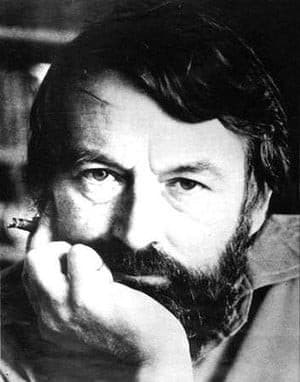
John Robert Fowles was an English novelist of international renown, critically positioned between modernism and postmodernism. His work was influenced by Jean-Paul Sartre and Albert Camus, among others.
Similar books
- The Collector
John Fowles
3.9 (29k) average on GoodreadsThrillerExplores themes of psychological control and dark obsession by the same author.
- The Trial
Franz Kafka
4.0 (235k) average on GoodreadsLiterary FictionFeatures a protagonist caught in an incomprehensible, nightmarish system with an ambiguous legal process.
- Ficciones
Jorge Luis Borges
4.4 (49k) average on GoodreadsFantasyOffers labyrinthine narratives and philosophical puzzles that blur reality and illusion, often with a dreamlike quality.
- Pale Fire
Vladimir Nabokov
4.1 (43k) average on GoodreadsLiterary FictionWhile both The Magus and Pale Fire explore unreliable narration and metafictional games, Fowles' novel is more focused on the psychological and emotional impact of deception on the protagonist, rather than the intellectual puzzle as an end in itself. Nabokov's work is arguably more self-referential and concerned with artistic creation, whereas Fowles delves deeper into the ethics of manipulation and personal transformation.
- The Name of the Rose
Umberto Eco
4.1 (301k) average on GoodreadsHistorical FictionBoth novels feature mystery and philosophical discourse. However, Eco's The Name of the Rose is primarily a historical mystery deeply rooted in semiotics, medieval philosophy, and the architecture of knowledge. The Magus, by contrast, is less about historical reconstruction or semiotic decipherment and more about the raw, visceral experience of personal transformation, the blurring of reality, and the ethics of psychological manipulation in a contemporary setting.
- The Old Man and the Sea
Ernest Hemingway
3.8 (831k) average on GoodreadsLiterary FictionA Cuban fisherman's long struggle with a giant marlin becomes a story of endurance and dignity, now retold for young adults with illustrations, phonetic guides, and writing prompts in Traditional Chinese.






Enjoyed the summary?
A summary gives you the shape of the book. The book itself has the detail, the examples and the voice.
Find The Magus on AmazonAs an Amazon Associate, BookBrief earns from qualifying purchases. How we're funded