
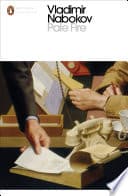
Synopsis
Covers the whole plot, including the ending.
- Difficulty
- Hard
- Pacing
- Variable
- Mood
- Intellectual, Mysterious, Witty, Melancholic, Delusional
- Read it if
- You enjoy unreliable narrators, experimental structures, literary puzzles, and the intricate interplay between text and commentary.
- Skip it if
- You prefer straightforward narratives, clear plot resolutions, or find extensive footnotes and digressions frustrating.
Pale Fire Plot Summary
Covers the whole plot, including the ending.
Foreword by the Editor
The novel begins with an eager and somewhat boastful foreword by Charles Kinbote, who presents himself as the close friend and neighbor of the recently deceased American poet, John Shade. Kinbote explains that he is editing and annotating Shade's final, unfinished 999-line poem, also called 'Pale Fire,' which appears in full right after the foreword. Kinbote claims to be the only person truly able to understand and interpret Shade's work, suggesting that the poem contains veiled references to his own life and a hidden message that only he can figure out. He immediately establishes his odd and unreliable narrative voice, hinting at a deeper, more personal connection to the poem than a mere editor might have.
Pale Fire: A Poem in Four Cantos
John Shade's poem 'Pale Fire' is a long, autobiographical work in four cantos, totaling 999 lines. It covers various parts of Shade's life: his childhood, his marriage to Sybil, his academic career, his experiences with nature, his thoughts on death and an afterlife, and most notably, the sad suicide of his daughter, Hazel. The poem is written in a clear, easy-to-read style, using rhyming couplets, and explores themes of art, reality, and the search for meaning. While seemingly a straightforward personal story, Kinbote later selectively reinterprets and distorts the poem's lines in his extensive commentary.
Canto One Commentary
Kinbote's commentary begins, supposedly to explain Shade's poem. However, from the very first note on Canto One, he strays far from literary analysis, instead using Shade's lines as starting points to tell his own elaborate personal history. He introduces himself as the exiled King Charles II of Zembla, a fictional European country, and describes his dramatic escape from a revolution planned by the 'Extremists.' Kinbote insists that Shade, despite appearing to write about his own life, was actually channeling Kinbote's experiences, and that the poem is a thinly veiled story of Zemblan royalty and political plotting. He claims that Shade sought him out specifically to hear his story.
Canto Two Commentary
Continuing his digressions, Kinbote uses Shade's descriptions of nature and home life to add more details about his past as King Charles II of Zembla. He recounts his early life, his marriage to Queen Disa, and the political unrest that led to his overthrow. Kinbote increasingly portrays himself as a very important figure, constantly pursued by an assassin named Gradus (Jakob Gradus, also known as Jack Gray), sent by the Zemblan 'Extremists' to kill him. He maintains that Shade was deeply interested in these stories and that many lines in the poem, especially those referring to 'distant lands' or 'a king,' are direct allusions to Zembla and Kinbote's royal identity.
Canto Three Commentary
Kinbote's commentary on Canto Three increases his story about Gradus, the assassin. He carefully tracks Gradus's journey across Europe and America, giving detailed, often fantastic, accounts of his movements and methods. Kinbote believes Gradus's real target is himself, the exiled King Charles II, and that Gradus's arrival in New Wye, where Shade and Kinbote live, is not a coincidence. He interprets Shade's lines about fate, death, and the random nature of existence as direct reflections of Kinbote's own dangerous situation. He also mixes this with more personal stories about his interactions with Shade, often showing Shade as a reluctant but captivated listener to his Zemblan tales.
Shade's Daughter and Kinbote's Interpretation
When Shade's poem talks about the sad suicide of his daughter, Hazel, Kinbote acknowledges the event but immediately reinterprets it to fit his own story. He suggests that Hazel's 'ugliness' and social exclusion were subtly linked to Zembla's fate, or that her death somehow mirrors his kingdom's downfall. He even guesses that Shade's grief was made worse by his worry for Kinbote's safety or Zembla's fate. This section shows Kinbote's inability to truly empathize with Shade's personal suffering, instead consistently turning the focus back to himself and his imagined royal struggles, further showing his self-absorption and psychological instability.
The Neighborly Relationship
Kinbote recounts his 'friendship' with John Shade, showing himself as Shade's closest confidant and inspiration. He describes how he bought the house next to Shade, visited him often, and frequently tried to influence the poem's content, urging him to write about Zembla. He recalls their walks, conversations, and Shade's apparent interest in his stories. However, the reader gradually understands that Kinbote's 'friendship' was mostly one-sided and intrusive, with Shade often trying to politely avoid Kinbote's constant presence and attempts to control his creative process. Kinbote's descriptions reveal his deep loneliness and his desperate need for connection and validation.
The Final Lines and the Assassination
In his final notes, Kinbote details the circumstances of John Shade's death. He claims that on the day Shade finished his 999-line poem, he was shot and killed by Gradus, the Zemblan assassin. However, Kinbote insists that Gradus's real target was not Shade, but Kinbote himself, the exiled King Charles II, who was wearing a white academic gown similar to Shade's. Shade was simply in the wrong place at the wrong time, caught in the crossfire of a Zemblan political vendetta. This dramatic climax is presented entirely through Kinbote's unreliable perspective, reinforcing his delusion that his life is the main drama around which all other events revolve.
The Unfinished 1000th Line
Shade's poem famously ends one line short of its intended 1000 lines. Kinbote spends a lot of his commentary guessing what the final, unwritten line would have been. He offers several possibilities, all of which, predictably, relate to Zembla, his own identity, or the assassin Gradus. He believes that Shade was about to explicitly reveal the Zemblan connection, thereby proving Kinbote's entire interpretation right. This obsession with the missing line shows Kinbote's desperate need for outside validation of his fantastical narrative and his belief that Shade's art was inherently about him.
Gradus's Demise and Kinbote's Retreat
Kinbote recounts that Gradus, after mistakenly killing Shade, was himself caught and later died while trying to escape custody (or, in another version, by falling down stairs). Kinbote then describes his flight from New Wye, taking Shade's manuscript with him. He retreats to a remote cabin in a mountainous area, supposedly to finish his editorial work alone. This act of physically removing himself and the manuscript from New Wye further isolates Kinbote and allows him to fully immerse himself in his delusions, free from the reality of the academic community that would undoubtedly question his interpretations.
Kinbote's Self-Reflection and Delusion
In the concluding notes, Kinbote's psychological state becomes clear. He deals with the implications of Shade's death, his own loneliness, and the truth of his Zemblan story. While occasionally hinting that his entire story is made up, he quickly dismisses such thoughts, holding onto his identity as King Charles II. He reveals his plans to keep writing, perhaps under a different name, and hints at a cycle of reincarnation, suggesting that he may reappear in another form. The final notes confirm the reader's understanding that Kinbote is a deeply disturbed individual, using his elaborate fantasy as a shield against a harsh and isolating reality.
Principal Figures
Charles Kinbote
Protagonist/Unreliable Narrator
The self-proclaimed King Charles II of Zembla and editor of John Shade's poem.
Charles Kinbote, whose real name is revealed to be V. Botkin, is a professor, an exile, and the self-appointed editor of John Shade's final poem. He is deeply delusional, believing himself to be the deposed King Charles II of Zembla, a fictional European kingdom. Obsessed with his royal identity and a convoluted narrative of political intrigue and assassination attempts, Kinbote uses Shade's poem as a vehicle to tell his own fantastical story, bending and distorting Shade's words to fit his elaborate delusions. He is lonely, intrusive, and desperate for connection and validation, which he seeks through his imagined friendship with Shade.
Relationships: John Shade (Obsessive, one-sided 'friendship' and perceived muse.); Sybil Shade (Viewed with suspicion and jealousy as a rival for Shade's attention.); Gradus (Jakob Gradus) (Imagined assassin pursuing Kinbote, but who mistakenly kills Shade.); Queen Disa (His estranged, imagined wife in Zembla.)
John Shade
Central Figure/Poet
The respected American poet whose final work, 'Pale Fire,' forms the core of the novel.
John Shade is a celebrated and ostensibly stable American poet whose 999-line poem, 'Pale Fire,' is the central text of the novel. His poem is an autobiographical reflection on his life, family (particularly his daughter Hazel), nature, and philosophical musings on death and the afterlife. He is portrayed as a kind, somewhat reserved academic who tolerates his eccentric neighbor, Kinbote, with polite patience. Shade represents a grounded, artistic reality that Kinbote continually attempts to appropriate and distort. His genuine grief over Hazel's death provides a stark contrast to Kinbote's self-centered interpretations.
Relationships: Charles Kinbote (Neighbor, endured with polite exasperation; source of unwanted narrative pressure.); Sybil Shade (Loving and devoted wife.); Hazel Shade (Beloved, tragic daughter whose death deeply affects him.)
Sybil Shade
Supporting
John Shade's devoted and protective wife.
Sybil Shade is John Shade's loyal and loving wife. She is portrayed as intelligent, practical, and protective of her husband's time and artistic process. She views Kinbote with suspicion and mild disdain, recognizing his intrusive nature and his attempts to monopolize Shade's attention. Sybil represents a grounding force in Shade's life and a voice of common sense amidst Kinbote's escalating delusions. Kinbote, in turn, often portrays her as an obstacle to his 'friendship' with Shade, seeing her as a jealous rival for Shade's affection and poetic inspiration.
Relationships: John Shade (Loving and devoted wife.); Charles Kinbote (Antagonistic, wary, and distrustful.)
Hazel Shade
Supporting/Tragic Figure
John and Sybil Shade's socially awkward and ultimately tragic daughter.
Hazel Shade is John and Sybil's only daughter, whose suicide deeply impacts her parents and forms a central emotional core of Shade's poem. She is described as intelligent but socially awkward, physically unattractive, and often lonely. Her struggles with self-esteem and her eventual tragic death are depicted with genuine pathos in Shade's poem. Kinbote, however, largely dismisses her suffering, twisting her story to fit his Zemblan narrative or to serve as a tangential reference to his own perceived hardships, thereby highlighting his profound lack of empathy.
Relationships: John Shade (Beloved daughter, source of profound grief and poetic inspiration.); Sybil Shade (Beloved daughter, source of profound grief.)
Gradus (Jakob Gradus / Jack Gray)
Antagonist/Imagined Threat
The supposed Zemblan assassin pursuing Kinbote, who accidentally kills John Shade.
Gradus is the name given by Kinbote to the assassin sent by the Zemblan 'Extremists' to kill him, the exiled King Charles II. Kinbote meticulously tracks Gradus's journey across the globe, detailing his clumsy and often absurd misadventures. In reality, Gradus is likely an escaped mental patient named Jack Gray who mistakenly shoots John Shade while aiming for Kinbote (or perhaps a random target, as Kinbote's version is highly suspect). Gradus serves as the externalized threat in Kinbote's delusion, providing a concrete antagonist for his fantastical narrative of royal persecution.
Relationships: Charles Kinbote (Imagined target and persecutor.); John Shade (Accidental victim.)
Queen Disa
Mentioned
Kinbote's estranged, imagined wife in Zembla.
Queen Disa is Kinbote's imagined wife from his life as King Charles II of Zembla. She is mentioned as having been beautiful and somewhat distant, eventually separating from him. Her character serves to further flesh out Kinbote's elaborate Zemblan fantasy, adding a layer of personal history and royal responsibility to his fabricated past. She is a figure of longing and regret for Kinbote, further emphasizing his isolation in his real life.
Relationships: Charles Kinbote (Imagined estranged wife.)
The Extremists
Mentioned
The imagined political faction that overthrew Kinbote in Zembla.
The Extremists are the fictional political faction that Kinbote claims overthrew him as King Charles II of Zembla. They are portrayed as ruthless revolutionaries who sent Gradus to assassinate Kinbote. They function as the unseen, overarching antagonists in Kinbote's Zemblan narrative, providing the motivation for his exile and the perceived threat that drives his story. They are a crucial element of his delusion, justifying his paranoia and his self-importance as a deposed monarch.
Relationships: Charles Kinbote (Political enemies and persecutors.)
Themes & Insights
The Nature of Reality and Perception
The novel explores how people build their own realities, often differing from objective truth. Kinbote's elaborate Zemblan fantasy, detailed in his notes, completely overrides the reality of John Shade's life and poem. He genuinely believes his delusions, showing how subjective perception can change or replace shared reality. The reader constantly questions what is 'real' – Shade's grounded poem or Kinbote's fantastical interpretation. This theme is clear in Kinbote's insistence that Shade's lines like 'a king, a web, a wretch, an insect' directly refer to him and Zembla, despite clear evidence otherwise, highlighting how interpretation can be subjective and self-serving.
“'I am not a poet. I am a poet's editor. I am a poet's reader. I am a poet's commentator. I am a poet's friend.”
Art and Interpretation
Nabokov examines the connection between an artist's creation and how it is received, especially the possibility of misunderstanding and appropriation. John Shade's poem is a sincere, autobiographical work, yet Kinbote's commentary completely takes over its meaning, twisting it to serve his own story. This shows the power of the interpreter to reshape or even destroy the original intent of a work of art. The novel suggests that once a work is released, its meaning can become fluid and subject to the biases and psychological states of its audience, as seen in Kinbote's re-reading of every mention of 'king' or 'exile' in Shade's poem as a direct reference to himself.
“'How many things are there which a poet cannot mention without our immediately perceiving a second, more personal meaning?'”
Madness, Delusion, and Solipsism
Kinbote's character is a study in psychological delusion and self-centeredness. His entire world revolves around his imagined identity as King Charles II of Zembla, so much so that he believes the universe conspires to confirm his fantasy. He cannot see any event or person outside his own self-important narrative. This theme is clear in his inability to truly mourn or understand Shade's grief over Hazel; instead, he immediately tries to connect it to his own Zemblan struggles. His isolation is both a cause and consequence of his madness, as his delusions push away any chance of real human connection.
“'It is the mind that makes the body rich; and as the sun breaks through the darkest clouds, so honor peereth in the meanest habit.'”
The Quest for Identity and Meaning
Both Shade and Kinbote seek identity and meaning, though in very different ways. Shade seeks meaning through his art, thinking about his life, family, and philosophical questions about existence and an afterlife. His poem tries to find patterns and comfort in life's randomness and death. Kinbote, on the other hand, builds a grand, fictional identity to escape a mundane, lonely, and perhaps painful reality. His Zemblan narrative is his desperate attempt to give his life significance and to affirm his existence against perceived insignificance. His constant search for a 'secret message' in Shade's poem is his way of seeking outside validation for his made-up self.
“'Life is a message. I am the messenger. The message is: there is no message.'”
Loss and Grief
While often overshadowed by Kinbote's showy delusions, the theme of loss and grief is central to John Shade's poem. The most moving example is his deep and lasting sorrow over his daughter Hazel's suicide. Shade's poem explores the pain of this loss, his attempts to understand it, and his philosophical struggle to find meaning in suffering. This genuine grief provides a sharp emotional anchor to the novel, contrasting with Kinbote's self-centered interpretations and his inability to truly empathize with Shade's pain, as he tries to reframe Hazel's death to suit his own narrative.
“'I was the shadow of the waxwing slain / By the false azure in the windowpane; / I was the smudge of ashen fluff—and I / Lived on, flew on, in some new butterfly.'”
Plot Devices & Literary Techniques
Unreliable Narrator
Charles Kinbote's perspective is deeply skewed by his delusions.
The novel is entirely filtered through the lens of Charles Kinbote, an intensely unreliable narrator. His mental instability and self-aggrandizing delusions mean that his account of events, his 'friendship' with Shade, and especially his interpretation of 'Pale Fire' cannot be trusted. The reader must constantly sift through his commentary, discerning the kernels of truth from the vast expanse of his fantasy. This device creates a profound sense of irony and ambiguity, forcing the reader to actively participate in constructing the 'true' story, which often exists in the gaps and contradictions of Kinbote's narrative.
Frame Story / Embedded Narrative
A poem contained within a scholarly commentary, which itself becomes a personal narrative.
The novel employs a complex frame story structure. At its core is John Shade's 999-line poem, 'Pale Fire.' This poem is then presented within Kinbote's extensive, chapter-by-chapter commentary. However, the commentary quickly overtakes the poem, transforming into Kinbote's own autobiographical narrative about his life as the exiled King of Zembla. This layering of narratives allows Nabokov to explore multiple perspectives and levels of reality, making the book a meditation on interpretation itself. The poem is the 'frame' that Kinbote then fills with his own, entirely different, story.
Metafiction
The novel self-consciously draws attention to its own artificiality and construction.
Pale Fire is a highly metafictional work. It is a novel about a poem, about editing, about interpretation, and about the act of storytelling itself. The novel constantly reminds the reader that they are reading a constructed text, particularly through Kinbote's self-aware (though deluded) discussions of his editorial process, his relationship with the author, and his attempts to shape the narrative. This device blurs the lines between author, editor, and reader, inviting reflection on the nature of literary creation, criticism, and the elusive quality of truth in narrative. The novel essentially comments on its own existence as a literary artifact.
Intertextuality
Extensive allusions and references to other texts, both real and imagined.
The novel is rich in intertextual references, both overt and subtle. It directly references Shakespeare ('pale fire' from *Timon of Athens*), and Kinbote frequently alludes to a vast, imagined body of Zemblan literature, history, and mythology. These references serve multiple purposes: they add layers of intellectual playfulness, enhance the illusion of Kinbote's fabricated world, and invite the reader to consider the ways in which texts speak to and influence one another. The interplay between Shade's grounded poetic voice and Kinbote's fantastical allusions further highlights the clash of realities within the novel.
Pale Fire Quotes
“I was the shadow of the waxwing slain by the false azure in the windowpane; I was the smudge of ashen fluff—and I lived on, brainless but with human eyes.”
“My God, what a beautiful world. It's a pity, though, that we have to die.”
“It is the fate of the man who looks too long at the Gorgon to become a stone himself.”
“For better or worse, I am the only one who can make myself understood, and I am the only one who cares.”
“The only way to get rid of a temptation is to yield to it.”
“Oh, had I been a gaudy butterfly, I would have flown to you, my love, and died upon your hand.”
“God, I hate these people who are so busy explaining the obvious.”
“And when I speak of a genius, I mean a person who has the capacity for the highest forms of creative thought.”
“I confess I do not believe in time.”
“The color of the sky, that night, was an unearthly blue, a blue that made one think of something inexpressibly remote and cold.”
“It is not the business of the artist to be a reporter.”
“Let us be realistic. The world is a place of suffering, and we are all condemned to it.”
“The game of worlds is being played now, and we are the pieces.”
“I have often wondered if the world is not a dream, and we are the dreamers.”
“One day, when all the world is but a memory, I shall still be here, a ghost among the ruins.”
Quiz
10 questions on the plot and the characters. Each answer comes with a short explanation.
Question 1
What is the name of the fictional poet whose 999-line poem is the central text of 'Pale Fire'?
- Charles Kinbote
- John Shade
- Gordon Pym
- V. Botkin
Show answer
B. John Shade The novel revolves around the long poem 'Pale Fire' written by the character John Shade.
Question 2
What is the primary narrative device used by Nabokov in 'Pale Fire' to present the story?
- A series of letters between two authors
- A traditional third-person omniscient narrator
- A poem accompanied by an increasingly eccentric editor's commentary
- A diary kept by the main character
Show answer
C. A poem accompanied by an increasingly eccentric editor's commentary The novel is structured as John Shade's poem followed by extensive, often self-serving, notes from his editor, Charles Kinbote.
Question 3
What is the name of the editor who provides the commentary and notes for John Shade's poem?
- Jonathan Swift
- Charles Kinbote
- Shade's Widow
- Professor V. Botkin
Show answer
B. Charles Kinbote Charles Kinbote is the self-appointed editor and commentator on John Shade's poem, and his notes form the bulk of the novel.
Question 4
What tragic event is central to John Shade's personal life and is reflected in his poem?
- His wife's infidelity
- The death of his daughter, Hazel Shade
- His failure to win a prestigious literary award
- A crippling illness he suffered in his youth
Show answer
B. The death of his daughter, Hazel Shade Shade's daughter, Hazel Shade, commits suicide, an event that profoundly impacts him and is a significant theme in his poem.
Question 5
Kinbote claims to be the exiled King of what fictional country?
- Zembla
- Sybaria
- Nabonidus
- Pninland
Show answer
A. Zembla Kinbote frequently asserts that he is the deposed King Charles II of Zembla, and he interprets Shade's poem through the lens of Zemblan history and his own exile.
Question 6
Who does Kinbote believe is the true target of Gradus, the assassin who ultimately kills John Shade?
- John Shade's wife
- Himself, as the exiled King of Zembla
- An American politician
- A rival poet
Show answer
B. Himself, as the exiled King of Zembla Kinbote is convinced that Gradus, a member of the 'Shadows' organization, was sent to kill him, not Shade, and that Shade's death was a tragic mistake.
Question 7
What is the final, unfinished line of John Shade's poem?
- The world is but a play...
- And the sun was...
- I was the shadow of the waxwing slay
- Oh, my dear Kinbote...
Show answer
C. I was the shadow of the waxwing slay The poem ends abruptly with line 999, 'I was the shadow of the waxwing slay,' which Kinbote misinterprets as 'I was the shadow of the waxwing, Kinbote,' believing it to be a direct reference to him.
Question 8
What is the primary thematic tension created by the interplay between Shade's poem and Kinbote's commentary?
- The conflict between science and religion
- The subjective nature of interpretation and the unreliability of narration
- The struggle for artistic recognition in a consumerist society
- The impact of war on individual psychology
Show answer
B. The subjective nature of interpretation and the unreliability of narration Kinbote's notes wildly diverge from and distort the meaning of Shade's poem, highlighting how personal biases and delusions can completely alter perceived reality and artistic intent.
Question 9
How does Kinbote obtain the manuscript of 'Pale Fire' after Shade's death?
- Shade bequeathed it to him in his will.
- He stole it from Shade's study immediately after the murder.
- Shade's wife willingly gave it to him for publication.
- He purchased it at an auction.
Show answer
B. He stole it from Shade's study immediately after the murder. Kinbote admits to snatching the manuscript from Shade's desk after Shade's death, preventing Shade's widow from accessing it.
Question 10
What is the significance of the character 'V. Botkin' mentioned by Kinbote in his notes?
- He is a real-life literary critic whom Kinbote despises.
- He is Kinbote's actual name, revealed in a moment of self-awareness or slip.
- He is a minor character in Shade's poem.
- He is the true assassin, not Gradus.
Show answer
B. He is Kinbote's actual name, revealed in a moment of self-awareness or slip. The name 'V. Botkin' appears in Kinbote's notes as a Russian scholar, subtly hinting at Kinbote's true identity (Vladimir Botkin) and his own self-deception, a detail often interpreted as Nabokov's playful self-insertion or a clue to Kinbote's origins.
Pale Fire FAQ
What is the basic premise of 'Pale Fire'?
'Pale Fire' presents itself as a 999-line poem by the fictional American poet John Shade, followed by a lengthy and increasingly unhinged commentary by his self-appointed editor, Charles Kinbote. The novel's narrative unfolds primarily through Kinbote's notes, which purport to illuminate Shade's poem but instead reveal Kinbote's own elaborate fantasies and obsessions, particularly concerning his supposed royal past in a country called Zembla.
Who is John Shade and what is the significance of his poem?
John Shade is the esteemed, if fictional, American poet whose final work, 'Pale Fire,' forms the core text of the novel. His poem is a semi-autobiographical meditation on life, death, nature, and art, reflecting on his family life, his daughter's suicide, and his search for meaning. Kinbote's notes claim to be essential for understanding it, but often hijack its themes for his own interpretive purposes.
Who is Charles Kinbote and what is his role in the book?
Charles Kinbote is John Shade's neighbor, colleague, and self-appointed editor, who provides the extensive commentary on Shade's poem. He presents himself as the exiled King Charles the Beloved of Zembla, spinning an elaborate tale of his escape from a revolution and the pursuit by an assassin named Gradus. Kinbote's notes become the primary narrative, overshadowing the poem itself and revealing his profound delusion.
What is Zembla, and how does it relate to the story?
Zembla is a fictional northern European kingdom that exists solely within Kinbote's delusional narrative. He claims to be its deposed king, Charles the Beloved, and weaves intricate tales of its history, geography, and his dramatic escape from a communist revolution. Kinbote's Zemblan fantasies frequently intrude upon and distort his interpretations of John Shade's poem, suggesting a deep psychological need for a grand, alternative reality.
How does the structure of 'Pale Fire' contribute to its themes?
The novel's unique structure, a poem followed by extensive notes, creates a multi-layered narrative where the 'editor' often eclipses the 'author.' This structure allows Nabokov to explore themes of authorship, interpretation, reality versus illusion, and the unreliability of narrative. Kinbote's increasingly self-referential and delusional commentary demonstrates how subjective interpretation can completely reshape a work's intended meaning.
Is Kinbote truly the exiled King Charles of Zembla, or is there another explanation for his identity?
Kinbote is almost certainly not the exiled King Charles of Zembla; this identity is a profound delusion. Evidence throughout the text, such as his real name being V. Botkin (a Russian émigré professor), his poverty, and his consistent misinterpretations of Shade's poem to fit his Zemblan narrative, strongly suggests he has fabricated this persona. The Zemblan story serves as a coping mechanism or a manifestation of his psychological state.
What is the true identity of Gradus, the assassin pursuing Kinbote?
Gradus, the Zemblan assassin Kinbote claims is hunting him, appears to be a figment of Kinbote's imagination or a heavily distorted interpretation of real events. The actual assassin of John Shade is Jack Gray, a mental patient who mistook Shade for Judge Goldsworth, his intended victim. Kinbote's narrative rebrands Gray as Gradus, twisting the tragic accident into a grand assassination plot to fit his Zemblan fantasy.
Are there any subtle clues that suggest Kinbote might have written Shade's poem, or at least influenced it heavily?
While Shade demonstrably wrote his own poem, Kinbote's notes subtly suggest a deep, almost parasitic, influence. Kinbote believes Shade's poem is secretly about Zembla and himself, even finding Zemblan words and themes where none exist. Some readers interpret Kinbote's intense desire to see himself in the poem, and his detailed knowledge of Zembla, as a hint that he might be the true author of the entire novel, including the poem, as a manifestation of his psychosis.
How does Kinbote's homosexuality influence his interpretation of Shade's poem and his relationship with Shade?
Kinbote's suppressed or unacknowledged homosexuality profoundly influences his interactions with Shade and his interpretation of the poem. He projects romantic and sexual fantasies onto Shade, imagining a deep, unspoken bond and even attempting to flirt with him. This desire colors his reading, leading him to believe Shade's poem contains veiled references to their 'shared secret' or to Kinbote's own Zemblan adventures, despite Shade's clear focus on his family.
What psychological defense mechanisms does Kinbote employ throughout his commentary?
Kinbote primarily employs delusion and projection as psychological defense mechanisms. He creates an elaborate delusional world (Zembla) to escape his lonely reality and elevate his self-importance. He projects his own fantasies and desires onto John Shade, believing Shade's poem is secretly about him, thus avoiding confronting his own isolation and identity struggles. His extensive notes also serve as a form of intellectualization, constructing a complex narrative to make sense of a chaotic reality.
How does the suicide of Shade's daughter, Hazel, impact Kinbote's narrative?
The suicide of Hazel Shade is a central tragic event in John Shade's poem, prompting deep reflection on life and death. Kinbote, however, largely dismisses or trivializes Hazel's tragedy, quickly steering the narrative back to his own Zemblan adventures. He sees her death primarily as an inconvenience to Shade's poetic output or as a tangential detail that he can somehow connect to his own grander, more dramatic story, showing his profound lack of empathy.
What is the 'Pale Fire' itself, and what does the title signify?
The 'Pale Fire' refers to John Shade's 999-line poem. The title is an allusion to Shakespeare's 'Timon of Athens,' specifically the line 'The moon's an arrant thief, And her pale fire she snatches from the sun.' This suggests that Kinbote's commentary, which draws its 'light' from Shade's poem, is merely a reflection, an imitation, or even a theft of the original's brilliance. It highlights the secondary, derivative, and distorted nature of Kinbote's 'illumination.'
Is Kinbote a reliable narrator? Why or why not?
Kinbote is an intensely unreliable narrator. His narrative is riddled with self-serving delusions, blatant misinterpretations, and a complete lack of self-awareness regarding his own mental state. He consistently prioritizes his Zemblan fantasy over objective reality, twisting facts and events to fit his preconceived notions. The reader quickly becomes aware that his version of events cannot be trusted, making the novel a study in subjective truth.
What is the 'Solipsist's paradise' and how does it relate to the novel's themes?
The 'Solipsist's paradise' is a concept Kinbote mentions, suggesting a world where one's own mind is the only thing that is certain to exist. This relates directly to Kinbote's psychological state, as he lives almost entirely within his self-created Zemblan reality, seemingly oblivious to the external world or the perspectives of others. The novel can be read as a tragic exploration of solipsism, where Kinbote's subjective world consumes him.
Could Kinbote be interpreted as a manifestation of Nabokov himself, exploring themes of authorship and control?
Some interpretations suggest Kinbote is a meta-fictional device, a 'demon editor' Nabokov uses to explore the perils of over-interpretation and authorial control. Kinbote's obsessive control over Shade's poem, and his insistence on his own 'correct' reading, mirrors the author's power over their creation. It allows Nabokov to play with the boundaries of fiction, authorship, and the reader's role in constructing meaning.
What is the significance of the number 999, the length of Shade's poem?
The number 999, one line short of a perfect thousand, carries symbolic weight. It suggests incompleteness, a near-perfection that is just shy of its goal, mirroring perhaps Shade's unfulfilled search for meaning or his premature death. It also sets up Kinbote's 'completion' of the work with his notes, implying his commentary is the missing piece, even though it ultimately distorts the original. Some also see it as an inverted 666, a subtle nod to a 'devilish' or inverted truth.
How does the final note by Kinbote, 'I am a poet, I am a king,' encapsulate his character?
This defiant final statement encapsulates Kinbote's complete retreat into his delusion and his unshakeable self-belief. Despite the apparent collapse of his narrative and the tragic reality of Shade's death, Kinbote reasserts his dual identity as a creative force and a royal figure. It signifies his ultimate triumph over reality through fantasy, choosing to live entirely within his self-constructed world where he holds absolute power and significance.
What role does humor play in a novel that deals with such dark themes of delusion and death?
Humor in 'Pale Fire' is often dark, ironic, and derived from Kinbote's profound unreliability and self-absorption. His absurd interpretations, his pretentious academic style combined with his increasingly bizarre revelations, and his oblivious misreading of social cues create a comedic effect. This humor serves to both lighten the heavy themes and emphasize the tragicomic nature of Kinbote's delusion, making him a figure of both pity and ridicule.
About the author
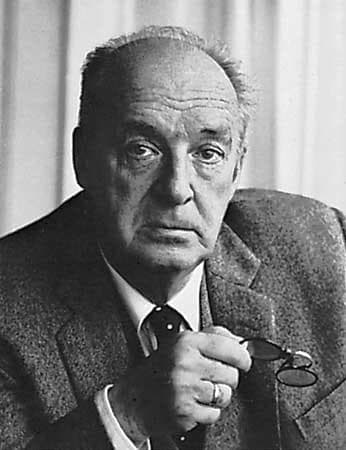
Vladimir Vladimirovich Nabokov, also known by the pen name Vladimir Sirin, was an expatriate Russian and Russian-American novelist, poet, translator, and entomologist. Born in Imperial Russia in 1899, Nabokov wrote his first nine novels in Russian (1926–1938) while living in Berlin, where he met his wife. He achieved international acclaim and prominence after moving to the United States, where he began writing in English. Nabokov became an American citizen in 1945 and lived mostly on the East Coast before returning to Europe in 1961, where he settled in Montreux, Switzerland.
Similar books
- House of Leaves
Mark Z. Danielewski
4.1 (131k) average on GoodreadsThrillerFeatures an unconventional structure and unreliable narration that blurs reality and fiction.
- The Fall
Albert Camus
4.2 (13k) average on GoodreadsThrillerWhile both novels feature unreliable narrators, The Fall employs a single, confessional monologue, maintaining narrative linearity. Pale Fire, conversely, uses a dual narrative (poem and commentary) that are in constant tension, creating a more complex, fragmented, and dialectical exploration of subjectivity and truth, requiring the reader to actively synthesize conflicting accounts rather than merely interpret one.
- The Old Man and the Sea
Ernest Hemingway
3.8 (831k) average on GoodreadsLiterary FictionA Cuban fisherman's long struggle with a giant marlin becomes a story of endurance and dignity, now retold for young adults with illustrations, phonetic guides, and writing prompts in Traditional Chinese.
- One Hundred Years of Solitude
Gabriel García Márquez
4.1 (753k) average on GoodreadsLiterary FictionThrough the multi-generational story of the Buendía family, a mythical town deals with the repeating patterns of time, love, and solitude, as the extraordinary mixes with the ordinary.
- The Goldfinch
Donna Tartt
3.9 (720k) average on GoodreadsLiterary FictionHaunted by a tragic explosion and clutching a stolen Dutch masterpiece, a young orphan navigates the opulent drawing rooms of New York and the gritty underbelly of the art world, desperately seeking connection and redemption amidst a life spiraling into crime and obsession.
- Little Fires Everywhere
Celeste Ng
4.1 (713k) average on GoodreadsLiterary FictionIn Shaker Heights, an artist and her daughter move in, and their free-spirited lives clash with a rule-bound matriarch, revealing hidden conflicts beneath a perfect surface.




Enjoyed the summary?
A summary gives you the shape of the book. The book itself has the detail, the examples and the voice.
Find Pale Fire on AmazonAs an Amazon Associate, BookBrief earns from qualifying purchases. How we're funded