
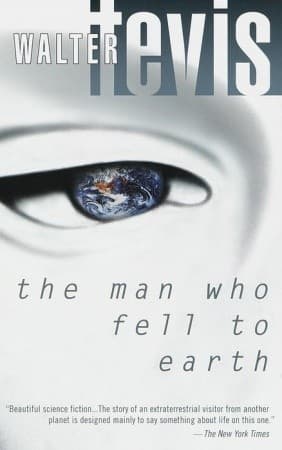
Synopsis
Covers the whole plot, including the ending.
- Difficulty
- Medium
- Pacing
- Slow
- Mood
- Melancholy, Introspective, Tragic, Alienating
- Read it if
- You enjoy introspective science fiction exploring themes of alienation, the human condition, and the price of progress. Fans of character-driven stories with a melancholic tone will appreciate Newton's tragic journey.
- Skip it if
- You prefer fast-paced action, clear-cut heroes, or optimistic science fiction. This book is a slow burn with a somber ending.
The Man Who Fell to Earth Plot Summary
Covers the whole plot, including the ending.
The Arrival of Thomas Jerome Newton
Thomas Jerome Newton, an alien from Anthea, crash-lands in Kentucky, USA. He looks human, but his eyes are a bit different, and he has no navel. He quickly patents advanced Anthean technology, like self-developing film and a high-efficiency rotary engine, under the name 'World Enterprises.' He wants to get rich to build a spaceship. This ship will take the last survivors of his dying planet to Earth. Newton is very smart but struggles to understand human social customs and emotions. He stays detached, almost childlike, as he navigates his new environment, focused only on saving his people.
Newton's Ascent and Encounter with Mary-Lou
Within a few years, Newton's patents make him very wealthy, and World Enterprises becomes a global company. He lives alone in a fancy apartment, with only a few trusted human employees who do not know he is an alien. One day, he meets Mary-Lou, a simple hotel clerk, when he gets sick with a human cold. His alien body is not ready for it. Mary-Lou takes him in and cares for him. While recovering, Newton tells her he is an alien, shows her his unique body, and explains his mission. Mary-Lou is shocked at first but slowly accepts his story, though she finds it hard to understand fully.
Building the Spaceship and Growing Isolation
With his money secure, Newton starts building his spaceship in a remote desert. He hires Dr. Bryce, a smart but disgraced chemistry professor, to oversee the technical work. He does not tell Bryce the ship's true purpose. Newton's relationship with Mary-Lou gets deeper, but they often misunderstand each other. He finds her human emotions and needs confusing and overwhelming. She struggles with his emotional distance and his constant focus on his mission. He drinks a lot, trying to quiet his inner conflict and his growing feeling of being an outsider, both from his home planet and his adopted world.
Dr. Bryce's Discovery and Growing Suspicion
Dr. Bryce, initially focused on the spaceship's technical challenges, becomes more curious about Newton's identity and the source of his knowledge. He does his own research, finding problems in Newton's past and noticing his unusual physical traits. Bryce eventually confronts Newton, who, tired of lying and trusting Bryce's scientific honesty, reveals his alien identity and the ship's purpose. Bryce, a scientist, is skeptical at first but Newton's detailed explanations and demonstrations convince him. He becomes a reluctant friend and a more dedicated assistant.
The Weight of Human Experience and Alien Longing
As the spaceship nears completion, Newton's health gets worse. He becomes addicted to alcohol and television, finding comfort in the mindless entertainment and the numbing effects of liquor. His relationship with Mary-Lou becomes more strained, marked by her jealousy and his increasing withdrawal. He shows her pictures of Anthea—a desolate, dying world with three suns and a few gentle inhabitants—hoping she will understand his urgency, but she remains focused on their human life. He records messages for his family on Anthea, expressing his despair and the growing difficulty of his mission, feeling the heavy weight of his responsibility and his deep loneliness.
The Failed Launch and Government Intervention
On the night before the spaceship's launch, government agents, who have been watching Newton's unusual activities and his vast wealth, raid the launch site. They arrest Newton, thinking he is a foreign spy or a dangerous strange person. The spaceship is taken and taken apart. Newton, confused and weakened by his addictions, does not fight back. He undergoes many physical and psychological examinations. During these, his alien body is discovered, though his captors largely misunderstand his true origins and mission. He is held in a secure, isolated facility.
Imprisonment and Experimentation
Newton is imprisoned in a sterile, white room, always watched. He undergoes many medical tests, including an eye exam that permanently damages his Anthean eyes, making them sensitive to light and leaving him practically blind without special glasses. The doctors, fascinated by his unique body, continue to examine him, treating him more like a specimen than a thinking being. His contact with the outside world is cut off, and he cannot explain his mission or his trouble. This captivity further breaks his spirit, as his only hope of saving his people is now lost.
Release and Despair
After years in prison, Newton is eventually released. He is no longer seen as a threat, perhaps forgotten by those who imprisoned him. He is a shell of his former self, his alien eyes damaged, his spirit crushed, and his addictions worse. He finds Mary-Lou, but their reunion is sad. She has aged and become tough, and their past together is spoiled by his long absence and his failure. He tries to reconnect with her, but the magic and hope of their earlier relationship are gone. He is a man without a purpose, completely lost on a planet that is not his own.
The Man Who Fell to Earth
Newton withdraws into a life of isolation and alcoholism. He uses his remaining wealth to live alone, surrounded by only liquor and the constant sound of television. He sometimes tries to write a message to Anthea, his home planet, but his damaged eyes and alcohol-affected mind stop him. He is a ghost, a lost soul, trapped on Earth forever, unable to go home and unable to complete his mission. He becomes a legendary, tragic figure, the 'man who fell to Earth,' a silent reminder of the failure of understanding between species and the destructive power of human society.
The Man Who Fell to Earth Characters
Thomas Jerome Newton
Protagonist
An alien from Anthea, on a mission to save his dying planet.
Newton is an extraterrestrial with a human appearance but a unique physiology and a highly advanced intellect. He arrives on Earth driven by a singular, desperate mission: to build a spaceship to bring the last survivors of his drought-stricken planet, Anthea, to Earth. He struggles profoundly with human emotions, social customs, and vices like alcohol, which he adopts in an attempt to cope with his immense loneliness and the pressure of his mission. His detached demeanor and logical approach often clash with human irrationality, leading to misunderstanding and ultimately, his downfall. He is a symbol of alien innocence corrupted by human society.
Relationships: Mary-Lou (lover, initial confidante, later strained and distant partner); Dr. Bryce (scientific collaborator, later confidant and witness to Newton's true nature)
Mary-Lou
Supporting
A simple hotel clerk who forms a relationship with Newton.
Mary-Lou is an uneducated, somewhat naive woman who works as a hotel clerk. She finds Newton when he is ill and takes him into her home, becoming his first human confidante and lover. She genuinely cares for Newton but struggles to comprehend his alien nature and the vastness of his mission. Her human desires for love, companionship, and a normal life often clash with Newton's emotional detachment and his single-minded focus on Anthea. She represents the ordinary human perspective, both its capacity for kindness and its limitations in understanding the extraordinary.
Relationships: Thomas Jerome Newton (lover, caretaker, later estranged partner)
Dr. Bryce
Supporting
A disgraced chemistry professor hired by Newton, who uncovers his secret.
Dr. Bryce is a brilliant but alcoholic former chemistry professor, whose career was derailed by scandal. He is hired by Newton to work on the spaceship project, initially unaware of its true purpose. Bryce is intelligent and scientifically curious, and his skepticism eventually leads him to uncover Newton's alien identity. He becomes a key confidant and assistant, fascinated by Newton's knowledge and the implications of his existence. Bryce represents the scientific mind's struggle with the unknown and the potential for both wonder and exploitation when confronted with the alien.
Relationships: Thomas Jerome Newton (employer, scientific collaborator, later confidant)
Newton's Family on Anthea
Mentioned
The wife and children Newton hopes to save.
Newton's family on Anthea – his wife and children – are never seen directly but are a constant motivating force for him. They represent his home, his hope, and the ultimate reason for his perilous mission to Earth. He carries a locket with their picture and records messages for them, expressing his longing and despair. Their existence underscores the urgency of his mission and the profound personal sacrifice he makes, highlighting the themes of family, duty, and longing for home.
Relationships: Thomas Jerome Newton (family he is trying to save)
The Government Agents/Scientists
Antagonist
The human authorities who capture and experiment on Newton.
These unnamed figures represent the institutional response to the unknown: suspicion, fear, and a desire to control and exploit. They monitor Newton's activities, raid his launch site, and then imprison and experiment on him, causing irreparable damage to his alien physiology and his spirit. They are driven by national security concerns and scientific curiosity, but their methods are invasive and ultimately destructive, embodying humanity's xenophobia and its inability to grasp the benevolent nature of Newton's mission.
Relationships: Thomas Jerome Newton (captors and experimenters)
The Antheans
Mentioned
Newton's dying race, gentle and dependent.
The Antheans are Newton's species, described as a gentle, intelligent, but physically fragile race facing extinction due to a prolonged drought on their home planet. They are dependent on Newton for their salvation. Their existence provides the core motivation for Newton's journey and highlights the stakes of his mission. They represent the innocent, vulnerable alien life that human society ultimately fails to comprehend or protect.
Relationships: Thomas Jerome Newton (his people, whom he is trying to save)
The Man Who Fell to Earth Themes
Alienation and Loneliness
The main idea of the novel is Newton's deep alienation. Even though he looks human, he is fundamentally different. He cannot connect emotionally with humans like Mary-Lou or fully understand their irrational behaviors. His mission isolates him, and even with people around, he remains an outsider, longing for his home planet. His inability to explain how urgent his situation is makes this worse, leading to a deep, constant loneliness that pushes him to alcohol and despair, as seen in his isolated life after his release.
“He took another drink. What he needed was to be drunk, so that he could escape from the terrible, gnawing loneliness.”
The Corrupting Influence of Humanity
Newton arrives on Earth with a good, selfless mission, but human vices and systems slowly corrupt him. He starts drinking as a way to cope, becoming an alcoholic. His advanced technology is first used for good (funding his mission), but his wealth also attracts unwanted attention. The government's suspicion, imprisonment, and invasive experiments eventually break him, turning a kind alien into a broken, isolated human-like figure. The novel suggests that humanity's fear, greed, and lack of understanding destroy innocence and potential.
“He was the man who fell to Earth. But he was more than that. He was the man who fell to Earth and then became a man.”
The Fragility of Hope and Mission
Newton's time on Earth is defined by his hope to save his people. He puts all his intelligence and resources into building the spaceship. However, this hope is shown to be very fragile, always threatened by human misunderstanding, his own emotional struggles, and government intervention. His mission's failure, despite his huge efforts, shows that even the best and most urgent projects can be stopped by outside forces and inner weaknesses, leading to a sad feeling of pointlessness.
“The ship was built. The dream was real. And then the dream was gone.”
Identity and Transformation
Newton's journey is one of major identity change. He starts as a pure Anthean, driven only by his species' survival. As he spends more time on Earth, he gradually takes on human traits, both physical (like getting sick) and behavioral (like drinking and watching television). His physical appearance, though initially alien, becomes more 'human' to others. By the end, after his eyes are damaged and his mission is lost, he has become a broken, human-like alcoholic. His alien identity is shattered, and his Anthean purpose is gone. He is no longer truly Anthean, but also not fully human, existing in a sad, in-between state.
“He was losing himself. The Anthean was dying, and in its place, something new, something human, was growing.”
Plot Devices & Literary Techniques
First-Person Limited (with shifts)
Primarily follows Newton's perspective, but occasionally shifts to others.
The narrative largely maintains a close, first-person limited perspective on Thomas Jerome Newton, allowing readers to experience his internal struggles, his alien logic, and his growing despair. However, Tevis occasionally shifts to the perspective of characters like Mary-Lou or Dr. Bryce, providing external observations of Newton and highlighting the human inability to fully grasp his true nature. This shifting perspective emphasizes Newton's isolation and the communication barrier between him and humanity, while also building suspense around his true identity for the reader.
Symbolism of Alcohol and Television
Represent Newton's escape from reality and his immersion in human culture.
Alcohol and television serve as powerful symbols of Newton's decline and his immersion into human culture. Initially, he views them with alien detachment, but they quickly become his primary coping mechanisms. Alcohol numbs his profound loneliness and the despair of his failing mission, while television provides a constant, mindless distraction from his internal torment. These addictions represent his corruption by human vices and his surrender to a passive, escapist existence, contrasting sharply with his initial driven, purposeful alien nature.
The Spaceship
A literal and symbolic vessel of hope and ultimate failure.
The spaceship is the central physical object of Newton's mission, representing his hope for salvation for his people. Its construction is a testament to his genius and determination. Symbolically, it embodies the bridge between two worlds and the potential for interspecies connection and survival. Its eventual confiscation and dismantling by human authorities signify the crushing of that hope, the failure of his mission, and humanity's destructive response to the unknown, leaving Newton and his people without a means of escape.
Newton's Eyes
A physical manifestation of his alien nature and his ultimate vulnerability.
Newton's eyes are a subtle but crucial detail. Initially described as slightly different, they are a physical marker of his alien identity. The damage inflicted upon them during his imprisonment, rendering him effectively blind without special glasses, is deeply symbolic. It represents not only his physical incapacitation but also his loss of vision, both literally and metaphorically. His ability to 'see' his mission through to completion is destroyed, and he is left permanently altered, a visible testament to the trauma he endured on Earth.
The Man Who Fell to Earth Quotes
“He was an alien, a visitor from another planet, but he was also a man, and he knew what it was like to be a man.”
“The greatest tragedy of mankind is that it has not yet learned to live.”
“Loneliness was a cold, hard fact, a thing that could not be denied or escaped.”
“He knew that he would never truly be one of them, that he would always be an outsider, a stranger.”
“Water, he thought, water was the key to everything. Water was life.”
“The human race was a strange, complicated thing, full of contradictions and paradoxes.”
“He had come to Earth to save his people, but he had found himself instead.”
“There was a sadness in him, a deep, pervasive melancholy that he could not shake.”
“The television was a window, a strange, flickering window into the human soul.”
“He had money now, more money than he could ever spend, but it didn't make him happy.”
“The air was thick with the smell of gasoline and exhaust fumes, the smell of human civilization.”
“He was a man caught between two worlds, a man who belonged to neither.”
“The stars, he thought, the beautiful, distant stars. They were his home.”
“Sometimes, he wished he had never come. Sometimes, he wished he could just disappear.”
Quiz
10 questions on the plot and the characters. Each answer comes with a short explanation.
Question 1
What is Thomas Jerome Newton's primary mission on Earth?
- To conquer Earth for his home planet.
- To establish a new colony for his people.
- To build a spacecraft to transport water back to his dying planet.
- To observe human society and report back to his superiors.
Show answer
C. To build a spacecraft to transport water back to his dying planet. Newton's home planet, Anthea, is suffering from severe drought. His mission is to gather resources, specifically water, and build a return vessel.
Question 2
What is the source of Thomas Jerome Newton's wealth on Earth?
- He inherited it from a long-lost relative.
- He used advanced Anthean technology to create valuable inventions and patents.
- He won the lottery shortly after arriving.
- He discovered a hidden gold mine.
Show answer
B. He used advanced Anthean technology to create valuable inventions and patents. Newton leverages his superior Anthean knowledge to patent numerous inventions, such as a self-developing camera and Velcro, quickly amassing a fortune through the company World Enterprises.
Question 3
Who is Mary-Lou and what is her initial relationship with Newton?
- She is a scientist who helps him with his spaceship designs.
- She is a housekeeper who discovers his true identity.
- She is a young hotel clerk who becomes his lover and confidante.
- She is a government agent tasked with observing him.
Show answer
C. She is a young hotel clerk who becomes his lover and confidante. Mary-Lou is a young woman working at the hotel where Newton stays. She quickly becomes his lover and one of the few people with whom he attempts to connect, though their relationship eventually sours.
Question 4
What physical characteristic of Newton's is a constant source of discomfort and a potential giveaway of his alien nature?
- His unusually long fingers.
- His sensitive eyes, which require dark glasses.
- His inability to tolerate Earth's gravity.
- His distinctive metallic voice.
Show answer
B. His sensitive eyes, which require dark glasses. Newton's eyes are extremely sensitive to Earth's light, forcing him to constantly wear dark glasses. This is a recurring detail that highlights his alien physiology and vulnerability.
Question 5
Why does Newton ultimately fail to complete his mission and return to Anthea?
- His spaceship is destroyed by a natural disaster.
- He is captured by the government and imprisoned.
- He succumbs to alcoholism and emotional despair, becoming trapped on Earth.
- His home planet, Anthea, is destroyed before he can return.
Show answer
C. He succumbs to alcoholism and emotional despair, becoming trapped on Earth. Despite his initial success, Newton becomes increasingly isolated, disillusioned, and addicted to alcohol, losing the will and ability to complete his mission and return home.
Question 6
What is the significance of the television in Newton's life on Earth?
- He uses it to communicate with his home planet.
- He becomes obsessed with it as a form of escapism and a connection to humanity.
- He invents a new type of television for World Enterprises.
- He uses it to learn Earth languages.
Show answer
B. He becomes obsessed with it as a form of escapism and a connection to humanity. Newton develops a profound, almost addictive, relationship with television, watching multiple sets simultaneously. It becomes his primary, albeit passive, way of engaging with human culture and a substitute for genuine connection, contributing to his isolation.
Question 7
How does Dr. Bryce, the chemist, initially react to Newton's advanced knowledge and inventions?
- He is immediately suspicious and tries to expose Newton.
- He is impressed and becomes a loyal business partner.
- He tries to steal Newton's ideas for his own profit.
- He dismisses Newton as a crackpot.
Show answer
B. He is impressed and becomes a loyal business partner. Dr. Bryce is initially skeptical but quickly becomes captivated and impressed by Newton's genius. He serves as a key figure in helping Newton establish World Enterprises and patent his inventions.
Question 8
What is the ultimate fate of Thomas Jerome Newton by the end of the novel?
- He successfully returns to Anthea with water.
- He is killed in an explosion at his launch site.
- He becomes a wealthy but isolated alcoholic, unable to leave Earth.
- He is taken into custody by a secret government agency.
Show answer
C. He becomes a wealthy but isolated alcoholic, unable to leave Earth. Newton's journey ends in tragic failure, not through external forces but internal collapse. He remains on Earth, a rich but broken man, lost to alcohol and despair, never completing his mission.
Question 9
Which of the following themes is most central to 'The Man Who Fell to Earth'?
- The triumph of advanced technology over human limitations.
- The corrupting influence of power and wealth.
- Alienation, loneliness, and the difficulty of connection.
- Humanity's inherent capacity for compassion and understanding.
Show answer
C. Alienation, loneliness, and the difficulty of connection. The novel deeply explores the theme of alienation. Despite his intelligence and wealth, Newton is fundamentally alone, unable to bridge the gap between his alien nature and human society, leading to profound loneliness and despair.
Question 10
What specific detail reveals Newton's non-human physiology during a medical examination?
- He has two hearts instead of one.
- His skeletal structure is hollow and bird-like.
- His internal organs are arranged differently and his blood is not human.
- He lacks a pulse and does not breathe oxygen.
Show answer
C. His internal organs are arranged differently and his blood is not human. During a medical examination after his capture, it's revealed that Newton's internal anatomy, including his organs and blood, is distinctly non-human, confirming his alien identity.
The Man Who Fell to Earth FAQ
What is 'The Man Who Fell to Earth' about?
'The Man Who Fell to Earth' tells the tragic story of Thomas Jerome Newton, an alien from the planet Anthea. Newton comes to Earth disguised as a human, using advanced technology to amass wealth for a spaceship project, hoping to transport the last survivors of his dying world to Earth. However, his mission is gradually derailed by the corrupting influences of human society, particularly alcohol and television, leading to his eventual downfall.
Why should I read 'The Man Who Fell to Earth'?
You should read it for its poignant exploration of alienation, the human condition, and the destructive nature of unchecked ambition and despair. It's a deeply psychological science fiction novel that uses an extraterrestrial's perspective to critique human society, offering a unique blend of empathy and tragedy. Tevis crafts a compelling narrative about a being caught between two worlds, unable to save his own or fully integrate into ours.
What is the background/setting of 'The Man Who Fell to Earth'?
The story is primarily set in the United States during the 1960s, particularly focusing on various cities and towns as Newton moves around building his empire. The background is a Cold War era Earth, a world ripe with technological advancement but also cultural anxieties and burgeoning consumerism, which ironically contribute to Newton's unraveling. His home planet, Anthea, is depicted as a technologically advanced but dying world, ravaged by drought.
What are the most memorable quotes?
One memorable quote is, 'I suppose I'm a kind of god now.' This highlights Newton's initial sense of power and detachment. Another is, 'He was a man who had fallen to Earth, and he was alone.' This encapsulates the profound isolation that defines his existence. These quotes underscore his tragic journey from a hopeful savior to a lonely, broken figure.
What writing style does the author use?
Walter Tevis employs a direct, unadorned prose style that is both accessible and deeply introspective. He uses sparse, precise language to convey complex emotional states and philosophical themes, focusing heavily on Newton's internal monologue and perceptions. This minimalist approach allows the reader to deeply connect with Newton's sense of isolation and despair, making the narrative powerfully evocative.
What minor details add significant meaning?
Newton's constant consumption of water, a seemingly minor detail, profoundly emphasizes his planet's severe drought and his species' desperate need for hydration, highlighting the existential crisis driving his mission. Similarly, his sensitivity to terrestrial gravity, manifesting as physical discomfort, constantly reminds the reader of his alien nature and the immense physical sacrifice he endures.
What are some subtle foreshadowing moments?
Early in the novel, Newton's inability to connect emotionally with humans, despite his intellectual brilliance, subtly foreshadows his ultimate failure to integrate or find solace on Earth. His immediate fascination with television and alcohol, presented as mere curiosities, subtly hints at the vices that will later consume him and distract him from his mission, suggesting his vulnerability to human weaknesses.
What unexpected character connections exist?
While not 'unexpected' in a twist sense, the deep, almost parental bond that develops between Newton and Betty Jo, a simple hotel maid, is poignant. Despite their vastly different origins and intellects, Betty Jo's genuine care and simple affection offer Newton a fleeting, almost human connection that he fails to reciprocate meaningfully, emphasizing his profound isolation.
What are unspoken character motivations?
Newton's unspoken motivation, beyond his explicit mission to save Anthea, is a desperate yearning for connection and belonging, which he tries to suppress. His increasing indulgence in human vices like alcohol and television isn't just weakness; it's a subconscious attempt to numb the profound loneliness and the crushing burden of his mission, a silent cry for relief from his unique alien suffering.
What psychological complexities do characters exhibit?
Newton exhibits profound psychological complexity, grappling with extreme alienation, a messiah complex driven by his species' survival, and a deep-seated despair. His initial intellectual superiority gives way to a crippling addiction and a loss of purpose, showcasing the psychological toll of isolation and the human capacity for self-destruction, even in an alien. Dr. Bryce, too, shows complexity in his conflicting admiration and exploitation of Newton.
What are the major emotional turning points?
A major emotional turning point is when Newton's communication system, designed to contact Anthea, is confiscated by government agents, effectively severing his last link to his home world. This event plunges him into deeper despair and accelerates his surrender to human vices. Another is his realization that he has become too dependent on Earthly comforts and too physically altered to return home, cementing his tragic fate.
How do relationship dynamics evolve?
Newton's relationship with Dr. Bryce evolves from a professional, mutually beneficial alliance to one of exploitation, as Bryce inadvertently contributes to Newton's downfall by studying him rather than helping him. His relationship with Mary Lou transitions from a detached, almost scientific interest in human companionship to a codependent, destructive entanglement fueled by alcohol and shared emptiness, highlighting the corrosive power of their dysfunctions.
Which parts remain ambiguous or open-ended?
The ultimate fate of Anthea remains ambiguous; Newton's mission fails, and whether his people eventually perish or find another solution is never revealed. Also, the extent of the government's understanding of Newton's true nature and intentions, beyond his alien identity, remains somewhat vague, leaving questions about potential future threats or interventions from Earth agencies.
What are controversial scenes or decisions?
Newton's decision to essentially abandon his mission and succumb to alcohol and television, despite the desperate plight of his people, can be seen as controversial. It raises questions about responsibility and the destructive power of human vices. The government's decision to dissect one of Newton's fallen crew members and confiscate his technology, rather than seeking peaceful communication, also presents a controversial portrayal of humanity's initial response to extraterrestrial life.
'The Man Who Fell to Earth' ending explained: how it ends & what it means
The book ends with Newton, now blind and an alcoholic, completely stranded on Earth. His spaceship project is abandoned, his fortune dwindled, and his last hope of returning to Anthea is gone. He is last seen as a forgotten, broken man, listening to music and drinking alone in his mansion. This ending signifies humanity's capacity to corrupt and destroy even the most advanced and well-intentioned beings, and serves as a profound metaphor for alienation, the tragedy of unfulfilled potential, and the self-destructive aspects of modern society.
About the author
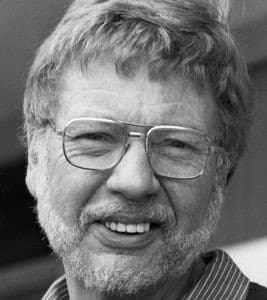
Walter Tevis was an American author known for his works of fiction that often explore themes of alienation and human experience. His notable books include "The Man Who Fell to Earth," a science fiction novel about an extraterrestrial visitor, and "The Hustler," which delves into the world of competitive pool. Tevis's writing has garnered attention for its psychological depth and social commentary.
Similar books
- Flowers for Algernon
Daniel Keyes
4.1 (478k) average on GoodreadsPsychologyExplores the tragic consequences of enhanced intelligence and societal misunderstanding.
- Dune
Frank Herbert
4.2 (766k) average on GoodreadsFantasyWhile different in scope, it shares themes of a gifted outsider navigating a complex, often hostile world.
- Stranger in a Strange Land
Robert A. Heinlein
3.9 (275k) average on GoodreadsFantasyBoth novels feature an alien protagonist interacting with human society, but their approaches differ significantly. Heinlein's novel uses its alien, Valentine Michael Smith, to deconstruct human taboos and introduce a new, often didactic, philosophy. Tevis's The Man Who Fell to Earth, in contrast, offers a more melancholic and despairing critique, showing how Newton's attempts to save humanity are ultimately futile against its ingrained destructive patterns, leading to his personal tragedy rather than a societal transformation.
- Harry Potter and the Sorcerer's Stone
J.K. Rowling
4.5 (7M) average on GoodreadsFantasyRescued from a miserable life under the stairs, an orphaned boy discovers he's a wizard destined for a magical school, where he uncovers a dangerous secret tied to the dark wizard who murdered his parents.
- The Hunger Games
Suzanne Collins
4.3 (6.4M) average on GoodreadsFantasyIn a future where children fight to the death on live television, Katniss Everdeen volunteers for the arena, turning a death sentence into a fight for survival and a spark of rebellion.
- 1984
George Orwell
4.2 (3.1M) average on GoodreadsPoliticsIn a future where surveillance and thought control are absolute, a man's search for truth clashes with the Party, showing that hope can be a form of rebellion.






Enjoyed the summary?
A summary gives you the shape of the book. The book itself has the detail, the examples and the voice.
Find The Man Who Fell to Earth on AmazonAs an Amazon Associate, BookBrief earns from qualifying purchases. How we're funded