
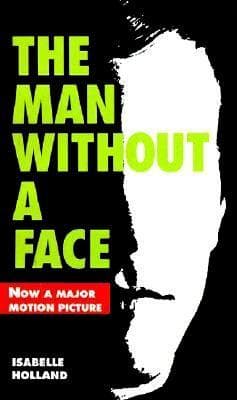
Synopsis
Covers the whole plot, including the ending.
- Difficulty
- Easy
- Pacing
- Moderate
- Mood
- Poignant, Reflective, Tender, Melancholy
- Read it if
- You enjoy poignant coming-of-age stories with complex character relationships and themes of mentorship, unconventional love, and self-discovery.
- Skip it if
- You prefer lighthearted reads or are uncomfortable with stories exploring potentially controversial adult-child relationships, even if handled with sensitivity.
The Man Without a Face Plot Summary
Covers the whole plot, including the ending.
Arrival at the Summer House
Fourteen-year-old Charles Norstadt, a sensitive and intelligent boy with a complicated family life, arrives at his family's summer house in Maine. He is accompanied by his older half-sister, Gloria, and his mother, who is on her fourth marriage. Charles feels like an outsider, overlooked and misunderstood by his self-absorbed mother and dismissive sister. His main goal for the summer is to study for the entrance exams to St. Matthew's, an elite boarding school. He sees this as his only chance to escape his chaotic home and find stability. He is determined to succeed, recognizing that this opportunity is his only path to a different future, away from his family's emotional neglect and his mother's frequent marital upheavals.
Encountering the 'Man Without a Face'
Soon after settling in, Charles meets the local recluse, Justin McLeod, who lives in an isolated house on a cliff overlooking the ocean. McLeod is known by the children in the area as 'The Man Without a Face' because of severe facial scarring. Charles, initially wary like others, is drawn to McLeod's enigmatic presence. He watches McLeod from a distance, intrigued by the mystery surrounding him. One day, Charles bravely approaches McLeod's property, driven by a desperate need for a tutor to help him prepare for the rigorous St. Matthew's entrance exams. This first, hesitant interaction marks the beginning of their unusual and deep relationship, as Charles looks past the physical scars to something deeper.
The Tutoring Arrangement
Charles, despite his fear and the local rumors, gathers the courage to ask Justin McLeod to tutor him. To his surprise, McLeod agrees, but on very strict terms. Their tutoring sessions begin, covering subjects like Latin, mathematics, and English. McLeod is a demanding and brilliant teacher, pushing Charles intellectually in ways no one ever has. Beyond academics, McLeod also introduces Charles to a world of literature, art, and critical thinking, challenging him to engage with ideas and develop his own opinions. These sessions become the anchor of Charles's summer, giving him intellectual stimulation and a sense of purpose he desperately craves, far removed from his family's superficial concerns.
A Developing Bond
As the tutoring continues, a deep and meaningful bond forms between Charles and McLeod. McLeod, despite his gruff exterior, shows genuine care and understanding towards Charles, offering him the emotional support and guidance his own family fails to provide. Charles begins to see McLeod not just as a tutor, but as a mentor, a confidant, and a father figure. McLeod teaches Charles about integrity, self-reliance, and the importance of intellectual curiosity. He encourages Charles to embrace his sensitivity and intelligence, validating parts of Charles's personality that have been suppressed. Charles, in turn, finds in McLeod the first adult he can truly trust and communicate with, creating a deep sense of belonging.
McLeod's Past Revealed
During their time together, Charles gradually learns about Justin McLeod's tragic past. McLeod eventually tells Charles that his facial scars resulted from a terrible car accident many years ago. He was driving drunk, and a young boy, his student and beloved companion, died in the crash. This revelation is an important moment, explaining McLeod's reclusiveness, his deep guilt, and his seemingly harsh self-imposed penance. Charles, rather than being repulsed, feels deep empathy for McLeod, understanding the depth of his suffering and the weight of his past actions. This shared vulnerability further strengthens their connection, built on honesty and mutual understanding.
Charles's Family Concerns
Charles's mother and half-sister, Gloria, become increasingly suspicious and uncomfortable with his close relationship with Justin McLeod. They view McLeod as an odd and potentially dangerous recluse, fueled by local gossip and his scarred appearance. They warn Charles to stay away from him, expressing their disapproval and unease. Charles, however, dismisses their concerns, feeling that they are incapable of understanding the positive impact McLeod has had on his life. He sees their interference as another example of their inability to truly connect with him or understand his needs, further isolating him from his family and pushing him closer to McLeod.
The Kiss and Its Aftermath
One evening, after an intense and emotionally charged tutoring session, Justin McLeod kisses Charles on the mouth. This unexpected act deeply confuses and disturbs Charles. While he has come to love McLeod as a father figure, the kiss introduces a new, unsettling dimension to their relationship, stirring feelings he doesn't understand. Charles reacts with a mixture of shock, fear, and a vague sense of betrayal, leading him to run away from McLeod's house. This incident creates a significant rift between them, as Charles struggles to process the implications of the kiss and reconcile it with his idealized image of McLeod, causing him to question the nature of their bond.
Confrontation and Reconciliation
After several days of avoiding McLeod, Charles, still deeply troubled, returns to confront him. He demands an explanation for the kiss, expressing his confusion and hurt. McLeod, in a moment of vulnerability, explains that he cares deeply for Charles and that the kiss was a misguided expression of his affection, stemming from his loneliness and his past trauma. He acknowledges that it was a mistake and sincerely apologizes, emphasizing that he values Charles's friendship and well-being above all else. This honest conversation allows Charles to understand McLeod's complex emotions and the depth of his remorse, paving the way for a fragile but significant reconciliation, based on a renewed understanding of boundaries and trust.
Passing the Exam
With the summer ending, Charles sits for the rigorous St. Matthew's entrance exams. Thanks to Justin McLeod's exceptional tutoring and his own diligent efforts, Charles performs very well. The news of his acceptance to St. Matthew's is a monumental triumph, signifying his escape from his current unhappy circumstances and the realization of his long-held dream. This achievement is a result of Charles's intelligence and hard work, and the transformative influence of McLeod's mentorship. It solidifies Charles's conviction that his time with McLeod was invaluable, providing him with the tools and confidence to pursue his future.
McLeod's Departure
As Charles prepares to leave for St. Matthew's, Justin McLeod tells him that he will be leaving his home in Maine. McLeod explains that he needs to move on, suggesting that he has found some measure of peace or resolution. His departure is bittersweet for Charles, who feels a deep sense of loss at the thought of losing his mentor and the closest thing he's ever had to a father. However, Charles also understands that McLeod has given him the most precious gift: the ability to face the world with confidence, intelligence, and a deeper understanding of love and human complexity. McLeod leaves Charles with a lasting legacy of intellectual curiosity, emotional maturity, and the strength to forge his own path.
A New Beginning
Charles Norstadt goes off to St. Matthew's, his dream school. He carries with him not just academic knowledge, but a deep emotional maturity and self-awareness gained during his summer with Justin McLeod. While the initial parting from McLeod is painful, Charles understands that his mentor has equipped him with the strength and perspective to navigate his new life independently. He is no longer the lost, emotionally neglected boy who arrived in Maine. He has found his voice, his intellect, and a deeper understanding of himself and others, all thanks to the transformative, though complex, relationship he shared with 'The Man Without a Face.' He looks towards his future with quiet confidence.
The Man Without a Face Characters
Charles Norstadt
Protagonist
A sensitive and intelligent fourteen-year-old seeking escape and belonging.
Charles is a thoughtful, observant, and emotionally intelligent boy who feels like an outsider within his own family. He yearns for stability, intellectual stimulation, and genuine affection, which he finds lacking in his mother's chaotic and self-absorbed life. He is determined to succeed academically to gain entry into St. Matthew's, viewing it as his only path to a better future. Despite his emotional vulnerability, Charles possesses a strong will and a deep capacity for empathy and understanding, allowing him to see beyond superficial appearances.
Relationships: Justin McLeod (Mentor, father figure, complex emotional bond); Mother (Emotionally distant, self-absorbed); Gloria (Dismissive, critical half-sister)
Justin McLeod
Supporting/Mentor
A reclusive, brilliant, and deeply scarred man with a tragic past.
Justin McLeod is an intelligent, cultured, and gruff recluse, physically disfigured by a past car accident for which he carries immense guilt. He is known by the local children as 'The Man Without a Face.' Despite his isolated existence, he possesses a keen intellect and a deep capacity for empathy and teaching. His self-imposed penance for his past mistakes has made him wary of human connection, yet he is drawn to Charles's intelligence and vulnerability, eventually becoming his mentor and father figure. He struggles with his own loneliness and the weight of his past.
Relationships: Charles Norstadt (Mentee, surrogate son, complex emotional bond); The boy who died in the accident (Past student, beloved companion, source of profound guilt)
Charles's Mother
Supporting
A self-absorbed woman preoccupied with her own life and marriages.
Charles's mother is portrayed as beautiful but emotionally distant and largely oblivious to her son's needs. She is on her fourth marriage and is preoccupied with her social life and romantic entanglements. She provides little emotional support or guidance for Charles, often leaving him to fend for himself emotionally. Her concerns about McLeod are more rooted in social propriety and her own discomfort than in a genuine understanding of Charles's well-being.
Relationships: Charles Norstadt (Mother-son, but emotionally detached); Gloria (Mother-daughter, but still somewhat distant)
Gloria
Supporting
Charles's older half-sister, critical and condescending.
Gloria is Charles's half-sister, significantly older than him, and generally dismissive and critical. She represents another source of Charles's family alienation, often making sarcastic remarks and showing little understanding or compassion for his emotional struggles. She echoes her mother's superficial concerns about McLeod and contributes to Charles's feeling of being misunderstood and unloved within his own home.
Relationships: Charles Norstadt (Half-siblings, strained and critical); Mother (Daughter-mother, but also somewhat distant)
The boy who died in the accident
Mentioned
McLeod's former student and the victim of his past mistake.
This unnamed boy is only known through Justin McLeod's tragic recounting of his past. He was McLeod's student and beloved companion, killed in a car accident when McLeod was driving drunk. His death is the central trauma that defines McLeod's reclusive life and his deep-seated guilt. He represents the catalyst for McLeod's self-imposed penance and his struggle with redemption.
Relationships: Justin McLeod (Student-teacher, beloved companion, victim of McLeod's actions)
The Man Without a Face Themes
The Search for Identity and Belonging
Charles, feeling alienated from his family, seeks a place where he truly belongs and can be understood. His pursuit of St. Matthew's is a literal and symbolic escape, a quest for an environment where his intellect and sensitive nature are valued. His relationship with McLeod fulfills this need, giving him a sense of belonging and validation he has never experienced. McLeod helps Charles define himself not by his family's neglect, but by his own intelligence and character, as seen when McLeod pushes him to think critically and express his own opinions during their tutoring sessions.
“I'd never had a friend, and he was my friend; I'd never really, except for a shadowy memory, had a father, and he was my father. I'd never known an adult I could communicate with or trust, and I communicated with him all the time, whether I was actually talking to him or not. And I trusted him....”
The Nature of Love and Affection
The novel explores the many, sometimes complicated, aspects of love. Charles experiences a pure, filial love for McLeod, seeing him as the father figure he never had. McLeod's affection for Charles is a mix of paternal care, intellectual admiration, and a deep loneliness, which sometimes appears in misguided ways (like the kiss). The story suggests that love is not always perfect or conventional, and can emerge from unexpected places, offering healing and growth. It contrasts the deep, complex love between Charles and McLeod with the superficial and absent love Charles receives from his biological family.
“Love is not a feeling, Charles. It is a decision. It is a promise.”
Redemption and Forgiveness
Justin McLeod's life is defined by his need for redemption for the tragic accident that killed his former student. His reclusiveness and the self-imposed penance are his way of atoning. Through his relationship with Charles, McLeod begins to find a path toward forgiveness, both for himself and from others. Charles, by accepting McLeod despite his past and his scars, offers him a form of absolution. This theme is clear when McLeod finally tells Charles the truth about the accident, seeking understanding and a chance to move forward, which his mentorship of Charles ultimately helps.
“He carried his past with him like a shroud, and I, for a little while, was allowed to peer beneath its folds.”
Appearance vs. Reality
The novel directly challenges the idea that outward appearances define a person's worth or character. Justin McLeod's scarred face leads the community to label him as 'The Man Without a Face' and to fear him. However, Charles looks past these physical deformities and the negative rumors to discover a brilliant, sensitive, and deeply moral man. Conversely, Charles's 'normal' family appears outwardly functional but is emotionally barren. This theme is central to Charles's journey, as he learns to discern true character and value based on actions and inner qualities, rather than superficial judgments.
“People are usually afraid of what they don't understand, Charles. And what they don't understand, they call bad.”
Plot Devices & Literary Techniques
The Scarred Face
A physical manifestation of guilt and a symbol of societal judgment.
Justin McLeod's severely scarred face serves as a powerful visual metaphor. It represents his past trauma and deep-seated guilt over the accident, acting as a constant reminder of his mistake. For the community, it's a mark of fear and difference, leading to his isolation and the nickname 'The Man Without a Face.' For Charles, however, the scars become a symbol of his ability to see beyond superficiality, forcing him to engage with McLeod's inner character. It's a key device that highlights the theme of appearance versus reality and the challenges of redemption.
St. Matthew's Entrance Exams
A goal representing escape, intellectual challenge, and a new beginning.
The entrance exams to St. Matthew's boarding school are a crucial plot device that drives Charles's actions and provides the initial catalyst for his relationship with McLeod. For Charles, passing these exams is not merely an academic achievement; it is his desperate escape route from his emotionally neglectful home environment. It symbolizes his yearning for a stable, intellectually stimulating life and a chance to forge his own identity. The exams provide a tangible goal that structures the narrative and demonstrates Charles's determination and growth under McLeod's tutelage.
The Isolated House
A setting that mirrors McLeod's emotional state and fosters a unique bond.
Justin McLeod's house, situated on a cliff overlooking the ocean and isolated from the rest of the community, is more than just a setting; it's a reflection of his emotional and psychological state. Its reclusiveness underscores his self-imposed penance and his separation from society. For Charles, it becomes a sanctuary, a place of learning and emotional safety, distinct from the chaos of his own family home. The isolation of the house allows for the intense, private, and transformative bond between Charles and McLeod to develop without external interference, emphasizing the unique nature of their connection.
The Misguided Kiss
A turning point that introduces complexity and tests the boundaries of their relationship.
McLeod's unexpected kiss to Charles is a pivotal plot device that introduces significant conflict and emotional complexity. It shatters Charles's idealized perception of McLeod, forcing him to confront uncomfortable truths about their relationship and McLeod's own loneliness and past trauma. The kiss acts as a catalyst for Charles's emotional growth, as he grapples with confusion, hurt, and ultimately, a deeper understanding of human vulnerability. It challenges both characters to define the boundaries of their affection and strengthens their bond through honest confrontation and reconciliation, rather than breaking it.
The Man Without a Face Quotes
“It was like that with everything; you were never prepared for anything, not really. You just went along, and then it happened.”
“The thing about being alone, really alone, was that you had to be everything to yourself.”
“He knew that hate was a strong word, but it was the only one that fit. He hated himself for being a coward.”
“It was strange, the way some people could just walk into your life and change everything, without even trying.”
“You can't really know a person until you've lived with them, or at least spent a lot of time with them.”
“Sometimes you just had to do things, even if you were scared, because it was the right thing to do.”
“The past was always there, lurking, waiting to pounce.”
“He had never known anyone who was so completely, utterly himself.”
“It wasn't just about learning facts; it was about learning to think.”
“You couldn't run away from yourself, no matter how hard you tried.”
“The world was a much bigger and more complicated place than he had ever imagined.”
“Sometimes the most important lessons were learned outside of any classroom.”
“He felt a strange mix of fear and excitement, like he was on the edge of something important.”
“It wasn't about being perfect; it was about trying.”
Quiz
10 questions on the plot and the characters. Each answer comes with a short explanation.
Question 1
What is Charles's primary motivation for seeking Justin McLeod's help as a tutor?
- To learn how to play chess
- To prepare for the St. Matthew's school entrance exams
- To get a job at the local library
- To help McLeod organize his house
Show answer
B. To prepare for the St. Matthew's school entrance exams Charles wants to attend St. Matthew's school as a way to escape his unpleasant home life, and he enlists McLeod to tutor him for the entrance exams.
Question 2
What is the nickname given to Justin McLeod by the local community due to his facial disfigurement?
- The Hermit of the Hill
- The Man Without a Face
- The Scarred Stranger
- The Quiet One
Show answer
B. The Man Without a Face Justin McLeod is known as 'The Man Without a Face' because of his severe facial scars, which is also the title of the book.
Question 3
What kind of relationship does Charles primarily lack in his life before meeting Justin McLeod?
- A strong relationship with his siblings
- A trusted adult figure and a father figure
- A close relationship with his mother
- Friendships with peers his own age
Show answer
B. A trusted adult figure and a father figure The text explicitly states Charles never 'really, except for a shadowy memory, had a father, and he was my father. I'd never known an adult I could communicate with or trust, and I communicated with him all the time.'
Question 4
What is Charles's age at the beginning of the story?
- Twelve years old
- Thirteen years old
- Fourteen years old
- Fifteen years old
Show answer
C. Fourteen years old The book description states that Charles is 'Fourteen-year-old Charles' when he befriends Justin McLeod.
Question 5
Beyond academic tutoring, what significant life lesson does Charles learn from McLeod during their summer together?
- The importance of strict discipline
- How to survive in the wilderness
- A stirring life lesson about the many faces of love
- The value of solitude and isolation
Show answer
C. A stirring life lesson about the many faces of love The summary states, 'But more important than anything he could get out of a book, that summer Charles learns from McLeod a stirring life lesson about the many faces of love.'
Question 6
Which of the following best describes Charles's home life before meeting McLeod?
- Warm and supportive
- Filled with many friends and social activities
- Characterized by 'unpleasant restrictions' and a lack of love
- Focused on academic achievement and intellectual pursuits
Show answer
C. Characterized by 'unpleasant restrictions' and a lack of love The text mentions Charles's 'desperately wants two things: a father and a way out' and that 'Little love has come his way until the summer he befriends a mysterious scarred man named Justin McLeod,' referring to 'unpleasant restrictions of his home life.'
Question 7
What does Charles mean when he says McLeod was his 'father' and 'friend'?
- McLeod literally adopted Charles and became his legal guardian.
- McLeod provided Charles with the emotional support, guidance, and trusted companionship that he lacked from his biological family.
- Charles was simply being metaphorical and didn't truly mean McLeod was like a father.
- McLeod introduced Charles to his biological father, who had been absent.
Show answer
B. McLeod provided Charles with the emotional support, guidance, and trusted companionship that he lacked from his biological family. The quote 'I'd never had a friend, and he was my friend; I'd never really, except for a shadowy memory, had a father, and he was my father. I'd never known an adult I could communicate with or trust, and I communicated with him all the time' indicates McLeod filled these crucial emotional voids for Charles.
Question 8
The phrase 'whether I was actually talking to him or not' suggests what about Charles's relationship with McLeod?
- Charles often imagined conversations with McLeod.
- Charles felt a deep, unspoken connection and understanding with McLeod that transcended verbal communication.
- McLeod was often absent, so Charles had to talk to himself.
- Charles was too shy to speak to McLeod directly.
Show answer
B. Charles felt a deep, unspoken connection and understanding with McLeod that transcended verbal communication. The quote 'I communicated with him all the time, whether I was actually talking to him or not' implies a profound mental and emotional bond, a sense of constant understanding and presence even without direct conversation.
Question 9
What does the title 'The Man Without a Face' imply about McLeod, beyond his physical appearance?
- He literally has no facial features.
- He is a mysterious figure whose true identity and past are initially unknown or hidden.
- He is an emotionless character incapable of expression.
- He is a spy who must conceal his identity.
Show answer
B. He is a mysterious figure whose true identity and past are initially unknown or hidden. Beyond the literal scarring, the title often suggests a character who is an enigma, whose true self or history is obscured, making him 'without a face' in a metaphorical sense until Charles gets to know him.
Question 10
The provided summary suggests that Charles's journey with McLeod is primarily about:
- Achieving academic excellence and winning awards.
- Finding a way to physically escape his home.
- Personal growth, emotional development, and understanding complex human relationships.
- Solving the mystery of McLeod's past and scars.
Show answer
C. Personal growth, emotional development, and understanding complex human relationships. While the entrance exams are a plot device for escape, the summary emphasizes that 'more important than anything he could get out of a book, that summer Charles learns from McLeod a stirring life lesson about the many faces of love,' highlighting personal and emotional growth.
The Man Without a Face FAQ
What is the central premise of 'The Man Without a Face'?
The novel centers on fourteen-year-old Charles Norstadt, who, feeling unloved and restricted at home, seeks a way out by preparing for entrance exams to St. Matthew's school. He finds an unconventional tutor and surrogate father figure in the reclusive, scarred Justin McLeod, who lives nearby.
Who is Charles Norstadt and what are his primary motivations at the beginning of the story?
Charles Norstadt is a lonely and emotionally neglected teenager yearning for affection and a stable male presence in his life. His primary motivations are to escape his dysfunctional home environment, particularly his indifferent mother and stepsisters, and to gain admission to St. Matthew's, which he sees as his ticket to a better future.
Who is Justin McLeod and why is he called 'The Man Without a Face'?
Justin McLeod is a reclusive, severely scarred man living in Charles's summer community. He earned the nickname 'The Man Without a Face' due to the disfigurement of his face, which makes him appear menacing to others and leads to his isolation. He becomes Charles's tutor and eventually a profound paternal figure.
What is the nature of the relationship that develops between Charles and Justin McLeod?
Their relationship evolves from a formal tutor-student arrangement into a deep, complex bond resembling that of a father and son. McLeod provides Charles with intellectual guidance, emotional support, and the unconditional love and trust he desperately craves, while Charles brings companionship and a sense of purpose back into McLeod's isolated life.
What significant event from McLeod's past is gradually revealed, and how does it impact his present life?
It is revealed that McLeod was involved in a tragic accident where he caused the death of a young boy he was tutoring and had a sexual relationship with. This event led to his facial disfigurement, his deep guilt, and his subsequent self-imposed isolation, profoundly shaping his reclusive and melancholic present existence.
How does Charles's mother react to his burgeoning friendship with McLeod, and what does this reveal about her character?
Charles's mother is largely indifferent and dismissive of his friendship with McLeod, viewing it as a strange eccentricity rather than a meaningful connection. Her lack of concern and emotional unavailability highlight her self-centeredness and her failure to provide Charles with the parental affection and guidance he needs.
What role does the setting of the summer house play in the development of the story?
The isolated summer house provides a secluded environment where Charles and McLeod can develop their intense relationship away from societal scrutiny and Charles's dysfunctional family. It acts as a sanctuary, fostering intimacy and allowing for deep personal growth and revelation for both characters, especially away from the city's distractions.
What symbolic significance does McLeod's 'face' hold in the narrative beyond its literal disfigurement?
McLeod's 'face' symbolizes not just his physical scars, but also the emotional and psychological burdens he carries from his past, his shame, and his self-imposed isolation. It represents the judgments of society and the hidden aspects of his character that Charles learns to look beyond, seeing the man beneath the surface.
How does Charles's loneliness and search for a father figure impact his judgment and vulnerability throughout the story?
Charles's profound loneliness and desperate need for a father figure make him highly susceptible to McLeod's attention and affection, blinding him to the potential complexities and dangers of their relationship. His emotional deprivation makes him vulnerable to manipulation, yet also opens him up to a profound, albeit controversial, form of love and mentorship.
Analyze Justin McLeod's motivations for tutoring Charles and forming such a deep bond with him.
McLeod is driven by a complex mix of guilt, a desire for redemption, and a deep-seated need for human connection after years of isolation. He sees in Charles a reflection of his past student and a chance to mentor without repeating his past mistakes, while also finding solace and purpose in the boy's companionship and trust.
What psychological impact does the revelation of McLeod's past have on Charles, and how does he process it?
The revelation of McLeod's past is a devastating blow to Charles, challenging his understanding of love, trust, and morality. He grapples with confusion, betrayal, and a profound sense of loss, struggling to reconcile the loving father figure he knows with the man capable of such a controversial act, ultimately choosing to forgive and remember the love.
How does the novel explore themes of innocence and experience through Charles's journey?
The novel depicts Charles's journey from a state of naive innocence, yearning for simple love and escape, to a more complex understanding of human nature and love's many facets. His experience with McLeod forces him to confront difficult truths about morality, judgment, and the grey areas between good and evil, leading to a loss of innocence but a gain in profound emotional maturity.
Is McLeod's final act with Charles an act of love, abuse, or a complex blend of both? Discuss the ambiguity.
McLeod's final act is deeply ambiguous and open to multiple interpretations. While presented as an expression of profound love and a misguided attempt to give Charles everything he lacked, it also carries the undeniable implication of a sexual act with a minor, which can be seen as an abuse of power and trust, blurring the lines between genuine affection and harmful transgression.
How does the novel challenge conventional definitions of 'love' and 'family'?
The novel challenges conventional definitions by portraying a deeply loving and nurturing bond between an unconventional pairing: a lonely teenager and a reclusive, scarred man. It suggests that love can manifest in unexpected forms, arise outside traditional family structures, and be found even amidst societal taboos and past transgressions, forcing readers to question their own preconceived notions.
What is the ultimate message or 'stirring life lesson' Charles learns from McLeod about the faces of love?
Charles learns that love is multifaceted, complex, and often found in unexpected places, transcending physical appearances and societal judgments. He discovers that love can be deeply flawed and intertwined with human brokenness, yet still profoundly transformative and real. The lesson is about accepting the whole person, scars and all.
How does the ending of the book leave the reader feeling about Charles's future and his relationship with McLeod's memory?
The ending leaves the reader with a sense of bittersweet hope and lingering unease. Charles has gained immense maturity and a deep understanding of love, but at a significant cost. He carries McLeod's memory not as a burden, but as a complex legacy of love and learning, suggesting he will integrate this profound, if controversial, experience into a more nuanced future.
Does the novel condone McLeod's actions, or does it invite critical reflection?
The novel does not explicitly condone McLeod's actions but rather presents them with a high degree of ambiguity, inviting critical reflection from the reader. It delves into the psychological complexities and emotional motivations without offering a simple judgment, compelling readers to grapple with difficult moral questions and the nuances of human relationships.
Similar books
- A Separate Peace
John Knowles
3.6 (191k) average on GoodreadsHistorical FictionExplores intense male friendships and coming-of-age themes at a boarding school setting.
- The Catcher in the Rye
J.D. Salinger
3.8 (2.7M) average on GoodreadsYoung AdultFeatures a cynical yet vulnerable teenage protagonist grappling with loneliness and the adult world.
- Bridge to Terabithia
Katherine Paterson
4.0 (445k) average on GoodreadsFantasyDeals with profound childhood friendships, loss, and the power of imagination and connection.
- The Giver
Lois Lowry
4.1 (1.8M) average on GoodreadsFantasyWhile both novels feature a powerful mentor figure, The Giver (1993) frames the mentorship within a dystopian quest for societal truth and memory, focusing on a broader community's fate. The Man Without a Face is far more intimate and psychologically focused, delving into the personal, morally ambiguous bond between two isolated individuals, rather than a mission to change society.
- Harry Potter and the Sorcerer's Stone
J.K. Rowling
4.5 (7M) average on GoodreadsFantasyRescued from a miserable life under the stairs, an orphaned boy discovers he's a wizard destined for a magical school, where he uncovers a dangerous secret tied to the dark wizard who murdered his parents.
- The Hunger Games
Suzanne Collins
4.3 (6.4M) average on GoodreadsFantasyIn a future where children fight to the death on live television, Katniss Everdeen volunteers for the arena, turning a death sentence into a fight for survival and a spark of rebellion.





Enjoyed the summary?
A summary gives you the shape of the book. The book itself has the detail, the examples and the voice.
Find The Man Without a Face on AmazonAs an Amazon Associate, BookBrief earns from qualifying purchases. How we're funded