
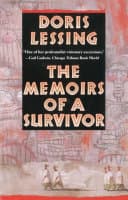
Synopsis
Covers the whole plot, including the ending.
- Difficulty
- Hard
- Pacing
- Slow
- Mood
- Atmospheric, Bleak, Philosophical, Introspective, Dreamlike
- Read it if
- You are interested in allegorical post-apocalyptic narratives, psychological depth, and a unique exploration of societal breakdown and inner worlds.
- Skip it if
- You prefer fast-paced action, clear-cut plot resolutions, or a strictly literal narrative without symbolic elements.
The Memoirs of a Survivor Plot Summary
Covers the whole plot, including the ending.
The Arrival of Emily
The story begins with the unnamed, middle-aged narrator living in an old apartment building in a city falling apart. Society is crumbling, services are failing, and youth gangs roam the streets. One day, a stranger brings a young girl, Emily, to her apartment, simply stating she is now the narrator's responsibility. The narrator, though confused, accepts this. Emily, about twelve, is quiet, watchful, and seems sad and independent. The narrator tries to include Emily in her life, observing the girl's reserved nature and her unique way of dealing with the increasingly desolate world outside.
The Wall and the Other World
Soon after Emily arrives, the narrator starts to see a wall in her apartment as more than just a physical barrier. It becomes semi-transparent, showing scenes from another reality. This 'other' world is not fantasy but a symbolic, vivid place with figures representing human experience: a wise, old woman, a child, and abstract shapes. The narrator watches these scenes, sometimes interacting with them mentally, and finds herself drawn to this inner world. The wall becomes central to her life, offering both comfort and a strange understanding amid the external decay. Emily also seems aware of the wall, though she never speaks of it.
The Growing Gangs and External Decay
Outside the narrator's apartment, the city continues its rapid descent into anarchy. Organized society has largely disappeared. Youth gangs, led by charismatic but often brutal figures, control the streets, scavenging and committing random acts of violence. Food and utilities become scarce, forcing the narrator and Emily, along with other residents, to adapt to constant uncertainty and fear. The narrator observes the children and young adults becoming wilder, losing their innocence, and struggling to survive. Emily, despite her youth, shows remarkable resilience and self-sufficiency, often disappearing to scavenge or interact with other children, which quietly concerns the narrator.
Emily's Companion, Hugo
One day, Emily brings a large, shaggy dog named Hugo into the apartment. Hugo is initially cautious but quickly forms a strong bond with Emily, becoming her constant companion. The narrator observes the deep connection between the girl and the dog, seeing it as a vital source of comfort and a symbol of lasting love and loyalty in a world without such niceties. Hugo's presence also shows Emily's nurturing side, as she cares for the animal despite food shortages. The dog's loyalty contrasts sharply with the betrayal and indifference common in human interactions outside their home, further highlighting their isolated existence.
Meeting the Leader, Gerald
As the city's structure further dissolves, Emily becomes more independent, often leaving for long periods. She eventually connects with Gerald, a charismatic and influential leader of one of the larger youth gangs. Gerald, though young, has a commanding presence and a practical, almost ruthless, approach to survival. He sometimes visits the narrator's apartment, bringing a sense of both protection and danger. The narrator views Gerald with a mix of apprehension and respect, acknowledging his ability to organize and lead in chaos, even if his methods are often brutal. Emily's involvement with Gerald complicates the narrator's role as guardian, as she must navigate the shifting loyalties and dangers of the outside world through Emily's experiences.
The Collective Household
As conditions worsen, the narrator's large apartment building attracts other survivors. Various individuals and small groups, displaced by increasing violence and lack of resources, seek shelter within its walls. These include a family with young children, a group of teenagers, and other adults, all trying to create some normalcy. The narrator observes this makeshift community forming, noting the struggles and small successes of collective living. This influx of people brings new challenges, such as resource allocation and conflict resolution, and a renewed sense of shared humanity, as they all depend on each other for survival and companionship amid widespread desolation.
The Wall's Deeper Meanings
The narrator's connection to the wall and the 'other' world behind it deepens. The scenes she witnesses become more meaningful and symbolic, showing not only archetypal figures but also glimpses into humanity's collective past and potential future. She sees a child being cared for, an old woman giving wisdom, and moments of creation and destruction. These visions offer a contrast to the grim reality outside, providing a spiritual and psychological refuge. The wall is a metaphor for the human mind's inner landscape, a place where meaning and order can still be found even when the external world collapses into chaos. The narrator spends more and more time observing and thinking about these internal experiences.
The Departure of the Collective
Despite temporary stability, the collective household in the apartment building is not sustainable. Resources remain scarce, and the constant threat from outside gangs and the city's general decay eventually force residents to make a hard choice. Led by Gerald and other pragmatic figures, the community decides to leave the building and move to a more rural, potentially safer, location. The departure is orderly but tinged with sadness and uncertainty, as they leave behind the last parts of their urban life. The narrator observes this exodus, understanding its necessity but feeling the loss of the fragile community that had formed.
Emily's Choice and Departure
When it is time for the group to leave the building, Emily, now older and more confident, decides to go with Gerald and the migrating group. Her bond with Gerald has grown strong, and she sees her future with him and the other youth. The narrator, though sad about Emily's departure, recognizes her need for independence and her place in this new, evolving society. Emily leaves with Hugo by her side, a symbol of her journey and her lasting connection with the natural world. This separation is a significant turning point, as the narrator is left alone to face the city's remains and her own inner world.
Alone with the Wall
After Emily and the others leave, the narrator is alone in the vast, empty apartment building. The outside world continues to decline, but her focus shifts almost entirely inward. The wall becomes her main companion and source of experience. She spends her days and nights observing the intricate, symbolic landscapes and figures within it, finding deep meaning and connection there. The 'other' world is no longer just a vision but an immersive reality, a place of order and spiritual nourishment that contrasts sharply with the desolation outside. This period marks her complete surrender to the internal journey, finding a new way of existing beyond society's traditional bounds.
The Final Transformation
In her solitude, the narrator undergoes a deep spiritual and psychological change. Her connection to the 'other' world of the wall becomes absolute, blurring the lines between inner and outer reality. She moves past the anxieties and physical limits of her former life, finding a state of deep understanding and peace. The wall is no longer just a vision but a gateway to universal consciousness, a realm where past, present, and future meet. She becomes an observer of fundamental human patterns, an embodiment of memory and potential. This final phase of her existence suggests a transcendence of individual identity into something more collective and eternal, a merging with life's essential forces.
Principal Figures
The Narrator
Protagonist
A middle-aged woman observing and surviving the collapse of society.
The unnamed narrator is a middle-aged, educated woman who finds herself a reluctant survivor in a decaying, post-apocalyptic city. Initially bewildered by the arrival of Emily, she adapts to her new role as a guardian while grappling with the disintegration of civilization. Her primary coping mechanism, and ultimately her salvation, is her ability to perceive and interact with an 'other' world manifested through a wall in her apartment. She is a keen observer, introspective, and represents the intellectual and spiritual capacity to find meaning amidst chaos. She is not a leader in the external world but a guide in the internal one.
Relationships: Emily (guardian-ward, complex and evolving); Hugo (indirect caretaker, observer of his bond with Emily); Gerald (observer, cautious respect for his leadership)
Emily
Supporting
A mysterious, resilient young girl placed under the narrator's care.
Emily is a twelve-year-old girl, quiet and self-possessed, who is abruptly brought to the narrator's home with no explanation. She is highly adaptable and resourceful, quickly integrating into the harsh realities of the collapsing city. Her silence and independence often make her enigmatic, but she displays a deep capacity for loyalty, particularly towards her dog, Hugo, and later to Gerald. Emily represents the new generation, forced to grow up quickly and find new ways of surviving and forming communities. She is pragmatic and grounded in the physical world, offering a contrast to the narrator's introspective nature.
Relationships: The Narrator (ward-guardian, a relationship of quiet dependence and observation); Hugo (deep, loyal bond, constant companion); Gerald (follower, eventual partner/member of his group)
Hugo
Supporting
Emily's loyal dog, a symbol of enduring connection.
Hugo is a large, shaggy stray dog that Emily befriends and brings into the apartment. He forms an immediate and profound bond with Emily, becoming her loyal companion and protector. Hugo's presence provides a source of unconditional love and comfort in a world increasingly devoid of such things. He represents the enduring power of animal companionship and the simplicity of loyalty and affection. His survival skills, though basic, also reflect the adaptation necessary in the post-collapse environment. For the narrator, Hugo is a poignant reminder of the natural world and the essential need for connection.
Relationships: Emily (deep, unconditional bond, companion); The Narrator (tolerated presence, observed from a distance)
Gerald
Supporting
A charismatic and pragmatic leader of a youth gang.
Gerald is a young, charismatic leader of one of the more organized youth gangs that roam the city. He is resourceful, intelligent, and possesses a strong will to survive and lead others. While his methods can be ruthless, they are born out of necessity in a lawless world. He represents the emergence of new forms of leadership and social order in the aftermath of societal collapse. Emily is drawn to his strength and vision, and he eventually leads a larger group of survivors out of the city. Gerald embodies a blend of primal instinct and nascent organizational skill, a figure of hope and danger.
Relationships: Emily (leader-follower, eventually close associate/partner); The Narrator (figure of authority and power, observed with caution)
The Man Who Brought Emily
Mentioned
The mysterious figure who delivers Emily to the narrator.
This unnamed man appears briefly at the beginning of the novel, delivering Emily to the narrator's apartment with a cryptic instruction that she is now the narrator's responsibility. He provides no explanation for Emily's origins or his own connection to her, and he disappears as quickly as he arrived. He serves as a catalyst for the main plot, initiating the narrator's guardianship and the subsequent events. His mysterious nature underscores the breakdown of conventional societal structures and the arbitrary nature of events in the post-apocalyptic world.
The 'Other' World Figures
Supporting
Archetypal figures appearing behind the wall.
These are not concrete characters but symbolic presences observed by the narrator through the wall. They include an ancient, wise woman, a child, and various other abstract forms representing universal human experiences and archetypes. They embody wisdom, innocence, creation, and destruction. They serve as guides and sources of profound insight for the narrator, offering a spiritual and psychological counterpoint to the external decay. Their interactions with the narrator are primarily psychic and symbolic, enriching her internal world.
Relationships: The Narrator (spiritual guides, symbolic figures)
The Collective Residents
Supporting
Various individuals and families seeking refuge in the apartment building.
These are a diverse group of unnamed individuals and families who gather in the narrator's apartment building as society collapses. They represent the remnants of different social strata – families with young children, teenagers, other adults – all attempting to form a makeshift community for survival. Their interactions highlight the challenges and small victories of collective living, including sharing resources, resolving conflicts, and providing mutual support. They embody the human instinct to gather and rebuild, even in the face of overwhelming adversity. Their eventual migration signifies the ongoing search for a viable future.
Relationships: The Narrator (fellow residents, observed from a distance); Emily (part of her peer group and larger community)
Themes & Insights
Societal Collapse and the Search for New Order
The novel shows society's breakdown—government, infrastructure, and social norms—leading to anarchy where youth gangs rule and basic survival is key. It also explores the human need to form new structures and seek order, even if those orders are harsh. Gerald's leadership and the formation of the migrating group illustrate this drive to create new communities from the old. The narrator observes the shift from old ways of living to new, often brutal, necessities, reflecting on humanity's resilience and adaptability in the face of destruction. This theme is central to understanding the external conflict and the characters' motivations.
“What they were doing, these children, was living a life that was natural to them: this was their time, their stage, their world.”
The Inner World vs. The Outer World
A main theme is the contrast between the external, decaying physical world and the rich, symbolic inner world seen through the wall. As the outer world collapses, the narrator finds comfort, meaning, and transcendence in her internal visions. The wall is a metaphor for the human mind, suggesting that even when external reality is shattered, an internal landscape of order, memory, and spiritual truth can persist and even grow. This contrast highlights the idea that true survival might be psychological and spiritual, not just physical, emphasizing consciousness's power to create its own reality. The narrator's journey is primarily internal.
“The wall was not a wall, it was a space, it was a whole country, and I was seeing through it.”
The Nature of Responsibility and Guardianship
The narrator is suddenly given the role of guardian to Emily, a responsibility she accepts without question despite the terrible circumstances. This explores the human drive to care for the young and vulnerable, even without societal support. The evolving relationship between the narrator and Emily, marked by quiet observation and mutual adaptation, examines the complexities of guardianship in extreme conditions. The narrator's responsibility goes beyond physical protection; she also provides a stable presence and a link to a fading past for Emily, even as Emily makes her own way in the new world. This theme questions what it means to nurture and guide when all traditional frameworks are gone.
“She was my responsibility. That was what he had said, and I had accepted.”
Memory, History, and the Future
The novel constantly deals with the weight of memory and history in a world that seems to have forgotten its past. The narrator, representing the 'old world,' carries memories of a functioning society, which she contrasts with the present decay. The 'other' world behind the wall also offers glimpses into archetypal human history and collective memory, suggesting that certain patterns and truths endure despite societal collapse. Emily and the youth, however, represent a future unburdened by the past, adapting to new circumstances without nostalgia. The novel explores how history informs (or fails to inform) the present and shapes a post-apocalyptic future, highlighting the cyclical nature of human experience.
“What I saw was not a past, but a present. And what I saw was not a future, but a present.”
Feminine Resilience and Adaptation
The novel subtly emphasizes the resilience and adaptability of its female characters, especially the narrator and Emily. The narrator, despite her initial passivity, shows remarkable inner strength and intellectual fortitude, finding a unique path to survival through her engagement with the 'other' world. Emily also shows incredible resourcefulness and independence, navigating the dangerous external world with quiet determination. Even the 'ancient woman' figure behind the wall can be seen as embodying lasting feminine wisdom. The story suggests that in a world where traditional male power structures have crumbled, a different kind of strength, often overlooked, comes forward. This theme highlights the diverse ways individuals, particularly women, cope with and adapt to extreme conditions.
“It was the women, I thought, who remembered what it was to be human, who kept the small flame of civilization alive.”
Plot Devices & Literary Techniques
The Wall
A permeable barrier revealing an 'other' world.
The wall is the central symbolic and structural device in the novel. Physically, it's a wall in the narrator's apartment. Metaphorically, it represents the boundary between external reality and internal consciousness, the conscious and unconscious mind, or even different dimensions of existence. It allows the narrator to access a vibrant, symbolic 'other' world that contrasts sharply with the decaying external reality. This device facilitates the narrator's spiritual journey and provides a unique lens through which to explore themes of memory, archetype, and the search for meaning. It functions as both a refuge and a source of profound insight.
First-Person Narration
The story is told exclusively from the narrator's subjective viewpoint.
The entire novel is presented as the unnamed narrator's journal or memoirs, offering a highly subjective and introspective account of events. This device limits the reader's perspective to what the narrator observes, perceives, and feels, making her internal world as significant as the external plot. It emphasizes themes of personal experience, perception, and the individual's struggle to make sense of chaos. The reader experiences the societal collapse and the 'other' world through her unique filter, allowing for a deep exploration of her psychological and spiritual journey without external validation.
Post-Apocalyptic Setting
A future society devastated by an unspecified collapse.
The novel is set in a future or alternate reality where society has largely collapsed, characterized by a breakdown of government, services, and social order. This setting creates a backdrop of extreme adversity, forcing characters into survival mode and highlighting the fragility of civilization. The unspecified nature of the catastrophe allows the focus to remain on the human response rather than the cause. This device serves to strip away the superficial layers of modern life, exposing fundamental human instincts and the essential search for meaning and order in a desolate landscape.
Archetypal Characters and Settings
Characters and locations that embody universal human experiences.
While specific characters like Emily and Gerald are distinct, many elements in the novel lean towards the archetypal. The 'ancient woman' and 'child' behind the wall are clear examples, representing wisdom and innocence. The decaying city itself becomes an archetype of a fallen civilization, and the narrator's apartment, a sanctuary, an archetype of home. This device allows the novel to explore universal themes of human experience, survival, and the collective unconscious, transcending the specific details of the plot to resonate on a deeper, more symbolic level. It gives the story a timeless and mythical quality.
The Memoirs of a Survivor Quotes
“The wall was not there because I was not there. The wall was there because I was there.”
“It was as if an immense and ancient weariness had settled upon the city, and everyone in it.”
“There was no longer any need to pretend that things were not as they were.”
“I understood then that what I had seen was not a memory, but a possibility.”
“The children were the most frightening part, because they were the future.”
“We were all survivors, but what we were surviving for, I did not know.”
“The cat was the only creature who seemed entirely at home in the chaos.”
“The inner room was always there, waiting, a place of peace and clarity.”
“It was not a question of good or evil, but of what worked.”
“The past was a dream, the present a nightmare, the future an abyss.”
“We were learning to live without a future, which meant living without hope.”
“The world was shrinking, not expanding. It was closing in.”
“The only thing that remained was the connection, the invisible threads that bound us.”
“To survive was to change, and to change was to become something new, something indefinable.”
Quiz
10 questions on the plot and the characters. Each answer comes with a short explanation.
Question 1
At the beginning of the novel, who brings Emily to the narrator's apartment?
- Emily's biological mother
- A representative from a government agency
- A neighbor seeking shelter for Emily
- A member of a roving gang
Show answer
B. A representative from a government agency Emily is brought to the narrator by a representative of a collapsing governmental structure, signifying the breakdown of traditional societal norms and the arbitrary assignment of responsibility.
Question 2
What unique ability does the narrator possess, allowing her to perceive events beyond her physical reality?
- She can communicate with animals.
- She can see into the past through objects.
- She can pass through walls into an 'inner' world.
- She has prophetic dreams about the future.
Show answer
C. She can pass through walls into an 'inner' world. The narrator's unique ability to pass through walls into a symbolic, 'inner' reality is a central mystical element of the book, representing a different dimension of perception and experience.
Question 3
What is the primary characteristic of the 'inner' world the narrator experiences behind her walls?
- It is a chaotic and violent mirror of the outside world.
- It presents idealized, nostalgic scenes from her own past.
- It shows scenes from Emily's childhood and a more ordered, symbolic reality.
- It is a barren wasteland devoid of life.
Show answer
C. It shows scenes from Emily's childhood and a more ordered, symbolic reality. The 'inner' world often reveals scenes from Emily's past, particularly her relationship with 'the owner,' and a more structured, symbolic reality that contrasts with the outer chaos.
Question 4
Who is 'the owner' figure often glimpsed in the narrator's visions and Emily's memories?
- The narrator's deceased husband.
- A symbolic, nurturing, and powerful male figure from Emily's earlier life.
- The leader of one of the roving gangs.
- The original owner of the apartment building.
Show answer
B. A symbolic, nurturing, and powerful male figure from Emily's earlier life. 'The owner' is a recurring symbolic figure, representing a source of authority, love, and a more stable past in Emily's life, seen through the narrator's visions.
Question 5
As the societal breakdown progresses, what happens to the narrator's apartment building?
- It is looted and abandoned.
- It becomes a fortified stronghold for a single family.
- It gradually fills with other survivors, forming a communal living space.
- It is completely destroyed by a fire.
Show answer
C. It gradually fills with other survivors, forming a communal living space. The building progressively fills with other survivors, including groups of children and their 'guardians,' illustrating the formation of new, albeit fragile, communal structures.
Question 6
What does the character of Hugo, Emily's pet cat, primarily symbolize in the novel?
- The untamed wildness of nature.
- A connection to a more stable, domestic past and unconditional affection.
- The cunning and survival instincts needed in the ruined city.
- The narrator's own repressed desires.
Show answer
B. A connection to a more stable, domestic past and unconditional affection. Hugo represents a link to a more normal, domestic past and provides a source of comfort and unconditional affection for Emily and, to a lesser extent, the narrator, amidst the chaos.
Question 7
What is the ultimate fate of the community that forms within the narrator's apartment building?
- They successfully rebuild society within the building.
- They are eventually overcome by external forces and perish.
- They collectively decide to leave the city in search of a new beginning.
- They devolve into internal conflict and civil war.
Show answer
C. They collectively decide to leave the city in search of a new beginning. Towards the end, the various groups of survivors, including the narrator and Emily, collectively decide to abandon the city and move 'out' towards an unknown future, seeking a new beginning.
Question 8
The novel's structure, presented as the narrator's journal, emphasizes which narrative characteristic?
- An objective, omniscient perspective on the crisis.
- A highly subjective and introspective account of personal experience and perception.
- A detailed historical record of the city's collapse.
- A series of detached observations from multiple viewpoints.
Show answer
B. A highly subjective and introspective account of personal experience and perception. As a journal, the narrative is intensely personal and subjective, reflecting the narrator's unique perceptions, internal struggles, and the blurring lines between external reality and inner vision.
Question 9
What overarching theme does the 'collapse' of society in the novel primarily represent?
- The inevitable end of all human civilization.
- A necessary breakdown to allow for a spiritual or evolutionary transformation.
- The failure of technology and scientific progress.
- The cyclical nature of violence and power struggles.
Show answer
B. A necessary breakdown to allow for a spiritual or evolutionary transformation. Lessing often uses societal collapse not as an endpoint, but as a crucible for transformation, suggesting that the breakdown of old structures is necessary for new forms of consciousness or community to emerge.
Question 10
Which of the following best describes the narrator's relationship with Emily throughout the novel?
- Initially resentful and distant, evolving into a complex, maternal bond.
- Immediate and unconditional love from the outset.
- Strictly as a guardian and ward, without emotional attachment.
- One of rivalry and mutual distrust.
Show answer
A. Initially resentful and distant, evolving into a complex, maternal bond. The narrator initially struggles with the imposed responsibility and finds Emily challenging, but their relationship slowly deepens into a complex, unconventional maternal bond, crucial for both their survival and understanding.
The Memoirs of a Survivor FAQ
What is the central premise of 'The Memoirs of a Survivor'?
The novel is set in a decaying, unnamed city where civilization is crumbling due to societal breakdown, scarcity, and violence. The middle-aged narrator is tasked with raising a pre-teen girl named Emily, chronicling their struggle for survival amidst the chaos and the narrator's increasingly vivid internal visions.
Who is Emily and what is her role in the story?
Emily is a twelve-year-old girl brought to the narrator's apartment by a mysterious man, with no explanation of her origins or why she was chosen. She represents the next generation grappling with a broken world, initially withdrawn and resistant, but gradually forming a complex bond with the narrator and even adopting a dog, Hugo, and later a baby, all while navigating the dangerous outside world.
Describe the setting of the novel and its significance.
The setting is a dystopian, post-collapse city, never explicitly named, characterized by constant decay, roving gangs, food shortages, and a complete breakdown of infrastructure and government. This external environment mirrors the internal chaos and disintegration of society, serving as a bleak backdrop against which the characters' personal struggles and the narrator's mystical experiences unfold.
What are the 'walls' the narrator experiences, and what do they represent?
The narrator frequently experiences visions where the physical walls of her apartment dissolve, revealing another 'reality' or dimension. These 'walls' separate her present, crumbling reality from a vision of a past, seemingly idyllic life or perhaps a deeper, more profound spiritual realm, representing a psychological escape, a different plane of existence, or a memory of a more integrated self.
Who is Hugo and what does he symbolize?
Hugo is a large, shaggy dog that Emily brings into the apartment. He symbolizes instinct, loyalty, and the raw, untamed aspects of nature that persist even in a ruined world. Hugo also becomes a protector for Emily and the baby, representing a primal bond and a source of comfort and stability amidst the surrounding chaos.
What is the significance of the 'original' woman and child seen through the walls?
Through her visions, the narrator observes an 'original' woman and child, seemingly reflections of herself and Emily in a different, more harmonious existence. This past or parallel life suggests a cyclical nature of experience, a lost innocence, or perhaps a deeper, archetypal connection between women and children that transcends the immediate dystopian setting.
How does the narrator's perception of time and reality shift throughout the novel?
The narrator's perception of time becomes fluid, with past, present, and future blending, particularly during her wall visions. Her 'real' world is increasingly juxtaposed with the vivid, seemingly more authentic experiences behind the walls, blurring the lines between objective reality and subjective, mystical perception, suggesting a breakdown of conventional understanding.
Is there a specific 'event' that triggered the societal collapse, or is it a gradual decay?
The novel deliberately avoids specifying a single catastrophic event. Instead, it portrays a gradual, creeping decay of society, suggesting that the collapse is more a result of human nature, apathy, and the erosion of social structures rather than an external cataclysm. This ambiguity emphasizes the internal, psychological aspect of the decline.
What is the role of the 'groups' or 'gangs' outside the narrator's apartment?
The 'groups' represent the fragmentation of society into tribalistic, often violent factions, driven by survival and a loss of central authority. They embody the breakdown of civility and order, forcing individuals like Emily and Hugo to adapt to a dangerous, unpredictable world where trust is scarce and alliances are temporary.
How does the narrator's relationship with Emily evolve psychologically?
Initially, the narrator struggles with her imposed responsibility for Emily, feeling distant and unequipped. Over time, a complex, almost telepathic bond forms, where the narrator experiences Emily's emotions and experiences, sometimes more vividly than her own. This psychological merging represents a deeper maternal connection and a shared journey of survival and understanding.
What psychological coping mechanisms do the characters employ to survive?
The narrator copes through her vivid wall visions, which provide an escape and a different perspective on reality. Emily, in contrast, copes by adapting to the harsh external world, forming bonds with animals and other children, and developing a resilient, street-smart demeanor. Both find ways to create meaning and connection amidst extreme deprivation and danger.
How does the novel explore the psychology of responsibility and caregiving in extreme circumstances?
The novel delves into the psychological burden of involuntary caregiving, as the narrator grapples with her unexpected responsibility for Emily. It highlights the tension between personal desire for solitude and the innate human need to nurture, showing how even in collapse, the act of caring for another can provide purpose and a path to self-discovery, transforming both caregiver and child.
In what ways does the 'inner world' of the narrator reflect or contrast with the 'outer world'?
The narrator's 'inner world' of visions, often depicting harmony and order, stands in stark contrast to the chaotic, decaying 'outer world.' However, her inner experiences also reflect the fragmentation and search for meaning that defines the external reality, suggesting that personal and societal collapse are deeply intertwined, and that inner exploration is a response to external breakdown.
What is the ultimate 'salvation' the author hints at in the novel's conclusion?
The 'salvation' appears to be a transcendence of the physical world and its limitations, perhaps a spiritual awakening or a collective consciousness. The final scene, where the narrator, Emily, Hugo, and the baby walk through an opening wall into a unified, shimmering existence, suggests that true escape and redemption lie in a shift of perception and connection to a higher plane of being, beyond the material collapse.
Is the novel a literal prophecy of the future or a metaphorical exploration?
While set in a near-future dystopia, the novel is widely interpreted as a metaphorical exploration rather than a literal prophecy. It uses the extreme setting to examine enduring themes of societal breakdown, human resilience, spiritual awakening, and the nature of reality itself, reflecting Lessing's broader philosophical concerns about consciousness and civilization.
How does the 'autobiographical attempt' aspect mentioned by Lessing manifest in the book?
Lessing's statement suggests that the novel, while fictional, reflects her own inner journey, philosophical reflections, and perhaps even subconscious experiences. The narrator's intense inner life, her visions, and her struggle to make sense of a collapsing world can be seen as an externalization of Lessing's own 'autobiography' of consciousness and spiritual exploration, rather than a factual recounting of events.
What is the significance of the narrator's unnamed status?
The narrator's unnamed status contributes to her universality and archetypal quality. By not giving her a name, Lessing emphasizes that her experiences and insights are not unique to one individual but represent a broader human condition, allowing readers to more easily project themselves onto her and engage with her inner journey as a collective human experience.
Could the entire narrative, especially the wall visions, be interpreted as a delusion or mental breakdown?
While the visions are presented as real within the narrative, an interpretation of them as a form of delusion or psychological coping mechanism in response to extreme stress is possible. However, Lessing's consistent portrayal of them as profound and transformative experiences, leading to a form of enlightenment, generally steers readers towards a more mystical or spiritual understanding, rather than purely pathological.
How does the novel challenge conventional notions of progress and civilization?
The novel fundamentally challenges the idea of linear progress by depicting a complete societal regression and the arbitrary nature of 'civilization.' It suggests that what we consider advanced society is fragile and can easily collapse, forcing characters to revert to more primal forms of existence and question the inherent value of the structures we build, hinting at a deeper, non-material form of progress.
About the author
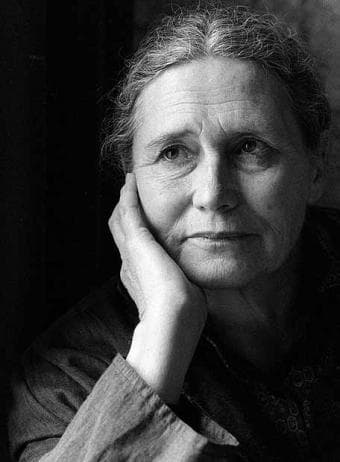
Doris May Lessing was a British-Zimbabwean novelist. She was born to British parents in Iran, where she lived until 1925. Her family then moved to Southern Rhodesia, where she remained until moving in 1949 to London, England. Her novels include The Grass Is Singing (1950), the sequence of five novels collectively called Children of Violence (1952–1969), The Golden Notebook (1962), The Good Terrorist (1985), and five novels collectively known as Canopus in Argos: Archives (1979–1983).
Similar books
- The Road
Cormac McCarthy
4.0 (716k) average on GoodreadsScience FictionExplores a post-apocalyptic world with a focus on survival and human relationships amidst desolation.
- Station Eleven
Emily St. John Mandel
4.0 (322k) average on GoodreadsLiterary FictionExamines the aftermath of a societal collapse and the resilience of human spirit and culture.
- The Handmaid's Tale
Margaret Atwood
4.1 (1.5M) average on GoodreadsFantasyFeatures a dystopian setting observed through the eyes of a female narrator, with strong social commentary.
- Nineteen Eighty-Four
George Orwell
4.2 (5.5M) average on GoodreadsFictionWinston Smith dreams of truth and rebellion in a world where Big Brother watches all, but he confronts the terrifying power of a regime that controls not just actions, but thoughts.
- The Frozen River
Ariel Lawhon
4.4 (600k) average on GoodreadsFictionIn 1789 Maine, a heroic midwife's diary helps her expose a murder and get justice in a town that wants to silence her.
- A Man Called Ove
Fredrik Backman
4.4 (569k) average on GoodreadsFictionA stubborn widower, who lives by strict rules, finds his quiet world changed by a lively new family next door, making him face his past and find happiness in human connection.






Enjoyed the summary?
A summary gives you the shape of the book. The book itself has the detail, the examples and the voice.
Find The Memoirs of a Survivor on AmazonAs an Amazon Associate, BookBrief earns from qualifying purchases. How we're funded