
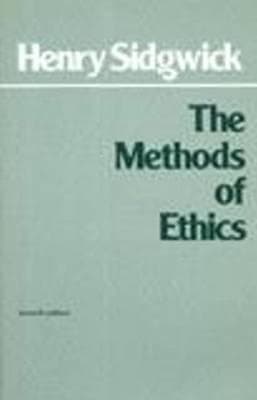
Core Idea
- Difficulty
- Hard
- Read it if
- You are a serious student of ethics or moral philosophy looking for a foundational, comprehensive, and deeply analytical treatment of classical ethical theories, particularly Utilitarianism and its relation to other moral frameworks.
- Skip it if
- You are seeking an introductory overview of ethics, a light read, or a prescriptive guide to moral living; this book is dense, highly academic, and demands significant philosophical background.
Key Takeaways from The Methods of Ethics
The Duality of Moral Reasoning
Sidgwick's exploration of common-sense morality reveals its inherent tension between egoism and utilitarianism.
Sidgwick carefully examines the 'methods' of ethics, not as rules, but as distinct rational ways to decide what we should do. He argues that ordinary moral thought, or 'Common Sense Morality,' is not a single system but a complex mix of different, often conflicting, principles. Specifically, he finds a basic tension between egoism (seeking one's own greatest good) and utilitarianism (seeking the greatest good for all). This conflict is not easily solved, as both approaches seem reasonable and deeply rooted in human thought. Sidgwick's work largely tries to systematically study these methods, show their inconsistencies, and find a consistent basis for moral judgment.
“The common sense of mankind has a duality in its moral judgments, which it is the business of philosophy to reconcile or to explain.”
In the book: Sidgwick's detailed analysis of 'Common-Sense Morality' in Book III, where he examines concepts like justice, benevolence, and self-regard, revealing how each contains elements of both individual and collective well-being without fully resolving their conflict.
Try this: When facing a moral dilemma, explicitly identify whether your reasoning is driven by self-interest (egoism) or by the well-being of the collective (utilitarianism). Acknowledge the tension and consider how a decision might be justified from both perspectives, or if one must ultimately take precedence.
Related ideas: common-sense-morality, egoism, utilitarianism
Intuitionism's Limits
Moral intuitions, while foundational, are often vague and require systematic scrutiny to become reliable guides.
Sidgwick spends much effort evaluating intuitionism, the idea that we can directly see moral truths. He admits that some moral principles, like justice or kindness, seem obviously true. However, he strongly demonstrates that these intuitions often lack the precision and universal agreement needed for a complete ethical system. They tend to be either too general to give specific advice in complex situations or, when looked at closely, implicitly rely on an unstated utilitarian calculation. This critical look does not dismiss intuition entirely but argues that raw intuition alone is not enough and needs to be refined and organized to avoid contradiction and randomness.
“The intuitions of Common Sense, when carefully examined, turn out to be either vague and indeterminate, or to contain an implicit reference to some ulterior principle.”
In the book: His detailed critique in Book III, Chapter I, where he examines and finds wanting various 'self-evident' moral maxims, showing how they either break down in specific cases or derive their force from an unacknowledged appeal to general happiness.
Try this: When you feel a strong 'gut feeling' about a moral choice, don't just act on it. Instead, articulate the underlying principle, test its universality, and consider potential counter-examples or situations where it might lead to undesirable outcomes. Seek to clarify and justify the intuition with broader rational principles.
Related ideas: intuitionism, moral-truth, common-sense-morality
Hedonism as the Measure of Good
Sidgwick argues for pleasure and pain as the ultimate components of 'good' and 'bad' consciousness, forming the basis of utilitarian calculation.
A main part of Sidgwick's classical utilitarianism is defining 'good' as pleasure and 'bad' as pain. He refines this by preferring the terms 'agreeable' and 'disagreeable consciousness,' emphasizing the personal experience. This hedonistic idea is important because it gives a measurable way, though hard to measure in practice, to compare different situations and actions. Without a common measure of value, utilitarian calculation would be impossible. Sidgwick addresses the complexities of this definition, admitting that pleasures differ in quality and intensity, but maintains that the ultimate goal of moral action is to maximize the total balance of agreeable over disagreeable consciousness for all living beings.
“By 'happiness' I mean a sum of pleasures and pains, or, more strictly, a sum of agreeable and disagreeable consciousness, the latter being taken as negative quantities.”
In the book: His foundational discussions in Book I, Chapter IV, on the definition of 'good' and 'happiness,' where he meticulously argues for the identification of ultimate good with desirable states of consciousness (pleasure) and ultimate bad with undesirable states (pain).
Try this: When evaluating the moral impact of an action or policy, try to objectively consider its likely effects on the 'agreeable' and 'disagreeable' consciousness of all affected parties. This isn't just about avoiding pain, but actively promoting conditions that lead to positive experiences, even if precise measurement is elusive.
Related ideas: hedonism, agreeable-consciousness, pain-and-pleasure, utilitarian-calculus
The Principle of Rational Benevolence
The 'Greatest Happiness Principle' is a self-evident dictate of practical reason, demanding impartiality in the pursuit of general good.
Sidgwick argues that the core of utilitarianism – the greatest happiness principle – is not just an observation but a fundamental command of practical reason. He calls this the Principle of Rational Benevolence. It states that from an unbiased, objective view, one's own good is no more important than the good of anyone else. Therefore, reason makes us extend our concern to everyone's well-being, aiming to maximize overall happiness. This principle provides the rational basis for extending selfish self-interest into universal kindness, moving beyond personal preferences to a truly objective moral stance. It is a strong claim, raising utilitarianism from a mere preference to a rational necessity.
“The good of any one individual is of no more importance, from the point of view (if I may say so) of the Universe, than the good of any other.”
In the book: His argument in Book III, Chapter XIII, where he presents the 'Axiom of Rational Benevolence' as a self-evident principle, alongside the 'Axiom of Prudence' (rational egoism), as fundamental intuitions of practical reason.
Try this: When making decisions that affect others, consciously adopt a 'view of the Universe' perspective. Ask yourself: if I were an impartial observer, would this action maximize overall well-being, irrespective of my personal connection to the beneficiaries or those who might be negatively impacted?
Related ideas: rational-benevolence, greatest-happiness-principle, impartiality, practical-reason
The Dualism of Practical Reason
Sidgwick's unresolved tension between rational egoism and rational benevolence represents a profound philosophical challenge.
Despite his strong defense of utilitarianism, Sidgwick famously concludes that an unbridgeable 'dualism of practical reason' remains. He identifies two self-evident principles: Rational Egoism (it is rational to seek one's own greatest good) and Rational Benevolence (it is rational to seek the greatest good for all). While he often tries to show that acting kindly can align with self-interest, he ultimately admits there is no logical proof that these two will always match. In situations where personal happiness conflicts with the greatest good for the greatest number, reason offers no clear way to choose. This honest admission shows his intellectual integrity and is a significant challenge to any complete ethical theory that seeks a single, unified rational basis.
“The profoundest problem of ethics is the apparent ultimate irreconcilability of the dictates of Rational Egoism and Rational Benevolence.”
In the book: His concluding remarks in Book IV, Chapter VI, where he discusses the 'dualism of the practical reason' and the lack of a complete demonstration that the performance of duty is always conducive to the agent's greatest happiness.
Try this: Recognize that moral life often presents genuine dilemmas where your self-interest and the greater good diverge. Instead of forcing a false reconciliation, acknowledge the inherent tension. This awareness can lead to more considered, if sometimes agonizing, choices, rather than rationalizing one's preferred outcome.
Related ideas: dualism-of-practical-reason, rational-egoism, rational-benevolence, moral-dilemma
The Role of Sanctions and Divine Providence
Sidgwick considers external sanctions, including religious ones, as potential solutions to the dualism of practical reason.
Given the 'dualism of practical reason,' Sidgwick explores how the conflict between self-interest and universal kindness might be resolved. He considers various 'sanctions' – outside motivators that align individual good with the general good. These include legal punishments, social pressures, and, most importantly for him, religious belief in a kind God who ensures ultimate happiness for those who act morally. While he does not offer proof for God's existence, he suggests that if a divine order guarantees that good actions ultimately lead to the agent's greatest happiness, then the dualism would be overcome. This highlights the practical need for harmony between individual well-being and moral duty, even if philosophical reason alone cannot guarantee it.
“The only way in which the 'Dualism of the Practical Reason' can be overcome is by the assumption of a Divine order of the world.”
In the book: His discussion in Book IV, Chapter V, on the 'Ultimate Sanctions of the Moral Law,' where he extensively analyzes the role of religion and a 'Divine Governor' in reconciling duty and self-interest.
Try this: When struggling with a moral choice where duty seems to demand personal sacrifice, consider what external factors (legal, social, or personal belief systems) might reinforce the 'right' action. For those with religious faith, reflect on how their beliefs might bridge the gap between personal well-being and universal good.
Related ideas: sanctions, divine-providence, religious-ethics, moral-motivation
The Indirectness of Utilitarianism
Directly calculating utility in every action is impractical; instead, agents should often follow rules or virtues justified by their overall utility.
Sidgwick is a sophisticated utilitarian, recognizing that a purely act-utilitarian approach (calculating outcomes for every single action) is often impractical and potentially harmful. He argues for the 'indirectness' of utilitarianism, suggesting that people should often follow established moral rules, cultivate virtues, or act from non-utilitarian motives (like love or loyalty) because these approaches, in the long run, lead to the greatest happiness. Directly pursuing utility in every instance might lead to inaction, mistakes, or even damage trust and social order. This nuanced view connects rule-based ethics and consequentialism, acknowledging the practical limits of human thought and the social usefulness of common moral frameworks.
“It is not necessary that the acts which are most conducive to the general good should be those which are consciously aimed at it.”
In the book: His discussion in Book IV, Chapter III, on 'Consequences of Utilitarianism,' where he considers how utilitarianism justifies adherence to common moral rules, and even secrecy about the ultimate utilitarian motive for certain actions.
Try this: Instead of trying to calculate the exact utility of every single action, focus on cultivating virtues (e.g., honesty, compassion) and adhering to generally beneficial rules. Periodically, however, reflect on whether these rules and virtues are indeed serving the greatest good, and be prepared to adjust them if they consistently lead to suboptimal outcomes.
Related ideas: indirect-utilitarianism, rule-utilitarianism, virtue-ethics, consequentialism
The Impartiality Requirement
Utilitarianism demands an impersonal perspective, treating all individuals' happiness equally, regardless of personal relation.
A central idea of classical utilitarianism, as stated by Sidgwick, is impartiality. The 'greatest happiness for the greatest number' cannot be achieved if one unfairly favors the happiness of oneself, one's family, or one's nation over others. From the 'point of view of the universe,' every person's agreeable consciousness holds equal importance. This requires a big change from natural human biases and affections. While Sidgwick admits the practical need and usefulness of special affections (e.g., parental love), the ultimate reason for these affections, within a utilitarian framework, is their overall contribution to general happiness. The ideal utilitarian agent tries for an objective assessment of well-being across all living beings.
“Each one is morally bound to regard the good of any other individual as much as his own, except in so far as he is more capable of promoting the good of one than of the other.”
In the book: His reiteration of the 'Axiom of Rational Benevolence' and the 'point of view of the Universe' throughout his work, particularly in Book III, Chapter XIII, when discussing the scope of benevolence and the equal consideration of interests.
Try this: When making decisions that impact multiple people, consciously try to set aside personal biases and affections. Imagine you are an impartial arbiter. How would a decision look if you weighed everyone's well-being equally, considering only the net balance of pleasure over pain for all involved?
Related ideas: impartiality, equal-consideration, universal-benevolence, moral-objectivity
The Precision of Ethical Language
Sidgwick's enduring contribution lies in his meticulous clarification and systematization of ethical concepts.
Beyond his specific conclusions about utilitarianism, Sidgwick's 'Methods of Ethics' sets a high standard for philosophical rigor and clear thinking. He carefully defines terms, analyzes arguments, and explores details in a way that remains influential. He does not just present a theory; he systematically examines the different 'methods' by which humans try to decide what they should do, showing their strengths and weaknesses. This commitment to precision, even when it leads to difficult conclusions like the dualism of practical reason, makes his work so foundational. He makes readers think clearly about what they mean when they talk about 'good,' 'duty,' and 'right action.'
“The first step in systematizing morality must be to make sure that we have a clear and precise understanding of the terms we employ.”
In the book: The entire structure of the book, which dedicates significant sections to defining 'good,' 'duty,' and examining the 'methods' of ethics (Intuitionism, Egoism, Utilitarianism) with analytical precision and careful logical progression.
Try this: Before engaging in any ethical discussion or making a moral decision, take time to precisely define the key terms and principles you are using. Challenge vague statements and seek to understand the underlying assumptions of different moral arguments.
Related ideas: conceptual-clarity, ethical-terminology, philosophical-rigor, analytical-philosophy
A Foundation for Modern Ethics
Sidgwick's comprehensive analysis remains a critical reference point for contemporary ethical philosophy.
Even over a century after its final edition, 'The Methods of Ethics' remains an essential text in moral philosophy. Its lasting importance comes from Sidgwick's unmatched systematic approach, his detailed understanding of different ethical viewpoints, and his honest struggle with their inherent difficulties. He does not just argue for utilitarianism; he provides a thorough, critical assessment of its competitors and acknowledges its limits, especially the 'dualism of practical reason.' Contemporary ethicists, whether they agree with his conclusions or not, must engage with his arguments regarding hedonism, impartiality, intuitionism, and the challenges of reconciling individual and collective good. His work prepared the way for much of 20th-century analytical ethics.
“No subsequent work in moral philosophy can afford to ignore the arguments and distinctions presented in 'The Methods of Ethics.'”
In the book: The continued academic discussion and reference to Sidgwick in modern ethical theory, as highlighted by John Rawls's foreword, which positions Sidgwick's work as the 'clearest and most accessible formulation of what we may call 'the classical utilitarian doctrine.''
Try this: When studying or discussing ethical theories, consider how they address the fundamental tensions Sidgwick identified: the conflict between self-interest and the greater good, the role of intuition versus systematic reasoning, and the challenges of defining and measuring 'good.' Use Sidgwick's framework to critically evaluate contemporary ethical arguments.
Related ideas: classical-utilitarianism, moral-philosophy-history, ethical-foundations, analytical-ethics
The Methods of Ethics Quotes
“The greatest happiness of the greatest number is the measure of right and wrong.”
“It is not the mere fact that a rule is generally accepted which proves it to be a sound rule, but the fact that it is a sound rule which is the reason why it is generally accepted.”
“No method of determining right conduct can be satisfactory which does not at least aim at making the conduct which it prescribes coincide with that which, on the whole, we judge to be right.”
“The practically important question is whether we can, on reflection, find any self-evident principles for determining the ultimate end of rational action.”
“If I am asked 'Why should I do it?' the only reason I can give is that it is right.”
“The Utilitarian principle, if it is to be made the basis of a complete ethical system, must be shown to harmonise with, or at least to be not irreconcilable with, the other commonly accepted maxims of morality.”
“The good of any one individual is of no more importance, from the point of view (if I may say so) of the Universe, than the good of any other.”
“It is not self-evident that one ought to seek the greatest possible happiness of the whole, but only that one ought to seek one's own greatest happiness.”
“We cannot reasonably refuse to admit that we ought to choose the course of action which we foresee will lead to the greatest attainable aggregate of happiness.”
“The ultimate reasons for acting must be found in the intrinsic desirability of certain ends.”
“It is a fundamental assumption of morality that we are free to choose between alternatives.”
“The difficulty of precisely calculating consequences is often urged as an objection to Utilitarianism, but it is a difficulty that besets all rational conduct.”
“The only ultimate test of the rightness of an action is the tendency of its consequences to promote the general happiness.”
“The intuitionist, no less than the utilitarian, must admit that he is ultimately guided by an intuition that certain actions are 'right' or 'reasonable'.”
Quiz
10 questions on the main ideas. Each answer comes with a short explanation.
Question 1
According to John Rawls's foreword, what does 'the classical utilitarian doctrine' as formulated by Sidgwick hold as the ultimate moral end of social and individual action?
- The greatest net sum of individual liberty.
- The greatest net sum of the happiness of all sentient beings.
- The adherence to universal moral duties, regardless of outcome.
- The pursuit of virtue for its own sake.
Show answer
B. The greatest net sum of the happiness of all sentient beings. Rawls explicitly states in the foreword that the classical utilitarian doctrine holds 'the ultimate moral end of social and individual action is the greatest net sum of the happiness of all sentient beings.'
Question 2
How does Sidgwick prefer to specify happiness within the classical utilitarian doctrine, as mentioned by Rawls?
- As the fulfillment of rational desires.
- As the net balance of pleasure over pain.
- As the net balance of agreeable over disagreeable consciousness.
- As the achievement of moral perfection.
Show answer
C. As the net balance of agreeable over disagreeable consciousness. Rawls notes that while happiness is specified as the net balance of pleasure over pain, Sidgwick 'preferred to say, as the net balance of agreeable over disagreeable consciousness.'
Question 3
Which edition of 'The Methods of Ethics' is reprinted in the 1981 Hackett edition, according to the provided text?
- The first edition (1874).
- The fifth edition.
- The seventh and last edition (1907).
- A specially revised Hackett edition.
Show answer
C. The seventh and last edition (1907). The forward explicitly states this Hackett edition is an 'unabridged and unaltered republication of the seventh (1907) edition.'
Question 4
Sidgwick's 'The Methods of Ethics' is considered a formulation of 'the classical utilitarian doctrine.' What does this classification imply about its approach to moral reasoning?
- It primarily focuses on the inherent rightness or wrongness of actions, independent of their consequences.
- It emphasizes the importance of individual rights and duties above collective well-being.
- It grounds moral judgments in the overall outcomes and consequences of actions, particularly regarding happiness.
- It advocates for a return to ancient Greek virtues as the basis for ethical conduct.
Show answer
C. It grounds moral judgments in the overall outcomes and consequences of actions, particularly regarding happiness. Utilitarianism, especially classical utilitarianism, is a consequentialist ethical theory. It judges the morality of actions based on their outcomes, specifically the maximization of happiness or well-being.
Question 5
Given the description of classical utilitarianism, how would Sidgwick likely approach a dilemma where a difficult decision might cause minor suffering to a few but significant happiness to many?
- He would prioritize avoiding any suffering, even if it meant less overall happiness.
- He would seek a solution that maximized the net balance of agreeable over disagreeable consciousness for all sentient beings.
- He would consult a set of universal moral rules to determine the inherently right action.
- He would argue that such dilemmas are inherently irresolvable by ethical theory.
Show answer
B. He would seek a solution that maximized the net balance of agreeable over disagreeable consciousness for all sentient beings. The core of classical utilitarianism is to maximize the net sum of happiness (or agreeable consciousness). Therefore, a decision that creates significant happiness for many, outweighing minor suffering for a few, would align with this principle.
Question 6
What does the term 'unabridged and unaltered republication' imply about the content of the 1981 Hackett edition of 'The Methods of Ethics'?
- It includes additional commentary and critical essays not present in the original.
- It has been updated to reflect contemporary ethical theories and language.
- It presents the original text of the seventh edition without any omissions or editorial changes.
- It is a summary or abridged version of Sidgwick's full work.
Show answer
C. It presents the original text of the seventh edition without any omissions or editorial changes. 'Unabridged' means not shortened or cut, and 'unaltered' means no changes have been made to the text. This ensures the reader receives Sidgwick's original work as it appeared in its final edition.
Question 7
Given Sidgwick's central role in formulating 'the classical utilitarian doctrine,' which of the following ethical considerations would be LEAST central to his methodology?
- The calculation of pleasure and pain resulting from an action.
- The aggregate well-being of all individuals affected by a choice.
- The inherent moral character of the agent performing the action, irrespective of outcomes.
- The comparison of different courses of action based on their potential to produce agreeable consciousness.
Show answer
C. The inherent moral character of the agent performing the action, irrespective of outcomes. Classical utilitarianism is outcome-focused. While an agent's character might influence their actions, the moral evaluation of the action itself, for Sidgwick, would primarily rest on its consequences for general happiness, not the inherent virtue of the agent prior to considering outcomes. This contrasts with virtue ethics.
Question 8
Why might Rawls consider Sidgwick's 'The Methods of Ethics' the 'clearest and most accessible formulation' of classical utilitarianism, rather than earlier works by Bentham or Mill?
- Sidgwick introduced entirely new concepts that superseded earlier utilitarian ideas.
- Sidgwick provided a more systematic and rigorous philosophical exposition, addressing potential objections and clarifying its principles.
- Sidgwick integrated elements of deontology and virtue ethics into utilitarianism, making it more palatable.
- Sidgwick focused solely on individual happiness, simplifying the collective aspect of the doctrine.
Show answer
B. Sidgwick provided a more systematic and rigorous philosophical exposition, addressing potential objections and clarifying its principles. The word 'formulation' suggests a structured, well-argued presentation. Philosophers often commend Sidgwick for his thoroughness, clarity, and systematic examination of ethical methods, which would make his work 'clearest and most accessible' compared to predecessors who might have been more pioneering but less systematic in their exposition.
Question 9
The phrase 'happiness is specified (as positive or negative) by the net balance of pleasure over pain' indicates that Sidgwick's utilitarianism is fundamentally a form of:
- Deontology.
- Virtue Ethics.
- Hedonistic Utilitarianism.
- Contractarianism.
Show answer
C. Hedonistic Utilitarianism. Defining happiness in terms of 'pleasure over pain' or 'agreeable over disagreeable consciousness' directly links Sidgwick's doctrine to hedonism, which identifies good with pleasure and bad with pain. Therefore, it is a form of hedonistic utilitarianism.
Question 10
Considering the historical context provided by Rawls (1838-1900), what significant intellectual challenge might Sidgwick have been implicitly addressing or responding to in his work on ethics?
- The rise of postmodernism and its critique of grand narratives.
- The dominance of existentialist thought and its emphasis on individual freedom.
- The need to systematically defend and refine utilitarianism against competing ethical frameworks (like intuitionism or common-sense morality) prevalent in his era.
- The integration of quantum physics into moral philosophy.
Show answer
C. The need to systematically defend and refine utilitarianism against competing ethical frameworks (like intuitionism or common-sense morality) prevalent in his era. During Sidgwick's time, utilitarianism was a prominent but also heavily debated ethical theory. His work is often seen as a comprehensive effort to systematize and defend utilitarianism, critically examining other 'methods of ethics' (like intuitionism or egoism) and showing how utilitarianism could provide a more rational and coherent foundation for morality.
The Methods of Ethics FAQ
What is 'the classical utilitarian doctrine' as presented by Sidgwick?
The classical utilitarian doctrine, as formulated by Sidgwick, asserts that the ultimate moral goal of both individual and social action is to achieve the greatest net sum of happiness for all sentient beings. Happiness is defined by the net balance of pleasure over pain, or more precisely, agreeable over disagreeable consciousness.
Does Sidgwick's utilitarianism account for individual rights?
Sidgwick's focus is primarily on maximizing overall happiness, which can sometimes lead to tension with individual rights if upholding those rights does not contribute to the greatest good. While he acknowledges common-sense morality, his system ultimately evaluates actions based on their utility.
What are 'The Methods of Ethics' that Sidgwick explores?
Sidgwick systematically examines three primary methods of ethics: Intuitionism (common-sense morality and philosophical intuition), Egoistic Hedonism (the pursuit of one's own greatest happiness), and Universalistic Hedonism, which he identifies as Utilitarianism (the pursuit of the greatest happiness for all).
How does Sidgwick's utilitarianism differ from earlier forms of utilitarianism?
Sidgwick provides a more rigorous and systematic analysis of utilitarianism, distinguishing it from egoism and carefully examining its relationship with common-sense morality. He offers a clearer and more accessible formulation of the 'classical doctrine' by meticulously dissecting its premises and implications.
Is 'The Methods of Ethics' still relevant for contemporary ethical discussions?
Absolutely. Sidgwick's work remains a foundational text for understanding utilitarianism and ethical theory in general. His meticulous analysis of moral reasoning, the challenges of conflicting ethical intuitions, and the relationship between individual and collective good continue to inform modern philosophical debates.
What does Sidgwick mean by 'agreeable over disagreeable consciousness'?
This phrase is Sidgwick's preferred way to describe happiness, moving beyond a simple 'pleasure over pain' formulation. It encompasses a broader range of positive and negative mental states, emphasizing the subjective experience of well-being rather than just raw sensations.
Does Sidgwick believe that egoism and utilitarianism can be reconciled?
Sidgwick explores the tension between rational egoism and universalistic hedonism (utilitarianism). He acknowledges that while reason seems to support both, he ultimately points to a 'dualism of practical reason,' suggesting a fundamental difficulty in fully reconciling the two within a purely rational framework.
How does this Hackett edition relate to the original publication?
This Hackett edition, first published in 1981, is an unabridged and unaltered republication of the seventh and final edition of 'The Methods of Ethics' from 1907. This ensures readers have access to Sidgwick's definitive and mature thoughts on the subject.
About the author

Henry Sidgwick was an English philosopher and economist active in the late 19th century, known for his contributions to ethical theory. His notable work, "The Methods of Ethics," explores various approaches to moral reasoning and remains influential in the field of moral philosophy. Sidgwick's writings focus primarily on ethics and utilitarianism.
Similar books
- A Theory of Justice
John Rawls
3.9 (11k) average on GoodreadsPoliticsBoth are comprehensive attempts to systematically justify fundamental moral and political principles, though Rawls focuses on justice and Sidgwick on methods of ethics.
- Utilitarianism
John Stuart Mill
3.7 (19k) average on GoodreadsPoliticsSidgwick provides a more rigorous and critical examination of the utilitarian principle that Mill championed, often building upon and critiquing Mill's arguments.
- Critique of Practical Reason
Immanuel Kant
3.9 (10k) average on GoodreadsPoliticsBoth grapple with the foundations of moral reasoning and the nature of practical reason, though Kant's approach is deontological and Sidgwick's is primarily consequentialist and analytical.
- Groundwork of the Metaphysics of Morals
Immanuel Kant
3.8 (17k) average on GoodreadsPhilosophySidgwick's approach stands in stark contrast to Kant's deontological framework. Kant seeks universal moral laws derived from pure practical reason and emphasizes duty, regardless of consequences. Sidgwick, conversely, builds his ethical system through a systematic analysis of existing moral thought and ultimately grounds morality in the consequences of actions (hedonism). While Kant aims for a priori moral principles, Sidgwick works from an analysis of common-sense morality towards a more coherent system, often highlighting the limitations of intuitionism that Kant might accept.
- The Story of Art
E.H. Gombrich
3.9 (311k) average on GoodreadsReferenceExplore thousands of years of human creativity, from ancient cave art to modern masterpieces, with Gombrich's classic account, updated with new insights into art's changing story.
- The New Drawing on the Right Side of the Brain
Betty Edwards
3.9 (297k) average on GoodreadsPsychologyLearn to draw by using the often-ignored visual side of your brain, changing how you see the world.



Enjoyed the summary?
A summary gives you the shape of the book. The book itself has the detail, the examples and the voice.
Find The Methods of Ethics on AmazonAs an Amazon Associate, BookBrief earns from qualifying purchases. How we're funded