

Core Idea
- Difficulty
- Hard
- Read it if
- You are interested in foundational ethical theories, want to understand the nuances of utilitarianism beyond common misconceptions, or are studying the history of political and moral philosophy.
- Skip it if
- You are looking for a light, introductory read on ethics, prefer virtue ethics or deontology without engaging in a defense of consequentialism, or are unwilling to grapple with dense philosophical arguments.
Key Takeaways from Utilitarianism
The Greatest Happiness Principle
Actions are right in proportion as they tend to promote happiness, wrong as they tend to produce the reverse of happiness.
Mill's main point is that the ultimate goal of all human action and morality should be to maximize happiness and minimize pain for the most people. This means thinking about the good of the group, not just individual pleasure. He states that happiness is the only thing desired for its own sake; everything else is either a way to get happiness or part of happiness itself. This idea offers a clear, though challenging, framework for making ethical choices. It moves the focus from duty or divine commands to the actual effects of actions on well-being. It is a big change from ethics based on rules, proposing a view where an act's 'goodness' is judged only by its results.
“The creed which accepts as the foundation of morals, Utility, or the Greatest Happiness Principle, holds that actions are right in proportion as they tend to promote happiness, wrong as they tend to produce the reverse of happiness.”
In the book: Mill defines happiness as pleasure, and the absence of pain; by unhappiness, pain, and the privation of pleasure. He then logically extends this to the 'greatest happiness principle' as the foundational principle of morality.
Try this: When facing a moral dilemma, consider which action will produce the most overall happiness and the least overall suffering for all affected parties. This requires a broad perspective beyond personal gain.
Related ideas: greatest-happiness-principle, consequentialism, hedonism
Quality Over Quantity of Pleasure
Some kinds of pleasure are more desirable and more valuable than others.
A common criticism of utilitarianism is that it reduces all pleasures to basic, animalistic feelings. Mill addresses this directly by introducing the idea that pleasures differ in quality. He argues that intellectual, moral, and aesthetic pleasures are naturally better than purely physical ones, not just in how much pleasure they bring, but in their very nature. A 'competent judge'—someone who has experienced both 'higher' and 'lower' pleasures—would always prefer the former, even if it came with some discomfort. This distinction raises utilitarianism above simple pleasure-seeking. It suggests that a life rich in intellectual and virtuous pursuits contributes more to overall happiness than one focused only on immediate satisfaction. It implies a ranking of human experience, valuing personal growth and mental enrichment.
“It is better to be a human being dissatisfied than a pig satisfied; better to be Socrates dissatisfied than a fool satisfied.”
In the book: Mill's famous declaration that 'it is better to be a human being dissatisfied than a pig satisfied; better to be Socrates dissatisfied than a fool satisfied' powerfully illustrates his point about qualitative pleasure. He argues that those who have experienced both types of pleasure will invariably prefer the higher, intellectual ones.
Try this: Prioritize activities that engage your intellect, foster personal growth, and contribute to a deeper sense of well-being, rather than solely pursuing fleeting sensory pleasures. Encourage educational and cultural pursuits in society.
Related ideas: qualitative-pleasure, higher-pleasures, intellectual-pleasure
The Role of Sanctions and Social Utility
Moral obligations are enforced by internal and external sanctions, all ultimately serving the general happiness.
Mill explains that following utilitarian principles is not just about abstract calculations. It is supported by both external and internal consequences. External consequences include social pressure, fear of disapproval, legal penalties, and the hope of favor from others or from God. Internal consequences, mainly the 'conscience' or 'feeling of unity with our fellow creatures,' are a stronger, more personal motivation. This feeling of duty, when developed, links personal well-being with the well-being of others. Mill believed that as societies improve, people naturally develop more empathy and a stronger connection to the common good. This makes the 'greatest happiness principle' seem more natural and self-enforcing. The moral structure of society is thus formed by these connected incentives and empathetic ties.
“The internal sanction of duty, whatever our standard of duty may be, is one and the same—a feeling in our own mind; a pain, more or less intense, attendant on violation of duty.”
In the book: Mill details both 'external sanctions' (hope of favour, fear of displeasure from God or fellow creatures, sympathy or affection) and 'internal sanctions' (the feeling of duty, conscience, the desire to be in unity with others). He sees the latter as the most powerful and the ultimate sanction of all morality.
Try this: Cultivate empathy and a sense of interconnectedness with others. Understand that your actions have consequences beyond yourself, and that contributing to the common good often brings personal satisfaction. Support social structures that reinforce positive behaviors.
Related ideas: moral-sanctions, conscience, social-utility
Justice as a Utilitarian Virtue
The sentiment of justice originates from the impulse of self-defense and the feeling of sympathy, all ultimately subservient to general utility.
Mill discusses the concept of justice, which seems separate from utilitarianism. He argues that justice is not an independent principle but a very important type of usefulness. He traces the feeling of justice to two natural human feelings: the urge to defend oneself and the feeling of empathy. When someone is wronged, these feelings combine to create a desire for punishment. Society then applies this desire generally to all similar cases. The 'rights' linked to justice (like the right to safety or fair treatment) are moral rules whose observance is so important for human well-being and social stability that they are given the highest priority. So, justice is not a mysterious absolute, but a set of rules whose strict enforcement maximizes overall happiness and prevents greater suffering.
“Justice is a name for certain moral requirements, which, regarded collectively, stand higher in the scale of social utility, and are therefore of more paramount obligation, than any others.”
In the book: Mill deconstructs the idea of justice, showing how its various forms (legal rights, moral rights, desert, impartiality, equality) all align with the principle of utility. He attributes the sentiment of justice to the 'desire to punish a person who has done harm to some individual' combined with the 'feeling of sympathy'.
Try this: When evaluating issues of justice, consider not just individual rights but also the broader societal impact. Advocate for policies and laws that, while upholding individual rights, also contribute to the greatest overall good and stability of the community.
Related ideas: justice, rights, social-utility
Utility and Capital Punishment
Capital punishment, though severe, can be justified if it serves the greater utility of deterring crime and protecting society.
In his 1868 speech, Mill applied utilitarian ideas directly to capital punishment. He argued that while taking a life is regrettable, it can be justified if it deters crime better than other punishments, thereby preventing more suffering (i.e., future murders). He claimed that the quick and decisive nature of the death penalty, especially for serious murder, caused more fear and was thus a more effective deterrent than long prison sentences, which he saw as potentially more cruel in their drawn-out suffering. This shows utilitarianism's often direct, outcome-focused logic: individual suffering (even death) can be allowed if it clearly prevents greater total suffering for society. This is a difficult but consistent use of the principle.
“The state, in inflicting punishment, has no other justification than that it is for the good of society.”
In the book: In his speech, Mill argued that capital punishment for aggravated murder was a more effective deterrent than penal servitude for life, stating that 'it is not the intensity of the suffering, but its duration, which makes penal servitude an example of greater severity'. He believed its swiftness and finality were crucial for deterrence.
Try this: When evaluating public policy, particularly criminal justice, analyze the potential consequences of different approaches on overall societal well-being and safety. Consider whether a harsh measure, despite its severity, might prevent more significant harm in the long run.
Related ideas: capital-punishment, deterrence, social-policy
The Fallacy of 'Natural' Rights and Duties
Moral truths are not self-evident or divinely ordained but derived from their tendency to promote happiness.
Mill firmly rejects the idea of 'natural rights' or duties that exist independently of their usefulness. For him, moral principles, including those that feel intuitively right, are valid only if they contribute to the greatest happiness. This is an important philosophical step, as it bases morality on observable results rather than abstract, unprovable beliefs. If a 'right' or a 'duty' does not ultimately promote collective well-being, it loses its moral power. This view requires constant review of existing moral codes, questioning whether they truly serve their purpose or are just old traditions. It calls for a practical, results-oriented approach to ethics, removing abstract reasons and focusing on real human experience.
“To be incapable of self-control is not to be free.”
In the book: Mill argues that 'whatever we may think of the origin of the moral faculty, the greatest happiness principle is the only standard by which its dictates can be tested and approved'. He doesn't deny moral feelings but questions their ultimate authority without a utilitarian justification.
Try this: Critically examine widely accepted moral 'truths' or 'rights.' Ask whether they genuinely contribute to the overall well-being of society, or if they are based on outdated traditions or unexamined assumptions. Be prepared to challenge them if they don't serve utility.
Related ideas: natural-rights, moral-relativism, ethical-pragmatism
The Cultivation of Moral Character
Utilitarianism encourages the development of virtues that align individual happiness with the common good.
Mill addresses the concern that utilitarianism might lead to cold, calculating people without personal virtue. He argues the opposite: that a truly utilitarian society would actively develop virtues like kindness, justice, honesty, and self-sacrifice. These virtues are not goals in themselves, but they are very valuable because they consistently lead to actions that promote overall happiness. A person who adopts these virtues and genuinely wants others to be well will, by habit and inclination, act in ways that maximize usefulness, often without conscious thought. So, utilitarianism is not just a rule for judging actions, but a way to shape character, encouraging people to contribute to the common good. This makes ethical action more natural and less burdensome.
“The cultivation of the feelings, and the habit of referring our actions to the end of promoting the happiness of others, is the only way to reconcile the individual and the general good.”
In the book: Mill states that 'the greatest happiness principle is not merely a rule for judging actions, but is also a rule for judging character'. He emphasizes the importance of cultivating noble character and virtues, as these dispositions reliably lead to utilitarian outcomes.
Try this: Actively work to develop virtues like empathy, honesty, and compassion. Recognize that these character traits not only benefit others but also contribute to your own deeper satisfaction and happiness, aligning your personal growth with the greater good.
Related ideas: virtue-ethics, moral-education, character-development
The Role of Education and Social Progress
Societal advancement and education are crucial for individuals to understand and embrace utilitarian principles.
Mill strongly believed that education and social progress could improve human nature and make utilitarianism more achievable. He imagined a future where people, through proper upbringing and good social institutions, would naturally see their own happiness as connected to the happiness of everyone. This is not a fantasy, but a practical goal: by teaching people to value higher pleasures, to empathize with others, and to understand the long-term effects of their actions, society can gradually raise its moral standards. Education, then, is not just about giving knowledge, but about shaping moral people who instinctively aim for the greatest good. This belief shows his hope for humanity's ability to improve morally.
“The present generation, if it were to apply itself to the task, could lay the foundations of a future society where the general happiness would be the primary aim.”
In the book: Mill expresses confidence that 'all the grand sources of human suffering are in a great degree, many of them entirely, conquerable by human care and effort'. He sees education and social arrangements as key to fostering sympathy and a sense of unity with others.
Try this: Support educational initiatives that promote critical thinking, empathy, and an understanding of societal interconnectedness. Engage in civic discourse to advocate for policies that aim to improve overall societal well-being and reduce suffering.
Related ideas: social-progress, education, moral-development
Addressing Objections: Time and Self-Interest
Utilitarianism is not about constant calculation, but about acting on principles derived from past experience.
Critics often say that applying utilitarianism is impractical, requiring endless calculations for every decision. Mill counters this by stating that people do not need to recalculate the usefulness of every action. Instead, humanity has, over thousands of years, developed general rules of conduct (like 'don't lie,' 'don't steal') that have been shown to maximize happiness in most situations. These 'secondary principles' act as guides, and only in conflicting or new situations does one need to go back to the main 'greatest happiness principle.' Furthermore, he argues that the charge of self-interest is wrong; a true utilitarian understands that their own happiness is best secured when contributing to the happiness of all. His defense highlights the practical, rather than purely theoretical, nature of his ethical system.
“There is no difficulty in proving any ethical standard whatever to be unworkable, if we suppose that all who acknowledge it are to be fools.”
In the book: Mill acknowledges that 'it is a misapprehension of the utilitarian mode of thought, to conceive it as implying that people should fix their minds upon so wide a generality as the world, or society at large'. He explains that ordinary actions are guided by 'secondary principles' (rules of thumb) learned from human experience.
Try this: While striving for the greatest good, don't feel obligated to perform complex utility calculations for every minor decision. Rely on established moral rules that generally promote happiness, reserving deep utilitarian analysis for complex dilemmas or when these rules conflict.
Related ideas: secondary-principles, rule-utilitarianism, practical-ethics
The Universalizability of Happiness
The ultimate proof of utilitarianism lies in the universal human desire for happiness as an end.
Mill tries to 'prove' the principle of utility by arguing that happiness is the only thing desired as an end in itself. He uses an example: just as the only proof that something is visible is that people see it, the only proof that something is desirable is that people actually desire it. He then states that people universally desire happiness. While critics debate whether 'desirable' (should be desired) is the same as 'desired' (is desired), Mill strengthens his case by suggesting that anything else desired (virtue, money, power) is either a way to happiness or has become part of happiness itself through association. This makes happiness the ultimate, foundational good, giving a seemingly evidence-based reason for his entire moral system and basing it on observable human psychology rather than abstract ideas.
“The only proof capable of being given that an object is visible, is that people actually see it. The only proof that a sound is audible, is that people hear it: and so of the other sources of our experience. In like manner, I apprehend, the sole evidence it is possible to produce that anything is desirable, is that people do actually desire it.”
In the book: Mill directly argues: 'The only proof capable of being given that an object is visible, is that people actually see it... In like manner, I apprehend, the sole evidence it is possible to produce that anything is desirable, is that people do actually desire it.' He then states that each person desires their own happiness.
Try this: Reflect on your own motivations and desires. Notice how many of your pursuits, even those that seem unrelated to immediate pleasure, ultimately aim for a state of well-being or contribute to a larger sense of satisfaction and purpose that aligns with happiness.
Related ideas: desirability, empirical-ethics, psychological-hedonism
Utilitarianism Quotes
“The creed which accepts as the foundation of morals, Utility, or the Greatest Happiness Principle, holds that actions are right in proportion as they tend to promote happiness, wrong as they tend to produce the reverse of happiness.”
“It is better to be a human being dissatisfied than a pig satisfied; better to be Socrates dissatisfied than a fool satisfied. And if the fool, or the pig, are of a different opinion, it is because they only know their own side of the question.”
“Of two pleasures, if there be one to which all or almost all who have experience of both give a decided preference, irrespective of any feeling of moral obligation to prefer it, that is the more desirable pleasure.”
“The only purpose for which power can be rightfully exercised over any member of a civilized community, against his will, is to prevent harm to others.”
“The happiness which forms the utilitarian standard of what is right in conduct, is not the agent's own happiness, but that of all concerned.”
“To do as one would be done by, and to love one's neighbour as oneself, constitute the ideal perfection of utilitarian morality.”
“The internal sanction of duty, whatever our standard of duty may be, is one and the same—a feeling in our own mind; a pain, more or less intense, attendant on violation of duty, which in properly cultivated moral natures rises, in the more serious cases, into an almost intolerable shrinking from the idea of such a violation.”
“The only proof capable of being given that an object is visible, is that people actually see it. The only proof that a sound is audible, is that people hear it: and so of the other sources of our experience. In like manner, I apprehend, the sole evidence it is possible to produce that anything is desirable, is that people do actually desire it.”
“Happiness is the sole end of human action, and the promotion of it the test by which to judge all human conduct; from whence it necessarily follows that it must be the criterion of morality, inasmuch as that is included in the former.”
“All honour to those who can abnegate for themselves the personal enjoyment of life, when by such renunciation they contribute worthily to increase the amount of happiness in the world.”
“Justice is a name for certain moral requirements, which, regarded collectively, stand higher in the scale of social utility, and are therefore of more paramount obligation, than any others; though particular cases may occur in which some other social duty is so important, as to overrule any one of the general maxims of justice.”
“The idea of justice supposes two things: a rule of conduct, and a sentiment which sanctions the rule.”
“The moral feelings are not innate, but acquired.”
“The ingredients of happiness are very various, and each of them is desirable in itself, and not merely when considered as swelling an aggregate. The principle of utility does not mean that any given pleasure, as music, for instance, or any given exemption from pain, as for example health, are to be looked upon as means to a collective something called happiness, and to be desired on that account.”
Quiz
10 questions on the main ideas. Each answer comes with a short explanation.
Question 1
According to Mill in 'Utilitarianism', what is the ultimate standard for morality?
- Divine command
- The greatest happiness for the greatest number
- Individual rights and freedoms
- Adherence to universal moral duties
Show answer
B. The greatest happiness for the greatest number Mill explicitly states that actions are right in proportion as they tend to promote happiness, wrong as they tend to produce the reverse of happiness. This is the core principle of utility.
Question 2
How does Mill differentiate between 'higher' and 'lower' pleasures?
- Higher pleasures are those that are more intense, while lower pleasures are less intense.
- Higher pleasures are preferred by those who have experienced both, typically involving intellectual and moral faculties.
- Lower pleasures are those that are more widely accessible to all individuals, regardless of education.
- Mill argues there is no qualitative difference, only quantitative.
Show answer
B. Higher pleasures are preferred by those who have experienced both, typically involving intellectual and moral faculties. Mill famously argues that 'it is better to be a human being dissatisfied than a pig satisfied; better to be Socrates dissatisfied than a fool satisfied.' He posits that competent judges, those who have experienced both, will prefer pleasures of the intellect, feeling, and imagination over mere sensual gratification.
Question 3
What role does justice play within Mill's utilitarian framework?
- Justice is an independent moral principle that sometimes overrides utility.
- Justice is a name for certain moral requirements which, regarded collectively, stand higher in the scale of social utility.
- Justice is merely a conventional rule with no inherent moral weight.
- Justice is a feeling of resentment when one is harmed, not a principle.
Show answer
B. Justice is a name for certain moral requirements which, regarded collectively, stand higher in the scale of social utility. Mill dedicates a significant portion of 'Utilitarianism' to explaining that justice, far from being opposed to utility, is derived from it. He sees it as pertaining to those moral rules which are most vital for human well-being and security, thus having the highest social utility.
Question 4
In his 1868 speech to the British House of Commons, what specific policy did Mill defend using utilitarian arguments?
- Universal suffrage for women
- Abolition of slavery
- The use of capital punishment in cases of aggravated murder
- Increased public education funding
Show answer
C. The use of capital punishment in cases of aggravated murder The prompt explicitly states that the expanded edition includes his 1868 speech 'defending the use of capital punishment in cases of aggravated murder.' This speech serves as a practical application of utilitarian principles to social policy.
Question 5
What is the 'proof' Mill offers for the principle of utility?
- He proves it through logical deduction from self-evident axioms.
- He argues that the only proof that something is desirable is that people actually desire it.
- He relies on empirical scientific evidence of human pleasure centers.
- He asserts it as an innate moral intuition shared by all.
Show answer
B. He argues that the only proof that something is desirable is that people actually desire it. Mill acknowledges that the ultimate ends are not susceptible of direct proof. He then argues that 'the only proof capable of being given that an object is visible, is that people actually see it. The only proof that a sound is audible, is that people hear it: and so of the other sources of our experience. In like manner, I apprehend, the sole evidence it is possible to produce that anything is desirable, is that people do actually desire it.'
Question 6
Mill addresses the criticism that utilitarianism is a 'doctrine worthy only of swine'. How does he counter this?
- By arguing that humans are not swine and thus have different desires.
- By introducing the distinction between higher and lower pleasures, emphasizing intellectual and moral enjoyments.
- By stating that the critique misunderstands the concept of happiness as solely sensual.
- By asserting that even swine seek happiness, validating the principle.
Show answer
B. By introducing the distinction between higher and lower pleasures, emphasizing intellectual and moral enjoyments. This critique is directly addressed by Mill's qualitative distinction of pleasures. He refutes the 'doctrine of swine' argument by explaining that human happiness involves faculties far beyond mere animalistic gratification, encompassing intellectual and moral pleasures.
Question 7
Which of the following best describes Mill's view on self-sacrifice within utilitarianism?
- Self-sacrifice is inherently good and should be encouraged as a moral duty.
- Self-sacrifice is only valuable if it increases the sum total of happiness, otherwise it is wasted.
- Self-sacrifice is a sign of moral weakness and should be avoided.
- Self-sacrifice is an act of pure altruism that cannot be judged by utility.
Show answer
B. Self-sacrifice is only valuable if it increases the sum total of happiness, otherwise it is wasted. Mill states that 'the utilitarian morality does recognize in human beings the power of sacrificing their own greatest good for the good of others.' However, he quickly adds that 'a sacrifice which does not increase, or tend to increase, the sum total of happiness, it considers as wasted.' Its value is measured by its contribution to overall happiness.
Question 8
In his defense of capital punishment, what primary utilitarian argument did Mill employ regarding its deterrent effect?
- Capital punishment is a more humane option than life imprisonment.
- The swiftness of capital punishment provides immediate closure for victims' families.
- The perceived terror of capital punishment, though rarely executed, provides a stronger deterrent against aggravated murder than life imprisonment.
- It ensures that the murderer cannot commit further crimes, thus maximizing safety.
Show answer
C. The perceived terror of capital punishment, though rarely executed, provides a stronger deterrent against aggravated murder than life imprisonment. Mill argued that the 'terror' of capital punishment, even if it is rarely applied, has a greater deterrent effect on potential murderers than the prospect of life imprisonment. He believed it presented a more formidable warning, thus preventing more harm and promoting greater overall security.
Question 9
What is the role of rules in Mill's utilitarianism, often leading to the 'rule utilitarianism' interpretation?
- Rules are absolute moral commands that must never be broken, regardless of consequences.
- Rules are useful guidelines derived from past experiences, which generally promote utility, but can be overridden in extreme cases.
- Rules are entirely irrelevant; only the consequences of individual acts matter.
- Rules are primarily for educating individuals and have no direct bearing on moral action.
Show answer
B. Rules are useful guidelines derived from past experiences, which generally promote utility, but can be overridden in extreme cases. While often debated, many scholars interpret Mill as a rule utilitarian. He emphasizes that 'all moral rules are liable to have exceptions' but that these exceptions should be rare and carefully considered. He sees rules as established principles that, when generally followed, lead to the greatest happiness, rather than requiring calculation for every single act.
Question 10
How does Mill address the objection that utilitarianism is too demanding, requiring constant calculation of consequences for every action?
- He admits it is demanding but argues that moral duty often is.
- He states that most actions are guided by established moral rules and common sense, which are themselves products of past utilitarian calculations.
- He suggests that individuals should only apply utilitarianism to major life decisions.
- He dismisses the objection as a misunderstanding of human capacity.
Show answer
B. He states that most actions are guided by established moral rules and common sense, which are themselves products of past utilitarian calculations. Mill argues that 'it is a misapprehension of the utilitarian mode of thought, to conceive it as implying that people should fix their minds upon so wide a generality as the world, or society at large. The great majority of good actions are intended not for the benefit of the world, but for that of individuals, of which the good of the world is made up.' He emphasizes reliance on general rules and common moral understanding, derived from historical experience of utility.
Utilitarianism FAQ
What is the core principle of utilitarianism as presented by John Stuart Mill?
John Stuart Mill's Utilitarianism posits that actions are right in proportion as they tend to promote happiness, wrong as they tend to produce the reverse of happiness. Happiness is defined as pleasure and the absence of pain, with Mill emphasizing the qualitative differences in pleasures.
Does utilitarianism advocate for 'the greatest good for the greatest number' without regard for individual rights?
While utilitarianism seeks to maximize overall happiness, Mill argued that a robust system of individual rights and justice is essential for long-term societal well-being and happiness. He believed that infringing on individual rights would ultimately lead to greater unhappiness.
How does Mill's utilitarianism differ from Jeremy Bentham's earlier formulation?
Mill's utilitarianism refines Bentham's by introducing the concept of qualitative differences in pleasures, arguing that intellectual and moral pleasures are inherently more valuable than purely sensual ones. He also placed greater emphasis on individual liberty and justice within the utilitarian framework.
What is the significance of Mill's speech on capital punishment included in this edition?
Mill's 1868 speech on capital punishment is significant because it demonstrates how the principle of utility can be applied to complex and controversial matters of social policy. It illustrates his reasoning process in defending a specific policy based on its overall benefit to society.
Does utilitarianism work as a practical guide for everyday moral decisions?
Mill acknowledged that calculating the utility of every single action can be impractical. Instead, he suggested that individuals should generally adhere to established moral rules and principles that have historically proven to promote overall happiness, reserving direct utility calculations for complex or conflicting situations.
What role do consequences play in Mill's ethical theory?
Consequences are central to Mill's utilitarian ethics, as the moral rightness or wrongness of an action is determined by its outcome. An action is good if it produces the greatest happiness for the greatest number, and bad if it leads to unhappiness.
How does Mill address the criticism that utilitarianism is a 'doctrine worthy only of swine'?
Mill countered this criticism by distinguishing between higher and lower pleasures, arguing that human beings are capable of intellectual, moral, and aesthetic pleasures that are far superior to mere animalistic gratification. He famously stated, 'It is better to be a human being dissatisfied than a pig satisfied.'
What are some common criticisms leveled against Mill's utilitarianism?
Common criticisms include the difficulty of accurately measuring happiness, the potential for utilitarianism to justify actions that seem intuitively unjust, and the challenge of predicting all the consequences of an action. Critics also question the practicality of applying the principle in every situation.
About the author
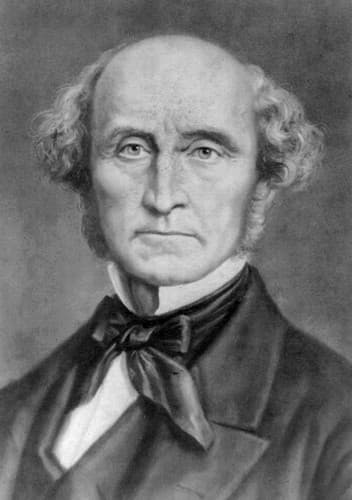
John Stuart Mill was a British philosopher and political economist active in the 19th century. He is best known for his work on utilitarianism, particularly in his book "Utilitarianism," where he explores the ethical implications of maximizing happiness. Mill's writings have significantly influenced modern liberal thought and discussions on individual liberty and social justice.
Similar books
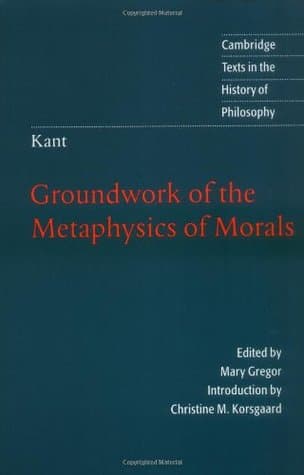
- Groundwork of the Metaphysics of Morals
Immanuel Kant
3.8 (17k) average on GoodreadsPhilosophyA foundational text for deontological ethics, offering a contrasting perspective to Mill's utilitarianism.
- 1984
George Orwell
4.2 (3.1M) average on GoodreadsPoliticsIn a future where surveillance and thought control are absolute, a man's search for truth clashes with the Party, showing that hope can be a form of rebellion.
- Animal Farm
George Orwell
4.0 (2.7M) average on GoodreadsPoliticsA farm animals' rebellion against humans turns into a pig-led dictatorship, showing how power corrupts and revolutionary ideals are betrayed.
- Freakonomics: A Rogue Economist Explores the Hidden Side of Everything
Steven D. Levitt
4.0 (709k) average on GoodreadsBusinessThis book uses economic principles to reveal the surprising incentives behind everything from drug dealing and real estate to cheating teachers and the decline of crime.
- I Am Malala: The Story of the Girl Who Stood Up for Education and Was Shot by the Taliban
Malala Yousafzai
4.1 (419k) average on GoodreadsPoliticsA teenage girl from a Taliban-controlled valley refuses to give up her books, becoming a global voice for education even after an assassination attempt.
- Atlas Shrugged
Ayn Rand
3.7 (354k) average on GoodreadsPoliticsIn a dystopian America where innovators vanish, a brilliant heiress races to uncover the truth behind the disappearing industrialists and the enigmatic John Galt, who vows to stop the world's progress.





Enjoyed the summary?
A summary gives you the shape of the book. The book itself has the detail, the examples and the voice.
Find Utilitarianism on AmazonAs an Amazon Associate, BookBrief earns from qualifying purchases. How we're funded