
Synopsis
Covers the whole plot, including the ending.
- Difficulty
- Easy
- Pacing
- Moderate
- Mood
- Thought-provoking, Reflective, Whimsical, Gentle
- Read it if
- You enjoy allegorical fables about self-discovery and the meaning of contentment, with simple yet profound messages.
- Skip it if
- You prefer complex narratives with detailed character development or clear-cut answers to philosophical questions.
The Missing Piece Plot Summary
Covers the whole plot, including the ending.
The Lonely Circle
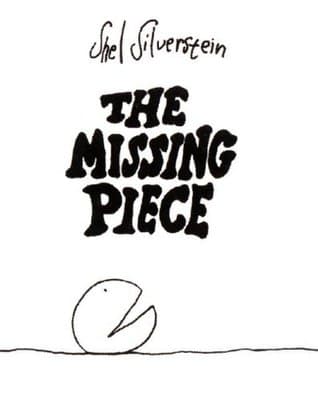
The story begins with a large, circular shape that has a wedge-shaped piece missing. This makes it unhappy. Because it lacks a piece, it cannot roll smoothly or quickly. It moves slowly, bumping along, and often stops to rest. Feeling a deep sense of longing, the shape decides to go on a journey to find the missing piece it believes will make it whole and content. It starts to roll, slowly and awkwardly, singing a simple song about its quest: "Oh, I'm lookin' for my missin' piece, I'm lookin' for my missin' piece. Hi-dee-ho, here I go, Lookin' for my missin' piece."
Initial Encounters and Disappointments
As the rolling shape continues its journey, it finds various small pieces along its path. With each discovery, it tries to see if the piece will fit into its empty space. Some pieces are too small, falling out immediately. Others are too large, unable to fit. Some are the wrong shape, while others are the right shape but don't quite connect. The shape feels repeated disappointment, its hopes rising with each potential piece only to be crushed when it doesn't fit. These failures teach the shape about what its missing piece really needs to be.
The Search Continues
Not discouraged by its first failures, the shape continues its slow, bumping journey across different places. It rolls through fields, over hills, and by water, always singing its song about looking for its missing piece. The journey is long and sometimes hard, but the shape keeps its determination. It watches the world around it, sometimes pausing to rest or think about its quest. The repeated action of rolling and singing keeps its single goal in focus.
Finding a Piece That Fits (Briefly)
At one point, the shape finds a piece that seems to fit perfectly. It slides right into the empty space, completing the circle. For a short time, the shape is whole and happy. However, as it tries to roll, the new piece falls out. It wasn't truly its missing piece; it just fit. This experience is bittersweet, offering a glimpse of wholeness only to have it taken away, showing that a true missing piece must not only fit but also stay attached and work.
Adventures and Challenges
Because it is missing a piece, the shape cannot roll quickly, which ironically allows it to experience the world more deeply. It can talk to a worm, smell a flower, and watch a butterfly. It meets both good and bad experiences, like being too hot or too cold, or getting caught in the rain. Its incompleteness, while causing longing, also gives it unique interactions and observations that a complete, fast-rolling circle might miss. These experiences change its view and add depth to its journey.
Encountering a Piece That Doesn't Want to Be Found
The shape eventually finds a piece that it believes is its missing one. However, this piece does not want to join. It prefers to be on its own, independent and unattached. The rolling shape tries to convince it, but the piece makes it clear that it is happy as it is. This encounter teaches the shape that not every piece is meant to complete it, and that other pieces may have their own paths and desires, separate from its own search for wholeness.
Finding a Piece That Fits (Again) - The Singing Piece
Finally, the rolling shape finds a piece that not only fits perfectly but also seems to belong. When the piece joins the circle, the shape becomes whole. Now, as a complete circle, it can roll smoothly and quickly. The two parts, now one, begin to roll together. This is a moment of success, as the long search seems to have ended, and the shape's wish for completeness is met. The new piece, however, has its own special quality.
The Problem with Wholeness
With its missing piece found and now whole, the circle rolls very fast. It rolls so fast, in fact, that it can no longer sing its song about looking for its missing piece. The speed and smoothness of its movement mean it passes by the worms, flowers, and butterflies without noticing them. The very act of being complete, which it had wanted, now stops it from experiencing the world in the way it had become used to. The joy of wholeness comes with an unexpected loss of connection and expression.
The Singing Piece's Problem
The piece that joined the circle also had its own song, a beautiful melody that it sang when it was alone. However, now that it is part of the fast-rolling, whole circle, it can no longer sing its song. The speed and the combined movement of the complete circle make it impossible for the piece to express itself. This creates a new problem: the circle's quest being fulfilled has accidentally silenced the very piece that completed it, showing a possible conflict between individual expression and being a whole group.
The Separation
Seeing that the new piece cannot sing its song while they are together and rolling fast, the now-complete circle stops. It understands that its wholeness has come at the cost of the piece's individuality and happiness. With gentle understanding, the circle carefully sets the piece down, allowing it to be free once more. This act is selfless, putting the well-being and freedom of the piece before its own desire for completeness, showing a new kind of wisdom gained through its journey.
Returning to Incompleteness
Once again, the circle is missing a piece. It is no longer whole. However, this time, its state of incompleteness is different. It is not unhappy in the same way it was at the beginning. It has experienced wholeness and understood what that means. It has also learned to let go. As it begins to roll again, slowly and bumping along as before, it starts to sing its original song: "Oh, I'm lookin' for my missin' piece, I'm lookin' for my missin' piece. Hi-dee-ho, here I go, Lookin' for my missin' piece." The journey continues, but with a new understanding.
The Journey Continues, Transformed
The story ends with the incomplete circle continuing its journey, still searching for its missing piece and still singing its song. However, the meaning of the song and the nature of the quest have subtly changed. The circle has learned that true happiness might not just be about being physically complete, but in the journey itself, the experiences gained, and understanding what it means to be connected, or even disconnected. It has accepted its state of becoming, rather than just focusing on a fixed goal of being whole.
Principal Figures
The Missing Piece
Protagonist
A simple, incomplete circle searching for its missing part.
The central character is an anthropomorphic, circular shape with a wedge-shaped gap. It is driven by a deep sense of incompleteness and unhappiness, believing that finding its 'missing piece' will make it whole and content. Its journey is characterized by perseverance, hope, and eventual introspection. While initially focused on external completion, it slowly learns about the nature of self, connection, and the unexpected consequences of achieving its desires. Its primary goal is to become a perfect, fast-rolling circle.
Relationships: Various Pieces (Brief, often ill-fitting encounters); The Singing Piece (Temporary union, leading to mutual realization and separation)
The Singing Piece
Supporting
A small, wedge-shaped piece that eventually joins the circle.
This is the specific piece that eventually fits perfectly into the protagonist. Before joining, it has its own identity and its own song, signifying its individuality and self-expression. Its brief union with the circle highlights the conflict between individual autonomy and the demands of being part of a larger whole. Its inability to sing its song when connected to the fast-rolling circle ultimately leads to its gentle separation, reinforcing themes of freedom and the potential costs of 'completeness' for all parties involved.
Relationships: The Missing Piece (Temporary union, then separation for mutual benefit)
The Worm
Mentioned
An example of the simple life forms the incomplete circle can interact with.
The worm represents the small, often overlooked details of the natural world. Because the Missing Piece rolls slowly, it has the opportunity to 'talk to a worm,' symbolizing the deeper, more intimate connections and observations that are possible when one is not rushing through life. The worm's presence emphasizes the unique perspective afforded by the circle's incompleteness, highlighting the richness of slow living.
Relationships: The Missing Piece (Brief, symbolic interaction)
The Flower
Mentioned
An example of natural beauty appreciated by the incomplete circle.
Like the worm, the flower signifies the simple beauties of nature that the slow-moving Missing Piece can 'smell.' It represents the sensory experiences and aesthetic appreciation that are possible when one is not driven by speed or a singular goal. The flower underscores the idea that incompleteness, while a perceived flaw, can also open doors to different forms of enjoyment and engagement with the world.
Relationships: The Missing Piece (Brief, symbolic observation)
The Butterfly
Mentioned
An example of transient beauty observed by the incomplete circle.
The butterfly symbolizes ephemeral beauty and the fleeting moments of life that the incomplete circle has the leisure to 'watch.' Its presence reinforces the notion that the journey itself, with its slower pace, allows for contemplation and appreciation of the world's delicate wonders. The butterfly represents the kind of subtle joy that is often missed when one is preoccupied with reaching a destination quickly.
Relationships: The Missing Piece (Brief, symbolic observation)
Themes & Insights
The Nature of Fulfillment and Wholeness
The main theme explores what it truly means to be 'whole' and find happiness. At first, the Missing Piece believes wholeness comes from finding an outside part to complete it. However, its journey shows that physical completeness (when it finds the Singing Piece) can mean giving up other forms of happiness, like connecting to the world and individual expression. The story suggests that true happiness might be an inside feeling, or found in the journey itself, rather than a fixed end goal. The circle's choice to free the Singing Piece shows a deeper understanding of happiness that puts mutual well-being before selfish completeness.
“Oh, I'm lookin' for my missin' piece. I'm lookin' for my missin' piece. Hi-dee-ho, here I go, Lookin' for my missin' piece.”
The Value of the Journey vs. the Destination
The book shows that the process of searching and experiencing life is as valuable, if not more, than just reaching a specific goal. Because the Missing Piece is incomplete, it rolls slowly, allowing it to "talk to a worm, and smell a flower, and watch a butterfly." These rich interactions would be impossible if it were whole and rolling fast. The journey is full of lessons, disappointments, and unique observations that shape its understanding. In the end, even after experiencing wholeness, the circle returns to its journey, suggesting that the continuous search, with its experiences, has important meaning.
“It was too hot, then it was too cold. Sometimes it rained, and sometimes it snowed. But it kept on rolling.”
Individuality and Interdependence
This theme is explored through the relationship between the Missing Piece and the Singing Piece. The Singing Piece has its own identity and song, showing its individuality. When it joins the circle, it loses its ability to sing, showing how merging with another for 'completeness' can sometimes silence individual expression. The circle's kind act of setting the Singing Piece free emphasizes the importance of respecting individuality and recognizing that true connection might not require losing oneself. It suggests that healthy relationships allow for both connection and individual freedom.
“The piece had its own song, and it sang it beautifully. But when it became part of the whole, it could no longer sing.”
Acceptance and Letting Go
The story ends with the Missing Piece accepting and letting go. After finally finding a piece that fits, and feeling the short joy of wholeness, it realizes the cost of this wholeness for its new companion. Its decision to set the Singing Piece free, even though it means returning to its incomplete state, shows a deep acceptance of its condition and a selfless act of letting go. This change from a relentless seeker to a caring entity suggests that true peace can come from accepting what is, rather than always trying for a perfect state.
“And the missing piece, who had its own song, could no longer sing it. So the circle gently set the piece down.”
Plot Devices & Literary Techniques
Allegory
The entire story functions as a symbolic narrative about life's journey.
The Missing Piece uses simple shapes and a straightforward narrative to convey deeper philosophical ideas about human existence. The 'missing piece' represents a sense of incompleteness, a longing for purpose, love, or self-actualization that many people experience. The journey symbolizes life's quest, filled with trials, errors, and moments of discovery. The ultimate resolution, or lack thereof, serves as a commentary on the nature of happiness and fulfillment, making the story resonate on multiple levels beyond its literal interpretation.
Personification
Inanimate objects are given human-like emotions and motivations.
The main character, a simple geometric shape, is imbued with human emotions like unhappiness, longing, determination, and eventually, compassion. It 'sings' a song, 'talks' to a worm, and makes conscious decisions. This personification allows young readers to connect with the abstract concept of searching for meaning, while also enabling adult readers to contemplate deeper philosophical questions through the relatable lens of a character's emotional journey. It makes the abstract accessible and engaging.
Repetition
The recurring song and actions emphasize the ongoing nature of the quest.
The repeated refrain of the Missing Piece's song – "Oh, I'm lookin' for my missin' piece..." – serves multiple purposes. It reinforces the central theme of the quest, creates a rhythmic and memorable element for children, and highlights the cyclical nature of life's search. The repetition of trying and failing to find a suitable piece, and the continuous act of rolling, underscores the perseverance required in any significant endeavor and the iterative process of self-discovery.
Symbolism
Objects and actions carry deeper, abstract meanings.
Various elements in the story hold symbolic weight. The 'missing piece' itself symbolizes whatever an individual feels is lacking in their life – be it a partner, purpose, or inner peace. Rolling slowly represents a contemplative, experiential approach to life, while rolling fast symbolizes a rushed, goal-oriented existence that might miss out on life's subtle joys. The 'song' of the Singing Piece symbolizes individual expression and identity. These symbols enrich the narrative, allowing for diverse interpretations.
The Missing Piece Quotes
“It was missing a piece. And it was lonesome.”
“So it set off to find its missing piece.”
“And as it rolled along, it sang a song:”
“Oh, I'm looking for my missing piece, I'm looking for my missing piece, Hi-ho, the derry-o, I'm looking for my missing piece.”
“Some of the pieces were too big.”
“And some of the pieces were too small.”
“And some of the pieces were too sharp.”
“And some were too square.”
“One day it found a piece that seemed to fit.”
“But it didn't really fit.”
“So it rolled on.”
“And then one day it found a piece that fit perfectly.”
“Now it was a whole. And it could not sing.”
“And it could not roll so fast.”
“So it put the piece down and rolled away.”
Quiz
10 questions on the plot and the characters. Each answer comes with a short explanation.
Question 1
What is the primary motivation for the main character, the 'missing piece' seeker, at the beginning of the story?
- To find a friend to play with.
- To complete itself and be whole.
- To explore the world and see new sights.
- To learn to sing a new song.
Show answer
B. To complete itself and be whole. The main character is unhappy because it is missing a piece and its quest is solely to find that missing piece to become complete.
Question 2
What does the main character do as it rolls along in search of its missing piece?
- It hums a tune.
- It whistles a happy song.
- It sings 'Oh I'm lookin' for my missin' piece'.
- It silently searches.
Show answer
C. It sings 'Oh I'm lookin' for my missin' piece'. The book explicitly states, 'And as it rolled it sang this song— Oh I'm lookin' for my missin' piece'.
Question 3
What happens when the main character encounters a piece that is too big?
- It tries to force the piece in, but it doesn't fit.
- It rolls past, knowing it's not the right one.
- It gets frustrated and gives up temporarily.
- It attempts to break off a smaller part of the piece.
Show answer
A. It tries to force the piece in, but it doesn't fit. The narrative shows the piece trying to fit various shapes, and when it encounters a piece that's too big, it simply doesn't fit, causing issues like getting stuck.
Question 4
Why does the main character eventually let go of one of the 'missing pieces' it finds, even though it fits perfectly?
- The piece was too heavy to carry.
- The piece preferred to be alone.
- The piece didn't want to be 'the missing piece' and left.
- The piece started to sing, and the main character could no longer sing its own song.
Show answer
D. The piece started to sing, and the main character could no longer sing its own song. When the main character finds a piece that fits and starts rolling with it, it realizes it can no longer sing its own song because it is now complete and rolls too fast.
Question 5
What is the implied emotional state of the main character when it is 'missing a piece'?
- Joyful and optimistic.
- Content and peaceful.
- Unhappy and incomplete.
- Indifferent and bored.
Show answer
C. Unhappy and incomplete. The very first lines state, 'It was missing a piece. And it was not happy.' This clearly establishes its initial emotional state.
Question 6
What does the story suggest about the nature of 'completeness' or 'fulfillment'?
- It is always found by acquiring something external.
- It often requires sacrificing individuality or personal expression.
- It is a permanent state once achieved.
- It is best found by staying in one place.
Show answer
B. It often requires sacrificing individuality or personal expression. The story suggests that true fulfillment might involve a trade-off. When the piece finds its 'missing piece' and becomes whole, it can no longer sing its song, implying a loss of its unique identity or purpose in the quest.
Question 7
Which of the following creatures does the main character NOT encounter during its journey?
- A worm
- A butterfly
- A bird
- An ant
Show answer
C. A bird The book illustrates encounters with a worm, a butterfly, and an ant, but a bird is not depicted as an interaction.
Question 8
What is the ultimate outcome for the main character at the very end of the story?
- It finds its perfect piece and lives happily ever after, silently.
- It remains alone, still missing a piece, but content in its singing.
- It decides to stop searching and simply observe the world.
- It breaks into smaller pieces, giving up its quest entirely.
Show answer
B. It remains alone, still missing a piece, but content in its singing. After trying a piece that makes it roll too fast to sing, it lets the piece go and continues on, alone, singing its song, implying a return to its original state but with a newfound understanding.
Question 9
What is a central theme explored through the main character's journey and choices?
- The importance of material possessions.
- The balance between individual identity and perceived completeness.
- The dangers of traveling alone.
- The inevitability of loneliness.
Show answer
B. The balance between individual identity and perceived completeness. The story highlights the dilemma of becoming 'complete' but losing the ability to sing its unique song, suggesting a trade-off between external fulfillment and internal self-expression or identity.
Question 10
How does the main character react when a piece it finds breaks?
- It cries in despair.
- It gets angry and throws the broken pieces away.
- It gently places the broken piece down and continues its search.
- It tries to mend the broken piece back together.
Show answer
C. It gently places the broken piece down and continues its search. The character shows resilience and understanding; when a piece breaks, it simply leaves it and continues its quest without excessive emotion.
The Missing Piece FAQ
What is the central premise of 'The Missing Piece'?
The book follows a circular entity that is incomplete, having a wedge-shaped 'missing piece' that prevents it from rolling smoothly and quickly. It embarks on a journey to find this piece, believing its acquisition will bring happiness and wholeness.
How does the Missing Piece's journey begin and what is its initial motivation?
The journey begins because the piece is 'not happy' due to its incompleteness, which causes it to roll slowly and struggle. Its primary motivation is to find the specific piece that will fit perfectly and allow it to experience an unhindered, joyful existence.
What kind of 'pieces' does the Missing Piece encounter before finding its 'own'?
The Missing Piece encounters various other pieces, some too big, some too small, some too pointy, and some too square. It also finds pieces that don't fit at all, highlighting its specific and unique need for a particular shape.
What happens when the Missing Piece finally finds a piece that seems to fit?
When the Missing Piece finally finds a piece that fits perfectly, it becomes a complete circle and can roll very fast. However, this newfound speed prevents it from singing or talking to worms and butterflies, leading to a new kind of dissatisfaction.
Why does the Missing Piece ultimately let go of the piece it found?
The Missing Piece lets go of the piece it found because, while it achieved completeness and speed, it lost its ability to sing and interact with its environment. It realized that true fulfillment wasn't just about being whole, but about enjoying the journey and its unique way of being.
Are there any subtle visual cues in Silverstein's illustrations that hint at the Missing Piece's evolving understanding?
Yes, initially the Missing Piece's 'mouth' often appears downturned or neutral, conveying its unhappiness. After it lets go of the piece, its 'face' often appears more relaxed, even joyful, despite its continued incompleteness, suggesting a shift in perspective.
What is the significance of the song the Missing Piece sings throughout its journey?
The song, 'Oh I'm lookin' for my missin' piece,' serves as a constant declaration of its quest and identity. When it becomes whole and rolls too fast, it can no longer sing, symbolizing the loss of its unique voice and purpose that came with the singular focus on completeness.
Does the book imply that the 'missing piece' was always external or could it have been an internal state?
The book strongly suggests the 'missing piece' is initially perceived as an external void to be filled. However, the resolution implies that true contentment might be an internal state of acceptance and enjoyment of one's current form, rather than a perfect external match.
How does the Missing Piece's initial 'unhappiness' drive its quest?
The initial 'unhappiness' acts as the primary motivator, a feeling of inadequacy or incompleteness that propels it to seek an external solution. This discontent is a common human experience, driving many to search for external fixes to internal voids.
What psychological concept does the Missing Piece's journey with the 'perfect' piece illustrate?
This illustrates the concept of the 'hedonic treadmill' or the paradox of choice. Achieving a long-sought goal (completeness) doesn't necessarily lead to lasting happiness, and can even introduce new problems or trade-offs (loss of song, interaction).
How does the story comment on the nature of 'fulfillment' from a psychological perspective?
The story suggests that fulfillment isn't solely about achieving a state of 'perfection' or completeness, but rather about the ability to experience and engage with life's journey, including its imperfections. True fulfillment might involve acceptance and the capacity for joy despite perceived flaws.
What does the Missing Piece's ultimate decision to roll on without a piece reveal about self-acceptance?
Its decision reveals a profound act of self-acceptance. It chooses to embrace its unique, incomplete form, recognizing that its perceived flaw also allows for valuable experiences like singing and connecting with its environment, rather than sacrificing those for a superficial 'completeness'.
Is the ending of 'The Missing Piece' truly happy, or is it bittersweet?
The ending is more nuanced than simply happy; it's arguably bittersweet. While the Missing Piece finds a new sense of peace and purpose, it still hasn't found its 'missing piece' in the traditional sense, suggesting that true happiness might come from accepting imperfections rather than eliminating them.
Could the 'missing piece' be interpreted as a metaphor for a romantic partner, and if so, what is the book's message about relationships?
Yes, it can be interpreted as a metaphor for a romantic partner. If so, the book's message is that while a partner might seem to 'complete' you, true happiness doesn't come from another person, but from within, and from being able to maintain your individuality and joy even when 'incomplete'.
What is the book's broader commentary on the human search for purpose or meaning?
The book suggests that the human search for purpose or meaning often involves seeking external solutions to internal feelings of incompleteness. It subtly argues that true meaning may not lie in achieving a perfect state, but in the journey itself, and in finding joy and connection amidst one's unique circumstances.
How does the book challenge conventional notions of 'perfection' and 'wholeness'?
It challenges these notions by demonstrating that achieving a state of 'perfection' (being a complete circle) doesn't automatically equate to happiness or a better existence. In fact, its 'imperfection' allowed for experiences that 'wholeness' prevented, suggesting that flaws can be integral to one's identity and enjoyment of life.
Could the story be seen as an allegory for personal growth and self-discovery?
Absolutely. The Missing Piece's journey mirrors personal growth, where an individual initially seeks external validation or completeness. Through trial and error, it discovers that true self-discovery involves understanding what genuinely brings joy and acceptance of one's unique self, rather than conforming to an idealized state.
About the author
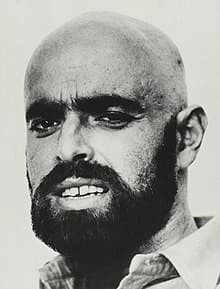
Shel Silverstein was an American poet, songwriter, and author known for his children's literature. His notable works include "Where the Sidewalk Ends," "The Giving Tree," "A Light in the Attic," "Falling Up," "The Missing Piece," and "The Missing Piece Meets the Big O," which feature whimsical illustrations and themes of imagination and friendship. Silverstein's writing has left a lasting impact on children's literature.
Similar books
- The Giving Tree
Shel Silverstein
4.4 (906k) average on GoodreadsFantasyExplores themes of giving, taking, and fulfillment with simple illustrations and profound meaning.
- The Little Prince
Antoine De Saint Exupéry
A philosophical fable for all ages, using simple language to explore deep questions about life, love, and loss.
- Jonathan Livingston Seagull
Richard Bach
3.8 (202k) average on GoodreadsFantasyA short, allegorical novel about self-perfection and the pursuit of a higher purpose.
- Harry Potter and the Sorcerer's Stone
J.K. Rowling
4.5 (7M) average on GoodreadsFantasyRescued from a miserable life under the stairs, an orphaned boy discovers he's a wizard destined for a magical school, where he uncovers a dangerous secret tied to the dark wizard who murdered his parents.
- The Hobbit, or There and Back Again
J.R.R. Tolkien
4.3 (2.9M) average on GoodreadsFantasyA comfort-loving hobbit named Bilbo Baggins is whisked away by a mischievous wizard and a band of dwarves on an unexpected journey to reclaim stolen treasure from a fearsome dragon, discovering courage and a magical ring along the way.
- Harry Potter and the Goblet of Fire
J.K. Rowling
4.6 (2.6M) average on GoodreadsFantasyA bewildered Harry Potter, underage and thrust into a deadly Triwizard Tournament, must brave dragons, mermaids, and a resurgent dark magic to survive a year that will forever alter the wizarding world.



Enjoyed the summary?
A summary gives you the shape of the book. The book itself has the detail, the examples and the voice.
Find The Missing Piece on AmazonAs an Amazon Associate, BookBrief earns from qualifying purchases. How we're funded