“Free men cannot be conquered.”
— Colonel Lanser's internal thought, reflecting on the difficulty of occupying a free people.

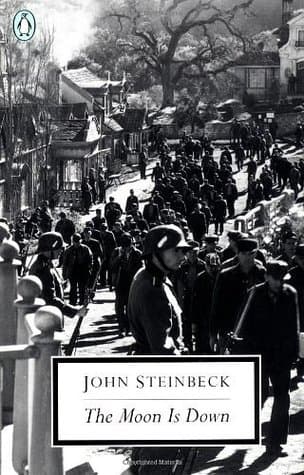
John Steinbeck (1942)
Goodreads Rating
3.90/ 5(20,301 reviews)
Summary Read
12 min
Book Length
120 min
Sign in to track this book
In a snow-bound coastal town under occupation, the people, spurred by the execution of a townsman, wage a relentless, quiet war against their invaders, proving that freedom, once lost, cannot be extinguished, only reclaimed through an unyielding spirit.
Ask anything about The Moon Is Down and get instant answers grounded in the summary.
The story begins with the swift and unexpected occupation of a small, unnamed coastal town by an invading army, later understood to be German forces during WWII, though never explicitly stated. The town is important because of its port, which serves a coal mine. The invasion meets little organized resistance, surprising the townspeople. Colonel Lanser, the commander of the occupying battalion, sets up his headquarters in the home of Mayor Orden, the town's elected leader. Lanser and his staff try to keep things civil, despite the reality of military occupation.
As the initial shock fades, the townspeople deal with losing their freedom. The weather turns bleak, with early snow adding to the oppressive atmosphere. Colonel Lanser, a veteran who understands people, acknowledges that 'there are no peaceful people' when their liberty is taken. He tries to enforce rules and maintain a sense of normalcy, but the resentment among the 'simple, peaceful people' of the town becomes clear. This time marks the start of the psychological struggle between the occupiers and the occupied, as their new reality sets in.
The fragile peace breaks when Alexander Morden, a former alderman who values his freedom, is ordered to work in the coal mine. In defiance, Morden strikes Captain Loft with a pickaxe. Captain Bentick, intervening, is hit instead and dies. After a quick trial, Morden is executed by a firing squad. This brutal event acts as a catalyst for the town. It turns their anger and confusion into a 'slow, silent, waiting revenge,' changing their passive resistance into active, though covert, rebellion against the invaders.
After Morden's execution, the townspeople begin their systematic, undeclared war against the occupiers. Sections of the railroad connecting the port to the coal mine are regularly damaged, machinery in the mine often breaks down, and the dynamo of the electricity generators is short-circuited. Also, individual soldiers who relax their guard, seek drink, or engage with women are found dead. This campaign of sabotage and targeted killings, though not coordinated in a traditional sense, shows the collective will of the people to resist. Mayor Orden, though outwardly compliant, supports his people, understanding their spirit.
Colonel Lanser, despite his experience, becomes increasingly frustrated by the invisible enemy. He tries to reason with Mayor Orden, seeking to understand the source of the town's resilience. Orden explains to Lanser that his goal – 'to break man’s spirit permanently' – is impossible, as the idea of freedom lasts longer than any physical force. Lanser sees his own men growing weary, demoralized by the constant fear, the cold weather, and the futility of their position. He begins to realize that 'the flies have conquered the flypaper,' a metaphor for the occupiers being trapped by the very people they sought to control.
The relentless, silent resistance harms the occupying soldiers. The constant fear of ambush, the isolation, and the bleak, cold environment erode their morale. Many soldiers openly want the war to end so they can return home, seeing the futility of their presence in a town that refuses to be subdued. The officers also show signs of strain, with some, like Captain Loft, becoming more volatile and brutal, while others, like Lieutenant Tonder, fall into despair and loneliness, showing the psychological cost of the occupation on the invaders.
Recognizing the need to do more, some members of the local resistance escape the occupied town and travel to England. There, they convey their situation and request explosives to increase their sabotage against the invaders. This marks a turning point, as the local resistance connects with outside support, signaling a broader conflict and the town's entry into the larger war effort. The request for dynamite shows a shift from passive disruption to more destructive, targeted actions.
In response to the resistance's plea, English planes drop small packages over the town. These packages contain dynamite sticks, meant to give the local resistance more destructive power, and chocolates, a gesture of solidarity and a morale booster for the suffering townspeople. The sight of these packages falling from the sky creates hope and renewed determination among the residents, while causing panic among the occupying army, who realize the outside world is now directly helping the resistance.
In a desperate attempt to stop the growing resistance and prevent the use of the new explosives, the invading army takes Mayor Orden and his friend, Dr. Winter, the town doctor and historian, hostage. Colonel Lanser makes it clear that any further acts of resistance from the townspeople will result in the immediate execution of both men. This act of coercion is a final gamble by the occupiers to regain control and break the town's spirit, putting the beloved mayor's life at risk.
Knowing his death is near, Mayor Orden remains firm. He tells his wife that while he can be killed, the 'idea of Mayor' – representing freedom, democracy, and the collective will of the people – is beyond the reach of any army. Before his execution, he shares a final conversation with Dr. Winter, reminding him of their high school play, where Orden played Socrates in 'The Apology.' He tells Winter to ensure 'the debt is repaid' to the army, a clear instruction for the resistance to continue, cementing his legacy as a martyr for freedom.
The Protagonist
Orden transitions from a symbol of democratic leadership to a martyr for freedom, demonstrating that ideas are more powerful than force.
The Antagonist
Lanser's initial confidence in military control erodes into a realization of the futility of his mission against an unyielding spirit.
The Supporting
Winter evolves from an observer to a crucial recipient of Mayor Orden's final charge, becoming a keeper of the resistance's flame.
The Supporting
Morden's brief but pivotal act of defiance serves as the spark that ignites the town's collective will to resist.
The Supporting
Loft's initial harshness gives way to increasing frustration and a descent into more desperate, brutal measures as the occupation falters.
The Supporting
Tonder's initial romantic view of war gives way to profound disillusionment and despair, ultimately leading to his death.
The Supporting
Molly endures personal tragedy and becomes a stoic figure of resistance, never compromising her loyalty to her people or her husband's memory.
This theme is central to the novel, stating that while bodies can be imprisoned or killed, the idea of freedom cannot be extinguished. Mayor Orden repeatedly tells this to Colonel Lanser, explaining that 'men cannot be killed, but the idea of man can be killed.' The townspeople's 'slow, silent, waiting revenge' shows this, as they continue to resist even after Alexander Morden's execution. The parachute drop of dynamite and chocolates symbolizes lasting hope and outside support for this spirit, showing that freedom is a universal desire.
“Free men cannot be conquered. The idea of freedom is stronger than any army.”
The novel explores the psychological and practical futility of military occupation when faced with a unified, determined populace. Colonel Lanser, despite his military skill, finds himself fighting an invisible enemy – the collective will of the town. His soldiers become demoralized, lonely, and fearful, realizing they are 'the flies' caught on 'the flypaper.' Constant sabotage, individual killings, and the general resentment make effective governance impossible, showing that brute force cannot control hearts and minds. The invaders' inability to 'break man's spirit permanently' leads to their own internal decay.
“The flies have conquered the flypaper. We are caught, and we cannot get out.”
Steinbeck frames the conflict not just as a battle between two armies, but as a clash between basic principles: democratic ideals of freedom and self-determination versus authoritarian force. Mayor Orden represents the lasting power of ideas, reason, and the collective human spirit, while Colonel Lanser, though not overtly evil, represents the instruments of force and control. The novel suggests that while force can temporarily subjugate, it can never truly conquer or destroy an idea. Orden's final conversation, referencing Socrates' Apology, elevates the struggle to a philosophical level, where truth and ideals ultimately win over physical power.
“The people don't like to be conquered, and they will not be conquered.”
The novel details the psychological impact of war, not just on the occupied, but also on the occupiers. The townspeople endure fear, grief, and the loss of liberty, yet find strength in unity. Conversely, the invading soldiers, despite their initial military advantage, suffer from loneliness, paranoia, and demoralization. Lieutenant Tonder's despair and his longing for human connection are examples of this. Colonel Lanser, too, is a weary man, burdened by the moral ambiguities of his mission. The constant tension and the unseen enemy erode the invaders' will, showing that war damages everyone involved.
“This is a little war, but it is a long one. And it is a lonely one.”
Mayor Orden as a symbol of the enduring idea of freedom and democratic rule.
Mayor Orden is more than just a character; he embodies the very 'idea' of democratic leadership and the spirit of his free people. His physical capture and impending execution are symbolic, as he articulates that while his body can be killed, the 'idea of Mayor' – representing freedom, self-governance, and resistance – is immortal and beyond the reach of any army. This device elevates the conflict from a mere military occupation to a philosophical struggle for enduring principles, making his sacrifice a powerful statement that inspires continued resistance.
A recurring metaphor illustrating the unexpected entrapment of the invaders by the occupied.
The metaphor of 'the flies have conquered the flypaper' is a powerful plot device used by Colonel Lanser to express the ironic and desperate situation of his occupying forces. Initially, the invaders (flies) believed they could easily subdue the town (flypaper). However, the town's passive yet persistent resistance has effectively trapped the invaders, draining their morale and resources, making escape or true victory impossible. This metaphor underscores the futility of their mission and the unexpected strength of the seemingly weaker party, highlighting the psychological victory of the occupied over the occupiers.
Mayor Orden's reference to Socrates in 'The Apology' as a parallel for his own sacrifice.
Mayor Orden's final conversation with Dr. Winter, where he reminds him of playing Socrates in 'The Apology,' serves as a profound classical allusion. Like Socrates, Orden is condemned to death for upholding truth and challenging authority (in this case, the authority of the invaders). Socrates chose death over abandoning his principles, and Orden does the same, emphasizing that ideas and moral principles are more important than physical life. This device elevates Orden's sacrifice to a universal, timeless act of martyrdom for freedom, ensuring his message and the resistance will live on.
The bleak and early onset of winter mirroring the oppressive atmosphere of the occupation.
The early and harsh onset of winter, with its cold and snow, serves as a powerful environmental motif that mirrors the oppressive, bleak, and demoralizing atmosphere of the occupation. The physical discomfort of the cold amplifies the psychological discomfort and fear experienced by both the townspeople and, notably, the invaders. It contributes to the soldiers' longing for home and their increasing despair, making the external environment a palpable extension of the internal state of the characters and the overall mood of the narrative.
“Free men cannot be conquered.”
— Colonel Lanser's internal thought, reflecting on the difficulty of occupying a free people.
“The people don't like to be conquered, sir.”
— Joseph, the mayor's servant, making a simple but profound observation to Colonel Lanser.
“It is a rule that people are either slaves or free. If they are slaves they have a master. If they are free they have no master.”
— Mayor Orden explaining the fundamental nature of freedom to the townspeople.
“The debt is not to the past, but to the future.”
— Mayor Orden contemplating the long-term struggle and the responsibility to future generations.
“The flies have conquered the flypaper.”
— A metaphor used by Dr. Winter to describe how the occupied people are turning the occupation against the invaders.
“You can kill people, but you can't kill ideas.”
— A recurring theme, often implied, but directly stated in various forms by characters like Mayor Orden.
“The conquerors are a little afraid of the conquered.”
— Dr. Winter observing the psychological toll of occupation on the invaders.
“The one thing that is clear is that the people hate us.”
— Colonel Lanser's stark realization about the futility of trying to win over the occupied population.
“A man is a man, and he has to be treated like a man.”
— Mayor Orden's belief in the inherent dignity of individuals, even when facing tyranny.
“The moon is down, and the night is dark, and the wind is cold. But the stars are still there.”
— A metaphorical statement by Mayor Orden, suggesting hope and enduring principles even in the darkest times.
“They will win who can endure.”
— A core philosophy of the resistance, emphasizing perseverance over immediate victory.
“The little plans, the little victories, these are what make the big war.”
— Dr. Winter explaining the nature of guerrilla warfare and sustained resistance.
“It is not the killing of men that is the worst, but the killing of spirit.”
— Mayor Orden reflecting on the deeper damage inflicted by an occupation.
“The people will not be broken. They are not made that way.”
— Joseph expressing his unwavering faith in the resilience of his community.
Ready to see how well you understood this book? Take our interactive quiz with 10 questions.
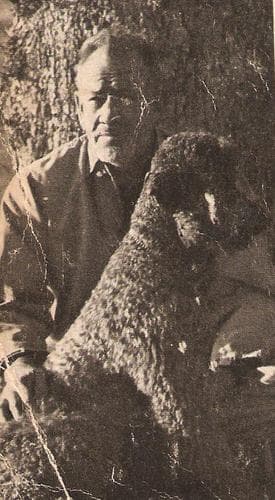
John Ernst Steinbeck was an American writer. He won the 1962 Nobel Prize in Literature "for his realistic and imaginative writings, combining as they do sympathetic humor and keen social perception". He has been called "a giant of American letters."
Support the author — grab the full book.
As an Amazon Associate, BookBrief earns from qualifying purchases, at no extra cost to you. How we're funded.