

Synopsis
Covers the whole plot, including the ending.
- Difficulty
- Medium
- Pacing
- Moderate
- Mood
- Atmospheric, Romantic, Melancholy, Grand, Dark
- Read it if
- You enjoy epic historical fantasy, forbidden romance, and a blend of ancient mysticism with early 20th-century grandeur.
- Skip it if
- You prefer fast-paced action over detailed historical settings and character introspection, or are sensitive to dark romantic themes and violence.
The Mummy Plot Summary
Covers the whole plot, including the ending.
The Awakening of Ramses
In 1900, during an archaeological dig in Egypt, British nobleman Lawrence Stratford uncovers Ramses the Great's tomb. Inside, he finds a man in suspended animation, preserved by an ancient elixir. Out of scientific interest, Lawrence gives him a modern stimulant, waking Ramses. The ancient pharaoh, disoriented but fully aware, sees a world vastly different from his own. Lawrence, surprised, quickly understands the huge historical and personal meaning of his find, setting the stage for Ramses's return to a world centuries removed from his.
Arrival in London and Julie's Fascination
Lawrence Stratford brings the revived Ramses, introduced as 'Reginald Ramsey' to avoid suspicion, to his London estate. Ramses quickly adjusts to Edwardian society, showing great intelligence and charm, though his old manners sometimes appear. Lawrence's daughter, Julie Stratford, is immediately drawn to Reginald. She senses an ancient mystery about him and is captivated by his knowledge and unique view of life. Her initial curiosity grows into deep interest, leading to a passionate and risky romance.
Ramses's Confession and the Elixir's Secret
Unable to keep up the pretense with Julie, Ramses reveals his true identity as Ramses the Great and explains the elixir of life, which gave him immortality. He tells her his past, including his rule and his love for Cleopatra. Julie, though shocked, is fascinated by his story and believes him. This confession strengthens their bond but also shows the serious effects of his immortality and the dangerous elixir. Ramses warns her of the elixir's power, capable of granting both eternal life and ruin.
The Lure of the Elixir
As Ramses and Julie grow closer, the elixir of life becomes known to others in the Stratford household. Julie's cousin, Alex, quickly sees its importance and wants its power for himself. Lawrence Stratford, still processing Ramses's existence, is also interested in immortality, especially after seeing Ramses's vigor. The elixir, once a secret between Ramses and Julie, now becomes a desired object and a source of potential conflict, threatening to cause unforeseen problems.
The First Tragedy: Lawrence's Death
Driven by a strong desire for immortality and scientific curiosity, Lawrence Stratford tries to analyze and recreate the elixir using Ramses's small samples. Despite Ramses's warnings about the elixir's unstable nature and the impossibility of replication without ancient knowledge, Lawrence proceeds. Tragically, his efforts lead to a fatal accident. His sudden death leaves Julie devastated and increases tension within the Stratford home, making the elixir an even more dangerous and desired item.
Julie's Choice and the Pact
After her father's death, Julie Stratford deals with deep grief. Seeing Ramses's eternal life and the short span of human life, she makes a big decision: she chooses to drink the elixir of life and join Ramses in immortality. Ramses, at first hesitant due to the burden of eternal life, finally agrees to share his gift with her, driven by his deep love. Together, they promise to face eternity, bound by the elixir's secret and their growing love.
The Reawakening of Cleopatra
Despite his love for Julie, Ramses is haunted by memories of his past and his lasting love for Cleopatra. Unable to resist his former queen, he secretly gets her mummy and, using the elixir, revives her. Cleopatra awakens in a world new to her, at first confused but quickly showing her royal presence. Her return introduces a strong rival for Ramses's affection and brings a dangerous element to the Stratford home, as Ramses tries to balance his ancient love with his new one.
Cleopatra's Reign of Terror
Awakened and given the elixir, Cleopatra quickly shows herself to be a strong and cruel figure. She is very possessive of Ramses and sees Julie as a rival. Using her ancient charm, cunning, and new power, she starts to influence the Stratford household. She subtly turns Alex against Julie and Ramses and even tries to harm Julie directly. Her presence creates fear and suspicion, showing the darker side of immortality and ancient power in a modern world.
Confrontation and Betrayal
Alex, further provoked by Cleopatra's suggestions and his own greed, becomes convinced that Ramses is evil and that the elixir belongs to him. He confronts Ramses, trying to overpower him and steal the remaining elixir. A violent fight follows, showing Alex's true, malicious intentions. This betrayal highlights the elixir's corrupting influence and Cleopatra's manipulative power, pushing the conflict to a dangerous peak at the Stratford estate.
The Final Battle and Cleopatra's Downfall
The conflict ends in a dramatic fight between Ramses, Julie, and Cleopatra. Julie, having also drunk the elixir, fights with Ramses, her love and loyalty strengthening her. They corner Cleopatra, who, despite her power, is outmatched by their combined efforts and her newly revived state. In a desperate struggle, Cleopatra is defeated, ending her reign of terror. Her defeat marks the victory of love and choice over old obsession and dark ambition.
Aftermath and New Beginnings
With Cleopatra defeated and the immediate threats gone, Ramses and Julie face the aftermath. Alex is dealt with, and their immortality is kept secret. They acknowledge the burden and loneliness of eternal life but confirm their commitment to each other. They decide to leave London, seeking a new life where they can explore immortality together, free from the past. Their journey is one of constant learning and change, as they navigate an evolving world, bound by their shared gift and love.
The Mummy Characters
Ramses the Great (Ramses the Damned)
Protagonist
An ancient Egyptian pharaoh revived in Edwardian London, cursed with immortality.
Ramses is an ancient Egyptian pharaoh, brilliant, charismatic, and possessing vast knowledge from centuries of observation. He is a man of intense passions, deeply loyal but also prone to being swayed by his past. His immortality, granted by an elixir, is both a gift and a curse, forcing him to witness the ebb and flow of human history and endure profound loneliness. He struggles with the weight of his past loves, particularly Cleopatra, which often conflicts with his burgeoning feelings for Julie Stratford.
Relationships: Julie Stratford (Love interest, companion in immortality); Cleopatra (Ancient love, obsessive and dangerous ex-lover); Lawrence Stratford (Discoverer, initial friend/mentor in the modern world)
Julie Stratford
Protagonist
A spirited and intelligent Edwardian heiress who falls in love with Ramses.
Julie is an independent, intelligent, and compassionate young woman of Edwardian society. She possesses a keen intellect and a thirst for knowledge, setting her apart from her peers. She is initially drawn to Ramses out of curiosity, but her fascination deepens into a profound love. Her courage and emotional strength are tested as she confronts the realities of Ramses's past and the dangers of immortality. She is willing to sacrifice her mortal life to be with the man she loves, embracing the unknown.
Relationships: Ramses the Great (Love interest, immortal companion); Lawrence Stratford (Beloved father); Alex (Cousin, initially friendly but later antagonistic)
Cleopatra
Antagonist
The ancient Egyptian queen, revived by Ramses, who becomes a jealous and ruthless rival.
Cleopatra is the legendary Egyptian queen, brought back to life by Ramses. She is incredibly beautiful, intelligent, and fiercely possessive, embodying ancient power and regal ruthlessness. Her love for Ramses is absolute and obsessive, and she views anyone who threatens her claim on him as an enemy. She quickly adapts to the modern world, using her cunning and manipulative nature to achieve her desires, becoming a dangerous force that threatens Ramses and Julie's happiness.
Relationships: Ramses the Great (Ancient love, object of her obsession); Julie Stratford (Rival, object of her jealousy and hatred); Alex (Manipulated pawn)
Lawrence Stratford
Supporting
Julie's father, the archaeologist who discovers and revives Ramses.
Lawrence Stratford is a wealthy, intelligent, and adventurous British archaeologist. He is a man of science and curiosity, driven by the thrill of discovery. His initial excitement at reviving Ramses turns into a complex mix of wonder, fear, and ultimately, a fatal desire for immortality. He genuinely cares for his daughter, Julie, but his ambition and recklessness lead to his tragic demise, setting in motion many of the story's key events.
Relationships: Julie Stratford (Daughter); Ramses the Great (Initial discoverer and host)
Alex
Antagonist/Supporting
Julie's ambitious and treacherous cousin, who covets the elixir.
Alex is Julie's cousin, a man driven by ambition, greed, and a sense of entitlement. He is initially presented as a charming but somewhat weak-willed character. He quickly becomes obsessed with the elixir of life, seeing it as a means to power and eternal youth. Easily manipulated, especially by Cleopatra, he succumbs to his darker impulses, becoming a dangerous adversary to Ramses and Julie. His actions highlight the corrupting influence of unchecked desire.
Relationships: Julie Stratford (Cousin, rival); Ramses the Great (Object of his envy and hatred); Cleopatra (Manipulator and co-conspirator)
Dora
Supporting
Julie's loyal and observant lady's maid.
Dora is Julie's devoted lady's maid, a practical and observant woman who notices the strange occurrences in the Stratford household. She is fiercely loyal to Julie and often serves as a grounding presence amidst the fantastical events. While not privy to all the secrets, her concern for Julie's well-being and her sharp observations add a touch of realism and human concern to the unfolding supernatural drama.
Relationships: Julie Stratford (Mistress, friend)
The Mummy Themes
The Burden of Immortality
The novel explores the mental and emotional costs of eternal life. Ramses, despite his power, carries great loneliness and the pain of seeing loved ones die. His struggle with past loves, especially Cleopatra, shows the difficulty of moving on when time means little. Julie's choice to become immortal is both an act of love and a terrifying step into an existence with potential sorrow, as Ramses warns her of loneliness.
“To be immortal is to be alone, my love, unless you find another to share the endless journey.”
Love Across Time
The central romance involves love crossing centuries. Ramses's lasting love for Cleopatra, even after millennia, drives much of the initial conflict, yet his new love for Julie grows in a different era. The novel asks if love can truly survive vast time and change, suggesting that new love can grow even with ancient passions. Julie and Ramses's bond shows a modern love against Ramses's ancient, possessive love for Cleopatra.
“I have seen empires rise and fall, but the heart's longing remains the same, a constant in the flux of eternity.”
The Allure and Corruption of Power
The elixir of life, while granting immortality, also symbolizes corrupting power. Lawrence Stratford's wish to recreate it causes his death, and Alex's greed turns him into a treacherous villain. Most strikingly, Cleopatra's return unleashes her ruthlessness and manipulative nature, amplified by her new eternal life, as she tries to dominate and destroy. The novel shows how seeking ultimate power can take away humanity and lead to destruction.
“The power to live forever is a gift, but also a poison to those who cannot wield it with wisdom.”
Clash of Eras and Cultures
The novel shows ancient Egypt next to Edwardian London. Ramses, a man of ancient wisdom, must navigate a world of cars, electricity, and changing social rules. His adjustment highlights both superficial differences and constant human traits across millennia. Cleopatra's inability to adapt and her insistence on ancient power in a modern setting cause chaos. This theme shows how people, no matter their origin, must adapt or become irrelevant.
“The world changes, but man's heart, for good or ill, remains a familiar landscape.”
Plot Devices & Literary Techniques
The Elixir of Life
A magical potion granting immortality and eternal youth.
The Elixir of Life is the central magical element and primary plot driver. It is the substance that granted Ramses his immortality and later Julie hers. It acts as both a source of wonder and immense danger, coveted by multiple characters and leading to tragic consequences for those who misuse or desire it. Its existence fuels the conflict, provides the characters with their extraordinary abilities, and raises profound philosophical questions about life, death, and power.
Suspended Animation/Reawakening
The process by which Ramses and Cleopatra are preserved and later revived.
This device is crucial to initiating the plot. Ramses is found in a state of suspended animation, perfectly preserved over millennia, and then reawakened. Later, Cleopatra is similarly revived. This mechanism allows ancient characters to be transplanted into a modern setting, creating immediate dramatic tension and cultural clashes. It serves as the catalyst for all subsequent events, from Ramses's introduction to Julie to Cleopatra's malevolent return.
The Haunted Past
Ramses's enduring memories and emotional ties to his ancient life, particularly Cleopatra.
Ramses's vivid memories of his past, especially his love for Cleopatra, act as a powerful internal and external conflict. These memories are not merely recollections but active forces that influence his present decisions, leading him to revive Cleopatra despite his growing love for Julie. This device creates a love triangle rooted in centuries of history, highlighting the difficulty of escaping one's past, especially when that past is immortal.
The Stratford Estate
A grand Edwardian manor serving as the primary setting and a microcosm of the conflict.
The Stratford Estate functions as the main stage for the drama. It is a symbol of Edwardian opulence and English tradition, which becomes infiltrated by the ancient and supernatural. Its enclosed nature allows for heightened tension and dramatic confrontations, acting as a crucible where ancient powers clash with modern sensibilities and where the secrets of immortality are contained and fought over. It represents the domestic sphere being invaded by the fantastical.
The Mummy Quotes
“For the love of Beauty is the love of God, and Beauty is the one thing that will never die.”
“I am a king, and I have lived for thousands of years. Do you imagine I am afraid of a little dust?”
“Love is not a compromise. It is a surrender. And the greatest surrender is to one's own nature.”
“There are things in this world that are older than any god, and more powerful than any magic.”
“To truly live, one must first be willing to die. And to truly love, one must be willing to lose everything.”
“The past is never truly dead. It merely sleeps, waiting for the right moment to awaken.”
“Do you know what it is to be immortal? It is to watch everything you love turn to dust, again and again.”
“The greatest treasure is not gold or jewels, but knowledge. For knowledge is power, and power is immortality.”
“Sometimes, the only way to find your way back to yourself is to get lost completely.”
“There is a kind of magic in the old world, a power that the new world has long forgotten.”
“What is time to a creature who has seen empires rise and fall like sandcastles?”
“Desire is a powerful current, and once you step into it, it can sweep you away.”
“Every secret has a life of its own, and sometimes, it demands to be told.”
“He moved like a god, with the grace of a panther and the eyes of a king.”
Quiz
10 questions on the plot and the characters. Each answer comes with a short explanation.
Question 1
In what historical period and city does Ramses the Great first reawaken in the novel?
- Victorian Paris
- Edwardian London
- Georgian Rome
- Regency Vienna
Show answer
B. Edwardian London The novel explicitly states Ramses the Great reawakens in opulent Edwardian London.
Question 2
What is the name Ramses acquires after drinking the elixir of life?
- Ramses the Immortal
- Ramses the Wanderer
- Ramses the Damned
- Ramses the Cursed
Show answer
C. Ramses the Damned After drinking the elixir, Ramses is referred to as Ramses the Damned, doomed to wander the earth.
Question 3
Who is the 'voluptuous heiress' with whom Ramses becomes a close companion in London?
- Lady Beatrice
- Eleanor Vance
- Julie Stratford
- Sophia Albright
Show answer
C. Julie Stratford The text identifies Julie Stratford as the voluptuous heiress who becomes Ramses's close companion.
Question 4
What is the primary reason Ramses is tormented by searing memories from his past?
- His failures as a pharaoh in ancient Egypt.
- His last reawakening at the behest of Cleopatra, his beloved queen.
- The pain of losing his mortal family centuries ago.
- The regret of having drunk the elixir of life.
Show answer
B. His last reawakening at the behest of Cleopatra, his beloved queen. Ramses is tormented by memories of his last reawakening, specifically his time with Cleopatra, his beloved queen.
Question 5
What is the central theme that drives Ramses's actions and puts others in danger?
- His desire for political power in modern society.
- His unfulfilled hunger for knowledge and ancient artifacts.
- His intense and undiminished longing for Cleopatra.
- His quest to find a cure for his immortality.
Show answer
C. His intense and undiminished longing for Cleopatra. The text states his 'intense longing for her [Cleopatra], undiminished over the centuries, will force him to commit an act that will place everyone around him in the gravest danger.'
Question 6
What is the nature of the 'hungers' Ramses is desperate to quell, which can never be satisfied?
- A hunger for wealth and material possessions.
- A physical hunger for sustenance, like a normal human.
- Profound, insatiable desires stemming from his cursed immortality.
- A craving for violence and destruction.
Show answer
C. Profound, insatiable desires stemming from his cursed immortality. As Ramses the Damned, he is 'doomed forever to wander the earth, desperate to quell hungers that can never be satisfied,' implying deep, existential desires tied to his cursed state, not merely physical ones.
Question 7
What specific action is Ramses compelled to commit due to his longing for Cleopatra, which endangers others?
- He attempts to steal a priceless Egyptian artifact to appease her spirit.
- He tries to resurrect Cleopatra, placing those around him in danger.
- He abandons Julie Stratford to search for Cleopatra's lost tomb.
- He uses his ancient knowledge to manipulate modern society to fund his search for her.
Show answer
B. He tries to resurrect Cleopatra, placing those around him in danger. The text implies his longing for Cleopatra will 'force him to commit an act that will place everyone around him in the gravest danger.' Given his history, this strongly suggests an attempt to bring her back, aligning with the core premise of a mummy's reawakening and his past with her.
Question 8
How does the elixir of life affect Ramses, beyond granting him immortality?
- It grants him the ability to control minds.
- It makes him immune to all physical harm and pain.
- It dooms him to perpetual unsatisfied hungers and a wandering existence.
- It allows him to shapeshift into different forms.
Show answer
C. It dooms him to perpetual unsatisfied hungers and a wandering existence. The description states he 'is now Ramses the Damned, doomed forever to wander the earth, desperate to quell hungers that can never be satisfied,' directly linking the elixir to this cursed existence.
Question 9
What specific emotional state defines Ramses's existence after becoming 'the Damned'?
- Contentment and peace.
- Apathy and indifference.
- Torment from memories and insatiable longing.
- Joy and liberation.
Show answer
C. Torment from memories and insatiable longing. He is 'tormented by searing memories' and driven by 'intense longing,' indicating his emotional state is far from peaceful or indifferent, but rather one of internal suffering.
Question 10
Considering the provided genre labels (Fantasy, Historical Fiction, Romance), which element is most directly addressed by Ramses's relationship with Julie Stratford?
- The Fantasy element, due to her being a modern woman.
- The Historical Fiction element, as she represents the Edwardian era.
- The Romance element, as she is described as his 'close companion' and 'voluptuous heiress'.
- The conflict element, as she is threatened by his past.
Show answer
C. The Romance element, as she is described as his 'close companion' and 'voluptuous heiress'. The description of Julie Stratford as his 'close companion' and 'voluptuous heiress' explicitly points to the romantic aspect of their relationship, directly engaging the 'Romance' genre label.
The Mummy FAQ
What is the central premise of 'The Mummy' by Anne Rice?
The novel centers on Ramses the Great, who, after consuming the elixir of life and becoming Ramses the Damned, reawakens in opulent Edwardian London. He forms a close bond with heiress Julie Stratford, but his ancient curse and undying love for Cleopatra threaten to unleash chaos upon his new world.
Who is Julie Stratford and what is her role in Ramses' new life?
Julie Stratford is a wealthy and beautiful heiress in Edwardian London who discovers Ramses' tomb. She becomes his primary companion and love interest, helping him navigate the modern world while also being drawn into the supernatural dangers that follow him.
What is the significance of Cleopatra in Ramses' story?
Cleopatra is Ramses' beloved queen from ancient Egypt, and his intense, centuries-old longing for her is a major driving force in the narrative. His memories of their past and his desire to reunite with her directly lead to perilous actions in the present.
What are the consequences of Ramses drinking the elixir of life?
Drinking the elixir of life granted Ramses immortality but also cursed him, making him Ramses the Damned. He is forever doomed to wander the earth, experiencing insatiable hungers and carrying the burden of his past, which continually propels him towards disaster.
How does the Edwardian London setting contrast with Ramses' ancient origins?
Edwardian London's opulence and modern advancements provide a stark contrast to Ramses' ancient Egyptian origins, highlighting his temporal displacement. This juxtaposition emphasizes the vast cultural and technological changes he must adapt to, while also showcasing the timelessness of his desires and curses.
What specific historical figures or events are referenced beyond Ramses and Cleopatra?
Beyond Ramses the Great and Cleopatra, the narrative subtly weaves in references to other historical figures through Ramses' long life and memories, particularly concerning the Roman Empire's influence on Egypt. The story also touches upon the burgeoning field of Egyptology and archaeological discoveries prevalent in the Edwardian era.
Are there any subtle foreshadowing elements regarding Ramses' true nature or his past with Cleopatra?
Yes, early in the novel, Ramses exhibits an unnerving stillness and an almost predatory intensity, which subtly hints at his ancient, powerful, and potentially dangerous nature. His intense, almost obsessive focus on certain artifacts or historical accounts related to Cleopatra also foreshadows the extreme lengths he will go to for her.
Does the novel connect to any other works or themes in Anne Rice's broader literary universe?
While 'The Mummy' is generally a standalone novel, it shares thematic elements with Anne Rice's other works, particularly the 'Vampire Chronicles,' through its exploration of immortality, ancient beings navigating modern times, and the profound psychological burdens of eternal life. The pursuit of powerful ancient beings and the intoxicating allure of the supernatural are common threads.
What are the underlying psychological motivations for Ramses' actions throughout the book?
Ramses is primarily driven by an intense, centuries-old longing for Cleopatra, a profound sense of loneliness, and the insatiable hungers that come with his cursed immortality. His actions stem from a desperate attempt to reclaim a lost past and quell his internal torment, often at the expense of others.
How does Julie Stratford's psychology evolve as she becomes entangled with Ramses?
Julie initially displays curiosity and an almost romantic fascination, but as she becomes more deeply entangled with Ramses, her psychology shifts towards a complex mix of love, fear, and a growing understanding of the dangerous supernatural world. She grapples with moral dilemmas and the allure of immortality herself.
What psychological impact does immortality have on Ramses, particularly regarding memory and identity?
Immortality has a profound psychological impact on Ramses, burdening him with an overwhelming weight of memories and a shifting sense of identity. He struggles to reconcile his ancient self with his present existence, often feeling a deep alienation from humanity and an inability to truly satisfy his desires.
How does the concept of 'damnation' manifest psychologically for Ramses?
Ramses' damnation manifests psychologically as an eternal restlessness, an inability to find lasting peace or satisfaction, and a constant torment from his past actions and unfulfilled desires. He is perpetually driven by a hunger that can never truly be sated, leaving him in a state of perpetual yearning and internal conflict.
Is Ramses truly a villain, or a tragic figure, or both?
Ramses is best interpreted as a complex blend of a tragic figure and a force capable of villainous acts. His actions are often driven by profound love and suffering, making him tragic, but his disregard for human life and willingness to endanger others in pursuit of his desires certainly cast him in a villainous light.
How does the novel explore themes of love and obsession, particularly between Ramses and Cleopatra, and Ramses and Julie?
The novel deeply explores love and obsession, portraying Ramses' bond with Cleopatra as an ancient, all-consuming obsession that transcends time. His relationship with Julie, while genuine, is complicated by this prior fixation, raising questions about whether his love for Julie is truly independent or merely a reflection of his undying need for companionship.
What is the ultimate message or warning conveyed by Ramses' curse and his pursuit of Cleopatra?
The ultimate message seems to be a warning about the perils of unchecked desire and the potential for immortality to become a curse rather than a blessing. Ramses' pursuit of Cleopatra, driven by an unchanging obsession, illustrates how clinging to the past can lead to destruction and prevent true peace or happiness in the present.
Does the ending offer any resolution for Ramses, or is his curse truly eternal?
The ending typically suggests that Ramses' curse is indeed eternal, or at least far from fully resolved. While he may achieve temporary solace or a new dynamic in his existence, the fundamental nature of his damnation and his insatiable hungers are portrayed as enduring aspects of his immortal life, leaving his fate open-ended.
How does the novel portray the clash between ancient magic/supernatural and modern scientific understanding?
The novel vividly portrays this clash by placing an ancient, magically sustained being like Ramses in the rational, scientific world of Edwardian London. Initial reactions to him often involve scientific speculation, but the supernatural elements quickly defy modern understanding, highlighting the limitations of science in explaining true magic.
What role does the 'elixir of life' play beyond granting immortality? Does it have other side effects or implications?
Beyond granting immortality, the elixir of life in 'The Mummy' also seems to instill Ramses with heightened senses, incredible strength, and an enduring, almost predatory hunger that extends beyond mere physical sustenance. It binds him to his past and his deepest desires, transforming him into a creature perpetually driven by ancient needs.
About the author

Anne Rice was an American author of gothic fiction, erotic literature, and Christian literature. She was best known for her series of novels The Vampire Chronicles. The first book became the subject of a film adaptation—Interview with the Vampire (1994).
Similar books
- Interview With The Vampire
Anne Rice
4.0 (485k) average on GoodreadsFantasyShares Anne Rice's signature lush prose, exploration of immortal beings, and complex romantic themes.
- A Discovery of Witches
Deborah Harkness
4.0 (369k) average on GoodreadsFantasyFeatures an ancient, powerful being falling for a modern woman, blending history, romance, and the supernatural.
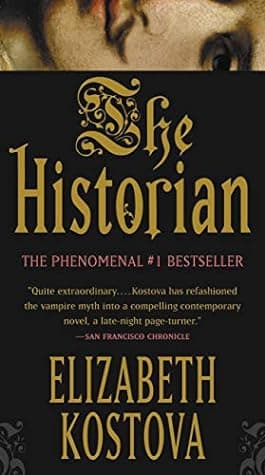
- The Historian
Elizabeth Kostova
3.8 (242k) average on GoodreadsThrillerInvolves historical research into an ancient, terrifying legend and a journey across Europe, though 'The Mummy' is more overtly fantasy.
- The Vampire Lestat
Anne Rice
4.1 (177k) average on GoodreadsFantasyWhile both The Mummy and The Vampire Lestat (1985) share Anne Rice's signature gothic style, exploration of immortality, and rich historical backdrops, they differ significantly in focus. Lestat delves deeply into the existential angst and philosophical debates surrounding vampirism, exploring the origins and societal structures of the undead. The Mummy, conversely, is more of a romantic adventure, centering on the immediate impact of ancient power on a modern individual and the personal drama of a forbidden love. While Lestat features a vast ensemble and complex mythology, The Mummy is more contained, focusing on a core group of characters and a more straightforward narrative arc. Lestat's exploration of identity and purpose across centuries is arguably more profound than The Mummy's more direct romantic and action-oriented plot.
- Stardust
Neil Gaiman
4.1 (359k) average on GoodreadsFantasyNeil Gaiman's Stardust (1999) is a fantasy novel that, like The Mummy, blends magical elements with a quest narrative, but their tones and approaches diverge sharply. Stardust is a whimsical, fairytale-like adventure, characterized by its playful tone, imaginative creatures, and a clear moral journey for its protagonist. The Mummy, in contrast, maintains a darker, more serious gothic atmosphere, even amidst its romantic elements. While both involve characters from different worlds encountering each other, Stardust's magical realm is entirely fantastical, whereas The Mummy's fantasy is rooted in historical legend and the clash with a relatively realistic Victorian setting. Gaiman's narrative often relies on mythic archetypes and a lighter touch, while Rice's is more grounded in psychological drama and the visceral consequences of immortality.
- Harry Potter and the Sorcerer's Stone
J.K. Rowling
4.5 (7M) average on GoodreadsFantasyRescued from a miserable life under the stairs, an orphaned boy discovers he's a wizard destined for a magical school, where he uncovers a dangerous secret tied to the dark wizard who murdered his parents.





Enjoyed the summary?
A summary gives you the shape of the book. The book itself has the detail, the examples and the voice.
Find The Mummy on AmazonAs an Amazon Associate, BookBrief earns from qualifying purchases. How we're funded