
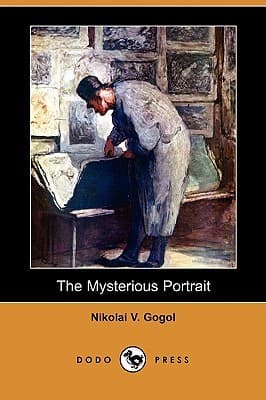
Synopsis
Covers the whole plot, including the ending.
- Difficulty
- Medium
- Pacing
- Moderate
- Mood
- Dark, Philosophical, Unsettling, Melancholy
- Read it if
- You enjoy classic Russian literature, psychological horror, or allegories about art and morality.
- Skip it if
- You prefer lighthearted stories or dislike dark, philosophical narratives.
The Mysterious Portrait Plot Summary
Covers the whole plot, including the ending.
The Discovery of the Portrait
The story begins with Chartkov, a young, poor artist, browsing a small art shop in Shchukin Dvor. He feels disappointed with his artistic progress. He is drawn to a portrait of an old man with piercing, lifelike eyes that seem to follow him. The portrait is so realistic it is unsettling, and Chartkov feels he must buy it, despite being very poor. He pays twenty kopecks, an amount he can barely afford, and carries the heavy painting back to his humble apartment. The portrait's eyes continue to disturb him, setting an ominous tone for his future.
The Mysterious Gold
In his studio, Chartkov tries to sleep, but the portrait's eyes unnerve him. He dreams of the old man coming to life and counting gold. Waking in a fright, he notices a slight bulge in the portrait's frame. He finds a hidden compartment with gold coins. Overjoyed by this unexpected fortune, Chartkov immediately imagines a life free from poverty, where he can follow his artistic ambitions without money worries. This discovery is a turning point, offering him an escape from destitution, but also bringing new temptations.
The Temptation of Fame
With the gold, Chartkov quickly abandons his simple life and his dedication to pure art. He moves into a luxurious apartment, dresses lavishly, and starts going to fashionable social events. He pays for articles praising his work in newspapers, hires a publicist, and begins taking commissions for portraits from rich clients. His initial artistic integrity is soon replaced by a desire for quick fame and easy money. He sacrifices his true talent for superficial flattery and trends, painting portraits that please clients instead of challenging himself. The gold, first a blessing, becomes a cause for his artistic and moral decline.
The Decline of Artistic Talent
As Chartkov becomes more popular, his artistic skill lessens. He develops a formula for portraits, using techniques that flatter subjects instead of capturing their true essence. His work becomes superficial, lacking the depth and originality he once wanted. He paints fashionable ladies with sweet smiles and wealthy gentlemen with dignified but empty looks. His studio, once a place of earnest effort, turns into a factory for commercial art. He becomes arrogant and dismisses real artistic criticism, surrounding himself with people who praise his every brushstroke. The spark of genius he once had fades, replaced by cynical professionalism.
Encountering True Art
Years later, Chartkov attends an exhibition and is deeply moved by a painting by a former fellow student. This painting, showing the Nativity, is a work of great beauty, spiritual depth, and technical skill, the result of years of dedicated study and self-sacrifice. It contrasts sharply with Chartkov's own superficial creations. Seeing this true masterpiece, Chartkov is overwhelmed by self-reproach and bitter regret. He sees the huge difference between his commercial success and the genuine artistic achievement of his contemporary. This encounter with authentic art makes him face the emptiness of his own career.
Despair and Madness
Realizing his artistic failure and wasted talent, Chartkov falls into deep despair. He becomes consumed by envy for other artists, especially those whose work has the integrity he lost. He starts buying masterpieces, not to appreciate them, but to destroy them in fits of rage and jealousy. His mind quickly deteriorates, haunted by the piercing eyes of the old man from the portrait. He becomes increasingly paranoid and violent, experiencing terrifying hallucinations. His once promising life as an artist ends in madness, a victim of his choices and the gold's subtle influence.
The Second Part: The Story of the Portrait's Origin
The story shifts to an auction where the same portrait of the old man is for sale. A distinguished art connoisseur steps in to share the portrait's true, chilling history, hoping to warn potential buyers. He explains that his father, a talented artist from Kolomna in the 18th century, painted the portrait. This part of the story explores the supernatural origins of the portrait's malevolent power and its creator's tragic fate, showing the deep ethical problems artists face.
The Money-Lender of Kolomna
The gentleman explains that his father, a young and religious artist, was asked to paint a notorious money-lender in Kolomna. This money-lender was a terrifying figure, rumored to be evil, whose piercing eyes and sinister presence brought misfortune to all who met him. He could ruin lives and families. Despite his disgust, the artist, compelled by a strange force and the money-lender's insistence, agreed to paint him. The artist's first attempts to capture the man's essence were hard, as the money-lender's eyes seemed to have a life of their own, influencing the artist's soul.
The Artist's Struggle and the Portrait's Power
While painting the money-lender, the artist felt increasingly tormented. He felt a malevolent presence from his subject, and his own soul felt corrupted. He struggled to capture the man's essence without falling to its evil. The money-lender's eyes, especially, seemed to hold a demonic power, influencing the artist's brush. After the money-lender's death, his spirit seemed to move into the portrait, continuing to harm its owners. The artist, deeply disturbed, abandoned the portrait, recognizing its dangerous influence, and sought spiritual comfort in a monastery.
The Portrait's Legacy of Ruin
The gentleman explains that the portrait, after his father abandoned it, passed through many hands, bringing ruin, madness, and even death to every owner. It caused families to break apart, artists to lose their talent, and people to fall into despair, mirroring Chartkov's fate. The painting became a cursed object, a vessel of evil energy that corrupted all who touched it. The gentleman's father, after years in a monastery, eventually tried to destroy the portrait, but it had already disappeared, continuing its destructive journey. The story ends with the portrait mysteriously vanishing from the auction, its fate unknown.
Principal Figures
Andrey Petrovich Chartkov
Protagonist
A young, talented but ultimately corrupted artist.
Chartkov begins as a promising, idealistic artist, struggling financially but dedicated to his craft. He possesses genuine talent and a desire for artistic purity. However, his ambition is intertwined with a susceptibility to temptation. The sudden acquisition of wealth from the portrait quickly sways him from his artistic integrity, leading him to pursue fame and luxury over true art. He is ultimately a tragic figure, whose initial potential is squandered by his embrace of superficiality and his inability to resist the portrait's insidious influence.
Relationships: The Money-Lender (via portrait) (Victim of his malevolent influence); His former fellow student (Rival whose success highlights Chartkov's failure)
The Money-Lender
Antagonist
The sinister subject of the cursed portrait.
The money-lender is a spectral and deeply malevolent figure, even after his death. He is described as having unnervingly lifelike, piercing eyes that are the focal point of the portrait's power. He is rumored to be a sorcerer, bringing misfortune and ruin to all who owe him money or cross his path. His essence, captured in the portrait, continues to exert a corrupting influence on its owners, driving them to avarice, spiritual decay, and madness. He represents the embodiment of evil and the destructive power of material obsession.
Relationships: The original artist (the gentleman's father) (His tormentor and subject); Chartkov (His indirect victim through the portrait's curse)
The Gentleman (Art Connoisseur)
Supporting
The narrator of the portrait's true origin story.
This unnamed gentleman is a cultured and wise art connoisseur who possesses deep knowledge of art history and, crucially, the cursed history of the money-lender's portrait. He steps forward at the auction to reveal the true story of its creation and its destructive legacy, acting as a moral voice and a storyteller who provides context and warning. He represents the importance of understanding the spiritual and ethical dimensions of art, contrasting sharply with Chartkov's superficial approach. His narrative serves to explain the supernatural element of the story.
Relationships: His father (the original artist) (Son and inheritor of his story and warnings)
The Original Artist (Gentleman's Father)
Supporting
The devout artist who painted the money-lender's portrait.
A talented and deeply religious artist from the 18th century, he is the gentleman's father. He initially struggles with poverty but maintains strong moral and spiritual convictions. He is reluctantly commissioned to paint the money-lender and is profoundly disturbed by the experience, feeling his soul corrupted by the malevolent subject. After completing the portrait, he recognizes its evil influence and abandons it, later seeking spiritual purification in a monastery. He embodies the ideal of an artist dedicated to spiritual truth and beauty, contrasting with Chartkov's eventual downfall. He warns against the dangers of art created without divine inspiration or with malevolent intent.
Relationships: The Money-Lender (His subject and source of spiritual torment); The Gentleman (His son, to whom he passed on the story and warning)
The Landlady
Mentioned
Chartkov's impoverished landlady.
Chartkov's landlady is a minor character who frequently presses him for rent payments. She represents the harsh realities of poverty that initially plague Chartkov. Her demands highlight his financial struggles before he discovers the gold, emphasizing the dramatic change in his circumstances.
Relationships: Chartkov (Tenant and landlord)
The Publicist
Mentioned
A figure who helps Chartkov achieve superficial fame.
The publicist is a nameless character who assists Chartkov in promoting his work through newspapers and social circles. He symbolizes the machinery of superficial fame and the commercialization of art. He represents the forces that encourage Chartkov's artistic compromise and his move away from genuine talent towards mere popularity.
Relationships: Chartkov (Client and professional associate)
The Fellow Student
Mentioned
A contemporary artist whose work highlights Chartkov's failure.
A former peer of Chartkov's, this artist dedicates years to studying and perfecting his craft, culminating in a magnificent painting of the Nativity. His work is described as a masterpiece of true spiritual and artistic depth, serving as a stark contrast to Chartkov's shallow, commercially driven portraits. He represents the path of genuine artistic integrity and perseverance, which Chartkov abandoned.
Relationships: Chartkov (Former fellow student and artistic rival (in Chartkov's mind))
Themes & Insights
The Corrupting Power of Materialism
The story explores how wealth and the desire for superficial fame can corrupt artistic integrity and spiritual well-being. Chartkov's discovery of gold in the portrait's frame immediately pulls him from his true artistic path. Instead of using the money for higher art, he gives in to luxury, commercialism, and the desire for quick recognition. This leads to his talent's decline and his eventual madness. The money-lender embodies this theme, having used his wealth to exert malevolent power, and his portrait continues this destructive legacy. The gold, initially a blessing, becomes a curse, symbolizing how material gain can lead to spiritual and artistic ruin.
“And from that moment on, his talent began to betray him.”
The Nature and Purpose of Art
Gogol examines what true art is. The story contrasts Chartkov's commercial, formulaic portraits, made for flattery and profit, with the spiritual depth and technical skill of the fellow student's Nativity painting. The original artist's struggle to paint the money-lender without giving in to his evil also highlights the artist's ethical and spiritual responsibilities. True art, the story suggests, must be more than imitation or commercial appeal; it must come from spiritual purity, dedication, and a connection to higher ideals. Art made for evil purposes or without sincere intent can corrupt.
“For art to be truly great, it must serve the divine, not merely the earthly.”
The Supernatural and Malevolent Influence
A strong supernatural element runs through the story, mainly through the cursed portrait. The money-lender's eyes are not just realistic but have an active, malevolent power that influences and eventually destroys its owners. This supernatural force is not just a plot device; it symbolizes the insidious nature of evil and temptation. The portrait acts as a way for the money-lender's corrupting spirit to work, suggesting that evil can persist and spread, infecting those who come into contact with it. This theme adds gothic horror and a moral warning, implying that certain artistic creations can carry a spiritual weight beyond their aesthetic form.
“The eyes, the eyes above all, possessed the most astounding vitality.”
Artistic Integrity vs. Compromise
The conflict between artistic integrity and compromise is central to Chartkov's character. He starts with a real desire to create meaningful art but quickly compromises his vision for money and social acceptance. He trades his unique style for popular appeal, creating portraits that are technically good but emotionally empty. This compromise leads to the loss of his talent and his eventual artistic and mental collapse. The original artist, in contrast, chooses spiritual purity over giving in to his subject's evil influence, finding redemption. The story warns against sacrificing one's artistic soul for fleeting success.
“He began to paint according to the demands of fashion and the tastes of the public.”
Plot Devices & Literary Techniques
The Cursed Portrait
A painting whose malevolent eyes and hidden gold corrupt its owners.
The portrait of the money-lender is the central plot device. Its hyper-realistic, piercing eyes possess a supernatural, malevolent power that influences and eventually drives its owners to madness. The hidden gold within its frame acts as the initial catalyst for Chartkov's downfall. The portrait symbolizes the corrupting power of materialism and the potential for art to embody and transmit evil. It is a physical manifestation of temptation and a supernatural agent of destruction, linking the two parts of the story and providing the core conflict and its consequences.
The Doppelgänger Motif
The money-lender's eyes and spirit haunting Chartkov, blurring identities.
While not a literal doppelgänger, the money-lender's eyes and spirit profoundly influence Chartkov, creating a psychological mirroring. Chartkov, consumed by avarice and malevolent envy, begins to embody characteristics of the money-lender, especially in his destructive acts against other artists. The money-lender's eyes are described as having a life of their own, almost possessing Chartkov's mind. This suggests a merging of their fates and a transfer of the money-lender's evil spirit into Chartkov, highlighting the insidious nature of corruption and the loss of individual identity when succumbing to vice.
The Frame Narrative / Story within a Story
A second narrator reveals the portrait's origin, adding depth and explanation.
The story employs a frame narrative structure, where the initial tale of Chartkov is followed by a second part, told by the gentleman at the auction. This 'story within a story' provides crucial backstory for the portrait, explaining its supernatural origins and the tragic fate of its creator and previous owners. This device shifts the narrative perspective, offering a more objective and historical account that validates the supernatural elements experienced by Chartkov and adds a moral dimension, transforming the initial psychological drama into a cautionary tale with broader implications about art and evil.
Ekphrasis
Literary descriptions of visual art to explore artistic themes.
Gogol utilizes ekphrasis extensively, providing vivid literary descriptions of the portrait itself, Chartkov's commercial works, and the fellow student's masterpiece. These detailed descriptions are not merely ornamental; they are crucial to exploring the story's central themes about the nature of art. The contrasting descriptions of Chartkov's soulless portraits versus the spiritual depth of the Nativity painting highlight the difference between true art and mere craft. The unsettling description of the money-lender's eyes is central to establishing the portrait's malevolent power, making the visual art a character in itself and driving the narrative.
The Mysterious Portrait Quotes
“The devil, they say, is not so black as he is painted.”
“There are for everyone such moments in life when his soul seems to rise to a great height, and when he feels that he is capable of performing a great deed.”
“The artist is a creator, and not a mere copyist.”
“Money is not everything, but it is a great deal.”
“The true artist must live in solitude and devote himself to his art, forgetting all the world's vanities.”
“There is a demon in every man, and it is a terrible demon.”
“The brush in the hands of a genius is a powerful weapon.”
“What is genius? It is to see what everyone else sees, and think what no one else thinks.”
“Every man has his own devil, and he must wrestle with him.”
“The world is full of wonders, but man sees only what he wants to see.”
“Art is a prayer.”
“Oh, if only people knew what a terrible demon is concealed in every man!”
“The true artist must not serve the world, but be its master.”
“There are moments when a man is ready to embrace the whole world, and moments when he wishes to be alone with his own thoughts.”
Quiz
10 questions on the plot and the characters. Each answer comes with a short explanation.
Question 1
What is the initial financial state of the young artist, Chartkov, at the beginning of 'The Portrait'?
- He is wealthy and comfortable.
- He is moderately successful, but struggles with inspiration.
- He is impoverished and deeply in debt.
- He receives a generous allowance from his family.
Show answer
C. He is impoverished and deeply in debt. Chartkov begins the story in extreme poverty, unable to pay his rent or buy art supplies, which prompts him to purchase the mysterious portrait.
Question 2
What unusual detail about the old man in the portrait most captivates and disturbs Chartkov?
- The intricate details of his clothing.
- The lifelike, piercing eyes that seem to follow him.
- The mysterious smile on his lips.
- The ancient, faded frame surrounding it.
Show answer
B. The lifelike, piercing eyes that seem to follow him. The most striking and unsettling feature of the portrait for Chartkov is the extraordinarily lifelike and penetrating eyes of the old man, which seem to gaze directly at him.
Question 3
What does Chartkov find hidden within the frame of the old man's portrait?
- A secret message.
- A smaller, miniature portrait.
- A large sum of gold coins.
- A forgotten artist's signature.
Show answer
C. A large sum of gold coins. After returning home with the portrait, Chartkov discovers a roll of gold coins hidden in its frame, which dramatically changes his financial circumstances.
Question 4
How does Chartkov's artistic style change after he acquires wealth and becomes famous?
- He dedicates himself to profound, spiritual art.
- He begins to paint only landscapes and still lifes.
- He prioritizes quick, flattering portraits for money over genuine artistic expression.
- He experiments with avant-garde, abstract forms.
Show answer
C. He prioritizes quick, flattering portraits for money over genuine artistic expression. Once wealthy, Chartkov abandons his pursuit of true artistic mastery for the sake of quick fame and fortune, painting superficial, flattering portraits to satisfy his clients.
Question 5
What is the primary theme explored through Chartkov's downfall in 'The Portrait'?
- The importance of social connections.
- The corrupting influence of money and superficial success on artistic integrity.
- The struggle between different artistic schools.
- The inevitable triumph of good over evil.
Show answer
B. The corrupting influence of money and superficial success on artistic integrity. Chartkov's tragic trajectory illustrates how wealth and the desire for popular acclaim can lead an artist to abandon his true calling and artistic soul, a central theme of the story.
Question 6
In the second part of the story, who is revealed to be the original painter of the mysterious portrait?
- An unknown amateur artist.
- A highly respected and devout monk, the father of the narrator.
- Chartkov's former teacher.
- A rival artist who envied Chartkov.
Show answer
B. A highly respected and devout monk, the father of the narrator. The second part of the story reveals the history of the portrait, explaining that it was painted by a devout artist, the father of the narrator, who later became a monk.
Question 7
What was the profession of the old man depicted in the cursed portrait?
- A wealthy merchant.
- A usurer (money-lender).
- A high-ranking government official.
- A respected scholar.
Show answer
B. A usurer (money-lender). The old man in the portrait is revealed to be a usurer, a figure associated with greed and corruption, whose malevolent spirit is believed to be imbued in the painting.
Question 8
What is the ultimate fate of Chartkov after his artistic and moral decline?
- He regains his artistic integrity and creates a masterpiece.
- He becomes a reclusive but respected art critic.
- He succumbs to madness, destroys art, and dies in despair.
- He loses his fortune but finds peace in simple living.
Show answer
C. He succumbs to madness, destroys art, and dies in despair. Driven by envy and remorse, Chartkov descends into madness, destroying artworks and ultimately dying in a state of torment and despair, a victim of the portrait's curse and his own choices.
Question 9
How does the original painter attempt to atone for the perceived 'evil' of the usurer's portrait?
- He destroys all his other paintings.
- He dedicates himself to creating only holy, spiritual art and becomes a monk.
- He publicly denounces the portrait's influence.
- He tries to buy back all copies of the portrait.
Show answer
B. He dedicates himself to creating only holy, spiritual art and becomes a monk. After realizing the malevolent impact of the usurer's portrait, the original painter seeks atonement by renouncing worldly art, becoming a monk, and dedicating his life to painting only sacred images.
Question 10
What philosophical concept, central to Romantic aesthetics, does Gogol explore through the dual narratives of 'The Portrait'?
- The triumph of reason over emotion.
- The objective reality of beauty.
- The artist's moral responsibility and the power of art to influence the soul, for good or ill.
- The inherent goodness of human nature.
Show answer
C. The artist's moral responsibility and the power of art to influence the soul, for good or ill. Gogol uses both Chartkov's story and the original painter's narrative to delve into the Romantic concern of an artist's ethical duty and the profound, almost supernatural, power of art to shape human lives and souls.
The Mysterious Portrait FAQ
What is the central premise of 'The Portrait' by Nikolai Gogol?
'The Portrait' tells the story of a talented but impoverished artist, Chartkov, who acquires a mysterious portrait of an old moneylender. This portrait's eyes seem uncannily alive and soon after its acquisition, Chartkov finds a large sum of money hidden within its frame, which dramatically alters the course of his artistic career and life.
Who is Chartkov and what is his initial artistic aspiration?
Chartkov is a young, promising artist who begins the story with a genuine passion for art and a desire to create profound, meaningful works. He lives in poverty, prioritizing artistic integrity over commercial success, dreaming of capturing the 'divine, unearthly, and spiritual' in his paintings.
How does the portrait of the moneylender influence Chartkov's life?
After finding money in the portrait's frame, Chartkov abandons his artistic ideals for commercial gain, becoming a fashionable portrait painter. The portrait's influence is insidious; it leads him to prioritize wealth and superficiality, ultimately corrupting his talent and soul.
What happens to Chartkov's artistic abilities as he gains fame and wealth?
As Chartkov's fame and wealth grow, his artistic abilities decline significantly. He loses the capacity for genuine creativity and deep observation, resorting to formulaic flattery in his portraits and becoming increasingly frustrated by his inability to produce truly great art.
What is the second part of the story about?
The second part of the story delves into the history of the mysterious portrait and the old moneylender. It reveals how the moneylender's portrait brought misfortune and madness to everyone who owned it, tracing its dark legacy through generations and revealing the artist's desperate attempt to atone.
What is the significance of the moneylender's eyes in the portrait?
The moneylender's eyes are repeatedly described as unnervingly lifelike and piercing, possessing an almost supernatural quality. They represent the corrupting power of materialism and evil, seemingly implanting a malevolent influence on those who possess the painting, especially Chartkov.
How does the story subtly critique the art market and patronage of Gogol's time?
The story critiques the art market by showing how patrons' superficial demands for flattering portraits and the pursuit of commercial success can corrupt an artist's integrity. Chartkov's downfall exemplifies how the pressures of the market can stifle genuine artistic expression in favor of shallow imitation.
What is the role of the 'true artist' in the second part of the story?
The 'true artist' in the second part is the painter of the original moneylender's portrait, who, after witnessing its destructive power, seeks spiritual redemption. He dedicates his later life to religious painting, aiming to create art that inspires holiness and repentance, a stark contrast to Chartkov's trajectory.
Is there a supernatural element to the portrait, or is its influence purely psychological?
Gogol leaves this ambiguous; while the portrait's malevolent influence feels supernatural, its effects on Chartkov can also be interpreted as psychological. The money provides the temptation, and Chartkov's greed and lack of artistic discipline lead to his downfall, with the portrait serving as a catalyst and symbol of his inner corruption.
How does Chartkov's initial poverty contribute to his later downfall?
Chartkov's extreme poverty makes him highly susceptible to the temptation of wealth. The sudden influx of money from the portrait offers an immediate escape from his hardships, making it easier for him to rationalize abandoning his artistic ideals for a life of comfort and social acceptance.
What psychological transformation does Chartkov undergo?
Chartkov transforms from an idealistic, struggling artist into a cynical, commercially driven painter consumed by envy and despair. He experiences a profound loss of self and artistic purpose, leading to a mental breakdown when he realizes the extent of his wasted talent.
How does envy play a role in Chartkov's ultimate demise?
Envy becomes a dominant force in Chartkov's later life. Witnessing the work of a truly gifted artist reawakens his lost artistic conscience, but instead of inspiring him, it fills him with bitter jealousy. This envy drives him to buy and destroy beautiful artworks, ultimately leading to his madness and death.
What is Gogol's message about the pursuit of material wealth versus artistic integrity?
Gogol strongly suggests that the pursuit of material wealth at the expense of artistic integrity leads to spiritual and creative ruin. Chartkov's story serves as a cautionary tale, illustrating how prioritizing money over one's true calling can corrupt the soul and destroy talent.
Does the story offer any hope for redemption for artists?
Yes, the story offers hope for redemption through the example of the original artist of the moneylender's portrait. After realizing the evil his work caused, he dedicates his life to creating sacred art, demonstrating that an artist can atone for past mistakes and use their talent for spiritual good, even if Chartkov himself fails to.
How does the revised 1842 version differ from the 1835 original, and why is this significant?
The 1842 revision significantly enhances the moral and religious themes, especially in the second part detailing the original artist's redemption and the moneylender's backstory. This revision deepens the story's exploration of artistic responsibility and the corrupting power of evil, aligning it more closely with Gogol's later spiritual concerns.
What does the contrast between Chartkov and the 'true artist' imply about the nature of artistic genius?
The contrast implies that true artistic genius requires not only talent but also moral integrity, spiritual depth, and a selfless dedication to art's higher purpose. Chartkov possesses talent but lacks the other qualities, leading to his downfall, while the 'true artist' embodies these virtues, creating works of lasting spiritual value.
What is the ultimate fate of the mysterious portrait?
The ultimate fate of the mysterious portrait is somewhat ambiguous. While the story describes its destructive lineage and the original artist's attempts to redeem it, the specific whereabouts or destruction of the portrait itself at the very end are left slightly open, emphasizing its enduring, almost mythical, malevolent power.
How does Chartkov's interaction with the old professor reinforce his artistic decline?
Chartkov's interaction with the old professor highlights his decline by showing his inability to appreciate or even understand true artistic mastery. He dismisses the professor's advice and critiques, prioritizing quick success over diligent study and genuine skill, further solidifying his artistic mediocrity.
About the author

Nikolai Vasilyevich Gogol was a Russian novelist, short story writer and playwright of Ukrainian origin.
Similar books
- The Picture of Dorian Gray
Oscar Wilde
4.1 (966k) average on GoodreadsFantasyExplores the corrupting influence of art and the soul's decay.
- Dead Souls
Nikolai Gogol
4.0 (8k) average on GoodreadsThrillerShares Gogol's satirical tone and exploration of human flaws.
- A Christmas Carol
Charles Dickens
4.1 (600k) average on GoodreadsFantasyFeatures a protagonist's moral decline and potential for redemption, though 'The Portrait' is much darker.
- Balzac and the Little Chinese Seamstress
Dai Sijie
3.6 (56k) average on GoodreadsHistorical FictionWhile vastly different in setting and tone, both stories touch upon the transformative power of art and literature. Dai Sijie's novel depicts how forbidden Western literature profoundly impacts and liberates the characters during the Chinese Cultural Revolution, highlighting art's capacity for enlightenment and empowerment. In contrast, Gogol's "The Mysterious Portrait" showcases art's potential for corruption and destruction, demonstrating how a malevolent artwork can lead to despair and ruin. Sijie celebrates art's redemptive qualities, echoing critiques by scholars like Perry Link on the power of literature in restrictive societies, whereas Gogol issues a stark warning about the spiritual dangers inherent in certain forms of artistic creation and patronage.
- Nineteen Eighty-Four
George Orwell
4.2 (5.5M) average on GoodreadsFictionWinston Smith dreams of truth and rebellion in a world where Big Brother watches all, but he confronts the terrifying power of a regime that controls not just actions, but thoughts.
- The Frozen River
Ariel Lawhon
4.4 (600k) average on GoodreadsFictionIn 1789 Maine, a heroic midwife's diary helps her expose a murder and get justice in a town that wants to silence her.




Enjoyed the summary?
A summary gives you the shape of the book. The book itself has the detail, the examples and the voice.
Find The Mysterious Portrait on AmazonAs an Amazon Associate, BookBrief earns from qualifying purchases. How we're funded