
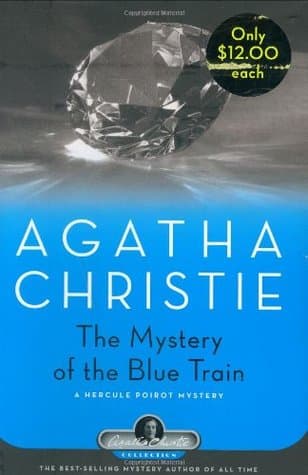
Synopsis
Covers the whole plot, including the ending.
- Difficulty
- Medium
- Pacing
- Moderate
- Mood
- Intriguing, Classic, Deductive, Suspenseful
- Read it if
- You enjoy classic Golden Age mysteries with intricate plots, a large cast of suspects, and Hercule Poirot's methodical deductions.
- Skip it if
- You prefer fast-paced, modern thrillers or stories with minimal character development outside of the detective.
The Mystery of the Blue Train Plot Summary
Covers the whole plot, including the ending.
Katherine Grey Inherits a Fortune
Katherine Grey, a young Englishwoman, lives a quiet life as a companion. Her life changes when she inherits a large fortune from her former employer, Miss Viner, a distant relative she barely knew. This sudden wealth gives her independence and the means to travel. Katherine plans a trip to the French Riviera on the luxurious Blue Train. Her journey starts in Paris, where she intends to spend time before continuing south, unaware her path is about to cross with a crime.
The Arrival of Ruth Kettering and the 'Heart of Fire'
Ruth Kettering, an American heiress and daughter of millionaire Rufus Van Aldin, is unhappily married to Derek Kettering. She travels on the Blue Train from Paris to Nice, carrying the 'Heart of Fire' ruby, a magnificent and supposedly cursed jewel recently given to her by her father. Ruth is known for her romantic relationships and is secretly meeting her lover, the Comte de la Roche, on the train. Her father, Rufus, worried for her safety and aware of the jewel's value, has arranged for a detective, Monsieur Goby, to watch over her. Ruth's maid, Ada Mason, is also with her.
Tragedy on the Blue Train
The Blue Train leaves Paris. The next morning, as the train nears Nice, Ruth Kettering is found murdered in her compartment. She was bludgeoned to death. The 'Heart of Fire' ruby is missing from her jewel case. The discovery shocks the train, and authorities are called. Katherine Grey, in an adjacent compartment, is among the first questioned, having heard a struggle but thinking it was a dream. The crime scene is chaotic, and the investigation begins amid confusion.
Hercule Poirot Joins the Investigation
Rufus Van Aldin, devastated by his daughter's murder and the theft of his ruby, refuses to accept the initial findings of the French police. He is determined to find the killer and recover the 'Heart of Fire'. He contacts Hercule Poirot, who is vacationing on the French Riviera. Poirot, interested in the case's complexity and high stakes, agrees to investigate. He interviews witnesses, examines the crime scene, and pieces together the events leading to Ruth's death, using his insights.
Initial Suspects and Alibis
Poirot's initial investigations focus on Ruth's estranged husband, Derek Kettering, who was also on the train and had a turbulent relationship with Ruth. Derek claims he was in another compartment and has an alibi, but his financial problems and temper make him a suspect. Comte de la Roche, Ruth's lover, is also questioned, but he denies involvement. Poirot considers other passengers and staff, including Katherine Grey, who heard noises, and the maid, Ada Mason, who is found dead soon after the murder. Poirot finds Ada's death suspicious. A mysterious man with a 'dancing girl' tattoo is also mentioned by witnesses.
The Discovery of Ada Mason's Body and the Ruby's Substitute
Ada Mason, Ruth's maid, is found dead in her cottage soon after Ruth Kettering's murder. Her death is first attributed to natural causes, but Poirot suspects foul play, believing she knew something important. Poirot discovers that the 'Heart of Fire' ruby found in Ruth's jewel case after the murder was a replica. The real ruby was stolen before or during the murder. This adds complexity, suggesting a detailed plan and possibly multiple people involved. The focus shifts to who had access to the real ruby and when it was exchanged.
Katherine's Involvement and a Missing Man
Katherine Grey, having overheard conversations and seen events on the train, gets more involved in the investigation, often giving Poirot valuable clues. She becomes friends with Major Knighton, Rufus Van Aldin's secretary, who seems to be helping Van Aldin find justice. Knighton appears reliable and trustworthy, and Katherine starts to have feelings for him. Meanwhile, Poirot continues to look into everyone's backgrounds, checking alibis and motives, and piecing together the timeline of events on the Blue Train.
The 'Dancing Girl' and the Smuggling Connection
Poirot's investigation connects the 'dancing girl' tattoo described by a witness to a jewel thief and smuggler named the Marquis. He realizes the murder and theft are part of a larger criminal operation. The Marquis works with a female accomplice, often disguised as a 'dancing girl' or an innocent woman. This discovery shifts the focus from a crime of passion to a planned professional heist. Ruth Kettering may have been an unwitting victim or a target of opportunity for thieves who knew about the ruby.
The Unveiling of the True Culprit
Through his deduction, Poirot unmasks Major Knighton, Rufus Van Aldin's trustworthy secretary, as the mastermind behind the murder and the 'Heart of Fire' theft. Knighton is the jewel thief known as the Marquis, who planned the scheme. He infiltrated Van Aldin's household to get information about the ruby and Ruth's travel plans. He used his position to manipulate events and divert suspicion, even faking his own identity. His accomplice, Kitty Kidd, was the 'dancing girl' seen on the train, who stole the real ruby.
The Full Revelation and Justice
Poirot explains that Knighton, as the Marquis, arranged for Kitty Kidd to steal the real 'Heart of Fire' ruby from Ruth's compartment and replace it with a fake. He then murdered Ruth Kettering later that night, framing Derek Kettering and making it seem like a crime of passion, while securing his escape. Ada Mason was also murdered by Knighton because she saw him near Ruth's compartment. Knighton's motive was greed, aiming to sell the ruby. With Poirot's evidence, Knighton is arrested. The 'Heart of Fire' ruby is recovered, and Derek Kettering is cleared. Katherine Grey, deceived by Knighton, finds closure and a new perspective, her inheritance having led her to dangerous adventures.
The Mystery of the Blue Train Characters
Hercule Poirot
Protagonist
The meticulous Belgian detective tasked with solving the murder.
Hercule Poirot is a world-renowned Belgian private detective, known for his fastidious nature, 'little grey cells,' and unique approach to solving crimes. He is vacationing on the French Riviera when he is called upon by Rufus Van Aldin to investigate his daughter Ruth's murder and the theft of the 'Heart of Fire' ruby. Poirot meticulously examines every detail, often focusing on the psychological aspects of the crime and the inconsistencies in witness testimonies. He is observant, intellectual, and possesses an unparalleled ability to deduce the truth from seemingly disparate clues.
Relationships: Rufus Van Aldin (employer and client); Katherine Grey (unwitting informant and friend)
Katherine Grey
Supporting
A young Englishwoman whose newfound fortune leads her to the Blue Train and the murder investigation.
Katherine Grey is a quiet, unassuming Englishwoman who unexpectedly inherits a substantial fortune, transforming her life from a companion to an independent traveler. She is on the Blue Train, in a compartment adjacent to Ruth Kettering's, making her an accidental witness to some key events. She is sensible, observant, and initially quite naive about the world of crime and high society. Her experiences on the Riviera and her involvement in the murder investigation force her to grow and become more discerning, especially in matters of the heart.
Relationships: Major Knighton (romantic interest (initially, then betrayed)); Hercule Poirot (acquaintance, provides clues); Ruth Kettering (neighbor on the train, victim)
Ruth Kettering
Victim
The American heiress murdered on the Blue Train, owner of the 'Heart of Fire' ruby.
Ruth Kettering is the beautiful, wealthy American daughter of Rufus Van Aldin. She is unhappily married to Derek Kettering and is known for her romantic liaisons, including with the Comte de la Roche. She possesses the magnificent 'Heart of Fire' ruby, a gift from her father. Ruth is depicted as somewhat reckless and impulsive, often seeking excitement and love outside her marriage. Her murder on the Blue Train sets the entire plot in motion, making her the central figure around which the mystery revolves, even in her death.
Relationships: Rufus Van Aldin (father); Derek Kettering (estranged husband); Comte de la Roche (lover)
Rufus Van Aldin
Supporting
An American millionaire, Ruth's father, who hires Poirot to find his daughter's killer.
Rufus Van Aldin is a powerful and immensely wealthy American millionaire, deeply devoted to his daughter, Ruth. He is the original owner of the 'Heart of Fire' ruby, which he gifted to her. Distraught and unsatisfied with the initial police investigation into Ruth's murder, he hires Hercule Poirot, trusting the Belgian detective to bring the true culprit to justice and recover his precious jewel. He is a determined and influential man, willing to spare no expense to achieve his goals.
Relationships: Ruth Kettering (daughter); Hercule Poirot (employer); Major Knighton (secretary (unwittingly, the killer))
Derek Kettering
Suspect
Ruth's estranged husband, a primary suspect in her murder.
Derek Kettering is Ruth's handsome but financially troubled English husband. Their marriage is strained, marked by arguments and Ruth's infidelities. He is on the same Blue Train as Ruth and becomes a prime suspect due to his volatile relationship with her and his need for money. Derek maintains his innocence, claiming to have been in a different compartment at the time of the murder, but his alibi is initially weak, and his character is painted as hot-headed and impulsive.
Relationships: Ruth Kettering (estranged husband); Mirelle (girlfriend)
Comte de la Roche
Suspect
Ruth Kettering's French lover, also on the Blue Train.
The Comte de la Roche is a French nobleman and Ruth Kettering's current lover. He is also on the Blue Train, intending to meet Ruth. He is elegant and suave, but his involvement with Ruth makes him another significant suspect in her murder. He denies any involvement and attempts to maintain a dignified composure throughout the investigation, though his passionate nature is implied.
Relationships: Ruth Kettering (lover)
Major Knighton / The Marquis
Antagonist
Rufus Van Aldin's secretary, secretly a notorious jewel thief and the true killer.
Initially introduced as Major Knighton, Rufus Van Aldin's seemingly trustworthy and efficient secretary, he is later revealed to be the notorious international jewel thief known as the Marquis. He meticulously planned Ruth Kettering's murder and the theft of the 'Heart of Fire' ruby, infiltrating Van Aldin's life to gain insider information. He is a master of disguise and manipulation, charming Katherine Grey and deceiving everyone around him with his calm and reliable demeanor. His true identity as a cold-blooded killer and professional criminal makes him the ultimate antagonist.
Relationships: Rufus Van Aldin (employer (disguise)); Katherine Grey (romantic deception); Kitty Kidd (accomplice)
Ada Mason
Supporting
Ruth Kettering's maid, later found dead.
Ada Mason is Ruth Kettering's personal maid, accompanying her on the Blue Train. She is a quiet and observant woman who likely witnessed something crucial related to Ruth's murder or the ruby's theft. Her subsequent death, initially dismissed as a heart attack, is later revealed by Poirot to be a murder orchestrated by the true killer, Major Knighton, to silence her. Her brief presence and mysterious death add a layer of complexity to the investigation.
Relationships: Ruth Kettering (employer)
Kitty Kidd
Supporting
An accomplice of the Marquis, known for her 'dancing girl' persona.
Kitty Kidd is a professional accomplice of the Marquis (Major Knighton). She is known for her ability to disguise herself, often adopting a 'dancing girl' persona, which allows her to move unnoticed in high society. She is instrumental in the initial theft of the 'Heart of Fire' ruby from Ruth Kettering's compartment, replacing it with a fake. Her agility and cunning make her a valuable asset to the Marquis's criminal enterprises, though she is not directly involved in the murder itself.
Relationships: Major Knighton/The Marquis (criminal accomplice)
The Mystery of the Blue Train Themes
Identity and Deception
The novel explores how appearances can deceive. Major Knighton creates a false identity as a trustworthy secretary, hiding his true nature as the jewel thief, the Marquis. Characters like Kitty Kidd also use disguises. This shows how individuals can craft personas to manipulate others and achieve their goals, making Poirot and the reader look beyond the surface. Katherine Grey's journey also involves identity, as she leaves her old life and discovers who she is in a new, adventurous context.
“It is the little things, mademoiselle, that are infinitely the most important. The little things that reveal the truth.”
Greed and Materialism
At the center of the crime is the 'Heart of Fire' ruby, a symbol of great wealth and the reason for the murder. Greed is clear in the Marquis's plan to steal the jewel, valuing material gain over human life. Ruth Kettering's wealth and her father's desire for the ruby's return show the allure and dangers of materialism. Characters' motivations are often tied to money, whether it is Derek Kettering's financial struggles or the thief's pursuit of riches. This illustrates how the desire for wealth can corrupt and lead to desperate acts.
“It is always the simple things that are the most difficult to believe.”
Justice and Retribution
Rufus Van Aldin's determination to find his daughter's killer and recover the ruby drives the investigation, showing the pursuit of justice. Hercule Poirot is dedicated to ensuring the guilty are punished and the innocent are cleared. The story emphasizes the process of finding the truth and the satisfaction of seeing a criminal brought to account. The plot's resolution brings a sense of moral balance, where those who commit heinous acts face consequences.
“The truth, however ugly in itself, is always beautiful and pure.”
Love and Betrayal
The novel explores different forms of love and the pain of betrayal. Ruth Kettering's complicated romantic life, involving her estranged husband Derek and her lover the Comte de la Roche, creates emotional turmoil. Katherine Grey's initial attraction to Major Knighton, only to discover his true, murderous identity, represents a personal betrayal. This theme shows the vulnerability in love and trust, and how easily these emotions can be exploited or broken by deceit and self-interest, leaving emotional scars on the characters.
“Human nature is a strange and complex thing.”
Plot Devices & Literary Techniques
The 'Heart of Fire' Ruby
The central MacGuffin and catalyst for the entire plot.
The 'Heart of Fire' ruby functions as the primary MacGuffin in the story. It is a legendary, supposedly cursed jewel of immense value, and its theft is intertwined with Ruth Kettering's murder. Its significance isn't in its intrinsic properties, but in its ability to drive the plot forward, motivate characters (Rufus Van Aldin's desire for its return, the Marquis's greed), and provide a tangible object around which the mystery revolves. The discovery of a fake ruby further complicates the case, adding layers to the mystery and misdirecting the investigation.
Red Herring
Misleading clues and suspects designed to divert attention from the true culprit.
Christie masterfully employs red herrings to mislead both the characters and the reader. Derek Kettering, with his strained marriage and financial woes, is a strong initial suspect. The Comte de la Roche, as Ruth's lover, also fits the profile of a passionate killer. Even the discovery of Ada Mason's body initially suggests a different line of inquiry. These elements are carefully placed to create a complex web of suspicion, diverting attention from the seemingly innocuous Major Knighton, until Poirot meticulously unravels the truth, exposing the true villain's cunning deception.
The Closed Circle Mystery (Train Setting)
The train setting confines suspects and limits external influences, intensifying the mystery.
While not entirely a 'closed circle' in the traditional sense, the Blue Train itself acts as a crucial closed environment for the initial crime. The limited number of passengers and staff on the train who could have committed the murder creates an intense atmosphere where suspicion can fall on anyone. Poirot's investigation extends beyond the train, but the initial confinement of the crime to this luxurious, moving setting allows for focused scrutiny of a specific group of individuals and their interactions, typical of Christie's use of contained settings to heighten suspense and limit suspects.
The Unreliable Witness/Observation
Characters' subjective observations and memory create ambiguity.
Several characters provide observations that are either incomplete, misinterpreted, or outright unreliable, contributing to the mystery. Katherine Grey's initial dismissal of the noises she heard as a dream is a key example. Witnesses describing the 'dancing girl' tattoo provide fragmented clues that only Poirot can piece together. This device highlights how human perception can be flawed, and how a detective must sift through subjective accounts to find objective truth. It also serves to obscure the true events, making Poirot's deductive reasoning all the more impressive when he clarifies the timeline and identities.
The Mystery of the Blue Train Quotes
“The truth, however ugly in itself, is always curious and beautiful to seekers after it.”
“Money is a good servant but a bad master.”
“The impossible could not have happened, therefore the impossible must be possible in spite of appearances.”
“One must never neglect the psychological side of a case.”
“It is the brain, the little gray cells on which one must rely.”
“The past is the father of the present.”
“There is nothing so dangerous for anyone who has something to hide as conversation!”
“A woman can keep a secret, but she cannot keep from telling that she has one.”
“The more elaborate the lie, the more likely it is to be believed.”
“It is a capital mistake to theorize before one has data.”
“The heart has its reasons which reason knows nothing of.”
“Crime is terribly revealing. Try and vary your methods as you will, your tastes, your habits, your attitude of mind, and your soul is revealed by your actions.”
“The best way to hide a thing is to leave it in the open.”
“There is no detective in England equal to a spinster lady of uncertain age with plenty of time on her hands.”
Quiz
10 questions on the plot and the characters. Each answer comes with a short explanation.
Question 1
What is the name of the legendary cursed jewel that is stolen on the Blue Train?
- The Star of the East
- The Heart of Fire
- The Heart of Fire ruby
- The Blue Diamond
Show answer
C. The Heart of Fire ruby The Heart of Fire ruby is the cursed jewel central to the plot. It is stolen from Ruth Kettering on the Blue Train, leading to her murder and the subsequent investigation.
Question 2
Who is the wealthy American heiress murdered on the Blue Train?
- Katherine Grey
- Ruth Kettering
- Ada Mason
- Mirelle
Show answer
B. Ruth Kettering Ruth Kettering, the daughter of American millionaire Rufus Van Aldin, is found dead in her compartment on the Blue Train. Her murder sets off the main mystery of the novel.
Question 3
Which character is a former maid of Ruth Kettering and provides key information to Poirot?
- Mirelle
- Ada Mason
- Katherine Grey
- Countess Rossakoff
Show answer
B. Ada Mason Ada Mason is Ruth Kettering's former maid who later works for Katherine Grey. She overhears crucial conversations and shares them with Poirot, helping him piece together the case.
Question 4
Why does Hercule Poirot initially become involved in the Blue Train mystery?
- He is hired by Rufus Van Aldin to protect the Heart of Fire ruby
- He happens to be traveling on the same train and witnesses the crime
- He is asked by the French police to assist with the investigation
- He is consulted by Katherine Grey after she finds a mysterious note
Show answer
D. He is consulted by Katherine Grey after she finds a mysterious note Poirot becomes involved when Katherine Grey, a fellow passenger, consults him about a strange note she received. This leads him to investigate Ruth Kettering's murder and the stolen jewel.
Question 5
What is the relationship between Derek Kettering and the dancer Mirelle?
- They are business partners in a smuggling operation
- They are secretly married
- They are having an affair
- They are distant cousins
Show answer
C. They are having an affair Derek Kettering, Ruth's husband, is having an affair with Mirelle, a dancer. This relationship adds to the motives and complexities in the murder investigation.
Question 6
How does the character of the Comte de la Roche figure into the plot?
- He is a police inspector assisting Poirot
- He is a jewel thief who plans to steal the Heart of Fire ruby
- He is Ruth Kettering's long-lost brother
- He is the owner of the Blue Train
Show answer
B. He is a jewel thief who plans to steal the Heart of Fire ruby The Comte de la Roche is a notorious jewel thief who conspires with others to steal the Heart of Fire ruby. His actions are a key part of the criminal plot in the novel.
Question 7
What role does Katherine Grey play in the resolution of the mystery?
- She is revealed to be the mastermind behind the theft and murder
- She provides Poirot with critical observations and insights from her interactions
- She inherits Ruth Kettering's fortune and marries Derek
- She is a undercover police officer working with Poirot
Show answer
B. She provides Poirot with critical observations and insights from her interactions Katherine Grey, a sensible and observant woman, assists Poirot by sharing her impressions of other characters and events. Her insights help Poirot unravel the truth.
Question 8
What is the significance of the 'alternate identity' used by one of the characters in the crime?
- Ruth Kettering was traveling under a false name to escape her husband
- The murderer impersonates a railway official to access the compartment
- Katherine Grey uses a pseudonym to protect herself
- The Comte de la Roche poses as a respectable businessman to avoid suspicion
Show answer
D. The Comte de la Roche poses as a respectable businessman to avoid suspicion The Comte de la Roche uses the alias of a respectable businessman to move in high society and plan the jewel theft. This deception is part of his criminal strategy.
Question 9
Which theme is most prominently explored through the character of Derek Kettering?
- The corrupting influence of wealth and greed
- The power of love to redeem past mistakes
- The importance of family loyalty in times of crisis
- The struggle for women's independence in society
Show answer
A. The corrupting influence of wealth and greed Derek Kettering's character illustrates how greed and desire for wealth lead to moral decay. His actions, including his affair and potential involvement in crime, highlight this theme.
Question 10
In Poirot's final revelation, what is the key piece of evidence that exposes the murderer?
- A fingerprint found on the jewel case
- A witness who saw the murderer board the train
- An inconsistency in the timing of events provided by the suspects
- A confession letter hidden in Ruth Kettering's luggage
Show answer
C. An inconsistency in the timing of events provided by the suspects Poirot identifies the murderer by analyzing alibis and noticing inconsistencies in the timing of events. This classic Christie technique relies on logical deduction rather than physical evidence.
The Mystery of the Blue Train FAQ
What is 'The Mystery of the Blue Train' about?
The novel follows Hercule Poirot as he investigates the murder of Ruth Kettering, an American heiress found strangled in her compartment on the Blue Train traveling to the French Riviera. The case centers on the theft of the legendary 'Heart of Fire' ruby, which Ruth was carrying, and involves a web of suspects including her estranged husband Derek, her secret lover the Comte de la Roche, and other passengers like Katherine Grey.
Why should I read 'The Mystery of the Blue Train'?
This is a classic Agatha Christie locked-room-style mystery with a glamorous European setting, intricate plotting, and the brilliant deductive reasoning of Hercule Poirot. It combines elements of romance, greed, and deception, offering a satisfying puzzle where every passenger on the train becomes a potential suspect in the theft and murder.
What is the background/setting of 'The Mystery of the Blue Train'?
The story is set in the 1920s, primarily aboard the luxurious Blue Train (Calais-Mediterranée Express) traveling from England to the French Riviera, with key scenes also in London and Nice. The opulent train and Riviera backdrop contrast with the dark crime, highlighting themes of wealth and corruption among high society.
What are the most memorable quotes from 'The Mystery of the Blue Train'?
Notable quotes include Poirot's observation, 'The truth, however ugly in itself, is always curious and beautiful to seekers after it,' and his warning about greed: 'A great deal of money is a great deal of responsibility.' The novel also opens with the evocative line, 'The Blue Train! The train of luxury, of romance, of mystery...'
What writing style does Agatha Christie use in this book?
Christie employs a third-person omniscient narrative with a crisp, descriptive prose that builds suspense through careful clue placement and red herrings. The style is characteristic of her Golden Age mysteries, blending social commentary on wealth with a tightly plotted investigation where Poirot's psychological insights unravel the truth.
What minor details add significant meaning to the mystery?
Small details like Ruth Kettering's dropped cigarette case, the timing of compartment door noises, and the specific arrangement of her luggage become crucial clues. The 'Heart of Fire' ruby's curse legend, mentioned early on, foreshadows the violence surrounding it, while minor characters like the maid Ada Mason provide key testimonies that shift suspicions.
What are some subtle foreshadowing moments in the story?
Foreshadowing includes early references to Ruth's reckless spending and secretive behavior hinting at her vulnerability, and Poirot's initial encounter with Katherine Grey where he senses hidden depths. The Comte de la Roche's smooth charm masks his criminal intentions, subtly suggested through his overly attentive manner toward Ruth before the murder.
What unexpected character connections exist in the plot?
Unexpected connections include Katherine Grey's inheritance linking her to the Kettering family fortune, and the revelation that Ruth's father, Rufus Van Aldin, had prior dealings with the Comte de la Roche. Minor characters like the French waiter M. Papopolous and his daughter Zia are later tied to the jewel theft ring, showing a broader criminal network.
What are the unspoken character motivations driving the crime?
Derek Kettering's motivation is financial desperation masked by his playboy exterior, while the Comte de la Roche is driven by greed and a long-term plan to swindle Ruth. Ruth herself is motivated by a desire for freedom from her stifling marriage, leading her to trust the wrong people. Van Aldin's overprotectiveness stems from guilt over his daughter's unhappy life.
What psychological complexities do characters like Hercule Poirot exhibit?
Poirot demonstrates his trademark 'little grey cells' approach, relying on psychology over physical evidence, as seen when he deduces motives from small behavioral cues. Katherine Grey shows complexity in her moral integrity despite newfound wealth, while Derek Kettering's charm hides a weak, opportunistic nature. Ruth's actions reveal a tragic mix of naivety and defiance.
What are the major emotional turning points in the novel?
Key emotional turns include Ruth's murder shocking the train passengers, Poirot's interrogation scenes that expose hidden guilt and lies, and the climax where the true culprit is revealed, leading to confrontations about betrayal. Katherine's growing relationship with Derek adds emotional depth, complicating the investigation with themes of redemption and trust.
How do relationship dynamics evolve among the characters?
Derek and Ruth's estranged marriage deteriorates further through mutual suspicion, while Katherine and Derek's bond develops from initial distrust to tentative romance. Poirot's interactions shift from polite observation to intense psychological pressure on suspects. Van Aldin's paternal relationship with Ruth posthumously drives his quest for justice, highlighting themes of regret and closure.
Which parts of the mystery remain ambiguous or open-ended?
Ambiguities include the exact sequence of events during the murder night, left partially reconstructed by Poirot, and the ultimate fate of minor characters like the Comte de la Roche after his exposure. The novel also leaves open the deeper moral questions about wealth and happiness, as seen in Katherine's reflections on her inheritance versus her simple former life.
What are controversial scenes or decisions in the book?
Controversial elements include Ruth's decision to carry the priceless ruby despite its danger, which some readers see as foolish, and Derek Kettering's morally grey actions that blur lines between victim and suspect. The resolution, where justice is served but not through conventional legal means, sparks debate about morality versus law in Christie's world.
'The Mystery of the Blue Train' ending explained: how it ends & what it means
The ending reveals the Comte de la Roche as the mastermind behind the theft and murder, with Derek Kettering as an accomplice driven by debt. Poirot exposes their plot through psychological deduction and minor clues, leading to the ruby's recovery and implied justice. The conclusion emphasizes themes that greed corrupts and truth prevails, with Katherine finding hope for a better future.
About the author
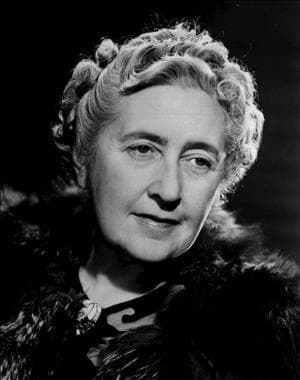
Dame Agatha Mary Clarissa Christie, Lady Mallowan, was an English writer known for her 66 detective novels and 14 short story collections, particularly those revolving around fictional detectives Hercule Poirot and Miss Marple. She also wrote the world's longest-running play, the murder mystery The Mousetrap, which has been performed in the West End since 1952. A writer during the "Golden Age of Detective Fiction", Christie has been called the "Queen of Crime". She also wrote six novels under the pseudonym Mary Westmacott. In 1971, she was made a Dame (DBE) by Queen Elizabeth II for her contributions to literature. Guinness World Records lists Christie as the best-selling fiction writer of all time, her novels having sold more than two billion copies.
Similar books
- Murder On The Orient Express
Agatha Christie
4.2 (381k) average on GoodreadsThrillerFeatures Hercule Poirot solving a murder on a train with a limited set of suspects.
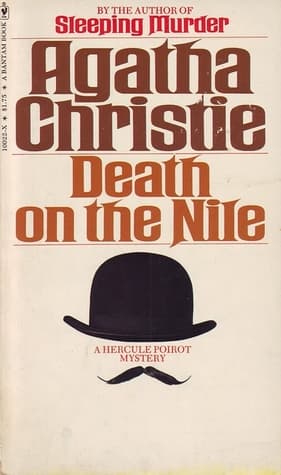
- Death on the Nile
Agatha Christie
4.1 (127k) average on GoodreadsThrillerAnother Poirot mystery involving a wealthy heiress, a love triangle, and murder in an exotic setting.
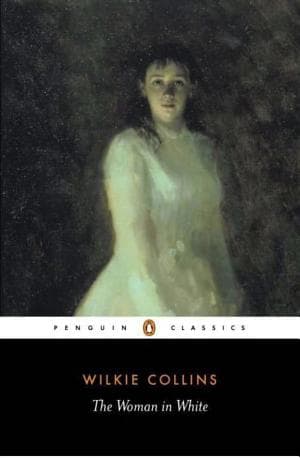
- The Woman in White
Wilkie Collins
4.0 (132k) average on GoodreadsHistorical FictionA classic Victorian mystery with elements of inheritance, mistaken identity, and a complex plot.
- Angels & Demons
Dan Brown
3.9 (2.7M) average on GoodreadsThrillerA Harvard symbologist races through Rome's ancient sites, deciphering cryptic clues to unmask the Illuminati and stop a vengeful plot to destroy the Vatican with a stolen antimatter weapon.
- Gone Girl
Gillian Flynn
4.1 (2.3M) average on GoodreadsThrillerA wife's sudden disappearance on her fifth anniversary reveals a web of lies and psychological warfare, exposing the secrets within a seemingly perfect marriage.
- The Girl on the Train
Paula Hawkins
3.9 (2.1M) average on GoodreadsThrillerA woman’s fascination with a seemingly perfect couple she watches from her daily train commute leads her into a dark investigation when she witnesses something that shatters their idyllic image.




Enjoyed the summary?
A summary gives you the shape of the book. The book itself has the detail, the examples and the voice.
Find The Mystery of the Blue Train on AmazonAs an Amazon Associate, BookBrief earns from qualifying purchases. How we're funded