
Synopsis
Covers the whole plot, including the ending.
- Difficulty
- Medium
- Pacing
- Moderate
- Mood
- Eerie, Oppressive, Mysterious, Cosmic Dread
- Read it if
- You enjoy cosmic horror, ancient mysteries, and stories where humanity's insignificance is a central theme.
- Skip it if
- You prefer character-driven plots, clear resolutions, or lighthearted narratives.
The Nameless City Plot Summary
Covers the whole plot, including the ending.
Arrival at the Nameless City
An unnamed European explorer, driven by curiosity for ancient mysteries, arrives at the desolate and long-abandoned Nameless City in the vast Arabian desert. He describes the city as an eerie, cyclopean ruin, built by an unknown, pre-human race. The city's architecture is unsettling, with strange angles and proportions that defy human understanding. Despite a sense of dread and the local Bedouins' warnings of evil spirits and curses, the narrator is compelled to explore its secrets. He feels a strong connection to the city's ancient past, seeing it as a place of immense, forgotten knowledge and unfathomable antiquity.
Initial Exploration and Unnerving Discoveries
The narrator begins his meticulous exploration of the Nameless City's crumbling structures. He discovers peculiar carvings and hieroglyphs on the walls, depicting a race of reptilian creatures with human-like torsos but crocodilian heads, engaged in unknown rituals and daily life. These creatures are clearly not human, and their artistry suggests a civilization far older than any recorded human history. He notes the city's unusual construction, with low doorways and passages that seem designed for beings much smaller than humans. This initial foray deepens his unease, hinting at the alien nature of the city's original inhabitants and their forgotten history.
The Temple and the Descending Staircase
Amidst the ruins, the narrator stumbles upon a remarkably preserved temple, its structure more intact than the surrounding decay. Inside, he finds more of the strange reptilian carvings, which now seem to tell a coherent, alien story. The most significant discovery in the temple is a deep, dark opening leading to a seemingly endless staircase descending into the earth. Driven by an urge to uncover the city's ultimate secrets, and despite a growing sense of claustrophobia and dread, the narrator decides to brave the descent. He prepares his equipment, including a lantern, and begins his terrifying journey into the unknown depths beneath the Nameless City.
Descent into the Underworld
The narrator's descent down the winding staircase is long and arduous. The air grows steadily colder and heavier, and the silence becomes absolute, broken only by his own breathing and the echo of his footsteps. He estimates he travels for hours, passing through vast, subterranean chambers carved out of the living rock. The walls are still adorned with the alien carvings, which now seem to depict the reptilian beings' migration into the underground, their adaptation to a sunless existence, and a gradual physical transformation. The sheer scale and antiquity of these underground passages overwhelm him, making him feel like a speck in an inconceivably ancient history.
The Subterranean City
After an immense journey, the staircase finally opens into a vast, cavernous space. To his astonishment, the narrator finds not a mere tomb, but an entire subterranean city, perfectly preserved in the eternal darkness. Its structures are similar to those on the surface but appear more refined and intact. The air is still, and a musty odor hangs heavy. He marvels at the scale of this hidden metropolis, realizing that the surface ruins were merely a prelude to this grander, more ancient civilization. The carvings here are even more detailed, portraying the reptilian race's height and their eventual, mysterious decline.
The Hall of Records
Within the subterranean city, the narrator discovers a magnificent hall, grander than any he has seen. This chamber, which he believes is a hall of records or a sacred space, is filled with rows upon rows of mummified figures. These are the preserved bodies of the reptilian beings, smaller than he had imagined, with leathery wings folded against their backs and faces frozen in expressions of ancient wisdom or terror. The sight is both fascinating and horrifying, providing tangible evidence of the city's long-dead inhabitants. He realizes these creatures were not just depicted in carvings, but were real, living beings.
The Pictorial History
The walls of the Hall of Records are covered with an elaborate, continuous frieze of carvings that tell the complete history of the reptilian race. The narrator deciphers their story: their emergence from the primordial ooze, their construction of the Nameless City on the surface, their dominion over the world, and their eventual retreat underground as the climate cooled and human civilizations began to rise. The carvings depict their adaptation to the darkness, the development of their wings, and their final, agonizing decline into a state of slumber and eventual death, leaving their city as a silent record of their existence.
The Awakening Dread
As the unseen desert dawn approaches, the narrator, still deep within the subterranean city, feels an inexplicable shift in the atmosphere. A chilling wind begins to blow through the passages, carrying with it a faint, unidentifiable sound, like a distant, mournful wailing. The carvings, which initially seemed merely historical, now appear to emanate an active, malevolent presence. He senses that the city is not as dead as he believed, and an ancient, dormant horror is stirring. The absolute silence he had grown accustomed to is replaced by an unnerving, almost imperceptible hum, fueling his growing terror.
The Return of the Old Ones
In a moment of pure horror, the narrator witnesses the mummified reptilian creatures in the Hall of Records begin to stir. Their leathery wings unfurl, and their desiccated forms twitch with an unnatural life. Simultaneously, the faint wailing he heard earlier intensifies into a cacophony of inhuman cries and screeches that echo through the vast caverns. He realizes, with a jolt of primal terror, that the ancient race is not merely depicted in the carvings; their spirits, or perhaps their reanimated bodies, are returning. The city is not a tomb, but a dormant hive now awakening.
Flight from the Nameless City
Overwhelmed by dread, the narrator abandons his lantern and equipment and flees in a desperate, panicked scramble back up the endless staircase. The wailing and the sound of leathery wings beating grow louder and closer behind him, confirming that the reanimated beings, or their spectral forms, are pursuing him. He races through the cold, dark passages, driven by a desperate instinct for survival. The experience shatters his sanity, replacing his intellectual curiosity with a profound, existential terror that will forever haunt him. He barely escapes, emerging into the harsh desert sunlight a broken man.
The Enduring Nightmare
The narrator manages to escape the Nameless City, but the horrors he witnessed leave him permanently scarred. He is now a haunted man, plagued by nightmares of the reptilian creatures, their wailing, and the ancient city's malevolent presence. The experience has irrevocably altered his perception of reality, revealing a universe far more ancient and terrifying than humanity dares to imagine. He remains convinced that the Nameless City is a gateway to untold horrors, a place where the barriers between worlds are thin, and where forgotten, pre-human entities still stir beneath the earth, waiting for an opportune moment to return.
The Nameless City Characters
The Narrator (Unnamed)
Protagonist
A curious, scholarly explorer driven by a thirst for ancient knowledge.
The narrator is an unnamed European scholar and explorer, characterized by his profound intellectual curiosity and his courage in pursuing ancient mysteries. He possesses a deep knowledge of archaeology and history, but his true drive is an almost obsessive desire to uncover secrets that predate human civilization. Initially rational and observant, his encounter with the Nameless City gradually erodes his sanity, transforming him from a detached observer into a terrified victim of cosmic horror. He is a proxy for the reader, experiencing the unfolding dread firsthand.
The Reptilian Race / The Old Ones
Antagonists (implied)
The ancient, pre-human inhabitants of the Nameless City, now mummified and stirring.
These are the original builders of the Nameless City, a race of reptilian beings with human-like torsos, crocodilian heads, and eventually, leathery wings. They represent an unimaginably ancient civilization that predates humanity by eons, having risen from primordial swamps. They built the surface city, then retreated underground as the world changed, adapting to a sunless existence before eventually succumbing to a long, slow decline and death. Their mummified remains and the echoes of their wailing suggest a dormant, malevolent presence that awakens when disturbed, embodying the story's core cosmic horror.
Bedouins (Mentioned)
Mentioned
Local desert dwellers who warn of the Nameless City's evil.
The Bedouins are local inhabitants of the Arabian desert, mentioned only briefly by the narrator. They serve as a narrative device to establish the Nameless City's legendary evil and the deep-seated fear it inspires in those who live near it. Their warnings, dismissed by the narrator as superstitious folklore, ultimately prove to be prescient, underscoring the ancient and dangerous nature of the city. They represent the primal, intuitive understanding of horror that the rational narrator initially scoffs at.
The Nameless City Themes
Cosmic Indifference and Insignificance
This theme explores humanity's minuscule place in a vast, ancient, and indifferent cosmos. The Nameless City, built by a pre-human race existing for eons before mankind, dwarfs human history and achievements. The narrator's realization of this vast temporal scale and the alienness of the reptilian civilization renders humanity's concerns and existence utterly insignificant. The city's ancient horrors are not malevolent in a human sense, but simply part of an uncaring universe, awakening without regard for human life. This is conveyed when the narrator descends into the subterranean city, feeling like a 'speck' in the face of unimaginable antiquity.
“What madness had driven me to this place, this city older than Egypt, or Chaldæa, or any other human thing?”
Forbidden Knowledge and Madness
The story emphasizes the dangerous allure of forbidden knowledge and its capacity to shatter human sanity. The narrator, driven by intellectual curiosity, deliberately seeks out secrets that humanity was not meant to discover. Each new revelation about the reptilian race and their subterranean city pushes him closer to the brink. The ultimate horror is not just the physical threat, but the psychological trauma of confronting a reality that utterly defies human understanding and logic. The knowledge gained destroys his peace of mind, leaving him permanently haunted and insane.
“I was in a realm of death and unthinkable antiquity, where the past was a presence and the present a mere futile dream.”
The Horrors of the Unknown
Lovecraft uses the unknown as the primary source of terror. The Nameless City itself is a mystery, its builders and purpose shrouded in an impenetrable veil of time. The reptilian creatures are alien and incomprehensible, their motives and existence beyond human empathy or understanding. The wailing sounds, the stirring mummies, and the chilling wind are terrifying precisely because their exact nature and origin are obscure, hinting at something ancient, powerful, and utterly beyond human control or explanation. This ambiguity allows the reader's imagination to fill in the gaps with their deepest fears.
“It was the wailing of the wind, yet it was not the wind; for it had a quality of conscious, malign life.”
Decay and Entropy
The theme of decay is central to the atmosphere and narrative. The surface city is a ruin, slowly crumbling into the desert sands, a record of the passage of immense time. Even the subterranean city, though preserved, is a monument to a dead civilization. The mummified reptilian creatures embody this decay, representing a once-dominant race reduced to desiccated husks. This pervasive sense of entropy suggests that all civilizations, even alien ones, are ultimately subject to the ravages of time and will eventually fade into oblivion, leaving behind only silent, terrifying remnants.
“I saw that the city was a thing of the past, that it had been built by a race long extinct, whose very memory had perished from the earth.”
Plot Devices & Literary Techniques
Unreliable Narrator
The story is told through the perspective of a narrator whose sanity is compromised by his experiences.
The unnamed narrator's increasing terror and eventual psychological breakdown make his account potentially unreliable. His descriptions of the reanimated mummies and the wailing sounds could be interpreted as hallucinations brought on by extreme stress and the overwhelming nature of his discoveries. This device enhances the horror by blurring the line between reality and madness, leaving the reader to question the true nature of the events and further emphasizing the profound psychological impact of the cosmic horrors encountered.
Ancient, Alien Civilization
The central mystery revolves around a pre-human, non-terrestrial race.
The Nameless City and its reptilian inhabitants serve as a prime example of Lovecraft's use of ancient, alien civilizations. This device establishes a sense of cosmic scale and antiquity, making human history seem trivial. The alien nature of the builders, their architecture, and their history are fundamentally incomprehensible to human thought, thereby generating a profound sense of dread and otherness. It underscores the idea that humanity is not alone, nor is it the most significant or oldest intelligence on Earth.
Desolate Setting
The remote, ancient desert setting isolates the protagonist and enhances the sense of dread.
The Arabian desert acts as a crucial plot device by isolating the narrator from civilization and any potential help. Its vastness, extreme conditions, and ancient reputation contribute to an atmosphere of profound loneliness and dread. The desert's timeless quality mirrors the immense age of the city, and its barrenness emphasizes the death and decay inherent in the narrative. This isolation intensifies the psychological impact of the horrors encountered, as the narrator has no one to turn to or share his experience with.
Gradual Revelation
Horror is slowly built through a series of escalating discoveries.
The story's horror is not delivered immediately but unfolds through a carefully paced series of revelations. The narrator first sees strange carvings, then discovers the subterranean passage, then the preserved city, and finally the mummified beings and their stirring. This gradual unveiling allows the dread to build organically, slowly eroding the narrator's (and the reader's) sense of security and understanding. Each discovery is more unsettling than the last, leading to a climactic moment of overwhelming terror rather than a sudden shock.
The Nameless City Quotes
“When, long ago, the gods created the world, they left one city nameless, and it was the oldest of all.”
“It was a city of the dead, for the beings who built it were not men, but things that walked on all fours and worshipped the great scaly thing.”
“The wind, it seemed, was always whispering, and the whisper was always of the city, and the city was always of the dead.”
“I was in a land of phantoms and impossible dreams, a land where the dead walked and the past was alive.”
“The very air seemed to thicken with the dust of ages, and the silence was a living, breathing thing.”
“That which is not dead, but sleepeth eternally, and with strange aeons even death may die.”
“The crypts were not for men, nor for any creature of the known world.”
“I felt the chill of the unhallowed ages, and the dread of that which was not meant for human eyes.”
“The murals told of a race of reptiles, intelligent and fearsome, who built the city and worshipped a nameless horror.”
“From the tombs of the unknown, came a sound that was not of this earth.”
“It was the cry of a thousand forgotten years, a wail from a world that had ceased to be.”
“The desert wind, it seemed, was a living thing, full of whispers and secrets from the dawn of time.”
“I had seen the ultimate blasphemy, and my soul was tainted forever.”
“The light of the moon, cold and spectral, seemed to mock my sanity.”
Quiz
10 questions on the plot and the characters. Each answer comes with a short explanation.
Question 1
What is the primary setting of 'The Nameless City'?
- The jungles of South America
- The deserts of the Arabian Peninsula
- The icy wastes of the Arctic
- The mountains of Tibet
Show answer
B. The deserts of the Arabian Peninsula The story explicitly states that the Nameless City is located in the deserts of the Arabian Peninsula, making its isolation and ancient nature more pronounced.
Question 2
What kind of creatures are depicted in the bas-reliefs and mummies found within the Nameless City?
- Humanoid beings with bat-like wings
- Reptilian creatures with crocodilian heads and human-like bodies
- Insectoid beings with multiple limbs
- Mammalian creatures resembling apes
Show answer
B. Reptilian creatures with crocodilian heads and human-like bodies The explorer discovers mummies and carvings of a distinct reptilian race, described as having the bodies of men but the heads of crocodiles or serpents, which were the original inhabitants.
Question 3
What sound does the narrator hear emanating from the depths of the city, just before fleeing?
- The wailing of desert winds
- A cacophony of human screams
- A chorus of piping, croaking, and flapping sounds
- The rumble of an earthquake
Show answer
C. A chorus of piping, croaking, and flapping sounds The narrator is driven to madness and flight by the horrifying sounds of the awakened reptilian beings, described as 'a chorus of piping, croaking, and flapping sounds' coming from the abyss.
Question 4
What is the protagonist's profession or role in 'The Nameless City'?
- A soldier
- An archaeologist/explorer
- A merchant
- A local guide
Show answer
B. An archaeologist/explorer The narrator is clearly an explorer driven by curiosity about ancient ruins, fitting the role of an archaeologist or adventurer seeking lost civilizations.
Question 5
What is the primary emotion evoked by the Nameless City in the narrator?
- Excitement and joy
- Awe and wonder
- Dread and cosmic horror
- Nostalgia and melancholy
Show answer
C. Dread and cosmic horror Lovecraft's signature theme of cosmic horror is central, as the narrator experiences profound dread and a sense of humanity's insignificance when confronted with the city's unfathomable age and alien inhabitants.
Question 6
What is unique about the architecture of the Nameless City's structures, particularly the tunnels?
- They are adorned with intricate gold and jewel work.
- They are built with perfectly smooth, jointless black stone.
- They feature human-sized doors and windows.
- They are constructed from petrified wood.
Show answer
B. They are built with perfectly smooth, jointless black stone. The architecture is described as cyclopean and alien, with the tunnels specifically noted for being built with 'perfectly smooth, jointless black stone' and having peculiar dimensions not suited for human beings.
Question 7
According to the narrator's interpretation of the city's hieroglyphs, what eventually happened to the reptilian inhabitants?
- They migrated to another planet.
- They were wiped out by a human invasion.
- They retreated into the earth as the climate changed and their city became desolate.
- They evolved into a purely ethereal form.
Show answer
C. They retreated into the earth as the climate changed and their city became desolate. The hieroglyphs reveal that as the world above changed and cooled, the reptilian race retreated deeper and deeper into the earth, eventually becoming subterranean dwellers.
Question 8
Which of these is NOT a characteristic attributed to the Nameless City by local legends?
- It is guarded by evil spirits.
- It is older than the pyramids.
- It houses vast treasures of gold and jewels.
- It is cursed and brings madness to those who enter.
Show answer
C. It houses vast treasures of gold and jewels. While legends speak of its antiquity, curses, and evil, there is no mention of it housing conventional human 'treasures' like gold or jewels; its value is in its history and horror.
Question 9
What is the ultimate fate of the narrator at the end of the story?
- He successfully escapes and publishes his findings.
- He remains trapped within the city.
- He is driven mad and flees, forever haunted by what he witnessed.
- He dies trying to escape the creatures.
Show answer
C. He is driven mad and flees, forever haunted by what he witnessed. The narrator barely escapes with his life, but his mind is shattered by the experience, leaving him a 'madman' haunted by the city and its horrors.
Question 10
The Nameless City is often cited as the first story to feature elements of what later became known as the Cthulhu Mythos. What is a key 'Mythos' element present in this story?
- A direct appearance of Cthulhu himself.
- The discovery of an ancient, non-human civilization and its alien artifacts/history.
- A specific reference to the Necronomicon.
- A protagonist who is a detective investigating a cult.
Show answer
B. The discovery of an ancient, non-human civilization and its alien artifacts/history. A foundational element of the Cthulhu Mythos is the discovery of ancient, pre-human civilizations and their terrifying cosmic history, which 'The Nameless City' establishes with its reptilian inhabitants and their subterranean legacy.
The Nameless City FAQ
What is the central premise of 'The Nameless City' and who is the protagonist?
The story follows an unnamed archeologist who journeys into the desolate Arabian desert to find and explore the fabled Nameless City, a ruin predating all known human history. He seeks to uncover its ancient secrets, only to discover a terrifying truth about its former inhabitants and their ultimate fate.
What is the physical description of the Nameless City, and what makes it unique among ruins?
The Nameless City is characterized by its cyclopean architecture, built from massive, dark stones with impossibly low ceilings and narrow passages, clearly not designed for human traversal. Its most striking feature is a series of descending ramps that lead deep underground, hinting at the true nature of its former inhabitants.
Who were the original inhabitants of the Nameless City, and what was their appearance?
The original inhabitants were a reptilian race, described as crocodilian-headed and short-bodied creatures who walked on all fours. They were intelligent, capable of building cities and developing a written language, and they worshipped an ancient, primal deity.
What is the significance of the bas-reliefs and hieroglyphs found within the city?
The bas-reliefs and hieroglyphs narrate the entire history of the reptilian race, from their flourishing civilization to their eventual decline and retreat into the earth. They depict their customs, their wars, their worship, and the chilling reasons behind their ultimate abandonment of the surface world.
What catastrophic event led to the decline and eventual disappearance of the reptilian race from the surface?
A shift in the global climate caused the surface world to become too cold for the reptilian inhabitants, forcing them to retreat deeper into the earth through subterranean passages. This environmental change marked the beginning of their long, isolated existence beneath the desert.
How does 'The Nameless City' connect to the broader Cthulhu Mythos?
While not explicitly naming Cthulhu, 'The Nameless City' introduces key Mythos themes: ancient, non-human civilizations, forgotten lore, cyclopean architecture, and a sense of cosmic dread. Its portrayal of an ancient reptilian race and their subterranean existence sets a precedent for later Mythos creatures and their hidden worlds.
What is the 'Crawling Chaos' mentioned in the parchment found by the explorer?
The 'Crawling Chaos' refers to Nyarlathotep, one of Lovecraft's most significant Outer Gods, often depicted as a messenger or soul of the Outer Gods. Its mention in the ancient parchment hints at a far older and more malevolent cosmic entity connected to the city's inhabitants.
What is the significance of the explorer hearing the 'piping' sound at the story's climax?
The 'piping' sound, described as an 'infernal piping,' is a recurring motif in Lovecraft's works, often associated with the presence of cosmic entities or their servants. In this context, it signifies the awakening or presence of the reptilian creatures and their connection to an otherworldly, dreadful music.
How does the protagonist's initial enthusiasm for discovery evolve throughout the narrative?
Initially, the protagonist is driven by a passionate, almost romantic, desire for archeological discovery and the thrill of uncovering ancient secrets. As he delves deeper into the city, his enthusiasm gradually transforms into a profound sense of dread, horror, and ultimately, madness, as he comprehends the true nature of what he has found.
What psychological effect does the architecture of the Nameless City have on the protagonist?
The impossibly low ceilings, narrow passages, and cyclopean scale of the architecture evoke a profound sense of claustrophobia, disorientation, and insignificance in the human protagonist. It emphasizes that the city was not built for humans, contributing to his growing alienation and terror.
How does the story explore the theme of humanity's insignificance in the face of cosmic antiquity?
The sheer age of the Nameless City, predating all human civilization, and the revelation of a non-human, intelligent race that flourished and declined long before humanity, profoundly diminishes humanity's perceived importance. The protagonist's realization of this vast, indifferent cosmic timeline shatters his anthropocentric worldview.
What role does isolation play in the protagonist's descent into terror?
The protagonist's complete isolation in the vast, desolate Arabian desert amplifies his fear and vulnerability. Without human companionship or external validation, his mind is left entirely to the horrors he uncovers, accelerating his psychological breakdown and making his experience more visceral and terrifying.
Is the ending of 'The Nameless City' ambiguous, or does it definitively confirm the creatures' return?
The ending strongly suggests the creatures' return and the protagonist's imminent demise or madness. While he flees and recounts his tale, the imagery of the creatures pursuing him, combined with the 'infernal piping,' leaves little doubt about the catastrophic nature of his discovery and the reawakening of the ancient horrors.
What is the symbolic meaning of the 'wind' that the protagonist constantly feels and hears in the city?
The 'wind' can be interpreted as more than just a natural phenomenon; it symbolizes the ancient, unseen forces at play within the city, carrying whispers of forgotten ages and the breath of non-human entities. It contributes to the pervasive sense of dread and the feeling of being watched by something ancient and alien.
How does the narrative's focus on ancient texts and hieroglyphs contribute to its horror?
The narrative's reliance on deciphering ancient texts and visual histories allows the horror to unfold gradually, building suspense through intellectual discovery before culminating in direct confrontation. This method immerses the reader in the protagonist's process of uncovering terrible truths, making the eventual revelation more impactful and horrifying.
Could the entire experience be a delusion of the protagonist, or is there evidence for its reality?
While Lovecraft often toys with unreliable narration, the detailed descriptions of the city, the consistent narrative of the hieroglyphs, and the shared experience of the Arab guide's fear (who flees before the climax) lend significant credence to the reality of the events. The horror transcends mere hallucination, rooted in tangible, if alien, discoveries.
What is the significance of the Arab guide's reaction and disappearance?
The Arab guide's terror and subsequent flight, leaving the protagonist alone, underscores the profound and universal dread inspired by the city. His reaction, rooted in local legends and superstitions, validates the horror the protagonist eventually experiences, suggesting that the city's malevolence is not merely a figment of one man's imagination.
About the author
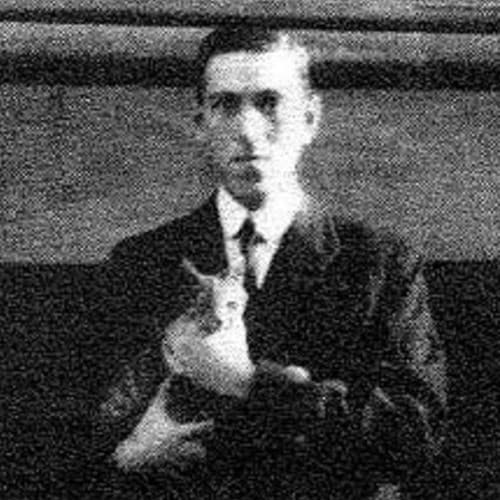
H.P. Lovecraft was an American writer known for his contributions to the genre of weird fiction and horror. His notable works include "The Call of Cthulhu," "The Case of Charles Dexter Ward," "The Shadow Over Innsmouth," "The Shunned House," "The Nameless City," and "Beyond The Wall Of Sleep," which explore themes of cosmic horror and the unknown. Lovecraft's influence on modern horror literature is significant, with many of his concepts and creatures becoming iconic in the genre.
Similar books
- The Call of Cthulhu
H.P. Lovecraft
4.0 (39k) average on GoodreadsFantasyClassic Lovecraftian cosmic horror with ancient, awakening entities.
- The House on the Borderland
William Hope Hodgson
3.6 (6k) average on GoodreadsFantasyHodgson's The House on the Borderland (1908), preceding Lovecraft's work, shares a similar theme of an isolated protagonist encountering cosmic, pre-human horrors through a strange, ancient dwelling. Both stories excel at creating a sense of vast, terrifying time and space. However, Hodgson's narrative is arguably more experimental in its structure, incorporating diary entries and visions of the far future and past, offering a more fragmented and perhaps even more disorienting experience than Lovecraft's more linear exploration. While both evoke profound dread, Hodgson's cosmic scope feels more directly integrated into the protagonist's immediate surroundings.
- Harry Potter and the Sorcerer's Stone
J.K. Rowling
4.5 (7M) average on GoodreadsFantasyRescued from a miserable life under the stairs, an orphaned boy discovers he's a wizard destined for a magical school, where he uncovers a dangerous secret tied to the dark wizard who murdered his parents.
- The Hunger Games
Suzanne Collins
4.3 (6.4M) average on GoodreadsFantasyIn a future where children fight to the death on live television, Katniss Everdeen volunteers for the arena, turning a death sentence into a fight for survival and a spark of rebellion.
- 1984
George Orwell
4.2 (3.1M) average on GoodreadsPoliticsIn a future where surveillance and thought control are absolute, a man's search for truth clashes with the Party, showing that hope can be a form of rebellion.
- Divergent
Veronica Roth
4.2 (2.9M) average on GoodreadsFantasyIn a society divided by virtues, a sixteen-year-old's difference from the norm starts a rebellion that threatens her world.





Enjoyed the summary?
A summary gives you the shape of the book. The book itself has the detail, the examples and the voice.
Find The Nameless City on AmazonAs an Amazon Associate, BookBrief earns from qualifying purchases. How we're funded