

Synopsis
Covers the whole plot, including the ending.
- Difficulty
- Easy
- Pacing
- Moderate
- Mood
- Satirical, Humorous, Observational, Poignant
- Read it if
- You enjoy satirical takes on wealth, stories about finding your voice, or narratives centered around a young woman's coming-of-age in an unexpected setting.
- Skip it if
- You dislike stories with dysfunctional family dynamics, feel uncomfortable with themes of emotional neglect, or prefer plots with strong romantic focus.
The Nanny Diaries Plot Summary
Covers the whole plot, including the ending.
An Unexpected Interview and a New Beginning
Nanny, a recent NYU graduate, needs a job to pay for her small studio apartment and growing student loan debt. While working a summer job at a playground, she meets Mrs. X, a wealthy Upper East Side mother, who thinks she is a professional nanny. Mrs. X quickly offers Nanny an interview to care for her four-year-old son, Grayer. Even though Nanny has no formal experience, she is hired, attracted by the high salary and her desperate financial situation. This is the start of Nanny's entry into the rich, but emotionally empty, world of the X family. She quickly learns the job involves much more than just childcare.
A Day in the Life of a Park Avenue Nanny
Nanny's first days at work are a busy time of learning the X family's unpredictable schedule and high demands. She finds out her main job is not just Grayer, but also managing Mrs. X's social calendar, making sure her employer's day runs without any home problems. This includes everything from organizing Grayer's playdates and classes to being available at all hours, often giving up her own life and school work. She sees the extreme wealth and privilege of the X family, which is a strong contrast to their emotional neglect of Grayer and their casual disregard for Nanny's well-being and personal space. This sets a difficult tone for her employment.
Grayer's World and Nanny's Growing Affection
As Nanny spends more time with Grayer, she sees how much emotional neglect he experiences. Mr. and Mrs. X are mostly absent, leaving Grayer to various staff members. Nanny quickly becomes his most stable and loving presence. Grayer, a smart and sensitive child, wants attention and affection, which Nanny provides. She becomes his trusted friend, playmate, and protector, forming a deep, motherly bond with him. This bond makes her want to stay in the demanding job, despite the difficult conditions, as she feels a strong responsibility for Grayer's happiness and emotional health, often putting his needs before her own.
The Absurdities of Upper East Side Life
Nanny's time with the X family shows her the extravagant and often strange customs of the Upper East Side elite. She attends exclusive playdates, goes to designer stores, and sees the complex social interactions among the wealthy mothers. She notices Mrs. X's obsession with appearances, her constant need for social approval, and her superficial friendships. The large amount of money spent on unimportant things, along with the emotional emptiness in these families, seems very ironic and disturbing to Nanny. She becomes like an anthropologist, recording the strange rituals and unsaid rules of this privileged world, often with confusion and dry humor.
Mr. X's Absence and Mrs. X's Control
The problems in the X family's marriage become clearer as Mr. X is always absent, either traveling for business or avoiding his family. Mrs. X, increasingly frustrated and lonely, takes more control over Nanny and Grayer, often with unreasonable demands and sudden schedule changes. She uses Nanny as someone to take out her anger on, putting her marital unhappiness onto her employee. Nanny finds herself stuck in the middle of their dysfunctional dynamic, often having to help Grayer deal with his father's absence and his mother's unpredictable moods, while also trying to keep her own professional boundaries and sanity in the chaos.
The Harvard Hottie and a Glimmer of Personal Life
Amidst the demanding schedule with the X family, Nanny finds a small part of a personal life and romance. She meets a charming young man, whom she calls 'Harvard Hottie,' who lives in her apartment building. Their new relationship offers Nanny a needed escape from the suffocating world of the X's and a chance to feel like a normal young woman. However, her duties to Grayer and the X family's unpredictable demands constantly get in the way of her attempts to grow this relationship, showing the sacrifices she makes for her job and the difficulty of having a personal life while being on call all the time.
Escalating Tensions and Marital Discord
The marital conflict between Mr. and Mrs. X gets worse, leading to open arguments and an increasingly tense mood in the apartment. Grayer becomes more anxious and quiet, clearly affected by his parents' unhappiness. Nanny sees their bitter arguments and the emotional results, often having to comfort Grayer and protect him from the worst of it. She finds herself in a difficult situation, trying to keep things normal for Grayer while dealing with the unstable environment created by his parents' failing relationship. The emotional toll on Nanny becomes significant, as she feels the weight of responsibility for Grayer's emotional health.
The Final Straw: Neglect and Misconduct
A series of increasingly bad acts of neglect and bad behavior by Mr. and Mrs. X push Nanny to her breaking point. These include Mrs. X forgetting Grayer at a park, Mr. X's affair becoming more public, and their general disregard for Nanny's well-being and pay. Nanny is often left without proper directions or support, dealing with inconsistent paychecks, unreasonable hours, and emotional abuse. The X's' self-centeredness and inability to put their son's needs first become clear. Nanny realizes that her presence, while good for Grayer, is allowing the X's' irresponsibility, and she can no longer accept their behavior or the harm it causes Grayer.
Nanny's Departure and a Hopeful Future
After months of emotional upset and professional disrespect, Nanny decides to leave the X family. She packs her bags and, in a moment of clear emotion and defiance, tells Mrs. X she is leaving. Despite the sadness of leaving Grayer, Nanny understands that staying would only continue the unhealthy situation. She leaves hoping that her departure might, in some way, make the X's face their responsibilities to their son. Nanny thinks about her experiences, having gained insights into class, privilege, and the real meaning of family. She is ready to start a new part of her life, forever changed by her time as a nanny.
The Nanny Diaries Characters
Nanny (Jane)
Protagonist
A recent NYU graduate navigating the challenges of nannying for a wealthy Park Avenue family.
Nanny, whose real name is Jane, is a sharp, observant, and compassionate young woman. She takes the nanny job out of financial necessity but quickly develops a deep, maternal bond with Grayer, becoming his primary source of emotional support. She possesses a dry wit and an anthropological curiosity that allows her to observe the absurdities of the Upper East Side elite with a critical eye, often journaling her experiences. Despite being an outsider, she maintains her integrity and stands up for Grayer's well-being, even when it means confronting her employers. Her journey is one of self-discovery and a re-evaluation of societal values.
Relationships: Grayer X (deep, maternal bond; caregiver); Mrs. X (employer-employee; often adversarial and emotionally abusive); Mr. X (employer; largely absent and indifferent); Harvard Hottie (romantic interest)
Mrs. X
Antagonist
A self-absorbed, wealthy Park Avenue socialite who neglects her son and abuses her nannies.
Mrs. X is a quintessential Upper East Side socialite, obsessed with appearances, social standing, and material possessions. She is emotionally detached from Grayer, viewing him more as an accessory or a burden than a child to be nurtured. Her life revolves around social engagements, beauty appointments, and maintaining a facade of perfection. She is passive-aggressive, manipulative, and often cruel to Nanny, projecting her own marital unhappiness and insecurities onto her employee. Her character embodies the superficiality and emotional emptiness that Nanny observes in the wealthy elite, highlighting the irony of their material abundance versus their emotional poverty.
Relationships: Nanny (employer; emotionally abusive and demanding); Grayer X (mother; emotionally distant and neglectful); Mr. X (husband; estranged and unfaithful)
Grayer X
Supporting
The four-year-old son of the X family, emotionally neglected but bright and sensitive.
Grayer is a sweet, intelligent, and sensitive four-year-old boy who craves affection and stability. Despite his privileged upbringing, he suffers from profound emotional neglect due to his parents' constant absence and marital discord. He forms an incredibly strong bond with Nanny, who becomes his primary caregiver, confidante, and source of comfort. Grayer's innocent perspective often highlights the absurdity and cruelty of his parents' behavior, making him a sympathetic figure and the central reason Nanny endures her difficult job for so long. His well-being is Nanny's main concern throughout the story.
Relationships: Nanny (deep, maternal bond; cared for and loved); Mrs. X (mother; neglected and often ignored); Mr. X (father; largely absent)
Mr. X
Supporting
The wealthy, perpetually absent, and unfaithful patriarch of the X family.
Mr. X is the archetypal Wall Street executive – wealthy, powerful, and almost entirely absent from his family's life. He is constantly traveling for business or pursuing extramarital affairs, showing little interest in his wife or son. When he is present, he is often cold, dismissive, and contributes to the tense atmosphere in the apartment. His neglect of Grayer is as significant as Mrs. X's, though less overtly emotional. He embodies the distant, work-obsessed father figure common in the world Nanny observes, where material success trumps familial connection.
Relationships: Nanny (employer; indifferent); Mrs. X (husband; estranged and unfaithful); Grayer X (father; neglectful)
Harvard Hottie
Supporting
Nanny's charming and supportive love interest who offers a glimpse of a normal life.
Harvard Hottie, whose real name is never fully revealed to the reader, is a kind, intelligent, and attractive young man who lives in Nanny's apartment building. He represents a potential escape from the suffocating world of the X family and a chance for Nanny to experience a normal romantic relationship. He is understanding of Nanny's demanding schedule, though often frustrated by its unpredictability. Their budding romance provides Nanny with much-needed emotional support and a reminder of her life outside of her job, highlighting the sacrifices she makes for Grayer.
Relationships: Nanny (romantic interest; supportive)
Tanya
Supporting
Nanny's best friend and roommate, offering a grounding perspective.
Tanya is Nanny's best friend and roommate, providing a crucial sounding board for Nanny's frustrations and observations. She represents a connection to Nanny's 'normal' life, outside the opulent bubble of the Upper East Side. Tanya often offers pragmatic advice and a dose of reality, helping Nanny process the absurdities and injustices she experiences. Her role is to provide emotional support and a consistent reminder of Nanny's own identity and values, distinct from those of the X family.
Relationships: Nanny (best friend; roommate; confidante)
The Other Nannies
Supporting
A network of nannies in Central Park who share their collective experiences.
The 'Other Nannies' are a group of professional caregivers Nanny encounters in Central Park. They form a supportive, informal community, sharing stories, tips, and commiserating over the challenges of their demanding jobs. They represent a collective voice of experience and solidarity, validating Nanny's feelings and observations. Through their shared experiences, Nanny realizes she is not alone in facing the eccentricities and demands of wealthy employers, reinforcing the systemic nature of the issues she faces.
Relationships: Nanny (colleagues; supportive community)
Gwyneth
Mentioned
One of Grayer's earlier nannies, whose dismissal foreshadows Nanny's own challenges.
Gwyneth is a previous nanny for Grayer, frequently mentioned by Mrs. X as a point of comparison or criticism. Mrs. X often brings up Gwyneth's perceived shortcomings to Nanny, highlighting her own impossible standards and manipulative tendencies. Gwyneth's implied dismissal or departure serves as a cautionary tale for Nanny, revealing the high turnover and demanding nature of the job, and foreshadowing the difficulties Nanny will face.
Relationships: Mrs. X (former employee; criticized)
The Nanny Diaries Themes
Class Divide and Social Commentary
The novel clearly criticizes the large class difference in Manhattan, showing the rich but emotionally empty lives of the wealthy elite through Nanny's eyes. It shows the strong contrast between the X family's material wealth and their emotional poverty, and the unseen work done by those who enable their privileged lives. Nanny's observations of designer clothes, exclusive schools, and social customs comment on the superficiality and self-centeredness that wealth can create, while also showing the struggles of those who serve them.
“I was an anthropologist, and the X's were my tribe. A tribe of two adults who didn't seem to have the faintest idea how to raise their own child.”
Parental Neglect and Childhood Vulnerability
A main theme is Grayer's deep parental neglect, despite his wealthy upbringing. Mr. and Mrs. X are mostly absent and emotionally distant, leaving Grayer to nannies. This neglect shows how vulnerable children are, no matter their wealth, when they lack consistent parental love and attention. Nanny's strong bond with Grayer and her efforts to protect him from his parents' problems show how important caregivers often are in filling emotional gaps left by absent parents.
“Grayer was a four-year-old with a full-time staff, but no parents.”
Identity and Self-Worth
Nanny's story is about self-discovery as she deals with her identity within her job. She struggles with being seen as an extension of the X family rather than an individual, and the constant mixing of work and personal boundaries. Her ability to keep her honesty, humor, and sense of self amidst the emotional abuse and demanding schedule shows her strength. In the end, her decision to leave is a strong statement of her self-worth and a refusal to be defined by her subservient role.
“I was Nanny. Not Jane. Not a person with a life, aspirations, or even a last name. Just Nanny.”
The Nature of Modern Servitude
The novel looks at the complexities of modern domestic service, especially in nannying. It explores the power dynamics between employer and employee, the lack of boundaries, inconsistent pay, and the emotional cost for caregivers. Nanny's experiences show how wealth can lead to a sense of entitlement and a disregard for the humanity of those in service, creating a new form of servitude where emotional work is often ignored and unpaid.
“The Nanny Diaries. A record of my servitude.”
The Illusion of Perfection
The book carefully breaks down the idea of the 'perfect' Upper East Side life. Beneath the designer clothes, lavish apartments, and exclusive social events, Nanny finds a world of marital conflict, emotional emptiness, and deep unhappiness. Mrs. X's constant need for social approval and external appearances hides a deep insecurity and loneliness. The novel shows that material wealth does not mean happiness or fulfillment, and often hides significant personal and family problems.
“Their perfect life was a perfect lie.”
Plot Devices & Literary Techniques
First-Person Narrative (Nanny's Perspective)
Provides an intimate, critical, and often humorous view of the X family's world.
The story is told entirely from Nanny's point of view, immersing the reader directly into her experiences, observations, and emotional struggles. This perspective allows for a sharp, often sarcastic, social commentary on the wealthy elite and the realities of her job. Her internal monologue, combined with her detailed descriptions of daily events, creates a sense of intimacy and authenticity, making her a relatable and sympathetic protagonist. The first-person narrative is crucial for conveying her developing bond with Grayer and her growing disillusionment with the X family.
Journal/Diary Entries
A structural device that mimics Nanny's personal reflections and observations.
Although not explicitly formatted as diary entries throughout, the narrative style often feels like Nanny is recounting her experiences in a personal journal. This device allows for a reflective tone, where Nanny processes the absurdities and injustices of her job. It emphasizes her role as an 'anthropologist' of the Upper East Side, giving her space to analyze the 'tribe' of the X family. This structure also highlights her isolation, as her 'diary' becomes a confidante for her observations and frustrations that she cannot openly share with her employers.
Symbolism of Central Park
Represents a microcosm of the nanny world and a space for connection.
Central Park serves as a recurring setting and a powerful symbol. It's the primary meeting ground for nannies and their charges, creating a community among the caregivers that contrasts sharply with the isolation Nanny often feels in the X apartment. It's a place where the social hierarchy of the Upper East Side is subtly played out among the nannies and mothers. For Nanny, the park becomes a refuge and a place of normalcy, away from the stifling environment of the X's' home, and where she first encounters Harvard Hottie.
Irony and Satire
Used to expose the absurdities and hypocrisies of the wealthy class.
The authors employ heavy use of irony and satire to critique the Upper East Side's privileged lifestyle. Nanny's internal commentary often highlights the ridiculousness of Mrs. X's demands, her self-absorption, and the disconnect between the family's wealth and their emotional poverty. The humor derived from these observations serves to underscore the book's social commentary, making the critique both entertaining and poignant. This device allows the reader to laugh at the X's' excesses while simultaneously feeling sympathy for Nanny and Grayer.
The Nanny Diaries Quotes
“Sometimes you have to accept that some people are a part of your history, but not a part of your destiny.”
“Love is not about finding a perfect person, but about seeing an imperfect person perfectly.”
“I realized that I was more in love with the idea of him than with the actual him.”
“The heart wants what it wants, but the mind knows what it needs.”
“In the end, we only regret the chances we didn't take.”
“You can't force someone to love you, but you can force yourself to stop loving them.”
“True love is not about being inseparable; it's about being separated and nothing changes.”
“The best relationships are the ones where you can be your complete self.”
“Sometimes the person you'd take a bullet for is the one behind the trigger.”
“Love is like a mirror; when you love another, you become the mirror of their soul.”
“We accept the love we think we deserve.”
“The hardest part about walking away from someone is the part where you turn around and see if they're following.”
“In a world full of temporary things, you are a perpetual feeling.”
“The greatest happiness of life is the conviction that we are loved; loved for ourselves, or rather, loved in spite of ourselves.”
Quiz
10 questions on the plot and the characters. Each answer comes with a short explanation.
Question 1
What is the main reason Nanny takes the job with the X family?
- She has always dreamed of working with children
- She needs money to pay for her NYU tuition and tiny apartment
- She wants to experience the glamorous Park Avenue lifestyle
- She is forced into it by her family
Show answer
B. She needs money to pay for her NYU tuition and tiny apartment Nanny is struggling to graduate from NYU and afford her microscopic studio apartment, which motivates her to accept the demanding nanny position despite the challenging conditions described in the job ad.
Question 2
What is the name of the four-year-old boy Nanny cares for?
- Charlie
- Grayer
- Henry
- Oliver
Show answer
B. Grayer The boy's name is Grayer X, and Nanny's primary responsibility is caring for him while navigating the dysfunctional dynamics of his wealthy family.
Question 3
How does the book describe Mrs. X's daily responsibilities?
- She works long hours at a corporate job
- She doesn't work, cook, clean, or raise her own child
- She volunteers extensively for charities
- She homeschools Grayer and manages the household
Show answer
B. She doesn't work, cook, clean, or raise her own child Mrs. X is a Park Avenue wife who outsources all domestic and childcare duties to Nanny, highlighting the theme of modern servitude and upper-class privilege.
Question 4
What major family event increases Nanny's involvement beyond normal nanny duties?
- The birth of a second child
- A family vacation to Europe
- The disintegration of the X's' marriage
- Mr. X losing his job
Show answer
C. The disintegration of the X's' marriage As the X's' marriage falls apart, Nanny becomes entangled in their personal conflicts, forcing her to navigate emotional boundaries and increasing her responsibilities.
Question 5
What does Nanny strive to maintain throughout her tenure with the X family?
- Her social life and dating prospects
- Grayer's mental health, her own integrity, and her sense of humor
- A spotless record for future employment
- Her physical fitness and health
Show answer
B. Grayer's mental health, her own integrity, and her sense of humor Despite the absurd demands and poor treatment, Nanny focuses on protecting Grayer's well-being, staying true to herself, and finding humor in the situation to cope.
Question 6
What is the 'age-old dance' that Mrs. X and Nanny perform according to the book description?
- A literal ballroom dance at high-society events
- The decorum and power dynamics of employer-employee relationships
- A competitive sport to impress Mr. X
- A friendship based on mutual respect
Show answer
B. The decorum and power dynamics of employer-employee relationships This metaphor describes the constant negotiation of social norms and control between Mrs. X as the employer and Nanny as the employee, testing the limits of servitude.
Question 7
How long does Nanny's tenure with the X family last?
- Six months
- One year
- Nine tense months
- Two years
Show answer
C. Nine tense months The book covers nine months of Nanny's employment, during which she witnesses the family's unraveling and faces increasing challenges.
Question 8
What aspect of Manhattan society does the book 'deftly puncture' according to its description?
- The efficiency of public transportation
- The glamour of the upper class
- The quality of public schools
- The diversity of neighborhoods
Show answer
B. The glamour of the upper class Based on the authors' experiences as nannies, the novel exposes the superficiality and dysfunction behind the luxurious facade of wealthy Manhattan families.
Question 9
What is implied about the job's pay in the satirical job description?
- It is generous and includes bonuses
- It is ridiculously erratic
- It is paid in luxury goods instead of cash
- It is below minimum wage but consistent
Show answer
B. It is ridiculously erratic The ad sarcastically mentions 'delicious anticipation of ridiculously erratic pay,' reflecting the unreliable and often unfair compensation nannies face in such positions.
Question 10
Why are the authors particularly qualified to write this story?
- They are professional psychologists specializing in family dynamics
- They are former nannies with firsthand experience
- They are members of the Park Avenue elite themselves
- They are journalists who investigated the nanny industry
Show answer
B. They are former nannies with firsthand experience Emma McLaughlin and Nicola Kraus drew on their real-life experiences as nannies for wealthy New York families, lending authenticity and insight to the novel's critique.
The Nanny Diaries FAQ
What is 'The Nanny Diaries' about?
The novel follows a struggling NYU student, known only as Nanny, who takes a job caring for Grayer, the four-year-old son of the wealthy X family on Park Avenue. Over nine months, she navigates the absurd demands of Mrs. X, who doesn't work or raise her own child, while witnessing the disintegration of the X's' marriage and fighting to protect Grayer's well-being and her own sanity.
Why should I read 'The Nanny Diaries'?
It offers a sharp, satirical look at Manhattan's elite through the eyes of a young nanny, blending humor with poignant social commentary. Based on the authors' real experiences, it exposes the dark side of wealth and privilege while exploring themes of servitude, integrity, and the emotional toll of caregiving.
What is the background/setting of 'The Nanny Diaries'?
Set in modern-day New York City, primarily in the opulent Park Avenue world of the X family, with contrasts to Nanny's tiny studio apartment and NYU campus. The setting highlights the stark divide between the ultra-wealthy's glamorous facade and the gritty reality of those who serve them.
What are the most memorable quotes from 'The Nanny Diaries'?
Key quotes include the job ad's opening: 'Must love being treated like fungus found growing out of employers Hermès bag,' and Nanny's reflection: 'I'm not just a nanny; I'm a buffer between Grayer and the chaos of his parents' world.' These capture the book's tone of dark humor and emotional depth.
What writing style does the author use?
Emma McLaughlin employs a first-person, conversational narrative with witty, sarcastic prose that blends humor and sharp social critique. The style is fast-paced and observational, drawing from the authors' real nanny experiences to create an authentic, engaging voice.
What minor details add significant meaning in 'The Nanny Diaries'?
Small details like Mrs. X's obsession with Hermès bags and perfect home decor symbolize her superficial priorities, while Grayer's attachment to his 'blankie' highlights his emotional neglect. Nanny's unpaid overtime and erratic pay underscore the exploitation inherent in her role.
What are some subtle foreshadowing moments?
Early scenes where Mr. X is constantly absent or on business trips hint at his emotional detachment and the marriage's collapse. Mrs. X's micromanaging of Nanny's every move foreshadows her increasing control issues and the family's unraveling stability.
What unexpected character connections exist?
Nanny forms a deeper bond with Grayer than his own parents do, acting as his primary emotional caregiver. Ironically, she also becomes a confidante to Mrs. X during marital crises, blurring professional boundaries and highlighting the family's dysfunction.
What are unspoken character motivations in 'The Nanny Diaries'?
Mrs. X is driven by a need for social status and control to compensate for her unhappy marriage, while Mr. X seeks escape through work and affairs. Nanny is motivated not just by money but by a genuine desire to protect Grayer from emotional harm.
What psychological complexities do characters exhibit?
Mrs. X shows narcissistic traits, using materialism to mask insecurity, while Grayer displays anxiety and attachment issues due to parental neglect. Nanny grapples with guilt and moral conflict as she becomes increasingly enmeshed in the family's drama.
What are the major emotional turning points?
Key moments include Nanny discovering Mr. X's infidelity, Mrs. X's breakdown when confronting her marriage, and Grayer's emotional outbursts that reveal his distress. The climax involves Nanny's decision to leave after realizing she can no longer shield Grayer.
How do relationship dynamics evolve?
Nanny's relationship with Mrs. X shifts from employer-employee to a tense, codependent dynamic as personal crises spill over. Her bond with Grayer deepens into a maternal-like connection, contrasting with his parents' increasing detachment.
Which parts remain ambiguous or open-ended?
The novel leaves Grayer's long-term fate ambiguous—whether he overcomes his neglect—and Nanny's future beyond nannying is unclear. The X's' marriage resolution is also left open, emphasizing the ongoing nature of their dysfunction.
What are controversial scenes or decisions?
Controversial moments include Nanny hiding Mr. X's affair from Mrs. X to protect Grayer, and Mrs. X's extreme demands like expecting Nanny to work unpaid overtime. These spark debate about ethics in caregiving and the limits of servitude.
'The Nanny Diaries' ending explained: how it ends & what it means
Nanny quits after a final confrontation with Mrs. X, realizing she can't save Grayer alone. The ending implies she gains personal integrity but leaves Grayer's future uncertain, critiquing how wealth often fails to provide emotional care. It underscores themes of self-preservation versus sacrifice.
About the author

Emma McLaughlin is an author known for her work in fiction, particularly for co-writing "The Nanny Diaries," which explores the lives of nannies in New York City. The book gained significant attention for its insightful commentary on class and privilege, and it has been adapted into a film.
Similar books
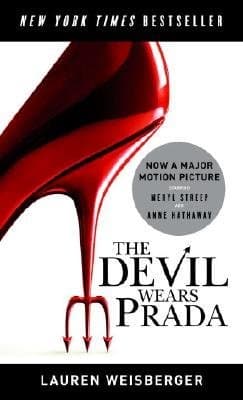
- The Devil Wears Prada
Lauren Weisberger
3.8 (786k) average on GoodreadsRomanceFeatures a young woman navigating a demanding, high-pressure job under a difficult, powerful female boss in a glamorous setting.
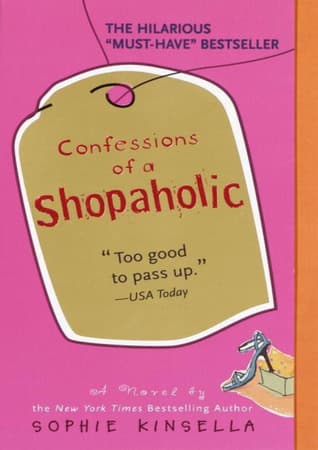
- Confessions of a Shopaholic
Sophie Kinsella
3.6 (647k) average on GoodreadsYoung AdultFollows a relatable young woman trying to make ends meet and navigate the complexities of adulthood in a humorous, lighthearted tone.
- The Hunger Games
Suzanne Collins
4.3 (6.4M) average on GoodreadsFantasyIn a future where children fight to the death on live television, Katniss Everdeen volunteers for the arena, turning a death sentence into a fight for survival and a spark of rebellion.
- The Great Gatsby
F. Scott Fitzgerald
3.9 (3.8M) average on GoodreadsHistorical FictionIn the opulent Roaring Twenties, a mysterious millionaire's lavish parties hide his desperate, tragic pursuit of a lost love, exposing the emptiness within the American Dream.
- The Fault in Our Stars
John Green
4.2 (3.6M) average on GoodreadsYoung AdultA girl with a terminal illness finds her story rewritten when a charming boy with a similar past enters her life at a cancer support group, leading to a star-crossed romance.
- Pride and Prejudice
Jane Austen
4.3 (3M) average on GoodreadsHistorical FictionIn a society focused on status and money, Elizabeth Bennet navigates love and pride, challenging Mr. Darcy and social expectations to find true affection.




Enjoyed the summary?
A summary gives you the shape of the book. The book itself has the detail, the examples and the voice.
Find The Nanny Diaries on AmazonAs an Amazon Associate, BookBrief earns from qualifying purchases. How we're funded