

Synopsis
Covers the whole plot, including the ending.
- Difficulty
- Medium
- Pacing
- Moderate
- Mood
- Suspenseful, Intriguing, Tense, Political
- Read it if
- You enjoy complex political thrillers with intricate plots, detailed espionage, and a focus on high-stakes negotiation.
- Skip it if
- You prefer fast-paced action over methodical plotting and detailed political maneuvering, or dislike stories with a strong focus on international relations.
The Negotiator Plot Summary
Covers the whole plot, including the ending.
The Kidnapping of William Cormack Jr.
The story starts with the kidnapping of William Cormack Jr., the only son of U.S. President John Cormack, while he is on vacation in Oxfordshire, England. William, an Oxford student, is ambushed on a country road by a professional team. The kidnappers, led by 'The Turk,' carry out the operation precisely, leaving no immediate witnesses or clues. This act becomes a major international incident, threatening to stop the upcoming disarmament treaty between the United States and the Soviet Union, a treaty President Cormack wants to sign. The U.S. government, desperate to get William back, decides to bring in a specialist.
Enter Quinn, The Negotiator
Quinn, a skilled former special operative and hostage negotiator, is reluctantly brought out of his quiet life to handle the crisis. He is known for his unusual methods and success. Despite his personal reluctance, the seriousness of the situation—the son of the President held captive—compels him to take the assignment. Quinn immediately starts contacting the kidnappers, using his psychological tactics and demanding specific rules to ensure William's safety and gain an advantage. He operates with cold, calculated efficiency, quickly assessing the threat.
The Initial Demands and Negotiations
Quinn contacts 'The Turk,' the leader of the kidnappers, and the initial demands are made: a large sum of money. Quinn, however, senses there is more to the abduction than just money. He carefully analyzes every communication, delay, and nuance in 'The Turk's' voice and demands, looking for inconsistencies. He suspects a deeper, more sinister plan. His negotiation tactics involve a balance of firmness and strategic concession, all while trying to gather information on the kidnappers' location and true motives. He uses intermediaries and secure channels, always aware that time is critical for William's survival.
The Failed Ransom Drop
A carefully planned ransom drop is arranged in a remote location. Quinn, despite his suspicions, organizes the delivery of the large sum of money, using complex movements designed to prevent the kidnappers from escaping easily and to protect the money. However, during the exchange, the operation is ambushed, not by the kidnappers, but by a separate, unknown force. The money is lost, and the kidnappers escape, but Quinn realizes that the ambush was planned by a third party, and that the kidnappers' true goal was never the money. This confirms Quinn's earlier suspicions that he is dealing with a more complex conspiracy.
Unmasking the Conspiracy
After the failed ransom drop, Quinn increases his investigation, now convinced that William's kidnapping is just a part of a larger political game. He uncovers evidence pointing to a powerful, hidden group of hardliners within the U.S. and Soviet military. Their goal is to prevent the signing of the U.S.-Soviet disarmament treaty, which they believe threatens their power. They plan to frame President Cormack for a scandal involving his son, forcing his resignation and stopping peace efforts. The kidnapping was designed to trap Quinn, making him an unwitting part of their scheme.
The Role of the Soviet Hardliners
Quinn's investigation crosses international borders, revealing that the American conspirators have allies among Soviet hardliners. These groups within the KGB and military share the same goal: to prevent the disarmament treaty at all costs. They believe the treaty weakens their nation's strategic position and threatens their power. Quinn realizes that the conspiracy is a sophisticated, two-part operation, with both sides manipulating events to achieve their shared goal of maintaining the Cold War. This discovery forces Quinn to operate with extreme caution, as he cannot trust traditional intelligence channels.
The Decoy and the Frame-up
Quinn understands that his role as the 'negotiator' was a key part of the conspirators' plan. They intended to manipulate him into a situation where William Cormack Jr. would appear to die under his watch, possibly during a botched rescue or a staged accident. This would then be used to create a scandal that would force President Cormack's resignation. The conspirators wanted to ensure that the blame for William's death could be placed on Quinn, discrediting the President and his administration, making him vulnerable to impeachment or political ruin.
Quinn's Counter-Plan
With the full scope of the conspiracy revealed, Quinn creates a daring counter-plan. He knows that conventional methods will not work against such powerful enemies. His strategy involves playing the conspirators at their own game, using their tactics against them. He aims to not only rescue William Cormack Jr. but also to expose the individuals behind the plot, saving President Cormack's presidency and the disarmament treaty. This requires him to go completely off-grid, trusting only a few individuals and relying on his skills in intelligence gathering and strategic manipulation.
The Climax and Confrontation
Quinn's plan ends in a high-stakes confrontation. He carefully sets a trap for the conspirators, forcing them into the open. Using his network and expertise, he orchestrates a complex series of events that leads him to William's hidden location. The rescue is dangerous, involving intense cat-and-mouse games and close calls. Quinn, with the help of a few trusted allies, outwits the conspirators and their operatives, ensuring William Cormack Jr.'s safety. The confrontation exposes the extent of the conspiracy, leading to major political consequences on both sides of the Iron Curtain.
Aftermath and Resolution
Afterward, the full extent of the conspiracy is revealed to the world. The key figures behind the plot, both American and Soviet, are exposed and face justice. President Cormack, though deeply shaken, is cleared, and his disarmament treaty proceeds, starting a new era of peace. Quinn, having completed his mission, again retreats from the public eye. The novel ends with peace triumphing over those who wanted conflict, thanks to Quinn's courage and strategic brilliance, but also shows the constant need for vigilance to maintain it.
The Negotiator Characters
Quinn
Protagonist
The legendary, retired special operative turned hostage negotiator.
Quinn is a man of immense skill, sharp intellect, and profound cynicism. A former special operative with a storied past, he possesses an unparalleled ability to read people, analyze situations, and manipulate events. He is driven by a strong moral compass despite his world-weariness, and a deep sense of duty, even when he claims to be retired. His methods are unconventional, often skirting the edges of legality, but always effective. He is a master of psychological warfare and strategic thinking, capable of seeing many steps ahead of his adversaries. He values integrity and despises political maneuvering that harms innocent lives.
Relationships: President John Cormack (professional, adversarial at times, ultimately respectful); William Cormack Jr. (victim he is dedicated to saving); The Turk (primary antagonist in the initial kidnapping, a pawn in the larger scheme)
President John Cormack
Supporting
The President of the United States, targeted by a conspiracy.
President Cormack is a principled and determined leader, deeply committed to achieving a landmark disarmament treaty with the Soviet Union. He is portrayed as a man of integrity, but also vulnerable, especially when his son's life is at stake. His political agenda and personal well-being become the central targets of the conspirators. He places immense trust, albeit with some initial skepticism, in Quinn's abilities, understanding the unconventional nature of the crisis. He represents the forces of peace and diplomacy, standing against the hawkish elements of both superpowers.
Relationships: Quinn (employer-employee, develops into trust); William Cormack Jr. (father-son, deep emotional bond); Conspirators (political adversaries seeking his downfall)
William Cormack Jr.
Victim/Supporting
The President's son, whose kidnapping ignites the international crisis.
William Cormack Jr. is a young, intelligent, and relatively innocent student caught in a political maelstrom. He is the catalyst for the entire plot, a pawn in a much larger game. His abduction is not personal but purely strategic, designed to destabilize his father's presidency. Although he spends much of the book as a captive, his safety and eventual rescue are the driving force behind Quinn's actions. His vulnerability highlights the ruthlessness of the conspirators and the high stakes involved in international politics. He represents the innocent lives often caught in the crossfire of power struggles.
Relationships: President John Cormack (son-father, central to the President's motivation); Quinn (rescuer-victim)
The Turk (Mehmet Celik)
Antagonist/Pawn
The ruthless, professional kidnapper leading the abduction team.
Mehmet Celik, known as 'The Turk,' is a highly competent and brutal mercenary. He is the immediate antagonist Quinn faces, a professional criminal who executes the kidnapping with chilling efficiency. While he appears to be the mastermind of the abduction, he is ultimately revealed to be a hired hand, manipulated by the larger conspiracy. He is driven by financial gain and a professional pride in his work, but lacks the ideological motivation of the true conspirators. His interactions with Quinn are tense and strategic, showcasing his skill in hostage-taking and negotiation, before his true role is exposed.
Relationships: Quinn (negotiator-kidnapper, primary adversary in the initial stages); Conspirators (employee-employer, unaware of their full agenda)
General Petrov
Antagonist/Supporting
A Soviet hardliner involved in the conspiracy to derail the treaty.
General Petrov represents the hawkish elements within the Soviet military and KGB. He is a staunch opponent of the disarmament treaty, viewing it as a weakening of Soviet power and a betrayal of their strategic interests. He is a key player on the Soviet side of the conspiracy, collaborating with his American counterparts to undermine President Cormack and the treaty. Petrov is cunning, ruthless, and deeply entrenched in the Soviet power structure, making him a formidable and dangerous adversary. His actions are driven by a mix of ideology and self-preservation, fearing a loss of influence.
Relationships: Quinn (adversary); American Conspirators (allies in the plot); President John Cormack (political opponent)
Senator William Kennedy
Antagonist/Supporting
A powerful American politician and a key figure in the anti-treaty conspiracy.
Senator Kennedy is a prominent and influential American politician who secretly orchestrates the conspiracy against President Cormack. He represents the American hardliners who oppose the disarmament treaty, believing it compromises national security and weakens the U.S. global standing. Kennedy is intelligent, charismatic, and outwardly patriotic, using his position and influence to manipulate events from behind the scenes. He is utterly ruthless in his pursuit of power and his political agenda, willing to sacrifice innocent lives, including William Cormack Jr.'s, to achieve his goals. He is the embodiment of the hidden danger within the establishment.
Relationships: Quinn (primary adversary); President John Cormack (political rival, target of his conspiracy); General Petrov (co-conspirator)
David Weintraub
Supporting
A loyal and capable aide to President Cormack.
David Weintraub is a trusted and highly competent aide to President Cormack. He serves as a crucial link between the President and Quinn, often acting as Quinn's contact within the official channels. Weintraub is intelligent, discreet, and deeply loyal to the President and his vision for peace. He is initially wary of Quinn's unconventional methods but quickly comes to respect his abilities. His role is to facilitate Quinn's operations within the constraints of government bureaucracy, providing support and information while navigating the political minefield of Washington D.C.
Relationships: President John Cormack (loyal aide); Quinn (professional liaison, becomes trusted ally)
Sarah Jessup
Supporting
A British intelligence operative who aids Quinn.
Sarah Jessup is a sharp and resourceful British intelligence officer who becomes one of Quinn's key allies. She is initially assigned to the case from a British perspective but quickly recognizes Quinn's unique skills and the true nature of the conspiracy. Jessup is intelligent, courageous, and capable of operating outside official channels when necessary. She provides Quinn with crucial intelligence and logistical support, often risking her career and safety. Her presence highlights the international scope of the crisis and the cooperation required to combat such a pervasive threat.
Relationships: Quinn (professional colleague, becomes trusted ally); British Intelligence (member of)
The Negotiator Themes
The Peril of Political Power
The novel shows how political power, when unchecked or driven by extreme beliefs, can be dangerous. The conspiracy to undermine President Cormack and the disarmament treaty comes from individuals, both American and Soviet, who believe their view of national interest justifies any actions, including kidnapping and murder. Senator Kennedy and General Petrov are examples, using their positions to manipulate global events for personal or ideological gain. This theme is clear when William Cormack Jr.'s kidnapping is revealed to be about destabilizing the presidency and stopping peace, not ransom. This shows the corrupting influence of power and how far some will go to maintain the status quo or advance their agenda, as seen when the conspirators arrange the failed ransom drop to frame Quinn and the President.
“There are some who believe that peace is a weakness, and that true strength lies only in perpetual conflict.”
The Nature of Negotiation
Frederick Forsyth explores the art and psychology of negotiation through Quinn. The theme looks at negotiation as a complex intellectual battle where information, psychology, and timing are crucial. Quinn's approach to 'The Turk' is a prime example, where every word, silence, and demand is analyzed for hidden meanings and leverage. He understands that negotiation is a performance, a dance of power and perception, where the true goal is often hidden. This theme is central to Quinn's character, as he constantly probes for the 'why' behind the 'what,' eventually realizing that the kidnappers' demands were a cover for a larger, more sinister plot, turning the negotiation into an intelligence-gathering operation.
“A good negotiator doesn't just hear what is said; he hears what is not said, and he understands why.”
The Fragility of Peace
The novel shows how fragile peace is, especially during the Cold War. The disarmament treaty, a symbol of hope for global stability, is constantly threatened by powerful groups on both sides who benefit from or believe in the need for ongoing conflict. The conspiracy to stop the treaty shows how easily peace efforts can be sabotaged by established interests and extreme beliefs. William Cormack Jr.'s kidnapping is a direct attack on this fragile peace, designed to create chaos and mistrust. The story emphasizes that achieving and maintaining peace requires constant vigilance and a willingness to confront those who profit from division, as shown by Quinn's relentless pursuit of the conspirators who want to continue the Cold War.
“Peace is not a given; it is a battle fought every day against those who thrive on discord.”
Individual Integrity vs. Systemic Corruption
This theme explores the conflict between the moral integrity of individuals like Quinn and President Cormack, and the widespread corruption within powerful, hidden systems. Quinn, despite his cynicism, operates with a strong personal code, prioritizing human life and justice over political convenience. President Cormack also strives for a greater good, even under immense personal pressure. Conversely, the conspirators, embedded within government and military structures, show how systems can be exploited and corrupted by individuals driven by self-interest or extreme beliefs. The story supports the idea that even against overwhelming systemic corruption, the actions of a few principled individuals can make a difference, as Quinn takes on a global conspiracy with minimal official backing, relying on his own moral compass.
“When institutions fail, it falls to individuals to hold the line, no matter the cost.”
Plot Devices & Literary Techniques
Red Herring
Misleading clues or plot points designed to distract the reader and characters.
The initial focus on the ransom demand for William Cormack Jr. serves as a major red herring. Quinn and the reader are led to believe that the kidnapping is a straightforward criminal act motivated by money. This misdirection is crucial to the conspirators' plan, allowing them to manipulate Quinn and the authorities while concealing their true political agenda: to sabotage the disarmament treaty and discredit President Cormack. The failed ransom drop further solidifies this device, making it appear as a botched criminal operation rather than a calculated move in a larger political chess game, thus deepening the mystery and complexity of the plot.
The Unreliable Narrator (implied)
Information is presented from a limited or biased perspective, leading to reader misinterpretation.
While not a traditional unreliable narrator in the sense of a character's direct narration, the information presented to Quinn (and thus the reader) is often carefully curated and manipulated by the conspirators. The official channels and initial communications from 'The Turk' are designed to mislead. Quinn's genius lies in his ability to see through these layers of deception, but for a significant portion of the novel, the audience is only privy to the information the conspirators want known, creating a sense of mystery and forcing the reader to constantly question motives and events alongside Quinn. This device heightens the suspense and makes the eventual revelations more impactful.
MacGuffin
An object, desire, or goal that drives the plot, but is ultimately secondary to the characters' development or thematic exploration.
The Disarmament Treaty serves as a central MacGuffin. While its signing is the ultimate goal President Cormack is striving for, and its prevention is the conspirators' primary motivation, the treaty itself is less important than the complex web of political intrigue, espionage, and character development it instigates. The kidnapping of William Cormack Jr. is a direct consequence of the treaty's existence, but the focus shifts to Quinn's negotiation skills, his uncovering of the conspiracy, and the high-stakes battle of wits. The treaty provides the impetus for the entire plot, yet the real story lies in the machinations surrounding it and Quinn's heroic efforts.
The Mastermind Villain
A highly intelligent and often hidden antagonist who orchestrates a complex plot.
The overarching conspiracy is orchestrated by a collective of 'mastermind villains,' primarily Senator William Kennedy and General Petrov, who operate behind the scenes. They are not direct, physical threats to Quinn but rather intellectual adversaries who manipulate events and people from a distance. Their power lies in their strategic thinking, their ability to leverage political influence, and their network of operatives. This device creates a sense of an unseen, powerful enemy, making Quinn's task far more challenging than a simple rescue mission, as he must uncover and dismantle a deeply entrenched and internationally connected plot rather than just confront a single kidnapper.
The Negotiator Quotes
“The greatest weapon in the world is the human mind. The greatest defense is a prepared mind.”
“Never make a threat unless you are prepared to carry it out. And if you are, make it count.”
“Love, like war, is a matter of strategy. But in love, the heart often overrules the head.”
“Information is power, but knowing how to use it is the ultimate weapon.”
“In the world of shadows, trust is a luxury few can afford and even fewer truly possess.”
“The past is a foreign country; they do things differently there. But it always finds a way to catch up.”
“Sometimes, the most dangerous enemy is the one you underestimate, or worse, the one you never see coming.”
“A good plan executed today is better than a perfect plan executed tomorrow.”
“The human heart, for all its vulnerability, is also capable of immense strength and surprising resilience.”
“Even the most carefully constructed facade can crumble under the weight of truth.”
“The art of negotiation is not about winning, but about finding a solution where everyone believes they have gained something.”
“Fear can be a powerful motivator, but courage is what allows you to act despite it.”
“There are no easy answers, only choices, and every choice has its price.”
“The world is a chessboard, and those who understand the moves are the ones who control the game.”
Quiz
10 questions on the plot and the characters. Each answer comes with a short explanation.
Question 1
What is President Cormack's primary objective that the master conspirator wishes to prevent?
- Starting a new trade war with China
- Signing a sweeping U.S.-Soviet disarmament treaty
- Re-election for a third term
- Invading a small Middle Eastern country
Show answer
B. Signing a sweeping U.S.-Soviet disarmament treaty President Cormack is focused on signing a significant disarmament treaty, which is the central point of conflict the conspirators aim to thwart.
Question 2
Where does the initial kidnapping, which is the first step in the conspiracy, take place?
- On a busy street in London
- At a university campus in Washington D.C.
- On a country road in Oxfordshire
- Inside the White House grounds
Show answer
C. On a country road in Oxfordshire The kidnapping that initiates the plot occurs on a country road in Oxfordshire, signaling the start of the larger conspiracy.
Question 3
What is the name of the protagonist, the 'unforgettable hero' who is tasked with preventing the conspiracy?
- Cormack
- Forsyth
- Quinn
- Oxford
Show answer
C. Quinn The hero of the story, known as 'The Negotiator,' is named Quinn.
Question 4
What shocking discovery does Quinn make about the kidnappers' true objective?
- They want to defect to the Soviet Union.
- Ransom was not their objective after all.
- They were hired by President Cormack himself.
- They want to expose government corruption unrelated to the President.
Show answer
B. Ransom was not their objective after all. Quinn initially believes the motive is ransom, but he discovers that the kidnapping is part of a much larger, more complex plot, and ransom is not the true goal.
Question 5
The conspiracy's ultimate aim is to achieve what outcome regarding the President?
- Force his resignation through public scandal.
- Engineer his destruction.
- Blackmail him into signing a different treaty.
- Gain control over his foreign policy decisions.
Show answer
B. Engineer his destruction. The text explicitly states that the plot is engineered 'to engineer the president's destruction,' indicating a far more severe outcome than merely thwarting a treaty.
Question 6
What is the broader geopolitical context that President Cormack's treaty signing would affect?
- U.S.-China trade relations
- U.S.-Soviet relations
- NATO's expansion into Eastern Europe
- The stability of the European Union
Show answer
B. U.S.-Soviet relations The treaty is described as a 'sweeping U.S.-Soviet disarmament treaty,' directly impacting the relationship between these two global powers.
Question 7
What is the primary skill or role of the protagonist, Quinn, that earns him the title 'The Negotiator'?
- His ability to engage in hand-to-hand combat.
- His expertise in code-breaking and espionage.
- His mastery of playing the kidnappers, like a musician.
- His deep knowledge of international law.
Show answer
C. His mastery of playing the kidnappers, like a musician. The description highlights Quinn's skill in handling the kidnappers, stating he 'plays the kidnappers like a master musician,' which is central to his role as a negotiator.
Question 8
After realizing the true nature of the conspiracy, what larger entity is Quinn ultimately trying to save?
- Only the kidnapped victim
- The United Nations Security Council
- His own reputation and career
- The entire free world
Show answer
D. The entire free world The stakes escalate dramatically, and Quinn's mission expands from saving the victim to 'save not only the victim but the entire free world.'
Question 9
The text describes Quinn as being 'lured into a cunningly woven web.' What does this imply about the conspirators' plan?
- They underestimated Quinn's abilities.
- Their plan is simple and straightforward.
- It is an elaborate, deceptive, and well-orchestrated trap.
- They intended for Quinn to discover their true motives early on.
Show answer
C. It is an elaborate, deceptive, and well-orchestrated trap. The phrase 'cunningly woven web' suggests a highly intricate, deceptive, and carefully constructed plot designed to mislead and trap Quinn.
Question 10
What is a key characteristic mentioned about Frederick Forsyth's writing style, as indicated by the description?
- He writes primarily historical fiction.
- He is a master of the international thriller.
- His novels focus on romantic comedies.
- He specializes in science fiction epics.
Show answer
B. He is a master of the international thriller. The very first sentence of the synopsis identifies Frederick Forsyth as the 'master of the international thriller,' setting the genre and tone for his work.
The Negotiator FAQ
What is the central conflict driving the plot of 'The Negotiator'?
The central conflict revolves around a conspiracy to prevent U.S. President Cormack from signing a crucial disarmament treaty with the Soviet Union. This grand scheme initiates with the kidnapping of President Cormack's son, William, in Oxfordshire, designed to destabilize his presidency and ultimately remove him from power.
Who is Quinn, and what is his primary role in the story?
Quinn is the titular 'Negotiator,' a highly skilled and experienced professional brought in to handle the kidnapping of William Cormack. His primary role is to communicate with the kidnappers, manage the ransom demands, and secure William's safe release, using his expertise to navigate the complex and dangerous situation.
What is the initial perceived motive for William Cormack's kidnapping?
Initially, the kidnapping of William Cormack appears to be a straightforward ransom demand. Quinn approaches the situation believing the kidnappers are seeking a large sum of money, and he meticulously works to orchestrate the payment and secure the victim's return based on this assumption.
How does the plot twist reveal a deeper conspiracy beyond a simple kidnapping?
The plot takes a dramatic turn when Quinn discovers that the kidnappers' true objective was never ransom. He uncovers that William's abduction is merely the first step in a much larger, more intricate conspiracy orchestrated to undermine President Cormack and derail the U.S.-Soviet disarmament treaty, trapping Quinn in a complex web of deceit.
Who is President Cormack, and what is his political agenda?
President Cormack is the President of the United States, deeply committed to achieving a sweeping disarmament treaty with the Soviet Union. His unwavering focus on this political goal makes him a target for powerful individuals and groups who oppose such an agreement, leading to the elaborate plot against him.
What specific details about the Oxfordshire setting hint at the conspiracy's international scope?
The choice of Oxfordshire for William Cormack's kidnapping, a seemingly quiet English countryside, serves as a deliberate misdirection. This location, far removed from immediate U.S. political circles, initially makes the event appear isolated, masking the sophisticated international network and high-stakes political motivations behind it.
Are there any subtle clues about the true identity or motivations of the 'master conspirator' that Quinn might have overlooked early on?
Early interactions with the kidnappers and their surprisingly sophisticated methods, beyond typical criminal operations, might have offered subtle clues. The precise timing of the kidnapping relative to the disarmament talks, and the lack of frantic urgency often associated with pure ransom demands, could also have been interpreted differently by Quinn in hindsight.
How does the 'master musician' analogy for Quinn's negotiation style foreshadow the complexity he faces?
The 'master musician' analogy suggests Quinn's remarkable control and precision in dealing with the kidnappers, playing them like instruments. However, it subtly foreshadows that he is playing a score he doesn't fully understand, and the 'music' being produced is part of a larger, more sinister composition directed by someone else.
What psychological toll does the realization of the deeper conspiracy take on Quinn?
The realization that he has been manipulated and used as a pawn in a much larger conspiracy likely creates profound psychological distress for Quinn. It challenges his professional pride, his judgment, and potentially his trust in the information he receives, forcing him to re-evaluate every aspect of the case and his own role.
How does Quinn's personal history or background contribute to his unique skills as a negotiator?
While not explicitly detailed in the synopsis, Quinn's status as 'The Negotiator' implies a history rich with high-stakes situations, intense psychological battles, and a deep understanding of human behavior under duress. This background likely forged his resilience, analytical prowess, and ability to remain calm in extreme pressure, making him exceptionally effective.
What motivates the 'master conspirator' beyond simple political opposition to the treaty?
The 'master conspirator' is likely driven by a complex mix of ideological conviction, personal ambition, and potentially deep-seated fear or distrust of the disarmament treaty's implications. Their determination to 'crush' the President suggests a more profound, perhaps even fanatical, opposition than mere political disagreement.
How does the novel explore themes of trust and betrayal, particularly through Quinn's experience?
The novel deeply explores themes of trust and betrayal as Quinn initially trusts the premise of a ransom kidnapping, only to discover he's been betrayed by the true intentions of the plotters. This forces him to question who he can truly rely on and re-evaluate every piece of information, highlighting the fragility of trust in high-stakes espionage.
What is the significance of the title 'The Negotiator' if the kidnapping wasn't about ransom?
The title 'The Negotiator' gains deeper significance as Quinn must negotiate not just for a hostage's release, but for truth, justice, and ultimately, the future of international relations. He shifts from negotiating with kidnappers to negotiating with a vast, unseen conspiracy, making his skills in understanding motives and leverage even more critical.
Could the 'romance' element mentioned in the genre description play a role in Quinn's motivation or vulnerability?
While not detailed, the 'romance' element could introduce a personal stake for Quinn, perhaps a past or present relationship that either grounds him or makes him vulnerable. This personal connection could be exploited by the conspirators or serve as a powerful motivator for him to succeed against overwhelming odds.
Is the 'entire free world' truly at stake, or is this an exaggeration of the treaty's importance?
The phrase 'entire free world' being at stake emphasizes the immense geopolitical ramifications of President Cormack's disarmament treaty. Its failure, engineered by the conspirators, could destabilize global power balances, reignite Cold War tensions, or even lead to broader conflicts, making the stakes genuinely global from the perspective of the narrative.
How does the novel critique or comment on political power and international relations?
The novel critiques the hidden machinations and extreme measures powerful individuals will take to manipulate political outcomes and international treaties. It comments on the fragility of peace, the constant struggle for power, and how personal ambitions can endanger global stability, even at the highest levels of government.
What philosophical questions does the story raise about the nature of truth and deception?
The story profoundly raises questions about the nature of truth and deception, particularly through Quinn's experience of being misled. It explores how easily truth can be obscured by elaborate lies, how initial perceptions can be completely wrong, and the constant battle to discern reality from meticulously crafted illusions in high-stakes environments.
About the author

Frederick Forsyth is a British author known for his thrillers and espionage novels. His notable works include The Day of the Jackal, which revolves around an assassination plot, The Odessa File, a story about a journalist uncovering a Nazi conspiracy, The Negotiator, focusing on hostage situations, and Avenger, which deals with themes of justice and revenge.
Similar books
- The Day of the Jackal
Frederick Forsyth
4.3 (118k) average on GoodreadsThrillerFeatures a meticulous plot against a high-profile target and detailed procedural elements.
- The Odessa File
Frederick Forsyth
4.1 (55k) average on GoodreadsThrillerInvolves a lone protagonist uncovering a deep-seated conspiracy with international implications.
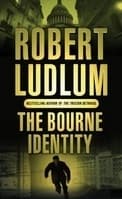
- The Bourne Identity
Robert Ludlum
4.0 (397k) average on GoodreadsThrillerLudlum's novel is more character-driven, focusing on psychological suspense, amnesia, and the protagonist's internal struggle for identity, whereas Forsyth's The Negotiator prioritizes external geopolitical maneuvering and the mechanics of a complex conspiracy.
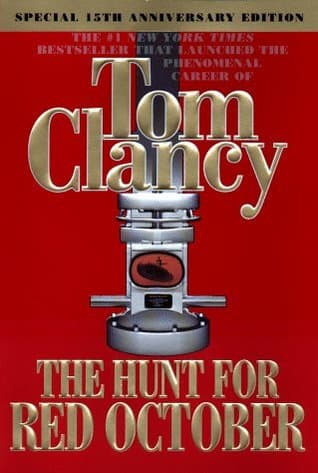
- The Hunt for Red October
Tom Clancy
4.1 (336k) average on GoodreadsThrillerClancy's work shares Forsyth's dedication to technical detail and military realism but delves deeper into operational aspects of military hardware and strategy. Forsyth, in contrast, focuses more on human intelligence, political negotiation, and the intricate construction of a conspiracy within a political framework.
- Angels & Demons
Dan Brown
3.9 (2.7M) average on GoodreadsThrillerA Harvard symbologist races through Rome's ancient sites, deciphering cryptic clues to unmask the Illuminati and stop a vengeful plot to destroy the Vatican with a stolen antimatter weapon.
- Gone Girl
Gillian Flynn
4.1 (2.3M) average on GoodreadsThrillerA wife's sudden disappearance on her fifth anniversary reveals a web of lies and psychological warfare, exposing the secrets within a seemingly perfect marriage.




Enjoyed the summary?
A summary gives you the shape of the book. The book itself has the detail, the examples and the voice.
Find The Negotiator on AmazonAs an Amazon Associate, BookBrief earns from qualifying purchases. How we're funded