
Synopsis
Covers the whole plot, including the ending.
- Difficulty
- Medium
- Pacing
- Moderate
- Mood
- Suspenseful, Cynical, Intriguing, Gritty
- Read it if
- You love intricate spy thrillers with deep character psychological exploration, moral ambiguity, and a detailed look into the world of arms dealing and intelligence operations.
- Skip it if
- You prefer fast-paced, action-heavy thrillers with clear-cut heroes and villains, or find political machinations and detailed procedural elements tedious.
The Night Manager Plot Summary
Covers the whole plot, including the ending.
Cairo: The First Encounter with Richard Roper
Jonathan Pine, a former British soldier and current night manager at the Nefertiti Hotel in Cairo, meets Sophie Alekan, mistress to the arms dealer Richard Roper. Sophie tells Pine about documents that expose Roper's upcoming illegal arms deal with an Egyptian contact, Freddie Hamid. Pine, feeling a moral duty and affection for Sophie, copies these documents and gives them to a contact at the British Embassy, not knowing about the corruption within British intelligence. Sophie is murdered shortly after, supposedly by Hamid, though Pine thinks Roper was involved. This event makes Pine want revenge against Roper.
Zermatt: A New Life and Lingering Ghosts
Years later, Jonathan Pine moves to Zermatt, Switzerland, working as the night manager at the Hotel Meister. He tries to build a new life, pushing away the trauma of Sophie's death. However, his past returns when Richard Roper and his group, including his mistress Jed Marshall and his enforcer Corkoran, arrive at the Meister. Pine must serve the man he hates most, which renews his desire for revenge. This meeting restarts his goal to expose Roper and avenge Sophie, setting his path toward a confrontation with the arms dealer.
London: Contacting Intelligence and Forming a Plan
After Roper leaves Zermatt, Pine contacts Leonard Burr, a senior operative in a small, underfunded British intelligence unit that focuses on arms trafficking. Burr, who received Pine's intelligence from Cairo years before, sees Pine's unique position and strong motivation. Burr and his team, including Rex Mayhew and Caroline Spence, plan for Pine to infiltrate Roper's inner circle, becoming an informant. This means Pine must change his identity, train intensely, and create a convincing cover story to gain Roper's trust. This is a dangerous task given Roper's ruthlessness and paranoia.
Cornwall: Creating the Legend of Thomas Quince
To appeal to Roper, Pine, now 'Thomas Quince,' starts a plan to appear as a dangerous criminal. He stages a violent incident in a remote Cornish village, creating a false reputation as a man with a dark past and useful connections in the underworld. This trick is meant to get Roper's attention as a potential asset, not a threat. Burr's team carefully arranges events to ensure Roper's network learns of 'Quince' and his supposed criminal skill, setting up their meeting and Pine's infiltration.
Quebec: The Initiation into Roper's World
Pine, pretending to be Thomas Quince, arranges a meeting with Roper's people in Quebec. He goes through brutal physical and psychological tests by Corkoran, proving his toughness and loyalty. After a staged rescue of Roper's son, Daniel, from a fake kidnapping by Burr's team, Pine gains Roper's trust and joins his inner circle. He becomes Roper's 'night manager' again, overseeing logistics and operations for the arms dealer. This puts him in a good position to gather information on Roper's illegal dealings and the corrupt officials protecting him.
The Caribbean: Unveiling the Network
From Roper's luxurious Caribbean base, Pine carefully gathers evidence on 'The River,' Roper's network of illegal arms dealing. He learns about the shell corporations, shipping routes, and political figures who help Roper. Pine sets up a secret communication channel with Burr's team, sending important information. During this time, he also forms a complex, unspoken bond with Jed Marshall, Roper's mistress, seeing in her a similar feeling of being trapped and having moral conflict. Their connection adds emotional risk to Pine's already dangerous mission.
Whitehall's Resistance: The Obstruction from Mainstream Intelligence
As Pine's information becomes more damaging, Burr's unit faces more obstruction and sabotage from powerful, corrupt figures within mainstream British intelligence, especially a group called 'the Whitehall Mandarins' led by Geoffrey Darker and Sir Alistair Hannaway. These officials, tied to Roper's illegal activities financially and politically, actively work to discredit Burr and protect Roper. They cut funding, spread misinformation, and try to recall Pine, risking his life and the entire operation. This internal conflict shows the widespread corruption that goes beyond Roper, making Burr's fight difficult against his own government.
Panama: The Final Arms Deal and Betrayal
Roper plans his largest arms deal yet, moving a large shipment of weapons through Panama. Pine is important in the logistics, giving him detailed knowledge of the operation. As the deal approaches, the pressure increases, and Pine realizes his cover is getting weaker. He works with Jed to get important evidence, including manifests and financial records. However, the corrupt people in Whitehall are closing in on Burr, and Pine's communication with his handlers becomes irregular and dangerous, putting him at extreme risk of being exposed and betrayed by those who should be his allies.
The Sting: Roper's Capture and Pine's Sacrifice
With help from American intelligence, who Burr reluctantly brings in because of Whitehall's obstruction, the final arms shipment is stopped in Panama. Roper and his main associates are arrested. In the chaos after, Pine's cover is blown. Roper's men brutally interrogate and torture him before Burr's team rescues him. The intelligence Pine gathered exposes Roper's network and the involvement of the corrupt British officials. Pine, having avenged Sophie and broken up Roper's empire, is left physically and emotionally scarred, his future uncertain but free from Roper's influence.
Aftermath: Justice and Lingering Corruption
Roper is taken into custody, though his wealth and connections suggest his imprisonment may not be permanent. The evidence Pine provided leads to arrests and disruptions in the global arms trade. However, the corrupt British intelligence officials, including Darker and Hannaway, largely avoid prosecution, showing how entrenched the corruption is and the limits of Burr's victory. Pine, having finished his mission, disappears, likely to start a new life. Burr and his small team, though proven right, remain watchful, knowing that the fight against such powerful forces is never truly over.
The Night Manager Characters
Jonathan Pine
Protagonist
Former British soldier turned night manager, seeking vengeance against Richard Roper.
Jonathan Pine is a deeply moral and haunted man, a former soldier whose experiences in Northern Ireland and elsewhere have left him with a strong sense of justice. He is meticulous, observant, and possesses an extraordinary capacity for empathy and deception. Sophie Alekan's murder by Roper's associates ignites a burning desire for revenge that fuels his transformation into an undercover operative. He is driven by a need to right wrongs and confront the darkness he perceives in the world, embodying a quiet heroism. His past as a soldier gives him the resilience needed for his perilous mission.
Relationships: Sophie Alekan (lover, catalyst for his revenge); Richard Roper (nemesis); Leonard Burr (handler, mentor); Jed Marshall (confidante, fellow captive in Roper's world)
Richard Roper
Antagonist
A charismatic and ruthless international arms dealer known as 'the worst man in the world'.
Richard Roper is a charming, sophisticated, yet utterly ruthless and amoral international arms dealer. He operates with impunity, protected by a network of corrupt officials and his vast wealth. He sees himself as a businessman, providing a service, and is utterly devoid of conscience regarding the human cost of his trade. He is intelligent, manipulative, and possesses a keen instinct for danger, making him a formidable adversary. His public persona as a philanthropic businessman masks a truly monstrous individual who thrives on chaos and violence.
Relationships: Jonathan Pine (unwitting target of Pine's vengeance); Jed Marshall (mistress, emotional hostage); Corkoran (loyal but brutal chief enforcer)
Leonard Burr
Supporting
Dedicated and principled British intelligence officer leading the pursuit of Roper.
Leonard Burr is a veteran British intelligence officer, an old-school spymaster operating within a small, underfunded, and often undermined unit. He is deeply moral, tenacious, and committed to bringing down arms dealers like Roper, despite facing constant obstruction from corrupt elements within his own government. Burr sees Pine as a unique and invaluable asset, a kindred spirit in the fight against injustice. He is a pragmatic and resourceful leader, fiercely protective of his agents, and willing to bend rules to achieve his goals. His integrity stands in stark contrast to the institutional corruption around him.
Relationships: Jonathan Pine (handler, recruiter, mentor); Caroline Spence (loyal team member); Rex Mayhew (loyal team member)
Jed Marshall
Supporting
Roper's beautiful and disillusioned mistress, who forms a bond with Pine.
Jed Marshall is Roper's beautiful, intelligent, and deeply unhappy mistress. Trapped in a gilded cage, she is aware of Roper's true nature and the horrors of his business, but feels powerless to escape. She is a survivor, pragmatic and observant, and carries a quiet sadness. Her connection with Pine is born out of shared vulnerability and a mutual understanding of the darkness surrounding them. She acts as an emotional anchor for Pine and ultimately becomes a crucial, albeit reluctant, accomplice in his mission to expose Roper, driven by a desire for freedom.
Relationships: Richard Roper (partner, captor); Jonathan Pine (confidante, ally, romantic interest)
Major Corkoran
Supporting
Roper's loyal, violent, and suspicious chief enforcer.
Major Corkoran, known as 'Corky,' is Roper's former military colleague and fiercely loyal chief of staff and enforcer. He is a brutal, alcoholic, and deeply suspicious man who dislikes Pine from the outset. Corkoran is cunning and dangerous, often acting as Roper's muscle and interrogator. His unwavering loyalty to Roper is rooted in their shared past and a sense of belonging within Roper's illicit world. He serves as a constant threat to Pine's cover, his intuition and jealousy making him Pine's most immediate and dangerous adversary within Roper's inner circle.
Relationships: Richard Roper (loyal subordinate, enforcer); Jonathan Pine (suspicious rival)
Sophie Alekan
Supporting
Roper's murdered mistress, whose death propels Pine's quest for revenge.
Sophie Alekan is a beautiful and vivacious Egyptian woman, mistress to Freddie Hamid and later Richard Roper. She is initially presented as a figure of allure and vulnerability, a woman caught in a dangerous world. Her decision to confide in Jonathan Pine about Roper's arms dealings, driven by fear and a desire for justice, seals her tragic fate. Her brutal murder, which Pine witnesses the aftermath of, becomes the foundational trauma and primary motivation for his entire mission against Roper. She represents the innocent victims of the arms trade.
Relationships: Jonathan Pine (lover, confidante); Richard Roper (former lover, indirect murderer); Freddie Hamid (lover, direct murderer)
Caroline Spence
Supporting
Dedicated and sharp member of Burr's intelligence team.
Caroline Spence is a highly competent and loyal member of Leonard Burr's small intelligence unit. She is intelligent, analytical, and shares Burr's commitment to exposing Roper and fighting corruption. Spence is instrumental in the logistical and intelligence gathering aspects of the operation, often providing crucial support and insights. Her steadfast dedication helps Burr navigate the political machinations within Whitehall and keep Pine's mission on track, despite the constant sabotage from higher-ups. She represents the unwavering integrity within a compromised system.
Relationships: Leonard Burr (colleague, loyal subordinate); Rex Mayhew (colleague)
Rex Mayhew
Supporting
Reliable and discreet member of Burr's intelligence team.
Rex Mayhew is another trusted member of Leonard Burr's team, providing quiet and efficient support to the operation. He is discreet, dependable, and possesses a strong moral compass, aligning with Burr's principles. Mayhew contributes to the technical and surveillance aspects of the mission, playing a vital role in maintaining communication with Pine and gathering external intelligence. His presence underscores the small, dedicated group fighting against a vast, corrupt network, highlighting the personal commitment required for such a dangerous undertaking.
Relationships: Leonard Burr (colleague, loyal subordinate); Caroline Spence (colleague)
Geoffrey Darker
Mentioned
Corrupt high-ranking official within British intelligence, protecting Roper.
Geoffrey Darker is a high-ranking official within the British intelligence establishment, representing the entrenched corruption within Whitehall. He is part of the 'Whitehall Mandarins' who actively obstruct Burr's efforts to expose Roper, as they are either directly compromised by Roper or benefit from his illicit activities. Darker uses his power and influence to sabotage Burr's operation, cut funding, and discredit Pine, demonstrating the deep-seated institutional rot that makes fighting arms dealers so difficult. He is a symbol of the 'unholy alliance' between intelligence and the arms trade.
Relationships: Richard Roper (beneficiary, protector); Leonard Burr (antagonist, obstructionist)
The Night Manager Themes
Corruption and Moral Compromise
The novel examines corruption, not just in Richard Roper's clear criminality but, more disturbingly, within British intelligence and government. Characters like Geoffrey Darker and Sir Alistair Hannaway show how power and self-interest lead to moral compromise, where officials protect an arms dealer for political or financial gain. This internal corruption poses a greater threat to justice than Roper himself, as it weakens the institutions meant to uphold the law, forcing Burr and Pine to fight against their own side. The 'unholy alliance' is a main part of this theme.
“'You're just a little man, Pine, a little man with a big grudge. You want to bring down the worst man in the world, do you? What about the worst men in Whitehall?'”
Identity and Deception
Jonathan Pine's journey is about taking on and shedding identities. He changes from 'Jonathan Pine, night manager' to 'Thomas Quince, dangerous criminal' and then back to a version of Pine working for Roper. This theme looks at the psychological cost of deception, as Pine must constantly live a false persona, blurring the lines between who he is and who he pretends to be. His ability to adapt and deceive is his greatest strength, but it also isolates him, making him question his true self among the lies he builds. Jed Marshall also lives a life of deception as Roper's mistress.
“'He had learned in the army that a uniform was a mask, but a hotel uniform was a mirror, reflecting only what the guest wished to see.'”
Revenge and Justice
Pine's main motivation is a strong desire for revenge for Sophie Alekan's murder. This personal vendetta drives him to risk his life and infiltrate Roper's dangerous world. His quest for revenge gradually mixes with a broader search for justice, as he aims to expose Roper's global arms network and the corrupt officials who protect him. The novel asks if true justice can be found in a world where powerful forces work against it, and if personal revenge can ever be truly satisfying without systemic change.
“'He'd made a promise to the dead, and the dead were very patient.'”
The Nature of Evil
Richard Roper shows a sophisticated, almost ordinary evil. He is not a cartoon villain but a charming, intelligent man who sees his trade in death and destruction as just business. This theme explores how evil can be charismatic and operate openly, protected by wealth and influence. The novel also looks at how common evil is through the involvement of the 'Whitehall Mandarins,' suggesting that systemic indifference and self-interest can be as destructive as clear malevolence. Pine's struggle is against this multifaceted, widespread evil.
“'He was an arms dealer. He sold death. He was the worst man in the world.'”
Loyalty and Betrayal
The story has acts of loyalty and betrayal. Pine's loyalty to Sophie's memory and his commitment to Burr's mission drive him. In contrast, deep betrayal comes from within British intelligence, where high-ranking officials betray their country's principles by protecting Roper. Within Roper's organization, Corkoran's strong loyalty to Roper contrasts with Jed's eventual betrayal of him for Pine. These dynamics show how uncertain trust is in espionage and illegal trade, where loyalties are always tested and often broken.
“'In the secret world, there were no friends, only interests.'”
Plot Devices & Literary Techniques
Undercover Infiltration
Pine's primary method of gathering intelligence by embedding himself within Roper's organization.
The entire plot hinges on Jonathan Pine's deep undercover infiltration of Richard Roper's inner circle. This device allows the reader to experience Roper's world from an intimate, dangerous perspective. It creates constant tension as Pine navigates the perils of maintaining his cover, earning trust, and gathering intelligence while surrounded by enemies. The success of the mission relies entirely on Pine's ability to deceive, adapt, and withstand intense scrutiny, making his personal transformation central to the narrative. This is a classic le Carré device, focusing on the psychological toll of deep cover.
The 'Whitehall Mandarins'
A collective term for corrupt high-ranking British intelligence officials obstructing Burr's investigation.
This collective term represents the institutional corruption within British intelligence. They are not a single character but a group of powerful, shadowy figures (like Darker and Hannaway) who actively work to protect Roper and sabotage Burr's unit. This device highlights the theme of internal corruption, making the fight against Roper a battle on two fronts: against the arms dealer himself and against the complicit elements within the protagonist's own government. They symbolize the 'unholy alliance' and the pervasive nature of power-driven self-interest, elevating the stakes beyond a simple good-vs-evil confrontation.
The 'River' Metaphor
Roper's global arms network, described as an unstoppable, flowing entity.
Roper's extensive arms dealing network is often referred to as 'The River' by Burr and his team. This metaphor conveys the vast, fluid, and seemingly unstoppable nature of Roper's operations, flowing across borders and through various illicit channels. It suggests that the trade is not just about one man but a systemic, almost natural, force that is difficult to contain. The imagery of a river also implies a constant, relentless movement, emphasizing the challenge of damming or diverting such a powerful current, reinforcing the scale of the task facing Pine and Burr.
The Hotel as a Microcosm
The luxurious hotel settings serve as a metaphor for hidden corruption beneath a polished surface.
Both the Nefertiti Hotel in Cairo and the Hotel Meister in Zermatt, where Pine works as a night manager, function as significant settings. These luxurious, outwardly pristine environments serve as a microcosm for the hidden corruption and illicit dealings that occur beneath a polished, respectable surface. Pine, as the night manager, is privy to the secrets and undercurrents of these places, mirroring his role in uncovering the hidden darkness within Roper's seemingly legitimate world. The hotels symbolize the façade behind which the 'worst man in the world' operates, and Pine's unique perspective from within them.
The Night Manager Quotes
“The world is not run by weapons anymore, or energy, or money. It's run by little ones and zeros, little bits of data. It's all just electrons.”
“A spy is just a man who lies for a living.”
“In our business, you don't choose your friends. You choose your enemies.”
“The only thing worse than a bad man is a good man who does nothing.”
“We are all sleepwalkers, stumbling through the dark, hoping not to fall off the edge.”
“Loyalty is a luxury we can't afford.”
“The truth is like a diamond; it has many facets, and each one reflects a different light.”
“In the end, we are all just stories. What matters is who tells them.”
“Fear is the most honest emotion. It tells you what you really care about.”
“The night has a thousand eyes, and the day but one.”
“You can't unsee what you've seen. That's the curse of knowledge.”
“Sometimes the only way to win is to lose everything first.”
“The line between good and evil is a river, not a wall. We all swim in it.”
“Silence is the loudest sound in the room when you're waiting for the truth.”
Quiz
10 questions on the plot and the characters. Each answer comes with a short explanation.
Question 1
What is Jonathan Pine's initial job at the beginning of the novel?
- A British intelligence officer
- A night manager at a luxury hotel in Switzerland
- A journalist investigating arms deals
- A former soldier working as a bodyguard
Show answer
B. A night manager at a luxury hotel in Switzerland At the start of the book, Jonathan Pine works as the night manager at the Meister Palace Hotel in Zurich, Switzerland, where he first encounters sensitive information about arms dealing.
Question 2
Who is the primary antagonist that Pine is tasked with infiltrating?
- Richard Onslow Roper
- Leonard Burr
- Sandy Langbourne
- Major Corkoran
Show answer
A. Richard Onslow Roper Richard Onslow Roper is the wealthy and ruthless arms dealer described as 'the worst man in the world,' whom Pine infiltrates under a false identity to gather evidence against him.
Question 3
What event at the hotel in Switzerland first draws Pine into the world of arms dealing?
- He overhears a secret meeting between diplomats
- He is recruited by a guest who is an undercover agent
- He reads a confidential memo left by an Egyptian woman, Sophie
- He witnesses a murder in one of the rooms
Show answer
C. He reads a confidential memo left by an Egyptian woman, Sophie Sophie, the mistress of an Egyptian businessman, leaves a memo with Pine detailing illegal arms deals involving Roper. After Sophie is murdered, Pine passes the information to British authorities, setting his mission in motion.
Question 4
Which intelligence officer recruits Pine for the mission against Roper?
- Leonard Burr
- Geoffrey Darker
- Major Corkoran
- Sandy Langbourne
Show answer
A. Leonard Burr Leonard Burr is a British intelligence officer who recruits Pine to go undercover and infiltrate Roper's organization, providing support and guidance throughout the mission.
Question 5
What false identity does Pine adopt to get close to Roper?
- A wealthy art dealer from London
- A former soldier turned security consultant
- A journalist writing a book on international trade
- A hotel manager seeking new opportunities
Show answer
B. A former soldier turned security consultant Pine assumes the identity of a former British soldier named 'Thomas Quayle' who works as a security consultant, allowing him to gain Roper's trust and join his inner circle.
Question 6
Which location does Pine NOT visit during his mission?
- The cliffs of west Cornwall
- Northern Quebec
- The jungles of post-Noriega Panama
- The deserts of Saudi Arabia
Show answer
D. The deserts of Saudi Arabia Pine's mission takes him to west Cornwall, northern Quebec, the Caribbean, and Panama, but Saudi Arabia is not a key location in the novel's plot.
Question 7
What is a central theme explored in 'The Night Manager'?
- The romance between Pine and a fellow agent
- The corruption linking intelligence agencies and the arms trade
- The technological advancements in espionage
- The historical impact of the Cold War
Show answer
B. The corruption linking intelligence agencies and the arms trade The novel delves into the unethical alliances between government intelligence communities and the secret arms trade, highlighting moral ambiguity and corruption in global politics.
Question 8
Why does Pine feel personally motivated to take down Roper?
- Roper killed Pine's brother in a previous conflict
- Pine seeks revenge for the murder of Sophie, whom he felt responsible for
- Pine was cheated out of money by Roper in a business deal
- Pine is blackmailed by British intelligence to cooperate
Show answer
B. Pine seeks revenge for the murder of Sophie, whom he felt responsible for Pine blames himself for Sophie's death after she trusted him with the memo, and this guilt drives his determination to bring Roper to justice.
Question 9
What role does Major Corkoran play in Roper's organization?
- He is Roper's personal bodyguard and enforcer
- He is the financial advisor managing Roper's assets
- He is a double agent working for British intelligence
- He is Roper's lawyer handling legal matters
Show answer
A. He is Roper's personal bodyguard and enforcer Major Corkoran serves as Roper's chief of security and enforcer, a loyal and dangerous figure who becomes suspicious of Pine's true identity.
Question 10
How does the mission ultimately conclude for Pine?
- He successfully exposes Roper and returns to a normal life
- He is killed in a confrontation with Roper's men
- He escapes with Roper's girlfriend, Jed, but Roper remains free
- He is captured and imprisoned by Panamanian authorities
Show answer
C. He escapes with Roper's girlfriend, Jed, but Roper remains free In the novel's climax, Pine manages to escape with Jed, Roper's girlfriend, but Roper evades capture, leaving the outcome ambiguous and reflecting the ongoing nature of such conflicts.
The Night Manager FAQ
What is 'The Night Manager' about?
The novel follows Jonathan Pine, a former British soldier turned night manager at a luxury hotel in Switzerland, who becomes embroiled in a dangerous mission to infiltrate the inner circle of Richard Roper, a charismatic but ruthless arms dealer known as 'the worst man in the world.' Pine's journey takes him across continents as he works with British intelligence to expose Roper's illegal arms trade and the corruption within government agencies.
Why should I read 'The Night Manager'?
It's a masterful espionage thriller that combines intricate plotting with deep psychological insight, exploring themes of morality, betrayal, and the blurred lines between good and evil. Le Carré's meticulous research into the arms trade and intelligence operations creates a gripping, realistic narrative that keeps readers on edge while questioning the ethics of modern geopolitics.
What is the background/setting of 'The Night Manager'?
The story unfolds in the early 1990s post-Cold War era, moving from the luxury Hotel Meister Palace in Zurich to remote locations like Cornwall, northern Quebec, the Caribbean, and the jungles of Panama after Noriega's fall. This global backdrop highlights the shadowy, borderless nature of the arms trade and intelligence operations.
What are the most memorable quotes?
Key quotes include Roper's chilling 'There is no law, only power' and Pine's reflective 'I have become the thing I hunt.' These lines encapsulate the novel's themes of moral ambiguity and the personal cost of undercover work, emphasizing how Pine's mission transforms his identity.
What writing style does the author use?
Le Carré employs a dense, atmospheric prose style with detailed descriptions of settings and complex character interactions, avoiding action-heavy clichés in favor of psychological tension and bureaucratic realism. His dialogue is sharp and layered, often revealing hidden agendas and unspoken conflicts between characters.
What minor details add significant meaning?
Pine's meticulous attention to hotel management details, like folding napkins or observing guest behaviors, mirrors his spycraft skills, showing how his past as a soldier and hotelier prepares him for infiltration. Similarly, Roper's casual cruelty in small interactions, such as dismissing loyal employees, foreshadows his larger moral bankruptcy.
What are some subtle foreshadowing moments?
Early scenes where Pine witnesses an arms deal at the hotel and feels compelled to act hint at his later recruitment by intelligence. Roper's offhand comments about 'owning governments' subtly reveal the extent of his corruption, while Pine's growing attachment to Roper's mistress, Jed, foreshadows the personal risks of his mission.
What unexpected character connections exist?
Leonard Burr, the British intelligence officer running Pine, has a hidden past rivalry with Roper that drives his vendetta, while Roper's right-hand man, Major Corkoran, has secret loyalties that complicate the plot. These connections create a web of personal and professional entanglements that blur the lines between allies and enemies.
What are unspoken character motivations?
Pine is driven not just by duty but by a deep-seated guilt over past failures and a desire for redemption, while Roper's charm masks a pathological need for control and validation. Jed's loyalty to Roper is tinged with fear and dependency, revealing how victims can become complicit in their own oppression.
What psychological complexities do characters exhibit?
Pine struggles with dual identities, grappling with the morality of deception as he becomes more like Roper to defeat him. Roper displays narcissistic traits, using charisma to manipulate others, while Burr's obsession with bringing Roper down borders on personal vengeance, highlighting how idealism can corrupt.
What are the major emotional turning points?
Pine's decision to leak information about an arms deal early on sets his path, his recruitment by Burr solidifies his commitment, and his growing relationship with Jed adds emotional stakes. The climax in Panama, where Pine must choose between mission success and personal survival, forces a brutal reckoning with his actions.
How do relationship dynamics evolve?
Pine and Roper's relationship shifts from employer-employee to a dangerous game of cat-and-mouse, with Pine gaining Roper's trust only to betray him. Pine and Jed's bond grows from mutual suspicion to a fragile alliance, complicating the mission, while Burr's manipulation of Pine reveals the cold pragmatism of intelligence work.
Which parts remain ambiguous or open-ended?
The ultimate fate of some characters, like Jed, is left uncertain, and the full extent of government complicity in Roper's trade is hinted at but never fully exposed. Pine's psychological state after the mission is ambiguous, leaving readers to ponder whether his sacrifices led to redemption or further corruption.
What are controversial scenes or decisions?
Pine's willingness to endanger innocents, such as hotel staff, for his mission sparks debate about means versus ends. Burr's use of Pine as a disposable asset raises ethical questions about intelligence tactics, and Roper's ability to operate with impunity critiques real-world failures to regulate the arms trade.
'The Night Manager' ending explained: how it ends & what it means
The climax in Panama sees Pine's cover nearly blown, leading to violent confrontations that expose Roper's operations but at great personal cost. The ending implies a partial victory, with Roper's network damaged but not destroyed, and Pine left in a limbo state, suggesting that fighting systemic evil often requires ambiguous, Pyrrhic wins.
About the author
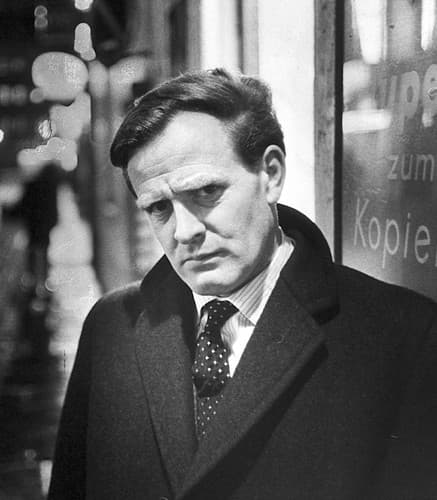
David John Moore Cornwell, better known by his pen name John le Carré, was a British and Irish author, best known for his espionage novels, many of which were successfully adapted for film or television. "A sophisticated, morally ambiguous writer", he is considered one of the greatest novelists of the postwar era. During the 1950s and 1960s he worked for both the Security Service (MI5) and the Secret Intelligence Service (MI6).
Similar books
- Tinker Tailor Soldier Spy
John le Carré
4.1 (107k) average on GoodreadsFictionShares le Carré's signature intricate plots, moral complexity, and focus on the inner workings of espionage.
- I Am Pilgrim
Terry Hayes
4.3 (126k) average on GoodreadsThrillerFeatures a highly skilled protagonist infiltrating a dangerous world to stop a global threat, with detailed spycraft.
- Angels & Demons
Dan Brown
3.9 (2.7M) average on GoodreadsThrillerA Harvard symbologist races through Rome's ancient sites, deciphering cryptic clues to unmask the Illuminati and stop a vengeful plot to destroy the Vatican with a stolen antimatter weapon.
- Gone Girl
Gillian Flynn
4.1 (2.3M) average on GoodreadsThrillerA wife's sudden disappearance on her fifth anniversary reveals a web of lies and psychological warfare, exposing the secrets within a seemingly perfect marriage.
- The Girl on the Train
Paula Hawkins
3.9 (2.1M) average on GoodreadsThrillerA woman’s fascination with a seemingly perfect couple she watches from her daily train commute leads her into a dark investigation when she witnesses something that shatters their idyllic image.
- The Da Vinci Code
Dan Brown
3.9 (1.9M) average on GoodreadsThrillerA symbologist and a cryptologist race through European landmarks, deciphering ancient codes and uncovering a conspiracy that could rewrite the foundations of Christianity.






Enjoyed the summary?
A summary gives you the shape of the book. The book itself has the detail, the examples and the voice.
Find The Night Manager on AmazonAs an Amazon Associate, BookBrief earns from qualifying purchases. How we're funded