
Synopsis
Covers the whole plot, including the ending.
- Difficulty
- Easy
- Pacing
- Moderate
- Mood
- Mysterious, Melancholy, Hopeful, Mythological
- Read it if
- You enjoy a blend of classical mythology, urban fantasy, and a touch of mystery with a heartfelt coming-of-age story.
- Skip it if
- You prefer hard fantasy without mythological elements or are looking for a fast-paced thriller.
The Night Tourist Plot Summary
Covers the whole plot, including the ending.
The Accident at Yale
Jack Perdu, a quiet ninth-grader at Yale University, is reading his classics textbook while walking across campus. Distracted, he falls down a flight of stone stairs, hitting his head hard. The accident leaves him with a concussion and a constant headache that doctors cannot explain. His father, Professor Perdu, a classics professor at Yale, grows worried about Jack's health and his withdrawn behavior. Jack continues to focus on his studies, especially ancient Greek myths about the Underworld, to cope with his isolation and the grief over his mother's death.
A Mysterious Doctor in New York
Worried by Jack's unexplained headaches and pale appearance, Professor Perdu sends Jack to a specialist in New York City. This doctor, Dr. Vivaldi, is said to have unusual methods. Jack does not want to return to New York, a city he connects with the painful memory of his mother's death eight years before. He feels a sense of dread about the trip, which gets worse when he learns the doctor's office is in an old building near Grand Central Station, a place that seems strange to him.
First Encounters at Grand Central
When Jack arrives in New York, his first visit to Dr. Vivaldi's office is unsettling. He then finds himself drawn to Grand Central Station, where he meets a girl named Euri. Euri is beautiful and knows a lot about the station's hidden areas. She seems to know things about Jack, including his name and his interest in the Underworld, which makes him curious and suspicious. Euri offers to show him the 'real' Grand Central, hinting at secrets beyond what most people see. Jack, despite his first doubts, is drawn to her and the promise of discovery.
The Night Tourist and the Underworld
Euri takes Jack on a secret tour of Grand Central Station, leading him through hidden passages and forgotten rooms. She explains that the station is not just for the living, but also a way to the Underworld, where the souls of those who died in New York City stay. These souls, called 'Night Tourists,' remain in the Underworld until they are ready to move on. Euri reveals that she is a 'Night Tourist' herself, having died in New York years ago. Jack is at first unsure, but the signs of the spirit world around him, unseen by others, slowly convince him.
The Hope of Seeing His Mother
The news of the Underworld gives Jack a desperate hope: he believes he can find his mother, who died in New York eight years ago. He tells Euri about his mother's death and his strong desire to see her again. Euri understands his grief and agrees to help him search for her. This new goal gives Jack a drive he has not felt since his mother's passing, changing his visits to the Underworld from simple curiosity into a determined search. He begins to carefully look through records and watch the Night Tourists, hoping for a reunion.
The Watcher and the Warning
As Jack explores the Underworld, he notices a shadowy figure, called 'the Watcher,' who seems to be watching him and Euri. He also meets Charon, the ferryman of the Underworld, who runs a ghostly subway line. Charon, a rough but wise character, warns Jack about staying too long in the Underworld and the possible results of bothering the spirits. He hints that Jack's presence there is not an accident and that forces are at work beyond his understanding, telling him to be careful.
Euri's Past Revealed
Jack starts to put together clues about Euri's past. Through fragmented memories and talks, he learns that Euri died in a taxi accident eight years ago, on the same day and in the same place his mother died. This shocking connection makes him realize that Euri was the pedestrian hit by the taxi his mother was driving. This discovery is very emotional, linking their fates in an unexpected and sad way, revealing a shared trauma and a deeper reason for their meeting in the Underworld.
The Truth About Jack's Condition
Dr. Vivaldi finally explains Jack's condition. His headaches are not just from a concussion; they show his unique ability to see the Underworld and its inhabitants. The accident at Yale, she says, just 'opened' his senses, making him a 'Night Tourist' in a different way – someone who can cross between the living and the dead. Dr. Vivaldi clarifies that she is not treating a physical problem, but helping him understand and control his new perception, preparing him for an important task related to his mother.
The Mother's Unfinished Business
Jack finally finds his mother in the Underworld. He discovers that she, like Euri, is a Night Tourist, unable to move on because of strong guilt over Euri's death. His mother believed she was fully responsible for the accident. Jack realizes that his purpose in the Underworld is not just to see her, but to help her find peace. He must help his mother and Euri reconcile, and both with the truth of what happened, so they can finally leave the Underworld.
Reconciliation and Forgiveness
Jack arranges a meeting between his mother and Euri in the Underworld. With his help, both spirits face the accident that tied them together. His mother expresses her deep sorrow, while Euri, understanding the situation and the true regret, offers forgiveness. This moment allows both women to let go of their guilt and anger. Jack acts as the bridge, helping them find closure and understanding, setting the stage for their final journey.
The Final Crossing
With their pasts settled, Jack's mother and Euri are ready to leave the Underworld. They say a tender goodbye to Jack, thanking him for his part in their freedom. Jack watches as they board Charon's ferry, which will take them to the next stage of their existence. It is a bittersweet moment for Jack, filled with sadness at their leaving and deep peace, knowing he has helped them. He understands that this is not a permanent goodbye, but a necessary change.
Jack's New Path
Having finished his task, Jack returns to the living world, changed by his experiences in the Underworld. He no longer sees his headaches as a problem, but as a link to a deeper reality. Dr. Vivaldi assures him that his ability to see the Underworld will remain, but he will learn to control it. Jack feels a new sense of purpose and a deeper understanding of life and death. He is no longer just a quiet classics student, but a unique person with a deep connection to the unseen world, ready to face his future with new courage and wisdom.
Principal Figures
Jack Perdu
Protagonist
A shy, intelligent classics prodigy who discovers his ability to see the Underworld.
Jack is a socially awkward, introverted ninth-grader with an exceptional intellect, particularly in ancient Greek and Roman classics. He lives with his father at Yale and is deeply affected by the death of his mother eight years prior. His grief and academic pursuits often isolate him from his peers. He is initially skeptical but possesses an innate curiosity and a strong moral compass that drives his quest to understand the Underworld and, ultimately, help his mother. He is courageous when it matters most, despite his initial timidity.
Relationships: Professor Perdu (Loving but somewhat distant father; shares a bond through grief.); Euri (Initial guide and friend in the Underworld; later revealed to be intertwined with his mother's past.); Dr. Vivaldi (Mysterious doctor and mentor who helps him understand his abilities.); Jack's Mother (Deceased, but her memory and presence in the Underworld drive his quest for reconciliation.)
Euri
Supporting/Deuteragonist
A spirited Night Tourist who guides Jack and holds a key to his past.
Euri is a vibrant, adventurous, and somewhat mischievous spirit who died in New York City years ago and now resides in the Underworld beneath Grand Central Station. She is knowledgeable about the secrets of the Underworld and acts as Jack's initial guide. Despite her playful demeanor, she carries the weight of her own unresolved past and her connection to Jack's mother. She is ultimately kind-hearted and longs for peace, showing remarkable forgiveness.
Relationships: Jack Perdu (Guide, friend, and ultimately, the catalyst for her peace.); Jack's Mother (The driver involved in her death; their reconciliation is central to the plot.)
Professor Perdu
Supporting
Jack's loving but preoccupied father, a classics professor at Yale.
Professor Perdu is a respected classics professor at Yale University and Jack's father. He is deeply devoted to his son but struggles with expressing his emotions, especially after his wife's death. He is concerned about Jack's health and withdrawn nature, leading him to seek Dr. Vivaldi's unconventional help. He represents the living world's perspective, unaware of the supernatural reality Jack is experiencing, but his love for Jack is a constant, grounding force.
Relationships: Jack Perdu (Father-son relationship, marked by mutual love and shared grief.)
Dr. Vivaldi
Supporting
A mysterious doctor who understands the connection between the living and the dead.
Dr. Vivaldi is an enigmatic figure who operates a clinic near Grand Central Station. She is not a conventional doctor but acts as a guardian and guide for individuals like Jack who possess the ability to perceive the Underworld. She is wise, calm, and possesses deep knowledge of the spiritual realm, subtly manipulating events to ensure Jack fulfills his destiny. She is a mentor figure, providing crucial explanations and support.
Relationships: Jack Perdu (Mentor and healer, guiding him through his supernatural awakening.)
Jack's Mother (Helen Perdu)
Supporting/Mentioned
A deceased Night Tourist burdened by guilt over Euri's death.
Jack's mother is initially a memory, the source of his profound grief. When discovered in the Underworld, she is a Night Tourist, trapped by the immense guilt she feels over the accidental death of Euri. She is loving and remorseful, unable to move on until she finds forgiveness. Her presence in the Underworld is the primary motivation for Jack's journey, and her reconciliation with Euri is the climax of the story. She embodies the theme of unresolved grief and the need for forgiveness.
Relationships: Jack Perdu (Son; their bond drives his quest to free her.); Euri (The victim of the accident she caused; their reconciliation is vital.)
Charon
Supporting
The gruff ferryman of the Underworld's spectral subway.
Charon is the spectral operator of the subway line that transports Night Tourists through the Underworld. He is a gruff, no-nonsense character, reminiscent of the mythological ferryman of the dead. Despite his stern exterior, he offers cryptic warnings and occasional insights to Jack, playing a crucial role in the mechanics of the Underworld. He represents the inexorable flow of life and death, and the rules governing the transition of souls.
Relationships: Jack Perdu (Informal guide and occasional source of cryptic advice.); Euri (A regular passenger on his spectral subway.)
The Watcher
Mentioned
A mysterious, unseen presence that observes the Night Tourists.
The Watcher is a shadowy, largely unseen entity within the Underworld. It represents the forces that maintain order and observe the Night Tourists, ensuring they eventually move on. Its presence creates a sense of unease and mystery, hinting at a larger, unseen bureaucracy or natural law governing the afterlife. It is less a character and more a manifestation of the rules of the Underworld, a subtle reminder of the consequences of lingering.
Themes & Insights
Grief and Loss
The book explores the deep impact of grief, especially on Jack after his mother's death. His focus on classics is a way to cope, and his entire journey into the Underworld is driven by his unresolved sorrow and desire to see her again. The theme extends to Euri and Jack's mother, both of whom are stuck in the Underworld due to their own unresolved grief and guilt about the accident. The story suggests that true healing comes not from forgetting, but from facing and accepting loss, as seen when Jack's mother and Euri finally find peace.
“He knew, with a certainty that chilled him, that he was looking for his mother.”
Forgiveness and Redemption
A main part of the story is the idea of forgiveness, both forgiving oneself and forgiving others. Jack's mother is tied to the Underworld by her guilt over Euri's death, while Euri is similarly bound by her inability to fully move on from being a victim. Jack's role in bringing them together allows for a strong act of mutual forgiveness, letting both spirits find peace and finally move on. This theme highlights that holding onto past wrongs, whether self-inflicted or by others, prevents true peace and progress.
“Sometimes, the only thing keeping us from moving on is ourselves.”
The Interconnectedness of Life and Death
The novel blends the lines between the living and the dead, showing the Underworld not as a far-off idea, but as a hidden part of New York City. Jack's ability to see this realm shows that life and death are not separate, but closely connected. The Night Tourists exist in a state between, influenced by the living world and still holding onto their pasts. This theme questions common views of death, suggesting that echoes of the departed remain, and that the living can help them find peace, creating a continuous cycle.
“New York is a city built on stories, and some of those stories are still walking around.”
Identity and Acceptance
Jack's journey is about self-discovery and accepting who he is. At first, he is a shy, bookish boy who feels out of place. His accident and his ability to see the Underworld force him to face a reality far beyond his studies. By the end, he accepts his role as a 'Night Tourist,' someone who can bridge worlds. This acceptance of his extraordinary perception changes him from a passive observer into an active participant in the mysteries of life and death, giving him a new sense of purpose and courage.
“You're not sick, Jack. You're just... seeing things differently.”
Plot Devices & Literary Techniques
The Underworld of Grand Central
A hidden, spectral realm beneath a bustling New York landmark.
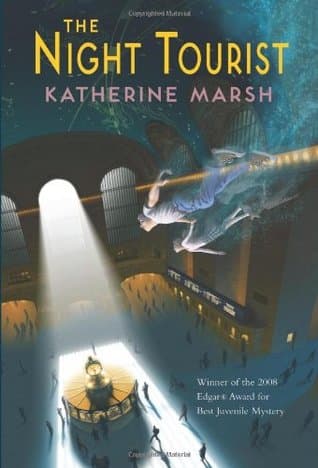
This device serves as the primary setting for much of the story's supernatural action. By placing the Underworld beneath Grand Central Station, the author creates a vivid contrast between the mundane, bustling world of the living and the spectral, unseen world of the dead. It grounds the fantasy elements in a recognizable, iconic location, making the magical more believable. This unique setting allows for the interaction between the living (Jack) and the dead (Night Tourists) and provides a tangible space for the themes of grief and reconciliation to unfold.
Jack's Headaches/Perception
A physical symptom that acts as a gateway to supernatural awareness.
Jack's persistent headaches, initially believed to be a symptom of his concussion, are revealed to be a manifestation of his unique ability to perceive the Underworld. This device serves as a physical manifestation of his extraordinary gift, tying his internal state to the external supernatural world. It acts as a narrative trigger, propelling him to Dr. Vivaldi and into the Underworld, and also allows for a gradual unveiling of his powers, making his transition into seeing ghosts more plausible and less instantaneous.
The Night Tourists
Souls of the deceased who linger in the Underworld, unable to move on.
The Night Tourists are the spectral inhabitants of the Underworld. This device personifies the concept of unresolved grief and unfinished business. Each Night Tourist represents a soul tethered to the living world by some emotional or psychological burden. They provide a tangible representation of the story's core themes of grief, guilt, and the need for resolution. Their presence allows Jack to directly interact with the consequences of death and the possibility of finding his own mother among them.
The Classics/Mythology Allusions
References to ancient Greek myths of the Underworld, paralleling Jack's journey.
Jack's deep knowledge of classical mythology, particularly stories of the Underworld like those of Orpheus and Persephone, serves as a literary framework for his actual journey. These allusions foreshadow events, provide context for the rules of the Underworld, and lend a sense of timelessness and epic scope to Jack's personal quest. They also highlight Jack's intellectual nature and his initial way of coping with grief, bridging his academic world with his unfolding supernatural reality.
The Night Tourist Quotes
“It was impossible to describe that place, like trying to describe the color purple to someone who had only ever seen black and white.”
“Sometimes the greatest mysteries are found not in what is hidden, but in what is plainly visible.”
“The dead don't care about your living rules.”
“Every secret has a shadow, and every shadow eventually finds the light.”
“It was a strange sort of comfort, knowing that even in death, some things endured.”
“Fear can be a compass, if you know how to read it.”
“The past isn't just something that happened; it's something that continues to happen, in its own way.”
“You can't truly appreciate the light until you've spent some time in the dark.”
“Some journeys are not about finding a destination, but about understanding where you've been.”
“Even the most ordinary places can hold extraordinary secrets.”
“The world is full of echoes, if you only know how to listen.”
“It's not about being unafraid, it's about doing what needs to be done despite the fear.”
“Grief is a map with no clear path, only winding roads.”
“Sometimes, the most important answers aren't found in books, but in the spaces between them.”
Quiz
10 questions on the plot and the characters. Each answer comes with a short explanation.
Question 1
Where does Jack Perdu live with his father at the beginning of the story?
- New York City
- Yale University campus
- Grand Central Station
- A remote cabin in the woods
Show answer
B. Yale University campus The synopsis states that Jack lives with his father on the Yale University campus.
Question 2
What event prompts Jack's father to send him to a mysterious doctor in New York City?
- He got into trouble at school.
- He suffered a near fatal accident.
- He discovered a secret about his mother.
- He was failing his classes.
Show answer
B. He suffered a near fatal accident. The story begins with Jack suffering a near fatal accident, after which his father sends him to New York.
Question 3
What is Euri's initial role when she meets Jack in New York City?
- She is his assigned therapist.
- She is a student from his new school.
- She offers to show him the secrets of Grand Central Station.
- She is a tour guide for New York City.
Show answer
C. She offers to show him the secrets of Grand Central Station. Euri is introduced as the young girl who offers to show Jack the secrets of Grand Central Station.
Question 4
What is the 'Underworld' in New York City, as discovered by Jack?
- A secret society of historians.
- A hidden network of subway tunnels.
- A place where those who died in New York reside until they are ready to move on.
- An abandoned part of the city's infrastructure.
Show answer
C. A place where those who died in New York reside until they are ready to move on. The synopsis clearly describes the Underworld as 'a place where those who died in New York reside until they are ready to move on.'
Question 5
What is Jack's primary motivation for exploring the Underworld?
- To find a rare ancient artifact.
- To prove his intelligence to his father.
- To see his mother again.
- To escape his current life.
Show answer
C. To see his mother again. Jack believes the Underworld is 'a chance to see his mother again,' who died in New York eight years prior.
Question 6
How long has it been since Jack was last in New York City before his current visit?
- One year
- Three years
- Five years
- Eight years
Show answer
D. Eight years The synopsis mentions that Jack hasn't been to New York City 'since his mother died there eight years ago.'
Question 7
What aspect of New York City does the book weave together to create its ghost world?
- Its famous landmarks and tourist attractions.
- Its financial districts and business centers.
- Its secret history and its modern-day landscape.
- Its diverse neighborhoods and culinary scene.
Show answer
C. Its secret history and its modern-day landscape. The description states that the book 'weaves together New York City's secret history and its modern-day landscape'.
Question 8
What is revealed about Euri as the story progresses?
- She is a long-lost relative of Jack.
- Secrets about her past are revealed.
- She is an agent sent to protect Jack.
- She is a student studying the Underworld.
Show answer
B. Secrets about her past are revealed. The synopsis indicates that 'secrets about Euri's past are revealed' alongside the true reasons for Jack's visit.
Question 9
What is Jack's academic specialization, according to the description?
- Mathematics
- Classics
- Computer Science
- Art History
Show answer
B. Classics Jack is described as a 'shy ninth grade classics prodigy'.
Question 10
What is the ultimate revelation that occurs concurrently with the secrets about Euri's past?
- The location of a hidden treasure.
- The true reasons for Jack's visit to the Underworld.
- The identity of the mysterious doctor.
- A prophecy about the end of the Underworld.
Show answer
B. The true reasons for Jack's visit to the Underworld. The synopsis states, 'as secrets about Euri's past are revealed, so are the true reasons for Jack's visit to the Underworld.'
The Night Tourist FAQ
What is the central premise of 'The Night Tourist'?
The central premise revolves around Jack Perdu, a classics prodigy, who, after a near-fatal accident, is sent to New York City for mysterious treatment. There, he discovers a hidden Underworld within Grand Central Station, where the souls of those who died in New York reside, offering him a potential chance to reunite with his deceased mother.
Who are the main characters Jack encounters in the Underworld?
Jack primarily encounters Euri, a mysterious young girl who acts as his guide and reveals the secrets of Grand Central's Underworld. He also meets various 'tourists' or souls residing there, and later learns about Charon, the ferryman, and the true nature of the 'doctor' his father sent him to.
What is the significance of Grand Central Station in the story?
Grand Central Station serves as the physical gateway to the Underworld in 'The Night Tourist.' Its hidden passages and secret levels are reimagined as the transit point and temporary residence for souls who have died in New York City, waiting for their next journey.
Why does Jack believe he can see his mother again in the Underworld?
Jack believes he can see his mother, who died in New York City, because the Underworld is described as a place where the souls of those who died there reside. He hopes that by navigating this hidden world, he can locate her and finally get closure or a reunion.
What is the 'treatment' Jack is supposedly receiving in New York?
Initially, Jack is told he's receiving treatment for his concussion from a mysterious doctor. However, it's later revealed that the 'treatment' is actually a process to help him cross into the Underworld and potentially resolve his lingering grief and guilt, orchestrated by figures connected to this hidden realm.
What is Euri's true identity and connection to the Underworld?
Euri is revealed to be Eurydice, a soul who died in New York many years ago and has been trapped in the Underworld due to an unresolved past. She is not a living guide but a resident, waiting for her own chance to move on, and her story mirrors the classical myth.
How does the author connect classical mythology, specifically the myth of Orpheus and Eurydice, to the modern-day New York setting?
The author ingeniously weaves the Orpheus and Eurydice myth by making Jack a classics scholar, naming his guide Euri (Eurydice), and having Jack's quest to find his mother parallel Orpheus's journey to rescue Eurydice. The Underworld is transposed to Grand Central, blending ancient themes with a contemporary urban landscape.
What is the significance of the 'tickets' and 'destinations' in the Underworld?
The 'tickets' represent a soul's readiness to move on from the Underworld, while 'destinations' symbolize their next phase of existence, whether it's reincarnation or another form of afterlife. They are not literal travel tickets but metaphors for spiritual progression and resolution.
What is the true reason Jack's father sent him to New York?
Jack's father sent him to New York not just for medical treatment, but because he was aware of the Underworld and believed Jack needed to confront his grief and guilt surrounding his mother's death. He orchestrated Jack's 'accident' and subsequent journey, hoping it would lead to healing and resolution.
How does Jack's near-fatal accident psychologically impact him beyond the physical injury?
Beyond the physical injury, Jack's accident serves as a catalyst, forcing him to confront his deep-seated grief, guilt, and emotional detachment following his mother's death. It shatters his isolated existence and propels him into a journey of self-discovery and emotional healing.
What psychological role does Euri play in Jack's journey?
Euri acts as both a guide and a mirror for Jack. She helps him navigate the physical Underworld, but more importantly, her own unresolved past and longing for release reflect Jack's emotional stagnation, prompting him to confront his own fears and ultimately, his grief for his mother.
How does Jack's introverted nature and love for classics influence his ability to adapt to the Underworld?
Jack's introverted nature makes him initially hesitant, but his deep knowledge of classics, particularly Greek mythology, provides him with a framework to understand and accept the seemingly impossible reality of the Underworld. His academic background becomes a psychological tool for processing the supernatural.
What is the underlying psychological theme of grief and loss explored in the novel?
The novel deeply explores the psychological theme of unresolved grief and loss, particularly through Jack's lingering sorrow over his mother's death. The Underworld serves as a metaphorical space for characters to process their pasts and find acceptance, highlighting the journey of healing from profound emotional wounds.
Is the Underworld in 'The Night Tourist' a literal place, or can it be interpreted metaphorically as Jack's internal struggle?
While presented as a literal hidden world, the Underworld can also be interpreted metaphorically as Jack's internal landscape of grief and unresolved emotions. His journey through it reflects his psychological process of confronting his past, accepting loss, and ultimately finding peace.
What message does the book convey about dealing with loss and moving on?
The book conveys a powerful message about the necessity of confronting grief and finding resolution to move on. It suggests that true healing comes not from avoiding pain or trying to reverse death, but from accepting loss, processing emotions, and cherishing memories while embracing the future.
How does the ending of the book challenge or reinforce traditional notions of life and death?
The ending reinforces the idea that death is a transition rather than an end, but challenges traditional notions by depicting a temporary resting place where souls can resolve their issues before moving on. It suggests a more fluid boundary between life and death, where connection and unresolved emotions can linger.
What is the significance of the 'Night Tourist' title?
The title 'The Night Tourist' refers to Jack himself, as he is a living person venturing into the realm of the dead, essentially 'touring' the Underworld. It also subtly refers to the souls within the Underworld who are themselves 'tourists' in a transitional space, waiting for their next journey.
Does the book suggest that Jack eventually sees his mother?
The book implies that while Jack doesn't have a direct, traditional reunion with his mother, he achieves a profound sense of understanding and emotional closure regarding her death. He finds peace and acceptance, which is arguably more impactful than a physical reunion in the context of the story's themes.
About the author

Katherine Marsh is an author known for her work in fiction. One of her notable books is "The Night Tourist," which blends elements of adventure and fantasy. Her writing often explores themes of friendship and self-discovery.
Similar books
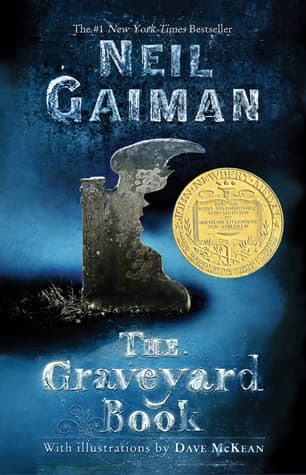
- The Graveyard Book
Neil Gaiman
4.1 (438k) average on GoodreadsFantasyExplores themes of death, the afterlife, and finding one's place in a world between worlds, with a young protagonist.
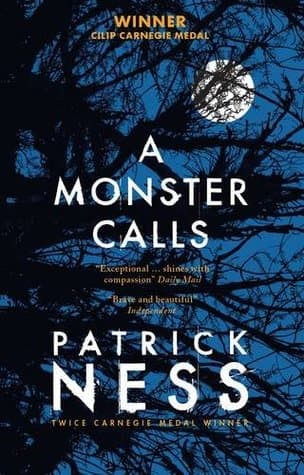
- A Monster Calls
Patrick Ness
4.3 (208k) average on GoodreadsFantasyBoth The Night Tourist and A Monster Calls address the profound impact of loss and grief on a young protagonist, but they differ significantly in their fantastical elements and narrative tone. A Monster Calls uses a dark, symbolic monster to help its protagonist, Conor, confront the unbearable truth of his mother's terminal illness, operating with a raw, emotional intensity and a more direct confrontation with the pain of impending death. Marsh's novel, while equally emotional, frames Jack's grief within the structured, albeit hidden, mythological world of the Underworld, offering a more guided and perhaps less viscerally terrifying journey toward acceptance. The Night Tourist provides a path to understanding and reconciliation, whereas A Monster Calls focuses on the brutal necessity of confronting painful truths. Both employ fantasy to externalize internal struggles, but with distinct thematic and stylistic approaches.
- Harry Potter and the Sorcerer's Stone
J.K. Rowling
4.5 (7M) average on GoodreadsFantasyRescued from a miserable life under the stairs, an orphaned boy discovers he's a wizard destined for a magical school, where he uncovers a dangerous secret tied to the dark wizard who murdered his parents.
- The Hunger Games
Suzanne Collins
4.3 (6.4M) average on GoodreadsFantasyIn a future where children fight to the death on live television, Katniss Everdeen volunteers for the arena, turning a death sentence into a fight for survival and a spark of rebellion.
- 1984
George Orwell
4.2 (3.1M) average on GoodreadsPoliticsIn a future where surveillance and thought control are absolute, a man's search for truth clashes with the Party, showing that hope can be a form of rebellion.
- Divergent
Veronica Roth
4.2 (2.9M) average on GoodreadsFantasyIn a society divided by virtues, a sixteen-year-old's difference from the norm starts a rebellion that threatens her world.




Enjoyed the summary?
A summary gives you the shape of the book. The book itself has the detail, the examples and the voice.
Find The Night Tourist on AmazonAs an Amazon Associate, BookBrief earns from qualifying purchases. How we're funded