

Synopsis
Covers the whole plot, including the ending.
- Difficulty
- Medium
- Pacing
- Moderate
- Mood
- Dramatic, Intimate, Intriguing, Romantic, Suspenseful
- Read it if
- You enjoy immersive historical fiction focusing on the lives of women during pivotal historical periods, particularly the Tudor era, with a strong emphasis on family dynamics and romance.
- Skip it if
- You prefer historically accurate accounts over fictionalized narratives, are sensitive to themes of manipulation and betrayal, or dislike extensive descriptions of courtly intrigue.
The Other Boleyn Girl Plot Summary
Covers the whole plot, including the ending.
A Family's Ambition and Mary's Introduction to Court
The Boleyn family, especially Thomas Boleyn and his brother-in-law the Duke of Norfolk, want to improve their status by securing a royal marriage or, failing that, by having one of their daughters become the king's mistress. After King Henry VIII shows interest in Mary Boleyn, who is only fourteen, she is brought to court. Her marriage to William Carey is quickly arranged, but it is clear this is a cover for her true purpose. Mary, initially naive, is flattered by the king's attention and quickly falls in love with the powerful monarch, believing his affections are genuine.
Mary Becomes the King's Mistress
Mary Boleyn becomes King Henry VIII's mistress, a position bringing both prestige and risk. She enjoys the king's lavish gifts and attention, becoming pregnant twice with his children: a daughter, Catherine, and a son, Henry. The Boleyn family's influence at court grows through Mary, and she truly believes in the king's love for her, despite their relationship's transactional nature. However, court pressures and the king's changing nature begin to affect her, as she sees how quickly royal favor fades and the sacrifices women in her position must make.
Anne's Return and Growing Influence
Anne Boleyn, Mary's older sister, returns from her education in France, bringing sophistication and ambition. Unlike Mary, Anne is not content to be just a mistress. She uses her wit and charm to capture King Henry VIII's attention, teasing him and denying him full access, making herself more desirable. The king's interest in Mary lessens significantly as he becomes increasingly infatuated with Anne. The Boleyn family, seeing Anne's potential for greater advancement, shifts its focus and support from Mary to Anne, leaving Mary feeling abandoned by both her family and the king.
Mary's Exile and Newfound Freedom
After her son Henry's birth, and with the king's attention fully on Anne, Mary is dismissed from court. She retires to the countryside, expected to live quietly with her husband, William Carey, who soon dies of the sweating sickness. This period of exile, though isolating, allows Mary to experience life outside the court's confines. She begins to develop a sense of self beyond her role as a pawn in her family's schemes and the king's plaything, appreciating simpler pleasures and her children's company, away from constant scrutiny and manipulation.
Anne's Rise to Queen
Anne Boleyn continues her calculated pursuit of the crown, refusing to become King Henry VIII's mistress and insisting on marriage. The king, desperate for a male heir and increasingly obsessed with Anne, begins the difficult process of annulling his marriage to Queen Catherine of Aragon, a move that throws England into religious and political chaos. Mary, despite lingering resentment, is occasionally drawn back into Anne's world, witnessing her sister's ambition and the immense pressure she faces. After years of legal and religious battles, Henry finally marries Anne, and she is crowned Queen of England, achieving the highest possible status.
Anne's Reign and Desperation for a Son
As Queen, Anne Boleyn faces great pressure to produce a male heir for King Henry VIII. She gives birth to Princess Elizabeth, but later pregnancies end in miscarriages, increasing the king's impatience and her own desperation. Anne becomes paranoid and isolated, making enemies at court with her sharp tongue. Even her own family, while still benefiting from her position, grows tired of her volatile temper. Mary observes Anne's decline, feeling a mix of pity and grim satisfaction, as Anne's ambition becomes a cage rather than liberation, mirroring Mary's own past experiences of being used.
Mary's Secret Marriage and Further Exile
While visiting her family's estates, Mary Boleyn meets and falls in love with William Stafford, a commoner and soldier. Defying her family's hopes for a politically advantageous marriage, Mary secretly marries Stafford for love. This act of independence further angers her family, who see it as a disgrace and a waste of her connections. They disown her, cutting off her financial support and effectively exiling her from court and their privileged world. Mary, however, finds genuine happiness and contentment with Stafford, prioritizing love and personal freedom over status and wealth, a stark contrast to her sister Anne's path.
Anne's Downfall and the Charges of Treason
King Henry VIII's patience with Anne Boleyn runs out after another miscarriage and his growing interest in Jane Seymour. He plans Anne's downfall, helped by Thomas Cromwell, who invents charges of incest, treason, and witchcraft against her. Several men, including Anne's own brother George, are arrested and tortured into confessing to affairs with the Queen. Mary is horrified by the events, understanding that the charges are politically motivated and designed to remove Anne so the king can marry again. The ruthlessness of the court and the king's power are terrifyingly clear.
Mary's Plea and Anne's Execution
Despite their strained relationship, Mary Boleyn feels she must try to help her sister. She tries to appeal to the king and even to Anne herself, urging her to confess to a minor fault to save her life, but Anne's pride and belief in her innocence stop her. Mary's pleas are ignored, as the court's machinery is set against Anne. Witnessing her sister's final days, Mary sees Anne's terror and despair, a clear reminder of how uncertain their lives are. Anne Boleyn is executed at the Tower of London, a tragic end to her ambitious rise, leaving Mary shattered and disillusioned.
Aftermath and Mary's Enduring Life
After Anne's execution, Mary Boleyn and William Stafford remain largely disowned by the Boleyn family, but Mary finds quiet strength and contentment in her life with her husband and children. She occasionally receives news from court, learning of Henry VIII's later marriages and the fates of those she once knew. Mary is visited by her sister Jane, Lady Rochford, who tries to persuade her to return to court, but Mary refuses, having learned the hard lessons of ambition and royal favor. She chooses a life of love and normalcy over the court's constant danger and manipulation, finding a lasting peace that her sister never knew.
Principal Figures
Mary Boleyn
Protagonist
The 'other' Boleyn girl, initially naive, who becomes King Henry VIII's mistress.
Mary is portrayed as the more gentle and initially innocent of the Boleyn sisters. She is kind-hearted and susceptible to flattery, genuinely falling in love with King Henry VIII when she becomes his mistress. While she enjoys the luxuries and attention, she is not driven by the same ruthless ambition as her family. Her experiences at court and her subsequent fall from favor force her to mature, leading her to value personal happiness and love over status and power. She is observant and often acts as a moral compass, though her actions are frequently dictated by her family's will.
Relationships: Anne Boleyn (Sister and rival for the king's affection, complex mix of love, jealousy, and pity.); King Henry VIII (Lover, father of her children, and ultimately, a powerful figure who discards her.); William Carey (Her first husband, a gentle man used as a cover for her affair with the King.); William Stafford (Her second husband, whom she marries for love, providing her with true happiness and security.); Thomas Boleyn (Father, who uses her for family advancement.); Elizabeth Boleyn (Mother, who is complicit in the family's schemes but sometimes shows affection.)
Anne Boleyn
Antagonist/Supporting
Mary's ambitious sister, who strategically becomes Queen of England.
Anne is sharp, intelligent, witty, and fiercely ambitious. Unlike Mary, she understands the game of court and plays it to her advantage, refusing to be merely a mistress and aiming for the crown. She is manipulative and at times cruel, driven by a desperate need for power and a male heir to secure her position. Her pride and stubbornness, while initially leading to her success, ultimately contribute to her downfall. She is a complex character, capable of both charm and vindictive cruelty, and her ambition consumes her.
Relationships: Mary Boleyn (Sister and rival, a relationship fraught with competition, resentment, and occasional flashes of sisterly affection.); King Henry VIII (Her lover and husband, a relationship of intense passion, obsession, and ultimately, betrayal.); Thomas Boleyn (Father, whom she uses and is used by in their mutual pursuit of power.); George Boleyn (Brother, her confidant and co-conspirator, accused of incest with her.)
King Henry VIII
Antagonist/Supporting
The powerful and volatile King of England, driven by desire for a male heir.
King Henry VIII is portrayed as a charismatic yet ruthless monarch. He is easily swayed by beauty and flattery, but his affections are fleeting. His primary obsession is securing a legitimate male heir, which drives many of his cruel and self-serving decisions, including his annulment of Catherine of Aragon and the eventual execution of Anne Boleyn. He sees women as instruments for his pleasure and his dynastic ambitions, displaying little genuine empathy for their fates. He is a figure of immense power, capable of bestowing great favor and inflicting terrible punishment.
Relationships: Mary Boleyn (Mistress, whom he discards after tiring of her and becoming infatuated with Anne.); Anne Boleyn (Lover and wife, whom he obsesses over, marries, and then brutally discards when she fails to produce a male heir.); Catherine of Aragon (His first wife, whom he divorces for Anne.); Jane Seymour (His third wife, whom he marries after Anne's execution.)
Thomas Boleyn
Supporting
The ambitious patriarch of the Boleyn family, determined to raise their status.
Thomas Boleyn is Mary and Anne's father, a man consumed by ambition and a desire for social advancement. He is ruthless and manipulative, viewing his daughters as commodities to be used to secure royal favor and power for the family. He prioritizes status and wealth above the happiness or well-being of his children, readily sacrificing their personal lives for his own gain. He is a driving force behind both Mary and Anne's presence at court, pushing them into morally compromising situations.
Relationships: Mary Boleyn (Daughter, whom he grooms to be the king's mistress.); Anne Boleyn (Daughter, whom he supports in her bid to become Queen.); Elizabeth Boleyn (Wife, with whom he shares his ambitions.)
Elizabeth Boleyn
Supporting
Mary and Anne's mother, complicit in her husband's schemes.
Elizabeth Boleyn is the mother of Mary, Anne, and George. While she often appears more reserved than her husband, she is equally complicit in the family's ambitious plans for her daughters. She initially instructs Mary on how to please the king and later supports Anne's rise. She sometimes displays flashes of maternal concern, particularly for Mary, but her loyalty to her husband and the family's aspirations generally overrides her personal feelings. She is a product of her time, understanding the limited agency women possess.
Relationships: Mary Boleyn (Daughter, whom she prepares for court life.); Anne Boleyn (Daughter, whom she supports in her pursuit of the crown.); Thomas Boleyn (Husband, with whom she shares a complex, power-driven marriage.)
George Boleyn
Supporting
Mary and Anne's brother, ambitious and close to Anne.
George Boleyn is the brother of Mary and Anne, and he shares his family's ambition. He is witty, charming, and often Anne's closest confidant and co-conspirator at court. He is portrayed as having a strained relationship with his wife, Jane Rochford, and is heavily involved in the political machinations surrounding Anne. His loyalty to Anne and his own desire for power ultimately lead to his tragic downfall when he is implicated in the false charges against his sister.
Relationships: Anne Boleyn (Sister and confidant, their relationship is intense and mutually ambitious.); Mary Boleyn (Sister, whom he often dismisses or uses.); Jane Rochford (Wife, their marriage is loveless and full of animosity.)
William Stafford
Supporting
Mary's second husband, a commoner whom she marries for love.
William Stafford is a commoner and a soldier, known for his kindness, integrity, and genuine affection. He represents a stark contrast to the manipulative and power-hungry men at court. Mary falls in love with him for his honest character and his ability to see her as a person, not just a means to an end. Their marriage, though it costs Mary her family's favor and her position at court, provides her with true happiness, security, and a life away from the dangerous intrigues of the monarchy. He values Mary for who she is, offering her a sanctuary.
Relationships: Mary Boleyn (Husband, their relationship is based on mutual love and respect.)
Catherine of Aragon
Supporting
King Henry VIII's first wife, the devout Queen of England.
Catherine of Aragon is depicted as a devout, dignified, and steadfast queen. She is deeply in love with Henry and fiercely protective of her daughter, Mary Tudor, and her position as Queen. Her refusal to accept an annulment of her marriage to Henry sets in motion the events that lead to Anne Boleyn's rise and the English Reformation. She is a sympathetic figure, wronged by Henry's desire for a male heir and Anne's ambition, and she maintains her dignity throughout her ordeal.
Relationships: King Henry VIII (Husband, whom she loves deeply despite his betrayal.); Mary Tudor (Daughter, whom she fiercely protects.)
Themes & Insights
Ambition and Its Consequences
The novel shows how ambition can consume people, especially through the Boleyn family. Thomas Boleyn and the Duke of Norfolk constantly push Mary and Anne into the king's orbit, seeing them as ways to gain social and political power. Anne's own ambition to become queen drives her actions, leading to her success but ultimately her tragic end. Mary, initially a tool of ambition, eventually rejects it for personal happiness. The theme highlights how uncontrolled ambition, while offering temporary power, often leads to isolation, betrayal, and destruction, as seen in Anne's paranoia and execution.
“We were a family of women, and we were all ambitious, but none of us had the single-minded ferocity of my sister Anne.”
The Powerlessness of Women in a Patriarchal Society
Despite the important roles of women like Mary and Anne, the novel shows their lack of power in Henry VIII's patriarchal court. Their worth is largely based on their beauty, fertility, and ability to serve male desires and dynastic needs. They are pawns in political games, their fates decided by the king's whims or their male relatives' schemes. Both Mary and Anne, in different ways, struggle against these limits. Mary finds freedom by escaping the system, while Anne's attempt to gain power within it ultimately leads to her destruction, showing the limited agency available even to influential women.
“We were merely girls, who had to be obedient to our fathers and then our husbands, and who had to bear children.”
Love vs. Duty/Power
A main conflict for many characters, especially Mary, is the struggle between personal love and the demands of duty, family, or the pursuit of power. Mary initially believes she loves Henry, but her relationship is driven by duty to her family. Her eventual marriage to William Stafford for love, defying her family and giving up status, shows her choosing personal happiness over power. Anne, conversely, prioritizes power and the crown, sacrificing genuine affection for her ambition. The novel suggests that true contentment comes from pursuing love and personal integrity, even at great cost, rather than giving in to the appeal of power.
“I chose love. And I got love, so I was the lucky one.”
Sisterly Rivalry and Loyalty
The relationship between Mary and Anne is the emotional center of the novel, showing a complex mix of rivalry, jealousy, and underlying sisterly affection. They compete for the king's attention and their family's favor, leading to periods of intense animosity and betrayal. Anne often dismisses Mary, while Mary resents Anne's ambition and manipulation. Yet, moments of shared vulnerability and concern, especially during Anne's downfall, reveal a lingering bond. Mary's attempts to save Anne, despite their differences, highlight the enduring, if complicated, nature of their sisterly connection, showing that even fierce rivalry cannot completely erase family ties.
“She was my sister, and I loved her, and I hated her, and I wished her well, and I wished her ill.”
Plot Devices & Literary Techniques
First-Person Narration (Mary Boleyn)
The story is told entirely from Mary Boleyn's perspective.
The novel uses first-person narration through Mary Boleyn, allowing readers intimate access to her thoughts, feelings, and observations. This perspective shapes the entire narrative, offering a unique, often sympathetic, and somewhat detached view of the tumultuous events at court. It emphasizes Mary's role as an 'outsider' or 'the other' Boleyn girl, enabling her to comment on Anne's ambition and the king's cruelty without being fully consumed by them. This device also creates a sense of immediacy and personal connection to the historical events, grounding the grand historical narrative in a very human experience.
Dramatic Irony
The reader often knows more about historical outcomes than the characters.
Dramatic irony is frequently employed, as readers, familiar with the historical fate of Anne Boleyn and the English Reformation, are aware of the tragic consequences awaiting the characters. This creates a sense of impending doom, particularly as Anne rises to power. Mary's naive hopes, Anne's ambitious schemes, and Henry's fleeting affections are all viewed through the lens of their known historical outcomes. This device heightens the tension and tragedy, making Anne's relentless pursuit of the crown all the more poignant and her downfall feel inevitable.
Symbolism of Fertility and Childbirth
The ability to bear children, especially sons, symbolizes a woman's value and power.
Fertility and childbirth, particularly the birth of male heirs, are central symbols in the novel, representing a woman's worth, power, and security within the Tudor court. Mary's initial value to the king stems from her ability to bear children, including a son. Anne's entire ascent and subsequent downfall are inextricably linked to her failure to produce a living male heir. The pressure to conceive and carry a son to term dictates the fates of queens and mistresses alike, highlighting the immense societal and political importance placed on female reproductive capabilities in this era, often at the expense of their personal well-being.
The Court as a Microcosm
The royal court functions as a small, intense world reflecting larger societal pressures.
The court of King Henry VIII acts as a microcosm of society, showcasing the intense political maneuvering, social climbing, moral compromises, and personal betrayals that occur on a grander scale. It is a place of both immense opportunity and extreme danger, where reputations can be made or destroyed in an instant. The confined, scrutinizing environment of the court amplifies the pressures on characters like Mary and Anne, making every interaction and decision fraught with consequence. This device effectively illustrates how personal lives become intertwined with national and international politics.
The Other Boleyn Girl Quotes
“I am not like other women. I was not made to be a wife or a mother. I was made to be a queen.”
“Love is not a game, it is a war. And I am not a player, I am a weapon.”
“He wants a son, and I will give him one. If not by fair means, then by foul.”
“A woman's place is in the bedchamber, and her duty is to her husband.”
“I was just a girl, and I loved him. That was my only crime.”
“The King's favour is a fickle thing. One day you are his dearest, the next you are nothing.”
“We are like puppets, dancing to the king's tune. And when he tires of us, he cuts our strings.”
“To be a Boleyn girl is to be a prize, to be desired, and to be broken.”
“There is no freedom for a woman in this world, not truly. Only a different kind of cage.”
“I never wanted to be queen. I only wanted to be loved.”
“He sees me as a vessel, not a woman. A means to an end.”
“The crown is a heavy burden, even for those who covet it most.”
“You cannot trust anyone in this court. Not even your own sister.”
“Sometimes, the only way to win is to walk away.”
Quiz
10 questions on the plot and the characters. Each answer comes with a short explanation.
Question 1
Which Boleyn sister is initially chosen by the family to capture King Henry VIII's attention?
- Jane Boleyn
- Mary Boleyn
- Anne Boleyn
- Catherine Boleyn
Show answer
B. Mary Boleyn Mary Boleyn is the first sister to be sent to court and become King Henry VIII's mistress, before Anne steps into the spotlight.
Question 2
What is the primary motivation behind the Boleyn family's efforts to place their daughters in the King's favor?
- To secure a loving marriage for their daughters
- To gain political power and influence at court
- To ensure the financial stability of the family
- To promote religious reform within England
Show answer
B. To gain political power and influence at court The Boleyn family, particularly Thomas Boleyn and the Duke of Norfolk, are driven by a ruthless ambition for power and status through their daughters' connections to the King.
Question 3
What happens to Mary Boleyn after the King's interest in her wanes and shifts to Anne?
- She is banished from court and sent to a convent.
- She marries a wealthy nobleman chosen by her family.
- She is married off to William Stafford against her family's wishes.
- She becomes a lady-in-waiting to Queen Catherine of Aragon.
Show answer
C. She is married off to William Stafford against her family's wishes. After her affair with the King ends, Mary is largely cast aside by her family and eventually marries William Stafford for love, incurring her family's wrath.
Question 4
Which of the following is NOT a characteristic often attributed to Anne Boleyn in the novel?
- Calculated and ambitious
- Quiet and demure
- Witty and intelligent
- Headstrong and defiant
Show answer
B. Quiet and demure Anne Boleyn is consistently portrayed as ambitious, intelligent, witty, and headstrong, using her charm and intellect to captivate the King, rather than being quiet or demure.
Question 5
What is the primary reason King Henry VIII seeks to annul his marriage to Catherine of Aragon?
- He has fallen out of love with Catherine and wishes to marry Anne for romantic reasons.
- He believes their marriage is cursed because she was previously married to his brother, and he needs a male heir.
- Catherine has committed adultery, making the marriage invalid.
- He wants to align England with a different European power through a new marriage.
Show answer
B. He believes their marriage is cursed because she was previously married to his brother, and he needs a male heir. Henry VIII's desperate desire for a male heir, coupled with his belief that his marriage to his brother's widow was against God's law (Leviticus), drives his pursuit of an annulment.
Question 6
How does the novel portray the relationship between Mary and Anne Boleyn?
- They are consistently supportive and loving towards each other.
- Their relationship is marked by rivalry, manipulation, and occasional moments of sisterly affection.
- They are largely indifferent to each other's fates and rarely interact.
- Mary constantly seeks to undermine Anne, while Anne ignores her.
Show answer
B. Their relationship is marked by rivalry, manipulation, and occasional moments of sisterly affection. The sisters' relationship is complex, characterized by deep-seated rivalry for the King's affection and their family's approval, intertwined with fleeting moments of genuine care.
Question 7
What is the ultimate fate of Anne Boleyn in the novel?
- She is exiled to France after failing to produce a male heir.
- She dies in childbirth while delivering a second daughter.
- She is executed on charges of treason, adultery, and incest.
- She lives out her life quietly in a country estate after being divorced by the King.
Show answer
C. She is executed on charges of treason, adultery, and incest. Anne Boleyn is famously executed at the Tower of London after failing to provide King Henry VIII with a male heir and being accused of various fabricated charges.
Question 8
Which historical figure, often portrayed as a manipulative advisor, is a key figure in orchestrating the Boleyn family's rise and fall?
- Thomas Cromwell
- Cardinal Wolsey
- Thomas Howard, Duke of Norfolk
- Sir Thomas More
Show answer
C. Thomas Howard, Duke of Norfolk Thomas Howard, the Duke of Norfolk (Anne and Mary's uncle), is depicted as a ruthless and ambitious figure who constantly pushes his nieces forward to gain power for the family.
Question 9
How does Mary Boleyn's personal journey contrast with Anne's by the end of the novel?
- Mary achieves greater political power than Anne.
- Mary finds a degree of personal happiness and freedom outside of court, while Anne's ambition leads to her downfall.
- Mary remains at court, serving the new queen, while Anne is forgotten.
- Both sisters ultimately find themselves equally unhappy and without influence.
Show answer
B. Mary finds a degree of personal happiness and freedom outside of court, while Anne's ambition leads to her downfall. Mary, after being cast aside by the King and her family, chooses to marry for love and retreats to a quieter life, finding a measure of contentment and freedom that eludes Anne, whose relentless pursuit of the crown leads to her tragic end.
Question 10
What significant religious upheaval occurs during the period covered by the novel, largely driven by King Henry VIII's marital issues?
- The Crusades
- The War of the Roses
- The English Reformation
- The Spanish Inquisition
Show answer
C. The English Reformation King Henry VIII's desire for an annulment from Catherine of Aragon, denied by the Pope, directly leads to his break with the Roman Catholic Church and the establishment of the Church of England, known as the English Reformation.
The Other Boleyn Girl FAQ
What is the central conflict in 'The Other Boleyn Girl'?
The central conflict revolves around the Boleyn sisters, Mary and Anne, as they are used by their ambitious family to gain power and influence at the court of King Henry VIII. They are pitted against each other in a desperate struggle for the King's affection, with the ultimate prize being the position of Queen of England.
Who is Mary Boleyn, and what is her initial role at court?
Mary Boleyn is initially presented as an innocent and somewhat naive girl, brought to court by her family to catch the King's eye. She becomes Henry VIII's mistress, bearing him at least one child, and serves as a pawn in her family's schemes before being overshadowed by her sister, Anne.
How does Anne Boleyn's character evolve throughout the novel?
Anne Boleyn begins as Mary's ambitious, intelligent, and somewhat calculating sister, determined to rise above her initial status. She manipulates Henry VIII, refuses to be his mistress, and ultimately achieves her goal of becoming Queen, though her reign is marked by increasing paranoia and ruthlessness.
What ultimately happens to Mary Boleyn by the end of the book?
Mary Boleyn, after being discarded by the King and enduring her family's manipulations, eventually finds love and marries a commoner, William Stafford, against her family's wishes. She is banished from court but finds peace and happiness in a simpler life, far from the intrigues of the Tudor court.
What role does George Boleyn play in his sisters' lives and the family's ambition?
George Boleyn is the brother of Mary and Anne, and an active participant in the family's ambitions. He is portrayed as witty, sophisticated, and deeply entangled in his sisters' affairs, particularly Anne's. He is instrumental in facilitating Anne's rise and ultimately shares her tragic fate.
Are there any subtle hints about Anne Boleyn's eventual downfall early in the narrative?
Yes, there are subtle hints throughout, particularly in Anne's increasingly desperate and ruthless actions to secure her position and produce a male heir. Her fierce independence and defiance of traditional roles, while initially captivating, also alienate powerful figures and fuel the envy that contributes to her downfall.
How does the novel portray the historical accuracy of Henry VIII's children with Mary Boleyn?
The novel strongly suggests that Henry VIII fathered at least one child, Henry Carey, with Mary Boleyn, and possibly Catherine Carey as well. While historical debate continues, the book leans into the possibility, using it to highlight Mary's quiet suffering and the King's casual disregard.
What is the significance of the 'other' Boleyn girl title beyond Mary?
The title 'The Other Boleyn Girl' primarily refers to Mary, the lesser-known sister overshadowed by Anne. However, it also subtly reflects how each sister, in their turn, becomes 'the other' when the King's favor shifts, highlighting the precariousness of their positions and the disposability of women at court.
Are there any characters who serve as a moral compass or voice of reason amidst the court's machinations?
Mary Boleyn often serves as a reluctant moral compass, particularly after her initial infatuation wanes. Her growing disillusionment and eventual desire for a simple, honest life contrast sharply with the ambition and deceit of her family and the court, providing an outsider's perspective on the corruption.
How does Mary's initial innocence contribute to her psychological journey?
Mary's initial innocence makes her particularly vulnerable to the court's manipulations and Henry VIII's charm. Her journey involves a painful loss of this innocence, forcing her to confront the harsh realities of power and ambition, and ultimately leading her to value genuine affection over status.
Analyze Anne Boleyn's ambition from a psychological perspective.
Anne Boleyn's ambition appears driven by a deep-seated desire for recognition, power, and security, possibly stemming from feeling overlooked or less favored than Mary. Her refusal to be a mere mistress suggests a need for ultimate control and a legitimate place, pushing her to extreme lengths to achieve and maintain her queenly status.
How does the pressure to produce a male heir affect the psychological states of the female characters, particularly Anne?
The intense pressure to produce a male heir creates immense psychological strain, particularly for Anne. It fuels her paranoia, desperation, and increasingly erratic behavior, as her entire worth and the security of her position depend on fulfilling this expectation, ultimately contributing to her downfall.
Discuss the psychological impact of being a 'pawn' on Mary Boleyn.
Being a pawn in her family's schemes deeply traumatizes Mary. It strips her of agency and self-worth, leading to feelings of betrayal and disillusionment. Her eventual decision to defy her family and choose her own path is a powerful act of reclaiming her psychological independence and identity.
To what extent is the novel a feminist retelling of Tudor history?
The novel can be interpreted as a feminist retelling by focusing on the experiences and perspectives of the women, particularly Mary and Anne, who were often marginalized in traditional historical accounts. It highlights their agency, struggles, and the systemic pressures they faced in a patriarchal society, offering a critique of the male-dominated court.
Does the novel portray Henry VIII as purely villainous, or is there nuance to his character?
While Henry VIII's actions are often ruthless and self-serving, the novel attempts some nuance. He is initially portrayed as charming and passionate, genuinely infatuated with Mary and later Anne. However, his self-interest and desire for a male heir quickly overshadow any softer qualities, revealing a tyrannical and fickle nature rather than pure villainy.
How does the book challenge or reinforce traditional notions of 'love' and 'marriage' in the historical context?
The book challenges traditional notions by exposing how 'love' was often a tool for political gain and 'marriage' a strategic alliance rather than a union of affection, especially at court. Mary's eventual marriage for love, despite its consequences, reinforces a more modern romantic ideal, contrasting sharply with the pragmatic, often brutal, realities of royal unions.
What is the novel's stance on the nature of ambition, as exemplified by the Boleyn family?
The novel presents ambition as a double-edged sword: while it can lead to power and influence, as seen with Anne's rise, it also demands immense sacrifice, moral compromise, and ultimately leads to destruction and tragedy for the Boleyn family. It suggests that unchecked ambition is a corrupting force.
Is Mary Boleyn a truly 'good' character, or does she have her own flaws?
Mary Boleyn is not entirely without flaws. Her initial naiveté and willingness to be used by her family, as well as her early infatuation with Henry VIII, show a lack of judgment. However, her journey is one of growth, as she learns from her mistakes and ultimately chooses integrity and personal happiness over courtly ambition.
About the author

Philippa Gregory is a British author known for her historical fiction, particularly set in the Tudor period. Her notable works include "The Other Boleyn Girl," "The White Queen," and "The Constant Princess," which explore the lives and intrigues of women in history. Gregory's writing often focuses on themes of power, gender, and the complexities of royal life.
Similar books
- A Place of Greater Safety
Hilary Mantel
4.0 (8k) average on GoodreadsLiterary FictionExplores the lives of historical figures during a tumultuous period with deep psychological insight.
- The White Queen
Philippa Gregory
3.9 (155k) average on GoodreadsHistorical FictionAnother historical novel by the same author, focusing on powerful women in English history with similar themes of ambition and romance.
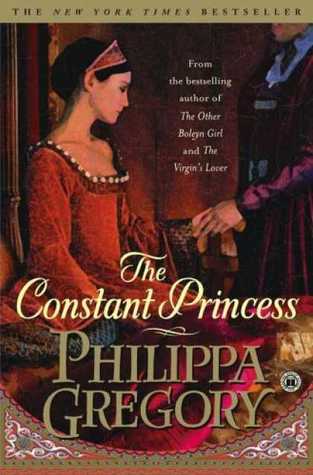
- The Constant Princess
Philippa Gregory
3.9 (150k) average on GoodreadsHistorical FictionFollows Catherine of Aragon, offering another perspective on the Tudor court and the women who inhabited it.
- Wolf Hall
Hilary Mantel
3.9 (166k) average on GoodreadsLiterary FictionMantel's Wolf Hall offers a far more historically rigorous and politically nuanced portrayal of the Tudor court, viewed through the eyes of Thomas Cromwell. Unlike Gregory's focus on emotional drama and romantic entanglements, Mantel prioritizes meticulous research, psychological depth, and the intricate strategic machinations of the period. While Gregory aims for accessibility, Mantel's work is celebrated for its literary sophistication and historical fidelity, appealing to readers seeking a more intellectually demanding and historically accurate narrative.
- To Kill a Mockingbird
Harper Lee
4.3 (4.5M) average on GoodreadsHistorical FictionIn the 1930s Jim Crow South, Harper Lee writes about racial injustice, moral growth, and the quiet courage of a lawyer father, Atticus Finch, as seen through his young daughter's eyes.
- The Great Gatsby
F. Scott Fitzgerald
3.9 (3.8M) average on GoodreadsHistorical FictionIn the opulent Roaring Twenties, a mysterious millionaire's lavish parties hide his desperate, tragic pursuit of a lost love, exposing the emptiness within the American Dream.





Enjoyed the summary?
A summary gives you the shape of the book. The book itself has the detail, the examples and the voice.
Find The Other Boleyn Girl on AmazonAs an Amazon Associate, BookBrief earns from qualifying purchases. How we're funded