
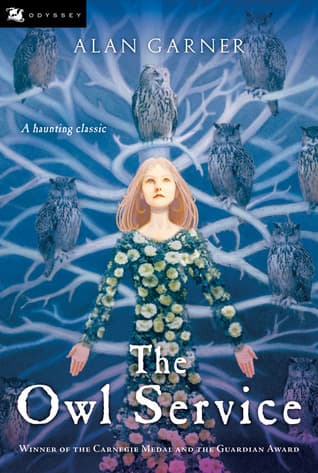
Synopsis
Covers the whole plot, including the ending.
- Difficulty
- Medium
- Pacing
- Moderate
- Mood
- Atmospheric, Eerie, Mysterious, Mythic, Tense
- Read it if
- You enjoy atmospheric, psychological fantasy with deep roots in mythology and folklore, and don't mind a story that's more about mood and implication than direct action.
- Skip it if
- You prefer fast-paced plots, clear-cut resolutions, or straightforward character motivations without ambiguity.
The Owl Service Plot Summary
Covers the whole plot, including the ending.
Arrival at the Valley House and the Attic Discovery
Alison, her mother Margaret, and her stepfather Clive, arrive at a remote house in a Welsh valley for their summer holiday. Roger, Clive's son from a previous marriage, and Gwyn, the son of the house's caretaker, Huw, are also present. Alison is immediately drawn to a scratching noise in the attic above her bedroom. Investigating, she finds a stack of old, dirty dinner plates with a peculiar floral pattern. Intrigued, she begins tracing the patterns onto paper. To her surprise, when she cuts out the traced shapes and folds them, they form the distinct shape of an owl. This discovery begins the strange occurrences that will unfold in the valley.
The Disappearing Owls and Growing Tensions
Alison continues making paper owls from the plate patterns, but she notices they disappear shortly after being made. The atmosphere in the house becomes strained, especially between Alison, Roger, and Gwyn. Roger, feeling displaced by Alison and Gwyn's connection to the valley, often makes snide remarks. Gwyn, protective of his heritage, is wary of the newcomers. Alison finds herself fascinated by the plates and the legends surrounding them, feeling an inexplicable pull towards the valley's ancient past, which seems to appear through the vanishing owls and the heightened emotions among the children.
The Legend of Blodeuwedd
Gwyn, initially reluctant, begins to share the local legend connected to the valley. He explains the ancient Welsh myth of Blodeuwedd, a woman conjured from flowers, who was given as a wife to Llew Llaw Gyffes. However, Blodeuwedd fell in love with another man, Gronw Pebr, and together they plotted Llew's death. As punishment, Blodeuwedd was transformed into an owl, doomed to only fly at night and be hated by other birds. Gwyn's telling of the tale deeply affects Alison, who feels an uncanny connection to Blodeuwedd. Roger dismisses it as superstition, further widening the rift between the three.
Physical Manifestations and Emotional Turmoil
As more paper owls are made and vanish, the legend starts to enter reality. Flowers appear inexplicably in Alison's room, and the children experience strange weather, including unnatural storms. Alison's personality changes; she becomes volatile, possessive, and emotionally unstable, mirroring Blodeuwedd's tragic story. She feels a strong, almost involuntary, attraction to Gwyn, while also feeling dread and entrapment. Roger grows concerned for Alison's mental state, believing she is overwhelmed by the valley's influence, while Gwyn is both drawn to and terrified by the unfolding events.
The Servants' Past and the New Cycle
Huw, Gwyn's father and the caretaker, reveals a piece of the puzzle: he, Margaret (Alison's mother), and Clive's father, Bertram, were the previous generation caught in the legend's cycle. Huw was 'Gronw', Margaret 'Blodeuwedd', and Bertram 'Llew'. This explains Margaret's deep anxiety and Huw's protective, yet resigned, demeanor. The children realize they are not just hearing a story but are destined to replay it. This knowledge intensifies their fear and the sense of inevitability, as they grapple with the implications for their own relationships and futures.
The Scythe and the Stone
Driven by the unfolding events and the increasing intensity of Alison's transformations, the children discover physical objects linked to the Blodeuwedd legend. They find an ancient scythe, rumored to be the weapon used to kill Llew, and a large stone with a hole in it, where Llew was supposedly struck. These discoveries confirm their belief that the legend is not just a story, but a cyclical curse that repeats itself with each generation. The presence of these artifacts deepens the sense of foreboding and reinforces the idea that they are trapped within a predetermined narrative.
The Confrontation and Blodeuwedd's Return
The emotional and supernatural tension reaches its peak. Alison, consumed by the spirit of Blodeuwedd, becomes demanding and manipulative, torn between her affection for Gwyn and her growing resentment towards Roger. She tries to draw Gwyn into the 'Gronw' role, while Roger desperately tries to break the spell. In a climactic scene, Alison, in a near-trance state, commands Gwyn and Roger, her voice and mannerisms shifting to those of Blodeuwedd. The air crackles with an otherworldly energy, and the house itself seems to pulse with the ancient magic of the valley.
The Owl Transformation
In the terrifying climax, as the boys struggle to understand and control the situation, Alison's transformation completes. She doesn't physically turn into an owl, but her essence, her being, becomes that of Blodeuwedd, the owl. Her eyes blaze, her movements become bird-like, and she emits a high, piercing shriek. The paper owls, previously made and vanished, seem to coalesce around her, and the very air in the room takes on the presence of a giant, menacing bird. This psychological and spiritual transformation leaves Roger and Gwyn horrified, believing the curse has once again run its course, trapping Alison in the same fate as Blodeuwedd.
Huw's Intervention and the Scapegoat
Just as despair sets in, Huw arrives, revealing the true nature of the curse. He explains that the legend is not about three people re-enacting a tragedy, but about the valley's need for a scapegoat, a 'Blodeuwedd' figure to bear the burden of its past sorrows and betrayals. The 'owl service' itself is a manifestation of this ancient magic. Huw believes that the legend is not just a story of love and betrayal, but a powerful, elemental force that demands a sacrifice to maintain its balance, and that Alison has become that sacrifice.
Breaking the Cycle
Roger, despite his earlier skepticism, pieces together Huw's words and the events. He realizes that the curse is not about the specific roles of Llew, Gronw, and Blodeuwedd, but about the *words* and *perceptions* that bind them. The legend repeats because people *expect* it to repeat, trapping Blodeuwedd in her owl form. He understands that the 'owl service' is not just about making owls, but about the very act of *seeing* the owl, of *naming* it. He recognizes that by focusing on the flowers, rather than the owls, he might be able to break the cycle.
The Flowers, Not the Owls
In a desperate attempt to free Alison, Roger confronts her, not with pleas to resist the owl, but by urging her to see the original pattern on the plates: the flowers. He shouts at her, trying to force her gaze back to the floral designs, to remember that Blodeuwedd was made from flowers, not owls. He believes that if Alison can perceive herself as the flower-maiden once more, the curse of the owl can be broken. Gwyn, initially confused, begins to understand Roger's radical approach, recognizing that the power lies in perception and naming.
The Release and the Aftermath
Roger's desperate insistence on the 'flowers' rather than the 'owls' seems to work. Alison, writhing and shrieking, slowly begins to calm. The intense, oppressive atmosphere in the room gradually dissipates. While she doesn't physically transform back, the oppressive spirit of Blodeuwedd leaves her, and she returns to her own self, albeit deeply shaken and traumatized. The children are left exhausted but free from the immediate grip of the legend. The experience leaves an indelible mark on all three, particularly on Alison, who has faced an ancient, powerful force and emerged from its shadow, forever changed by the summer in the valley.
Principal Figures
Alison
Protagonist
A curious and sensitive girl who becomes the unwitting Blodeuwedd.
Alison is a sensitive, imaginative, and initially somewhat passive girl on holiday with her newly formed family. She is the first to discover the mysterious plates and is quickly drawn into the valley's ancient legend. As the story progresses, she becomes increasingly possessed by the spirit of Blodeuwedd, exhibiting mood swings, possessiveness, and a growing sense of dread. Her transformation is central to the plot, as she grapples with an identity not her own.
Relationships: Roger (Stepbrother, sometimes antagonistic, ultimately her savior); Gwyn (Complicated attraction, potential 'Gronw' figure); Margaret (Mother, distant and anxious); Clive (Stepfather, largely detached)
Roger
Protagonist/Hero
Alison's skeptical but ultimately insightful stepbrother.
Roger is Clive's son, initially portrayed as cynical, practical, and somewhat resentful of the new family dynamic. He often clashes with Gwyn and dismisses the supernatural occurrences as Alison's imagination or hysteria. However, as events escalate, his skepticism gives way to concern for Alison. He is the intellectual counterpoint to Gwyn's intuitive understanding of the valley, and it is his rational, yet ultimately empathetic, insight that provides the key to breaking the curse.
Relationships: Alison (Stepbrother, initially antagonistic, becomes her protector and savior); Gwyn (Rival, often antagonistic); Clive (Father, somewhat distant)
Gwyn
Protagonist/Foil
The caretaker's son, deeply connected to the valley's ancient magic.
Gwyn is the son of Huw, the local caretaker, and is deeply rooted in the Welsh valley and its folklore. He possesses an innate understanding of the ancient magic and legends, often serving as the interpreter of the supernatural events. He is initially wary of the newcomers but forms a strong, complicated bond with Alison, feeling drawn to her yet also terrified by the unfolding curse. He represents the intuitive, mystical side of the valley, in contrast to Roger's rationalism.
Relationships: Alison (Complicated attraction, potential 'Llew' or 'Gronw' figure); Roger (Rival, often antagonistic); Huw (Father, shares a deep, unspoken understanding)
Huw
Supporting
Gwyn's father and the enigmatic caretaker, a keeper of the valley's secrets.
Huw is the laconic and mysterious caretaker of the house and Gwyn's father. He possesses a deep, almost instinctual knowledge of the valley's history and the Blodeuwedd legend, having been caught in its previous cycle. He is a man of few words, but his pronouncements are often profound and pivotal. He serves as a guide to the children, albeit a reluctant and enigmatic one, slowly revealing the truth about the curse's cyclical nature.
Relationships: Gwyn (Father, shares a deep, unspoken bond and understanding of the valley); Margaret (Past participant in the curse, former 'Gronw' figure)
Margaret
Supporting
Alison's mother, haunted by a past involvement with the legend.
Margaret is Alison's mother and Clive's new wife. She is portrayed as anxious, fragile, and often dismissive of the children's experiences, attributing them to imagination or illness. It is later revealed that she was the 'Blodeuwedd' in the previous cycle of the legend, which explains her deep-seated unease and her desire to escape the valley's influence. Her past trauma makes her largely ineffective in helping Alison, as she is still consumed by her own experience.
Relationships: Alison (Mother, emotionally distant due to her past trauma); Clive (Husband, their relationship is strained); Huw (Past participant in the curse, former 'Gronw' figure)
Clive
Supporting
Alison's stepfather, a detached and somewhat oblivious figure.
Clive is Alison's stepfather and Roger's father. He is generally portrayed as a well-meaning but somewhat detached and oblivious character, more concerned with his work and maintaining a pleasant holiday facade than with the strange occurrences around him. He struggles to understand the emotional complexities of his new family and dismisses the supernatural elements as childish games or overactive imaginations. His inability to grasp the gravity of the situation highlights the children's isolation in dealing with the curse.
Relationships: Alison (Stepfather, somewhat distant); Roger (Father, their relationship is strained); Margaret (Wife, their relationship is strained)
Themes & Insights
The Power of Myth and Legend
The novel explores how ancient myths can transcend time and appear in the present. The Welsh legend of Blodeuwedd is not just a story but a living, cyclical force that actively shapes the characters' lives. The plates, the paper owls, and Alison's transformation all act as conduits for this myth, showing its enduring power. The children are literally forced to re-enact a tragedy, showing how deeply ingrained cultural narratives can influence individual destinies, as seen when Alison embodies Blodeuwedd, and Roger and Gwyn are drawn into the roles of Llew and Gronw.
“It's not just a story. It happens. It happens to us.”
Identity and Transformation
A central theme is the struggle for identity, particularly Alison's. She is an ordinary girl who is gradually taken over by the ancient spirit of Blodeuwedd. This transformation is both psychological and supernatural, leading her to question who she is and what controls her actions. The theme also extends to Roger and Gwyn, who are forced into roles by the legend, challenging their own self-perceptions. The novel suggests that identity can be fluid, influenced by external forces, and that breaking free requires a conscious act of reclaiming one's self from imposed narratives, as Roger attempts to do by focusing on the 'flowers' for Alison.
“I'm not Alison. I'm Blodeuwedd.”
The Nature of Reality and Perception
The story blurs the lines between reality and the supernatural, suggesting that what one perceives can shape reality. The plates, for example, can be seen as either flowers or owls, and this perception directly impacts the unfolding events. Roger's realization that breaking the curse involves changing the *perception* of the 'owl' to the 'flower' is key. The adults' inability to see the supernatural elements highlights how their own perceptions limit their understanding, while the children's open minds allow them to witness and participate in the magic, making them both victims and potential liberators.
“It's not what you see, it's what you think you see.”
Family Dynamics and Intergenerational Trauma
The novel explores the complex and often strained relationships within the newly formed family unit of Alison, Roger, Margaret, and Clive. The underlying tension is made worse by the re-awakening of the Blodeuwedd legend, which also reveals the intergenerational trauma carried by Margaret and Huw from their own past involvement. The children are not only dealing with their own immediate family issues but are also inheriting and re-enacting the unresolved conflicts of the previous generation, showing how past events can echo through families and shape future relationships and destinies.
“They've been here before. My father, and your mother. And Bertram.”
Love, Betrayal, and Jealousy
At its heart, the Blodeuwedd legend is a tragic tale of love, betrayal, and jealousy, and these themes are powerfully replayed through the children. Alison, as Blodeuwedd, is torn between her feelings for Gwyn and her complex relationship with Roger, mirroring Blodeuwedd's betrayal of Llew for Gronw. The intense emotions of attraction, possessiveness, and resentment among the teenagers are heightened by the supernatural influence, showing how these primal human emotions can become destructive when fueled by ancient forces and unresolved conflicts, leading to a cyclical pattern of heartbreak and disaster.
“She loved Gronw. She hated Llew.”
Plot Devices & Literary Techniques
The Owl Service Plates
The catalyst for the entire supernatural plot.
The old, grimy dinner plates in the attic are the central magical artifact. Their floral pattern, when traced and cut, forms owls that mysteriously disappear. These plates are not just objects; they are a direct conduit to the Blodeuwedd legend, manifesting the curse and initiating Alison's transformation. They represent the cyclical nature of the legend, perpetually offering the choice between 'flowers' (Blodeuwedd's origin) and 'owls' (her curse).
Symbolism of Owls and Flowers
Representing transformation, curse, and potential redemption.
The owl symbolizes Blodeuwedd's curse, her transformation, and the dark, nocturnal aspect of the legend. It represents betrayal and the hatred of other birds. Conversely, the flowers symbolize Blodeuwedd's origin as a beautiful maiden created from blossoms, representing purity and potential freedom from the curse. The struggle between seeing 'owls' or 'flowers' on the plates becomes a metaphor for the struggle to break the cycle of the curse, with Roger's final insight hinged on the power of the 'flowers'.
The Valley Setting
An isolated, ancient landscape that holds and perpetuates the legend.
The remote Welsh valley is more than just a backdrop; it is an active participant in the story. Its ancient landscape, steeped in Celtic mythology, acts as a vessel for the Blodeuwedd legend. The isolation of the valley intensifies the children's experience, cutting them off from external reality and forcing them to confront the supernatural forces. The valley itself seems to have a memory and a will, perpetuating the curse through generations, and its weather and flora react to the unfolding events.
The Scythe and the Stone
Tangible links to the historical and mythical past of the legend.
These two artifacts – the scythe (representing the weapon used to kill Llew) and the stone (where he was struck) – serve as powerful physical anchors to the Blodeuwedd legend. Their discovery by the children grounds the supernatural events in a tangible, historical reality, making the myth feel less like a story and more like a recurring historical event. They heighten the sense of dread and inevitability, confirming to the children that they are indeed re-enacting an ancient tragedy.
The Owl Service Quotes
“It was her mother, Nancy, who had died, and her father, Huw, who had gone mad, but it was Alison who felt herself to be dead and mad.”
“The owls are coming. The owls are coming.”
“She looked at the paper flowers. They were flowers, but they were also owls. The petals were wings, the leaves were feathers, the stamens were beaks.”
“It's the service, see. The owl service. It's always been here.”
“He knew it was dangerous, but he couldn't stop. He had to know.”
“You can't change what's happened, only what's happening.”
“The house was alive. It breathed, it watched, it waited.”
“It's not just the plate. It's the mountain. It's everything.”
“She felt herself being pulled, drawn into the pattern, becoming part of it.”
“He saw the flowers, and then he saw the owls. And then he saw the girl.”
“It was the same story, over and over, always the same.”
“The past isn't dead. It's not even past.”
“You can't fight a story. You can only live it.”
“She was the owl, the flower, the girl. All three, and none.”
Quiz
10 questions on the plot and the characters. Each answer comes with a short explanation.
Question 1
What is the initial source of the mysterious 'scratching' sound above Alison's room?
- A trapped bird trying to escape the attic.
- A rat that has made a nest in the ceiling.
- Alison's own subconscious imagination.
- The old plates moving and making noise on their own.
Show answer
D. The old plates moving and making noise on their own. The scratching sound is attributed to the plates themselves, hinting at their supernatural nature and the unfolding events.
Question 2
What happens when Alison traces the patterns from the plates onto paper and assembles them into owls?
- The paper owls turn into real, live owls.
- The paper owls disappear when no one is watching them.
- The paper owls cause the plates themselves to crack.
- The paper owls reveal hidden messages in the patterns.
Show answer
B. The paper owls disappear when no one is watching them. The disappearing paper owls are a key early indicator of the magical and unsettling events tied to the legend.
Question 3
Which character is the caretaker's son and becomes involved in the repeating legend?
- Roger
- Clive
- Gwyn
- Huw
Show answer
C. Gwyn Gwyn is the caretaker's son and plays the role of Lleu Llaw Gyffes in the repeating Mabinogion legend.
Question 4
What is the primary emotional manifestation that Alison experiences as the legend takes hold of her?
- An overwhelming sense of joy and freedom.
- Growing anger and hostility towards Roger and Gwyn.
- Profound sadness and melancholia.
- Increased anxiety and fear of being alone.
Show answer
B. Growing anger and hostility towards Roger and Gwyn. Alison's personality begins to change, showing fits of anger and possessiveness, mirroring the character of Blodeuwedd from the legend.
Question 5
What specific type of flower is central to the legend and Alison's transformation?
- Roses
- Lilies
- Foxgloves
- Broom
Show answer
D. Broom Blodeuwedd, the woman in the legend, was made from flowers of oak, broom, and meadowsweet. The broom flowers are particularly significant as Alison's transformation progresses.
Question 6
What is the ultimate fate of the character who plays the role of Lleu Llaw Gyffes in the legend?
- He is turned into an eagle.
- He is turned into an owl.
- He is turned into a stone.
- He is banished from the valley forever.
Show answer
B. He is turned into an owl. Lleu Llaw Gyffes is cursed by Gwydion to be an owl, a fate that Gwyn, in his role, is destined to repeat.
Question 7
How does the 'owl service' itself, the collection of plates, physically change as the children become more deeply involved in the legend?
- They become more vibrant in color and appear new.
- They develop cracks and eventually shatter.
- The patterns on them subtly shift from flowers to owls.
- They begin to glow with an eerie light.
Show answer
C. The patterns on them subtly shift from flowers to owls. The transformation of the patterns on the plates from flowers to owls mirrors Alison's own transformation into Blodeuwedd and the repeating curse.
Question 8
What is the significance of the Welsh Mabinogion tales to the plot of 'The Owl Service'?
- They are merely bedtime stories Roger reads to Alison.
- They provide the exact blueprint for the tragic legend the children are re-enacting.
- They are a distraction for Gwyn, preventing him from understanding the legend.
- They are a collection of unrelated myths that inspire the local folklore.
Show answer
B. They provide the exact blueprint for the tragic legend the children are re-enacting. The novel directly re-enacts the fourth branch of the Mabinogion, specifically the story of Lleu Llaw Gyffes, Blodeuwedd, and Gronw Pebr.
Question 9
How does the adult generation (Alison's mother, Roger's father, and Nancy) react to the strange events unfolding around the children?
- They actively try to help the children understand and break the curse.
- They are largely oblivious or dismissive, attributing events to childish imagination or illness.
- They become possessed by the spirits of the past themselves.
- They secretly know about the curse and are trying to protect the children.
Show answer
B. They are largely oblivious or dismissive, attributing events to childish imagination or illness. The adults remain largely unaware or choose to ignore the supernatural occurrences, contributing to the children's isolation and the inevitability of the repeating legend.
Question 10
What is the central, recurring 'disaster' that the legend always culminates in?
- The entire valley is flooded by a magical river.
- The woman made of flowers is betrayed and transforms into an owl.
- The two male protagonists engage in a fatal duel.
- The 'owl service' plates are destroyed, breaking the curse.
Show answer
B. The woman made of flowers is betrayed and transforms into an owl. The core tragedy of the legend is Blodeuwedd's betrayal of Lleu and her subsequent transformation into an owl, a fate Alison is increasingly pushed towards.
The Owl Service FAQ
What is the central mystery surrounding the owl service plates?
The central mystery revolves around ancient dinner plates found in the attic. When Alison traces the floral patterns on them, they transform into owls, which then vanish, signaling the re-emergence of a powerful and dangerous local legend that traps the children within its cyclical narrative.
Who are the three main characters caught in the legend's cycle?
The three main characters are Alison, a wealthy girl on holiday; Roger, her stepbrother; and Gwyn, the son of the local caretaker. They unwittingly become the latest incarnations of Blodeuwedd, Lleu Llaw Gyffes, and Gronw Pebyr, destined to repeat a tragic love triangle.
What happens to the traced owls after they are created?
Once Alison traces the flower patterns into owls, they mysteriously disappear when unobserved, leaving behind a blank sheet of paper or causing the original plates to crack. Each disappearance fuels the growing supernatural tension and brings the children closer to fulfilling the ancient curse.
What is the significance of the valley's geography in relation to the legend?
The isolated Welsh valley itself is imbued with the legend's power, acting as a crucible where the ancient tragedy repeatedly unfolds. Specific locations, like the stone with the hole or the barn, are sites where past iterations of the story have played out, drawing the children deeper into its grasp.
How does the legend of Blodeuwedd connect to Alison's fate?
Alison embodies Blodeuwedd, a woman made of flowers who betrayed her husband, Lleu. As Alison traces the owls, she is increasingly consumed by Blodeuwedd's spirit, exhibiting her jealousy and manipulative tendencies, and ultimately facing a similar, tragic transformation.
What is the true nature of Nancy, Gwyn's mother, and Huw Halfbacon?
Nancy and Huw are not merely caretakers but are revealed to be the previous generation's Blodeuwedd and Lleu/Gronw, or perhaps guardians of the legend. They possess a deep, painful understanding of the curse and try, often ineffectively, to guide or protect the children from repeating their own past.
How does the 'stone with the hole' serve as a hidden detail or connection?
The 'stone with the hole' is a crucial landmark, marking the spot where Gronw slew Lleu in the original Mabinogion tale. Its presence in the modern story signifies the cyclical nature of the legend and foreshadows the violent climax, linking the past and present iterations of the tragedy.
Are there any clues in the initial descriptions of the house or attic that hint at the supernatural events?
The 'scratching around' in the attic, combined with the 'grimy old plates' found there, immediately establishes an unsettling atmosphere. The attic itself, being a repository of forgotten things, subtly hints at the buried history and dormant magic about to be unleashed.
What is the significance of the constant rain and oppressive weather in the story?
The relentless rain and gloomy weather are not just atmospheric but reflect the characters' internal turmoil and the escalating tension of the curse. It creates a sense of entrapment and melancholy, mirroring the inescapable nature of the legend that descends upon the valley.
How does Alison's growing obsession with the plates reflect her psychological state?
Alison's obsession with tracing the plates reflects her burgeoning adolescent identity and her susceptibility to external influences. As she embodies Blodeuwedd, her jealousy, possessiveness, and desire for attention become magnified, revealing deeper insecurities and a volatile emotional landscape.
Analyze Roger's role as the 'mediator' or 'observer' and its psychological impact.
Roger often tries to rationalize the strange events and mediate between Alison and Gwyn, but his attempts are futile. Psychologically, he represents the struggle to maintain normalcy and scientific reason in the face of overwhelming supernatural forces, highlighting his helplessness and growing frustration.
How does Gwyn's experience as an outsider influence his connection to the legend?
As the local boy and caretaker's son, Gwyn is inherently closer to the land and its ancient stories, making him more attuned to the legend's pull. His position as an outsider to Alison and Roger's world also makes him vulnerable, as he is drawn into their drama, ultimately taking on the role of the fated lover, Lleu or Gronw.
What psychological effect does the repeated nature of the curse have on the characters, especially Nancy and Huw?
The repeated nature of the curse inflicts a deep psychological trauma on characters like Nancy and Huw, who have lived through it before. It results in a sense of fatalism, resignation, and a profound weariness, as they are forced to witness the same tragedy unfold, unable to break the cycle.
Is the ending truly a resolution, or does it suggest the cycle will continue?
The ending is highly ambiguous. While Alison transforms, it's left unclear if the cycle is broken or merely reset. The final image of the flowers, not owls, suggests a potential shift, but the deep-rooted nature of the curse implies that the valley will likely continue to draw new victims into its ancient drama.
What is the primary message or theme Alan Garner conveys through 'The Owl Service'?
Garner explores themes of generational trauma, the inescapable power of myth, and the destructive nature of jealousy and possessiveness. The book suggests that ancient stories can manifest and control human lives, and that certain patterns of behavior are deeply ingrained and difficult to break.
How does the book challenge traditional notions of good and evil within its characters?
The book blurs the lines of good and evil. Blodeuwedd, though a betrayer, is also a victim of circumstances, and the children are not inherently malicious but are forced into roles. This challenges simplistic morality, suggesting characters are products of their fate and the powerful forces acting upon them.
Is the transformation of Alison into a flower-owl a literal or metaphorical event?
The transformation is presented as both literal within the narrative's magical realism and metaphorical. Literally, Alison is consumed by the curse; metaphorically, it represents her complete surrender to Blodeuwedd's spirit and the loss of her individual identity to the ancient, destructive forces of the legend.
How does the novel explore the destructive nature of adult secrets and past grievances on the younger generation?
The novel subtly reveals that the adults' unresolved pasts and hidden resentments, particularly between Nancy and Huw, contribute to the reawakening of the curse. Their failure to openly address their own history leaves the younger generation vulnerable to repeating the same mistakes, highlighting the cyclical nature of inherited trauma.
About the author

Alan Garner is a celebrated English author renowned for his impactful contributions to children's and young adult fantasy literature. His seminal works, including 'The Owl Service' and 'The Weirdstone of Brisingamen,' explore themes of mythology, folklore, and the British landscape with a distinctive, often challenging, narrative style. Garner's unique voice and deep engagement with ancient British culture have earned him critical acclaim and a dedicated readership.
Similar books
- A Wizard of Earthsea
Ursula K. Le Guin
4.0 (241k) average on GoodreadsFantasyExplores deep mythological themes and character development within a fantasy setting.
- The Dark Is Rising
Susan Cooper
4.1 (51k) average on GoodreadsFantasyFeatures children caught in ancient, magical conflicts rooted in British folklore.
- Jonathan Strange & Mr Norrell
Susanna Clarke
3.8 (198k) average on GoodreadsFantasyRich in historical detail and the subtle, often unsettling presence of ancient magic and folklore.
- Harry Potter and the Sorcerer's Stone
J.K. Rowling
4.5 (7M) average on GoodreadsFantasyRescued from a miserable life under the stairs, an orphaned boy discovers he's a wizard destined for a magical school, where he uncovers a dangerous secret tied to the dark wizard who murdered his parents.
- The Hunger Games
Suzanne Collins
4.3 (6.4M) average on GoodreadsFantasyIn a future where children fight to the death on live television, Katniss Everdeen volunteers for the arena, turning a death sentence into a fight for survival and a spark of rebellion.
- 1984
George Orwell
4.2 (3.1M) average on GoodreadsPoliticsIn a future where surveillance and thought control are absolute, a man's search for truth clashes with the Party, showing that hope can be a form of rebellion.





Enjoyed the summary?
A summary gives you the shape of the book. The book itself has the detail, the examples and the voice.
Find The Owl Service on AmazonAs an Amazon Associate, BookBrief earns from qualifying purchases. How we're funded