

Synopsis
Covers the whole plot, including the ending.
- Difficulty
- Medium
- Pacing
- Moderate
- Mood
- Reflective, Melancholy, Transformative, Poignant
- Read it if
- You appreciate classic literature exploring themes of redemption, personal growth, and the complexities of relationships against an exotic historical backdrop.
- Skip it if
- You prefer fast-paced plots with clear-cut heroes and villains, or are sensitive to themes of infidelity and societal judgment.
The Painted Veil Plot Summary
Covers the whole plot, including the ending.
A Discovery and a Demand
In 1920s Hong Kong, Kitty Fane, a beautiful but superficial Englishwoman, has an affair with Charles Townsend, the Assistant Colonial Secretary. Her husband, Walter Fane, a quiet and dedicated bacteriologist, discovers their infidelity after finding a love letter. Instead of confronting Kitty directly, Walter presents her with a stark choice: either he divorces her, naming Townsend as co-respondent, which would ruin Townsend's career, or Kitty must accompany him to Mei-tan-fu, a remote village in inland China ravaged by a deadly cholera epidemic, where he has volunteered to combat the outbreak. Kitty, believing Townsend will leave his wife for her, initially agrees to the divorce, but Townsend's cowardly refusal to commit to her forces her to choose Mei-tan-fu.
Journey to Mei-tan-fu
Reluctantly, Kitty packs her belongings and prepares for the journey to Mei-tan-fu. The journey is arduous and uncomfortable, a stark contrast to her previous luxurious life in Hong Kong. She travels by boat and then by sedan chair through a desolate and unfamiliar landscape, filled with the sights and smells of rural China. Throughout the journey, Walter remains cold and distant, offering no comfort or conversation. Kitty is filled with resentment and a growing sense of dread about the unknown challenges that await her, realizing the gravity of her situation and the consequences of her actions.
Life in the Cholera-Stricken Village
Upon arrival in Mei-tan-fu, Kitty is confronted with the reality of the cholera epidemic. The village is desolate, the air heavy with the stench of sickness and death. Walter immediately immerses himself in his work, tirelessly battling the disease, performing autopsies, and organizing sanitation efforts. Kitty, accustomed to a life of social engagements and luxury, finds herself isolated and bored. She has no one to talk to, nothing to do, and the constant presence of death and suffering is overwhelming. She resents Walter's dedication and his apparent indifference to her plight, feeling utterly alone and without purpose.
The Convent and the Sisters
In her search for something to occupy her time, Kitty discovers a French convent run by Catholic nuns who are caring for orphaned children during the epidemic. Initially, Kitty views the nuns with a mixture of curiosity and disdain, seeing their devotion as strange. However, she is gradually drawn to the calm strength and selflessness of the Mother Superior and the other sisters. She begins to volunteer, helping with the children and observing the nuns' compassion and courage in the face of immense suffering. This exposure to genuine altruism begins to subtly challenge Kitty's materialistic worldview.
A Glimmer of Understanding
As days turn into weeks, Kitty observes Walter's tireless work with a detached curiosity that slowly transforms into grudging respect. She sees him risking his life daily, performing dangerous autopsies, and working tirelessly to save the villagers. She witnesses his quiet courage and his dedication to his profession and to humanity. This stark contrast to the superficiality of her former life, and particularly to Charles Townsend's weakness, forces Kitty to re-evaluate her husband. She starts to understand the depth of his character and the nobility of his purpose, realizing the immense gulf between his values and her own.
The Death of Walter
Despite his meticulous precautions, Walter Fane contracts cholera. Kitty, now softened by her experiences at the convent and her growing appreciation for Walter, cares for him during his final days. She witnesses his suffering and his quiet dignity, feeling guilt and regret for her past actions and the pain she inflicted upon him. His death leaves her devastated and alone, not with the relief she might once have expected, but with a deep, aching emptiness and the heavy burden of unsaid apologies and unfulfilled understanding. His passing marks a turning point in her emotional journey.
Return to Hong Kong and a New Reality
After Walter's death, Kitty discovers she is pregnant. She arranges her return to Hong Kong, carrying this secret and the changes wrought by her time in Mei-tan-fu. Upon her arrival, she finds that society, particularly her sister-in-law, is sympathetic but also subtly judgmental. She encounters Charles Townsend again, who, despite his initial enthusiasm, quickly reveals his true shallow nature. He is still married and views Kitty merely as a convenient distraction. Kitty, no longer the naive woman she once was, sees through his empty promises and realizes the futility of her past infatuation, rejecting his advances with newfound resolve.
Confronting Her Past
Kitty decides to return to England and confronts her estranged father, a kind but somewhat ineffectual man, with the truth of her pregnancy. She reveals that the child is not Walter's, but Charles Townsend's. Her father, shocked but ultimately understanding, supports her decision to leave Hong Kong. This confession is a moment of vulnerability and honesty for Kitty, signifying her break from the deceit and superficiality of her past. She resolves to raise her child with integrity and to make amends for her previous mistakes, seeking a life of genuine purpose rather than social approval.
A New Beginning in England
Back in England, Kitty gives birth to her daughter. She dedicates herself to raising the child, finding a quiet strength and fulfillment in motherhood. She lives a modest life, far removed from the social whirl she once craved. She continues to reflect on her experiences in Mei-tan-fu and Walter's life, striving to embody the qualities of compassion, dedication, and integrity she witnessed in him and the nuns. This new life, though simpler, is richer and more meaningful, representing her transformation from a frivolous socialite to a mature and responsible woman.
The Legacy of Walter
As her daughter grows, Kitty often thinks of Walter. She hopes that her child will inherit Walter's strength of character, his intellectual curiosity, and his dedication to a greater purpose, rather than her own initial superficiality. She wants her daughter to be independent, courageous, and to live a life of meaning and service. This desire for her daughter to embody Walter's virtues shows the impact he had on Kitty's transformation, solidifying his legacy as a moral compass and an inspiration for a life well-lived.
The Painted Veil Characters
Kitty Fane
Protagonist
A beautiful but initially superficial Englishwoman who undergoes a profound transformation.
Kitty is introduced as a vain and self-absorbed socialite, driven by a desire for admiration and a fear of missing out. She is initially shallow, prioritizing social standing and romantic dalliances over genuine connection or purpose. Her affair with Charles Townsend stems from a craving for excitement and affection that her quiet husband, Walter, seemingly cannot provide. She is impulsive and lacks self-awareness, often justifying her actions and blaming others. Her journey to Mei-tan-fu forces her to confront her inner emptiness and the consequences of her choices.
Relationships: Walter Fane (Husband; initially distant and unappreciated, later respected and mourned.); Charles Townsend (Lover; initially infatuated, later disgusted by his shallowness.); Mother Superior (Mentor; provides spiritual guidance and a model of selfless service.); Her Father (Supportive parent; offers solace and acceptance after her return to England.)
Walter Fane
Supporting/Catalyst
A dedicated, quiet bacteriologist whose integrity and selflessness profoundly impact Kitty.
Walter is intelligent, reserved, and deeply committed to his scientific work, particularly in public health. He is a man of quiet integrity and courage, driven by a desire to alleviate suffering. While socially awkward and perhaps emotionally distant, his actions speak volumes about his character. He loves Kitty, but struggles to express it, and is deeply hurt by her betrayal. His decision to take Kitty to Mei-tan-fu is not purely punitive, but also a desperate attempt to force her to confront reality and perhaps, to grow. His ultimate sacrifice battling cholera solidifies his moral authority.
Relationships: Kitty Fane (Wife; initially betrayed and distant, later respected and deeply missed.); Colonel Yu (Colleague; works with him in Mei-tan-fu.); The Nuns (Allies; shares a common goal in helping the sick and orphaned.)
Charles Townsend
Antagonist (initial catalyst)
The charming but ultimately shallow and cowardly Assistant Colonial Secretary.
Charles Townsend is handsome, charismatic, and a skilled manipulator of social situations. He represents the superficiality and moral decay of the Hong Kong expatriate society. He is driven by ego and immediate gratification, lacking any genuine depth of feeling or responsibility. His affair with Kitty is a self-serving diversion, and he quickly abandons her when faced with the consequences, revealing his true cowardly nature. He is a foil to Walter's integrity and a symbol of the hollow existence Kitty initially pursued.
Relationships: Kitty Fane (Lover; initially infatuated, later rejected by Kitty due to his superficiality.); Dorothy Townsend (Wife; his marriage is a social convenience he is unwilling to jeopardize.)
Mother Superior
Supporting/Mentor
The wise and compassionate head of the French convent in Mei-tan-fu.
The Mother Superior is a figure of immense spiritual strength, unwavering faith, and selfless compassion. She runs the convent and cares for orphaned children amidst the cholera epidemic, providing a beacon of hope and order in chaos. She offers Kitty a quiet space for reflection and a model of purposeful living through her dedication to others. Her gentle wisdom and practical kindness deeply influence Kitty, helping her to recognize the value of altruism and the emptiness of her former life. She sees beyond Kitty's initial facade to the potential for good within her.
Relationships: Kitty Fane (Mentor; provides spiritual and emotional guidance, a role model.); The Nuns (Leader; guides the sisters in their charitable work.)
Waddington
Supporting
A cynical but observant British customs official in Mei-tan-fu.
Waddington is a solitary and somewhat eccentric British customs official living in Mei-tan-fu. He is a keen observer of human nature, possessing a cynical wit and a realistic view of the world. He offers Kitty sporadic company and conversation, often providing blunt, unvarnished insights that challenge her sheltered perceptions. He is not overtly kind but offers a form of companionship and a different perspective on Walter's character and the nature of the Chinese people. He is a survivor in a harsh land, reflecting a certain practical wisdom.
Relationships: Kitty Fane (Acquaintance; offers intermittent company and cynical observations.)
Kitty's Father
Supporting
A kind but somewhat ineffectual London barrister.
Kitty's father is portrayed as a gentle and somewhat overwhelmed man. He is a successful barrister but struggles with his demanding wife, Kitty's mother, and later with his daughter's scandalous return. He is fundamentally good-hearted and provides a safe haven for Kitty upon her return to England. Despite his initial shock at her confession, he offers unconditional love and support, enabling Kitty to establish a new life for herself and her child. He represents a quiet, enduring form of familial love.
Relationships: Kitty Fane (Father; supportive, though initially shocked by her revelations.)
Dorothy Townsend
Mentioned
Charles Townsend's wife.
Dorothy Townsend is primarily mentioned as the obstacle to Charles's supposed commitment to Kitty. She is depicted as a socially adept woman who is aware of her husband's infidelities but chooses to ignore them for the sake of maintaining her social position. Her character highlights the hypocrisy and moral compromises prevalent in the colonial society of Hong Kong.
Relationships: Charles Townsend (Wife; maintains a marriage of social convenience.)
Colonel Yu
Mentioned
A Chinese official working with Walter in Mei-tan-fu.
Colonel Yu is a Chinese official who assists Walter Fane in his efforts to combat the cholera epidemic in Mei-tan-fu. He represents the local authority working in cooperation with the foreign doctor. His presence underscores the international effort to combat the disease and provides a glimpse into the local governance during the crisis.
Relationships: Walter Fane (Colleague; works together on cholera relief.)
The Painted Veil Themes
The Journey of Self-Discovery and Redemption
The novel charts Kitty Fane's transformation from a frivolous, self-absorbed socialite to a compassionate and self-aware woman. Her forced exile to Mei-tan-fu, a place of suffering and death, acts as a crucible for her character. Stripped of her social comforts and forced to confront the harsh realities of life and death, she begins to shed her superficiality. Her exposure to Walter's selfless dedication and the nuns' compassion gradually awakens her conscience, leading her to acknowledge her past mistakes and seek a more meaningful existence. This journey is not without pain, but it ultimately leads to her redemption and a deeper understanding of herself and the human condition.
“The painted veil which she had thought was life was rent asunder, and she saw the naked reality beyond.”
Love, Betrayal, and Forgiveness
The complex interplay of love, betrayal, and forgiveness forms the emotional core of the narrative. Kitty's betrayal of Walter through her affair with Charles Townsend is the inciting incident that sets her on her transformative journey. Walter's initial response, while seemingly punitive, stems from his deep hurt and a hope for Kitty's growth. As Kitty witnesses Walter's selflessness and later mourns his death, she experiences guilt and regret. Though Walter never explicitly forgives her, Kitty's journey is an act of self-forgiveness and a recognition of the love she failed to appreciate. The novel explores the destructive power of betrayal and the redemptive potential of understanding and empathy, even in the absence of explicit reconciliation.
“She had wanted him to say he loved her, and he had not said it. She had wanted to say she loved him, and she had not said it.”
The Contrast Between Superficiality and Purpose
A central theme is the stark contrast between a life lived for superficial pleasures and social status, and a life dedicated to a greater purpose. Kitty's initial existence in Hong Kong is characterized by social climbing, gossip, and hollow romantic pursuits, exemplified by Charles Townsend. In contrast, Walter Fane embodies a life of purpose through his scientific work and humanitarian efforts in Mei-tan-fu. The French nuns, with their selfless devotion to God and the suffering, further highlight this distinction. Kitty's journey is essentially a movement from the former to the latter, as she discovers that genuine fulfillment comes not from external validation but from internal integrity and contribution.
“She had always been afraid of life, and now she was afraid of death.”
Colonialism and Cultural Clash
The setting of 1920s Hong Kong and rural China provides a backdrop for themes of colonialism and cultural clash. The British expatriate community in Hong Kong lives a privileged, isolated existence, often detached from the realities of the local population and prone to moral laxity. Kitty's journey into inland China forces her to confront a culture vastly different from her own, challenging her ethnocentric views. The novel subtly critiques the colonial mindset through characters like Charles Townsend, who exploit their positions, and contrasts it with Walter's more respectful and humanitarian engagement with the Chinese people. The 'painted veil' can also symbolize the illusions of colonial power and the superficial understanding of other cultures.
“They were like plants that had been transplanted into a foreign soil, and they withered away if they were not watered by the familiar.”
Plot Devices & Literary Techniques
The Journey as Metaphor
Kitty's physical journey to Mei-tan-fu mirrors her internal journey of self-discovery.
The arduous and uncomfortable journey from the bustling, artificial society of Hong Kong to the remote, cholera-stricken village of Mei-tan-fu is a powerful metaphor for Kitty's spiritual and emotional transformation. As she sheds her physical comforts and social connections, she is simultaneously stripped of her illusions and forced to confront the harsh realities of life. The unfamiliar and desolate landscape reflects her internal emptiness and confusion, while her eventual engagement with the suffering in Mei-tan-fu marks the beginning of her inner growth and the shedding of her 'painted veil' of ignorance.
The Cholera Epidemic
The deadly disease serves as a stark backdrop, catalyst, and symbol of moral decay and redemption.
The cholera epidemic in Mei-tan-fu is more than just a setting; it is a critical plot device. It acts as the catalyst for Kitty's forced journey and Walter's ultimate sacrifice. The epidemic represents chaos, suffering, and the fragility of life, forcing Kitty to confront mortality and the superficiality of her past concerns. It also highlights Walter's unwavering dedication and the selfless work of the nuns, providing a moral contrast to Kitty's initial self-absorption. The disease itself can be seen as a metaphor for the moral sickness that infected Kitty's life, from which she slowly recovers.
The 'Painted Veil'
A central metaphor representing illusion, ignorance, and the superficiality of life.
The title itself is a significant plot device, drawing from Shelley's poem 'Lift not the painted veil which those who live / Call Life.' The 'painted veil' symbolizes the illusions and superficialities that prevent Kitty (and many others) from seeing the true nature of reality, love, and purpose. For Kitty, this veil is composed of her vanity, social ambitions, and her romanticized view of her affair. Her experiences in Mei-tan-fu gradually tear this veil away, forcing her to confront the 'naked reality' of suffering, selflessness, and her own flawed character, leading to a profound awakening.
Foil Characters
Charles Townsend and Walter Fane serve as contrasting figures highlighting Kitty's moral choices.
Charles Townsend and Walter Fane function as classic foil characters, each representing a path Kitty could take and highlighting her moral development. Townsend embodies superficial charm, moral weakness, and self-interest, reflecting Kitty's initial values and the hollow society she came from. Walter, in contrast, represents integrity, quiet strength, selflessness, and dedication to a higher purpose. The stark contrast between these two men forces Kitty to re-evaluate her values and ultimately choose a path aligned with Walter's virtues, signifying her transformation and rejection of Townsend's emptiness.
The Painted Veil Quotes
“The important thing is not to be cured, but to live with the disease.”
“She had a sudden vision of the loneliness of the human soul. She felt that there was no contact between them, that they were like ships that pass in the night.”
“The average person is a creature of habit, and the habit of being unhappy is one of the commonest and most difficult to cure.”
“I never knew a man who was good for anything who was not at the same time good-natured.”
“What d'you expect? You're a woman. You're not supposed to think.”
“It is not enough to be loved, you must be understood.”
“She was like a child playing with fire, and she had burnt her fingers.”
“The trouble with people is not that they don't know, but that they don't want to know.”
“She had always been a creature of impulses, and it was her impulses that had led her into trouble.”
“The greatest tragedy of life is not that men perish, but that they cease to love.”
“It was impossible to live with him and not be influenced by his profound, if somewhat cynical, honesty.”
“She had discovered that the only way to be happy was to be useful.”
“Man is a creature that can get used to anything.”
“It's a dreadful thing to have to live with a person you don't love.”
Quiz
10 questions on the plot and the characters. Each answer comes with a short explanation.
Question 1
What is the name of Kitty Fane's husband, who discovers her affair?
- Charlie Townsend
- Walter Fane
- Waddington
- Charles Strickland
Show answer
B. Walter Fane Kitty's husband is Walter Fane, a bacteriologist. Charlie Townsend is her lover.
Question 2
To what remote, cholera-stricken village does Walter force Kitty to accompany him?
- Shanghai
- Peking
- Mei-tan-fu
- Canton
Show answer
C. Mei-tan-fu Walter takes Kitty to the remote Chinese village of Mei-tan-fu, where he is to combat a severe cholera epidemic.
Question 3
What is the profession of Kitty's lover, Charlie Townsend?
- A doctor
- A government official
- A missionary
- A businessman
Show answer
B. A government official Charlie Townsend is the Assistant Colonial Secretary in Hong Kong, a prominent government official.
Question 4
What is the specific ultimatum Walter gives Kitty after discovering her affair?
- He will divorce her immediately unless she leaves Hong Kong alone.
- He will expose her and Charlie unless Charlie divorces his wife and marries Kitty.
- He will forgive her if she promises never to see Charlie again.
- He will kill Charlie if she does not accompany him to Mei-tan-fu.
Show answer
B. He will expose her and Charlie unless Charlie divorces his wife and marries Kitty. Walter's ultimatum is that he will divorce Kitty and expose her and Charlie unless Charlie divorces his wife Dorothy and marries Kitty, thereby saving Kitty's reputation.
Question 5
What is the primary reason Kitty initially married Walter Fane?
- She was deeply in love with him.
- Her parents pressured her to marry a man of good standing.
- To escape her family and a younger sister who overshadowed her.
- She admired his intelligence and dedication to science.
Show answer
C. To escape her family and a younger sister who overshadowed her. Kitty married Walter primarily to escape her home life, particularly the competitive shadow of her younger sister, Doris, who was about to marry.
Question 6
Which character represents a figure of moral and practical support for Kitty in Mei-tan-fu?
- The Governor of Hong Kong
- Waddington, the Deputy Commissioner
- Mother Superior of the convent
- Dr. Yu, a local physician
Show answer
B. Waddington, the Deputy Commissioner Waddington, the Deputy Commissioner of Customs, becomes a confidant and source of support for Kitty during her time in Mei-tan-fu.
Question 7
What significant personal development does Kitty experience while working at the convent orphanage in Mei-tan-fu?
- She decides to become a nun.
- She discovers a talent for medicine and assists Walter.
- She finds purpose and a sense of self-worth through caring for others.
- She secretly plans her escape back to Hong Kong.
Show answer
C. She finds purpose and a sense of self-worth through caring for others. Caring for the children at the convent orphanage helps Kitty develop empathy, compassion, and a sense of purpose, leading to her personal growth.
Question 8
What is the ultimate fate of Walter Fane?
- He returns to England to continue his research.
- He dies from cholera while treating patients in Mei-tan-fu.
- He survives the epidemic and divorces Kitty.
- He commits suicide out of despair.
Show answer
B. He dies from cholera while treating patients in Mei-tan-fu. Walter Fane tragically dies from cholera, contracted while diligently working to combat the epidemic in Mei-tan-fu.
Question 9
Upon returning to Hong Kong after Walter's death, what does Kitty discover about Charlie Townsend's true feelings and intentions?
- He genuinely loves her and wishes to marry her.
- He views her primarily as a conquest and is unwilling to leave his wife.
- He has moved on and is engaged to another woman.
- He wants to maintain their affair but without any commitment.
Show answer
B. He views her primarily as a conquest and is unwilling to leave his wife. Kitty realizes that Charlie Townsend never truly loved her or intended to leave his wife, seeing her only as a convenient diversion.
Question 10
What is the symbolic significance of the title 'The Painted Veil' in relation to Kitty's journey?
- It refers to the exotic Chinese landscape that Kitty finds beautiful.
- It symbolizes the illusions and superficiality of the society she once valued, which she eventually sees through.
- It is a literal veil worn by the nuns at the convent.
- It represents the hidden dangers of the cholera epidemic.
Show answer
B. It symbolizes the illusions and superficiality of the society she once valued, which she eventually sees through. The 'painted veil' symbolizes the deceptive appearances, societal conventions, and superficial values that initially blind Kitty, which she gradually peels away to find deeper truth and meaning in her life.
The Painted Veil FAQ
What is the central conflict that propels Kitty Fane's journey in 'The Painted Veil'?
The central conflict arises when Kitty's husband, Walter Fane, discovers her affair with Charles Townsend. Instead of a direct confrontation or divorce, Walter forces Kitty to accompany him to Mei-tan-fu, a remote Chinese village ravaged by a cholera epidemic, as a form of vengeful penance, stripping her of her comfortable life and forcing her to confront her own character.
Who is Walter Fane and what is his profession?
Walter Fane is Kitty's husband, a bacteriologist by profession. He is a quiet, intelligent, and somewhat socially awkward man who deeply loves Kitty, despite her superficiality and the affair that shatters his world. He volunteers to combat the cholera epidemic in Mei-tan-fu.
What role does Charles Townsend play in Kitty's initial unhappiness and subsequent journey?
Charles Townsend is the Assistant Colonial Secretary in Hong Kong and Kitty's married lover. His charm and attention initially provide Kitty with an escape from her perceived dull marriage to Walter, but his ultimate cowardice and refusal to leave his wife expose the superficiality of their affair and leave Kitty emotionally stranded, serving as a catalyst for her forced introspection.
Where does Kitty's transformation primarily take place?
Kitty's profound transformation primarily takes place in Mei-tan-fu, a remote Chinese village devastated by a cholera epidemic. Stripped of social distractions and confronted with human suffering and Walter's selfless dedication, she begins to shed her vanity and develop empathy and a sense of purpose.
What is the significance of the convent and the Mother Superior in Kitty's development?
The convent, particularly the Mother Superior, provides Kitty with a stark contrast to her previous life and a model of selfless service. By working with the nuns and observing their unwavering dedication to the sick and orphaned children, Kitty learns humility, compassion, and the value of a life devoted to others, which significantly shapes her moral awakening.
Are there any subtle hints about Walter's character or past before the affair is revealed?
Yes, there are subtle hints. Kitty often perceives Walter as 'cold' or 'uninteresting,' but the narrative occasionally shows his quiet competence and dedication to his work, suggesting a depth she fails to appreciate. His meticulous nature and intellectual pursuits are also noted, contrasting with Kitty's more frivolous interests.
What does the 'painted veil' in the title symbolize?
The 'painted veil' primarily symbolizes the illusions and superficiality that Kitty initially lives behind, obscuring the harsh realities of life and the true nature of people, including herself. It also refers to the societal conventions and romanticized notions that prevent her from seeing Walter's true worth and her own moral failings until she is forced to confront them.
Is there any foreshadowing of Walter's ultimate fate?
Yes, there is subtle foreshadowing. Walter's relentless and selfless work amidst the highly contagious cholera epidemic, his increasing weariness, and the constant exposure to the disease all hint at the severe risks he is taking. His dedication borders on self-sacrifice, making his eventual contraction of the disease tragically plausible.
How does Kitty's relationship with her mother influence her initial choices and insecurities?
Kitty's relationship with her demanding and critical mother heavily influences her. Her mother's constant pressure to marry well and secure a social position, coupled with her lack of genuine affection, instills in Kitty deep insecurities and a desperate need for external validation, driving her towards superficial relationships and societal acceptance.
Analyze the psychological impact of Walter's 'punishment' on Kitty.
Walter's 'punishment' of bringing Kitty to Mei-tan-fu has a profound psychological impact. Stripped of her social identity and luxuries, she is forced into isolation and confronted with her own moral emptiness. This extreme environment shatters her self-deception, forcing her to confront her vanity, selfishness, and the true consequences of her actions, leading to a profound psychological reckoning.
How does Walter's quiet suffering and dedication contrast with Kitty's initial self-pity?
Walter's quiet suffering is marked by his unwavering dedication to saving lives and his stoic acceptance of his wife's betrayal. He channels his pain into purposeful action. In contrast, Kitty initially wallows in self-pity, focusing on her discomfort and perceived victimhood, highlighting the vast difference in their coping mechanisms and moral fortitude.
What psychological shift allows Kitty to forgive Walter (and herself) by the end of the novel?
Kitty's psychological shift towards forgiveness stems from her immersion in suffering and her observation of Walter's selfless work. She gains empathy, humility, and a deeper understanding of human nature, including Walter's hidden depths and her own capacity for growth. This newfound self-awareness allows her to acknowledge her own wrongdoings and extend forgiveness, both to him and to herself.
Was Walter's decision to take Kitty to Mei-tan-fu an act of love, revenge, or both?
Walter's decision is open to interpretation, but it appears to be a complex mix of revenge and a desperate, perhaps misguided, attempt to force Kitty into a situation where she might change. While fueled by his pain and desire for retribution, it inadvertently creates the crucible for Kitty's transformation, suggesting a dark, twisted kind of 'tough love' alongside his anger.
How does the novel challenge traditional notions of romance and marriage?
The novel challenges traditional notions by depicting a marriage initially devoid of true romantic love, built on superficiality and societal pressure. It suggests that true love and connection can emerge not from initial passion, but from shared suffering, mutual respect, and a deep understanding of character developed through adversity, subverting the typical 'happily ever after' narrative.
What is the ultimate message about human capacity for change presented in 'The Painted Veil'?
The ultimate message is a profound affirmation of the human capacity for radical change and redemption. Kitty's journey illustrates that even the most superficial and self-absorbed individuals can, through profound suffering and self-reflection, awaken to empathy, purpose, and a deeper understanding of life and love, ultimately achieving personal growth and moral enlightenment.
Could Kitty have found redemption without Walter's extreme measure?
It is highly debatable whether Kitty could have found redemption without Walter's extreme measure. Her comfortable, superficial life provided no impetus for change, and her character was deeply entrenched in vanity. The harsh, life-threatening environment of Mei-tan-fu acted as a necessary catalyst, stripping away her illusions and forcing her to confront reality in a way no other circumstance likely would have.
How does the setting of 1920s colonial Hong Kong contribute to the novel's themes?
The setting of 1920s colonial Hong Kong highlights themes of superficiality, social climbing, and moral decay within the British expatriate community. It provides the backdrop for Kitty's initial shallow existence and the world she desperately tries to maintain, contrasting sharply with the raw, authentic struggle for survival in Mei-tan-fu and emphasizing the artificiality of her prior life.
What is the significance of the ending, particularly Kitty's decision regarding her child?
The ending signifies Kitty's complete transformation and her commitment to breaking the cycle of unhappiness. By dedicating herself to raising her daughter (who may or may not be Walter's) with genuine love and honesty, and ensuring she is 'free and courageous,' Kitty chooses a path of selfless motherhood and authenticity, directly contrasting with her own mother's failings and her past superficiality.
About the author

William Somerset Maugham was an English writer, known for his plays, novels and short stories. Born in Paris, where he spent his first ten years, Maugham was schooled in England and went to a German university. He became a medical student in London and qualified as a physician in 1897. He never practised medicine, and became a full-time writer. His first novel, Liza of Lambeth (1897), a study of life in the slums, attracted attention, but it was as a playwright that he first achieved national celebrity. By 1908 he had four plays running at once in the West End of London. He wrote his 32nd and last play in 1933, after which he abandoned the theatre and concentrated on novels and short stories.
Similar books
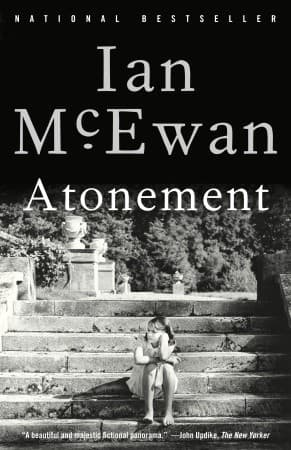
- Atonement
Ian McEwan
4.4 (70) average on GoodreadsExplores themes of guilt, class, and the repercussions of a single act on multiple lives.
- The Razor's Edge
W. Somerset Maugham
4.2 (36k) average on GoodreadsLiterary FictionAnother Maugham novel exploring a protagonist's spiritual journey and search for meaning.
- Tender is the Night
F. Scott Fitzgerald
3.8 (114k) average on GoodreadsLiterary FictionFeatures complex relationships and characters grappling with personal crises in a decadent, foreign setting.
- A Passage to India
E.M. Forster
3.7 (70k) average on GoodreadsHistorical FictionWhile both are set in colonial contexts and explore personal crises, Forster's novel focuses more on broader societal tensions, cultural clashes, and the impossibility of true connection between colonizer and colonized. Maugham's "The Painted Veil" is more intensely personal, concentrating on one woman's individual journey of moral redemption.
- The End of the Affair
Graham Greene
3.9 (52k) average on GoodreadsLiterary FictionBoth novels involve infidelity and a journey of spiritual or moral awakening. However, Greene's work delves deeper into theological and existential questions, often with a more overt Catholic sensibility and a focus on divine grace. Maugham offers a more secular, humanistic path to redemption, emphasizing practical compassion, self-awareness, and personal responsibility rather than religious conversion.
- To Kill a Mockingbird
Harper Lee
4.3 (4.5M) average on GoodreadsHistorical FictionIn the 1930s Jim Crow South, Harper Lee writes about racial injustice, moral growth, and the quiet courage of a lawyer father, Atticus Finch, as seen through his young daughter's eyes.




Enjoyed the summary?
A summary gives you the shape of the book. The book itself has the detail, the examples and the voice.
Find The Painted Veil on AmazonAs an Amazon Associate, BookBrief earns from qualifying purchases. How we're funded