

Synopsis
Covers the whole plot, including the ending.
- Difficulty
- Medium
- Pacing
- Moderate
- Mood
- Melancholy, Intense, Reflective, Obsessive, Spiritual
- Read it if
- You enjoy intense psychological dramas, explorations of faith and doubt, and complex love triangles set against a war-torn backdrop.
- Skip it if
- You prefer lighthearted romance, straightforward narratives, or are put off by themes of religious struggle and existential despair.
The End of the Affair Plot Summary
Covers the whole plot, including the ending.
The Inciting Incident: A Chance Encounter
The story begins in London in 1946, two years after World War II and two years after Maurice Bendrix's passionate affair with Sarah Miles ended. Maurice, a novelist, meets Sarah’s husband, Henry Miles, a civil servant, by chance on a rainy night. Henry confides his suspicion that Sarah might be having an affair, an irony Maurice understands, having been Sarah's secret lover. This meeting reignites Maurice's dormant love and jealousy for Sarah, making him obsessively seek the truth behind their breakup. He considers confronting Sarah but decides instead to secretly uncover her secrets.
Hiring Parkis: The Investigation Begins
Driven by a need to understand why Sarah left him, Maurice hires a private detective. He contacts Mr. Parkis, a somewhat clumsy but earnest investigator, and tells him to follow Sarah, document her movements, and identify any men she might be seeing. Maurice gives Parkis details about Sarah's routine and appearance, carefully planning the surveillance. Parkis, with his young son, Lancelot, begins his work, reporting initial, often ordinary, observations to Maurice. Maurice's jealousy grows with each report, fueling his belief that Sarah must have found a new lover, even without concrete evidence.
The Stolen Diary: A Revelation
The investigation takes an unexpected turn when Parkis's son, Lancelot, who sometimes helps his father, steals Sarah's private diary from her handbag during a visit to the Miles' home. Parkis gives the diary to Maurice, who at first feels a pang of guilt, but his overwhelming curiosity and jealousy quickly override his scruples. Maurice begins to read the diary, expecting to find details of another affair, a rival lover. Instead, he discovers entries revealing a completely different, deeply spiritual, and intensely personal struggle within Sarah, centered on a promise she made to God during a crisis.
The Promise: Sarah's Vow to God
As Maurice reads deeper into Sarah's diary, he discovers the real reason for their breakup. During a severe bombing raid in 1944, a V-1 flying bomb hit near Maurice's flat while he was inside. Sarah, believing Maurice to be dead, rushed into the damaged building. When she found him alive, she made a spontaneous, desperate promise to God: if Maurice were spared, she would give him up forever and dedicate her life to Him. The diary entries describe her inner conflict, her deep love for Maurice, and her equally deep, agonizing commitment to this promise, which she felt bound to honor despite her immense pain.
Confrontation and Despair
With the knowledge from the diary, Maurice confronts Sarah. He demands an explanation, revealing that he knows about her promise. Sarah is shocked and defensive at first, but eventually confirms the diary's account, explaining the depth of her spiritual commitment and the pain it caused her to leave him. Maurice, unable to understand or accept her spiritual reasons, feels deeply betrayed and despairing. He sees her faith as a rival, a cruel trick that took her from him. Their meeting is full of raw emotion, love, and misunderstanding, leaving both of them heartbroken and further apart.
Henry's Suspicions and Sarah's Health
Henry Miles, still unaware of Maurice's past affair with Sarah but disturbed by her withdrawn behavior and his own growing loneliness, confides further in Maurice, ironically seeking his advice. He expresses his fear that Sarah is seeing someone, or perhaps even ill. Meanwhile, Sarah's health visibly declines. She becomes pale, weak, and distant, concerning both Henry and Maurice, who watches her from afar. This physical decline, with her intense spiritual struggle, suggests a deep inner battle affecting her body and soul. Maurice, still consumed by his own pain, struggles to connect her physical suffering with her spiritual devotion.
The Role of Father Crompton
As Sarah's spiritual journey deepens and her health worsens, she seeks advice from Father Crompton, a Catholic priest. Her diary entries, and later direct accounts, show her growing devotion and her efforts to understand and live by her promise. Father Crompton, initially somewhat skeptical of her sudden conversion, gradually recognizes the sincerity and depth of her faith. He becomes a confidant, guiding her through her spiritual struggles and helping her reconcile her past with her current commitment. This growing connection to the Church further alienates Maurice, who sees it as another barrier between him and Sarah, a rival for her affections.
Sarah's Death
Sarah's health continues to worsen dramatically, leading to her sudden death. The cause is not immediately clear, but it seems to be a rapid decline made worse by her deep internal struggles. Her death leaves both Maurice and Henry devastated. Henry, still largely unaware of her true spiritual life and her affair, is heartbroken by the loss of his wife. Maurice, consumed by grief and guilt, struggles to accept her absence, his anger at her God, and his lasting love for her. Her death leaves a void neither man knows how to fill, forcing them to confront their own beliefs and their relationship with the woman they both loved.
The Miracles and The Atheist's Struggle
After Sarah's death, a series of unexplained events occur, attributed to her intervention. Parkis's young son, Lancelot, who has a severe rash, recovers completely after believing Sarah will heal him. Later, a woman Sarah knew, with a birthmark on her face, finds the mark has disappeared. These 'miracles' deeply disturb Maurice, a staunch atheist. He tries to find rational explanations, dismissing them as coincidences or psychological effects. However, these events, with Sarah's deep faith shown in her diary, begin to erode his disbelief, forcing him to consider the possibility of a spiritual reality.
Henry's Conversion and Maurice's Isolation
Following Sarah's death and the strange occurrences, Henry Miles, previously indifferent to religion, begins to explore Catholicism. Influenced by Father Crompton and the perceived 'miracles,' Henry finds comfort and meaning in faith, seeing it as a way to connect with Sarah. He starts attending Mass and reading religious texts. Maurice, however, remains fiercely atheist, holding to his rationalism even as he struggles with his grief and the unsettling evidence of the miracles. He feels increasingly isolated from Henry and the world that seems to be embracing a spiritual explanation for Sarah's life and death, leaving him alone with his anger and despair.
The Final Confrontation with God
In the final sections, Maurice's struggle with God intensifies. He cannot accept Sarah's God, whom he sees as a rival who took her from him. He rages against this unseen force, blaming it for his loss and pain. Despite his intellectual atheism, he finds himself engaging in a perverse form of prayer, addressing God directly, challenging Him, and even begging Him for Sarah's return. Maurice's grief and anger become a reluctant and resentful acknowledgment of a power beyond his understanding. He feels God's presence not as comforting, but as an oppressive, all-consuming rival who has triumphed over his human love, leaving him in a state of tormented, isolated belief.
Principal Figures
Maurice Bendrix
Protagonist
A cynical, obsessive novelist driven by love, jealousy, and a fierce atheism.
Maurice Bendrix is a successful novelist whose life is defined by his passionate, illicit affair with Sarah Miles. He is intensely possessive, cynical, and a staunch atheist. His love for Sarah is profound but also tinged with jealousy and a desire for control. When she leaves him, he becomes consumed by an obsessive need to understand why, leading him to hire a detective. His rationalist worldview is severely challenged by Sarah's spiritual transformation and the inexplicable events following her death, forcing him into a reluctant, resentful engagement with faith.
Relationships: Sarah Miles (Passionate, illicit lovers; later, a complex relationship defined by her spiritual conversion and his possessive love and jealousy.); Henry Miles (Acquaintances; Maurice is Henry's wife's lover, and later Henry confides in Maurice, unaware of the past affair.); Mr. Parkis (Employer and employee; Maurice hires Parkis as a private detective.)
Sarah Miles
Central Figure
A woman torn between illicit love and a profound, sudden spiritual awakening.
Sarah Miles is a beautiful, sensitive, and complex woman trapped in a loveless marriage with Henry. She engages in a passionate affair with Maurice Bendrix, which brings her intense joy and pain. During a bombing raid, she makes a desperate vow to God to give Maurice up if he survives, fundamentally altering her life's trajectory. Her subsequent spiritual journey is marked by profound devotion, self-sacrifice, and an agonizing internal struggle between her human love and her divine commitment. She is the catalyst for Maurice's spiritual crisis.
Relationships: Maurice Bendrix (Passionate, illicit lovers; later, her spiritual commitment forces her to end the affair, causing him immense pain.); Henry Miles (Husband; their marriage is loveless and emotionally distant.); Father Crompton (Spiritual advisor and confidant.)
Henry Miles
Supporting
Sarah's mild-mannered, somewhat oblivious husband, a civil servant.
Henry Miles is Sarah's husband, a respectable but emotionally detached civil servant. He is kind, gentle, and somewhat naive, largely unaware of Sarah's affair with Maurice and later, the depth of her spiritual transformation. He loves Sarah in his own quiet way but lacks the emotional intensity she craves. His loneliness and confusion about Sarah's behavior lead him to confide in Maurice, ironically, and after Sarah's death, he finds solace in exploring Catholicism.
Relationships: Sarah Miles (Husband; their marriage is polite but emotionally unfulfilling for Sarah.); Maurice Bendrix (Acquaintance; he confides in Maurice, unaware of Maurice's past with Sarah.)
Mr. Parkis
Supporting
A bumbling but earnest private detective hired by Maurice.
Mr. Parkis is the private detective Maurice hires to follow Sarah. He is a good-natured, somewhat unpolished man who takes pride in his work, despite his occasional clumsiness. He is devoted to his young son, Lancelot, who sometimes assists him. Parkis's reports, initially mundane, eventually lead to the pivotal discovery of Sarah's diary. He later becomes a witness to the 'miracles' attributed to Sarah, which deeply impact his simple, unquestioning faith.
Relationships: Maurice Bendrix (Employee; he works for Maurice.); Lancelot Parkis (Father and son; Lancelot often accompanies him.)
Lancelot Parkis
Supporting
Mr. Parkis's young son, who plays a crucial role in the plot.
Lancelot Parkis is the young son of Mr. Parkis. He is a bright, observant, and somewhat mischievous boy who occasionally accompanies his father on assignments. It is Lancelot who, through a moment of youthful curiosity, steals Sarah's diary, thus providing Maurice with the key to understanding her. Lancelot later experiences a miraculous recovery from a severe rash, an event attributed to Sarah's intercession, which further challenges Maurice's atheism and deepens the novel's spiritual themes.
Relationships: Mr. Parkis (Son; he assists his father.); Sarah Miles (He briefly interacts with her and is later healed through her perceived intercession.)
Father Crompton
Supporting
A Catholic priest who becomes Sarah's spiritual guide.
Father Crompton is the Catholic priest Sarah seeks out for spiritual guidance after her vow to God. He is portrayed as a wise, patient, and understanding figure, though initially somewhat cautious about Sarah's sudden conversion. He helps Sarah navigate the complexities of her faith, providing counsel and support as she grapples with her commitment and her past. He later guides Henry Miles in his own exploration of Catholicism, representing the Church's compassionate and guiding presence.
Relationships: Sarah Miles (Spiritual advisor and confessor.); Henry Miles (Spiritual advisor after Sarah's death.)
Themes & Insights
The Nature of Love (Human vs. Divine)
The novel explores the conflict between human, passionate, often possessive love and divine, selfless, spiritual love. Maurice's love for Sarah is intensely human, marked by jealousy and a desire for control. Sarah's journey, however, shifts from this human love to a deep, almost agonizing divine love for God, which makes her sacrifice her earthly desires. This theme is central to the 'affair's end,' as Sarah's love for God becomes a rival Maurice cannot understand or defeat. The entire story is framed by Maurice's struggle to understand or accept this higher form of love.
“If I believed in God, I would say that God had taken her, but I don't believe in God, so I just say that she's gone.”
Faith and Doubt
Greene shows the intricate relationship between faith and doubt. Maurice is a staunch atheist whose worldview is systematically challenged by Sarah's unwavering faith and the unexplained 'miracles' after her death. His atheism is less a calm intellectual position and more an aggressive, almost religious rejection of God. Sarah, on the other hand, experiences a sudden, overwhelming conversion that leads to absolute faith, despite her human weaknesses. The novel does not offer easy answers but immerses the reader in the deep internal struggles of both belief and disbelief, suggesting that faith often begins in doubt and pain, and doubt can be a way of engaging with the divine.
“I hate You, God, I hate You as though You existed.”
Obsession and Jealousy
Maurice's character is largely defined by his obsessive love and jealousy. After Sarah ends their affair, his love quickly turns into an all-consuming obsession to uncover her secrets. He hires a detective, reads her diary, and relentlessly seeks the 'truth,' driven by a possessive desire to reclaim her or understand who replaced him. This jealousy extends even to God, whom Maurice sees as a rival who stole Sarah's affection. His obsession blinds him to Sarah's true spiritual state for much of the novel, fueling his bitterness and making his grief even deeper.
“A story has no beginning or end: arbitrarily one chooses a moment of experience from which to look back or from which to look ahead.”
The Search for Meaning and Purpose
Each main character, in their own way, searches for meaning. Henry Miles, in his ordinary life, is unaware of true passion until Sarah's death forces him to rethink his life. Maurice seeks meaning in human love and intellectual pursuits, but is left empty when Sarah leaves him, and his ultimate confrontation with God is a desperate, though angry, search for purpose. Sarah, however, finds her ultimate meaning and purpose in her promise to God, sacrificing earthly happiness for a deep spiritual fulfillment, showing that meaning can be found in unexpected and difficult places.
“When you loved me, I gave you nothing. Now I love you, I give you everything.”
Plot Devices & Literary Techniques
The Stolen Diary
A physical object that reveals the central mystery and shifts the narrative's direction.
The stolen diary is the pivotal plot device. It is not merely a means of information, but a direct conduit into Sarah's inner spiritual world, revealing her vow to God. Before the diary, Maurice's investigation is driven by jealousy and suspicion of another man. The diary completely upends his assumptions, transforming the narrative from a detective story about adultery into a profound exploration of faith, sacrifice, and the nature of love. It forces Maurice, and the reader, to confront a spiritual reality he vehemently denies.
First-Person Narration (Unreliable Narrator)
Maurice Bendrix's biased perspective shapes the reader's understanding of events.
The novel is narrated in the first person by Maurice Bendrix, making him an inherently unreliable narrator. His perspective is deeply colored by his jealousy, cynicism, and atheism. He interprets events through his own lens of bitterness and possessiveness, often misjudging Sarah's motives and the true nature of her spiritual journey. This device forces the reader to constantly question Maurice's interpretations, piece together the truth from Sarah's diary and other characters' actions, and ultimately experience the story's spiritual themes through the eyes of a deeply conflicted, skeptical individual.
The Miracles
Supernatural events that challenge Maurice's rational worldview.
The 'miracles' that occur after Sarah's death – Lancelot's rash disappearing, and the woman's birthmark vanishing – serve as crucial plot devices to challenge Maurice's staunch atheism. These inexplicable events provide tangible, albeit disputed, evidence of a spiritual power at work, forcing Maurice to confront the possibility of God's existence. They are not explicitly confirmed as divine interventions, leaving room for Maurice's rationalizations, but their cumulative effect relentlessly chips away at his disbelief, pushing him towards a grudging, angry acknowledgment of a power beyond human comprehension.
Flashbacks
Non-linear storytelling used to reveal the history of Maurice and Sarah's affair.
The novel uses extensive flashbacks to gradually reveal the history and intensity of Maurice and Sarah's affair. The present-day narrative, driven by Maurice's investigation, is constantly interrupted by his memories of their passionate encounters, their secret life, and the emotional complexities of their relationship. This non-linear structure allows Greene to build the emotional weight of their past love, making Sarah's eventual decision to leave Maurice even more poignant and the mystery of her departure more compelling. It also highlights the depth of Maurice's grief and longing.
The End of the Affair Quotes
“I hated her, not because I didn't love her, but because I did. I hated her for the power she had over me, the way she could make me feel so alive and then so utterly desolate.”
“When you loved someone, you too wanted to be good. You begged for a grace, and you didn't know why, and if there was no God, you would invent Him.”
“A story has no beginning or end: arbitrarily one chooses a moment from which to look forward or back.”
“There are times when I think we are all in the process of creating our own hell.”
“Pity is a rather useless emotion. It's too close to contempt.”
“I caught a glimpse of what it must be like to be good – for nothing. To be good for goodness' sake.”
“Sex is a matter of biology. Love is a matter of choice. And sometimes, a matter of will.”
“We are all of us, always, in search of God, though we may not know it.”
“I have loved you with a love that was a disease, and now I hate you with a hate that is a disease.”
“To be loved, to be truly loved, is to be changed forever.”
“It's a strange thing, isn't it? That we can know someone so intimately, and yet still know so little.”
“The sense of being watched, not by a person, but by something else, something vast and indifferent.”
“There is a great loneliness in the world, and it is the loneliness of men who have no God.”
“The only way to get rid of a temptation is to yield to it. Resist it, and your soul grows sick with longing for the things it has forbidden to itself.”
“Human nature is not a thing that can be improved. It is a thing that can only be endured.”
Quiz
10 questions on the plot and the characters. Each answer comes with a short explanation.
Question 1
What is the profession of Maurice Bendrix, the narrator of 'The End of the Affair'?
- Journalist
- Novelist
- Private Detective
- Civil Servant
Show answer
B. Novelist Maurice Bendrix is a novelist, and his perspective as a writer heavily influences the narrative style and his introspection throughout the book.
Question 2
During which significant historical event does Maurice Bendrix and Sarah Miles's initial affair take place?
- World War I
- The Great Depression
- The London Blitz of World War II
- The Cold War
Show answer
C. The London Blitz of World War II The turbulent times of the London Blitz, during World War II, provide the backdrop for the early stages of Maurice and Sarah's affair, adding to the urgency and intensity of their relationship.
Question 3
What specific event prompts Sarah to make a vow to God, leading to the end of her affair with Bendrix?
- Maurice proposing marriage to her
- Maurice nearly being killed by a V-1 flying bomb
- Her husband, Henry, discovering the affair
- A close friend dying unexpectedly
Show answer
B. Maurice nearly being killed by a V-1 flying bomb Sarah makes a vow to God, promising to end her affair with Maurice if he survives a V-1 bomb blast that she believes has killed him. When he miraculously reappears, she feels compelled to honor her promise.
Question 4
Who is Henry Miles in relation to Sarah?
- Her brother
- Her husband
- Her father
- Her lover before Bendrix
Show answer
B. Her husband Henry Miles is Sarah's husband, a civil servant who is largely oblivious to her affair with Maurice for a significant period.
Question 5
What does Maurice Bendrix hire Parkis, the private detective, to do?
- Investigate Henry Miles's finances
- Find a new publisher for his novel
- Follow Sarah Miles to discover who she is seeing
- Gather information for a new book
Show answer
C. Follow Sarah Miles to discover who she is seeing After a chance meeting rekindles his love and jealousy, Bendrix hires Parkis to follow Sarah, believing she must have another lover, thus turning his love into an obsession.
Question 6
What is the primary theme explored through Sarah's spiritual journey in the novel?
- The conflict between materialism and asceticism
- The nature of divine love versus human love
- The role of fate in human relationships
- The psychological impact of wartime trauma
Show answer
B. The nature of divine love versus human love Sarah's journey is deeply spiritual, exploring her unexpected conversion and the idea that her love for God superseded her human love for Bendrix, highlighting the tension between sacred and profane love.
Question 7
What item does Parkis's son, Lance, steal from Sarah's house during the investigation?
- A valuable necklace
- Sarah's diary
- A love letter from Maurice
- A photograph of Maurice
Show answer
B. Sarah's diary Lance, Parkis's son, steals Sarah's diary from her home, which later becomes a crucial source of information for Bendrix, revealing Sarah's true feelings and her spiritual conversion.
Question 8
How does Maurice Bendrix initially react to the idea of Sarah's religious faith?
- He finds it comforting and starts to explore faith himself.
- He is indifferent, seeing it as her personal choice.
- He dismisses it as a delusion and a rival for her affection.
- He respects it but struggles to understand her motives.
Show answer
C. He dismisses it as a delusion and a rival for her affection. Maurice, an atheist, initially views Sarah's newfound faith with hostility and disbelief, seeing God as a rival who has stolen her from him, rather than a genuine spiritual awakening.
Question 9
What is the ultimate fate of Sarah Miles?
- She reconciles with Maurice and they restart their affair.
- She leaves Henry and dedicates her life to religious service.
- She dies unexpectedly from a sudden illness.
- She moves abroad to escape both Maurice and Henry.
Show answer
C. She dies unexpectedly from a sudden illness. Sarah dies suddenly from an illness, which deepens Maurice's grief and further complicates his understanding of her life and their relationship.
Question 10
What supernatural or miraculous events are attributed to Sarah after her death?
- Healing of Parkis's birthmark and a cure for Bendrix's rash.
- Visions appearing to Henry Miles and Father Crompton.
- The sudden blossoming of flowers out of season.
- A mysterious light emanating from her grave.
Show answer
A. Healing of Parkis's birthmark and a cure for Bendrix's rash. After Sarah's death, several unexplained 'miracles' occur, including the disappearance of Parkis's unsightly birthmark and the healing of Bendrix's persistent rash, which are attributed to her intercession.
The End of the Affair FAQ
What is the central conflict that drives Maurice Bendrix's actions throughout the novel?
Maurice Bendrix is driven by an intense and possessive love for Sarah Miles, which, after her abrupt departure, transforms into a consuming jealousy and obsession. He cannot accept her leaving without a rational explanation and seeks to uncover the truth behind her sudden withdrawal from their affair, leading him to hire a private detective.
Who is Henry Miles and what is his relationship to the main characters?
Henry Miles is Sarah's husband, a rather complacent and emotionally distant civil servant. He is aware of Maurice's friendship with Sarah but remains largely oblivious to the depth and nature of their affair, representing a stable but passionless alternative to Maurice's fiery devotion.
What event triggers Sarah's sudden decision to end her affair with Maurice?
Sarah's decision is triggered by a near-death experience during a bombing raid. When Maurice is seemingly killed by a falling beam, she makes a desperate vow to God that if he is spared, she will give up Maurice forever. Maurice's miraculous survival compels her to uphold this promise.
How does the London Blitz influence the atmosphere and urgency of Maurice and Sarah's affair?
The Blitz creates an atmosphere of constant danger and impermanence, intensifying the urgency and passion of Maurice and Sarah's affair. The threat of sudden death makes their moments together feel more precious and immediate, fostering a 'live for today' mentality that deepens their illicit bond.
What role does the private detective, Mr. Parkis, play in Bendrix's investigation?
Mr. Parkis, along with his son Lancelot, is hired by Bendrix to follow Sarah and uncover the reason for her departure. Initially, he provides factual details and observations, but inadvertently, he also uncovers Sarah's diary, which becomes the key to revealing her spiritual journey and the true nature of her promise.
What is the significance of the diary entries that Bendrix eventually reads?
Sarah's diary entries are crucial because they reveal her inner turmoil, her vow to God during the bombing, and her subsequent spiritual awakening. They provide Bendrix with the 'other side' of the story, transforming his understanding of her actions from betrayal to a profound act of faith and sacrifice.
Are there any subtle indications of Sarah's burgeoning spirituality before her pivotal vow?
While not explicitly detailed as religious, Sarah often expresses a longing for something more profound or a sense of guilt regarding the affair, which hints at an underlying spiritual sensitivity. Her deep emotional responses and search for meaning subtly foreshadow her later conversion.
How does the character of Henry Miles subtly change or react once he learns the truth about Sarah's affair?
Henry Miles, upon discovering the affair through Sarah's diary, reacts with a surprising blend of sadness and a kind of resigned understanding rather than explosive anger. He grieves for the loss of his wife's affection but also seems to gain a deeper, albeit painful, insight into her complex inner life and his own emotional distance.
What is the implied significance of the 'miracles' that seem to occur around Sarah after her death?
The 'miracles' – such as Parkis's son's rash disappearing, or Bendrix's own resistance to conversion – are implied to be manifestations of Sarah's saintliness or divine intervention, suggesting her spiritual power continues even after her death. These events challenge Bendrix's atheism and underscore the novel's theological themes.
How does Maurice Bendrix's narrative perspective shape the reader's initial understanding of Sarah?
Bendrix's perspective is deeply biased by his love, jealousy, and anger, initially presenting Sarah as a mysterious, perhaps fickle, woman who abandoned him without cause. His intense emotional state colours every observation, making her actions seem cruel until her diary reveals her true motivations.
Analyze the psychological impact of Sarah's 'betrayal' on Maurice Bendrix's mental state.
Sarah's 'betrayal' plunges Bendrix into a protracted state of obsessive jealousy, paranoia, and self-pity. He becomes consumed by the need for explanation, distorting his perception of reality and leading him down a path of relentless investigation and emotional torment, blurring the lines between love and hate.
How does Sarah's character evolve psychologically from the beginning of the affair to her spiritual conversion?
Sarah evolves from a woman seeking passionate connection outside a loveless marriage to one deeply grappling with guilt, faith, and sacrifice. Her near-death experience and subsequent vow initiate a profound psychological shift, where her desire for earthly love is supplanted by a yearning for spiritual redemption and divine love.
What psychological defense mechanisms does Maurice Bendrix employ to cope with his grief and anger?
Bendrix primarily employs projection, attributing malicious motives to Sarah, and intellectualization, attempting to rationally dissect her actions while suppressing his raw emotional pain. He also engages in obsessive rumination and seeks external validation through the detective's findings, all to avoid confronting the true nature of his loss.
Is the novel ultimately a critique of passionate human love or an affirmation of a different kind of love?
The novel can be interpreted as both a critique of destructive, possessive human love and an affirmation of a more selfless, spiritual love. Bendrix's love, while intense, is shown to be self-serving and ultimately painful, contrasted with Sarah's journey towards a divine love that demands sacrifice but offers peace.
How does Graham Greene use the recurring motif of rain and darkness to reflect the characters' internal states?
Rain and darkness often mirror the characters' internal turmoil, despair, and moral ambiguity. The incessant rain in London during the Blitz reflects the bleakness and uncertainty of their lives, while darkness symbolizes the hidden nature of their affair and the spiritual confusion they experience.
Could Sarah's spiritual conversion be interpreted as an escape from her difficult emotional life rather than a genuine act of faith?
This is a debatable point. While her conversion offers an escape from the guilt and complexity of her affair, Greene strongly suggests it is a genuine, profound act of faith. Her suffering and unwavering commitment to her vow indicate a deep spiritual conviction, not merely a convenient evasion.
To what extent does the novel suggest that suffering is a necessary component of spiritual growth?
The novel strongly suggests that suffering is integral to spiritual growth, particularly through Sarah's journey. Her emotional pain from the affair, the fear of death, and the sacrifice of her love for Bendrix are presented as catalysts that deepen her faith and bring her closer to God, aligning with Catholic theological concepts of redemptive suffering.
Does the ending offer any sense of redemption or closure for Maurice Bendrix?
The ending offers a complex form of closure rather than straightforward redemption for Bendrix. While he doesn't convert to Catholicism, he is left with a profound, unsettling awareness of Sarah's spiritual power and a lingering sense of God's presence, challenging his atheism and forcing him to reconsider his worldview, leaving him in a state of unresolved contemplation.
About the author

Henry Graham Greene was an English writer and journalist regarded by many as one of the leading English novelists of the 20th century.
Similar books
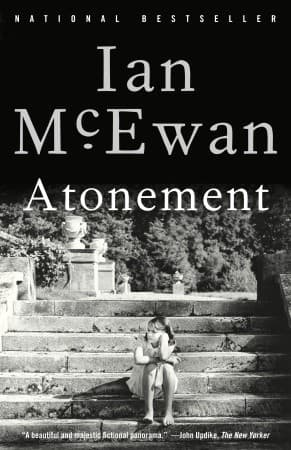
- Atonement
Ian McEwan
4.4 (70) average on GoodreadsExplores love, war, and the devastating consequences of a single event on a relationship.
- The Power and the Glory
Graham Greene
4.0 (33k) average on GoodreadsLiterary FictionAnother Greene novel deeply exploring themes of faith, sin, and redemption.
- The Lover
Marguerite Duras
3.7 (36k) average on GoodreadsHistorical FictionFeatures an intense, illicit affair and a reflective, melancholic tone.
- Brideshead Revisited
Evelyn Waugh
4.0 (93k) average on GoodreadsLiterary FictionBoth The End of the Affair and Brideshead Revisited are seminal works of 20th-century British literature that explore Catholicism and its influence on characters' lives. However, Waugh's novel focuses on the aristocratic Flyte family through the eyes of an outsider, Charles Ryder, examining themes of nostalgia, class, and the enduring pull of faith across generations. Greene's novel is far more personal and intense, centering on a destructive love affair and a direct, almost violent, encounter with God. While Waugh's faith is often depicted as an inherited tradition or a gentle return, Greene's is a disruptive, demanding force that shatters human relationships, leading to a more visceral and confrontational spiritual journey for his characters, as discussed by scholars comparing the 'Catholic novels' of the period [e.g., Martin Stannard's work on Waugh](https://www.goodreads.com/book/show/159897.Evelyn_Waugh_The_Early_Years_1903_1939).
- The Old Man and the Sea
Ernest Hemingway
3.8 (831k) average on GoodreadsLiterary FictionA Cuban fisherman's long struggle with a giant marlin becomes a story of endurance and dignity, now retold for young adults with illustrations, phonetic guides, and writing prompts in Traditional Chinese.
- One Hundred Years of Solitude
Gabriel García Márquez
4.1 (753k) average on GoodreadsLiterary FictionThrough the multi-generational story of the Buendía family, a mythical town deals with the repeating patterns of time, love, and solitude, as the extraordinary mixes with the ordinary.




Enjoyed the summary?
A summary gives you the shape of the book. The book itself has the detail, the examples and the voice.
Find The End of the Affair on AmazonAs an Amazon Associate, BookBrief earns from qualifying purchases. How we're funded