

Core Idea
- Difficulty
- Medium
- Read it if
- You are interested in historical investigative journalism, the social impact of industrial capitalism, or the origins of welfare states, and are prepared for a bleak but powerful account of human suffering.
- Skip it if
- You prefer optimistic narratives, are sensitive to descriptions of extreme poverty and squalor, or are looking for a light or purely academic historical analysis without strong political commentary.
Key Takeaways from The People of the Abyss
The Abyss Devours Humanity
Poverty in London's East End isn't just lack of money; it's a systemic destruction of human potential.
London's time in the East End shows a harsh truth: the 'Abyss' is not just poverty, but an active, consuming force. It takes away people's dignity, health, and will to live. This poverty is not a short-term problem, but a trap that wears down generations. The extent of human suffering, physical decline, and psychological damage fundamentally changes what it means to be human. It criticizes a society that allows such conditions to exist, showing that a lack of basic needs does not just inconvenience, it systematically destroys.
“That which made for less life, which hurt, and dwarfed, and distorted life, was bad.”
In the book: London's detailed descriptions of the workhouses, the casual wards, and the 'doss-houses' where people sleep standing up or in shifts, illustrating the complete lack of privacy, hygiene, and basic comfort, all designed to dehumanize.
Try this: Recognize that systemic poverty is a complex issue requiring more than individual charity; it demands policy changes that address root causes like housing, labor exploitation, and access to healthcare, rather than simply treating symptoms.
Related ideas: systemic-poverty, dehumanization, social-determinants-of-health
Workhouses: Prisons of Poverty
The 'relief' offered by workhouses was a deliberate system of degradation designed to punish poverty, not alleviate it.
London's experience in the workhouses shows them not as helpful places, but as punishment. The repetitive labor (like picking oakum), the small and unpleasant food, the forced separation of families, and the constant shame were meant to make poverty so bad that people would rather starve on the streets than seek 'aid.' This system, meant to stop people from avoiding work, crushed the spirit of those truly in need, ensuring that those who entered rarely left with their dignity or hope. It highlights a deep societal cruelty, where the poor were seen as moral failures deserving of punishment.
“The workhouse is a prison for the man who is down and out, a place where he is compelled to perform useless tasks while his spirit is broken.”
In the book: London's personal account of his stay in a workhouse, describing the 'skilly' (thin gruel) he was fed, the forced baths, the uniform, and the degrading tasks, all under the constant threat of the 'pauper's oath.'
Try this: Critically examine modern social safety nets and welfare programs to ensure they are genuinely supportive and empowering, rather than inadvertently punitive or stigmatizing. Advocate for policies that uphold human dignity.
Related ideas: social-control, welfare-reform, institutional-cruelty
The Illusion of Choice
For the denizens of the Abyss, 'choice' is a cruel joke, limited to different forms of suffering or slow death.
London argues that the concept of free will, as understood by the middle and upper classes, does not exist for the poor. Their 'choices' are limited, harsh, and often lead to the same outcome of continued suffering. Whether to beg, steal, or endure the dehumanizing workhouse, each option leads to more degradation and a shorter life. This lack of real control means that individual effort, often presented as the solution to poverty, is largely meaningless against overwhelming systemic barriers. It criticizes the idea that the poor are simply lazy or make bad decisions; their environment dictates their grim reality.
“Between the Scylla of starvation and the Charybdis of the workhouse, the London pauper is tossed.”
In the book: The constant struggle for food, shelter, and warmth, where even a penny can mean the difference between sleeping in a bed or on the street, illustrating how every decision is a matter of survival, not aspiration.
Try this: Challenge narratives that blame individuals for their poverty. Advocate for structural changes that expand genuine opportunities and choices for marginalized communities, recognizing that true agency requires basic security and resources.
Related ideas: agency-and-poverty, structural-inequality, social-mobility
The 'Beast' Within Society
London argues that a society that tolerates such widespread suffering is itself barbaric, reverting to primal cruelty.
London often uses animal comparisons for people in the Abyss, not to dehumanize them, but to show how their conditions force them into a struggle for basic survival, stripping away higher abilities. More importantly, he applies this idea to society itself, suggesting that the indifference and cruelty of the 'civilized' world toward its poor is a form of barbarism. The 'beast' is not just the individual fighting for scraps, but the societal system that creates and maintains the 'sty.' This challenges the idea of 'progress' and 'civilization' when such misery exists at its core, showing a moral failure.
“The human beast is a product of the human sty.”
In the book: The contrasting descriptions of the 'gentleman's club' and the 'doss-house,' highlighting the vast chasm and moral indifference between the two worlds, both existing within the same city.
Try this: Reflect on societal values and priorities. Advocate for policies that prioritize human well-being and social justice over unchecked economic growth or class stratification, recognizing that true civilization is measured by its treatment of its most vulnerable.
Related ideas: social-darwinism, moral-philosophy, societal-responsibility
The Invisible Army of the Unemployed
A vast, desperate reserve army of labor undercuts wages and ensures perpetual poverty for many.
London observes the economic system that traps the poor: a large, desperate reserve of labor. This excess of workers, always competing for too few jobs, pushes down wages to starvation levels and makes employment uncertain for those who find it. This is not just an unfortunate side effect; it is a structural part of the capitalist system London criticizes. It means that even those who work hard often cannot escape poverty, as their labor is devalued by the many available, cheaper alternatives. This 'army' is both a sign and a cause of the Abyss, constantly growing.
“For every man who is working, there is another man or woman who is not working, and who is ready to step into his place for less money.”
In the book: London's descriptions of crowds of men waiting for casual labor, fighting over opportunities, and the ease with which employers could replace workers, often for lower pay.
Try this: Advocate for policies that strengthen worker protections, implement living wages, and reduce precarious employment. Support labor unions and collective bargaining as crucial tools to counter the power imbalance between employers and workers.
Related ideas: reserve-army-of-labor, wage-slavery, labor-exploitation
The Indifference of the Privileged
The comfortable classes remain willfully ignorant, their 'charity' often a facade for maintaining the status quo.
One of London's strongest criticisms is aimed not just at the system, but at the comfortable classes who benefit from it and allow it to continue through their ignorance and indifference. He argues that their 'charity' often serves more to ease guilt or maintain social order than to truly help. This deliberate blindness allows them to justify the Abyss, often by blaming the poor for their situation. London suggests this detachment is not accidental but a necessary psychological barrier, protecting the privileged from the uncomfortable truth of their part in an unjust society. Their 'civilization' is built on suffering they refuse to see.
“The people of the West End do not know how the people of the East End live, nor do they care to know.”
In the book: London contrasts the lavish lifestyles and moralizing attitudes of the wealthy with the stark reality he experiences, pointing out the lack of genuine understanding or empathy from those who hold power.
Try this: Actively seek out and engage with perspectives from marginalized communities. Challenge your own biases and assumptions about poverty. Support investigative journalism and social research that exposes systemic inequalities and holds the powerful accountable.
Related ideas: class-divide, social-justice, privilege-and-ignorance
The Erosion of Identity
In the Abyss, individual identity and self-worth are systematically erased, replaced by a collective struggle for survival.
London shows how the constant pressure of poverty removes people's unique identities. Names, histories, hopes — all become secondary to the immediate need for food and shelter. People are reduced to their role in the struggle for survival, often looking the same in their worn clothes and despair. This loss of self-worth is a deep psychological harm, making it almost impossible for people to imagine a different future or to act on their own behalf. It shows the dehumanizing power of extreme need, where individuality is a luxury few can afford, replaced by a collective, desperate anonymity.
“The individual is swallowed up in the mass; he becomes a unit of the great, anonymous army of the perishing.”
In the book: London's observations of the 'casuals' in the workhouses, where men are stripped of their clothes and possessions, forced into uniforms, and referred to by numbers, symbolizing their complete loss of personal identity.
Try this: Support initiatives that empower individuals in marginalized communities to tell their own stories and reclaim their narratives. Advocate for policies that foster dignity and respect, ensuring that social services treat individuals as unique beings, not just cases.
Related ideas: identity-and-poverty, psychological-impact-of-poverty, dehumanization
The Cycle of Hereditary Poverty
Poverty in the Abyss isn't an isolated incident; it's a self-perpetuating cycle, trapping generations.
London highlights that poverty in the East End is often passed down through families. Children born into the Abyss inherit not just poverty, but also the health problems, lack of education, and psychological damage that prevent them from improving their lives. They are denied proper nutrition, healthcare, and chances from birth, ensuring the cycle continues. This systemic continuation of poverty exposes the myth of individual success, showing that the 'game' is unfair from the start for those born into the Abyss. It argues against blaming the poor for their situation, showing the intergenerational nature of their hardship.
“The children born in the Abyss are doomed to live and die in the Abyss.”
In the book: London's observations of the physical and mental stuntedness of children in the East End, often malnourished and diseased, with no access to education or a healthy environment, predetermining their future.
Try this: Advocate for early childhood development programs, universal healthcare, and equitable access to quality education, recognizing these as critical interventions to break intergenerational cycles of poverty. Support policies that invest in community upliftment.
Related ideas: intergenerational-poverty, social-reproduction, child-poverty
The Thin Veil of Civilization
London reveals how easily 'civilized' society can revert to barbarism when faced with economic collapse.
London's analysis goes beyond observation to a warning: London's 'civilization,' and any society, is fragile. He considers what would happen if the economy truly failed, suggesting that polite society in the West End would quickly become chaotic and violent, mirroring the brutal struggle for survival already endured in the East End. This implies that the 'beast' is not unique to the poor, but exists within all humanity, controlled only by stability and prosperity. It is a reminder of how unstable social order can be when basic inequalities are left unaddressed, suggesting a potential for societal breakdown.
“And the men and women of the Abyss, in their turn, would rise like a flood and overwhelm the West End.”
In the book: London's descriptions of the desperate competition for limited resources, the casual violence, and the breakdown of social norms in the East End, which he implies are merely suppressed instincts that would emerge everywhere under duress.
Try this: Support policies that build resilient communities and robust social safety nets to prevent widespread suffering and maintain social cohesion during economic downturns. Recognize the fragility of social order in the face of extreme inequality.
Related ideas: social-collapse, societal-resilience, fragile-civilization
The People of the Abyss Quotes
“I had been in the East End but a few minutes, and already I was a half-dozen years older.”
“The food eaten by these toilers is of the poorest quality, and is insufficient in quantity.”
“There are 450,000 people in London to-day looking for work, and not being able to find it.”
“The slum is an economic product, and it is a social crime.”
“They are the 'residuum,' and in the process of social selection have been left at the bottom.”
“The greatest cause of the degradation of the poor is their poverty.”
“It is not the lowest forms of life that are the most tenacious, but the highest.”
“Life, in short, is a matter of endurance, and the weak perish.”
“Man is a gregarious animal, and the desire for companionship is strong within him.”
“The children are sickly, puny, and undeveloped; the women are pale, anemic, and worn.”
“There is no more miserable human being than one who is in constant fear of hunger.”
“The whole thing is a monstrous injustice, and it is an injustice that is growing.”
“I was oppressed by the sight of so much misery, and by the thought of so much more.”
“The people of the Abyss are not brutes, but human beings, with human hearts and human aspirations.”
Quiz
10 questions on the main ideas. Each answer comes with a short explanation.
Question 1
In what year did Jack London undertake the experiences detailed in 'The People of the Abyss'?
- 1900
- 1902
- 1904
- 1906
Show answer
B. 1902 As stated in the author's preface, 'The experiences related in this volume fell to me in the summer of 1902.'
Question 2
What was London's stated attitude of mind when he went into the London underworld?
- That of a missionary, seeking to convert the poor.
- That of an explorer, open to evidence rather than preconceived notions.
- That of a social reformer, determined to implement specific policies.
- That of a journalist, seeking sensational stories for publication.
Show answer
B. That of an explorer, open to evidence rather than preconceived notions. London explicitly states in the preface: 'I went down into the underworld of London with an attitude of mind which I may best liken to that of the explorer.'
Question 3
What primary criteria did London use to measure life in the underworld?
- Wealth accumulation and social status.
- Adherence to religious doctrine and moral purity.
- That which made for more life, physical and spiritual health, versus that which diminished it.
- The level of education and intellectual engagement.
Show answer
C. That which made for more life, physical and spiritual health, versus that which diminished it. The preface outlines his criteria: 'That which made for more life, for physical and spiritual health, was good; that which made for less life, which hurt, and dwarfed, and distorted life, was bad.'
Question 4
London's approach emphasized being convinced by 'the evidence of my eyes.' What does this suggest about his methodology compared to other social commentators of the time?
- He relied heavily on statistical data and official reports.
- He prioritized direct observation and personal experience over secondary accounts.
- He sought to confirm existing theories rather than challenge them.
- He focused primarily on historical records to understand the past.
Show answer
B. He prioritized direct observation and personal experience over secondary accounts. His statement 'I was open to be convinced by the evidence of my eyes, rather than by the teachings of those who had not seen, or by the words of those who had seen and gone before' highlights his empirical, experiential approach.
Question 5
What is the significance of London referring to his journey as going 'down into the underworld of London'?
- It implies a literal descent into underground tunnels and sewers.
- It metaphorically represents entering a hidden, suffering, and socially marginalized segment of society.
- It suggests he was investigating criminal organizations exclusively.
- It indicates a spiritual quest for enlightenment among the poor.
Show answer
B. It metaphorically represents entering a hidden, suffering, and socially marginalized segment of society. The term 'underworld' is a common metaphor for the lowest, most deprived, and often hidden strata of society, which aligns with London's intent to explore the lives of the destitute.
Question 6
London's preface suggests a critical stance towards 'the teachings of those who had not seen.' What kind of 'teachings' is he likely referring to?
- Academic theories based on extensive field research.
- Religious sermons advocating charity for the poor.
- Comfortable middle-class or elite perspectives on poverty lacking direct experience.
- Historical accounts written by previous generations.
Show answer
C. Comfortable middle-class or elite perspectives on poverty lacking direct experience. By contrasting his 'evidence of my eyes' with 'the teachings of those who had not seen,' London implies a skepticism towards theoretical or detached understandings of poverty, likely from those in privileged positions.
Question 7
How does London's self-description as an 'explorer' influence the reader's expectation of the book's content?
- It signals a focus on economic data and statistical analysis.
- It suggests a narrative of discovery, potentially challenging preconceived notions, and rich in descriptive detail.
- It implies a detached, purely academic study of social conditions.
- It prepares the reader for a fictional adventure story.
Show answer
B. It suggests a narrative of discovery, potentially challenging preconceived notions, and rich in descriptive detail. An explorer ventures into unknown territory, observing and documenting what they find. This implies a firsthand, descriptive account intended to reveal previously unseen realities, aligning with the book's purpose.
Question 8
Considering London's criteria of 'more life' vs. 'less life,' what kind of social reforms or changes would he implicitly advocate for?
- Increased policing and stricter laws to control the poor.
- Policies that improve living conditions, health, and opportunities, fostering human dignity.
- Emphasis on individual charity rather than systemic change.
- Promoting emigration as the primary solution for poverty.
Show answer
B. Policies that improve living conditions, health, and opportunities, fostering human dignity. His criteria directly link 'good' to 'physical and spiritual health' and 'more life,' and 'bad' to that which 'hurt, and dwarfed, and distorted life.' This strongly implies a need for systemic changes that enhance human well-being and dignity, rather than punitive or superficial measures.
Question 9
The phrase 'dwarfed, and distorted life' suggests London's concern about the impact of poverty beyond mere physical deprivation. What deeper effect is he likely highlighting?
- The loss of physical stature and genetic abnormalities.
- The suppression of human potential, spirit, and moral development.
- The physical deformities caused by poor nutrition alone.
- The reduction in average lifespan due to disease.
Show answer
B. The suppression of human potential, spirit, and moral development. While physical deprivation is certainly part of it, 'dwarfed, and distorted life' goes further, implying a stunting of intellectual, emotional, and spiritual growth—a comprehensive assault on human potential and dignity.
Question 10
How does London's stated intention to be 'convinced by the evidence of my eyes' challenge the typical Victorian perception of poverty and the poor?
- It reinforces the idea that poverty was a moral failing rather than a societal problem.
- It suggests a move away from moralistic judgments and towards an empirical, potentially more empathetic understanding of the poor's circumstances.
- It confirms the prevailing belief that the poor were inherently lazy and undeserving.
- It promotes the idea of charity as the sole solution, without examining root causes.
Show answer
B. It suggests a move away from moralistic judgments and towards an empirical, potentially more empathetic understanding of the poor's circumstances. Victorian society often viewed poverty through a moral lens, blaming individuals for their plight. London's emphasis on direct, unbiased observation ('evidence of my eyes') suggests a rejection of these preconceived moral judgments in favor of understanding the reality of their lives, which can lead to a more systemic and empathetic view.
The People of the Abyss FAQ
What is 'The People of the Abyss' about?
'The People of the Abyss' is Jack London's first-hand account of living among the destitute in the East End of London in the summer of 1902. He immersed himself in their daily struggles to document the harsh realities of poverty, squalor, and social injustice.
Does Jack London offer solutions to poverty in the book?
While London vividly portrays the problems and critiques the societal structures that perpetuate poverty, the book primarily serves as an exposé rather than a prescriptive text. He aims to raise awareness and provoke thought about the conditions rather than offering explicit policy solutions.
What is the 'Abyss' that London refers to?
The 'Abyss' is London's metaphorical term for the extreme depths of poverty and social degradation experienced by the working poor and unemployed in London's East End. It represents a life devoid of dignity, health, and hope, often hidden from the eyes of the more affluent society.
How did Jack London conduct his research for the book?
London adopted the persona of an American sailor down on his luck, living undercover among the poor. He slept in workhouses, ate in soup kitchens, and experienced the daily indignities and struggles of the working class and homeless, documenting his observations firsthand.
How does 'The People of the Abyss' differ from other social reform literature of the era?
Unlike some contemporaneous reformist works that might have relied on statistics or second-hand accounts, London's book stands out for its immersive, experiential journalism. He doesn't just describe poverty; he lives it, offering a raw and often emotional perspective from within the 'Abyss' itself.
What was the immediate impact of 'The People of the Abyss'?
The book garnered significant attention upon its publication, shocking many readers with its stark and unflinching portrayal of poverty in one of the world's wealthiest cities. It contributed to growing public awareness and debate about social welfare and urban conditions in early 20th-century Britain.
What political perspectives does Jack London express in the book?
London, a self-proclaimed socialist, uses the book to implicitly and explicitly critique capitalism and the class system. He argues that the extreme poverty he witnesses is a direct consequence of systemic failures and economic inequality, rather than individual moral failings.
Is 'The People of the Abyss' still relevant today?
Yes, the book remains relevant as a powerful historical document of urban poverty and a timeless commentary on social inequality. Its themes of human dignity, systemic injustice, and the impact of economic hardship continue to resonate in contemporary discussions about poverty and social welfare.
About the author

John Griffith Chaney, better known as Jack London, was an American novelist, journalist and activist. A pioneer of commercial fiction and American magazines, he was one of the first American authors to become an international celebrity and earn a large fortune from writing. He was also an innovator in the genre that would later become known as science fiction.
Similar books
- Down and Out in Paris and London
George Orwell
4.1 (62k) average on GoodreadsLifestyleBoth are first-hand accounts of poverty and destitution in major European cities, exploring similar themes of social exclusion and economic hardship.
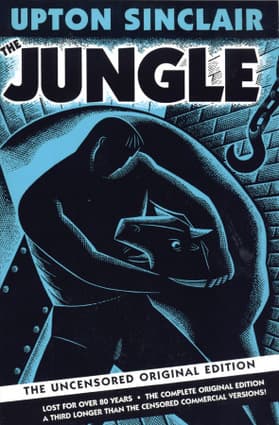
- The Jungle
Upton Sinclair
3.8 (129k) average on GoodreadsPoliticsBoth use immersive, often shocking, journalistic styles to expose the brutal realities faced by the working poor under industrial capitalism, advocating for social reform.
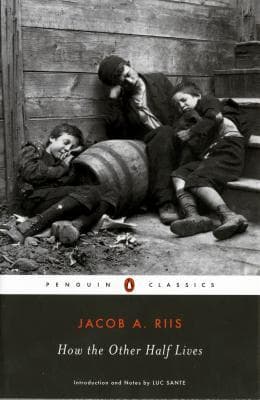
- How the Other Half Lives
Jacob A. Riis
3.8 (2k) average on GoodreadsHistoryA pioneering work of photojournalism exposing poverty in New York City, sharing a similar investigative spirit and goal of revealing hidden urban destitution to a wider audience.
- 1984
George Orwell
4.2 (3.1M) average on GoodreadsPoliticsIn a future where surveillance and thought control are absolute, a man's search for truth clashes with the Party, showing that hope can be a form of rebellion.
- Animal Farm
George Orwell
4.0 (2.7M) average on GoodreadsPoliticsA farm animals' rebellion against humans turns into a pig-led dictatorship, showing how power corrupts and revolutionary ideals are betrayed.
- Freakonomics: A Rogue Economist Explores the Hidden Side of Everything
Steven D. Levitt
4.0 (709k) average on GoodreadsBusinessThis book uses economic principles to reveal the surprising incentives behind everything from drug dealing and real estate to cheating teachers and the decline of crime.




Enjoyed the summary?
A summary gives you the shape of the book. The book itself has the detail, the examples and the voice.
Find The People of the Abyss on AmazonAs an Amazon Associate, BookBrief earns from qualifying purchases. How we're funded