

Synopsis
Covers the whole plot, including the ending.
- Difficulty
- Medium
- Pacing
- Fast
- Mood
- Terrifying, Suspenseful, Claustrophobic, Desperate
- Read it if
- You enjoy intense psychological horror, detailed descriptions of sensory deprivation and claustrophobia, and a thrilling escape narrative.
- Skip it if
- You prefer supernatural horror, dislike extreme tension, or are sensitive to themes of torture and imprisonment.
The Pit and the Pendulum Plot Summary
Covers the whole plot, including the ending.
Condemnation and Descent into Darkness
The story begins with the narrator describing his trial and condemnation by the Spanish Inquisition in Toledo. He recounts the terrifying scene of his judges, their lips white, and the seven tall candles on the table looking like 'seven slender angels.' Overwhelmed by fear and his death sentence, he faints. He briefly wakes to hear the judges' voices and feels himself carried down into what he thinks is a tomb. He then faints again, waking to complete darkness and a deep sense of dread, unsure if he is dead or alive.
Exploring the Dark Chamber
Upon fully waking, the narrator is in complete darkness, lying on a damp stone floor. He stretches out his arms, feeling masonry walls, and begins to explore his cell by shuffling along the perimeter. His first fear is that he might be buried alive, but he soon realizes the space is larger than a coffin. He tries to measure the circumference by walking, but becomes disoriented and trips, falling face-first. His chin lands on a damp, slimy edge, and he realizes he is at the edge of a deep, circular pit in the center of the dungeon, barely avoiding a fatal fall. The horror of the pit makes him faint again.
The Pendulum's Threat
The narrator wakes from his second faint, now lying on a wooden framework, strapped down by long bandages that bind his limbs and body, leaving only his head free. He has an intense thirst and finds a pitcher of water and some spiced meat nearby, which he consumes before falling into a troubled sleep. Upon waking, he notices a faint light from a high crevice in the ceiling. Looking up, he sees a painted figure of Father Time holding a large, razor-sharp pendulum, which is slowly swinging and descending directly toward his chest. This deliberate torture fills him with a new, agonizing terror.
Desperate Measures and Escape
For days, the pendulum continues its slow descent, its sharp edge glinting and its hiss echoing in the chamber. The narrator measures its decreasing distance, knowing it will soon cut through his heart. He realizes the spiced meat he was given earlier has attracted many large, hungry rats from the pit. A desperate idea comes to him. He smears the remaining meat over the bandages that bind him, waiting patiently. As the pendulum's edge begins to graze his robe, the rats, drawn by the scent, swarm over him, gnawing at the greasy straps. They eventually cut them, allowing him to roll free just as the pendulum slices through the empty space where his chest had been.
The Walls Close In
Having barely escaped the pendulum, the narrator rises, bruised but alive. However, his relief is short-lived. He notices a strange, metallic glow from the walls, which begin to heat up and slowly, imperceptibly, move inward. The chamber, which he had first measured to be about fifty yards around, is now visibly shrinking, forcing him closer and closer to the central pit. The walls are covered with grotesque, fiery images of demons and skeletons, adding to the psychological torment. The air becomes stiflingly hot and metallic, and the walls' relentless movement speeds up, leaving him with less and less space.
Facing the Pit
The contracting walls continue their movement, pushing the narrator toward the fiery, glowing pit in the center of the cell. The intense heat from the metal walls becomes unbearable, making the air thick and suffocating. The horrific images painted on the walls seem to mock his coming death. With every inch the walls close, the pit's opening appears wider and more inviting, a terrifying choice to being crushed or burned alive. He is forced to the very edge of the abyss, looking into its depths, where he can see water gleaming and the rats he had used to escape the pendulum, now seemingly waiting for him.
Last-Minute Deliverance
With the walls pressing him toward the pit's edge, the narrator has no escape. He feels himself teetering, about to be forced into the fiery chasm. He lets out a final, desperate shriek. At that moment, he hears a loud blast of trumpets and human voices. The walls suddenly stop moving and then rapidly move back. A strong hand grabs his arm, pulling him back from the edge. General Lasalle, leading the French army, has captured Toledo, and the Inquisition's torture chambers are being freed. The narrator is saved from certain death at the last second.
The Pit and the Pendulum Characters
The Narrator
Protagonist
An unnamed prisoner of the Spanish Inquisition, enduring unimaginable torments.
The narrator is a condemned prisoner whose crime is never revealed, making his suffering universal. He is highly sensitive, prone to fainting under extreme stress, but also possesses a remarkable capacity for observation, analysis, and cunning. His internal monologue reveals a keen intellect constantly trying to understand and escape his terrifying circumstances. He experiences profound psychological and physical torture, moving from the fear of entombment to the dread of the pendulum and finally the terror of the contracting walls and the pit. His will to survive is strong, even in the face of certain death.
The Judges of the Inquisition
Antagonists
The silent, ominous figures who condemn the narrator to his fate.
These figures are presented as cold, implacable, and terrifying. Their faces are described with 'white lips' and their presence evokes a sense of overwhelming, malevolent power. They represent the oppressive and cruel authority of the Spanish Inquisition, acting as the unseen orchestrators of the narrator's torments. They do not speak directly to the narrator after his condemnation, but their judgment sets the entire horrific sequence of events in motion. They embody a detached, institutional evil that designs elaborate psychological and physical torture.
Father Time (Figure)
Mentioned
A painted figure on the dungeon ceiling, holding the deadly pendulum.
Father Time is not a character but a symbolic figure painted on the ceiling of the narrator's cell. He is depicted holding a scythe, which forms the blade of the pendulum. This image serves as a constant, mocking reminder of the narrator's impending death and the relentless march of time towards his doom. The figure's presence emphasizes the deliberate, almost theatrical, nature of the torture, turning a traditional symbol of mortality into an active instrument of death.
The Rats
Supporting
Creatures from the pit, used by the narrator in his desperate escape.
The rats are initially a source of disgust and fear for the narrator, emerging from the foul pit. However, in a moment of brilliant desperation, he transforms them into an unwitting tool for his survival. By smearing the spiced meat on his bonds, he exploits their hunger, turning them into agents of his liberation from the pendulum. They represent the primal, desperate struggle for existence and the unexpected ways in which even the most loathsome creatures can play a role in one's fate. They are a vivid, sensory detail that grounds the horror in a visceral reality.
General Lasalle
Supporting
The French general who leads the rescue of the prisoners.
General Lasalle appears only in the final moments of the story, acting as the deus ex machina who saves the narrator from certain death. As the leader of the French army, his presence signifies the historical invasion of Toledo and the overthrow of the Spanish Inquisition's power. He represents external intervention and the sudden, unexpected cessation of torment. His hand pulling the narrator from the pit's edge is the ultimate symbol of salvation, abruptly ending the claustrophobic nightmare and restoring hope.
The Pit and the Pendulum Themes
Psychological Torture and Fear
The story is a study in psychological horror, focusing on the narrator's internal experience of terror. Poe details the narrator's changing fears: the dread of being buried alive, the claustrophobia of the dark cell, the slow agony of the approaching pendulum, and the terror of the contracting walls and the fiery pit. The uncertainty and gradual discovery of each new torment increase the psychological impact, making the reader feel the narrator's growing despair and mental anguish. The story has no supernatural elements, which makes the fear feel real.
“I was sick—sick unto death with that long agony; and when they at length unbarred the doors, and I became aware of a commotion without, I struggled to force myself up, but could not. My senses were leaving me. The sentence—the dread sentence of death—was the last of distinct accentuation which reached my ears.”
The Indomitable Will to Survive
Despite facing torments that seem impossible to escape, the narrator consistently shows a strong will to survive. From his careful exploration of the dark cell to his clever use of the rats to escape the pendulum, he shows remarkable resourcefulness and determination. Even when pushed to despair and forced toward the pit, his final shriek is an act of defiance, a cry for life. This theme shows the resilience of the human spirit even when facing overwhelming odds and planned cruelty.
“My eye, however, had caught the faint glimmer of a far distant hope. I had been upborne by the thought of ultimately escaping by means of the pit itself.”
Time and Its Cruelty
Time is not just a neutral passage, but an active instrument of torture. The slow, relentless descent of the pendulum shows this, extending the agony and allowing the narrator to carefully calculate his coming death. The painted figure of Father Time holding the scythe further shows this symbolic connection. The gradual nature of the torments—the slow discovery of the pit, the barely noticeable shortening of the pendulum's arc, the creeping movement of the walls—all use time to maximize psychological suffering, making waiting itself a form of pain.
“I saw that the pendulum was a gigantic scythe of steel, and that it was suspended from a beam of the ceiling by a single cord. It was already in motion, and it was descending!”
Sensory Deprivation and Overload
Poe uses sensory details to immerse the reader in the narrator's experience. The initial absolute darkness and silence give way to the dampness of the stone, the slimy edge of the pit, the metallic glint and hiss of the pendulum, the smell of the rats, and the suffocating heat of the contracting walls. The story moves between sensory deprivation (the initial darkness) and sensory overload (the heat, the glowing walls, the rats), each serving to increase the terror and disorientation. This focus on physical sensations makes the abstract horror of the Inquisition feel real.
“The blackness of eternal night encompassed me, and I felt around me for some clue to my fate.”
Justice and Injustice
The story begins with the narrator's condemnation by the Spanish Inquisition for an unnamed crime. This lack of clarity shows injustice and arbitrary power. The Inquisition is a system that gives cruel punishment without clear cause, turning 'justice' into a terrifying, elaborate game of torture. The narrator's suffering is a result of institutionalized tyranny, where the victim is treated as less than human and subjected to calculated brutality. The rescue by the French army is a symbolic victory of external, more humane forces over such a system.
“I was sick—sick unto death with that long agony; and when they at length unbarred the doors, and I became aware of a commotion without, I struggled to force myself up, but could not. My senses were leaving me. The sentence—the dread sentence of death—was the last of distinct accentuation which reached my ears.”
Plot Devices & Literary Techniques
First-Person Narration
Directly immerses the reader in the narrator's subjective experience of terror.
The entire story is told from the perspective of the unnamed narrator. This technique is crucial for building suspense and psychological horror, as it allows the reader to experience every fear, every thought, and every agonizing moment directly through his eyes and mind. We are privy to his disorientation, his calculations, his despair, and his surges of hope, making the terror deeply personal and immediate. The lack of an objective viewpoint intensifies the claustrophobic and subjective nature of his ordeal.
Symbolism of the Pit, the Pendulum, and the Walls
Each element represents a distinct form of existential dread and methodical torture.
The pit symbolizes the abyss of hell, eternal damnation, and the ultimate fall into nothingness. The pendulum represents the relentless, agonizing march of time towards an inevitable, gruesome death, a slow, mechanized fate. The contracting, heated walls symbolize claustrophobia, the crushing weight of oppression, and the inescapable closure of one's world. Together, these elements represent a progression of increasingly sophisticated and torturous methods designed to break the human spirit and ensure a horrific end, each targeting a different primal fear.
Deus Ex Machina
A sudden, unexpected intervention that resolves the seemingly inescapable conflict.
The sudden arrival of General Lasalle and the French army at the very last moment, just as the narrator is about to be forced into the pit, is a classic example of a deus ex machina. This plot device provides an abrupt and external resolution to a situation that the protagonist had no logical way of escaping on his own. While some critics view it as an artificial ending, it effectively highlights the absolute powerlessness of the individual against institutional cruelty and makes the relief of salvation all the more dramatic and unexpected.
Sensory Details and Imagery
Vivid descriptions of sights, sounds, and feelings to create an immersive, terrifying atmosphere.
Poe relies heavily on detailed sensory descriptions to make the narrator's ordeal palpable. The 'blackness of eternal night,' the 'damp, slimy stone,' the 'hiss' of the pendulum, the 'fiery eyes' of the painted demons, and the 'suffocating heat' of the walls all contribute to a vivid and horrifying mental image. This focus on sensory input, rather than supernatural elements, grounds the terror in a visceral reality, making the reader feel as though they are experiencing the dungeon's horrors alongside the narrator, amplifying the story's impact.
The Pit and the Pendulum Quotes
“I was sick—sick unto death with that long agony; and when they at length unbound me, and I was permitted to sit, I felt that my senses were leaving me.”
“The blackness of eternal night encompassed me.”
“I had swooned; but still will not say that all of consciousness was lost.”
“The sentence—the dread sentence of death—was the last of distinct accentuation which reached my ears.”
“I shrank from the glowing metal to the centre of the cell.”
“Down—steadily down it crept.”
“For the moment, at least, I was free.”
“The agony of suspense grew at length intolerable, and I cautiously moved forward, with my arms extended, and my eyes straining from their sockets, in the hope of catching some faint ray of light.”
“I saw that the lips of the judges were white—whiter than the sheet upon which I trace these words—and thin even to grotesqueness; thin with the intensity of their expression of firmness—of immovable resolution—of stern contempt of human torture.”
“The vibration of the pendulum was at right angles to my length.”
“I struggled no more, but the agony of my soul found vent in one loud, long, and final scream of despair.”
“The fiery walls rushed back! An outstretched arm caught my own as I fell, fainting, into the abyss.”
“I felt that I tottered upon the brink—I averted my eyes—”
“The thought came gently and stealthily, and it seemed long before it attained full appreciation; but just as my spirit came at length properly to feel and entertain it, the figures of the judges vanished, as if magically, from before me.”
Quiz
10 questions on the plot and the characters. Each answer comes with a short explanation.
Question 1
What historical event serves as the backdrop for the narrator's imprisonment in 'The Pit and the Pendulum'?
- The French Revolution
- The Salem Witch Trials
- The Spanish Inquisition
- The American Civil War
Show answer
C. The Spanish Inquisition The story is set during the Spanish Inquisition, a period of religious persecution in Spain, though Poe takes creative liberties with historical accuracy to enhance the horror.
Question 2
What is the first method of torture the narrator encounters after waking up in the dark room?
- A swinging pendulum with a blade
- A deep pit in the center of the room
- Moving walls that close in on him
- Rats gnawing at his restraints
Show answer
B. A deep pit in the center of the room Upon regaining consciousness, the narrator discovers a large, deep pit in the middle of the room, which poses an immediate threat of falling into it in the darkness.
Question 3
How does the narrator initially try to determine the size of his prison cell?
- By counting his steps as he walks around
- By throwing a piece of his clothing and listening for echoes
- By tearing a strip from his robe and using it as a measuring tool
- By shouting and timing the return of his voice
Show answer
C. By tearing a strip from his robe and using it as a measuring tool The narrator tears a strip from the hem of his robe, places it against the wall, and walks around to estimate the perimeter, but this effort causes him to faint from exhaustion.
Question 4
What does the narrator use to escape from the pendulum's blade?
- A hidden key he finds in the wall
- Rats that chew through his bonds after he smears meat on them
- A loose stone he pulls from the floor
- A sudden collapse of the ceiling
Show answer
B. Rats that chew through his bonds after he smears meat on them The narrator smears meat from his food onto the straps binding him, attracting rats that gnaw through the restraints just in time to free him before the pendulum strikes.
Question 5
After escaping the pendulum, what new threat does the narrator face?
- The room fills with water
- The walls become electrified
- The walls start to move and close in, pushing him toward the pit
- A fire breaks out in the chamber
Show answer
C. The walls start to move and close in, pushing him toward the pit Once free from the pendulum, the narrator finds that the walls of his prison begin to move inward, heating up and forcing him closer to the pit in the center.
Question 6
How does Poe primarily create a sense of horror in 'The Pit and the Pendulum', according to the book description?
- Through supernatural elements like ghosts and curses
- By focusing on the senses, such as sound, to emphasize reality
- With graphic descriptions of violence and gore
- Through complex political allegories
Show answer
B. By focusing on the senses, such as sound, to emphasize reality Unlike many of Poe's stories that rely on the supernatural, this tale inspires fear by vividly describing sensory experiences—like the sound of the pendulum or the feel of the walls—making the torment feel real and immediate.
Question 7
What is the narrator's crime that leads to his imprisonment?
- Heresy against the Church
- Treason against the Spanish crown
- It is never specified in the story
- Murder of a high-ranking official
Show answer
C. It is never specified in the story Poe leaves the narrator's crime unnamed, adding to the story's atmosphere of arbitrary persecution and focusing the reader on the psychological and physical torment rather than the reason for it.
Question 8
What happens to the narrator at the very end of the story?
- He falls into the pit and dies
- He is rescued by French forces as the walls close in
- He escapes on his own by finding a secret passage
- He is pardoned and released by the Inquisition
Show answer
B. He is rescued by French forces as the walls close in As the walls are about to push him into the pit, General Lasalle and the French army storm the prison, rescuing the narrator at the last moment, providing a sudden deus ex machina ending.
Question 9
Which of the following best describes a key theme in 'The Pit and the Pendulum'?
- The triumph of love over adversity
- The power of human resilience in the face of psychological and physical torture
- The importance of historical accuracy in storytelling
- The supernatural origins of fear
Show answer
B. The power of human resilience in the face of psychological and physical torture The story explores how the narrator endures extreme torment—from the pit and pendulum to the moving walls—showcasing his will to survive despite overwhelming odds, a central theme of human resilience.
Question 10
What detail does the narrator notice about the pendulum's motion that increases his terror?
- It swings faster each time
- It emits a loud screeching sound
- It gradually descends closer to his chest with each swing
- It changes direction unpredictably
Show answer
C. It gradually descends closer to his chest with each swing The pendulum's blade slowly lowers with each swing, bringing it incrementally closer to cutting through the narrator's chest, creating a prolonged and agonizing sense of impending doom.
The Pit and the Pendulum FAQ
What is 'The Pit and the Pendulum' about?
The story follows an unnamed narrator who is imprisoned and tortured by the Spanish Inquisition. He endures psychological and physical torment in a dark cell, first discovering a deep pit in the center, then facing a descending pendulum blade aimed at his chest, and finally confronting walls that close in to push him toward the pit.
Why should I read 'The Pit and the Pendulum'?
It's a masterclass in psychological horror that focuses on sensory deprivation and imminent physical danger rather than supernatural elements. Poe's intense first-person narration immerses readers in the prisoner's fear and desperation, making it a gripping exploration of human endurance under extreme duress.
What is the background/setting of 'The Pit and the Pendulum'?
The story is set during the Spanish Inquisition in Toledo, Spain, though Poe takes creative liberties with historical accuracy. The primary setting is a dark, dungeon-like prison cell where the narrator is subjected to elaborate tortures designed to break him psychologically and physically.
What are the most memorable quotes from 'The Pit and the Pendulum'?
Key quotes include: 'I was sick—sick unto death with that long agony' (opening line emphasizing psychological torment), 'The blackness of eternal night encompassed me' (describing sensory deprivation), and descriptions of the pendulum's 'scythe-like' descent that create visceral horror.
What writing style does Edgar Allan Poe use in this story?
Poe employs intense first-person narration with detailed sensory descriptions, particularly focusing on sound, darkness, and physical sensations. The prose is Gothic and atmospheric, building tension through the narrator's escalating panic and the methodical description of each torture device.
What minor details add significant meaning to the story?
The narrator's careful measurement of the cell using fragments of his robe establishes his rational mind fighting against terror. The painted figures on the ceiling that he initially mistakes for real judges symbolize how the Inquisition's authority haunts him even in isolation.
What are some subtle foreshadowing moments in the story?
Early references to 'the pit' as something the narrator instinctively avoids foreshadow its central role in the final torture. His initial dizziness and disorientation when trying to measure the room hint at the later moving walls that will disorient him completely.
What unexpected character connections exist in the narrative?
While there are no other characters physically present, the narrator's relationship with his unseen captors evolves from faceless tormentors to almost-personified forces through the mechanical precision of the pendulum and moving walls, creating a psychological connection between prisoner and persecutor.
What are the unspoken character motivations in the story?
The Inquisition's unstated motivation appears to be breaking the narrator's spirit through calculated psychological torture rather than simply executing him. The narrator's own motivation shifts from desperate survival to near-resignation before his final escape attempt.
What psychological complexities does the narrator exhibit?
The narrator demonstrates remarkable analytical thinking under extreme stress (measuring the cell, devising the pendulum escape), yet also experiences hallucinations and despair. This duality shows how human cognition both fights and succumbs to terror in cycles.
What are the major emotional turning points in the story?
Key emotional shifts occur when the narrator discovers the pit (initial horror), when he's strapped beneath the pendulum (resigned despair), when he escapes the pendulum through cleverness (brief hope), and when the walls begin moving (ultimate terror leading to surrender).
How does the narrator's relationship with his environment evolve?
Initially, he tries to understand and control his environment through measurement. As tortures escalate, the cell becomes an active antagonist—first with the pit as passive danger, then the pendulum as mechanical threat, finally the walls as aggressive force pushing him toward death.
Which parts of the story remain ambiguous or open-ended?
The narrator's crime is never specified, leaving readers to wonder what provoked such extreme punishment. The exact mechanism of his rescue (French army's arrival) happens off-page, creating ambiguity about whether it represents divine intervention, historical irony, or narrative convenience.
What are controversial aspects of Poe's historical portrayal?
Poe's depiction of the Spanish Inquisition has been criticized for historical inaccuracy, particularly the elaborate torture devices which don't align with actual Inquisition methods. Some readers debate whether this creative liberty enhances the horror or undermines the story's credibility.
How does 'The Pit and the Pendulum' ending work and what does it mean?
The narrator is saved at the last moment by General Lasalle's French army, which has taken Toledo. This sudden rescue has been interpreted variously: as a deus ex machina, as historical commentary on the Inquisition's fall, or as psychological metaphor for the thin line between death and deliverance.
What makes the horror in this story different from Poe's other works?
Unlike supernatural tales like 'The Fall of the House of Usher,' the horror here stems from realistic psychological torture and physical danger. The absence of ghosts or monsters makes the terror more immediate and plausible, focusing on human cruelty and vulnerability.
How does sensory deprivation contribute to the story's effectiveness?
The initial complete darkness amplifies the narrator's (and reader's) imagination, making every discovered detail—the pit's depth, the pendulum's sound—more terrifying. This deprivation makes the later sensory experiences (the pendulum's swishing, the walls' heat) overwhelmingly intense.
What symbolic meaning might the pit and pendulum represent?
The pit often symbolizes the unknown or psychological abyss, while the pendulum represents inescapable, measured time leading to death. Together, they create dual threats of sudden fall versus slow, inevitable cutting—mirroring different aspects of mortal fear.
About the author
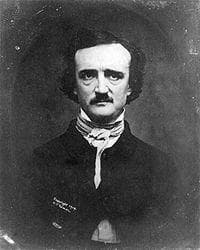
Edgar Allan Poe was an American writer, poet, editor, and literary critic who is best known for his poetry and short stories, particularly his tales of mystery and the macabre. He is widely regarded as a central figure of Romanticism in the United States, and of American literature. He was one of the country's earliest practitioners of the short story, and is considered the inventor of the detective fiction genre, as well as a significant contributor to the emerging genre of science fiction. He is the first well-known American writer to earn a living through writing alone, resulting in a financially difficult life and career.
Similar books
- 1984
George Orwell
4.2 (3.1M) average on GoodreadsPoliticsExplores themes of oppressive regimes, psychological manipulation, and the fear of an all-powerful authority.
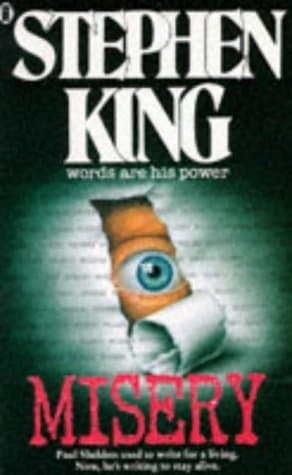
- Misery
Stephen King
4.2 (499k) average on GoodreadsThrillerInvolves a protagonist trapped and tormented by a captor, facing extreme physical and psychological duress.
- Frankenstein: The 1818 Text
Mary Shelley
3.8 (1.2M) average on GoodreadsFantasyWhile both explore terror, Shelley's Frankenstein employs a more Gothic approach with external monsters and broader philosophical questions about creation. Poe's "The Pit and the Pendulum" focuses on internal psychological torment and human-made cruelty, making the horror more personal and immediate.
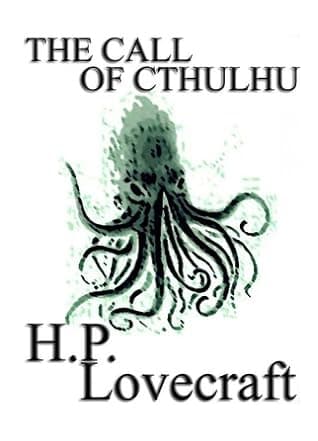
- The Call of Cthulhu
H.P. Lovecraft
4.0 (39k) average on GoodreadsFantasyLovecraft's work often delves into cosmic horror and existential dread stemming from forces beyond human comprehension. Poe's story, however, grounds its terror in the immediate, visceral threat to an individual's life and sanity through human-orchestrated torture, making the horror more intensely psychological and less cosmic.
- Angels & Demons
Dan Brown
3.9 (2.7M) average on GoodreadsThrillerA Harvard symbologist races through Rome's ancient sites, deciphering cryptic clues to unmask the Illuminati and stop a vengeful plot to destroy the Vatican with a stolen antimatter weapon.
- Gone Girl
Gillian Flynn
4.1 (2.3M) average on GoodreadsThrillerA wife's sudden disappearance on her fifth anniversary reveals a web of lies and psychological warfare, exposing the secrets within a seemingly perfect marriage.




Enjoyed the summary?
A summary gives you the shape of the book. The book itself has the detail, the examples and the voice.
Find The Pit and the Pendulum on AmazonAs an Amazon Associate, BookBrief earns from qualifying purchases. How we're funded