
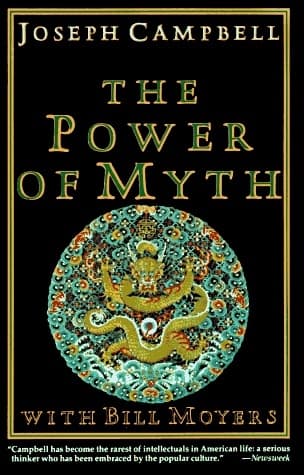
Core Idea
- Difficulty
- Medium
- Read it if
- You are fascinated by the universal patterns in human storytelling, seeking deeper meaning in life through ancient wisdom, or curious about the psychological and spiritual significance of myths across cultures.
- Skip it if
- You prefer practical, prescriptive self-help, are uninterested in abstract philosophical or mythological concepts, or are looking for a purely historical account of specific mythologies without broader interpretation.
Key Takeaways from The Power of Myth
The Monomyth: A Universal Journey
All heroic narratives share a fundamental, cyclical structure.
Campbell says that despite many cultural differences, myths worldwide follow a single, main story pattern he called the 'monomyth' or 'Hero's Journey.' This structure includes a call to adventure, refusing the call, meeting a mentor, entering an unknown world, facing challenges, receiving a reward, and finally, returning with new wisdom or power to help society. Understanding this pattern reveals deep psychological truths about human growth, the search for meaning, and the common challenges we all face. It is not just a story device but a guide for life's changes, showing how personal growth often mirrors these old heroic tales.
“A hero ventures forth from the world of common day into a region of supernatural wonder: fabulous forces are there encountered and a decisive victory is won: the hero comes back from this mysterious adventure with the power to bestow boons on his fellow man.”
In the book: Campbell extensively analyzes myths from diverse cultures—such as the story of Osiris, Buddha's enlightenment, the quest for the Holy Grail, and Luke Skywalker's journey in Star Wars—to demonstrate the consistent application of the monomyth structure.
Try this: Recognize the stages of the Hero's Journey in your own life's challenges and transitions. When faced with a 'call to adventure' (a new opportunity, a crisis), understand that fear and resistance are natural, but crossing the 'threshold' into the unknown is where true growth lies. Seek mentors, embrace trials as opportunities for transformation, and aim to return with insights that can enrich your community.
Related ideas: hero's-journey, archetype, collective-unconscious
Myths as Life's Guiding Metaphors
Myths are not literal truths but profound psychological and spiritual maps.
Campbell strongly argues that myths should not be seen as historical facts or simple science, but as symbolic stories that carry deep, timeless truths about the human condition, the universe, and our place in it. They work as important metaphors, giving a way to understand the unexplainable, handle life's problems, and find meaning. By focusing on a literal reading, we miss the deep psychological, social, cosmic, and spiritual roles myths play. They are active stories that offer guidance, inspire awe, and help people fit into society and the universe, providing a sense of purpose beyond everyday life.
“Myth is not a lie; it is a metaphor for a mystery that we cannot grasp directly.”
In the book: Campbell discusses how the virgin birth narrative, for instance, in various traditions (Jesus, Buddha, Zoroaster) is not a biological claim but a symbolic representation of a divine spark or spiritual purity inherent in the hero's origin, signifying their extraordinary nature and destiny.
Try this: Approach stories, religious texts, and even personal narratives (like family legends) not for their factual accuracy but for their underlying symbolic meaning. Ask: 'What psychological truth does this convey?' or 'What does this story teach me about living?' This shift in perspective unlocks deeper insights and personal relevance.
Related ideas: symbolism, metaphor, meaning-making
Follow Your Bliss: The Inner Call
Authentic living means aligning with your deepest passions and inner calling.
Campbell's most famous advice, 'Follow your bliss,' is not about seeking pleasure but a deep spiritual and psychological instruction. It means finding and pursuing what truly excites your passion and sense of purpose, even if it goes against common expectations. This 'bliss' is not just pleasure, but a strong feeling of being alive and connected to one's true self, a sense of being on the right path. By following this inner guide, people connect to a universal energy that supports their journey, leading to unexpected meetings and chances. It is about finding where your unique talents and the world's needs meet.
“If you follow your bliss, you put yourself on a kind of track that has been there all the while, waiting for you, and the life that you ought to be living is the one you are living. When you can see that, you begin to meet people who are in your field of bliss, and they open doors for you.”
In the book: Campbell draws parallels with heroes like the Buddha, who left behind a life of luxury to pursue enlightenment, or artists and innovators who defy societal norms to create their unique contributions, driven by an inner, compelling force.
Try this: Regularly reflect on what truly excites and energizes you. What activities make you lose track of time? What causes do you feel compelled to serve? Take small, consistent steps towards integrating these 'blissful' elements into your daily life, even if they initially seem impractical. Trust that by aligning with your inner calling, external opportunities will emerge.
Related ideas: self-actualization, purpose, authenticity
The Four Functions of Myth
Myths serve essential roles in human society and individual psychology.
Campbell identifies four key roles of mythology. First, the 'mystical function' creates a sense of wonder, helping us see the mystery of the universe beyond reason. Second, the 'cosmological function' explains the shape of the universe and our place in it, giving us a worldview. Third, the 'sociological function' supports the existing social order, helping people fit into their community. Finally, the 'pedagogical function' guides individuals through life's stages, from childhood to adult responsibility, and eventually, to the wisdom of old age. These functions show how myths are not just stories but important frameworks for individual and group life.
“The first function of mythology is to reconcile consciousness with the preconditions of its own being.”
In the book: Campbell illustrates these functions by referencing various rituals: initiation rites (pedagogical), creation myths (cosmological), divine king narratives (sociological), and meditative practices (mystical), showing how each addresses fundamental human needs.
Try this: When encountering a myth, story, or even a cultural tradition, analyze which of these four functions it primarily serves. Consider how contemporary narratives (movies, political ideologies, advertising) might be fulfilling similar roles in modern society. This helps to critically evaluate their impact and understand their underlying power.
Related ideas: myth-functions, sociology-of-religion, spiritual-development
Initiation: The Death and Rebirth
Personal growth often requires symbolic death to old selves and rebirth into new ones.
Many myths include rites of passage, often with symbolic death and rebirth. This is not literal death but a deep psychological change where an old identity, beliefs, or way of being 'dies' to let a new, more complete self appear. These 'initiations' are often hard, challenging a person's comfort zone and making them face their limits and fears. The hero often goes into an underworld or fights a monster, which symbolizes facing the shadow self. Coming out of this struggle, the person is reborn with more wisdom, strength, and a deeper understanding of themselves and the world. This process is essential for moving past self-centered concerns to a more complete existence.
“The ultimate aim of the quest must be that of the release of the individual from the ego, from the bonds of the ego.”
In the book: Campbell references shamanic initiations, where the initiate undergoes ritual dismemberment and reassembly, or stories like Jonah and the Whale, where being swallowed and later expelled represents a transformative journey through the belly of the unconscious.
Try this: Identify moments in your life where you've experienced a 'death' of an old self (e.g., losing a job, ending a relationship, a major illness). Instead of seeing these as purely negative, recognize them as opportunities for initiation and rebirth. Actively engage in self-reflection, mourn the old, and consciously cultivate the new identity that emerges from the challenge.
Related ideas: rite-of-passage, shadow-self, transformation
The Mythology of Modern Life
Even in secular society, we create and live by powerful, often unconscious, myths.
Campbell notes the loss of traditional myths in Western society, which has created a gap in providing meaning and direction. However, he also believes that humans cannot live without myth. Instead of old religious stories, modern society creates new 'myths' around nationalism, consumerism, science, or celebrity culture. While these can offer a sense of belonging or purpose, they often lack the depth and universal wisdom of ancient myths, possibly leading to isolation or superficiality. Understanding these new myths is important for seeing how they shape our values and goals, and for finding more meaningful sources of purpose.
“The society that has lost its myths is like a man who has lost his memory.”
In the book: Campbell discusses how political ideologies, national anthems, and even sports heroes serve a mythological function by uniting people, providing shared narratives, and embodying aspirational values, albeit sometimes with less transcendent meaning.
Try this: Critically examine the 'stories' that dominate your personal and societal landscape. What values do they promote? What kind of 'hero' do they present? Are these myths serving your deeper needs, or are they leading to a sense of emptiness? Actively seek out and engage with narratives (books, art, personal stories) that resonate with universal truths and offer profound meaning.
Related ideas: secular-mythology, cultural-narrative, postmodernism
The Cosmic Dance: Duality and Unity
Myths reveal the inherent duality of existence and the ultimate unity underlying it.
Myths often explore the interaction of opposites: light and dark, good and bad, creation and destruction, male and female. These pairs are not always in conflict but represent the basic forces that make up existence. Campbell stresses that the divine or ultimate reality goes beyond these oppositions, including both without judgment. The goal of spiritual insight, often shown through myth, is to move past a simple 'us vs. them' thinking and see the underlying unity that embraces all seeming contradictions. This understanding promotes compassion and a complete view of the world, recognizing that both joy and sorrow, order and chaos, are needed in the grand cosmic dance.
“The ultimate mystery of being is beyond all categories of thought and is therefore beyond all categories of good and evil.”
In the book: The Hindu concept of Shiva as both creator and destroyer, or the Chinese Yin and Yang symbol, beautifully illustrates the harmonious interplay of seemingly opposing forces within a unified whole.
Try this: When faced with seemingly irreconcilable opposites in your life or the world, try to perceive the larger pattern or context in which they exist. Embrace paradox and resist the urge to categorize everything as strictly 'good' or 'bad.' Cultivate a perspective that seeks the underlying unity and interdependence of all things, fostering greater acceptance and peace.
Related ideas: duality, non-duality, cosmic-unity
The Call to Adventure in Marriage
Modern marriage is a challenging and transformative journey, akin to a heroic quest.
Campbell sees modern marriage as a unique and challenging 'call to adventure,' different from its historical role as a social contract for having children and property. Today, people marry seeking deep personal fulfillment, psychological growth, and spiritual connection. This makes it an extremely difficult heroic journey, as partners must constantly face their own egos, projections, and shadow selves, and adapt to the changing nature of another person. It requires great courage, sacrifice, and a willingness to undergo continuous change, moving past romantic ideals into a deeper, more challenging reality of shared growth and mutual support. The 'reward' of this journey is not just companionship, but deep self-knowledge and a greater ability to love.
“Marriage is not a love affair. A love affair is a work of art. A marriage is a work of art, but it's a social institution. And you are entering it as a hero.”
In the book: Campbell contrasts traditional arranged marriages, focused on societal roles, with modern 'romantic' marriages, where the individual's psychological and spiritual development within the relationship becomes paramount, requiring a new kind of heroism.
Try this: Approach marriage (or any long-term committed relationship) not just as a partnership, but as a dynamic spiritual quest. Recognize that challenges are opportunities for growth and self-discovery. Be willing to confront your own limitations and patterns, and actively work towards mutual understanding and transformation, viewing your partner as a fellow traveler on this heroic path.
Related ideas: relationship-psychology, sacred-marriage, personal-growth
Living the Myth: Finding Your Personal Legend
The ultimate purpose is not just to understand myths, but to embody their timeless truths.
Campbell's work is not just an academic study of old stories; it is an invitation to live mythically. He suggests that the deepest role of myth is to connect us to the 'ground of our being,' to the universal consciousness from which all stories, and all life, come. By understanding the archetypal patterns, we can see them at play in our own lives and choose to take part in our personal 'hero's journey.' This means taking responsibility for our story, seeing our unique challenges as chances for change, and bringing our awakened self to the world. The goal is to realize that the hero is within us, and our life itself is the unfolding myth.
“The ultimate mystery is that we are it. We are the source of the myth.”
In the book: Campbell frequently discusses the idea of 'mythic identification,' where individuals, through ritual or contemplation, come to embody the qualities of the hero or deity, realizing their own divine potential.
Try this: Actively seek to understand the underlying mythic structure of your own life story. What are your 'calls to adventure,' your 'threshold guardians,' your 'boons'? Frame your challenges as trials on your unique heroic journey. By doing so, you imbue your life with deeper meaning and purpose, transforming mundane experiences into significant steps on your personal legend.
Related ideas: personal-mythology, self-realization, existentialism
The World as a Living Organism
Myths help us reconnect with the sacredness and interconnectedness of nature.
Campbell expresses concern that modern scientific and materialistic views have separated humanity from nature, leading to environmental problems and a feeling of spiritual emptiness. Traditional myths, in contrast, often show the Earth, animals, and nature as sacred, full of spirit, and connected to human destiny. They teach respect for life and a sense of belonging within the larger cosmic order. Reconnecting with these mythic views can help us overcome our perceived separation from nature, fostering a deeper respect for the environment and a renewed sense of wonder at the living world. This change is crucial for both personal well-being and the planet's survival, moving from exploitation to living in harmony.
“The problem of the world is that we've lost touch with the mystery of the world.”
In the book: Campbell references indigenous myths where animals are seen as spiritual guides or ancestors, or where specific landscapes hold divine power, contrasting this with a Western view that often positions humanity as separate from and dominant over nature.
Try this: Spend time in nature with a mindful, contemplative attitude, seeking to perceive its inherent sacredness rather than just its utility. Read myths and stories that emphasize humanity's interconnectedness with the natural world. Challenge anthropocentric views and cultivate a sense of awe and respect for all living beings, recognizing the 'mystery' inherent in every aspect of existence.
Related ideas: eco-spirituality, nature-reverence, interconnectedness
The Power of Myth Quotes
“The cave you fear to enter holds the treasure you seek.”
“Mythology is not a lie, mythology is poetry. It is metaphorical. It has been well said that mythology is the penultimate truth—penultimate because the ultimate cannot be put into words.”
“Follow your bliss. If you do, you put yourself on a kind of track that has been there all the while, waiting for you, and the life that you ought to be living is the one you are living. When you can see that, you begin to meet people who are in your field of bliss, and they open doors to you.”
“The ultimate aim of the human mind, in any field, is to know the truth. The ultimate aim of the human heart, in any field, is to experience beauty. The ultimate aim of the human spirit, in any field, is to realize goodness.”
“Myths are public dreams; dreams are private myths.”
“Where we thought to slay another, we shall slay ourselves; where we thought to travel outward, we shall come to the center of our own existence; where we thought to be alone, we shall be with all the world.”
“The world is a wasteland. But it has always been a wasteland. It is a wasteland only if you don't have the eyes to see what is there.”
“The hero's journey is a symbol of the spiritual journey, of the journey of the soul, of the journey of the individual from the known to the unknown.”
“Life has no meaning. Each of us has meaning and we bring it to life. It is not something we discover. It is something we create.”
“What we are looking for is an experience of being alive, so that our life experiences on the purely physical plane will have resonances within our innermost being and reality, so that we actually feel the rapture of being alive.”
“The function of mythology is to open the mind and the heart to the mystery of creation and to the mystery of life.”
“The privilege of a lifetime is to be who you are.”
“The demon that you can swallow gives you its power, and the greater life's pain, the greater life's reply.”
“Myth is a way of making sense in a senseless world. Myth is a way of understanding yourself and your life.”
Quiz
10 questions on the main ideas. Each answer comes with a short explanation.
Question 1
According to Joseph Campbell in 'The Power of Myth,' what is the primary function of mythology for human societies?
- To provide accurate historical records of ancient civilizations.
- To reconcile humanity with the 'four great problems' of human existence: the mystery of the universe, the terror of death, the riddle of the cosmos, and the demands of society.
- To establish political hierarchies and reinforce social stratification.
- To entertain and amuse through fanciful stories.
Show answer
B. To reconcile humanity with the 'four great problems' of human existence: the mystery of the universe, the terror of death, the riddle of the cosmos, and the demands of society. Campbell frequently discusses the four functions of mythology throughout the book, emphasizing their role in addressing the profound mysteries and challenges of human life, rather than merely documenting history or entertaining.
Question 2
Which of the following best describes Joseph Campbell's concept of the 'monomyth' or 'hero's journey' as discussed with Bill Moyers?
- A unique narrative structure found only in ancient Greek myths.
- A universal pattern of adventure and transformation found in myths across diverse cultures and throughout history.
- A specific historical event that gave rise to all subsequent mythological narratives.
- A psychological disorder characterized by delusions of grandeur.
Show answer
B. A universal pattern of adventure and transformation found in myths across diverse cultures and throughout history. The 'monomyth' is a central concept in Campbell's work, highlighting the common structural pattern of the hero's journey that transcends cultural boundaries, a theme extensively explored in the interviews.
Question 3
In the discussion about 'follow your bliss,' what does Campbell emphasize as the practical implication for an individual's life?
- To pursue only financially lucrative careers.
- To identify and pursue the path that brings one's deepest spiritual and psychological fulfillment, trusting that the universe will support it.
- To indulge in hedonistic pleasures without regard for consequences.
- To blindly imitate the life choices of successful people.
Show answer
B. To identify and pursue the path that brings one's deepest spiritual and psychological fulfillment, trusting that the universe will support it. Campbell's famous advice, 'follow your bliss,' is presented not as a call for superficial pleasure, but for finding and committing to one's true calling, which then opens up opportunities and support.
Question 4
When discussing the differences between the Oriental and Occidental approaches to myth, what key distinction does Campbell highlight regarding the individual?
- Occidental myths emphasize collective societal duties, while Oriental myths focus on individual spiritual liberation.
- Oriental myths often aim for the dissolution of the individual ego into a larger cosmic consciousness, whereas Occidental myths frequently emphasize the importance and uniqueness of the individual soul.
- Both traditions equally prioritize the individual's role in the divine narrative.
- Occidental myths ignore the individual, focusing solely on deities.
Show answer
B. Oriental myths often aim for the dissolution of the individual ego into a larger cosmic consciousness, whereas Occidental myths frequently emphasize the importance and uniqueness of the individual soul. Campbell draws a clear distinction, often contrasting the Eastern emphasis on transcending the individual self with the Western emphasis on the unique, eternal soul.
Question 5
Campbell suggests that modern society often lacks effective initiation rituals. What is the consequence of this absence, particularly for young people?
- An increased focus on academic achievement.
- Difficulty in transitioning from adolescence to adulthood, leading to prolonged psychological immaturity and a sense of aimlessness.
- A greater appreciation for historical narratives.
- Stronger community bonds due to shared experiences.
Show answer
B. Difficulty in transitioning from adolescence to adulthood, leading to prolonged psychological immaturity and a sense of aimlessness. Campbell frequently laments the loss of meaningful initiation rituals in modern Western society, arguing that it leaves young people without clear markers and guidance for entering adulthood, thereby prolonging their 'childhood.'
Question 6
When discussing the concept of 'virgin births' in mythology, what does Campbell propose is its symbolic meaning, rather than a literal biological event?
- It signifies the literal absence of a father.
- It represents a spiritual birth, where the individual's consciousness is not solely derived from carnal origins but from a higher, divine source, indicating a profound spiritual awakening or calling.
- It is a historical inaccuracy perpetuated by ancient storytellers.
- It implies a lack of scientific understanding in ancient cultures.
Show answer
B. It represents a spiritual birth, where the individual's consciousness is not solely derived from carnal origins but from a higher, divine source, indicating a profound spiritual awakening or calling. Campbell consistently interprets mythological narratives symbolically, explaining virgin births as metaphors for spiritual awakening and a connection to the divine, rather than literal biological events.
Question 7
Campbell differentiates between a 'myth' and a 'fairy tale.' What is a key distinction he makes regarding their societal function and perceived truth?
- Myths are for children, fairy tales are for adults.
- Myths are stories that are believed to be true by a society and provide a framework for life, often dealing with cosmic or foundational truths; fairy tales are acknowledged as fictional, entertaining stories.
- Fairy tales always involve magical creatures, while myths do not.
- Myths are always tragic, fairy tales always have happy endings.
Show answer
B. Myths are stories that are believed to be true by a society and provide a framework for life, often dealing with cosmic or foundational truths; fairy tales are acknowledged as fictional, entertaining stories. Campbell clearly states that myths are stories that a culture believes to be true and lives by, providing guidance and meaning, while fairy tales are understood to be fictional entertainment, even if they share similar motifs.
Question 8
In the context of modern marriage, how does Campbell suggest individuals can find mythological meaning in their relationship?
- By strictly adhering to traditional gender roles and expectations.
- By viewing the marriage as a 'mythological adventure' where two individuals embark on a journey of self-discovery and transformation together, facing challenges as a single unit.
- By seeking external validation and societal approval for their union.
- By constantly striving for individual independence without compromise.
Show answer
B. By viewing the marriage as a 'mythological adventure' where two individuals embark on a journey of self-discovery and transformation together, facing challenges as a single unit. Campbell discusses how modern marriage, in the absence of traditional community myths, becomes a 'hero's journey' for two, requiring a mythological understanding of commitment and shared transformation.
Question 9
Campbell argues that the 'death of God' or the decline of traditional religious myths in the West has led to what psychological effect?
- A greater sense of collective purpose and identity.
- An increased reliance on scientific rationality to provide ultimate meaning.
- A sense of alienation, meaninglessness, and a search for new, personal mythologies to fill the void.
- A return to more primitive forms of tribal worship.
Show answer
C. A sense of alienation, meaninglessness, and a search for new, personal mythologies to fill the void. A significant portion of the book addresses the modern predicament of lost mythologies, leading to individuals feeling disconnected and searching for their own personal meaning, often through creative or therapeutic means.
Question 10
In 'The Power of Myth,' Campbell discusses the concept of 'imitation of Christ' or 'imitatio Christi.' What does he interpret this to mean in a mythological sense?
- A literal attempt to replicate the historical actions of Jesus.
- The psychological realization of one's own divine potential and inner spiritual journey, mirroring the universal hero's journey embodied by Christ.
- Strict adherence to all Christian doctrines and dogma.
- A rejection of all other mythological figures in favor of Christ.
Show answer
B. The psychological realization of one's own divine potential and inner spiritual journey, mirroring the universal hero's journey embodied by Christ. Campbell consistently interprets religious figures as manifestations of universal mythological patterns. 'Imitation of Christ' is thus understood as a personal, internal journey of spiritual transformation, rather than a mere historical reenactment.
The Power of Myth FAQ
What is the central idea behind Joseph Campbell's 'The Power of Myth'?
The book explores the universal patterns and themes found across various mythologies from different cultures and eras. Campbell argues that myths are not mere stories but essential guides that help individuals understand their place in the world, navigate life's challenges, and find meaning and purpose.
Does 'The Power of Myth' provide practical advice for modern life?
While not a self-help book, Campbell's discussions on the hero's journey, the role of ritual, and the symbolism of myths offer profound insights that can be applied to personal growth, career choices, and understanding relationships in contemporary society. It helps readers find their own 'bliss' and follow their unique path.
What is the 'hero's journey' as described by Joseph Campbell?
The hero's journey, or monomyth, is a universal narrative pattern found in countless myths and stories, detailing a hero's departure from the ordinary world, initiation into a special world, and eventual return with a boon for their community. It represents a metaphorical framework for personal transformation and growth.
How does 'The Power of Myth' differ from purely academic studies of mythology?
'The Power of Myth' is presented through engaging conversations between Campbell and Bill Moyers, making complex mythological concepts accessible and relatable to a general audience. Unlike purely academic texts, it focuses on the psychological and spiritual relevance of myths to everyday life, rather than just their historical or anthropological context.
Does 'The Power of Myth' promote a specific religion or spiritual path?
No, Campbell does not advocate for any single religion. Instead, he highlights the common spiritual truths and symbolic meanings that underlie various religious traditions and mythologies, encouraging readers to find their own spiritual understanding rather than adhering to a particular dogma.
What role does creativity play in understanding myths, according to Campbell?
Campbell suggests that myths are products of the human imagination and creativity, serving as a language of the soul. Understanding myths involves engaging with them creatively and interpretively, allowing their symbols and narratives to inspire personal insight and artistic expression.
How does 'The Power of Myth' address the relevance of ancient myths in a secular world?
Campbell argues that even in a secular world, myths provide essential psychological and spiritual functions that science and rational thought cannot fulfill. They offer frameworks for understanding life's mysteries, coping with suffering, and finding meaning beyond the material realm.
What is the significance of 'following your bliss' in Campbell's philosophy?
'Following your bliss' is Campbell's famous advice, meaning to identify and pursue what truly brings you joy and fulfillment. He believed that by doing so, individuals align themselves with the deeper, mythic patterns of life, leading to a meaningful and authentic existence.
About the author
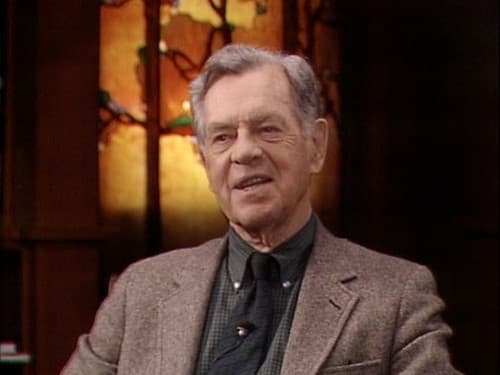
Joseph Campbell was an American mythologist and writer known for his exploration of mythology and its impact on human experience. His notable works include "The Power of Myth," which discusses the role of myth in society, "The Hero With a Thousand Faces," which outlines the hero's journey archetype, and "Myths to Live By," where he examines the relevance of myths in contemporary life.
Similar books
- Man and His Symbols
C.G. Jung
4.2 (21k) average on GoodreadsPsychologyExplores the psychological significance of symbols, dreams, and archetypes, foundational to Campbell's work.
- Sapiens: A Brief History of Humankind
Yuval Noah Harari
4.4 (502k) average on GoodreadsPsychologyExamines the power of shared fictions and narratives in shaping human societies, resonating with myths' societal function.
- The Hero With a Thousand Faces
Joseph Campbell
4.2 (32k) average on GoodreadsPsychologyThe foundational academic work outlining the monomyth, which 'The Power of Myth' popularizes and discusses in an accessible interview format.
- The Golden Bough
James George Frazer
4.0 (8k) average on GoodreadsReferenceFrazer's 'The Golden Bough' is an encyclopedic, comparative study of magic, religion, and myth from an anthropological perspective, predating Campbell. It meticulously documents countless rituals, beliefs, and myths from around the world, often seeking to trace their origins and evolution, particularly focusing on themes like the dying and rising god. While both Campbell and Frazer engage in comparative mythology, Frazer's approach is more focused on classification and the historical development of customs, often from an evolutionary, positivist viewpoint. Campbell, influenced by Jung, emphasizes the psychological and symbolic universality of myth, focusing less on historical origins and more on the enduring human experience. Frazer's work is vast and detailed, sometimes overwhelming, whereas Campbell's 'Power of Myth' is more focused on a singular, unifying theory and its personal relevance.
- The Perks of Being a Wallflower
Stephen Chbosky
4.2 (1.3M) average on GoodreadsPsychologyThrough letters, a shy high school freshman learns to navigate first love, trauma, and self-discovery, stepping off the sidelines and into life.
- Eleanor Oliphant Is Completely Fine
Gail Honeyman
4.3 (708k) average on GoodreadsLiterary FictionA lonely woman's structured life changes when an IT guy and an elderly man help her learn to open her heart.




Enjoyed the summary?
A summary gives you the shape of the book. The book itself has the detail, the examples and the voice.
Find The Power of Myth on AmazonAs an Amazon Associate, BookBrief earns from qualifying purchases. How we're funded