
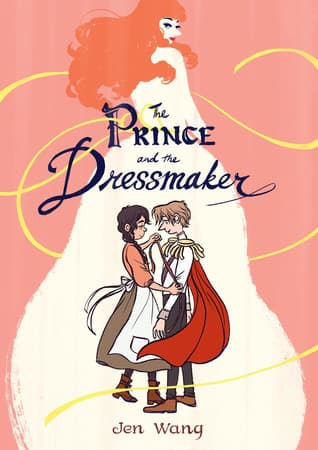
Synopsis
Covers the whole plot, including the ending.
- Difficulty
- Easy
- Pacing
- Moderate
- Mood
- Charming, Uplifting, Romantic, Sweet, Authentic
- Read it if
- You love heartwarming stories about self-acceptance, unique friendships, and the power of fashion, with a charming historical setting.
- Skip it if
- You prefer fast-paced action or complex political intrigue over character-driven romance and identity exploration.
The Prince and the Dressmaker Plot Summary
Covers the whole plot, including the ending.
A Secret Commission
Frances, a young dressmaker at Madame Aurelia's renowned Parisian workshop, receives a strange late-night summons. Blindfolded, she is taken to the palace to meet Prince Sebastian. He tells her his secret: he likes to wear dresses and wants Frances to create them for him. Though at first hesitant due to the secrecy and the prince's unusual request, Frances is drawn in by the challenge and the artistic freedom Sebastian offers. She agrees to be his personal, secret dressmaker, designing elaborate gowns that let Sebastian express a hidden part of himself, with the strict condition that their collaboration remains confidential.
Lady Crystallia's Debut
Frances begins designing beautiful gowns for Prince Sebastian. As Lady Crystallia, Sebastian starts attending exclusive Parisian events, carefully keeping his disguise. Lady Crystallia quickly becomes a celebrated fashion icon, captivating the city with her daring and unique style. Frances, though hidden, takes great pride in her creations' success, seeing her designs admired and influencing trends. Their secret partnership grows, strengthening their bond. Sebastian finds joy in his alter ego, and Frances finds validation for her artistic vision, even if she cannot publicly claim her work.
A Growing Friendship and Royal Pressures
As Frances continues to create stunning dresses for Lady Crystallia, her friendship with Prince Sebastian deepens. They share intimate talks about their dreams, fears, and the pressures of their lives. Sebastian confides in Frances about his struggles with his public role and the expectations placed on him as a prince. Meanwhile, the King and Queen increasingly insist that Sebastian find a bride, arranging social events and introductions with eligible princesses. Sebastian feels torn between his duty and his desire to continue his secret life as Lady Crystallia.
The Princess Sofia Incident
At a royal ball, Prince Sebastian is meant to charm Princess Sofia, a potential bride. However, Lady Crystallia's popularity reaches new heights, with Sofia herself admiring the mysterious fashion icon. Sebastian, seeing a chance to gauge Sofia's reaction, discreetly arranges for Frances to create a dress for Sofia inspired by Lady Crystallia's style. This act further strengthens Lady Crystallia's influence and Sebastian's internal conflict, as he struggles to balance his two lives and their impact on his public duties and the women around him.
Frances's Ambition and Frustration
Despite Lady Crystallia's success, Frances becomes increasingly frustrated by the secrecy around her work. She wants public recognition for her talent and designs, but Sebastian's need for anonymity prevents her from claiming her creations. This tension strains their friendship, as Frances feels her own dreams are being held back by her loyalty to Sebastian. She considers leaving to pursue her career openly, but her affection for Sebastian and the unique creative outlet he provides make the decision very difficult. Her passion for fashion conflicts with her role as a secret dressmaker.
A Royal Engagement and a Difficult Choice
Under great pressure from his parents, Prince Sebastian proposes to Princess Sofia, who accepts. This deeply affects Frances. The upcoming marriage means a potential end to Lady Crystallia and, with it, to Frances's unique and fulfilling, though secret, design work. She realizes that Sebastian's commitment to his royal duties will likely overshadow his need for Lady Crystallia, leaving Frances with no public portfolio or recognition. This forces Frances to seriously consider leaving Sebastian's service and pursuing her own dreams, even if it means leaving her friend and collaborator behind.
The Confrontation and the Ultimatum
Frances can no longer tolerate the secrecy. She confronts Prince Sebastian, expressing her deep frustration and the unfairness of her hidden talent. She demands that he publicly acknowledge her as the designer behind Lady Crystallia's iconic looks. Sebastian, caught between his fear of exposure and his loyalty to Frances, struggles with her demand. He understands her need for recognition but fears the societal backlash and scandal that revealing Lady Crystallia would bring to the royal family, especially with his engagement to Princess Sofia.
The Exposure
During a public appearance, Sebastian is unexpectedly exposed. At a fashion show, a rival designer, jealous of Lady Crystallia's popularity, tries to unmask her. In the confusion, Sebastian's wig is pulled off, revealing his identity as the Prince. The revelation shocks Paris, with the public and the royal family grappling with the truth. This event forces Sebastian to confront his secret life directly, with serious implications for his engagement, his public image, and his relationship with Frances.
Royal Fallout and Public Reaction
The King and Queen are furious and deeply embarrassed by the scandal. They confine Sebastian to the palace, trying to control the story and lessen the damage to the monarchy. Princess Sofia, though initially shocked, shows surprising understanding and compassion. The Parisian public reacts with a mix of outrage, confusion, and some unexpected support for Sebastian and Lady Crystallia, showing the city's changing views on gender and expression. Frances is also involved, facing scrutiny for her part in the deception, though her design talent is clear.
Frances's Decision and Departure
Seeing Sebastian's turmoil and realizing that her own career cannot thrive in such circumstances, Frances decides to leave Paris. She bids Sebastian a heartfelt farewell, expressing her lasting friendship but also her need to establish her own name as a designer. She travels to London, determined to build her own fashion house and achieve the public recognition she deserves, no longer content to be a secret. This departure marks a significant turning point for both characters, forcing them to navigate their paths independently.
Sebastian's Public Apology and Confession
After much internal struggle and encouragement from Princess Sofia, Prince Sebastian decides to address the public directly. He holds a press conference, not to apologize for being Lady Crystallia, but to explain his need for self-expression and the joy he found in it. He publicly acknowledges Frances as the brilliant designer behind Lady Crystallia's iconic looks, giving her the credit she always deserved. This brave act of honesty begins to change public perception and solidifies Sebastian's commitment to living authentically, even if it comes with consequences.
A New Beginning for Frances
In London, Frances's talent is quickly recognized. With Prince Sebastian's public acknowledgment, her reputation grows. She establishes her own fashion house, attracting diverse clients who admire her unique vision and bold designs. She thrives where she can openly claim her creations and build her brand. Her designs become celebrated, and she achieves the professional success and recognition she had always dreamed of, proving her ability as an independent and innovative fashion designer.
Reunion and Reconciliation
Months later, Prince Sebastian, having found a new balance in his life and a more accepting relationship with his family, travels to London. He visits Frances at her thriving workshop. Their reunion is warm and heartfelt, marking a new chapter in their friendship, built on mutual respect and open honesty. Sebastian, now more confident in his identity, even expresses a desire to commission new designs from Frances, not as Lady Crystallia for secrecy, but as a patron who appreciates her art for himself, symbolizing his newfound comfort and acceptance.
A Royal Wedding and a Fashion Statement
Princess Sofia, having broken off her engagement to Sebastian amicably and found love with someone else, invites Sebastian to her wedding. Sebastian attends, not as a conventional prince, but wearing a beautifully tailored, gender-fluid outfit designed by Frances, a subtle but powerful statement of his authentic self. This public appearance shows his growth and acceptance, and Frances's design further strengthens her innovative reputation. It signifies a new era for Sebastian, where he can attend royal functions while still expressing his individuality, with Frances's artistry supporting him.
Embracing Authenticity
The story ends with both Sebastian and Frances having found happiness and fulfillment by embracing who they truly are. Sebastian, while still a prince, lives a life true to his identity, no longer hiding. Frances is a celebrated and successful designer, her name known for groundbreaking fashion. Their friendship lasts, showing their shared journey of self-discovery and mutual support. The story ends on a hopeful note, celebrating individuality, artistic passion, and the power of true friendship in overcoming societal expectations.
Principal Figures
Prince Sebastian
Protagonist
A European prince who secretly cross-dresses as the fashion icon Lady Crystallia.
Prince Sebastian is a young royal burdened by the expectations of his family and society. He is kind-hearted, artistic, and possesses a deep-seated need for self-expression that he finds through wearing dresses and becoming Lady Crystallia. He is courageous in his secret life but struggles with the fear of public exposure and disappointing his parents. His journey is one of self-discovery and finding the courage to embrace his true identity, even in the face of scandal.
Relationships: Frances (Best friend, confidante, and personal dressmaker.); King and Queen (Parents, whose expectations and traditional views create pressure and conflict.); Princess Sofia (Fiancée, who becomes a supportive ally despite their broken engagement.)
Frances
Protagonist
A talented and ambitious dressmaker who designs for Lady Crystallia.
Frances is a brilliant and passionate dressmaker with an innate talent for fashion design. She is driven by a desire for artistic recognition and to create groundbreaking styles. Initially content with the creative freedom offered by Sebastian's secret, she eventually grows frustrated by the lack of public credit for her work. She is fiercely independent and loyal, but her ambition ultimately leads her to prioritize her own career and dreams, making her a strong and inspiring figure.
Relationships: Prince Sebastian (Client, friend, and creative partner.); Madame Aurelia (Former employer and mentor.)
Lady Crystallia
Alter Ego
Prince Sebastian's glamorous and trendsetting female alter ego.
Lady Crystallia is the persona Prince Sebastian adopts when he wears Frances's dresses. She is a dazzling and mysterious fashion icon who takes Paris by storm, known for her unique, avant-garde style and confident presence. Lady Crystallia represents Sebastian's freedom, creativity, and the part of himself he feels he cannot express as the prince. She becomes a symbol of daring fashion and individuality in Parisian society, influencing trends and captivating the public.
Relationships: Prince Sebastian (The hidden identity of Sebastian.); Frances (Her creator and designer.)
Princess Sofia
Supporting
Prince Sebastian's kind and understanding fiancée.
Princess Sofia is an intelligent and compassionate royal who is initially betrothed to Prince Sebastian. Unlike many traditional princesses, she possesses an open mind and a genuine interest in fashion and the arts. When Sebastian's secret is revealed, she demonstrates remarkable understanding and support, proving to be a true friend rather than just a political match. She encourages Sebastian to embrace his true self and eventually finds her own happiness.
Relationships: Prince Sebastian (Fiancée, later a supportive friend.)
The King
Antagonist (initially)
Prince Sebastian's traditional and stern father.
The King is a traditional and authoritarian ruler who prioritizes the monarchy's image and Sebastian's duty above all else. He struggles to understand Sebastian's desire for self-expression and views Lady Crystallia as a scandal that threatens the royal family's reputation. His initial anger and disappointment drive much of the external conflict for Sebastian, though he eventually shows a degree of reluctant acceptance.
Relationships: Prince Sebastian (Father, whose expectations create pressure.)
The Queen
Supporting
Prince Sebastian's concerned and pragmatic mother.
The Queen is Sebastian's mother, who shares her husband's concern for royal appearances but is also deeply worried about her son's happiness. She pushes Sebastian towards marriage out of a sense of duty and tradition, but her underlying motivation is often her love for him. She is initially shocked and upset by the Lady Crystallia revelation but shows more empathy than the King, eventually helping Sebastian navigate the fallout.
Relationships: Prince Sebastian (Mother, who balances love with royal duty.)
Madame Aurelia
Supporting
Frances's former employer and owner of a prestigious fashion atelier.
Madame Aurelia is the proprietor of the renowned Parisian fashion atelier where Frances initially works. She is a respected figure in the fashion world, known for her discerning eye and traditional approach. While she recognizes Frances's talent, she represents the established order of the fashion industry, which can be resistant to radical change. Her atelier provides the initial setting for Frances's dreams and challenges.
Relationships: Frances (Employer and mentor.)
The Count
Mentioned
A minor character who is a suitor for Frances.
The Count is a wealthy and somewhat arrogant suitor who expresses interest in Frances. He represents a conventional path for Frances, offering security but not artistic fulfillment. His presence highlights Frances's dedication to her career over societal expectations of marriage.
Relationships: Frances (Suitor.)
Themes & Insights
Identity and Self-Expression
The story centers on Prince Sebastian's struggle to balance his royal identity with his true self, Lady Crystallia. His cross-dressing is a strong metaphor for gender identity and the universal human need to express one's authentic self, even when it goes against societal norms. Frances's journey also reflects this, as she tries to express her artistic identity without being hidden. The entire narrative explores the courage it takes to live genuinely, as seen when Sebastian publicly acknowledges Lady Crystallia and Frances's role, choosing authenticity over societal approval.
“If you hide your light, who will see it?”
The Power of Art and Creativity
Fashion design, as an art form, is central to the story. Frances's dresses are more than just clothes; they are expressions of identity, freedom, and beauty. Her creative skill allows Sebastian to become Lady Crystallia, transforming him. The story celebrates the power of art to change things, showing how it can empower individuals, challenge traditions, and even change public perception. The designs themselves become characters, speaking volumes about the characters' inner lives and the evolving Parisian fashion scene, as seen in Lady Crystallia's influential style.
“A dress can be more than just fabric. It can be a statement.”
Friendship and Loyalty
The deep bond between Sebastian and Frances is a core part of the story. Their friendship is built on mutual respect, shared secrets, and steady support, even when challenged by ambition and societal pressures. Frances's loyalty to Sebastian is clear in her commitment to his secret, while Sebastian's eventual public acknowledgment of her work shows his loyalty to her talent. The narrative explores the complexities of friendship, where personal dreams sometimes conflict, but ultimately, true friends support each other's growth and happiness, as they do in their eventual reconciliation.
“I’m not just your dressmaker, Sebastian. I’m your friend.”
Societal Expectations vs. Individual Desire
Both Sebastian and Frances deal with the weight of societal expectations. Sebastian is expected to be a traditional prince, marry a princess, and uphold the monarchy's image, which clashes with his desire for self-expression. Frances, as a female designer, struggles against the limitations placed on women in the professional world and the need for public recognition that her secret role denies her. The story examines the tension between conforming to social norms and pursuing personal happiness and ambition, ultimately supporting the latter, as seen in their respective paths to fulfillment.
“It’s not easy being a prince… or a woman with big dreams.”
Plot Devices & Literary Techniques
The Secret Identity
Prince Sebastian's hidden persona as Lady Crystallia.
This device drives the central conflict and mystery of the story. Sebastian's secret identity as Lady Crystallia allows him to express his true self, but also creates immense pressure and fear of exposure. It establishes the confidential nature of his relationship with Frances and fuels the dramatic tension as Sebastian tries to balance his two lives. The eventual revelation of Lady Crystallia's true identity is the climax, forcing Sebastian to confront societal expectations head-on.
The Dresses
Frances's designs for Lady Crystallia.
More than just clothing, the dresses are a key plot device. They are the physical manifestation of Sebastian's hidden identity and Frances's artistic talent. Each dress represents a step in Lady Crystallia's evolution and Frances's growing skill. They are also catalysts for events, drawing attention to Lady Crystallia and influencing Parisian fashion, which in turn puts pressure on Sebastian. The dresses symbolize freedom, artistry, and the power of self-expression.
The Atelier
Frances's workplace, first Madame Aurelia's, then her own.
The atelier serves as a crucial setting and symbol. Initially, Madame Aurelia's atelier represents the traditional fashion world and the limitations Frances faces. Later, Frances's own atelier in London symbolizes her independence, success, and the public recognition she achieves. It is a space of creativity, hard work, and ultimately, self-actualization for Frances, marking her journey from hidden talent to celebrated designer.
The Royal Court
The setting for Sebastian's public life and familial pressures.
The royal court represents the rigid societal expectations and traditional gender roles that Sebastian struggles against. It is the source of the pressure for him to marry and conform, contrasting sharply with the freedom he finds as Lady Crystallia. The court's reaction to the scandal highlights the conservative attitudes of the time and the challenges Sebastian faces in embracing his authentic self within such an environment.
The Prince and the Dressmaker Quotes
“Perhaps I'm meant to be a dressmaker after all.”
“The world is full of interesting things. And people.”
“It's not about being a boy or a girl. It's about being who you are.”
“Sometimes you have to be brave to be happy.”
“A dress can be more than just fabric. It can be a dream.”
“You don't have to choose just one path. You can make your own.”
“What good is a secret if it keeps you from being yourself?”
“Love isn't always neat and tidy. Sometimes it's a little messy.”
“It takes courage to be different. And even more to show it.”
“Maybe the best adventures are the ones you don't plan for.”
“True beauty comes from within. And a really good dress helps too.”
“Don't let anyone tell you who you are supposed to be.”
“The greatest joy is in creating something beautiful for someone else.”
“A crown doesn't make a king. It's what's in his heart.”
Quiz
10 questions on the plot and the characters. Each answer comes with a short explanation.
Question 1
What is Prince Sebastian's secret identity when he dresses in daring gowns?
- Lady Starlight
- Lady Crystallia
- Empress Eugenie
- Duchess Vivienne
Show answer
B. Lady Crystallia Prince Sebastian's alter ego, who becomes a fashion icon in Paris, is Lady Crystallia.
Question 2
What is Frances's dream that conflicts with her role as Sebastian's secret dressmaker?
- To open a grand restaurant in Paris
- To become a famous painter
- To have her own fashion house and be recognized for her designs
- To marry into royalty
Show answer
C. To have her own fashion house and be recognized for her designs Frances dreams of being a renowned dressmaker with her own recognized designs, which is hindered by keeping Sebastian's secret.
Question 3
Who is the only other person, besides Frances, who initially knows Sebastian's secret?
- His father, the King
- His personal valet
- The Prince's personal guard
- The text states Frances is 'one of only two people who know the truth', implying the other person is not explicitly named in the synopsis but is someone in Sebastian's life.
Show answer
D. The text states Frances is 'one of only two people who know the truth', implying the other person is not explicitly named in the synopsis but is someone in Sebastian's life. The synopsis states Frances is 'one of only two people who know the truth', indicating there is one other unnamed person aware of Sebastian's secret life.
Question 4
What is the primary setting of 'The Prince and the Dressmaker'?
- London, England
- Rome, Italy
- Paris, France
- Vienna, Austria
Show answer
C. Paris, France The story is set in Paris, described as 'the world capital of fashion'.
Question 5
Which of the following themes is NOT explicitly mentioned in the synopsis as being explored in the book?
- Identity
- Young love
- Political intrigue
- Art and family
Show answer
C. Political intrigue The synopsis highlights themes of identity, young love, art, and family. Political intrigue is not mentioned.
Question 6
Why are Sebastian's parents looking for a bride for him?
- To secure a political alliance with a neighboring kingdom.
- It is a traditional expectation for a prince of his age, as implied by the setting 'at the dawn of the modern age'.
- They want him to stop his secret life as Lady Crystallia.
- They are unaware of his secret life and simply fulfilling their royal duties.
Show answer
B. It is a traditional expectation for a prince of his age, as implied by the setting 'at the dawn of the modern age'. The synopsis states 'Prince Sebastian is looking for a bride—or rather, his parents are looking for one for him', implying it's a parental expectation for a prince, without specifying a political alliance as the direct reason.
Question 7
What does the phrase 'at the dawn of the modern age' suggest about the story's historical context?
- It is set during the Stone Age, focusing on early human development.
- It takes place in a futuristic, technologically advanced society.
- It is set in a period of significant societal and cultural change, possibly late 19th or early 20th century, but still with traditional monarchical structures.
- It refers to the beginning of the Renaissance period.
Show answer
C. It is set in a period of significant societal and cultural change, possibly late 19th or early 20th century, but still with traditional monarchical structures. The phrase 'at the dawn of the modern age' typically refers to a transitional period, often late 19th or early 20th century, where traditional structures coexist with emerging modern ideas, aligning with the historical fiction genre.
Question 8
How does Frances's role as Sebastian's 'secret weapon' impact her own aspirations?
- It provides her with the financial stability to pursue her dreams independently.
- It forces her to defer her dreams of public recognition and establishing her own fashion house.
- It makes her a celebrity in her own right, indirectly fulfilling her dreams.
- It allows her to anonymously influence Parisian fashion trends, which is her ultimate goal.
Show answer
B. It forces her to defer her dreams of public recognition and establishing her own fashion house. The synopsis explicitly states, 'being someone’s secret weapon means being a secret. Forever. How long can Frances defer her dreams to protect a friend?'
Question 9
What specific characteristic makes Lady Crystallia 'the hottest fashion icon'?
- Her royal lineage, which she openly flaunts.
- Her daring dresses and unique sense of style.
- Her ability to predict future fashion trends with uncanny accuracy.
- Her exclusive use of rare and expensive fabrics.
Show answer
B. Her daring dresses and unique sense of style. The description highlights Lady Crystallia's 'daring dresses' and her taking Paris by storm as a 'fabulous' icon, indicating her unique and bold fashion choices.
Question 10
The book is described as 'A fairy tale for any age'. What aspects of the synopsis support this description?
- The presence of magical creatures and enchanted objects.
- The classic 'prince with a secret' trope, themes of identity, love, and pursuing dreams, often found in traditional fairy tales, but with a modern twist.
- Its strict adherence to historical accuracy, avoiding any fantastical elements.
- The story's focus on grim realism and challenging traditional happy endings.
Show answer
B. The classic 'prince with a secret' trope, themes of identity, love, and pursuing dreams, often found in traditional fairy tales, but with a modern twist. The story features a prince, a secret identity, dreams, and young love, all elements reminiscent of traditional fairy tales, but reinterpreted for a modern audience.
The Prince and the Dressmaker FAQ
What is Prince Sebastian's secret and how does he maintain it?
Prince Sebastian secretly cross-dresses as Lady Crystallia, a renowned fashion icon in Paris. He maintains this secret by only appearing as Lady Crystallia at night, using private entrances and exits, and relying heavily on Frances, his personal dressmaker, to create and manage his elaborate wardrobe.
Who is Frances and what is her role in Sebastian's secret life?
Frances is a talented young dressmaker who becomes Sebastian's confidante and the creative force behind Lady Crystallia's iconic outfits. She designs and sews all of Lady Crystallia's daring dresses, making her an indispensable part of Sebastian's double life and the only other person privy to his secret.
What is the central conflict or dilemma Frances faces throughout the story?
Frances faces the dilemma of sacrificing her own dreams of becoming a famous designer to protect Sebastian's secret. While she loves creating for Lady Crystallia, her work remains anonymous, preventing her from gaining the public recognition she deserves and hindering her career aspirations.
How does Sebastian's parents' search for a bride complicate his secret identity?
The royal parents' insistent search for a suitable bride for Prince Sebastian puts immense pressure on him to conform to traditional masculine roles and expectations. This directly conflicts with his desire to express himself as Lady Crystallia, forcing him to live a more carefully guarded double life and making his secret harder to maintain.
What role does the setting of Paris play in the narrative, especially regarding fashion?
Paris, at the dawn of the modern age, serves as the perfect backdrop for a story about fashion and identity. As the world capital of fashion, it provides a vibrant, accepting, and inspiring environment for Lady Crystallia's daring styles to thrive, while also highlighting the social pressures of the royal court.
How does Frances's initial encounter with Sebastian hint at his true nature?
Frances's initial encounter with Sebastian involves her being hired to make dresses for an unnamed client. The specific, daring requests and the secrecy surrounding the fittings subtly hint at the unusual nature of the client, foreshadowing Sebastian's gender-fluid identity before it is explicitly revealed.
Are there any subtle indications of Sebastian's internal struggle with his identity before his secret is fully revealed?
Before his secret is fully revealed, Sebastian shows signs of discomfort and distraction during formal royal events and interactions with potential brides. His longing glances at fashion sketches or his general aloofness can be interpreted as his internal struggle with the expectations placed upon him versus his true desire for self-expression.
What is the significance of the specific 'daring' dresses Frances creates for Lady Crystallia?
The 'daring' dresses created by Frances are not just fashionable; they are expressions of liberation and individuality that challenge conventional gender norms of the era. Each dress allows Sebastian to embody a different facet of himself as Lady Crystallia, pushing boundaries and making a statement beyond mere aesthetics.
How does Sebastian's relationship with his parents evolve throughout the story in relation to his secret?
Initially, Sebastian's relationship with his parents is strained by his secret, as he feels he must hide his true self to meet their expectations. As the story progresses and his secret is revealed, their relationship undergoes a profound shift, moving towards acceptance and understanding, albeit with initial shock and disappointment.
What psychological impact does living a double life have on Prince Sebastian?
Living a double life creates significant psychological strain for Sebastian, leading to feelings of isolation and the burden of constant deception. While Lady Crystallia offers him freedom and joy, the need to conceal this from his family and the world causes anxiety and internal conflict about his true identity and future.
How does Frances's self-esteem and ambition change as a result of her involvement with Lady Crystallia?
Frances's self-esteem initially soars as she creates magnificent designs, but it later wanes due to the anonymity of her work. Her ambition is constantly tested as she grapples with the desire for public recognition versus her loyalty to Sebastian, leading to moments of doubt and frustration about her artistic future.
Discuss the theme of self-acceptance and its portrayal through Sebastian's journey.
Sebastian's journey is a powerful exploration of self-acceptance, as he navigates societal expectations versus his authentic self. His transformation into Lady Crystallia is not just about fashion, but about embracing his gender expression and finding the courage to live truthfully, ultimately leading to a more integrated sense of self.
How does the story explore the psychological impact of societal expectations on individual identity?
The story profoundly explores how societal expectations, particularly for royalty, can stifle individual identity and expression. Sebastian's need to hide Lady Crystallia demonstrates the immense pressure to conform to traditional gender roles, highlighting the psychological toll of suppressing one's true self to meet external demands.
Is Lady Crystallia merely a disguise, or does she represent a deeper aspect of Sebastian's identity?
Lady Crystallia is far more than just a disguise; she represents a profound and authentic aspect of Sebastian's identity. She is the embodiment of his creativity, freedom, and true self-expression, allowing him to explore and embrace a part of himself that society would otherwise deny.
What is the significance of the 'fairy tale' aspect mentioned in the synopsis, and how does it relate to modern themes?
The 'fairy tale' aspect refers to the classic narrative of a prince finding his true path, but with a modern twist. It uses the timeless framework to explore contemporary themes of gender identity, self-acceptance, and challenging societal norms, making it a relevant and resonant story for today's audience.
How does the ending resolve the conflict between Sebastian's secret and Frances's dreams?
The ending resolves the conflict by allowing both Sebastian and Frances to achieve their dreams authentically. Sebastian gains acceptance for his identity, while Frances finally receives public recognition for her talent, with Lady Crystallia's true identity revealed, allowing Frances to claim her rightful place as a celebrated designer.
Could the story be interpreted as a commentary on the art world's often-unseen laborers or 'ghost' designers?
Yes, the story can certainly be interpreted as a commentary on the unseen laborers in the art and fashion worlds. Frances's struggle for recognition while being the creative genius behind Lady Crystallia highlights the often-uncredited work of designers, artists, and artisans who contribute to famous brands or personalities.
What message does the book convey about the nature of love and acceptance?
The book conveys a powerful message that true love and acceptance involve embracing a person for their authentic self, including their unique expressions and identities. It emphasizes that love should not demand conformity but rather celebrate individuality, as shown by Sebastian and Frances's evolving relationship and the eventual acceptance from his family.
About the author

Jen Wang is an author and illustrator known for her graphic novels. Her notable work, The Prince and the Dressmaker, explores themes of identity and acceptance through a story about a prince who wishes to wear dresses. Wang's storytelling often combines elements of fantasy with contemporary issues.
Similar books
- Harry Potter and the Sorcerer's Stone
J.K. Rowling
4.5 (7M) average on GoodreadsFantasyRescued from a miserable life under the stairs, an orphaned boy discovers he's a wizard destined for a magical school, where he uncovers a dangerous secret tied to the dark wizard who murdered his parents.
- The Hobbit, or There and Back Again
J.R.R. Tolkien
4.3 (2.9M) average on GoodreadsFantasyA comfort-loving hobbit named Bilbo Baggins is whisked away by a mischievous wizard and a band of dwarves on an unexpected journey to reclaim stolen treasure from a fearsome dragon, discovering courage and a magical ring along the way.
- Harry Potter and the Goblet of Fire
J.K. Rowling
4.6 (2.6M) average on GoodreadsFantasyA bewildered Harry Potter, underage and thrust into a deadly Triwizard Tournament, must brave dragons, mermaids, and a resurgent dark magic to survive a year that will forever alter the wizarding world.
- Harry Potter and the Order of the Phoenix
J.K. Rowling
4.5 (2.5M) average on GoodreadsFantasyIn a year of oppressive secrets and the threat of Voldemort, Harry Potter and Dumbledore's Army secretly train for war, shown through Jim Kay and Neil Packer's dark illustrations.
- The Lightning Thief
Rick Riordan
4.3 (2M) average on GoodreadsFantasyThrust into a world of mythological monsters and divine treachery, an ordinary boy discovers he's the son of Poseidon and must embark on a perilous quest across modern America to prevent an Olympian war.
- The Giver
Lois Lowry
4.1 (1.8M) average on GoodreadsFantasyIn a world where everyone is the same, a young boy named Jonas learns about true memory, forcing him to see the cost of his community's peaceful ignorance.






Enjoyed the summary?
A summary gives you the shape of the book. The book itself has the detail, the examples and the voice.
Find The Prince and the Dressmaker on AmazonAs an Amazon Associate, BookBrief earns from qualifying purchases. How we're funded