
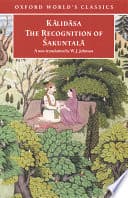
Synopsis
Covers the whole plot, including the ending.
- Difficulty
- Medium
- Pacing
- Moderate
- Mood
- Romantic, passionate, melancholic, ultimately hopeful, ethereal
The Recognition of Sakuntala Plot Summary
Covers the whole plot, including the ending.
The Royal Hunt and the Hermitage
King Dusyanta, hunting a deer, enters Sage Kanva's hermitage. He sees Sakuntala, a beautiful maiden tending plants, and is immediately drawn to her. He learns she is of royal lineage, the daughter of Sage Visvamitra and nymph Menaka, left in Kanva's care. Dusyanta, smitten, plans to stay near her. He claims he needs protection from wild animals to remain at the hermitage, hoping to win her affection. Her innocence and beauty contrast with his royal life.
A Secret Union
While Sage Kanva is away, Dusyanta courts Sakuntala. He declares his love, and Sakuntala, though hesitant, returns his feelings. With help from her friends, Priyamvada and Anasuya, Dusyanta and Sakuntala marry in a Gandharva ceremony—a secret, mutual consent union for royalty. Dusyanta promises to return for her and enthrone her as his queen, leaving her a signet ring as a token.
The Curse of Durvasa
After Dusyanta leaves, Sakuntala is lost in thoughts of her husband, neglecting her duties. One day, the irritable Sage Durvasa arrives. Distracted, Sakuntala fails to greet him with respect. Enraged, Durvasa curses her: the person she is thinking of will forget her entirely, and only a specific token will restore his memory. Her friends, overhearing, plead with Durvasa, who softens the curse, stating that the king's memory will return when he sees an identifying mark or ornament.
Departure for the Capital
As time passes, Sakuntala's pregnancy is apparent. Sage Kanva returns and, through divine insight, learns of Sakuntala's secret marriage and impending motherhood. Accepting the union, he prepares her for her journey to Dusyanta's palace, accompanied by two disciples, Sarngarava and Saradvata, and an elderly ascetic, Gautami. Kanva gives her heartfelt advice on a wife's duties and sends her off with blessings. Sakuntala feels both anticipation and fear, leaving the only home she has known.
The Lost Ring
During the journey to Hastinapura, while crossing a river, Sakuntala dips her hand into the water. The signet ring Dusyanta gave her, the token meant to break the curse, slips from her finger and is lost. This incident proves to be a turning point, sealing her fate for a time. The group continues its journey, unaware of the loss, believing the king's memory would return upon seeing her.
Rejection at Court
At Dusyanta's court, Sakuntala and her companions present themselves to the king. Because of Durvasa's curse, Dusyanta does not remember Sakuntala or their marriage. He sees her as a stranger and dismisses her claims, accusing her of deception. Sakuntala is devastated and tries to remind him of their past, but he does not listen. When she tries to show him the signet ring as proof, she discovers it is missing. Her companions are dismayed, and Dusyanta's minister advises the king to reject her, fearing scandal.
A Celestial Intervention
After her humiliating rejection, Sakuntala is in despair. With no one to believe her and no proof, she is helpless. As she is about to collapse, a flash of divine light appears, and a celestial nymph, believed to be Menaka, Sakuntala's birth mother, carries her away to a heavenly hermitage. This intervention saves Sakuntala from further suffering and provides a sanctuary where she can raise her son, Bharata, away from the earthly court.
The Fisherman's Discovery
Some time later, a fisherman catches a large fish. Cleaning it, he finds a royal signet ring inside. Recognizing the king's insignia, he takes it to the royal police. The ring is brought before King Dusyanta. Upon seeing the familiar ring, the curse is lifted, and Dusyanta's memory of Sakuntala, their love, and their marriage returns. He is filled with remorse and grief for his actions and the injustice he inflicted upon her, lamenting his loss and desperately wishing to find her.
Dusyanta's Remorse and Penance
Overwhelmed by guilt and sorrow, Dusyanta becomes melancholic and withdrawn. He constantly thinks of Sakuntala, regretting his harsh words and the pain he caused her. He neglects his royal duties, consumed by grief. His court notices his changed demeanor. He expresses his deep remorse to his jester and ministers, recounting his forgotten love. He longs for reunion but does not know where Sakuntala is. He performs acts of penance and lives a life of quiet suffering, hoping to atone.
Journey to Marica's Hermitage
Indra, king of the gods, summons Dusyanta to the heavens to help him battle a demon. Dusyanta, eager for a distraction and a chance to earn merit, accepts. After defeating the demon, Dusyanta is rewarded. On his way back to earth, his celestial chariot passes through Sage Marica's hermitage, a divine sage. This hermitage is on a sacred mountain, a place of peace, setting the stage for his reunion.
Encounter with Bharata
At Marica's hermitage, Dusyanta sees a brave and strong young boy playing with a lion cub. The boy's strength and regal bearing remind Dusyanta of himself. He feels an inexplicable fatherly affection for the child. He learns the boy's name is Sarvadamana (later Bharata) and that he is the son of a celestial nymph and a powerful king, abandoned by his mother after his father rejected her. Dusyanta notices a distinctive mark on the boy's hand, confirming his own lineage, and a realization begins to dawn on him.
The Reunion
After meeting Bharata, Dusyanta encounters Sakuntala at Marica's hermitage. She is older, more serene, and dressed in ascetic clothes, having lived a life of piety. Initially, she is hesitant, remembering his rejection. However, hearing his heartfelt apologies and seeing his genuine remorse, along with their son and Sage Marica's explanation of the curse, she forgives him. Marica explains the divine plan and the curse, absolving Dusyanta. The family is joyfully reunited, and Dusyanta takes Sakuntala and Bharata back to Hastinapura, where Bharata is eventually crowned heir.
Principal Figures
King Dusyanta
Protagonist
The valorous and romantic king of Hastinapura.
Dusyanta is the brave and righteous king of Hastinapura, known for his hunting prowess and just rule. He is initially portrayed as a romantic and passionate man, falling deeply in love with Sakuntala. However, he is also susceptible to the forces of fate and the curse of Durvasa, leading to his temporary amnesia and the subsequent rejection of Sakuntala. He is honorable, though flawed, and deeply remorseful once his memory is restored. His journey is one of love, loss, and eventual redemption.
Relationships: Sakuntala (Husband, lover); Bharata (Father); Sage Kanva (Respected elder, Sakuntala's foster father); Sage Durvasa (Curser)
Sakuntala
Protagonist
The innocent and beautiful maiden, daughter of a nymph and a sage.
Sakuntala is the central female protagonist, an epitome of natural beauty, innocence, and purity, raised in the serene environment of Sage Kanva's hermitage. She is initially shy and demure but possesses a deep capacity for love and loyalty. Her character undergoes significant suffering due to the curse and Dusyanta's rejection, yet she maintains her dignity and unwavering devotion. She embodies resilience and the virtues of a devoted wife and mother, ultimately finding peace and reunion through her steadfastness.
Relationships: King Dusyanta (Wife, lover); Bharata (Mother); Sage Kanva (Adopted daughter, foster father); Priyamvada (Close friend); Anasuya (Close friend); Menaka (Birth mother)
Sage Kanva
Supporting
Sakuntala's wise and benevolent foster father.
Sage Kanva is a revered ascetic and Sakuntala's foster father. He is a figure of wisdom, compassion, and spiritual insight. He loves Sakuntala deeply and ensures her well-being, even when she makes choices he didn't directly guide. He blesses her marriage and provides her with poignant advice before sending her to Dusyanta's court. His presence underscores the values of dharma and paternal care, and he plays a crucial role in providing moral guidance and support for Sakuntala.
Relationships: Sakuntala (Foster father); King Dusyanta (Respected elder, Sakuntala's father-in-law)
Priyamvada
Supporting
One of Sakuntala's loyal and cheerful friends.
Priyamvada is one of Sakuntala's two closest friends and confidantes at the hermitage. She is characterized by her cheerful disposition, wit, and practicality. She actively supports Sakuntala's romance with Dusyanta, often acting as an intermediary and offering encouragement. She is deeply concerned for Sakuntala's happiness and welfare, and her loyalty is evident in her distress over the curse and Sakuntala's subsequent suffering. She represents the bonds of female friendship and support.
Relationships: Sakuntala (Close friend); Anasuya (Close friend)
Anasuya
Supporting
Sakuntala's other devoted and thoughtful friend.
Anasuya is Sakuntala's other close friend, often portrayed as more serious and thoughtful than Priyamvada. She is perceptive and protective, recognizing the potential complications of Sakuntala's secret marriage. She is the first to learn of Durvasa's curse and immediately seeks to mitigate its effects. Her concern for Sakuntala is profound, and she often offers more cautious counsel. She, along with Priyamvada, highlights the importance of sisterhood and unwavering companionship.
Relationships: Sakuntala (Close friend); Priyamvada (Close friend)
Sage Durvasa
Antagonist/Catalyst
The short-tempered sage whose curse causes the central conflict.
Sage Durvasa is a powerful and notoriously short-tempered ascetic. His curse, delivered in a moment of pique when Sakuntala, distracted by thoughts of Dusyanta, fails to show him proper respect, serves as the pivotal plot device. While his actions cause immense suffering, he is not purely evil but rather a force of unyielding spiritual power and consequence. He represents the danger of neglecting one's duties and the profound impact of spiritual wrath in ancient Indian narratives.
Relationships: Sakuntala (Curser)
Bharata (Sarvadamana)
Supporting
Dusyanta and Sakuntala's heroic son.
Bharata, initially named Sarvadamana ('subduer of all'), is the strong, courageous, and regal son of Dusyanta and Sakuntala. He is raised in the celestial hermitage of Sage Marica, exhibiting extraordinary bravery and strength even as a young boy, playing with wild animals. His appearance and inherent royal qualities are instrumental in Dusyanta's recognition of him as his son, which in turn leads to the reunion with Sakuntala. He embodies the continuation of the royal lineage and becomes a legendary emperor.
Relationships: King Dusyanta (Son); Sakuntala (Son); Sage Marica (Mentor/Guardian)
Sage Marica
Supporting
The divine sage who resides in a celestial hermitage.
Sage Marica is a divine sage, residing in a celestial hermitage where Sakuntala and Bharata find refuge. He is a figure of ultimate wisdom and spiritual authority, possessing knowledge of past, present, and future. He plays a crucial role in the play's resolution by explaining the divine curse to Dusyanta and Sakuntala, thus absolving Dusyanta of his guilt and facilitating their reunion. Marica represents divine intervention and the ultimate triumph of dharma and truth.
Relationships: King Dusyanta (Divine guide); Sakuntala (Protector/Guide); Bharata (Guardian/Mentor)
Themes & Insights
Love and Separation (Vipralambha Sringara)
The central theme is the love between Dusyanta and Sakuntala, followed by their painful separation. This separation, caused by a divine curse, explores 'Vipralambha Sringara'—love in separation, a key aesthetic in Sanskrit drama. It highlights the depth of their affection, the agony of longing, and love's enduring nature, leading to a more mature reunion.
“KING: Yes. I shall release you - SAKUNTALA: When? KING: When? When, like a bee, I kiss the bud of your unbruised lip And flood my thirsting mouth with nectar.”
Fate vs. Free Will
The play explores the interaction between fate (karmic destiny, divine curses) and individual choice. Durvasa's curse is a strong example of fate, causing Dusyanta's forgetfulness and Sakuntala's suffering. However, the characters' reactions—Sakuntala's resilience, Dusyanta's remorse, and their reunion through divine grace—suggest that while fate brings trials, human virtue and devotion shape outcomes. The lost ring shows how small, fated events can have large consequences.
“When a man's heart is pure, even a misfortune becomes an ornament.”
Dharma (Righteousness and Duty)
Dharma, moral and ethical duties, is a constant theme. Dusyanta's initial adherence to royal duty leads him to the hermitage, and his eventual acceptance of Sakuntala as his queen fulfills his duty as a husband and king. Sakuntala's duty as a devoted wife, even in rejection, and Sage Kanva's fatherly duty are central. The curse itself is a result of Sakuntala's momentary neglect of her duty towards a guest. The play ultimately emphasizes righteous conduct and fulfilling one's roles in society.
“A daughter is indeed another's wealth; today, having sent her to her husband, my mind is at ease.”
Nature and the Hermitage
The hermitage, with its natural beauty and peaceful environment, symbolizes innocence, purity, and spiritual harmony. Sakuntala's connection to nature, her care for plants and animals, reflects her pure spirit. The contrast between the peaceful hermitage and the busy royal court highlights the play's appreciation for natural virtue and a simpler, more authentic life. Nature also mirrors the characters' emotions, from the blooming flowers of love to the signs of separation.
“The trees, her sisters, drop their flowers in her path, as though to strew a bridal carpet for her feet.”
Plot Devices & Literary Techniques
The Curse of Durvasa
A magical curse causing Dusyanta's amnesia.
This is the primary plot device that drives the entire narrative. The short-tempered Sage Durvasa curses Sakuntala, causing Dusyanta to forget her completely unless he sees a specific token. This curse creates the central conflict of separation, rejection, and subsequent suffering, allowing for the exploration of themes like fate, love, and human resilience. It also provides a supernatural justification for Dusyanta's otherwise inexplicable cruel behavior, preserving his heroic image while allowing for dramatic tension and eventual redemption.
The Signet Ring
A token of love and the key to restoring memory.
The signet ring given by Dusyanta to Sakuntala is a crucial symbolic and functional plot device. It represents their secret union and love. Its loss in the river directly prevents the curse from being lifted during Sakuntala's presentation at court, leading to her rejection. Its subsequent discovery by the fisherman is the catalyst for Dusyanta regaining his memory and initiating his remorse. The ring thus acts as both the instrument of separation and the means of eventual reunion, embodying the fickle nature of fate.
Divine Intervention
Gods and celestial beings influencing human events.
Divine intervention manifests in several ways: Durvasa's curse, Menaka's rescue of Sakuntala after her rejection, Indra's summons of Dusyanta to battle demons, and Sage Marica's role in explaining the curse and orchestrating the final reunion. These interventions highlight the belief in a cosmic order and the influence of higher powers on human destiny. They serve to move the plot forward when human agency is insufficient, ensuring that dharma ultimately prevails and the protagonists find their rightful place.
Prophecy and Omens
Foreshadowing and divine insights guiding the narrative.
Throughout the play, prophecies and omens subtly guide the narrative. Sage Kanva's divine insight into Sakuntala's marriage, the auspicious signs that appear before her journey, and the prophecy concerning Bharata's future as a great emperor all contribute to the sense of an unfolding destiny. These devices build anticipation, validate the characters' actions (especially Kanva's acceptance of the Gandharva marriage), and reassure the audience that despite the trials, a harmonious resolution is divinely ordained.
Quiz
10 questions on the plot and the characters. Each answer comes with a short explanation.
Question 1
Who are the two main characters in "The Recognition of Sakuntala"?
- King Dusyanta and Sakuntala
- Kalidasa and Goethe
- Sakuntala and the Mahabharata
- King Dusyanta and a European composer
Show answer
A. King Dusyanta and Sakuntala The play is about the love story of King Dusyanta and Sakuntala.
Question 2
What is the primary goal of the performance of "The Recognition of Sakuntala"?
- To educate the audience about ancient Indian history.
- To produce an experience of aesthetic rapture in the audience.
- To provide a historical account of the Mahabharata.
- To encourage the study of Sanskrit drama.
Show answer
B. To produce an experience of aesthetic rapture in the audience. The text states that in performance, the play aimed to produce an experience of aesthetic rapture in the audience.
Question 3
What is the approximate century in which Kalidasa lived and wrote?
- 1st century CE
- 4th century CE
- 18th century CE
- 6th century CE
Show answer
B. 4th century CE The text mentions Kalidasa as the greatest poet and playwright (c.4th century CE).
Question 4
What event caused the separation of King Dusyanta and Sakuntala?
- A misunderstanding about their marriage.
- A curse
- Sakuntala's father's disapproval.
- King Dusyanta's political duties.
Show answer
B. A curse The summary of the play mentions their separation by a curse.
Question 5
Which ancient Indian epic is mentioned as a likely source for Kalidasa's play?
- The Ramayana
- The Upanishads
- The Mahabharata
- The Puranas
Show answer
C. The Mahabharata The text explicitly states that the Mahabharata is a likely source for Kalidasa.
Question 6
What was the general tone of "The Recognition of Sakuntala" as described in the text?
- Tragic and somber
- Comedic and lighthearted
- Overwhelmingly erotic
- Philosophical and didactic
Show answer
C. Overwhelmingly erotic The text describes the play as 'Overwhelmingly erotic in tone'.
Question 7
Who was influenced by the English translation of Sakuntala in 1789?
- Only Indian scholars and artists
- European composers and writers
- Scholars of Sanskrit literature exclusively
- Historians of ancient India
Show answer
B. European composers and writers The text mentions that the translation caused a sensation among European composers and writers, including Goethe.
Question 8
What is a notable feature of the Oxford World's Classics series, according to the provided text?
- They only publish contemporary literature.
- They focus exclusively on English literature.
- They offer expert introductions, helpful notes, and bibliographies.
- They are primarily academic, not affordable.
Show answer
C. They offer expert introductions, helpful notes, and bibliographies. The 'ABOUT THE SERIES' section lists features like 'expert introductions', 'helpful notes', and 'up-to-date bibliographies'.
Question 9
What does the passage suggest about the nature of the 'aesthetic rapture' produced by the play?
- It is solely an emotional response.
- It is comparable to certain types of mystical experience.
- It is a purely intellectual appreciation of the drama.
- It is a superficial amusement.
Show answer
B. It is comparable to certain types of mystical experience. The text states the aim was to produce an experience 'akin to certain types of mystical experience'.
Question 10
The quote 'When? When, like a bee, I kiss the bud of your unbruised lip And flood my thirsting mouth with nectar.' is spoken by whom to whom?
- Sakuntala to King Dusyanta
- King Dusyanta to Sakuntala
- Kalidasa to the audience
- Goethe to European composers
Show answer
B. King Dusyanta to Sakuntala The dialogue is presented with 'KING' as the speaker and 'SAKUNTALA' as the recipient, indicating King Dusyanta speaking to Sakuntala.
The Recognition of Sakuntala FAQ
What is The Recognition of Sakuntala about?
The play tells the story of King Dusyanta and Sakuntala, a girl raised in a hermitage. It chronicles their love, separation due to a curse, and eventual reunion. It is considered the pinnacle of Sanskrit drama by the renowned poet and playwright Kalidasa.
Who wrote The Recognition of Sakuntala?
The play was written by Kalidasa, who is regarded as the greatest poet and playwright of Sanskrit literature. He is believed to have lived around the 4th century CE.
What is the tone and intended effect of The Recognition of Sakuntala?
The play is overwhelmingly erotic in tone. In performance, it aimed to evoke a state of aesthetic rapture in the audience, similar to certain mystical experiences.
What was the impact of the English translation of Sakuntala?
The first English translation of Sakuntala in 1789 created a significant stir among European artists and writers, notably influencing composers and writers like Goethe. The play continues to be performed globally.
What is included in the new verse translation of The Recognition of Sakuntala?
This new verse translation features the renowned version of the story from the Mahabharata, which is considered a significant literary work and a probable source for Kalidasa. It also includes an introduction exploring the play within its ancient Indian aesthetic and cultural context.
What is the Mahabharata's connection to The Recognition of Sakuntala?
The play incorporates the famous version of the Sakuntala story as found in the Mahabharata, an epic text. This version is believed to be a likely source material for Kalidasa's dramatic adaptation.
What is the Oxford World's Classics series?
Oxford World's Classics is a long-standing series dedicated to publishing a wide array of literature from around the world. Each volume offers an accurate text, expert introductions, helpful notes, and bibliographies for further study.
When was The Recognition of Sakuntala written?
Kalidasa, the author of The Recognition of Sakuntala, is estimated to have lived and written during the 4th century CE.
About the author

Kālidāsa was a Classical Sanskrit author who is often considered ancient India's greatest poet and playwright. His plays and poetry are primarily based on Hindu Puranas and philosophy. His surviving works consist of three plays, two epic poems and two shorter poems.
Similar books
- Oedipus Rex
Sophocles
3.7 (171k) average on GoodreadsFictionComparing "The Recognition of Sakuntala" to Sophocles' "Oedipus Rex" reveals fascinating parallels and divergences in classical dramatic traditions. Both plays hinge on the concept of fate and divine intervention, yet they manifest differently. Oedipus Rex is a tragedy driven by an inescapable prophecy and the protagonist's unwitting fulfillment of it, leading to inevitable downfall. Sakuntala, while featuring suffering and separation due to a divine curse, ultimately culminates in a joyous reunion and a reaffirmation of virtue. Both utilize dramatic irony effectively; in Oedipus, it builds towards a horrifying revelation, while in Sakuntala, it creates suspense around Dushyanta's amnesia and the eventual recognition. Sophocles' play is starker and more focused on the individual's struggle against an overwhelming, often cruel, destiny, whereas Kalidasa's offers a more lyrical and ultimately redemptive vision of human experience, even amidst adversity.
- Harry Potter and the Sorcerer's Stone
J.K. Rowling
4.5 (7M) average on GoodreadsFantasyRescued from a miserable life under the stairs, an orphaned boy discovers he's a wizard destined for a magical school, where he uncovers a dangerous secret tied to the dark wizard who murdered his parents.
- The Hunger Games
Suzanne Collins
4.3 (6.4M) average on GoodreadsFantasyIn a future where children fight to the death on live television, Katniss Everdeen volunteers for the arena, turning a death sentence into a fight for survival and a spark of rebellion.
- Nineteen Eighty-Four
George Orwell
4.2 (5.5M) average on GoodreadsFictionWinston Smith dreams of truth and rebellion in a world where Big Brother watches all, but he confronts the terrifying power of a regime that controls not just actions, but thoughts.
- Pride & Prejudice
Jane Austen
4.3 (4.9M) average on GoodreadsElizabeth Bennet and Mr. Darcy navigate love and misunderstanding, learning that first impressions can be wrong.
- To Kill a Mockingbird
Harper Lee
4.3 (4.5M) average on GoodreadsHistorical FictionIn the 1930s Jim Crow South, Harper Lee writes about racial injustice, moral growth, and the quiet courage of a lawyer father, Atticus Finch, as seen through his young daughter's eyes.





Enjoyed the summary?
A summary gives you the shape of the book. The book itself has the detail, the examples and the voice.
Find The Recognition of Sakuntala on AmazonAs an Amazon Associate, BookBrief earns from qualifying purchases. How we're funded