
Synopsis
Covers the whole plot, including the ending.
- Difficulty
- Medium
- Pacing
- Moderate
- Mood
- Adventurous, Romantic, Dramatic, Historical
- Read it if
- You enjoy classic tragicomedies with themes of adventure, romance, religious conflict, and redemption, set against an exotic historical backdrop.
- Skip it if
- You prefer modern prose or are sensitive to historical representations of cultural and religious differences that may not align with contemporary views.
The Renegado Plot Summary
Covers the whole plot, including the ending.
The Merchant's Concern and Vitelli's Mission
The play begins in Tunis, where Mustapha, a Turkish Basha, describes his niece Donusa's strange behavior. She has grown fond of a Christian slave. Her uncle, Asambeg, a Turkish merchant, is troubled, fearing dishonor to their family and religion. He believes she is being corrupted by Christianity and plans to separate her from her captive. Meanwhile, in Messina, Vitelli, a Venetian noble, prepares to sail for Tunis. He is full of grief and anger over his sister Paulina's abduction by pirates and enslavement in Tunis. He vows to rescue her or die, disguised as a renegade, a Christian convert to Islam, to enter the city.
Paulina's Purity and Francisco's Counsel
In Tunis, Paulina, a captive, is held in the palace of Amurath, the Turkish Emperor. Gazet, a eunuch serving Amurath, tries to win her over, promising luxury and status if she converts to Islam and becomes the Emperor's concubine. Paulina refuses, asserting her Christian faith and commitment to purity. Francisco, a Jesuit friar disguised as a merchant, secretly visits her, offering spiritual guidance and comfort. He tells her to remain strong in her faith, assuring her that God will provide a way for her release and reminding her of chastity and resilience.
Donusa's Love and Vitelli's Arrival
Donusa, in love with Antonio, the Christian slave, makes her feelings known. She does not know Antonio is Vitelli, who has entered Tunis under this name. Donusa, driven by passion, suggests they elope and escape Tunis, offering him wealth and marriage if he converts to Islam. Vitelli, seeing a chance to advance his mission, pretends interest in her offer, careful not to reveal his true identity or goals. He realizes Donusa's feelings could help him find and rescue Paulina, and he starts to plan around her infatuation.
Asambeg's Suspicion and Donusa's Deception
Asambeg, increasingly suspicious of Donusa's behavior and her attachment to Antonio, decides to spy on her. He sees her secret meetings with Vitelli, becoming more convinced she is straying from her faith and shaming their family. Donusa, aware of her uncle's watch, cleverly manipulates him. She pretends to be interested in converting Antonio to Islam, using this as a reason to spend more time with him. Her deception allows her to pursue her own romantic goals while easing Asambeg's immediate fears, giving Vitelli more access to the Basha's household.
Francisco's Plan and Vitelli's Revelation
Francisco, the friar, having contacted Paulina, arranges a daring escape plan for her. He enlists help from sympathetic Christian captives and outlines a strategy for her to flee Amurath's palace. Meanwhile, Vitelli, still disguised as Antonio and using Donusa's affections, finally finds Paulina. The reunion is emotional. Vitelli, relieved and joyful, reveals his true identity as her brother and explains his dangerous mission to rescue her. Paulina, overjoyed, is also fearful, knowing the immense danger they face in the heart of the Ottoman Empire.
Donusa's Betrayal and Vitelli's Capture
Donusa, upon learning Vitelli's true identity and his deception about his feelings for her, is filled with furious rage. Feeling betrayed and humiliated, her love turns to bitter anger. In a fit of vengeance, she reports Vitelli's true mission and his presence in Tunis to her uncle, Mustapha, the Basha. Mustapha, outraged by the Christian's infiltration and his niece's involvement, orders Vitelli's immediate arrest. Vitelli is captured and condemned to death, facing execution for espionage and his perceived offense to the Ottoman Empire and its customs.
Paulina's Plea and Francisco's Intervention
Paulina, distraught by her brother's capture and coming execution, bravely confronts Mustapha and pleads for Vitelli's life. She argues for his innocence and the nobility of his intentions, appealing to Mustapha's sense of justice and mercy. At this point, Francisco, the friar, steps forward and reveals his true identity as a Christian priest. He offers Mustapha a deal: if Vitelli and Paulina are spared, he will offer to convert Donusa to Christianity, suggesting a spiritual exchange that could bring peace and understanding between the two faiths, a bold move in Tunis.
Donusa's Conversion and Mustapha's Dilemma
Moved by Paulina's sincerity and Francisco's arguments, Donusa begins to rethink her actions and faith. Francisco, with his knowledge and compassionate manner, guides her through Christian beliefs. Donusa, seeking comfort and forgiveness for her betrayal of Vitelli, eventually embraces Christianity, undergoing a spiritual change. Mustapha, seeing his niece's conversion, is left in conflict. He is torn between loyalty to his religion and family honor, and a growing respect for the unwavering faith and courage of the Christians.
Amurath's Arrival and Justification
Emperor Amurath, the supreme ruler, arrives in Tunis, informed of the events in Mustapha's household. Mustapha, fearing the Emperor's anger, tries to explain the complex situation, stressing the unexpected power of Christian faith that led to Donusa's conversion. He details Vitelli's mission, Paulina's steadfastness, and Francisco's arguments. Mustapha's story is a desperate attempt to lessen the Emperor's anger, showing how the extraordinary circumstances and the Christians' conviction led to these outcomes under his rule.
Amurath's Judgment and Mercy
After considering Mustapha's explanation and seeing Donusa's change, Emperor Amurath gives his judgment. To many's surprise, he is moved by the faith and courage shown by Vitelli, Paulina, and Francisco. Recognizing the sincerity of Donusa's conversion and the power of their beliefs, Amurath, in an act of mercy, spares Vitelli's life. He allows Vitelli, Paulina, and Francisco to return to Messina and permits Donusa to go with them, giving her freedom to practice her new faith. This decision shows a rare moment of interfaith understanding.
Return to Messina and Union
The Christians, with the newly converted Donusa, safely return to Messina. The city celebrates their escape and their return. Vitelli, having rescued his sister and found an unexpected love, prepares to marry Donusa, who has fully accepted her new faith and culture. Paulina, free from captivity, reunites with her family and starts a new life, her experiences in Tunis having changed her. The play ends with the promise of a harmonious future, symbolizing the triumph of love, faith, and forgiveness over religious and cultural divides.
The Renegado Characters
Vitelli (Antonio)
Protagonist
Noble Venetian who infiltrates Tunis to rescue his sister.
Vitelli is a courageous and resourceful Venetian nobleman driven by a fierce sense of family loyalty. He assumes the disguise of Antonio, a renegado, to navigate the dangerous political and religious landscape of Tunis. His primary motivation is the rescue of his sister, Paulina, from slavery. Despite his cunning and willingness to deceive, he maintains a strong moral compass and ultimately acts with integrity. He is a master of disguise and strategic thinking, capable of both passionate conviction and calculated manipulation.
Relationships: Paulina (Devoted brother, rescuer); Donusa (Initial deceiver, then true lover and husband); Francisco (Ally and spiritual guide)
Paulina
Supporting
Vitelli's captive sister, steadfast in her Christian faith.
Paulina is Vitelli's sister, abducted by pirates and enslaved in Tunis. She embodies purity, resilience, and unwavering Christian faith. Despite the pressures to convert and the advances of her captors, she remains steadfast in her virtue and beliefs. Her inner strength and spiritual fortitude are a beacon of hope, both for herself and for her brother. She is a symbol of Christian piety and endurance in the face of adversity, inspiring those around her with her unwavering conviction.
Relationships: Vitelli (Beloved sister, rescued); Francisco (Confidante and spiritual counsel); Gazet (Object of his unwanted advances)
Donusa
Supporting
Mustapha's niece, who falls for Vitelli and converts to Christianity.
Donusa is the niece of Mustapha, the Turkish Basha, and initially a Muslim woman of high status. She is passionate, impulsive, and initially driven by romantic infatuation. Her attraction to Vitelli (disguised as Antonio) leads her to defy cultural and religious norms. Her initial actions are motivated by love and a desire for freedom, but she is capable of great anger and betrayal when scorned. Her journey is one of profound spiritual transformation, moving from a vengeful Muslim to a devout Christian seeking redemption.
Relationships: Vitelli (Lover, betrayed, then reconciled and married); Mustapha (Niece, causes him distress and conflict); Francisco (Spiritual guide and converter)
Francisco
Supporting
A Jesuit friar disguised as a merchant, who provides spiritual guidance.
Francisco is a wise and courageous Jesuit friar, operating undercover in Tunis as a merchant. He serves as a spiritual anchor for the Christian captives, particularly Paulina, offering comfort, counsel, and hope. He is a master of persuasion and diplomacy, capable of navigating dangerous religious and political waters. His faith is unwavering, and he uses his intellect and compassion to advocate for the Christians, ultimately playing a pivotal role in Donusa's conversion and the resolution of the conflict. He embodies the intellectual and spiritual power of the Christian church.
Relationships: Paulina (Spiritual guide and confessor); Vitelli (Ally and co-conspirator in rescue); Donusa (Spiritual mentor, converter to Christianity)
Mustapha
Supporting
The Turkish Basha and Donusa's uncle, conflicted by the events.
Mustapha is the Basha of Tunis and Donusa's uncle. He is a figure of authority within the Ottoman Empire, bound by its laws and customs. Initially, he is concerned with maintaining family honor and upholding Islamic traditions. He is portrayed as somewhat rigid but ultimately capable of being swayed by compelling arguments and demonstrations of genuine faith. He faces a profound dilemma as his niece converts to Christianity, challenging his beliefs and authority. His internal conflict reflects the broader tension between different cultures and religions.
Relationships: Donusa (Uncle, initially disapproves of her actions, later accepts her choices); Amurath (Subordinate, fears his judgment); Vitelli (Captor, then grants mercy)
Amurath
Supporting
The Ottoman Emperor, who ultimately shows mercy.
Amurath is the powerful and authoritative Ottoman Emperor. He represents the ultimate secular and religious power in the play's setting. While capable of severity, he ultimately demonstrates a capacity for wisdom, justice, and even mercy. His decision to spare the Christians and allow Donusa's conversion highlights a surprising degree of tolerance and understanding, suggesting that even within a strict religious and political system, human compassion and the power of faith can prevail. His judgment is the final arbiter of fate for the characters.
Relationships: Mustapha (Superior, judges his actions); Vitelli, Paulina, Francisco (Ultimately grants them freedom)
Asambeg
Supporting
A Turkish merchant and Donusa's other uncle, deeply concerned with honor.
Asambeg is a Turkish merchant and another of Donusa's uncles, deeply rooted in traditional Islamic values and concerned with family honor. He is suspicious of Donusa's affections for a Christian and fears the disgrace she might bring upon their family. He acts as a guardian of tradition and a foil to Donusa's rebellious spirit, often attempting to control her actions. He represents the conservative elements of Turkish society and the challenges faced by those who defy cultural norms.
Relationships: Donusa (Uncle, attempts to control her and preserve family honor)
Gazet
Mentioned
A eunuch in Amurath's palace who attempts to woo Paulina.
Gazet is a eunuch serving in Emperor Amurath's palace. He attempts to persuade Paulina to convert to Islam and become the Emperor's concubine, offering her a life of luxury. He represents the temptations and pressures faced by Christian captives within the Ottoman court. His character highlights the moral challenges Paulina endures and her unwavering commitment to her faith and chastity.
Relationships: Paulina (Attempts to woo and convert her)
The Renegado Themes
Religious Conversion and Identity
The play explores the impact of religious conversion, especially Donusa's change from Islam to Christianity. It looks at the reasons for such a shift—love, forgiveness, and spiritual belief—and its societal effects. Francisco's role as a guide highlights the power of evangelism, while Mustapha's dilemma shows the conflict between personal faith and cultural loyalty. The theme asks the audience to consider how religious identity can change and the possibility of understanding between faiths, as seen in Emperor Amurath's final judgment, which respects individual faith over strict rules.
“What power is in this Christian faith that can work such wonders?”
Love and Deception
Love, in its various forms, drives the story, often mixed with deception. Vitelli's initial 'love' for Donusa is a planned trick to achieve his mission, while Donusa's passionate, real love for 'Antonio' leads her to defy her family and faith. This mix of true emotion and strategic manipulation explores the complexities of human relationships in extreme situations. The eventual reconciliation and true love between Vitelli and Donusa suggest that even deception can lead to real connection, showing how love can bridge cultural and religious differences.
“I will change my heaven for thee, and learn to love thy God.”
Captivity and Freedom
Captivity, both physical and spiritual, is a constant theme. Paulina's actual enslavement drives much of the plot, showing the danger for Christians in Ottoman lands. Donusa's initial 'captivity' by her societal and religious expectations, and her later 'freedom' through conversion, offers a nuanced view of the theme. The play uses captivity as a symbol for the limits of identity and tradition, showing how characters seek freedom not just from physical chains but also from the restrictions imposed by their situations and beliefs, finding freedom in faith and self-determination.
“My mind is free, though my body be a slave.”
Honor and Family
The idea of honor, especially family honor, is important to the Turkish characters, particularly Asambeg and Mustapha. Donusa's actions are first seen as a deep dishonor to her family and religion, threatening their social standing and spiritual integrity. The play explores the tension between individual desires and family expectations, and how these conflicts can lead to dramatic choices. The ending suggests that honor can be redefined, moving beyond strict tradition to include compassion, understanding, and acceptance of individual choice, even if it challenges long-held beliefs.
“To lose my honor, is to lose my life.”
Plot Devices & Literary Techniques
Disguise
Vitelli's use of a false identity to infiltrate Tunis.
Vitelli's disguise as Antonio, a 'renegado' (a Christian converted to Islam), is a central plot device. This allows him to move freely within Tunis, gain access to powerful figures like Donusa, and ultimately locate Paulina. The disguise creates dramatic irony, as characters like Donusa are unaware of his true identity and motives, leading to misunderstandings and escalating tension. It also highlights the theme of hidden identities and the blurred lines between appearance and reality in a foreign and hostile environment, making the audience privy to information that characters within the play are not.
Dramatic Irony
The audience's knowledge of Vitelli's true identity and intentions.
Dramatic irony is heavily employed, particularly regarding Vitelli's true identity as Antonio. The audience is aware from the outset that Vitelli is a Christian nobleman on a rescue mission, while characters like Donusa and Mustapha believe him to be a genuine renegado or a simple slave. This creates suspense and tension, as the audience anticipates the inevitable revelation and its consequences. It also allows for deeper appreciation of the characters' motivations and reactions, as their actions are often based on incomplete or false information, leading to heightened emotional impact when truths are finally revealed.
The 'Renegado' Archetype
The figure of a Christian convert to Islam, used as a narrative catalyst.
The 'renegado' archetype, a Christian who converts to Islam, is a significant plot device. Vitelli's adoption of this persona is crucial for his mission, but the play also explores the genuine possibility of such conversions through Donusa's journey. This archetype taps into contemporary anxieties and fascinations with the Ottoman Empire and religious conversion, serving as a catalyst for dramatic conflict and thematic exploration. It allows Massinger to explore questions of religious loyalty, identity, and the boundaries between cultures, making the 'renegado' a symbol of both betrayal and potential bridge-building between faiths.
The Deus ex Machina (Emperor Amurath's Mercy)
The unexpected intervention of a powerful figure to resolve conflict.
Emperor Amurath's final decision to grant mercy to the Christians and allow Donusa's conversion can be seen as a form of deus ex machina. His unexpected compassion and understanding, overriding the expected harsh justice of the Ottoman court, provides a swift and somewhat miraculous resolution to the seemingly insurmountable conflicts. While it might appear as a convenient plot device, it also serves to underscore the play's thematic message of potential interfaith harmony and the triumph of human compassion over rigid dogma, suggesting that even ultimate authority can be swayed by profound demonstrations of faith and love.
The Renegado Quotes
“He that would have a wife obedient, young, handsome, and rich, must not look for all these in one woman.”
“For there is no hell to a troubled mind.”
“Honour is a mere humour, a vain breath, and where it is not fed with profit, a mere nothing.”
“We are all mortal, and our life a dream.”
“There is no freedom to a mind in chains.”
“He that would please all, must please none.”
“The devil himself cannot be a greater hypocrite.”
“A woman's heart is a riddle, which few men can read.”
“For lust, though it burn fiercely for a time, consumes itself, and turns to loathing.”
“Revenge, though it be sweet, yet in the end, it ever leaves a bitter taste behind it.”
“Who builds on sand, expects a sudden fall.”
“There is no greater torment than to love, and not be loved again.”
“Conscience, that makes cowards of us all, and yet sometimes spurs us on to brave attempts.”
“He that would command, must first learn to obey.”
Quiz
10 questions on the plot and the characters. Each answer comes with a short explanation.
Question 1
Which author's experiences as a captive in Algiers served as a key inspiration for 'The Renegado'?
- William Shakespeare
- Miguel de Cervantes
- Christopher Marlowe
- Ben Jonson
Show answer
B. Miguel de Cervantes 'The Renegado' fetches its inspiration from a number of works by Cervantes, based on his own experiences as a captive in Algiers.
Question 2
What genre is 'The Renegado' classified as?
- Tragedy
- Comedy
- Tragicomedy
- History Play
Show answer
C. Tragicomedy Massinger's play is described as a 'tragicomedy' that combines the eroticized captivity narrative with the romance motif.
Question 3
Which of the following romance motifs is combined with the eroticized captivity narrative in 'The Renegado'?
- A Christian hero's quest for lost treasure
- A Christian hero's conquest of an exotic princess
- A Christian hero's escape from a labyrinth
- A Christian hero's discovery of a new world
Show answer
B. A Christian hero's conquest of an exotic princess The play combines the eroticized captivity narrative with the 'long-popular romance motif of a Christian hero's conquest of an exotic princess'.
Question 4
Beyond romantic fantasy, 'The Renegado' engages with contentious issues related to what specific historical context?
- The English Civil War in the 1640s
- The Black Death in the 14th century
- Sectarian feuds dividing England in the 1620s
- The Spanish Armada in the 1580s
Show answer
C. Sectarian feuds dividing England in the 1620s The play offers a provocative response to 'the sectarian feuds dividing England in the 1620s'.
Question 5
Which empire's expansionist fears did 'The Renegado' exploit, according to the description?
- The Roman Empire
- The Mongol Empire
- The Ottoman Empire
- The Holy Roman Empire
Show answer
C. The Ottoman Empire The play exploits 'wider European fears of the expansionist Muslim empire of the Ottomans'.
Question 6
What aspect of early modern society does Massinger's play offer important insights into through its treatment of religious confrontation and conversion?
- Early modern agricultural practices
- Early modern constructions of the Islamic world
- Early modern scientific discoveries
- Early modern legal systems
Show answer
B. Early modern constructions of the Islamic world Through its treatment of religious confrontation and conversion, the play 'offers important insights into early modern constructions of the Islamic world'.
Question 7
What specific type of narrative did 'The Renegado' introduce to the English stage?
- The picaresque adventure
- The domestic tragedy
- The eroticized captivity narrative
- The revenge tragedy
Show answer
C. The eroticized captivity narrative The play is noted for 'Introducing the eroticized captivity narrative to the English stage'.
Question 8
What additional resource is made available on the Arden website for students and teachers of this edition?
- An interview with Philip Massinger
- The complete text of Cervantes' 'The Prisons of Algiers'
- A documentary about early modern drama
- A list of all of Massinger's plays
Show answer
B. The complete text of Cervantes' 'The Prisons of Algiers' The whole Cervantes text ('The Prisons of Algiers') is available on the Arden website as an additional resource.
Question 9
The introduction to this edition assesses 'The Renegado's impact on the Renaissance stage as well as its particular relevance to what contemporary concept?
- Global warming
- Digital communication
- Contemporary multi-cultural society
- Economic globalization
Show answer
C. Contemporary multi-cultural society The illustrated introduction assesses the play's relevance 'to our contemporary multi-cultural society'.
Question 10
What makes this particular edition the 'first major single-volume edition'?
- It is the first time the play has ever been published.
- It includes a new, previously unreleased act of the play.
- It makes the play 'properly available to all students and teachers of early modern drama' with detailed commentary and an introduction.
- It features a foreword by a contemporary playwright.
Show answer
C. It makes the play 'properly available to all students and teachers of early modern drama' with detailed commentary and an introduction. The description states it is the first major single-volume edition, 'making it properly available to all students and teachers of early modern drama' with detailed on-page commentary notes and an illustrated introduction.
The Renegado FAQ
What is the central plot of 'The Renegado'?
The play follows Vitelli, a Venetian gentleman, who travels to Tunis to rescue his sister, Paulina, who has been captured by pirates and is now held in the Basha Asambeg's seraglio. His quest becomes entangled with the romantic pursuits of the renegade Francisco, who seeks to convert and marry Donusa, the niece of the Ottoman Emperor, and the broader political and religious tensions between Christian and Muslim worlds.
Who are the main protagonists in 'The Renegado'?
The main protagonists include Vitelli, the noble Venetian seeking his sister; Paulina, the virtuous captive Christian woman; Francisco, the titular renegade, a former Christian turned Muslim; and Donusa, the Ottoman princess who falls in love with Francisco. Gonzalo, a Spanish merchant, also plays a significant role in assisting Vitelli.
What is the significance of the 'renegado' in the play's title?
The 'renegado' refers to Francisco, a Christian who has converted to Islam, a figure who embodies the religious and cultural liminality central to the play. His conversion and subsequent internal conflict, as well as his eventual reconversion, are crucial to the play's exploration of faith, identity, and loyalty in a religiously divided world.
How does the play resolve the various romantic and political conflicts?
The play culminates in a series of dramatic conversions and reconversions. Francisco reconverts to Christianity and marries Donusa, who also converts. Paulina is rescued and her virtue is upheld, though not without significant trials. Vitelli achieves his goal, and the Christian characters generally prevail, despite the initial dangers and the threat of Ottoman power, often through divine intervention or opportune escapes.
What role does the setting of Tunis play in the narrative?
Tunis, as an Ottoman-controlled city, serves as an exotic and dangerous backdrop, symbolizing the 'otherness' of the Muslim world from a European perspective. It is a place of captivity, religious tension, and moral testing, where Christian characters face threats to their faith and freedom, but also where unexpected alliances and transformations occur.
How does Massinger draw from Cervantes' 'The Prisons of Algiers'?
Massinger draws on Cervantes' work for the 'eroticized captivity narrative' motif, particularly in Paulina's plight within the seraglio and the dangers she faces to her honor and faith. The themes of Christian endurance under Muslim captivity and the potential for romantic entanglements across religious lines are also directly inspired by Cervantes' experiences.
Are there any subtle allusions to contemporary English politics in the play?
Yes, the play's engagement with 'sectarian feuds dividing England in the 1620s' is a subtle but significant layer. The intense religious confrontations and conversions in Tunis can be read as an allegorical commentary on the heated debates between Protestants and Catholics in England, with the dangers of 'renegadism' resonating with fears of religious apostasy or shifting loyalties within the English context.
What is the true nature of Donusa's conversion to Christianity?
Donusa's conversion is initially driven by her passionate love for Francisco, but it is portrayed as becoming genuine through her experiences and the moral arguments presented by the Christian characters. While love is the catalyst, her acceptance of Christian faith is ultimately depicted as a sincere spiritual transformation, allowing her to marry Francisco and escape her previous life.
How does Massinger use the character of Asambeg to explore power dynamics?
Asambeg, the Basha, represents the arbitrary and often cruel power of the Ottoman state and its legal system over captives. He embodies the authority that threatens Paulina's virtue and Vitelli's freedom, highlighting the vulnerability of Christians in a foreign, non-Christian legal framework and the dangers of absolute power.
How does Francisco's journey reflect the psychological struggle of identity?
Francisco's journey is a profound psychological exploration of identity, as he grapples with his Christian past and his Muslim present. His 'renegado' status creates internal conflict, torn between love for Donusa and a lingering sense of guilt and betrayal towards his original faith. His eventual reconversion represents a resolution of this internal struggle, reaffirming his original identity.
What psychological impact does captivity have on Paulina?
Paulina experiences intense psychological distress from her captivity, facing constant threats to her honor and religious purity within the seraglio. Her resilience and unwavering faith under duress demonstrate profound psychological strength, but also highlight the trauma and vulnerability inherent in her situation as a captured woman in a foreign land.
How do the characters' motivations for conversion differ?
The motivations for conversion vary significantly: Francisco's initial conversion to Islam was likely for survival or advancement, while his reconversion is driven by renewed faith and love for Donusa. Donusa's conversion to Christianity is primarily motivated by her love for Francisco, but it is also presented as a genuine spiritual awakening that allows her to escape her previous life and marry him.
What does the play suggest about the nature of religious belief and conversion?
The play suggests that religious belief, while sometimes influenced by external circumstances or personal gain (as with Francisco's initial conversion), can also be a deeply personal and transformative experience. It highlights both the steadfastness of faith under duress (Paulina) and the potential for genuine spiritual change (Donusa and Francisco's reconversion), often intertwined with love and moral imperative.
Is 'The Renegado' primarily a religious play or a romantic one?
While deeply infused with religious confrontation and conversion, 'The Renegado' is arguably more of a romantic tragicomedy. The central driver of much of the plot, particularly Francisco and Donusa's story, is their passionate love, which then becomes the catalyst for religious change and ultimately a happy resolution, blending romance with serious theological themes.
How does the play challenge or reinforce stereotypes of the Islamic world?
The play both reinforces and subtly challenges early modern stereotypes. It exploits fears of 'expansionist Muslim empire' and depicts aspects of Ottoman society as cruel or exotic. However, it also presents Donusa as a complex, intelligent woman capable of genuine love and spiritual transformation, moving beyond a purely villainous portrayal of all Muslim characters.
To what extent is the happy ending believable, given the harsh realities of the setting?
The happy ending, with multiple conversions and escapes, leans heavily on the conventions of tragicomedy and romance, making it less rooted in strict realism. It often relies on opportune interventions and sudden changes of heart, characteristic of the genre's desire for a morally satisfying resolution, rather than a strictly plausible one within the grim realities of Ottoman captivity.
What is the play's most provocative response to sectarian feuds in England?
The play's most provocative response lies in its exploration of conversion and reconversion. By showing characters like Francisco navigating and ultimately choosing their faith, and Donusa embracing a new one, Massinger subtly invites his English audience to reflect on the nature of their own religious loyalties and divisions, perhaps advocating for a re-evaluation or even a return to a perceived 'true' faith amid the sectarian conflicts.
How does 'The Renegado' resonate with contemporary multi-cultural society?
'The Renegado' resonates today through its exploration of cultural and religious encounter, identity in a globalized world, and the complexities of 'otherness.' It prompts reflection on how different societies perceive each other, the challenges of interfaith relationships, and the enduring human desire for freedom and self-determination across cultural divides, making its insights into the Islamic world still relevant.
About the author
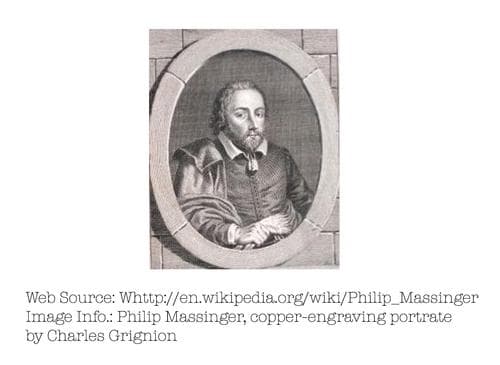
Philip Massinger was an English playwright active during the early 17th century. He is known for his contributions to English drama, with notable works including "The Renegado," which explores themes of love and betrayal. Massinger's plays often reflect the complexities of human relationships and societal issues of his time.
Similar books
- Othello
William Shakespeare
3.9 (315k) average on GoodreadsFictionFeatures themes of exoticism, jealousy, and cultural clash, though 'The Renegado' has a more redemptive arc.
- Harry Potter and the Sorcerer's Stone
J.K. Rowling
4.5 (7M) average on GoodreadsFantasyRescued from a miserable life under the stairs, an orphaned boy discovers he's a wizard destined for a magical school, where he uncovers a dangerous secret tied to the dark wizard who murdered his parents.
- The Hunger Games
Suzanne Collins
4.3 (6.4M) average on GoodreadsFantasyIn a future where children fight to the death on live television, Katniss Everdeen volunteers for the arena, turning a death sentence into a fight for survival and a spark of rebellion.
- Nineteen Eighty-Four
George Orwell
4.2 (5.5M) average on GoodreadsFictionWinston Smith dreams of truth and rebellion in a world where Big Brother watches all, but he confronts the terrifying power of a regime that controls not just actions, but thoughts.
- Pride & Prejudice
Jane Austen
4.3 (4.9M) average on GoodreadsElizabeth Bennet and Mr. Darcy navigate love and misunderstanding, learning that first impressions can be wrong.
- To Kill a Mockingbird
Harper Lee
4.3 (4.5M) average on GoodreadsHistorical FictionIn the 1930s Jim Crow South, Harper Lee writes about racial injustice, moral growth, and the quiet courage of a lawyer father, Atticus Finch, as seen through his young daughter's eyes.





Enjoyed the summary?
A summary gives you the shape of the book. The book itself has the detail, the examples and the voice.
Find The Renegado on AmazonAs an Amazon Associate, BookBrief earns from qualifying purchases. How we're funded