
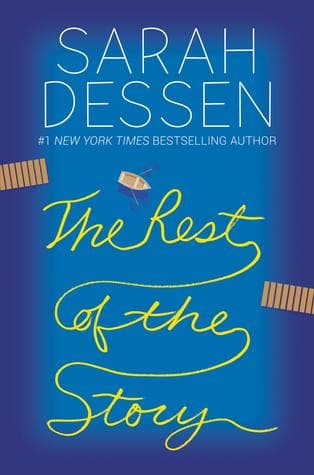
Synopsis
Covers the whole plot, including the ending.
- Difficulty
- Easy
- Pacing
- Moderate
- Mood
- Heartwarming, Nostalgic, Reflective, Romantic
- Read it if
- You enjoy coming-of-age stories about self-discovery, family secrets, and first love set in a charming summer location.
- Skip it if
- You prefer high-stakes plots or stories with minimal introspection and slower romantic development.
The Rest of the Story Plot Summary
Covers the whole plot, including the ending.
An Unexpected Summer at North Lake
Seventeen-year-old Emma Saylor lives a predictable life with her father, Michael. Her mother, Bridget, died when Emma was ten. Her father is about to remarry Mindy, and they are going on a honeymoon. Because of a sudden change, Emma cannot stay with her best friend, Megan. She is sent to North Lake to stay with her maternal grandmother, Mimi, and her mother’s family, whom she has not seen in years. This side of her family, the Starrs, lives in the less wealthy, working-class North Lake community. This is different from the richer Lake North resort where her father’s family spent their summers. Emma feels like an outsider, dealing with a family she barely knows and a place with unclear memories of her mother.
Welcome to the Starr Family and the Two Lakes
When she arrives, Emma is met by the lively Starr family, including her grandmother Mimi, Aunt Mel, Uncle Wayne, and her cousins Corette, Bailey, and Cricket. They call her 'Saylor,' her mother's name, which creates a dual identity for her. She quickly learns about the difference between North Lake, where her mother grew up, and the wealthy Lake North, where her father’s family had a summer home. The Starrs run businesses like The Big House restaurant in North Lake. Emma feels pulled between both worlds, trying to connect her 'Emma' identity from her father's side with her 'Saylor' identity from her mother's.
Reconnecting with Roo and Unearthing Memories
Emma is surprised to see Roo, her best friend from her early childhood summers at North Lake. Roo, now older and working at his family's marina, remembers her as Saylor. He brings back many memories she had forgotten. He shows her places they used to go and tells stories about her mother, Bridget. Through Roo, Emma starts to understand more about her mother's life at North Lake, including her adventurous spirit and her strong connection to the community. This makes Emma feel more connected to her mother's heritage.
Life at The Big House and North Lake Traditions
Emma starts working at The Big House, the family restaurant, with her cousins Corette and Bailey. She sees how the Starr family works, their loyalty, their arguments, and their support for each other. She takes part in North Lake traditions like the annual fireworks display and learns about local stories and history. This helps her feel more a part of the community and closer to her mother's past. She begins to see the charm and strength of North Lake, liking its realness compared to the more polished world of Lake North.
The Mystery of Her Parents' Relationship
Through talks with Mimi, Aunt Mel, and Roo, Emma learns about the difficult relationship between her parents, Bridget and Michael. She finds out that her mother, Bridget, was a free spirit who felt held back by Michael's wealthy Lake North family. Their love was strong but troubled, marked by class differences and expectations. Emma realizes that her parents' marriage was not the simple, happy union her father had described. She begins to understand the conflict her mother must have felt, caught between two different worlds.
Developing Feelings for Roo
As Emma and Roo spend more time together, their bond gets stronger. Roo's patience, his understanding of North Lake, and his shared memories of her mother create a special connection. Emma feels more drawn to him, liking his kindness and how he sees her as 'Saylor.' Their interactions become more personal, with shared secrets, quiet moments, and growing romantic feelings. Emma realizes she is falling for Roo, which excites her and makes her understanding of her place in North Lake more complex.
Confronting Her Father and His Narrative
Emma's father, Michael, visits North Lake near the end of the summer. He brings his neat, controlled version of their family history. He is uncomfortable with Emma being so involved with the Starr family and the working-class area. Emma, now with a fuller understanding of her mother's life and her parents' relationship, questions her father's clean version of events. She talks to him about how he overshadowed her mother's memory and the reasons for their difficult relationship. This leads to a tense but necessary conversation about their past.
The Truth About Bridget's Dreams
Through old journals and conversations, Emma discovers that her mother, Bridget, wanted to be an artist and travel. She largely set these dreams aside after marrying Michael and having Emma. This deeply affects Emma, making her understand her mother's love and the sacrifices she made. Emma realizes that her mother was not just the woman her father described, but an individual with her own goals and inner life. This strengthens Emma's connection to her mother's creative and adventurous spirit.
Choosing Her Own Path
By the end of the summer, Emma has fully accepted her 'Saylor' identity and is part of the Starr family. She feels a deep connection to North Lake and its people, especially Roo. She realizes she does not have to choose between her two identities but can combine them. She decides to pursue art, a passion she shares with her mother, and to keep her connections to North Lake and her maternal family. Her time at the lake has given her a stronger sense of self and a clearer idea for her future, different from what her father wanted for her.
A Future with Both Worlds
As summer ends, Emma gets ready to go home, but she is changed. She has found her 'rest of the story' and understands her rich heritage. She leaves Roo, confirming their romantic relationship with a promise to continue it. She leaves North Lake with a strong sense of belonging and a commitment to the relationships she has built. Emma returns to her father and Mindy with new confidence and clarity, ready to live her full self, carrying the spirit of North Lake and her mother with her.
Principal Figures
Emma Saylor
Protagonist
A seventeen-year-old girl discovering her identity and family history at North Lake.
Emma Saylor is initially presented as a somewhat reserved and compliant teenager, living a structured life with her father. She has suppressed many memories of her mother, Bridget, and experiences a profound sense of loss and an incomplete understanding of her family history. Her summer at North Lake forces her out of her comfort zone, challenging her preconceived notions and leading her to embrace her 'Saylor' identity. She is artistic and observant, slowly piecing together the puzzle of her past. She learns to stand up for herself and articulate her own desires.
Relationships: Michael (father, initially distant but grows closer); Bridget (deceased mother, whose memory she seeks to understand); Roo (childhood best friend, then romantic interest); Mimi (maternal grandmother, a source of comfort and truth); Corette (cousin, initially wary, becomes a close friend)
Roo
Supporting/Romantic Interest
Emma's childhood best friend and a keeper of North Lake's history.
Roo is a kind, patient, and grounded young man who works at his family's marina. He possesses a deep knowledge of North Lake and its history, as well as a strong connection to Emma's mother, Bridget. He remembers Emma as 'Saylor' and acts as her gentle guide, helping her unlock forgotten memories and understand her mother's past. Roo is dependable and observant, and his easygoing nature provides a comforting presence for Emma. He represents the stability and authenticity of North Lake.
Relationships: Emma Saylor (childhood best friend, then romantic interest); Bridget (close family friend, shared history)
Bridget Saylor
Mentioned/Catalyst
Emma's deceased mother, whose life and choices are central to the story's mystery.
Bridget is Emma's mother, who died when Emma was ten. Although deceased, her presence is central to the narrative. She is remembered as a free-spirited, artistic, and adventurous woman deeply connected to North Lake and her Starr family. Her life represents the bridge between the working-class North Lake and the wealthier Lake North, and her choices, particularly her marriage to Michael, are explored throughout the book. She is the 'Saylor' who gave Emma her second name, signifying Emma's connection to her maternal heritage.
Relationships: Emma Saylor (daughter, whose quest is to understand her); Michael (husband, whose family she struggled to fit into); Mimi (mother, with whom she had a close bond); Roo (childhood friend, confidant)
Mimi
Supporting
Emma's maternal grandmother, a wise and loving matriarch of the Starr family.
Mimi is the matriarch of the Starr family and Bridget's mother. She is a warm, insightful, and resilient woman who runs The Big House restaurant. Mimi provides Emma with much-needed comfort, guidance, and unfiltered truths about her mother and the family's history. She represents the heart of North Lake and its values, offering Emma a sense of belonging and an understanding of her roots. Mimi is instrumental in helping Emma reconcile her dual identity and come to terms with her past.
Relationships: Emma Saylor (granddaughter, whom she welcomes and guides); Bridget (daughter, whose memory she cherishes); Corette (granddaughter)
Michael
Supporting
Emma's father, who has a carefully curated narrative of their family's past.
Michael is Emma's protective and somewhat controlling father. He comes from the wealthier Lake North community and prefers a structured, predictable life. He has largely shielded Emma from her mother's side of the family and presented a simplified, idealized version of his marriage to Bridget. His discomfort with North Lake and his reluctance to discuss Bridget's past openly create tension with Emma. He genuinely loves Emma but struggles to understand her need to connect with her maternal heritage.
Relationships: Emma Saylor (daughter, whom he loves but struggles to understand); Bridget (deceased wife, whose memory he tried to control); Mindy (fiancée)
Corette
Supporting
Emma's cousin, initially reserved but becomes a close confidante.
Corette is Emma's cousin, a few years older, who works at The Big House. Initially, she is somewhat reserved and wary of Emma, perhaps due to the long separation and the differences in their backgrounds. However, as Emma integrates into the family and shows genuine interest in North Lake, Corette warms up to her. She becomes a valuable source of information about local life, family dynamics, and even some of Bridget's stories. Corette represents the loyal and hardworking spirit of the Starr family.
Relationships: Emma Saylor (cousin, close friend); Mimi (grandmother)
Bailey
Supporting
Emma's cousin, a lively and outgoing member of the Starr family.
Bailey is another of Emma's cousins, lively, outgoing, and deeply involved in the social fabric of North Lake. She is more immediately welcoming to Emma than Corette, eager to share local gossip and include her in activities. Bailey works at The Big House and embodies the boisterous, friendly nature of the Starr family. She helps Emma navigate the social scene of North Lake and makes her feel more at home.
Relationships: Emma Saylor (cousin, friendly and welcoming); Corette (sister)
Cricket
Supporting
The youngest of Emma's cousins, who quickly bonds with Emma.
Cricket is the youngest of Emma's cousins, a sweet and observant child. She quickly forms an attachment to Emma, seeing her as an exciting new presence in the family. Cricket's innocent questions and observations sometimes inadvertently provide Emma with insights into her mother's past and the family's current dynamics. Her unwavering affection helps Emma feel truly accepted by the Starr family.
Relationships: Emma Saylor (cousin, with whom she forms a quick bond)
Mindy
Mentioned/Supporting
Michael's fiancée, a kind but somewhat naive presence.
Mindy is Michael's fiancée, a kind and well-meaning woman who tries to be supportive of Emma. She is somewhat oblivious to the deeper family dynamics and Emma's emotional journey, often acting as a buffer between Emma and her father. Mindy represents the stable, comfortable life Emma is leaving behind, but she is not presented as an antagonist.
Relationships: Michael (fiancée); Emma Saylor (stepmother-to-be)
Themes & Insights
Identity and Self-Discovery
The main idea is Emma's journey to understand herself by connecting with her mother's past and her mother's family. She uses two names, 'Emma' and 'Saylor,' representing her father's controlled world and her mother's free spirit. By rediscovering her mother's life at North Lake, Emma combines these two parts of herself, realizing she can embrace her full identity. She finds her own artistic voice, like her mother's goals.
“It was like I had two lives, two names, and two families. And I was learning that I didn't have to pick one to be real, or to be me. I could be both.”
Family and Belonging
The novel explores family beyond parents, showing the importance of extended relatives and shared history. Emma first feels like an outsider with the loud Starr family but slowly finds a deep sense of belonging and love. The difference between her father's small, neat family and the large, connected Starr family shows different ways family can be. This is clear in how the Starrs accept Emma as 'Saylor' and share stories, making her feel connected to her roots.
“Family wasn't always just the people you were born with. It was the people you found, the ones who understood you, the ones who were there.”
The Power of Memory and Storytelling
Memory, both personal and shared, is a main idea. Emma has unclear memories of her mother. The story shows her putting them together through stories from her mother's family and Roo. The different stories from her father and the Starrs show how memory can be selective and shaped by viewpoint. By looking at these different stories, Emma builds a more complete and true understanding of her past and her mother's life, which then shapes her future.
“It was like the lake held all the stories, and if you listened close enough, they would tell you everything.”
Class and Social Divide
The difference between working-class North Lake and the wealthy Lake North resort shows a social divide. Emma's parents came from these two worlds, and their marriage was complicated by class. The Starr family shows the strength, community, and realness of North Lake, while her father's world represents polish and expectations. Emma moves between these two places, learning to value both but finding more connection with the down-to-earth nature of North Lake.
“There was North Lake, and there was Lake North. And even though they shared a name, they were two entirely different places, with two entirely different sets of rules.”
First Love and Connection
The romance between Emma and Roo is a big part of her self-discovery. Their connection comes from shared childhood memories and Roo's understanding of her mother's past. Roo gives Emma emotional support and makes her feel truly seen. Their relationship grows in North Lake, showing a natural, real connection that is different from the more surface-level parts of her old life. Their love story is tied to Emma's journey to accept her full identity.
“He was the rest of the story I hadn't known I was missing.”
Plot Devices & Literary Techniques
Dual Identity/Names
The use of 'Emma' and 'Saylor' to represent the protagonist's divided self.
Emma's two names, 'Emma' (her father's preferred name) and 'Saylor' (her mother's nickname for her, used by her maternal family), serve as a powerful symbol of her dual identity. This device highlights her internal conflict and the external pressures she faces to conform to one side of her heritage. As she spends time at North Lake, embracing 'Saylor' allows her to connect with her mother's past and integrate these two parts of herself, ultimately leading to a more complete sense of self. It's a constant reminder of the two worlds she inhabits.
North Lake vs. Lake North
The contrasting settings symbolize social class and differing values.
The geographical and cultural divide between the working-class North Lake and the affluent Lake North resort acts as a central metaphor for the class differences that shaped Emma's parents' relationship and now influence her own identity. North Lake represents authenticity, community, and the Starr family's resilience, while Lake North symbolizes wealth, expectations, and her father's controlled environment. This device allows Emma to experience and compare these two worlds, ultimately choosing to integrate the values of North Lake into her life.
Fragmented Memories and Storytelling
The narrative technique of revealing the past through incomplete recollections and diverse perspectives.
The story employs fragmented memories and multiple perspectives to gradually reveal the truth about Bridget's life and her parents' relationship. Emma's own childhood memories are hazy, and she relies on the stories told by Mimi, Aunt Mel, Roo, and even her father. Each character offers a piece of the puzzle, often with differing biases. This device creates suspense and allows the reader to discover the 'rest of the story' alongside Emma, emphasizing how personal narratives shape understanding and identity.
The Big House Restaurant
A symbolic setting for family, community, and the heart of North Lake life.
The Big House, the Starr family's restaurant, serves as more than just a workplace; it's a central hub for the family and the entire North Lake community. It symbolizes tradition, hard work, and the interconnectedness of the Starrs. For Emma, working there is an immersive experience that helps her understand her roots, observe family dynamics, and feel a sense of belonging. It's a place where stories are shared, and the pulse of North Lake life is most evident, solidifying her connection to her maternal heritage.
The Rest of the Story Quotes
“The hardest part of getting to know someone, I've found, is that you have to give them a piece of yourself, even if you don't know them well enough to know what that piece is yet.”
“It’s funny how you can live your whole life in one place and think you know it, and then you leave and come back, and suddenly it’s all different.”
“Sometimes you just have to take a leap of faith and figure out the landing on the way down.”
“The best kind of summer is the one where you don't plan anything and everything just happens.”
“It’s not about finding someone who completes you, it’s about finding someone who accepts you completely.”
“There are some people you meet and you just know, instantly, that they're going to be important to you.”
“You can never truly go back to who you were, but you can always decide who you want to be next.”
“The thing about family is, you don't get to pick them. But sometimes, if you're lucky, you get to choose how you love them.”
“Sometimes the quietest places hold the loudest stories.”
“It’s amazing how much you can learn about yourself when you're away from everything you thought you knew.”
“The best kind of memories are the ones you don't even realize you're making until they're already made.”
“You don't always need a grand plan. Sometimes you just need to follow the feeling.”
“Every person has a whole world inside them, and sometimes you just need to find the right key to unlock it.”
Quiz
10 questions on the plot and the characters. Each answer comes with a short explanation.
Question 1
Why is Emma unexpectedly sent to spend the summer with her mother's family?
- Her father gets a new job that requires him to travel.
- She needs to help her grandmother who is ill.
- Her dad has to go on his honeymoon after getting remarried.
- She misbehaves and is sent away as a punishment.
Show answer
C. Her dad has to go on his honeymoon after getting remarried. Emma is sent to North Lake because her dad is getting remarried and needs to go on his honeymoon, making it an unexpected but necessary trip.
Question 2
What two distinct communities does Emma discover exist around the lake?
- The bustling tourist town and the quiet retirement village.
- The working-class North Lake and the wealthier Lake North resort.
- The historical preservation society and the modern development.
- The artists' colony and the fishermen's village.
Show answer
B. The working-class North Lake and the wealthier Lake North resort. Emma learns that her mother grew up in the working-class North Lake, while her dad spent summers in the more affluent Lake North resort, highlighting the social divide.
Question 3
What is the significance of the name 'Saylor' to Emma?
- It's the name her father always wanted her to have.
- It's the name her mother always called her and is used by her maternal family.
- It's a nickname given to her by her new friends at the lake.
- It's her grandmother's maiden name.
Show answer
B. It's the name her mother always called her and is used by her maternal family. To her father, she is Emma, but to her mother's family, she is Saylor, the name her mother always called her. This symbolizes her connection to her mother's side and heritage.
Question 4
Who is Roo in relation to Emma?
- A new friend she makes at the resort.
- Her long-lost cousin who lives nearby.
- The boy who was her best friend when she was little.
- A local legend or mythical figure of the lake.
Show answer
C. The boy who was her best friend when she was little. Roo is introduced as the boy who was Emma's very best friend when she was little, and he becomes crucial in helping her understand her past.
Question 5
What role does Roo play in Emma/Saylor's understanding of her family history?
- He provides her with old family documents and photographs.
- He tells her stories and helps her piece together her past and her mother's life.
- He takes her to visit her mother's grave and other significant sites.
- He introduces her to her mother's childhood friends.
Show answer
B. He tells her stories and helps her piece together her past and her mother's life. Roo 'holds the key to her family’s history, and slowly, he helps her put the pieces together about her past,' often through shared memories and explanations.
Question 6
What internal conflict does Emma/Saylor experience throughout the summer?
- Whether to pursue a career in art or follow her father's footsteps.
- Struggling with her feelings for Roo versus another boy at the lake.
- Feeling divided between her predictable life with her dad and her newfound connection to her mother's side.
- Deciding whether to stay at North Lake permanently or return home.
Show answer
C. Feeling divided between her predictable life with her dad and her newfound connection to her mother's side. The narrative explicitly states, 'The more time Emma spends there, the more it starts to feel like she is divided into two people as well,' reflecting the internal conflict between her two lives and identities.
Question 7
What is the central theme explored by Emma's experience of having two different names (Emma and Saylor)?
- The importance of legal names versus nicknames.
- The struggle of identity and belonging to different family legacies.
- The confusion caused by having a common first name.
- A metaphor for the dual nature of humanity.
Show answer
B. The struggle of identity and belonging to different family legacies. The different names symbolize her split identity and the challenge of integrating the two distinct parts of her heritage—her father's world and her mother's world.
Question 8
How does the description of the lake, 'with cold, clear water and mossy trees at the edges,' connect to Emma's mother?
- Her mother was an environmental activist for the lake.
- These are specific details from the stories her mother told her about the lake.
- It describes her mother's favorite swimming spot.
- It's a poetic description Emma creates in memory of her mother.
Show answer
B. These are specific details from the stories her mother told her about the lake. The text states, 'But she does remember the stories her mom told her about the big lake that went on forever, with cold, clear water and mossy trees at the edges,' directly linking these details to her mother's memories.
Question 9
The book's title, 'The Rest of the Story,' most likely refers to:
- Emma learning about the missing parts of her mother's life and her own past.
- The continuation of her romance with Roo after the summer ends.
- The untold history of the North Lake community.
- Emma discovering a secret about her father's past.
Show answer
A. Emma learning about the missing parts of her mother's life and her own past. The phrase 'The Rest of the Story' points to Emma's journey of uncovering the parts of her family history and her mother's life that were previously unknown to her, primarily with Roo's help.
Question 10
By the end of the summer, what is the fundamental question Emma/Saylor faces regarding her identity?
- Whether to pursue her education or start a career.
- Which side of her—Emma or Saylor—will define her future identity.
- If she should move to North Lake permanently to be with Roo.
- How to mend the relationship between her two families.
Show answer
B. Which side of her—Emma or Saylor—will define her future identity. The final sentence of the synopsis directly poses this question: 'But when it’s time to go back home, which side of her will win out?', emphasizing the choice of identity.
The Rest of the Story FAQ
What is 'The Rest of the Story' about?
'The Rest of the Story' follows Emma Saylor, a girl who, after her mother's death, is sent to spend a summer with her mother's family at North Lake. There, she discovers two distinct communities: her working-class maternal family's side and her wealthier paternal family's resort side, forcing her to reconcile her identity as 'Emma' and 'Saylor' while uncovering her family's past and falling for her childhood friend, Roo.
Why should I read 'The Rest of the Story'?
You should read this book for its heartfelt exploration of identity, grief, and family connection. It beautifully portrays the struggle of finding where you belong between two different worlds, all wrapped in a charming summer romance and the nostalgic atmosphere of a lake town.
What is the background/setting of 'The Rest of the Story'?
The story is set at North Lake, a place divided into two distinct communities: the working-class North Lake where Emma's mother grew up, and the affluent Lake North resort where her father spent summers. This dual setting is crucial, symbolizing Emma's internal conflict and the two halves of her family history.
What are the most memorable quotes?
While specific quotes aren't provided in the summary, Dessen's books are known for their poignant observations on life and relationships. Readers often highlight lines that capture the feeling of summer, the complexity of family, or the journey of self-discovery, such as reflections on 'the rest of the story' of one's life.
What writing style does the author use?
Sarah Dessen employs a warm, evocative, and character-driven writing style. Her prose is accessible yet rich with emotional depth, focusing on internal monologues, vivid descriptions of setting, and realistic dialogue that captures the nuances of young adult experiences, particularly in summer settings.
What minor details add significant meaning?
The distinction between Emma being called 'Emma' by her father's side and 'Saylor' by her mother's family is a crucial detail. It's not just a name change, but a symbolic representation of her fractured identity and the two different lives she could lead, each name unlocking a different part of her heritage.
What are some subtle foreshadowing moments?
Emma's fragmented memories of her mother and the recurring imagery of 'the big lake that went on forever' subtly foreshadow her journey of uncovering her mother's past. The initial feeling of being 'divided into two people' hints at the deeper family secrets and the two distinct communities she will encounter.
What unexpected character connections exist?
The most significant unexpected connection is between Emma (Saylor) and Roo. They were best friends as young children, a detail Emma had largely forgotten. Roo not only reignites their past bond but also serves as a crucial link to her mother's history and the North Lake community.
What are unspoken character motivations?
Emma's unspoken motivation is a deep-seated longing to understand her mother, whose memory is fragmented. This desire drives her to embrace her mother's family and the North Lake community, even as she navigates the unfamiliarity and the expectations of her father's world.
What psychological complexities do characters exhibit?
Emma exhibits complex psychological dynamics by feeling torn between two identities – 'Emma' representing her current life with her dad and 'Saylor' representing her mother's heritage. This internal division reflects her struggle to integrate her past and present selves, particularly in the wake of her mother's death.
What are the major emotional turning points?
A major emotional turning point occurs when Emma fully embraces being 'Saylor' among her mother's family, allowing herself to be vulnerable and connect with her roots. Another is her realization of her deep feelings for Roo, which solidifies her connection to North Lake and her rediscovered past.
How do relationship dynamics evolve?
Emma's relationship with her father evolves from predictable comfort to one with more open communication about her mother. Her relationship with her maternal grandmother and cousins deepens from distant relatives to a supportive family unit, while her bond with Roo transforms from a forgotten childhood friendship into a blossoming romance.
Which parts remain ambiguous or open-ended?
While Emma makes choices about her identity, the long-term resolution of how she will balance her two lives – her predictable home life and the magic of North Lake – remains somewhat open-ended. The story concludes with her finding a sense of self, but the future logistics of her divided world are left for the reader to imagine.
What are controversial scenes or decisions?
The summary doesn't detail any overtly controversial scenes. However, Emma's decision to immerse herself so fully in her mother's family, potentially at the expense of her established life with her father, could be a point of debate for readers, as it challenges her previous predictable existence.
'The Rest of the Story' ending explained: how it ends & what it means
The book ends with Emma (Saylor) having a clearer understanding of her mother's past and a stronger sense of her own identity, having embraced both sides of her heritage. She has fallen for Roo and found a deep connection with her maternal family. The ending signifies her integration of the 'Emma' and 'Saylor' parts of herself, suggesting she will carry the lessons and love from North Lake forward, no longer feeling divided.
About the author

Sarah Dessen is an American author known for her young adult fiction that often explores themes of love, friendship, and personal growth. Some of her notable works include Just Listen, The Truth About Forever, Along for the Ride, This Lullaby, Lock and Key, and Keeping the Moon. Dessen's writing has garnered a dedicated readership and has been recognized for its relatable characters and emotional depth.
Similar books
- Along for the Ride
Sarah Dessen
4.1 (186k) average on GoodreadsYoung AdultAnother Sarah Dessen novel with a summer setting, self-discovery, and a sweet romance.
- To All the Boys I've Loved Before
Jenny Han
4.2 (490k) average on GoodreadsYoung AdultWhile both 'The Rest of the Story' and 'To All the Boys I've Loved Before' are prominent YA romances, Han's series often focuses more on the lighter, often comedic, aspects of first love and familial bonds, with a more direct and less introspective narrative style regarding the protagonist's identity crisis. Dessen's novel delves deeper into the psychological impact of past trauma and fragmented identity, making Emma's journey more emotionally complex than Lara Jean's.
- Eleanor & Park
Rainbow Rowell
4.0 (860k) average on GoodreadsYoung AdultRainbow Rowell's 'Eleanor & Park' offers a more gritty and realistic portrayal of young love set against a backdrop of socioeconomic hardship and abuse. While Dessen's 'The Rest of the Story' touches on familial challenges, it maintains a generally more optimistic and less stark tone. 'Eleanor & Park' is often lauded for its raw emotional depth and unflinching look at difficult themes, whereas Dessen provides a more comforting, albeit still meaningful, exploration of self-discovery within a more idyllic setting.
- Harry Potter and the Sorcerer's Stone
J.K. Rowling
4.5 (7M) average on GoodreadsFantasyRescued from a miserable life under the stairs, an orphaned boy discovers he's a wizard destined for a magical school, where he uncovers a dangerous secret tied to the dark wizard who murdered his parents.
- The Hunger Games
Suzanne Collins
4.3 (6.4M) average on GoodreadsFantasyIn a future where children fight to the death on live television, Katniss Everdeen volunteers for the arena, turning a death sentence into a fight for survival and a spark of rebellion.
- To Kill a Mockingbird
Harper Lee
4.3 (4.5M) average on GoodreadsHistorical FictionIn the 1930s Jim Crow South, Harper Lee writes about racial injustice, moral growth, and the quiet courage of a lawyer father, Atticus Finch, as seen through his young daughter's eyes.






Enjoyed the summary?
A summary gives you the shape of the book. The book itself has the detail, the examples and the voice.
Find The Rest of the Story on AmazonAs an Amazon Associate, BookBrief earns from qualifying purchases. How we're funded