
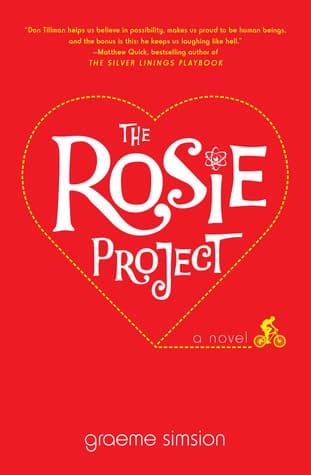
Synopsis
Covers the whole plot, including the ending.
- Difficulty
- Easy
- Pacing
- Moderate
- Mood
- Humorous, Heartwarming, Charming, Witty
- Read it if
- You enjoy quirky characters, heartwarming romance, and a humorous exploration of how love can defy all expectations and logical frameworks.
- Skip it if
- You prefer highly dramatic romances or find socially awkward protagonists frustrating rather than endearing.
The Rosie Project Plot Summary
Covers the whole plot, including the ending.
The Wife Project's Inception
Don Tillman, an intelligent but socially awkward genetics professor in Melbourne, lives by a strict schedule and logical principles. After realizing his difficulty in forming lasting romantic relationships, Don decides to start 'The Wife Project.' His goal is to find a compatible partner using a questionnaire to filter out unsuitable candidates. The questionnaire details preferences for punctuality, rationality, health, and many other traits, specifically excluding smokers, drinkers, and latecomers. He believes that by using logic, he can bypass the emotional aspects of courtship and find his ideal mate, ensuring a successful marriage.
Rosie's Chaotic Arrival
Don's structured world changes when he meets Rosie Jarman, a bartender and genetics PhD student, who arrives late for their first meeting (which Don mistakenly thinks is a date setup by his friend Gene). Rosie is the opposite of everything on Don's Wife Project questionnaire: she smokes, drinks, is often late, and is emotionally expressive. Despite her failing all his criteria, Don is interested in her sharp mind and personality. Rosie needs Don's genetics knowledge to help her find her biological father, whom she believes is one of her mother's medical school classmates from twenty years ago, a quest she calls 'The Father Project.'
The Father Project Begins
Don, a logical problem-solver, is interested in the challenge of Rosie's 'Father Project.' He agrees to help her, seeing it as a complex genetic puzzle, and temporarily puts aside his Wife Project. Their work involves unconventional methods to collect DNA samples from Rosie's mother's past classmates. This includes creating disguises, arranging 'accidental' encounters, and even manipulating social events, often with humorous and awkward results. Don finds himself increasingly involved in Rosie's chaotic world, making him change his routines and embrace spontaneity, much to his surprise and the amusement of his friends, Gene and Claudia.
Unconventional DNA Collection
Their search for Rosie's father leads them on elaborate and comical adventures. Don creates a system to narrow down the list of potential fathers, based on Rosie's mother's memories and secret DNA collection missions. They crash a university reunion, where Don tries to gather hair samples from discarded combs. They also hold a 'cocktail party' at Don's apartment to collect DNA from a selected group of candidates by having them unknowingly contribute to a 'scientific experiment' involving their saliva. These escapades push Don outside his comfort zone, forcing him to engage in social interactions he would normally avoid and to improvise when his plans go wrong, often with Rosie's more intuitive suggestions.
Growing Closeness and Misunderstandings
As Don and Rosie spend more time together on the Father Project, a deep bond forms between them. Don, despite his logical approach, finds himself enjoying Rosie's company and even changing his routines for her. He experiences new emotions, though he struggles to identify or express them in a way Rosie understands. Their close work, however, leads to misunderstandings, especially about their relationship. Rosie, frustrated by Don's lack of emotional clarity and his continued pursuit of The Wife Project, sometimes feels like just another scientific problem to him, causing tension and arguments.
The Father Revealed and Emotional Fallout
Through their efforts, Don identifies Rosie's biological father: Phil, a man who had been a close friend to Rosie's mother for years. The revelation shocks both Rosie and her mother, who genuinely believed Phil was not the father. Rosie is initially overwhelmed by the news, grappling with the implications for her identity and her relationship with her mother. Afterwards, an argument happens between Don and Rosie. Rosie feels that Don, in his scientific detachment, did not understand the emotional weight of her quest, and she is hurt by his inability to show his feelings for her, leading her to distance herself from him.
Don's Emotional Awakening
Rosie decides to move to New York to pursue her academic career, leaving Don feeling a sense of loss. Her departure causes Don's emotional awakening. He realizes that his logical world is incomplete without her and that his feelings for Rosie are beyond any statistical analysis. With help from Gene and Claudia, Don starts to process his emotions, recognizing that he is in love with Rosie. He understands that love is not about perfect compatibility on paper, but about their unique connection. This realization prompts him to make a grand, uncharacteristic gesture to win her back.
The New York Pursuit
Determined to win Rosie back, Don sells his apartment, buys new clothes, and flies to New York, completely changing his planned life. He finds Rosie at a scientific conference and, in a moment of emotional vulnerability, declares his love for her. He explains that she has changed him, making him realize that his previous definition of a 'perfect' partner was wrong and that she, in her imperfection, is the only woman he wants. This public, heartfelt confession, a complete change from his usual reserved manner, moves Rosie, who finally sees the depth of his feelings.
A New Beginning
Rosie, touched by Don's gesture and recognizing his sincerity, returns his feelings. They reconcile, acknowledging their love and commitment. Don, having changed, is now more open to spontaneity and emotional expression, while Rosie has found a sense of belonging and acceptance with Don. They decide to move forward together, embracing their individual quirks and the unconventional nature of their relationship. The novel ends with them starting their life together in New York, looking forward to a future where logic and love can exist, in a messy and unpredictable way.
Principal Figures
Don Tillman
Protagonist
A highly intelligent but socially challenged genetics professor seeking a logical partner.
Don Tillman is a brilliant genetics professor who adheres to a strict, logical, and highly structured life. He struggles with social cues, empathy, and emotional expression, leading him to believe he is not wired for romance. He approaches dating like a scientific experiment, creating 'The Wife Project' to find a compatible partner based on objective criteria. His journey with Rosie forces him to confront his rigid worldview, challenging his reliance on logic and opening him up to the complexities of human emotion and love. He is meticulous, punctual, and highly intelligent, often taking things literally.
Relationships: Rosie Jarman (Love interest, initially an antithesis to his ideal, later his wife); Gene (Close friend, colleague, and confidant); Claudia (Close friend, Gene's wife, offers emotional guidance)
Rosie Jarman
Love Interest / Co-protagonist
A vivacious, chaotic, and intelligent genetics PhD student on a quest for her biological father.
Rosie Jarman is a spirited, independent, and emotionally expressive woman studying for her PhD in genetics while working as a bartender. She is everything Don's Wife Project questionnaire rejects: she smokes, drinks, is often late, and is fiercely impulsive. Rosie is on a quest to find her biological father, known as 'The Father Project,' which inadvertently brings her into Don's life. She challenges Don's rigid worldview and forces him to embrace spontaneity and emotion, ultimately helping him to understand love. She is intelligent, resilient, and deeply values emotional connection.
Relationships: Don Tillman (Love interest, initially a scientific collaborator, later her husband); Gene (Acquaintance, Don's friend); Claudia (Acquaintance, Gene's wife); Phil (Biological father); Julia (Mother)
Gene
Supporting
Don's charismatic, philandering best friend and colleague.
Gene is Don's best friend and a colleague at the university. He is a charming, intelligent, but morally ambiguous man who frequently engages in extramarital affairs, which causes strain in his marriage with Claudia. Despite his personal flaws, Gene genuinely cares for Don and often tries to guide him through social situations, sometimes with questionable advice. He is instrumental in encouraging Don to pursue The Wife Project and later helps him understand his feelings for Rosie. He represents a more 'normal' but flawed approach to relationships, contrasting with Don's highly analytical method.
Relationships: Don Tillman (Best friend and colleague); Claudia (Wife, in a strained marriage); Rosie Jarman (Acquaintance, initially tried to set her up with Don)
Claudia
Supporting
Gene's long-suffering wife and a source of emotional wisdom for Don.
Claudia is Gene's wife and a close friend to Don. She is a compassionate and insightful woman who is deeply affected by Gene's philandering but remains committed to him. Claudia often acts as an emotional interpreter for Don, helping him understand social nuances and the complexities of human feelings, particularly his own. She provides a grounded, empathetic perspective that contrasts with Don's logical approach and Gene's more hedonistic one. She is a stable, supportive presence in Don's life, offering guidance and encouragement as he navigates his relationship with Rosie.
Relationships: Don Tillman (Close friend, confidante); Gene (Husband, in a strained marriage); Rosie Jarman (Acquaintance)
Phil
Supporting
Rosie's biological father, a former medical school classmate of her mother.
Phil is one of the candidates for Rosie's biological father. He was a medical school classmate of Rosie's mother, Julia, and maintained a close, platonic friendship with her for many years. He is portrayed as a kind, somewhat reserved man. His identity as Rosie's father is a significant plot twist, as neither he nor Julia had ever suspected it. His character highlights the unforeseen consequences of past relationships and the complexities of family secrets. He is a gentle and unassuming presence in the narrative, becoming an important figure in Rosie's life once his paternity is revealed.
Relationships: Rosie Jarman (Biological daughter); Julia (Former classmate, mother of Rosie)
Julia
Supporting
Rosie's mother, who had a complex past in medical school.
Julia is Rosie's mother, a woman with a somewhat mysterious past regarding her medical school days. She is initially reluctant to discuss the details of her past relationships, making Rosie's 'Father Project' challenging. Julia is a loving mother but has kept secrets about Rosie's conception, believing she knew who the father was. Her character represents the emotional complexities and hidden histories within families. The revelation of Phil as Rosie's father forces Julia to confront her past and re-evaluate her understanding of her own life and relationships.
Relationships: Rosie Jarman (Daughter); Phil (Former classmate, biological father of Rosie)
Professor Errol
Mentioned
A senior academic and colleague of Don and Gene.
Professor Errol is a senior academic at the university where Don and Gene work. He is mentioned periodically as a figure of authority and sometimes a target for Don's social observations. He is not a major character but serves to illustrate the professional environment and the social dynamics within the university setting. Don sometimes reports his observations of Errol's behavior, often through a detached, analytical lens, further highlighting Don's unique perspective on social interaction.
Relationships: Don Tillman (Colleague); Gene (Colleague)
Themes & Insights
Identity and Self-Discovery
The novel explores how individuals define themselves and find who they are, often through unexpected relationships. Don, initially defined by his logical approach to life, changes, realizing his identity includes emotions he previously ignored. Rosie's 'Father Project' is a literal search for her biological identity, which helps her understand her place in the world. Both characters' journeys show that identity changes through experience and connection, challenging old ideas of self.
“I had been living a life of my own design, and it had been a good life. But it was no longer enough.”
Love vs. Logic
A main theme is the conflict and eventual joining of logical reasoning and emotional experience, especially in love. Don's 'Wife Project' tries to apply logic to finding a partner, believing love can be measured. Rosie, with her chaotic and emotional nature, directly challenges this idea. The story shows that while logic can solve problems, love works differently, requiring vulnerability, acceptance of imperfection, and emotional intelligence that goes beyond science. Don's journey proves that true love often defies logical categorization.
“Love is not a statistical phenomenon.”
Social Norms and Neurodiversity
The book explores the challenges faced by people who do not fit typical social norms, especially through Don's likely undiagnosed neurodivergence (often seen as Asperger's Syndrome). Don carefully observes and tries to follow social rules, often failing humorously due to his literal interpretation and lack of intuitive understanding of human emotion. The story shows the difficulties of navigating a world built on unspoken social cues and empathy, and how different ways of thinking can lead to misunderstandings and unique strengths. Rosie's acceptance of Don's quirks is important for his integration.
“I am not good at reading social cues, but I am excellent at reading data.”
The Nature of Family
The idea of family, both biological and chosen, is explored through Rosie's 'Father Project' and Don's changing relationships. Rosie's quest reveals that biological ties can be unexpected and complex, challenging her long-held assumptions about her family history. At the same time, Don finds a sense of 'family' with Rosie, Gene, and Claudia, even though they are not biologically related. The book suggests that family is not just defined by genetics but also by the bonds of love, support, and shared experiences that people choose to build, showing the importance of emotional connection over pure biology.
“Perhaps the greatest scientific discovery of all is that there is no formula for happiness.”
Plot Devices & Literary Techniques
The Wife Project Questionnaire
A detailed questionnaire designed to find Don's ideal partner based on objective criteria.
This elaborate, multi-page questionnaire is Don's primary tool for selecting a compatible partner. It details highly specific requirements and exclusions (e.g., non-smoker, punctual, logical, non-barmaid). The questionnaire serves as a central plot device by immediately setting up the conflict when Rosie, who fails every criterion, enters Don's life. It highlights Don's logical, analytical approach to relationships and provides a humorous contrast to the messy reality of human connection. Its ultimate failure to identify Don's true love underscores the novel's theme that love defies pure logic.
The Father Project
Rosie's quest to find her biological father, which drives the main plot and brings her and Don together.
The Father Project is Rosie's personal mission to identify her biological father from a pool of her mother's former medical school classmates. This project serves as the primary catalyst for Don and Rosie's interaction and the development of their relationship. It provides a structured, scientific challenge that appeals to Don's logical mind, allowing him to engage with Rosie without immediately confronting romantic feelings. The various schemes they devise to collect DNA samples generate much of the comedic action and force Don out of his comfort zone, accelerating his personal growth and their bond.
First-Person Narrative (Don's Perspective)
The story is told entirely from Don Tillman's unique, highly logical, and often literal viewpoint.
The novel is narrated exclusively by Don Tillman, providing readers with direct access to his internal monologue, his logical deductions, and his struggle to understand social norms and emotions. This narrative choice is crucial to the book's humor and its thematic exploration of neurodiversity. It allows the audience to experience the world through Don's unique lens, appreciating his intellect while also understanding the challenges he faces in social interactions. It creates empathy for Don and highlights the gap between his logical interpretations and the emotional reality of situations, particularly in his relationship with Rosie.
Opposites Attract Trope
The central romantic relationship is built on the stark contrast between the two protagonists.
The 'opposites attract' trope is a fundamental plot device, central to the romantic comedy aspect of the novel. Don is meticulously organized, logical, and socially awkward, while Rosie is spontaneous, chaotic, emotional, and socially adept. Their contrasting personalities create inherent conflict, humor, and ultimately, a powerful attraction. Their journey together demonstrates how two vastly different individuals can complement each other, with Rosie helping Don to embrace emotion and spontaneity, and Don providing Rosie with stability and intellectual support. This dynamic reinforces the idea that love isn't about finding an identical match, but someone who broadens one's world.
The Rosie Project Quotes
“It is not possible to be a little bit in love. It is like being a little bit pregnant.”
“The problem with people who have no imagination is that they are unable to imagine what it is like to have no imagination.”
“I am not a person who is easily swayed by emotion. I am a person who is easily swayed by data.”
“I have a theory that the best way to get to know someone is to observe them in a crisis.”
“Love is not a checklist. It is a feeling.”
“I am an academic. I am paid to think.”
“My genetic material is excellent. My social skills are, perhaps, not so excellent.”
“Sometimes the most logical thing to do is to be illogical.”
“I was about to embark on a project that would change my life. The Wife Project.”
“The greatest danger in life is not taking risks. It is taking no risks at all.”
“I had established the protocols. I had designed the questionnaire. I had even prepared a preliminary schedule.”
“Perhaps I was not designed for this. Perhaps I was designed for something else. Something more logical.”
“Love does not require a genetic match. It requires a human match.”
Quiz
10 questions on the plot and the characters. Each answer comes with a short explanation.
Question 1
What is the primary goal of Don Tillman's 'Wife Project' at the beginning of the novel?
- To find a woman who shares his passion for genetics.
- To find a statistically perfect partner based on a rigorous questionnaire.
- To prove to his friends that he is capable of a long-term relationship.
- To find a woman who can assist him with his research.
Show answer
B. To find a statistically perfect partner based on a rigorous questionnaire. Don approaches the 'Wife Project' with his typical scientific rigor, developing a detailed questionnaire to filter potential partners based on specific criteria, rather than subjective feelings or shared interests.
Question 2
What is Rosie Jarman's initial quest when she first encounters Don?
- To find a place to stay after moving to a new city.
- To get Don's help with a complex genetic research project.
- To find her biological father with Don's expertise in DNA.
- To prove that Don's 'Wife Project' is flawed.
Show answer
C. To find her biological father with Don's expertise in DNA. Rosie is on a personal mission to locate her biological father, and she seeks out Don, a genetics professor, hoping his knowledge of DNA can assist her in this 'Father Project'.
Question 3
Which of the following is NOT one of the characteristics Don initially seeks in his ideal partner for the Wife Project?
- Punctual
- Logical
- A smoker or drinker
- Not a late-arriver
Show answer
C. A smoker or drinker Don explicitly states that his ideal partner would 'most definitely not' be a barmaid, a smoker, a drinker, or a late-arriver. He prefers someone who is punctual and logical.
Question 4
How does Don's perspective on love evolve throughout his interactions with Rosie?
- He realizes that love is purely a chemical reaction, as he initially suspected.
- He concludes that love is an irrational social construct and abandons the idea.
- He learns that love can be spontaneous and doesn't always conform to logical criteria.
- He finds that his initial questionnaire was perfectly accurate in predicting compatibility.
Show answer
C. He learns that love can be spontaneous and doesn't always conform to logical criteria. Don's structured 'Wife Project' is gradually overshadowed by his spontaneous and often chaotic experiences with Rosie, leading him to understand that love defies strict logic and 'is not always what looks good on paper'.
Question 5
What is Don's profession?
- Theoretical Physicist
- Professor of Genetics
- Data Scientist
- Behavioral Psychologist
Show answer
B. Professor of Genetics The book clearly states that Don Tillman is a 'professor of genetics', which is why Rosie seeks his expertise for her 'Father Project'.
Question 6
Why is Don described as being 'socially challenged'?
- He has a severe fear of public speaking.
- He struggles with understanding and navigating typical social rituals and cues.
- He prefers to isolate himself and avoid all human interaction.
- He is often rude and intentionally offensive to others.
Show answer
B. He struggles with understanding and navigating typical social rituals and cues. Don's 'lifelong difficulty with social rituals' is a core aspect of his character, making him perceive himself as 'not wired for romance' and contributing to his logical, rather than emotional, approach to relationships.
Question 7
What event significantly disrupts Don's orderly 'Wife Project' plan?
- A sudden career opportunity that requires him to move to a different country.
- His apartment building undergoes unexpected renovations.
- His involvement in Rosie's 'Father Project'.
- He decides to adopt a pet, which takes up all his free time.
Show answer
C. His involvement in Rosie's 'Father Project'. The summary explicitly states that 'Don's Wife Project takes a back burner to the Father Project' once he becomes involved in helping Rosie find her biological father, indicating this as the major disruption.
Question 8
How does Don's initial impression of Rosie conflict with his established criteria for a wife?
- She is quiet and reserved, while he seeks someone outgoing.
- She is a barmaid, a smoker, a drinker, and often late, all traits he explicitly excluded.
- She is highly intellectual, but he prefers someone less academic.
- She is overly organized, clashing with his preference for spontaneity.
Show answer
B. She is a barmaid, a smoker, a drinker, and often late, all traits he explicitly excluded. The book highlights that Rosie 'is all these things' – a barmaid, a smoker, a drinker, and a late-arriver – directly contradicting the specific negative criteria Don had established for his ideal partner.
Question 9
What is the overarching theme explored by Don's journey from the 'Wife Project' to his relationship with Rosie?
- The importance of strict adherence to one's initial plans.
- The triumph of scientific methodology over human emotion.
- The idea that true love often defies logic and expectations.
- The necessity of finding someone with identical personality traits.
Show answer
C. The idea that true love often defies logic and expectations. The narrative's central conflict and resolution demonstrate that love is 'not always what looks good on paper' and can emerge from unexpected connections that challenge logical, predetermined criteria.
Question 10
Don's 'Wife Project' is based on the statistical probability that...
- He will eventually find someone with similar genetic markers.
- There is someone for everyone, given enough data points.
- His friends will eventually introduce him to the right person.
- Romantic attraction is entirely predictable through algorithms.
Show answer
B. There is someone for everyone, given enough data points. The summary states that Don 'must concede to the statistical probability that there is someone for everyone', which forms the foundational premise for his logical, data-driven approach to finding a partner.
The Rosie Project FAQ
What is 'The Rosie Project' about?
'The Rosie Project' is a heartwarming romantic comedy about Don Tillman, a highly intelligent but socially awkward genetics professor who designs a rigorous questionnaire, 'The Wife Project,' to find his ideal partner based on logic and compatibility. His plans are upended when he meets Rosie Jarman, a spontaneous, unconventional woman who is the antithesis of his criteria, yet captivates him as he helps her find her biological father.
Why should I read 'The Rosie Project'?
You should read 'The Rosie Project' for its unique blend of humor, romance, and insightful character development. It offers a fresh perspective on love and relationships through the eyes of a neurodivergent protagonist, providing both laugh-out-loud moments and genuinely touching insights into human connection and the unexpected ways love can blossom.
What is the background/setting of 'The Rosie Project'?
The story is primarily set in Melbourne, Australia, where Don Tillman works as a professor of genetics at a university. Much of the narrative unfolds in various urban settings, from Don's meticulously organized apartment to restaurants and social gatherings, as well as during a significant trip to New York City for Rosie's Father Project.
What are the most memorable quotes?
One memorable quote is, 'I am not a psychopath. I am a high-functioning individual with Asperger's Syndrome.' This line, though not explicitly stated as Asperger's in the book, perfectly encapsulates Don's self-perception and his struggle with social norms. Another is, 'Love is not a system of rewards and penalties.' This reflects Don's evolving understanding of emotion beyond logical constructs.
What writing style does the author use?
Graeme Simsion employs a first-person narrative from Don Tillman's perspective, characterized by a dry, logical, and often hilariously literal voice. The writing is precise and detail-oriented, reflecting Don's scientific mind, but it also gradually reveals a deep emotional undercurrent as Don's experiences broaden his understanding of human behavior and feeling.
What minor details add significant meaning?
Don's meticulously planned daily schedule and his color-coded wardrobe, initially presented as quirky habits, subtly highlight his need for control and predictability, which Rosie's chaotic presence gradually deconstructs. His precise method for preparing lobster thermidor, a seemingly trivial detail, becomes a metaphor for his attempt to apply scientific rigor to romance.
What are some subtle foreshadowing moments?
Early in the book, Don's rigid criteria for 'The Wife Project' are so extreme that they subtly foreshadow the unsuitability of any woman who perfectly fits them, hinting that his true match will be someone entirely different. His initial discomfort with Rosie's smoking and lateness, which he categorizes as immediate disqualifiers, subtly sets up their eventual acceptance and even affection.
What unexpected character connections exist?
The most significant unexpected connection is Don's unwitting involvement in Rosie's 'Father Project.' What starts as a scientific consultation for a friend's friend evolves into a deeply personal quest that intertwines Don's life with Rosie's in ways neither anticipated, making their initial connection far more profound than a simple romantic interest.
What are unspoken character motivations?
Rosie, despite her outward confidence and independent spirit, harbors a deep-seated desire for belonging and understanding, particularly stemming from the mystery of her biological father. Her occasional impulsiveness can be interpreted as a coping mechanism for her unresolved past and a way to exert control in an unpredictable world.
What psychological complexities do characters exhibit?
Don exhibits traits consistent with Asperger's Syndrome, manifesting as difficulty with social cues, literal interpretation of language, and a strong preference for routine and logic over emotion. Rosie, on the other hand, grapples with abandonment issues and a need for self-discovery, which fuel her passionate but sometimes erratic behavior, making their dynamic a study in contrasts.
What are the major emotional turning points?
A major turning point occurs when Don defends Rosie against his university colleagues' judgmental comments, demonstrating his burgeoning emotional connection and loyalty over his usual adherence to social norms. Another is when Don travels to New York to help Rosie with the Father Project, fully committing to her quest and prioritizing her needs over his own structured life.
How do relationship dynamics evolve?
Don and Rosie's relationship evolves from a purely transactional arrangement (Don helping Rosie with DNA analysis) to a deep emotional bond. Initially, Don views Rosie through the lens of his 'Wife Project' criteria, but as they spend time together, his rigid expectations dissolve, replaced by genuine affection, understanding, and a willingness to embrace her imperfections, fundamentally altering his perception of love.
Which parts remain ambiguous or open-ended?
While the immediate romantic outcome is clear, the long-term implications of Don and Rosie's unconventional relationship, especially regarding how Don will continue to navigate social complexities and Rosie will adapt to a more structured life, are left somewhat open-ended. The book focuses more on the journey of them finding each other rather than a detailed blueprint for their future.
What are controversial scenes or decisions?
One potentially controversial aspect is Don's initial, highly clinical approach to finding a wife, which some might view as dehumanizing or overly simplistic for such a complex human endeavor. His attempts to 'optimize' social interactions and his blunt honesty, though often humorous, can also be seen as socially inappropriate or insensitive by some readers.
'The Rosie Project' ending explained: how it ends & what it means
The book ends with Don abandoning 'The Wife Project' and proposing to Rosie, recognizing that she is his perfect match precisely because she challenges his rigid worldview and brings chaos and joy into his life. They move to New York together, signifying Don's willingness to embrace spontaneity and a life beyond his carefully constructed routines, and Rosie's acceptance of Don for who he is, flaws and all. It means that true love often defies logic and expectations.
About the author
Graeme Simsion is an Australian author known for his fiction, particularly the popular novels The Rosie Project and its sequel, The Rosie Effect. His works often explore themes of love and relationships through unique and humorous narratives. Simsion's writing has garnered a significant readership and has been translated into multiple languages.
Similar books
- Eleanor Oliphant Is Completely Fine
Gail Honeyman
4.3 (708k) average on GoodreadsLiterary FictionFeatures a socially awkward protagonist learning to navigate human connection and find love.
- A Man Called Ove
Fredrik Backman
4.4 (569k) average on GoodreadsFictionPresents a curmudgeonly yet endearing protagonist whose life is changed by unexpected relationships.
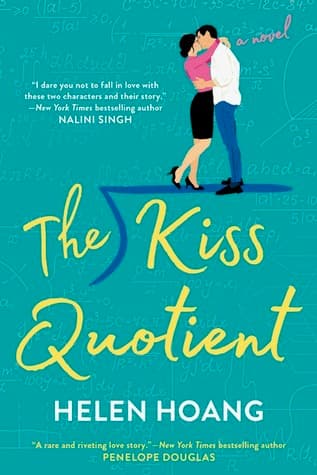
- The Kiss Quotient
Helen Hoang
3.9 (141k) average on GoodreadsRomanceHoang's novel offers a more explicit and detailed exploration of autism spectrum disorder, particularly focusing on female representation and sensory experiences. It delves deeper into the internal world and therapeutic journey of its autistic protagonist, Stella Lane, providing a more direct and detailed representation of autism in romance.
- The Hunger Games
Suzanne Collins
4.3 (6.4M) average on GoodreadsFantasyIn a future where children fight to the death on live television, Katniss Everdeen volunteers for the arena, turning a death sentence into a fight for survival and a spark of rebellion.
- The Great Gatsby
F. Scott Fitzgerald
3.9 (3.8M) average on GoodreadsHistorical FictionIn the opulent Roaring Twenties, a mysterious millionaire's lavish parties hide his desperate, tragic pursuit of a lost love, exposing the emptiness within the American Dream.
- The Fault in Our Stars
John Green
4.2 (3.6M) average on GoodreadsYoung AdultA girl with a terminal illness finds her story rewritten when a charming boy with a similar past enters her life at a cancer support group, leading to a star-crossed romance.





Enjoyed the summary?
A summary gives you the shape of the book. The book itself has the detail, the examples and the voice.
Find The Rosie Project on AmazonAs an Amazon Associate, BookBrief earns from qualifying purchases. How we're funded