
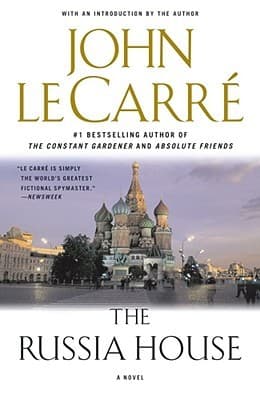
The Russia House Plot Summary
Covers the whole plot, including the ending.
The Moscow Manuscript
A package of highly sensitive Soviet military secrets, written by a disillusioned physicist named Yakov, arrives at a Moscow book fair, delivered to British publisher Bartholomew 'Barley' Blair. The manuscript, called 'Katalog,' details significant weaknesses in Soviet missile capabilities, challenging Western intelligence's assumptions about Soviet strength. Yakov, using the name 'Bluebird,' gives the documents to Katya Orlova, a charming and resourceful young woman who works for a Soviet publishing house. Katya, not knowing the documents' true importance, simply follows Yakov's instructions to deliver them to Barley, whom Yakov trusts because of his past interactions with the Soviet literary world and his perceived anti-establishment views.
Barley's Recruitment
The manuscript, after passing from Katya to Barley's literary contact in Moscow, reaches British Intelligence (the 'Circus') in London. Recognizing its strategic value, the Circus, led by Ned and Walter, needs to verify its authenticity and source. They identify Barley Blair, a charming but somewhat disorganized jazz-loving publisher, as the unwitting link. Despite his initial reluctance and dislike for espionage, Barley is blackmailed into becoming their agent. His unique ties to the Soviet literary community and his initial contact with Katya make him the ideal, though untrained, operative to re-establish communication with the source and verify the information.
Operation 'Russia House' Initiated
Barley undergoes a crash course in espionage, to his exasperation and his handlers' amusement. He learns how to use surveillance detection routes, secure communication methods, and cover stories, all while struggling with the moral implications of his new role. The mission, codenamed 'Russia House,' aims for him to return to Moscow under the guise of attending another book fair. His main goal is to re-establish contact with Katya Orlova, gain her trust, and through her, verify the existence and identity of 'Bluebird' (Yakov) and the 'Katalog' documents. The intelligence agencies are divided on whether the information is genuine or a sophisticated disinformation campaign.
First Contact with Katya
Barley successfully re-enters Moscow and, following instructions, contacts Katya Orlova. Their initial meetings are tense, with Katya wary and Barley struggling to maintain his cover while navigating Soviet society. However, a real connection begins to form between them. Barley is captivated by Katya's intelligence, resilience, and beauty, while Katya is drawn to Barley's unconventional charm and sincerity, a stark contrast to her rigid world. He learns that Katya is not an agent but a loyal friend of Yakov, acting out of duty and affection for the physicist.
The Hunt for Yakov
With Katya's help, Barley begins the difficult task of locating Yakov. Katya, committed to her friend, uses her network of contacts within the Soviet literary and scientific communities to search for him, all while under constant, subtle KGB surveillance. Barley, increasingly caught in the human drama, finds his priorities shifting from intelligence gathering to protecting Katya and, by extension, Yakov. The intelligence agencies in London and Washington grow impatient, demanding more concrete evidence and direct contact with 'Bluebird,' putting immense pressure on Barley and increasing the risks for Katya.
The Deeper Conspiracy
As Barley investigates, he learns that Yakov's reasons for leaking the documents are not solely political. Yakov is a man disillusioned by the Soviet system, but also a moralist concerned about the arms race and the potential for a catastrophic war. He believes that revealing the truth about Soviet military weaknesses could force the West to de-escalate and engage in more meaningful disarmament talks. This revelation complicates Barley's mission, as it suggests Yakov is not merely a defector but a proactive peacemaker, challenging the simple 'us vs. them' narrative of the Cold War.
Love and Betrayal
Barley's affection for Katya grows into deep love. He recognizes the immense danger she is in and the personal sacrifice she has made for Yakov. His loyalty shifts from the intelligence agencies to Katya. He questions the morality of his mission and the cynical manipulation by his handlers. He considers abandoning the mission altogether and finding a way to protect Katya, even if it means risking his own life and freedom. This internal conflict puts him at odds with Ned and Walter, who view Katya as a means to an end, a tool to access Yakov.
The Interrogation of Yakov
Through Katya's efforts, Barley finally arranges a clandestine meeting with Yakov. The encounter is tense and dangerous. Yakov, a brilliant but fragile man, confirms the authenticity of the 'Katalog' documents and elaborates on the strategic vulnerabilities he detailed. He repeats his desire for peace and his belief that exposing the truth about Soviet capabilities is the only way to prevent a nuclear conflict. Barley, now fully convinced of Yakov's sincerity and the truth of his claims, transmits this information back to London, urging his handlers to take Yakov's message seriously.
The Western Response
Despite Barley's reports and Yakov's revelations, intelligence establishments in both Britain and the United States react with skepticism and, ultimately, dismissal. The information from 'Katalog,' suggesting Soviet military inferiority, contradicts their long-held assumptions and the strategic narratives that justify massive defense spending and aggressive foreign policy. Rather than accept a truth that would destabilize their own power structures, they believe Yakov is either a disinformation agent or simply misinformed. This rejection deeply frustrates Barley, who sees the tragic irony of their unwillingness to accept a genuine olive branch.
Realizing that Yakov's information will be ignored and that both he and Katya are now expendable, Barley devises a desperate plan to save them. He uses his intelligence channels to warn Katya of the danger, urging her to go into hiding with Yakov. He understands that the intelligence agencies, having extracted what they wanted (or dismissed it), will likely abandon or even sacrifice them to tie up loose ends. This act of defiance against his handlers shows his complete shift in loyalty. He tries to arrange for their escape, but time is running out, and Soviet authorities are closing in.
Katya's Arrest
Despite Barley's frantic efforts, the KGB apprehends Katya. The intelligence agencies, having obtained the information they sought (or decided against it), consider the mission concluded. Barley is devastated by Katya's capture, feeling personally responsible for her fate. The novel leaves Yakov's ultimate destiny unclear, strongly implying that Soviet authorities have also neutralized him. Barley is left with the crushing realization that his mission, intended to uncover truth, has instead led to the suffering of the very people he had come to care for, and that those in power have ignored the truth itself.
Aftermath and Disillusionment
Barley returns to the West, a broken and disillusioned man. He is debriefed, but his warnings and protests about Katya's fate and the dismissal of Yakov's information are ignored. The intelligence apparatus quickly moves on, eager to bury the 'Russia House' operation and its inconvenient truths. Barley grapples with the moral compromises he made, the love he lost, and the cynicism of a system that prioritizes its own narratives over genuine intelligence and human lives. He is a changed man, no longer the carefree publisher, but one scarred by the brutal realities of the Cold War and the betrayal of trust.
The Russia House Characters
Bartholomew 'Barley' Blair
Protagonist
A charming, unconventional British publisher coerced into espionage.
Barley Blair is a middle-aged, somewhat bohemian British publisher with a passion for jazz and a detached, ironic view of the world. He is intelligent, articulate, and possesses a unique ability to connect with people, particularly within the Soviet literary sphere. Initially an unwitting pawn, he is reluctant to engage in espionage but is manipulated into the 'Russia House' operation. He is characterized by his moral compass, which increasingly conflicts with the cynical machinations of the intelligence world. His initial aloofness gradually gives way to deep empathy and love for Katya.
Relationships: Katya Orlova (Deep romantic love and mutual trust); Ned (Handler, manipulative and cynical); Walter (Handler, pragmatic and detached); Yakov (Source, respected for his integrity and idealism)
Katya Orlova
Supporting
A beautiful and courageous Soviet woman who acts as a go-between for Yakov and Barley.
Katya Orlova is a resourceful and intelligent Soviet woman who works in a publishing house. She is fiercely loyal to her friends, particularly Yakov, and acts as his conduit to the West out of a sense of duty and affection, not political ambition. She is initially wary of Barley but comes to trust and love him deeply. Katya embodies the human cost of the Cold War, a civilian caught between powerful ideological forces. She is courageous, pragmatic, and possesses a quiet dignity despite the immense risks she takes.
Relationships: Barley Blair (Deep romantic love and mutual trust); Yakov (Close friendship, protective and supportive)
Yakov
Supporting
A brilliant but disillusioned Soviet physicist who leaks vital military secrets.
Yakov, codenamed 'Bluebird,' is a highly intelligent Soviet physicist and military scientist. He is the author of the 'Katalog' documents, revealing critical weaknesses in Soviet missile technology. His motivations are driven by a profound disillusionment with the arms race and a moral imperative to prevent global conflict. He is an idealist, believing that exposing the truth will lead to peace. He is fragile, deeply principled, and trusts Katya implicitly. His actions are those of a man seeking to change the world through truth, rather than a traditional defector seeking asylum.
Relationships: Katya Orlova (Close friendship, intellectual respect, and mutual trust); Barley Blair (Source and recipient of critical information, respectful but cautious)
Ned
Supporting
A cynical and manipulative British Intelligence handler.
Ned is one of Barley's primary handlers from the 'Circus.' He represents the cynical, detached, and ruthless side of British Intelligence. He is pragmatic, focused on the mission's objectives at any cost, and views agents as expendable tools. Ned is skilled at psychological manipulation and uses Barley's vulnerabilities to control him. He lacks empathy and is primarily concerned with the institutional interests of the intelligence service, rather than the human consequences of their actions. He embodies the Cold War's moral ambiguity.
Relationships: Barley Blair (Handler-agent, manipulative and controlling); Walter (Colleague, shared professional objectives)
Walter
Supporting
A pragmatic and methodical British Intelligence handler.
Walter is Ned's colleague and the other half of Barley's handling team. He is more methodical and less overtly cynical than Ned, but equally committed to the intelligence apparatus. Walter is responsible for much of the logistical and technical support for the 'Russia House' operation. He is practical, detail-oriented, and represents the bureaucratic efficiency of the intelligence service. While not as overtly manipulative as Ned, he is equally detached from the human element of their operations, prioritizing procedure and outcome over individual well-being.
Relationships: Barley Blair (Handler-agent, professional and detached); Ned (Colleague, shared professional objectives)
Brady
Supporting
An American CIA operative involved in the 'Russia House' operation.
Brady is the American liaison from the CIA, representing the U.S. intelligence interest in the 'Katalog' documents. He is depicted as somewhat boisterous and prone to American exceptionalism, but also professional. His presence highlights the Anglo-American intelligence collaboration and the differing perspectives and priorities between the two nations regarding Soviet threats. Brady is less nuanced in his understanding of the Soviet situation compared to some of the British operatives, reflecting a more black-and-white view of the Cold War.
Relationships: Ned (Inter-agency collaborator, sometimes at odds); Walter (Inter-agency collaborator)
Quinn
Supporting
A senior figure in British Intelligence, representing the establishment.
Quinn is a high-ranking official within the 'Circus,' embodying the entrenched interests and bureaucratic inertia of the intelligence establishment. He is concerned with maintaining existing narratives and justifying budgets, often at the expense of inconvenient truths. Quinn is skeptical of Yakov's information because it challenges the prevailing view of Soviet military strength, which underpins Western defense strategies. He represents the institutional resistance to change and the prioritization of political expediency over genuine intelligence assessment.
Relationships: Ned (Superior, gives orders and sets policy); Walter (Superior)
The Russia House Themes
Truth vs. Narrative
The novel explores the dangerous gap between objective truth and the self-serving stories created by powerful institutions. Yakov's 'Katalog' documents present a truth about Soviet military weakness that contradicts the West's established narrative of a formidable enemy. This narrative is used to justify defense spending and political posturing. The intelligence agencies, especially the Americans and the higher levels of the British 'Circus,' ultimately reject Yakov's truth because it destabilizes their existing worldview and power structures. Barley's struggle to convey Yakov's message shows how inconvenient truths are often suppressed for politically convenient fictions.
“What they were saying was that truth, like love, was a private affair. The public truth, the official truth, was a construct, not a discovery.”
Love and Betrayal
At its heart, the story is a tragic romance set against espionage. Barley's growing love for Katya becomes the driving force behind his actions, overshadowing his loyalty to his handlers. He initially betrays his personal ethics by becoming an agent, but then betrays the intelligence agencies by prioritizing Katya's safety over the mission's objectives. Katya, in turn, betrays her country (unwittingly at first) out of loyalty to Yakov, and then risks everything for Barley. The ultimate betrayal comes from the intelligence agencies themselves, who are willing to sacrifice both Katya and Yakov once their usefulness ends. This shows the dehumanizing nature of the spy world.
“Love was the only thing that made sense to him in a world gone mad.”
Disillusionment and Moral Compromise
The novel portrays the deep disillusionment experienced by characters caught in the Cold War's web. Yakov is disillusioned with the Soviet system and the arms race. Barley, initially a cynical outsider, becomes deeply disillusioned with the Western intelligence apparatus, witnessing its manipulative tactics, moral bankruptcy, and disregard for human life and truth. He makes moral compromises, acting as a spy, but finds redemption in his love for Katya and his attempt to save her. The story concludes with Barley's deep sense of loss and the realization that his efforts, and Yakov's sacrifice, were ultimately in vain against entrenched power structures.
“He had seen the face of power, and it was indifferent.”
The Human Cost of Ideology
Le Carré shows how grand ideological conflicts, such as the Cold War, crush individual lives. Katya and Yakov, ordinary people with personal motivations, become pawns in a geopolitical game. Their hopes, fears, and ultimately their freedom (and possibly lives) are sacrificed for strategic advantage or to maintain existing power structures. The novel emphasizes that beneath the rhetoric of East vs. West are real people who suffer the consequences of political maneuvering. Barley's transformation is largely due to his realization of this human cost, moving him from a detached observer to an active participant deeply affected by the suffering he witnesses.
“They were just people, caught in the mechanism, and the mechanism didn't care.”
Plot Devices & Literary Techniques
The MacGuffin (Katalog)
The central, sought-after object that drives the plot.
The 'Katalog' documents, detailing Soviet military weaknesses, function as the primary MacGuffin. While their content is eventually revealed and is crucial to the plot's thematic core, their initial role is to set the entire espionage machinery in motion. They are the catalyst for Barley's recruitment, the focus of the 'Russia House' operation, and the source of the conflict between intelligence agencies. The true significance of the 'Katalog' ultimately lies not just in its information, but in how it exposes the cynical priorities of those who seek it, and those who dismiss it.
The Unreliable Narrator/Perspective
The story is filtered through the subjective experiences and limited knowledge of various characters, particularly Barley.
While not a single unreliable narrator in the traditional sense, the narrative frequently shifts perspectives and highlights the inherent unreliability of intelligence gathering. Barley himself is an amateur, constantly questioning the information he's given and the motives of his handlers. The reader experiences the confusion and manipulation alongside him. The intelligence agencies themselves are presented as deeply distrustful and prone to internal biases, making it difficult to discern the 'truth' of Yakov's intentions or the 'Katalog's' authenticity. This device underscores the theme of truth vs. narrative.
The Fish Out of Water Protagonist
An ordinary individual thrust into an extraordinary, dangerous world.
Barley Blair, a jazz-loving publisher, is a classic 'fish out of water' protagonist. He is entirely unsuited for the world of espionage, lacking the training, temperament, and inherent cynicism of professional spies. This device allows le Carré to highlight the absurdity, brutality, and moral compromises of the spy world through the eyes of an outsider. Barley's initial awkwardness and moral objections serve to humanize the often-inhuman landscape of intelligence, and his eventual emotional investment makes his disillusionment all the more poignant for the reader.
Dramatic Irony
The audience is aware of information that characters are not, creating tension and foreshadowing.
Dramatic irony is employed through the audience's early understanding of the intelligence agencies' manipulative intentions towards Barley, even as he struggles to comprehend them. The reader often perceives the dangers Katya and Yakov face before Barley fully does, creating a sense of dread. This device also extends to the political landscape, where the audience, with the benefit of hindsight (given the novel's setting near the end of the Cold War), understands the impending collapse of the Soviet Union, making the intelligence agencies' rigid adherence to outdated assumptions about Soviet strength particularly ironic and tragic.
The Russia House Quotes
“The only thing more dangerous than a spy is a spy who thinks he's a hero.”
“We are not here to make friends, Mr. Blair. We are here to make sense of a very dangerous world.”
“Love is a very inconvenient emotion when you're trying to save the world.”
“The truth is a weapon, and like all weapons, it can be used for good or ill.”
“He lived in a world where everyone had an agenda, and no one ever showed their true hand.”
“Sometimes the greatest act of patriotism is an act of betrayal.”
“The Cold War wasn't just about bombs and missiles; it was about the human heart.”
“We were all just pawns in a game we didn't understand, played by rules we never agreed to.”
“Fear is a powerful motivator, but it's a poor master.”
“The greatest secrets are often hidden in plain sight.”
“Every lie we tell creates a debt, and the truth will always come to collect.”
“There are no clean hands in this business, Mr. Blair. Only hands that are less dirty.”
“Hope is a dangerous thing for a spy. It makes you careless.”
“The world is full of ghosts, Mr. Blair, and some of them walk among us.”
Quiz
10 questions on the plot and the characters. Each answer comes with a short explanation.
Question 1
What is Barley Blair's profession before he is recruited by British Intelligence?
- A university professor
- A freelance journalist
- A publisher of Russian literature
- A diplomat at the British Embassy
Show answer
C. A publisher of Russian literature Barley Blair is a somewhat eccentric British publisher specializing in Russian literature, which makes him a suitable, albeit reluctant, choice for British Intelligence.
Question 2
What is the name of the Soviet physicist who initially compiles the sensitive military documents?
- Yevgeny Orlov
- Boris Pasternak
- Yakov Savelyev
- Vladimir Popov
Show answer
C. Yakov Savelyev The physicist who creates the 'Athens' documents, detailing Soviet military capabilities, is Yakov Savelyev.
Question 3
Through whom are the 'Athens' documents initially delivered to the West?
- A British tourist in Moscow
- A Soviet defector in London
- An intermediary at a literary festival
- A contact at the British Embassy in Moscow
Show answer
C. An intermediary at a literary festival The documents are first brought to the attention of the West by a contact at a literary festival, who passes them to a British publisher, though not directly to Barley Blair at this initial stage.
Question 4
What is the primary concern of the British and American intelligence agencies regarding the 'Athens' documents?
- That the documents are a Soviet disinformation campaign
- That the documents reveal a new Soviet weapon system
- That the documents expose a mole within their ranks
- That the documents detail an imminent Soviet invasion plan
Show answer
A. That the documents are a Soviet disinformation campaign Both British and American intelligence are highly suspicious that the 'Athens' documents are a sophisticated Soviet trick or 'provocation' rather than genuine intelligence.
Question 5
What is Katya Orlova's role in the delivery and communication of the documents?
- She is the author of the documents
- She is the typist who transcribed the documents
- She is Savelyev's intermediary and contact person
- She is a British agent working undercover in Moscow
Show answer
C. She is Savelyev's intermediary and contact person Katya Orlova is the beautiful young Russian woman entrusted with the papers by Savelyev and serves as the primary contact for Barley Blair in Moscow.
Question 6
What key detail about the 'Athens' documents makes Western intelligence doubt their authenticity?
- They are written in a strange, archaic Russian dialect.
- They suggest a Soviet military far weaker than generally believed.
- They contain specific references to Western intelligence operations.
- They are dated several years in the past.
Show answer
B. They suggest a Soviet military far weaker than generally believed. The documents' assertion that the Soviet military is technologically backward and on the verge of collapse directly contradicts the prevailing Western intelligence assessments, leading to deep suspicion.
Question 7
What is the ultimate fate of the 'Athens' documents as interpreted by Western intelligence at the highest levels?
- They are confirmed as genuine and acted upon immediately.
- They are dismissed entirely as a fabrication.
- They are used as leverage in a diplomatic negotiation.
- They are leaked to the press to create public panic.
Show answer
B. They are dismissed entirely as a fabrication. Despite Barley's growing belief in their authenticity, the intelligence chiefs ultimately decide that the documents are a Soviet deception and effectively bury them.
Question 8
What becomes of Barley Blair and Katya Orlova by the end of the novel?
- They both return to their normal lives, disillusioned.
- They are both killed by the KGB.
- They escape to the West together and start a new life.
- They are betrayed and captured, but their love endures.
Show answer
D. They are betrayed and captured, but their love endures. Barley and Katya fall in love, but are ultimately betrayed by Western intelligence, who sacrifice them to the KGB in exchange for intelligence cooperation.
Question 9
Which of the following themes is most prominent in 'The Russia House'?
- The triumph of capitalist ideals over communism.
- The moral ambiguity and cynicism of the intelligence world.
- The clear distinction between good and evil in espionage.
- The unwavering loyalty of agents to their respective nations.
Show answer
B. The moral ambiguity and cynicism of the intelligence world. Le Carré consistently explores the murky ethics, betrayals, and self-serving nature of the intelligence agencies, where personal integrity often clashes with institutional objectives.
Question 10
What is the metaphorical significance of the title 'The Russia House'?
- It refers to a specific safe house in Moscow used by British agents.
- It symbolizes the entire, impenetrable Soviet intelligence apparatus.
- It is the name of the British intelligence department dealing with Russia.
- It is the codename for the operation to extract Savelyev.
Show answer
B. It symbolizes the entire, impenetrable Soviet intelligence apparatus. The 'Russia House' is a metaphor for the vast, complex, and often unknowable world of Soviet intelligence and the Soviet Union itself, which the Western agencies are trying to penetrate.
The Russia House FAQ
What is the central premise of 'The Russia House'?
The novel centers on a mysterious document, dubbed 'the Russia House', containing Soviet military secrets. This document is offered to British Intelligence, who then recruit an eccentric British publisher, Barley Blair, to verify its authenticity and source within the Soviet Union.
Who are the key characters involved in the espionage plot?
The main characters are Barley Blair, the unwitting British publisher; Katya Orlova, the beautiful young Russian woman who acts as a go-between for the document's source; and Yakov, the dissident Soviet physicist and author of the crucial military secrets.
What is the significance of the document Yakov provides?
Yakov's document details the true, dilapidated state of the Soviet Union's military capabilities, revealing them to be far weaker than Western intelligence presumes. This information has the potential to drastically alter geopolitical strategies if its veracity is accepted.
How does Barley Blair become entangled with British Intelligence?
Barley is initially contacted by Katya because he is a publisher of literary works, and she is trying to get Yakov's manuscript out. British Intelligence intercepts their communications and, recognizing the potential significance of the 'Russia House' document, coerces Barley into becoming their operative in Moscow.
What is the ultimate goal of British Intelligence with this operation?
British Intelligence, specifically the 'Russia House' section, aims to authenticate Yakov's document, understand its full implications, and ideally recruit Yakov himself. They want to exploit the intelligence for their strategic advantage, though internal factions debate its true value and potential disruption.
What is the 'Russia House' in the context of the book's title?
The 'Russia House' refers to the section of British Intelligence responsible for Soviet affairs. It's a symbolic name for the bureaucratic machinery and the intricate web of espionage directed towards understanding and influencing Russia.
Are there any deeper meanings behind Yakov's motivation for leaking the document?
Yakov's motivation isn't purely defection or monetary gain; he is a disillusioned patriot who believes revealing the truth about Soviet military weakness is the only way to prevent a catastrophic global conflict based on false assumptions. He seeks peace through transparency.
How does John le Carré use the setting of the crumbling Iron Curtain to enhance the narrative?
The novel is set during the twilight years of the Soviet Union, with the Iron Curtain beginning to rust. This historical backdrop underscores themes of obsolescence, the changing nature of espionage, and the questioning of long-held ideological certainties within both East and West. It highlights the uncertainty of a world in transition.
What is the significance of Barley's love for Katya in the grand scheme of the spy plot?
Barley's developing love for Katya transcends his initial reluctant role as an agent. It becomes a powerful motivator for him to protect her and Yakov, leading him to ultimately betray his handlers and prioritize human connection over national security interests, thereby complicating the mission.
How does the novel explore the psychological toll of espionage on its characters?
The novel delves into the paranoia, moral ambiguity, and loneliness inherent in the spy world. Barley experiences profound alienation and disillusionment, while Katya lives under constant fear. Even the intelligence officers struggle with the ethical implications of their decisions and the human cost of their operations.
What psychological traits make Barley Blair an unconventional spy?
Barley's eccentric, artistic, and deeply empathetic nature makes him a highly unconventional spy. He lacks the ruthlessness and detachment typically associated with the profession, often prioritizing human connection and moral considerations over the cold logic of intelligence gathering, which ultimately leads to his downfall as an agent but triumph as a human.
How do the intelligence agencies, both British and American, react to Yakov's information?
British and American intelligence agencies are deeply divided. Some, like Ned, recognize the truth and importance of Yakov's revelations, while others, particularly the hardliners, find it too unsettling. They prefer to maintain the status quo of the 'enemy threat' to justify their own existence and budgets, leading them to suppress or discredit the information.
Is the ending of 'The Russia House' optimistic or pessimistic, and why?
The ending is largely pessimistic, or at best, bittersweet. While Barley and Katya find a form of personal freedom and love, they do so by becoming exiles and outcasts, having sacrificed their former lives and betrayed their respective systems. The truth Yakov sought to reveal is suppressed, suggesting that entrenched institutions resist inconvenient truths.
What commentary does the novel make about the nature of truth in intelligence and politics?
The novel strongly suggests that 'truth' in intelligence is often subjective and manipulated. Intelligence agencies frequently prefer convenient fictions (like an ever-present, powerful Soviet threat) over inconvenient truths that might challenge their established paradigms or justify their budgets and power structures. Yakov's truth is too disruptive to be accepted.
How does 'The Russia House' critique the espionage establishment itself?
Le Carré critiques the bureaucracy, cynicism, and self-serving nature of intelligence agencies. He portrays them as more interested in maintaining their own power and relevance than in genuine national security. The agents are often depicted as jaded, morally compromised, and ultimately ineffective in dealing with genuine human crises, prioritizing 'the game' over humanity.
What is the significance of the novel's title, 'The Russia House,' beyond the intelligence section?
Beyond the intelligence section, 'The Russia House' can symbolize the impenetrable, often misunderstood, and complex nature of Russia itself in the Western imagination. It represents the constructed narratives and projections that the West places upon Russia, often detached from its true internal realities, which Yakov attempts to expose.
Does Barley Blair achieve his personal goals by the end of the book?
Barley achieves his personal goal of protecting Katya and, by extension, Yakov's legacy of truth, even if the larger world ignores it. He finds love and a sense of moral purpose, but at the cost of his former life and country. His success is personal, not political.
What is the ultimate fate of Yakov and his document?
Yakov is ultimately captured and likely killed by the Soviet authorities, having been betrayed by the very intelligence systems he tried to inform. His document, 'the Russia House,' is largely discredited or ignored by Western intelligence, who prefer to maintain the illusion of a powerful Soviet threat.
About the author
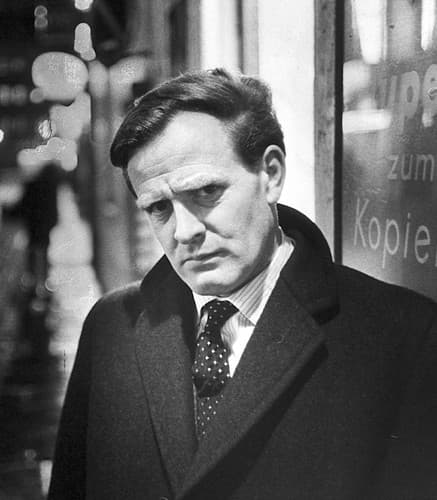
David John Moore Cornwell, better known by his pen name John le Carré, was a British and Irish author, best known for his espionage novels, many of which were successfully adapted for film or television. "A sophisticated, morally ambiguous writer", he is considered one of the greatest novelists of the postwar era. During the 1950s and 1960s he worked for both the Security Service (MI5) and the Secret Intelligence Service (MI6).
Similar books
- Angels & Demons
Dan Brown
3.9 (2.7M) average on GoodreadsThrillerA Harvard symbologist races through Rome's ancient sites, deciphering cryptic clues to unmask the Illuminati and stop a vengeful plot to destroy the Vatican with a stolen antimatter weapon.
- Gone Girl
Gillian Flynn
4.1 (2.3M) average on GoodreadsThrillerA wife's sudden disappearance on her fifth anniversary reveals a web of lies and psychological warfare, exposing the secrets within a seemingly perfect marriage.
- The Girl on the Train
Paula Hawkins
3.9 (2.1M) average on GoodreadsThrillerA woman’s fascination with a seemingly perfect couple she watches from her daily train commute leads her into a dark investigation when she witnesses something that shatters their idyllic image.
- The Da Vinci Code
Dan Brown
3.9 (1.9M) average on GoodreadsThrillerA symbologist and a cryptologist race through European landmarks, deciphering ancient codes and uncovering a conspiracy that could rewrite the foundations of Christianity.
- The Guest List
Lucy Foley
3.8 (1.3M) average on GoodreadsThrillerOn a remote Irish island, a glamorous wedding descends into a deadly whodunnit when a guest is found murdered, trapping everyone with their secrets as a storm rages.
- The Shining
Stephen King
4.2 (1.1M) average on GoodreadsThrillerA recovering alcoholic accepts a caretaking job at a snow-bound, haunted hotel, where his son's psychic abilities reveal the sinister forces that drive him to madness and terrorize his family.





Enjoyed the summary?
A summary gives you the shape of the book. The book itself has the detail, the examples and the voice.
Find The Russia House on AmazonAs an Amazon Associate, BookBrief earns from qualifying purchases. How we're funded