
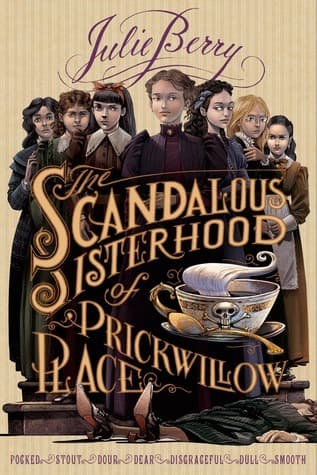
Synopsis
Covers the whole plot, including the ending.
- Difficulty
- Easy
- Pacing
- Fast
- Mood
- Humorous, Witty, Suspenseful, Lighthearted
- Read it if
- You enjoy clever mysteries with a humorous, farcical tone, strong female characters, and a Victorian setting.
- Skip it if
- You prefer serious, gritty mysteries or dislike stories where children deceive adults.
The Scandalous Sisterhood of Prickwillow Place Plot Summary
Covers the whole plot, including the ending.
A Most Inconvenient Demise
On a quiet Sunday evening at St. Etheldreda's School for Girls, the seven students—Disgrace, Smudge, Pippi, Dandy, Dearlove, Clovis, and Emmeline—have dinner with the headmistress, Mrs. Plackett, and her brother, Mr. Godding. During the meal, both adults suddenly fall ill and die, seemingly poisoned. The girls realize the problem: if the deaths are discovered, the school will close, and they will be sent back to their often-unpleasant homes. Led by Disgrace and Smudge, they decide to hide the deaths and pretend Mrs. Plackett and Mr. Godding are just sick, keeping their home at Prickwillow Place.
The Grand Deception Begins
With Mrs. Plackett and Mr. Godding's bodies hidden, the girls begin a series of deceptions. They say Mrs. Plackett has a contagious fever and Mr. Godding is away on business. To keep up the lie, they forge letters, imitating the adults' handwriting, and create reasons for their continued absence. Disgrace manages the household finances, while Smudge tells believable stories to nosy villagers and tradespeople. The girls also take on the duties of running the school and household, trying to appear normal and avoid suspicion.
A Motley Crew of Suspects
While maintaining the deception, the girls secretly investigate who poisoned Mrs. Plackett and Mr. Godding. They make a list of suspects, including former servants, local tradesmen, and Mrs. Plackett's estranged family. Their investigation shows that both victims had many enemies and were involved in shady dealings. They discover Mrs. Plackett's gambling debts and Mr. Godding's questionable business practices, suggesting several motives for murder. The girls realize solving the mystery is important for justice and to keep their unusual arrangement at Prickwillow Place.
The Arrival of Mr. Cromwell
Their world is threatened by Mr. Cromwell, a solicitor for Mrs. Plackett's estranged husband, who wants a divorce. Mr. Cromwell is suspicious of the girls' vague explanations for Mrs. Plackett's absence and asks questions. The girls, especially Smudge and Disgrace, use all their cunning to avoid his inquiries, inventing complicated reasons for the headmistress's unavailability. They fear Mr. Cromwell's persistence will uncover their secret, leading to the discovery of the bodies and their removal from the school, so they must work harder to keep him from the truth.
A Buried Treasure and a Secret Room
During their secret investigations, the girls find a hidden room and passages within Prickwillow Place, revealing more about the house's secrets. They find a hidden compartment with Mrs. Plackett's diary, which gives insights into her life, her relationship with her brother, and her financial problems. This discovery deepens the mystery and makes Mrs. Plackett seem more complex than the tyrant they knew. The hidden passages also help the girls move around the house undetected for their plans.
A Series of Near Misses
As days pass, the girls face many challenges keeping their charade going. The local baker, Mr. Pimm, becomes suspicious, and a visit from a nosy neighbor, Mrs. Treacle, almost exposes them. They constantly improvise, leading to comedic and tense near-misses. For example, they use an old wig and Mrs. Plackett's clothes to make a dummy in a window, only for it to fall over. They also struggle with household chores and money, often taking desperate measures to keep up appearances and prevent anyone from entering parts of the house where the bodies or secrets are hidden.
The Baker's Secret
The girls eventually suspect Mr. Pimm, the baker, who has been unusually persistent. Through observation and eavesdropping, they discover Mr. Pimm was secretly in love with Mrs. Plackett and gave her 'medicinal' concoctions, which turn out to be poison. He intended to kill Mr. Godding, whom he blamed for Mrs. Plackett's unhappiness, but Mrs. Plackett accidentally ate the poisoned food too. This discovery adds tragedy and misunderstanding to the murders, showing the complex lives of the people around them.
Confession and Consequences
When confronted, Mr. Pimm confesses, explaining his misguided love for Mrs. Plackett and his wish to 'free' her from her brother's influence. The girls, understanding the tragic circumstances and Mr. Pimm's regret, face a moral choice. They could expose him, but that would expose their deception and close the school. They decide to keep Mr. Pimm's secret, becoming accomplices. In return, Mr. Pimm agrees to keep providing them with supplies and support, securing their alliance and the continuation of their independent life at St. Etheldreda's.
The Bodies' Final Resting Place
With the mystery solved and Mr. Pimm's help secured, the girls bury Mrs. Plackett and Mr. Godding's bodies. They plan and execute the burial, using the hidden passages and the cover of night. They choose a remote spot on the school grounds, ensuring the bodies will never be found. This act solidifies their shared secret and their commitment to their new, self-governed life. It is a dark but necessary step that binds them together even more tightly, marking their transition from bewildered students to self-reliant young women.
A New Beginning for St. Etheldreda's
With immediate threats gone and the bodies handled, the girls establish a new order at St. Etheldreda's. They create their own rules, dividing responsibilities, and ensuring a more equal and enjoyable environment than Mrs. Plackett provided. The school, now run by the students, becomes a place of independence and friendship. While occasional visitors require them to maintain parts of their deception, they have formed a unique sisterhood, showing their resourcefulness and resilience. They continue their studies, but on their own terms, embracing their newfound freedom.
Principal Figures
Disgrace
Protagonist
The pragmatic and logical leader of the girls.
Disgrace is the most level-headed and practical of the girls. She quickly takes charge after the adults' deaths, organizing the others and managing the household's finances. She is intelligent, analytical, and often the voice of reason, though she can be stern. Her drive comes from a desire for order and stability, and she is fiercely protective of the school as a sanctuary from the harsh realities of their individual homes. She often clashes with Smudge due to their differing approaches but ultimately respects her cunning.
Relationships: Smudge (Best friends, sometimes rivals in leadership, complementary skills.); Mrs. Plackett (Student of, but resentful of her strict and unfair rule.)
Smudge
Protagonist
The quick-witted, imaginative, and theatrical mastermind of the deception.
Smudge is the most creative and impulsive of the girls, excelling at improvisation and crafting elaborate lies. She is a natural storyteller and actress, often coming up with the most outrageous yet believable excuses for Mrs. Plackett and Mr. Godding's absence. Her intelligence is more intuitive and social, making her adept at manipulating perceptions. She is driven by a love for adventure and a desire to escape the mundane, and she relishes the challenge of maintaining their deception. She provides much of the comedic relief.
Relationships: Disgrace (Best friends, often bickering but deeply reliant on each other.); Pippi (Close friend, often involved in Smudge's schemes.)
Pippi
Supporting
The cheerful, optimistic girl with a knack for observation.
Pippi is generally cheerful and optimistic, often finding joy in small things even amidst their predicament. She has a sharp eye for detail and a talent for observation, which proves useful in their investigations. She is less involved in the grand schemes but contributes valuable insights and is a loyal friend. Pippi's innocence and positive outlook often serve as a counterbalance to the more cynical or stressed members of the group. She is particularly adept at noticing discrepancies that others might miss.
Relationships: Smudge (Close friend and often a partner in mischief.); Emmeline (Supports and encourages the shyer Emmeline.)
Dandy
Supporting
The vain and fashion-conscious girl who initially struggles with the grim reality.
Dandy is initially portrayed as somewhat vain and preoccupied with her appearance and social standing. She struggles more than the others with the grim reality of the situation and the unglamorous tasks required. However, she gradually adapts, finding ways to contribute and even using her social graces to their advantage. Her journey involves overcoming her initial superficiality and recognizing the importance of their collective survival over personal comfort. She learns to be resourceful and less reliant on external validation.
Relationships: Clovis (Shares a room and often squabbles with, but ultimately friends.)
Dearlove
Supporting
The quiet, artistic girl who finds solace in drawing.
Dearlove is generally quiet and reserved, often expressing herself through her artwork. She is sensitive and observant, capturing details and emotions in her sketches. Her artistic talents prove useful in forging documents and creating props for their deceptions. She finds comfort and strength in her creative pursuits, which also serve as a way for her to process the extraordinary events unfolding around them. Dearlove represents the quieter strength and the importance of individual expression within the group.
Relationships: Emmeline (Quiet companionship, shared artistic inclinations.)
Clovis
Supporting
The practical, strong, and somewhat gruff girl.
Clovis is the most physically capable and practical of the girls, often taking on the heavy lifting and more physically demanding tasks, such as moving the bodies. She is straightforward and sometimes gruff, but deeply loyal to her friends. Her strength and common sense are vital assets to the group, especially in the early stages of hiding the murders. She is less concerned with appearances and more with getting things done efficiently, often providing a grounding influence.
Relationships: Dandy (Roommate, often at odds over Dandy's fussiness but ultimately loyal.)
Emmeline
Supporting
The youngest and shyest girl, who gradually finds her voice.
Emmeline is the youngest and most timid of the girls. Initially overwhelmed by the events, she struggles to contribute and is often frightened. However, throughout the story, she gradually gains confidence, finding her voice and contributing in small but significant ways. Her arc is one of growth and empowerment, as she learns to overcome her shyness and become an active, valued member of the sisterhood. Her innocence often highlights the absurdity and danger of their situation.
Relationships: Dearlove (Shared quiet nature, supportive friendship.)
Mrs. Plackett
Antagonist/Victim
The tyrannical headmistress of St. Etheldreda's.
Mrs. Plackett is the strict, often cruel, and financially troubled headmistress of St. Etheldreda's. She rules the school with an iron fist, making the girls' lives miserable. She is a woman of many secrets, including gambling debts and a strained relationship with her estranged husband. Her death is the catalyst for the entire plot. Though initially presented as purely antagonistic, the discovery of her diary reveals a more complex, albeit still unsympathetic, character driven by desperation and a desire to maintain her status.
Relationships: Mr. Godding (Brother, co-conspirator in shady dealings, mutually disliked.); Mr. Pimm (Object of his unrequited affection and misguided attempts to 'help'.)
Mr. Godding
Antagonist/Victim
Mrs. Plackett's surly and equally unpleasant brother.
Mr. Godding is Mrs. Plackett's brother and lives at St. Etheldreda's, where he serves no clear purpose other than to be surly and occasionally assist in his sister's questionable financial schemes. He is generally disliked by everyone, including his sister, and his death is met with little remorse. He is particularly obnoxious and contributes to the general misery of the girls' lives. His presence exacerbates Mrs. Plackett's financial troubles and his own shady dealings provide additional motives for murder.
Relationships: Mrs. Plackett (Sister, often in conflict, partners in various dubious ventures.)
Mr. Pimm
Supporting
The local baker, secretly in love with Mrs. Plackett and the accidental murderer.
Mr. Pimm is the local baker who regularly delivers bread to St. Etheldreda's. He appears to be a kindly, unassuming man, but he harbors a secret, unrequited love for Mrs. Plackett. He becomes increasingly suspicious of the girls' explanations for the adults' absence. Driven by a misguided desire to 'help' Mrs. Plackett escape her brother's influence, he poisons Mr. Godding, inadvertently killing Mrs. Plackett as well. He is remorseful upon confession and becomes an unlikely ally to the girls.
Relationships: Mrs. Plackett (Unrequited love interest, accidental victim.)
Mr. Cromwell
Supporting
The suspicious solicitor who nearly uncovers the truth.
Mr. Cromwell is a solicitor who arrives at St. Etheldreda's representing Mrs. Plackett's estranged husband, who seeks a divorce. He is intelligent, persistent, and highly suspicious of the girls' vague and contradictory explanations for Mrs. Plackett's unavailability. He poses a significant threat to the girls' deception, forcing them to be at their most cunning and resourceful to deflect his inquiries. His presence provides much of the external tension and nearly exposes their secret.
Relationships: Mrs. Plackett (Legal representative for her estranged husband.)
Themes & Insights
Female Agency and Empowerment
The main theme is the girls taking control of their lives and environment without adult authority. Without their headmistress and facing uncertain futures, they work together, using their strengths and wit to survive. They manage the household, finances, and even solve a murder, defying Victorian expectations for young women. This is seen in Disgrace's leadership, Smudge's deceptions, and the group's decision to run the school themselves, dividing responsibilities and creating new rules.
“We are seven, and we are capable. We shall manage.”
The Nature of Truth and Deception
The plot relies on the girls' deception to hide the murders. The story shows how truth can be manipulated, hidden, and reimagined, and how lies, consistently told, can create a new reality. The girls become masters of hiding things, forging letters, crafting elaborate backstories, and performing ruses to convince the outside world that all is well. This theme is highlighted in Smudge's talent for storytelling and the constant improvisation needed to maintain their facade, especially during Mr. Cromwell's visits.
“A lie, if told often enough, becomes a kind of truth, doesn’t it?”
Sisterhood and Community
Forced into an unusual situation, the seven girls, initially different, form a strong bond. They learn to rely on each other's talents, support one another through fear and stress, and work together towards a common goal: preserving their home. The 'scandalous sisterhood' starts out of necessity but becomes a genuine, loving community. This is seen in their shared decision-making, their efforts to hide the bodies, and their choice to protect Mr. Pimm to safeguard their independence, solidifying their loyalty.
“We were no longer just girls; we were a unit, a compact, dangerous, and utterly devoted sisterhood.”
Justice and Morality
The novel deals with questions of justice and morality. While the girls are first motivated by self-preservation, they also seek the truth behind the murders. However, their decision to protect the killer, Mr. Pimm, and hide the crime challenges typical ideas of justice. They prioritize their own safety and the continuation of their community over reporting a crime, suggesting that morality can be flexible and situational, especially when facing serious consequences. Their choice to bury the bodies and keep Mr. Pimm's secret shows their practical, rather than strictly legal, approach to justice.
“Sometimes, justice isn’t about what’s right, but about what allows us to survive.”
The Hypocrisy of Victorian Society
The story subtly criticizes the rules and hypocrisies of Victorian society, especially for young women. The girls are seen as helpless, yet they prove resourceful. The adults in their lives—Mrs. Plackett, Mr. Godding, and Mr. Pimm—are shown to have hidden vices, secrets, and moral failings that contradict the era's appearance of respectability. The girls' ability to outwit the supposedly 'proper' adults exposes the superficiality of societal expectations, showing the gap between outward appearances and inner realities. The scandal they create directly defies these societal norms.
“Respectability was a cloak, and beneath it, all manner of mischief could hide.”
Plot Devices & Literary Techniques
Red Herring
Misleading clues or suspects designed to distract the reader and characters.
Throughout the girls' investigation, several characters are introduced or situations arise that make them seem like plausible murderers. For instance, Mrs. Plackett's estranged husband, various disgruntled former servants, and even local tradesmen are considered by the girls as potential culprits. These red herrings serve to complicate the mystery, provide comedic opportunities for the girls' deductive reasoning (or lack thereof), and heighten the suspense before the true culprit, Mr. Pimm, is revealed, making his confession more surprising.
Dramatic Irony
The audience knows more than the characters, creating tension and humor.
Dramatic irony is a pervasive element, as the reader is aware from the very beginning that Mrs. Plackett and Mr. Godding are dead and that the girls are actively concealing their deaths. This creates constant tension and humor whenever an unsuspecting outsider, like Mr. Cromwell or Mrs. Treacle, interacts with the girls. The humor arises from the girls' increasingly elaborate lies and the outsiders' cluelessness, while the tension stems from the constant threat of discovery, as the reader anticipates the moment the truth might be revealed.
Secret Passages and Hidden Rooms
Architectural elements that facilitate the plot and reveal secrets.
The discovery of secret passages and a hidden room within St. Etheldreda's serves multiple crucial functions. Practically, it allows the girls to move bodies, hide evidence, and eavesdrop undetected, aiding their deception. Symbolically, these hidden spaces represent the secrets and hidden lives of the house's inhabitants, particularly Mrs. Plackett, whose diary is found in one such compartment. It reinforces the theme that appearances can be deceiving and that there's always more beneath the surface, both in the house and its occupants.
Foreshadowing
Hints or clues about future events or revelations.
While the initial poisoning is sudden, there are subtle hints throughout the narrative that build towards the eventual revelation of Mr. Pimm as the killer. His unusual persistence in visiting the school, his seemingly innocent 'medicinal' deliveries to Mrs. Plackett, and the girls' growing unease about his behavior all serve as foreshadowing. These clues, often overlooked by the girls initially, become clear in retrospect, adding to the satisfaction of the mystery's resolution and demonstrating the author's careful plotting.
The Scandalous Sisterhood of Prickwillow Place Quotes
“I'm afraid Prickwillow Place is going to be the death of me,”
“One must always maintain appearances, no matter how dire the circumstances.”
“A proper young lady never screams, even when faced with a dead body.”
“We are all in this together, for better or worse, and mostly for worse.”
“The truth, like a stubborn stain, will always find a way to reveal itself.”
“Sometimes, the most scandalous acts are born of the most respectable intentions.”
“A good lie, like a good corset, must be well-constructed and able to withstand scrutiny.”
“The world is not always as it appears, especially not at Prickwillow Place.”
“One must never underestimate the resourcefulness of a young lady determined to avoid scandal.”
“There is a certain freedom in absolute despair.”
“Even the most dreadful events can have their amusing moments, if one is willing to look for them.”
“Secrets, like mice, multiply quickly in the dark.”
“A lady's reputation is a fragile thing, easily shattered by the slightest breath of suspicion.”
“Who knew that being good could be so very, very complicated?”
Quiz
10 questions on the plot and the characters. Each answer comes with a short explanation.
Question 1
What is the initial, immediate problem the girls face after Mrs. Plackett and Mr. Godding are poisoned?
- They fear being accused of the murders.
- The school will almost certainly be closed, and they'll be sent home.
- They don't have enough food to sustain themselves.
- They are worried about who will teach their classes.
Show answer
B. The school will almost certainly be closed, and they'll be sent home. The primary concern for the girls, as stated in the synopsis, is that the school will close and they'll be sent home, disrupting their lives and plans.
Question 2
Which two characters are the first to be poisoned at Sunday dinner?
- Miss Penelope and Mr. Abernathy
- Mrs. Plackett and Mr. Godding
- Miss Agnes and Dr. Finch
- Mrs. Higgins and Mr. Bumble
Show answer
B. Mrs. Plackett and Mr. Godding The book's premise clearly states that the 'irascible headmistress, Mrs. Plackett, and her surly brother, Mr. Godding,' are the ones inconveniently poisoned.
Question 3
How many girls are involved in the plan to hide the murders?
- Five
- Six
- Seven
- Eight
Show answer
C. Seven The synopsis specifies that 'these seven very proper young ladies' are the ones who undertake the plan.
Question 4
What is the primary motivation for the girls to conceal the deaths of Mrs. Plackett and Mr. Godding?
- To inherit Mrs. Plackett's fortune.
- To avoid being sent home and having their school closed.
- To protect one of their own who committed the crime.
- To prove their cleverness to the local authorities.
Show answer
B. To avoid being sent home and having their school closed. Their main goal is to prevent the closure of their beloved school, St. Etheldreda's, and being forced to return home.
Question 5
What type of literary genre is 'The Scandalous Sisterhood of Prickwillow Place' primarily described as?
- Gothic Horror
- Romantic Comedy
- Victorian Farce/Mystery
- Science Fiction
Show answer
C. Victorian Farce/Mystery The book is described as a 'rollicking farce,' a 'smart, hilarious Victorian romp,' and a 'mystery,' fitting the Victorian Farce/Mystery description.
Question 6
What is the name of the school for girls where the events take place?
- Prickwillow Academy
- St. Etheldreda's School for Girls
- The Ladies' Seminary of Prickwillow
- Miss Plum's Finishing School
Show answer
B. St. Etheldreda's School for Girls The school is explicitly named 'St. Etheldreda's School for Girls' in the book's description.
Question 7
Which of the following elements is NOT mentioned as a characteristic of the book's plot?
- Outrageous plot twists
- Time travel paradoxes
- Mistaken identities
- Mysterious happenings
Show answer
B. Time travel paradoxes The synopsis mentions 'outrageous plot twists, mistaken identities, and mysterious happenings' but makes no mention of time travel.
Question 8
What is the general tone and style of the book, as indicated by terms like 'rollicking farce' and 'hilarious Victorian romp'?
- Somber and melancholic
- Suspenseful and terrifying
- Lighthearted and comedic
- Academic and philosophical
Show answer
C. Lighthearted and comedic The terms 'rollicking farce' and 'hilarious Victorian romp' strongly suggest a lighthearted, comedic, and amusing tone.
Question 9
The girls' plan relies heavily on what overarching concept to succeed?
- Convincing the local constabulary of an accidental death.
- Maintaining appearances and convincing neighbors 'nothing is wrong.'
- Escaping the school undetected with the bodies.
- Finding the real murderer before anyone else does.
Show answer
B. Maintaining appearances and convincing neighbors 'nothing is wrong.' The core of their plan is to 'hide the murders and convince their neighbors that nothing is wrong,' emphasizing the importance of maintaining appearances.
Question 10
Which character's personality is described as 'irascible' and another's as 'surly'?
- Mrs. Plackett (irascible) and Mr. Godding (surly)
- Mr. Godding (irascible) and Mrs. Plackett (surly)
- Miss Penelope (irascible) and Mrs. Higgins (surly)
- Miss Agnes (irascible) and Dr. Finch (surly)
Show answer
A. Mrs. Plackett (irascible) and Mr. Godding (surly) The description clearly states 'Their irascible headmistress, Mrs. Plackett, and her surly brother, Mr. Godding.'
The Scandalous Sisterhood of Prickwillow Place FAQ
What is the central premise of 'The Scandalous Sisterhood of Prickwillow Place'?
The book centers on seven students at St. Etheldreda's School for Girls who discover their headmistress, Mrs. Plackett, and her brother, Mr. Godding, have been poisoned. Fearing the school's closure and their return home, they conspire to hide the deaths and maintain the appearance of normalcy to avoid suspicion and keep the school open.
Who are the seven main girls involved in the conspiracy?
The core group consists of sophisticated Pinfold, practical Disir, scientific Smudge, romantic Dearlove, timid Droll, aspiring actress Gruff, and the youngest, sharp-eyed Speckle. Each girl brings a distinct personality and skill to the challenging task of concealing the murders and running the school.
What is the primary motivation for the girls to hide Mrs. Plackett's death?
Their primary motivation is to prevent the school from closing, which would mean returning to undesirable home situations. For many, St. Etheldreda's, despite its flaws, offers a degree of independence or escape from difficult family circumstances, making its preservation paramount.
How do the girls manage to dispose of the bodies and maintain the illusion of Mrs. Plackett's presence?
The girls employ various ingenious and often comedic methods. They initially hide the bodies in a secret passage, then later move them. To simulate Mrs. Plackett's presence, they use a dummy, forge her handwriting, and even Gruff impersonates her voice and mannerisms when interacting with outsiders.
What role does Mr. Godding play in the initial events of the story?
Mr. Godding is Mrs. Plackett's surly and often unpleasant brother, who is also poisoned alongside her at Sunday dinner. His presence complicates the girls' efforts, as they must hide two bodies instead of one, and his suspicious behavior before his death adds to the mystery.
What is the significance of the 'Prickwillow Place' name in the title?
Prickwillow Place is the specific location of St. Etheldreda's School for Girls, providing a concrete setting for the story. The name itself evokes a certain quaint, slightly eccentric Victorian charm, fitting the farcical and mysterious events that unfold within its walls.
Are there any clues to the murderer's identity planted early in the story that a careful reader might notice?
Yes, subtle clues are woven throughout, such as the specific type of poison used (arsenic), the limited access to Mrs. Plackett's food, and the unusual behavior of certain characters leading up to the dinner. The murderer's motive is also hinted at through past grievances and financial desperation.
How does the author use the Victorian setting to enhance the mystery and farce?
The Victorian setting provides a strict social code and limited communication, which ironically allows the girls' outrageous deception to thrive for a time. The era's expectations of female propriety and the isolation of the girls' school create both comedic tension and believable constraints for their actions.
What is the true identity of the murderer, and what was their motive?
The murderer is revealed to be Miss Scrimshaw, the seemingly meek and loyal governess. Her motive was financial desperation and revenge; she had been secretly embezzling funds from Mrs. Plackett for years and feared exposure, choosing to eliminate her employer to cover her tracks.
How does the collective effort of the girls impact their individual psychological development?
The conspiracy forces each girl to confront her fears, utilize her strengths, and develop new skills. Droll overcomes her timidity, Gruff embraces her dramatic flair, and Smudge's scientific curiosity becomes crucial. This shared experience fosters an intense bond and a sense of agency they might not have otherwise found.
What psychological pressures do the girls face in maintaining their elaborate deception?
They endure immense psychological pressure from fear of discovery, the constant need for vigilance, and the emotional toll of living with such a grave secret. The weight of their actions and the constant threat of outsiders unraveling their scheme lead to moments of anxiety, paranoia, and internal conflict.
How do the girls' individual personalities contribute to the success or challenges of their plan?
Pinfold's leadership, Disir's practicality, Smudge's scientific knowledge, and Gruff's acting skills are all vital. However, their distinct personalities also lead to disagreements and clashes, such as Dearlove's romantic distractions or Droll's initial fearfulness, which occasionally jeopardize the plan.
Is there a specific moment where the girls' psychological resolve is most tested?
Their resolve is most tested during the visit from Mrs. Higgins, the nosy neighbor, and later by the investigation of Inspector Crump. These external threats force them to improvise rapidly, maintain composure under intense scrutiny, and work together seamlessly, pushing their limits of deception and nerve.
What message does the book convey about female agency and empowerment in a restrictive era?
The book powerfully conveys that even within the confines of Victorian society, young women can exercise remarkable agency and ingenuity. By taking control of their fate, the girls demonstrate resourcefulness, resilience, and the strength of their collective bond, challenging societal expectations placed upon them.
Could the girls' actions be morally justified, despite being illegal?
This is a key interpretive question. While their actions are undeniably illegal, the narrative frames them as a desperate act of self-preservation against potentially worse fates at home. The 'greater good' of their collective future and the undesirability of their alternative lives offer a strong moral argument for their choices.
How does the book balance its comedic tone with the serious themes of murder and deception?
Julie Berry masterfully balances the two by focusing on the girls' often-clumsy and endearing attempts at deception, creating humor from their predicaments and contrasting it with the underlying stakes. The farcical elements serve to lighten the mood while never fully diminishing the seriousness of the crimes and their consequences.
What does the ending suggest about the girls' future and their bond?
The ending suggests that the girls, having successfully navigated their ordeal, emerge stronger and more united. While the immediate future of the school might be uncertain, their shared experience has forged an unbreakable bond and equipped them with an invaluable sense of self-reliance and collective strength, preparing them for whatever comes next.
Is there an underlying commentary on the education system or societal expectations for girls during the Victorian era?
Yes, the book subtly critiques the limited options and often unappealing prospects for girls in the Victorian era, which drives their desperate actions to save the school. It highlights how institutions like St. Etheldreda's, despite their flaws, could offer a crucial refuge or path to a more independent future for some young women.
About the author

Julie Berry is an author known for her works of fiction, including "Lovely War," "The Amaranth Enchantment," and "The Scandalous Sisterhood of Prickwillow Place." Her writing often blends historical elements with imaginative storytelling, appealing to both young adult and middle-grade readers. Berry's books have received various accolades and recognition within the literary community.
Similar books
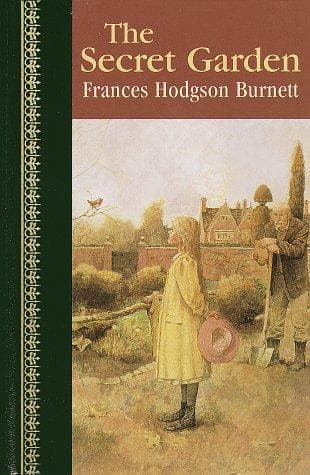
- The Secret Garden
Frances Hodgson Burnett
4.1 (891k) average on GoodreadsFantasyChildren discovering secrets and creating their own world within a large estate.
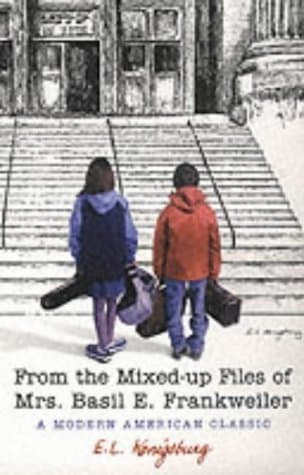
- From the Mixed-Up Files of Mrs. Basil E. Frankweiler
E.L. Konigsburg
4.2 (189k) average on GoodreadsChildren'sWhile both books feature children solving a mystery with a degree of independence, Konigsburg's novel offers a more introspective and emotionally resonant exploration of identity and belonging. Berry's book is more overtly comedic and focuses on external plot complications, whereas Konigsburg delves deeper into the psychological motivations of her protagonists and the artistic mystery itself.
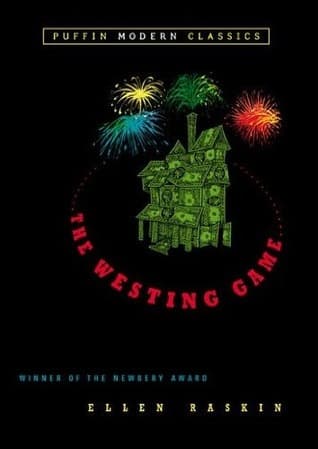
- The Westing Game
Ellen Raskin
4.0 (165k) average on GoodreadsChildren'sRaskin's The Westing Game presents a more intricate and complex puzzle, with a larger cast of eccentric characters and a sophisticated, multi-layered mystery that demands active reader participation. Berry's mystery, while fun, is more straightforward in its execution and relies more on situational comedy and character interactions for its appeal, rather than a truly confounding intellectual challenge. Raskin's novel also provides a more satisfying and logical, albeit surprising, resolution to its central enigma.
- Harry Potter and the Sorcerer's Stone
J.K. Rowling
4.5 (7M) average on GoodreadsFantasyRescued from a miserable life under the stairs, an orphaned boy discovers he's a wizard destined for a magical school, where he uncovers a dangerous secret tied to the dark wizard who murdered his parents.
- The Hobbit, or There and Back Again
J.R.R. Tolkien
4.3 (2.9M) average on GoodreadsFantasyA comfort-loving hobbit named Bilbo Baggins is whisked away by a mischievous wizard and a band of dwarves on an unexpected journey to reclaim stolen treasure from a fearsome dragon, discovering courage and a magical ring along the way.
- Harry Potter and the Goblet of Fire
J.K. Rowling
4.6 (2.6M) average on GoodreadsFantasyA bewildered Harry Potter, underage and thrust into a deadly Triwizard Tournament, must brave dragons, mermaids, and a resurgent dark magic to survive a year that will forever alter the wizarding world.



Enjoyed the summary?
A summary gives you the shape of the book. The book itself has the detail, the examples and the voice.
Find The Scandalous Sisterhood of Prickwillow Place on AmazonAs an Amazon Associate, BookBrief earns from qualifying purchases. How we're funded