
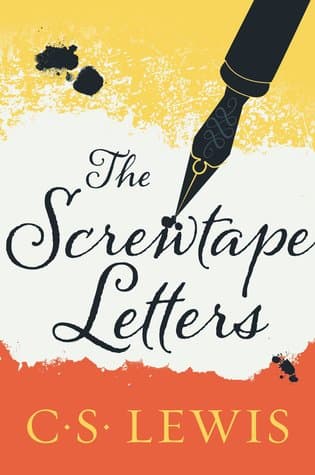
Synopsis
Covers the whole plot, including the ending.
- Difficulty
- Medium
- Pacing
- Moderate
- Mood
- Satirical, Philosophical, Insightful, Darkly Humorous
- Read it if
- You enjoy satirical works that explore theological and philosophical concepts from an unconventional perspective.
- Skip it if
- You prefer straightforward narratives without allegorical or epistolary structures, or find religious themes unappealing.
The Screwtape Letters Plot Summary
Covers the whole plot, including the ending.
Introduction to Infernal Correspondence
The book starts with an opening letter from Screwtape, a senior demon, to his nephew Wormwood, a junior tempter. Screwtape teaches Wormwood the subtle art of tempting a human 'patient' — a young British man who has recently become a Christian. Screwtape stresses distracting the patient with everyday thoughts and worldly worries, rather than direct arguments against faith. He tells Wormwood to use the patient's spiritual dryness and common annoyances, like a church organist's sound, to cause doubt. The first letters set up the satirical idea and the inverted moral world of the demonic view, where good is 'the Enemy' and evil is 'Our Father Below'.
Exploiting Spiritual Dryness and Mundane Annoyances
Screwtape continues to advise Wormwood on how to handle the patient's early days as a Christian. He warns against letting the patient feel lasting spiritual joy, suggesting Wormwood should instead encourage a focus on the 'real world' and the physical discomforts of church. Screwtape points out that the patient's first emotional high will fade, and this 'trough' period is a good chance for temptation. He tells Wormwood to make the patient feel his conversion was just a phase or an experiment, and to use the patient's annoyance with his mother or other churchgoers, turning small complaints into bigger resentments.
The Dangers of Friendship and Intellectual Snobbery
The patient starts making new friends, and Screwtape sees this as a new way to tempt him. He suggests Wormwood should either isolate the patient or, more effectively, lead him toward friends who are outwardly smart but morally loose, or those who follow a 'fashionable' form of Christianity that lacks true meaning. Screwtape encourages Wormwood to make the patient feel intellectually superior, making him look down on his simpler, more religious Christian friends and family. This pride can make the patient dismiss real faith as unsophisticated and adopt a cynical, critical view of spiritual matters.
Love, Lust, and the Corrupted Ideal
The patient falls in love with a good Christian woman, which upsets Screwtape, as this love strengthens his faith. Screwtape changes his plan, telling Wormwood to corrupt this genuine affection. He advises turning the patient's love into mere lust, or into a possessive, selfish desire for the woman, rather than a selfless love. Screwtape also suggests using the patient's pride in his new relationship, making him feel better than others who are not as 'enlightened' in their romantic choices. The goal is to make the patient focus on himself and his own desires, rather than on his beloved's well-being or his relationship with God.
War, Fear, and Disillusionment
With World War II starting, Screwtape finds new chances for temptation. He advises Wormwood to use the patient's fear and worry, encouraging him to focus on an uncertain future rather than the present. Screwtape also suggests causing a feeling of disappointment and anger toward God for allowing such suffering. He warns against letting the patient embrace true patriotism or self-sacrifice, instead encouraging a selfish desire for safety or a cynical view of human nature. The goal is to make the patient feel that faith is useless or even cruel in the face of widespread suffering and chaos.
The Perils of Prayer and Hypocrisy
Screwtape writes several letters about weakening the patient's prayer life. He tells Wormwood to make prayer feel like a chore, a meaningless habit, or to encourage the patient to focus on his own feelings during prayer rather than on God. Screwtape also advises Wormwood to make the patient pray for selfish reasons or to judge others based on how well they seem to pray. He encourages hypocrisy, where the patient acts religious in public but has cynical or unkind thoughts in private. The goal is to break the patient's real connection with God through misguided or insincere prayer.
The Danger of Small Sins and Gradual Erosion
Screwtape constantly reminds Wormwood that big, dramatic sins are often less effective than a steady build-up of small, seemingly unimportant wrongdoings. He argues that these 'slight deviations' slowly wear down the patient's moral sense and make him less sensitive to evil. Screwtape encourages Wormwood to make the patient believe these small sins are harmless, or that he can easily repent later. This slow loss of conscience makes it easier for the patient to commit bigger sins over time, leading to a slow but sure drift away from God. This subtle method is key to demonic success.
Pride, Self-Awareness, and the Demonic Trap
Screwtape is especially annoyed when the patient starts to recognize and fight temptation, blaming 'the Enemy's' direct help. Screwtape advises Wormwood to make the patient proud of his new self-awareness, turning the act of resisting temptation into spiritual pride. He also suggests making the patient believe he is uniquely strong or perceptive, thus separating him from the humility and support of other Christians. The ultimate goal is to make the patient focus on his own strength and goodness, rather than on his reliance on God, falling into a more subtle form of pride.
The Patient's Death and Screwtape's Disappointment
Sadly for the demons, the patient dies during an enemy air raid. In the final letters, Screwtape shows his extreme disappointment and anger at Wormwood's failure to get the patient's soul. Screwtape describes the patient's last moments, where he turned to God with real faith and love, escaping the demons' grip. Screwtape vividly portrays the patient's rise to 'the Enemy's' presence, surrounded by angels, while Wormwood is left to face his superiors' anger. Screwtape ends with a chilling description of Wormwood's coming punishment, hinting at his own wish to consume Wormwood's being.
The Aftermath: Wormwood's Fate and Infernal Justice
In the very last letter, Screwtape, no longer pretending to be a mentor, openly delights in Wormwood's failure and coming doom. He describes the horrible fate awaiting Wormwood — being eaten by other demons as punishment for losing his patient's soul. Screwtape's true, predatory nature is fully shown, without any family affection. This final letter highlights hell's brutal, self-serving nature, where even cooperation is driven by malice and failure leads to ultimate destruction. It contrasts sharply with 'the Enemy's' love and forgiveness.
The Screwtape Letters Characters
Screwtape
Antagonist
A senior demon and chief correspondent.
Screwtape is a highly experienced and cunning demon, a 'Senior Under-Secretary' in Hell's bureaucracy. He serves as the primary narrator, offering cynical and often darkly humorous advice to his nephew, Wormwood. Screwtape is a master manipulator, deeply understanding human psychology and spiritual weaknesses. His motivations are entirely self-serving and driven by malice towards God and humanity. He embodies intellectual pride, a thirst for power, and a profound contempt for love and humility. His 'love' for Wormwood is purely conditional and ultimately predatory.
Relationships: Wormwood (Nephew and subordinate, subject of instruction and eventual prey.); Our Father Below (His ultimate master, whom he serves out of fear and ambition.); The Enemy (God) (The object of his profound hatred and the source of his frustration.)
Wormwood
Supporting
A junior demon and Screwtape's nephew and student.
Wormwood is a relatively inexperienced and often clumsy demon, tasked with tempting the 'patient'. He is the recipient of Screwtape's letters, and his failures and successes drive the narrative. Wormwood is depicted as eager but often inept, prone to making obvious mistakes and lacking the subtle cunning of his uncle. He represents the less sophisticated, more direct approach to temptation, often resorting to overt suggestions of sin rather than subtle corruption. His ultimate fate is to be devoured by other demons for his failure.
Relationships: Screwtape (Uncle and mentor, but ultimately a predatory superior.); The Patient (His assigned human target, whose soul he attempts to corrupt.); Our Father Below (His ultimate master, whom he fails to serve effectively.)
The Patient
Protagonist (unseen)
A young British man who has recently converted to Christianity.
The Patient is the human individual whose soul is the subject of the demonic correspondence. He is never directly named or heard from, but his spiritual journey and struggles are detailed through Screwtape's observations. He begins as a new convert, experiences periods of spiritual fervor and dryness, falls in love, faces wartime anxieties, and ultimately dies. He represents the everyman Christian, susceptible to temptation but ultimately capable of genuine faith and repentance. His journey illustrates the challenges and triumphs of the Christian walk.
Relationships: Wormwood (His assigned tempter.); Screwtape (Wormwood's instructing superior, indirectly tempting him.); His Mother (A source of minor annoyances and also a fellow Christian.); The Christian Girl (His virtuous love interest, a positive influence.)
The Christian Girl
Supporting
The virtuous woman the Patient falls in love with.
The Christian Girl is a devout and loving woman whom the Patient meets and falls in love with. Her strong faith and virtuous character are consistently presented as a significant obstacle to Wormwood's attempts at temptation. She embodies genuine Christian love, humility, and spiritual strength, serving as a positive influence on the Patient. Screwtape views her as particularly dangerous because her goodness reinforces the Patient's faith and encourages him towards selfless love, the very opposite of demonic aims. She is a symbol of the 'Enemy's' work in the world.
Relationships: The Patient (His virtuous love interest and a positive spiritual influence.)
Our Father Below
Mentioned
The ultimate ruler of Hell.
'Our Father Below' is the demonic equivalent of God, the ultimate authority in Hell. He is never seen directly but is frequently referenced by Screwtape as the source of all evil and the ultimate recipient of the demons' efforts. He embodies absolute power, cruelty, and an insatiable hunger for souls. His existence reinforces the hierarchical and tyrannical structure of Hell, where fear and self-preservation are the primary motivators. His 'glory' is the damnation of souls and the triumph of evil.
Relationships: Screwtape (His loyal (and fearful) servant.); Wormwood (Another servant, whom he expects to devour upon failure.)
The Enemy (God)
Mentioned
The Christian God, referred to with disdain by the demons.
'The Enemy' is the demons' term for God. He is depicted as the ultimate source of all good, love, and joy, and thus the demons' primary adversary. Through Screwtape's distorted lens, God is portrayed as an incomprehensible, meddlesome being who inconveniently loves humans and desires their freedom and happiness. The demons find God's self-sacrificial love and humility utterly baffling and repulsive, constantly trying to thwart His plans for humanity. He represents the ultimate good against which all demonic efforts are directed.
Relationships: Screwtape (His ultimate adversary.); The Patient (His beloved creation, whose soul he seeks to save.)
Slubgob
Mentioned
A demon who gives a lecture at the 'Training College for Young Tempters'.
Slubgob is a demon mentioned by Screwtape as having given a lecture at the 'Training College for Young Tempters'. His lecture, 'On the Tendency of Patients to Take the Enemy's Side When a War Breaks Out,' is cited by Screwtape as a classic text. Slubgob represents a more traditional, perhaps less subtle, approach to demonic instruction, focusing on broad patterns of human behavior under duress. His mention adds a layer of bureaucratic realism to the infernal world, showing that even demons have academic institutions and established theories.
Relationships: Screwtape (A fellow demon, whose work Screwtape references.)
Toxolox
Mentioned
Another demon who also gave a lecture at the 'Training College'.
Toxolox is another demon mentioned by Screwtape, having given a lecture titled 'Patients Who Have Become Acquainted with Temptation'. Like Slubgob, Toxolox serves to illustrate the extensive and specialized knowledge that demons accumulate regarding human weakness and spiritual warfare. His lecture topic is particularly relevant when the Patient begins to gain self-awareness about the nature of temptation, leading Screwtape to recall Toxolox's insights. These references flesh out the imagined infernal world.
Relationships: Screwtape (A fellow demon, whose work Screwtape references.)
The Screwtape Letters Themes
The Nature of Temptation and Spiritual Warfare
The main theme is the sneaky nature of temptation, shown from the perspective of the tempters. Lewis reveals that temptation often comes not as big, clear evils, but as subtle twists of good, small compromises, and using everyday annoyances. Screwtape constantly tells Wormwood to distract the patient, encourage spiritual dryness, foster intellectual pride, and turn real love into lust or possessiveness. The book shows that spiritual battle is a constant, inner fight, over thoughts, intentions, and reactions to daily life, as seen in the Patient's struggles with prayer and his relationships.
“Indeed the safest road to Hell is the gradual one—the gentle slope, soft underfoot, without sudden turnings, without milestones, without signposts.”
The Deception of Self-Love and Pride
Pride, especially intellectual and spiritual pride, is consistently shown as one of the most dangerous sins. Screwtape often tells Wormwood to make the patient feel better than others — his mother, his less intellectual churchgoers, or those with less 'fashionable' views. This self-love leads to being cut off from God and others. Even when the patient notices temptation, Screwtape tries to turn this self-awareness into a source of pride, making him feel uniquely perceptive. The demons' own hierarchy, where Screwtape eventually wants to consume Wormwood, also shows the ultimate self-serving nature of pride.
“All vices are rooted in the same soil of self-love, and pride is the most fertile of them all.”
The Power of Love (Divine and Human)
Despite the demonic viewpoint, the book implicitly supports the power of true love, both divine and human, as the ultimate cure for evil. Screwtape and Wormwood are constantly frustrated by 'the Enemy's' mysterious love for humanity and the Patient's ability for selfless love, especially for the Christian Girl. True love, as shown by 'the Enemy', is self-giving and seeks the good of the other, which is hated by hell's self-serving nature. The Patient's eventual salvation is rooted in his turning to God in love and trust, showing love's power to redeem.
“He really loves the hairless bipeds whose souls you are trying to capture.”
The Mundanity of Evil
Lewis argues that evil is often not grand or spectacular, but appears in the mundane, the trivial, and the everyday. Screwtape's advice is full of ways to use minor annoyances (like a church organist), petty arguments, spiritual dryness, and subtle shifts in perspective. He emphasizes that small, repeated sins are more effective than dramatic ones in corrupting a soul. This theme warns that one must be watchful against seemingly harmless compromises and distractions that slowly erode faith and goodness, showing how easily evil can enter ordinary life.
“The safest road to Hell is the gradual one—the gentle slope, soft underfoot, without sudden turnings, without milestones, without signposts.”
The Inverted Morality of Hell
The whole book uses an inverted moral system where what humans see as good (love, humility, God) is seen as evil by the demons, and what humans see as evil (hatred, pride, damnation) is seen as good. 'Our Father Below' is the ultimate good, and 'the Enemy' (God) is the ultimate evil. This inversion allows Lewis to make fun of human failings and theological ideas by seeing them through a twisted lens. It makes the reader re-examine their own understanding of good and evil, and appreciate the true nature of Christian virtues that the demons find so confusing and repulsive.
“We want cattle who can finally become food; He wants servants who can finally become sons.”
Plot Devices & Literary Techniques
Epistolary Format
The entire novel is a series of letters.
The novel is presented as a collection of letters from Screwtape to Wormwood. This epistolary format allows Lewis to directly present the demonic perspective without needing a human narrator to filter or interpret it. It creates an intimate, conspiratorial tone, drawing the reader into the demons' world. The one-sided correspondence also leaves gaps, forcing the reader to infer Wormwood's actions and the Patient's struggles, making the reader an active participant in understanding the narrative. It effectively highlights the subjective and biased nature of the demonic viewpoint.
Ironic Satire
Using humor and exaggeration to criticize human and spiritual failings.
Lewis employs ironic satire throughout the letters. The demons' 'advice' is presented as serious and logical within their infernal framework, but the underlying intent is to expose and critique human weaknesses and spiritual dangers. For example, Screwtape's disdain for humility or his 'concern' for the Patient's spiritual dryness are deeply ironic. This device allows Lewis to deliver profound theological and moral insights in an engaging and often humorous way, making complex spiritual concepts accessible and memorable by showing their twisted reflection.
Unreliable Narrator
Screwtape's perspective is intentionally biased and distorted.
Screwtape serves as an unreliable narrator, as his entire worldview is based on an inversion of good and evil. He consistently misinterprets God's actions and motives, viewing love as a weakness and humility as a trick. This unreliability is crucial to the book's purpose, as it forces the reader to discern the truth by understanding the demonic distortion. By presenting evil's perspective as 'truth', Lewis encourages the reader to critically evaluate their own assumptions and recognize the subtle lies that can masquerade as wisdom.
Allegory/Personification
Abstract concepts are personified as characters and events.
While not a strict allegory in every detail, the book uses allegorical elements. Screwtape and Wormwood personify the forces of temptation and evil, while 'the Enemy' (God) and 'Our Father Below' (Satan) personify ultimate good and evil. The Patient represents humanity's spiritual journey. Events like 'spiritual dryness' or 'the trough' become concrete challenges. This device helps to make abstract theological concepts, such as spiritual warfare and the nature of sin, more tangible and understandable by embedding them within a narrative of personal struggle and infernal machination.
The Screwtape Letters Quotes
“Indeed the safest road to hell is the gradual one - the gentle slope, soft underfoot, without sudden turnings, without milestones, without signposts.”
“The great thing is to direct the patient's attention to the future, or to the past, but never to the present.”
“Gratitude looks to the Past and love to the Present; fear, avarice, lust, and ambition look ahead.”
“All mortals tend to turn into the thing they are pretending to be.”
“The Enemy relies on a curious fantasy of His own, which He calls 'Free Will.'”
“Prosperity knits a man to the World. He feels that is 'finding his place in it,' while adversity drives him out of it and Him.”
“Your patient is a man of science. That is a good thing. Let him regard science as the only real knowledge.”
“The game is to get them away from the stable, solid, perennial, and into the shifting, wild, and ephemeral.”
“He wants them to learn to walk and must therefore take away His hand; and if only a little, and for a little while, they stumble, and if a little cloud of bewilderment darkens their understanding, He is not displeased.”
“The more often he feels without acting, the less he will be able ever to act, and, in the long run, the less he will be able to feel.”
“It is funny how mortals always picture us as putting things into their minds: in reality, our best work is done by keeping things out.”
“Never forget that when we are dealing with any pleasure in its healthy and normal and satisfying form, we are dealing with a great weapon of the Enemy.”
“The safest road to Hell is the gradual one – the gentle slope, soft underfoot, without sudden turnings, without milestones, without signposts.”
“Humility is not thinking less of yourself, but thinking of yourself less.”
Quiz
10 questions on the plot and the characters. Each answer comes with a short explanation.
Question 1
To whom is Screwtape writing his letters?
- His nephew, Wormwood
- His superior, Our Father Below
- The patient, a human being
- A fellow tempter, Slubgob
Show answer
A. His nephew, Wormwood Screwtape's letters are addressed to his nephew, Wormwood, a junior devil assigned to tempt a specific human being.
Question 2
What is the primary goal of the devils, as described by Screwtape?
- To cause physical suffering to humans
- To collect human souls for Our Father Below
- To destroy human civilization
- To create widespread chaos and anarchy
Show answer
B. To collect human souls for Our Father Below The devils' primary objective is to secure human souls for 'Our Father Below' (Satan) by tempting them away from 'the Enemy' (God).
Question 3
What does Screwtape advise Wormwood to do regarding the patient's reading material?
- Encourage him to read deeply philosophical texts
- Distract him with newspapers and light, unchallenging material
- Push him towards ancient religious scriptures
- Inspire him to write his own literature
Show answer
B. Distract him with newspapers and light, unchallenging material Screwtape advises Wormwood to keep the patient's mind occupied with superficial distractions like newspapers, preventing deep thought or spiritual reflection.
Question 4
How does Screwtape suggest Wormwood exploit the patient's initial conversion to Christianity?
- By making him proud of his newfound faith and critical of others
- By tempting him to abandon prayer altogether
- By encouraging him to doubt God's existence
- By making him fearful of divine judgment
Show answer
A. By making him proud of his newfound faith and critical of others Screwtape's strategy is to turn the patient's initial zeal into spiritual pride, making him feel superior to other Christians and focus on their flaws.
Question 5
What is 'The Law of Undulation' as described by Screwtape?
- The natural ebb and flow of human spiritual and emotional states, moving between 'troughs' and 'peaks'
- The predictable pattern of human sinfulness over a lifetime
- The way in which God intervenes directly in human affairs
- The cyclical nature of historical events and human progress
Show answer
A. The natural ebb and flow of human spiritual and emotional states, moving between 'troughs' and 'peaks' The Law of Undulation refers to the natural rhythm of human experience, alternating between periods of spiritual fervor ('peaks') and dryness ('troughs'). Screwtape advises exploiting the troughs.
Question 6
What advice does Screwtape give regarding the patient's prayer life?
- To make him focus on the physical act of prayer rather than the spiritual intention
- To encourage him to pray only for selfish desires
- To distract him from prayer by making him feel unworthy
- To make him question the efficacy of prayer itself
Show answer
A. To make him focus on the physical act of prayer rather than the spiritual intention Screwtape suggests making the patient focus on the 'machinery' of prayer, like posture or specific words, rather than the sincere, heartfelt communication with God.
Question 7
What is Screwtape's reaction when Wormwood mentions that the patient has fallen in love with a Christian woman?
- He is furious and sees it as a major setback, as she is a positive influence.
- He sees it as an opportunity to tempt both of them.
- He is indifferent, believing love to be a minor distraction.
- He advises Wormwood to encourage the relationship to make the patient complacent.
Show answer
A. He is furious and sees it as a major setback, as she is a positive influence. Screwtape is enraged because the woman is a genuine Christian and a positive spiritual influence, making Wormwood's task significantly harder.
Question 8
How does Screwtape instruct Wormwood to use the patient's patriotism during wartime?
- To make him hate the enemy personally and glorify his own nation above all else, even God.
- To make him question the morality of all warfare.
- To encourage him to become a pacifist and avoid conflict.
- To distract him from the war by focusing on personal safety.
Show answer
A. To make him hate the enemy personally and glorify his own nation above all else, even God. Screwtape aims to pervert patriotism into an idolatry of one's own nation, fostering hatred and pride, and making the patient forget his primary allegiance to God.
Question 9
What ultimate fate befalls the patient, much to Screwtape's dismay?
- He becomes a powerful atheist and influencer.
- He dies in an air raid and is taken by the Enemy (God).
- He lives a long, comfortable life, falling away from faith gradually.
- He is captured by the devils and brought to Our Father Below.
Show answer
B. He dies in an air raid and is taken by the Enemy (God). Despite Wormwood's efforts, the patient dies during an air raid, and Screwtape's final letter reveals that the patient has 'slipped through' their grasp and gone to Heaven.
Question 10
What is the primary reason Screwtape desires to consume Wormwood at the end of the book?
- As a reward for Wormwood's diligent service.
- As punishment for Wormwood's failure to secure the patient's soul.
- As part of a demonic ritual to gain more power.
- To absorb Wormwood's knowledge and experience.
Show answer
B. As punishment for Wormwood's failure to secure the patient's soul. Screwtape's final letter, filled with rage, indicates his intention to consume Wormwood as a direct punishment for his spectacular failure in losing the patient's soul to 'the Enemy.'
The Screwtape Letters FAQ
What is the basic premise of 'The Screwtape Letters'?
The book is an epistolary novel, consisting of a series of letters from a senior demon, Screwtape, to his nephew, Wormwood, a junior tempter. Screwtape advises Wormwood on how to corrupt his assigned human subject, referred to as 'the Patient,' and lead him away from 'the Enemy' (God) and towards 'Our Father Below' (Satan). The letters offer a devil's-eye view of human nature, faith, and temptation.
Who are the main characters in the book?
The primary characters are Screwtape, a high-ranking demon who authors the letters, and Wormwood, a novice demon receiving the advice. Although never directly heard from, 'the Patient' is central to the narrative as the human whose soul is being contested. 'The Enemy' (God) and 'Our Father Below' (Satan) are also pivotal, representing the opposing forces in the spiritual battle.
What is the 'Patient's' journey throughout the book?
The Patient begins as a relatively lukewarm Christian, then experiences a period of earnest conversion and spiritual growth, much to Screwtape's chagrin. He falls in love, faces the trials of wartime, and ultimately dies during an air raid, leading to his salvation. His journey illustrates common human struggles with faith, doubt, and everyday temptations.
How does C.S. Lewis use the demonic perspective to comment on human morality?
Lewis uses the demons' inverted morality to highlight human virtues and vices from an unusual angle. What the demons praise (self-centeredness, pride, triviality) are human failings, and what they fear (love, humility, genuine joy) are the very things Lewis considers good. This satirical approach allows for a fresh and often humorous critique of human behavior and spiritual pitfalls.
What is the significance of the 'dry periods' or 'troughs' in the Patient's spiritual life?
Screwtape frequently advises Wormwood to exploit these 'troughs,' which are natural periods of spiritual dryness or emotional flatness that all humans experience. Lewis suggests that enduring faith during these times, when emotion is absent, is more valuable to God than faith based purely on feeling. The demons try to convince the Patient that God has abandoned him during these periods.
How does Screwtape view human love, particularly romantic love?
Screwtape sees human love as a potential threat to demonic plans, particularly if it fosters genuine selflessness and connection. He advises Wormwood to corrupt it by introducing possessiveness, vanity, or lust, or by encouraging the Patient to seek a spouse who is either spiritually incompatible or who will distract him from God through triviality or worldliness. He views true love as a pale imitation of divine love but still dangerous if uncorrupted.
What is the role of 'noise' and 'distraction' in the demons' strategy?
Screwtape repeatedly emphasizes the importance of noise and distraction in keeping humans from introspection, prayer, and quiet contemplation. He believes that a constant bombardment of triviality, worry, and sensory input prevents the Patient from truly listening to 'the Enemy' or recognizing his own spiritual state. This highlights Lewis's critique of modern life's busyness.
Does Screwtape ever express genuine emotion or doubt?
Screwtape primarily expresses professional frustration, contempt, and occasional bursts of anger, especially when Wormwood fails or when 'the Enemy's' plans succeed. He does not show genuine doubt in their cause, but his constant anxiety over the Patient's potential salvation and his furious rants reveal a deep-seated fear of 'the Enemy's' power and goodness. He also experiences a brief, involuntary transformation into a centipede out of pure rage.
How does the book explore the concept of free will?
The demons' constant efforts to tempt and manipulate the Patient underscore the idea that humans have free will to choose between good and evil. While the demons can influence thoughts and circumstances, they cannot force a human soul's ultimate decision. The Patient's struggles demonstrate the ongoing battle for his will, which ultimately remains his own to direct.
What psychological tactics do Screwtape and Wormwood employ to tempt the Patient?
They employ various tactics, including fostering pride, vanity, and self-pity; encouraging triviality and superficiality; promoting a sense of ownership over time and possessions; and exploiting natural human weaknesses like lust, gluttony, and a desire for comfort. They also try to make the Patient focus on the faults of others or become overly concerned with what others think of him.
How do the demons manipulate the Patient's perception of time?
Screwtape advises Wormwood to keep the Patient preoccupied with either the past (regret, nostalgia) or the future (anxiety, planning), rather than allowing him to focus on the present moment, which Screwtape calls 'the point at which time touches eternity.' By distracting him from the present, they hope to prevent him from engaging with God, who operates in the eternal now.
What is the 'law of undulation' and how does it relate to human psychology?
The 'law of undulation' describes the natural ebb and flow of human life, characterized by periods of spiritual and emotional highs ('peaks') followed by lows ('troughs'). Screwtape sees this as a fundamental aspect of human psychology and a prime opportunity for temptation. He instructs Wormwood to exploit the troughs by fostering despair and doubt, and to corrupt the peaks with pride and self-satisfaction.
Is the book meant to be a literal guide to demonic activity, or is it purely metaphorical?
While Lewis believed in the reality of spiritual evil, 'The Screwtape Letters' is primarily a work of satirical fiction and allegory. It uses the demonic perspective as a literary device to illuminate human temptations and spiritual truths in an accessible and engaging way, rather than providing a literal manual on demonology. Its power lies in its psychological insights and moral commentary.
How does Lewis's own Christian faith influence the themes of the book?
Lewis, a devout Anglican, imbues the book with his understanding of Christian theology, ethics, and human nature. Themes like free will, the nature of temptation, God's love, the importance of humility, and the reality of spiritual warfare are all central to his faith and are explored through the inverted lens of the demons. The book serves as a powerful apologetic for Christian living.
Why does Screwtape hate 'the Enemy' (God) so intensely?
Screwtape's hatred stems from a fundamental misunderstanding and perversion of God's nature. He sees God's love as a form of possessiveness, his humility as weakness, and his desire for human freedom as manipulation. The demons believe they are superior and resent God's creation of humans and his love for them, viewing it as an affront to their pride and power. Their hatred is rooted in rebellion and envy.
What is the ultimate fate of Wormwood and the Patient?
The Patient dies during an air raid, and Screwtape's final letter confirms he has been saved and is now with 'the Enemy.' This means Wormwood has failed his mission. As punishment for his failure and for the sheer delight of it, Screwtape plans to consume Wormwood, detailing the various parts of his essence he intends to devour. This gruesome end emphasizes the brutal hierarchy of hell and the consequences of failure among demons.
How does the book portray the nature of evil?
Evil is portrayed not as a creative force, but as a parasitic, corrupting one. The demons can only distort, pervert, or destroy what God has already created. They thrive on negation, division, and the trivialization of good. Their existence is one of constant hunger, envy, and internal strife, reflecting Lewis's view that evil ultimately leads to self-destruction and misery even for its practitioners.
What is the significance of the final letter's description of Screwtape's desire to consume Wormwood?
This chilling detail vividly illustrates the nature of hell and evil as envisioned by Lewis: it is a place of utter selfishness, where even allies are ultimately prey. It underscores that evil is not just about harming humans, but is inherently self-devouring and devoid of true love or loyalty, even among demons. It serves as a stark contrast to the loving unity found in 'the Enemy's' realm.
About the author

Clive Staples Lewis was a British writer, literary scholar, and Anglican lay theologian. He held academic positions in English literature at both Oxford University and Cambridge University. He is best known as the author of The Chronicles of Narnia, but he is also noted for his other works of fiction, such as The Screwtape Letters and The Space Trilogy, and for his non-fiction Christian apologetics, including Mere Christianity, Miracles, and The Problem of Pain.
Similar books
- Paradise Lost
John Milton
4.1 (6k) average on GoodreadsMysteryExplores the nature of good and evil and temptation from a theological perspective, though in epic poem format.
- Gulliver's Travels
Jonathan Swift
3.6 (232k) average on GoodreadsFantasyA classic work of satire that uses an imaginative premise to critique human nature and society.
- The Pilgrim's Progress
John Bunyan
4.0 (109k) average on GoodreadsFantasyAn allegorical narrative exploring Christian spiritual journey, temptation, and redemption.
- Orthodoxy
G.K. Chesterton
4.2 (31k) average on GoodreadsSpiritualityChesterton's Orthodoxy offers a direct, celebratory defense of Christian belief using paradox and wit. Lewis's Screwtape Letters, while also witty, takes an indirect, diagnostic approach, exposing the pathology of sin and temptation from an inverted, demonic perspective rather than building arguments for faith directly.
- Harry Potter and the Sorcerer's Stone
J.K. Rowling
4.5 (7M) average on GoodreadsFantasyRescued from a miserable life under the stairs, an orphaned boy discovers he's a wizard destined for a magical school, where he uncovers a dangerous secret tied to the dark wizard who murdered his parents.
- The Hunger Games
Suzanne Collins
4.3 (6.4M) average on GoodreadsFantasyIn a future where children fight to the death on live television, Katniss Everdeen volunteers for the arena, turning a death sentence into a fight for survival and a spark of rebellion.





Enjoyed the summary?
A summary gives you the shape of the book. The book itself has the detail, the examples and the voice.
Find The Screwtape Letters on AmazonAs an Amazon Associate, BookBrief earns from qualifying purchases. How we're funded